
Table 1.
List of nsSNPs of STAT3 gene predicted as deleterious by different bioinformatics tools
| S. No. | rs ID | Alleles | Amino acid change | SIFT (score) | Polyphen (Humvar) (score) | PANTHER | SNP & GO (RI) | PROVEAN (score) | PHD -SNP (RI) | MUTANT I DDG value (<0) |
|---|---|---|---|---|---|---|---|---|---|---|
| 1 | rs145786768 | C/A | V507F | Deleterious (0.004) | Probably damaging (0.990) | Probably damaging | Disease (9) | Deleterious (−3.744) | Disease (6) | Decrease (−2.49) |
| 2 | rs193922716 | G/A | R335W | Deleterious (0) | Probably damaging (0.996) | Probably damaging | Disease (3) | Deleterious (−5.816) | Neutral (1) | Decrease (−0.36) |
| 3 | rs193922717 | C/T | E415K | Deleterious (0.003) | Probably damaging (0.955) | Probably damaging | Disease (5) | Deleterious (−3.097) | Neutral (0) | Decrease (−1.00) |
| 4 | rs193922719 | T/A | K591M | Deleterious (0.002) | Possibly damaging (0.751) | Probably damaging | Disease (8) | Deleterious (−4.949) | Disease (6) | Decrease (−0.13) |
| 5 | rs1803125 | G/T | Q32K | Deleterious (0.025) | Possibly damaging (0.868) | Probably damaging | Disease (0) | Neutral (−1.975) | Disease (3) | Decrease (−0.41) |
| 6 | rs11547455 | G/A | S629F | Deleterious (0.001) | Possibly damaging (0.481) | Probably damaging | Disease (5) | Deleterious (−3.097) | Disease (1) | Increase (0.64) |
| 7 | rs11547455 | G/A | S727F | Deleterious (0.002) | Probably damaging (0.974) | Probably damaging | Neutral (0) | Deleterious (−3.858) | Neutral (1) | Decrease (−0.20) |
| 8 | rs374063766 | C/G | Q198H | Deleterious (0.035) | Probably damaging (0.965) | Probably damaging | Neutral (3) | Neutral (−1.942) | Neutral (3) | Decrease (−0.82) |
| 9 | rs11547455 | G/A | S727F | Deleterious (0.002) | Probably damaging (0.974) | Probably damaging | Neutral (0) | Deleterious (−3.858) | Neutral (1) | Decrease (−0.20) |
[i] nsSNPs, non-synonymous single nucleotide polymorphisms; PANTHER, Protein Analysis Through Evolutionary Relationship; PhD-SNP, Predictor of human Deleterious Single Nucleotide Polymorphisms; RI, reliability index; SNP, single nucleotide polymorphism.
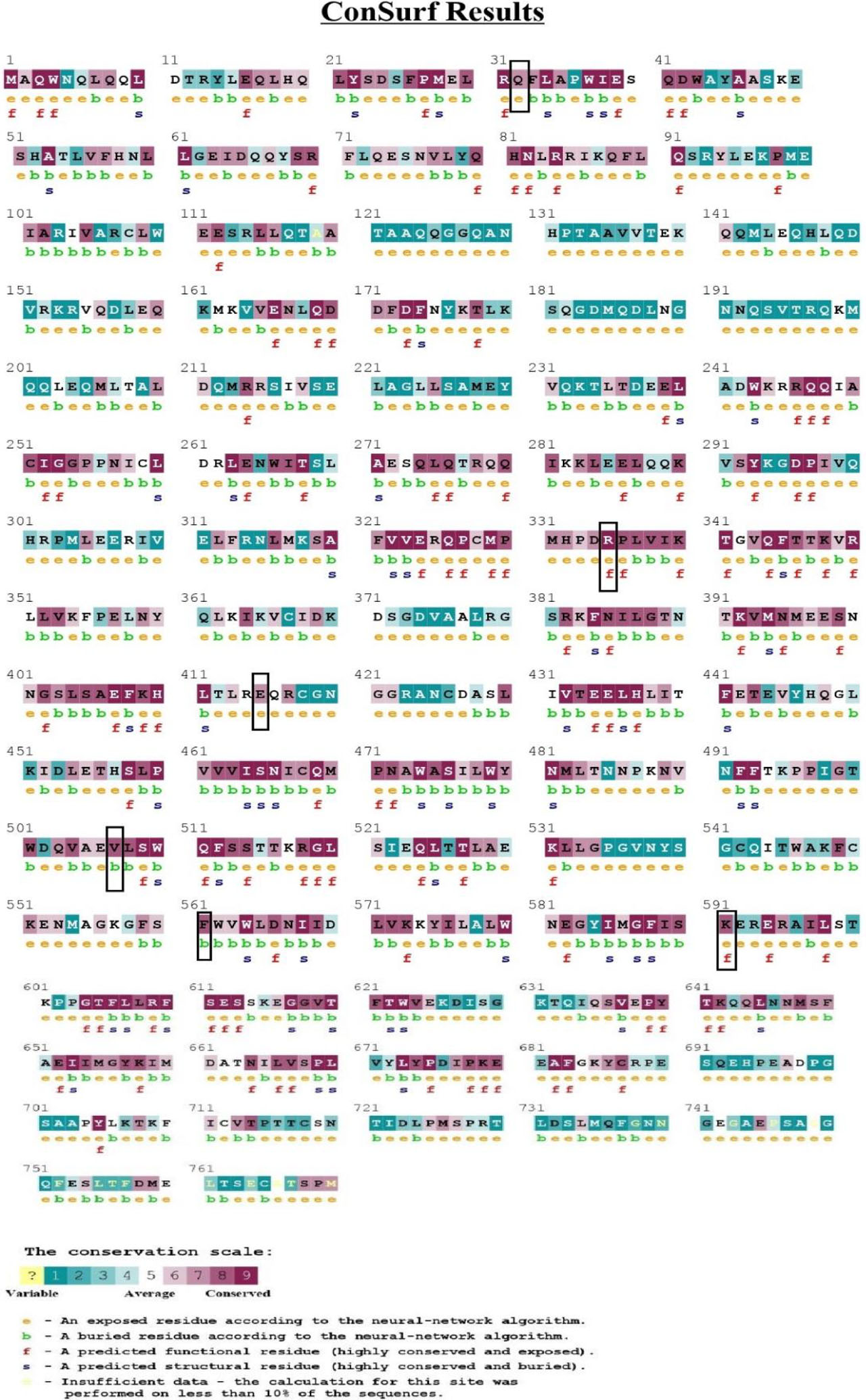
Figure 1.
Evolutionary conservancy of STAT3 by ConSurf server. The high-risk nsSNPs are denoted by black boxes. nsSNPs, non-synonymous single nucleotide polymorphisms; STAT, signal transducer and activator of transcription factors.
Table 2.
Analysis of evolutionary conservation profile of high-risk nsSNPs of STAT3 by ConSurf
| Amino acid change | Conservation score | Buried/exposed | Functional/structural |
|---|---|---|---|
| V507F | 8 | Buried | - |
| R335W | 9 | Exposed | Functional |
| E415K | 8 | Exposed | - |
| K591M | 9 | Exposed | Functional |
| F561Y | 8 | Exposed | Functional |
| Q32K | 7 | Exposed | - |
[i] nsSNPs, non-synonymous single nucleotide polymorphisms; STAT, signal transducer and activator of transcription factors.
Table 3.
NetsurfP-2.0 prediction based on relative solvent accessibility, stability, and secondary structure prediction
| Amino acid change | NetsurfP-2.0 | |||||
|---|---|---|---|---|---|---|
| Class assignment | RSA | ASA | Secondary structure | Phi | Psi | |
| V507F | Buried | 13% | 20 Å | α helix | −64° | −44° |
| R335W | Exposed | 44% | 101 Å | Coil | −110° | 137° |
| E415K | Exposed | 52% | 90 Å | Strand/β sheet | −108° | 137° |
| K591M | Exposed | 37% | 77 Å | α helix | −57° | −41° |
| E594K | Buried | 6% | 10 Å | α helix | −66° | −41° |
| F561Y | Buried | 4% | 8 Å | α helix | −60° | −38° |
| R609S | Buried | 9% | 22 Å | Strand/β sheet | −112° | 132° |
[i] ASA, absolute surface accessibility; RSA, Relative surface accessibility.
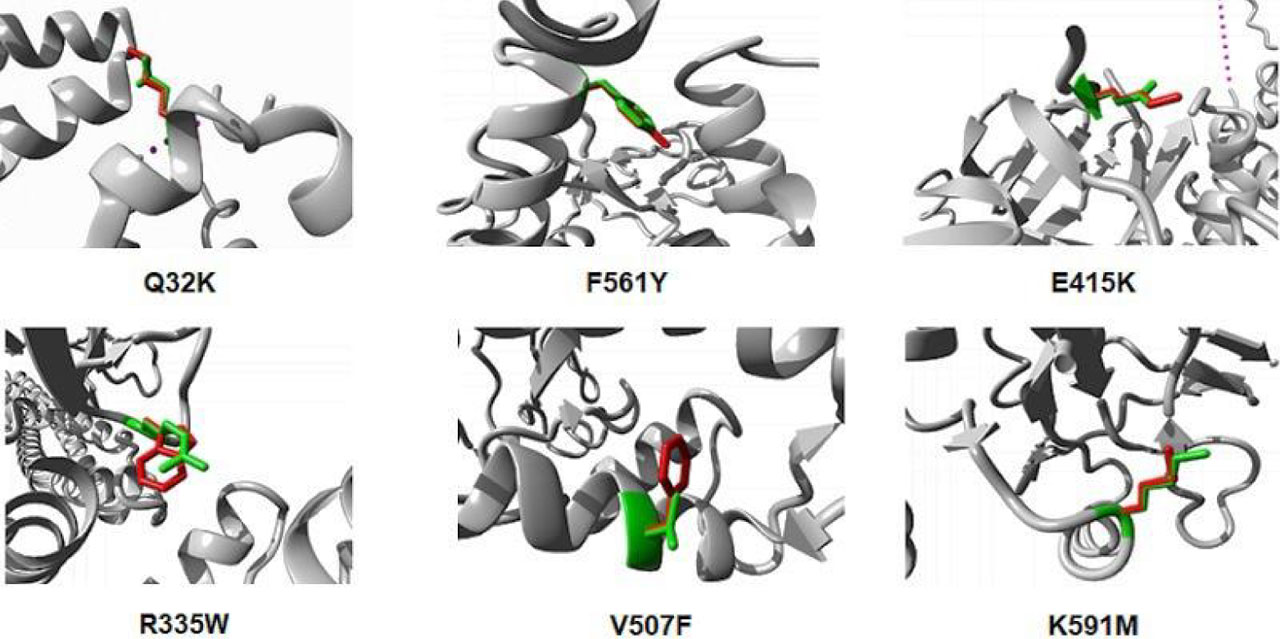
Figure 2.
Structural variation of the wild-type and mutant residues by Project HOPE. The wild-type residue is presented as green and the mutant residue is shown in red.
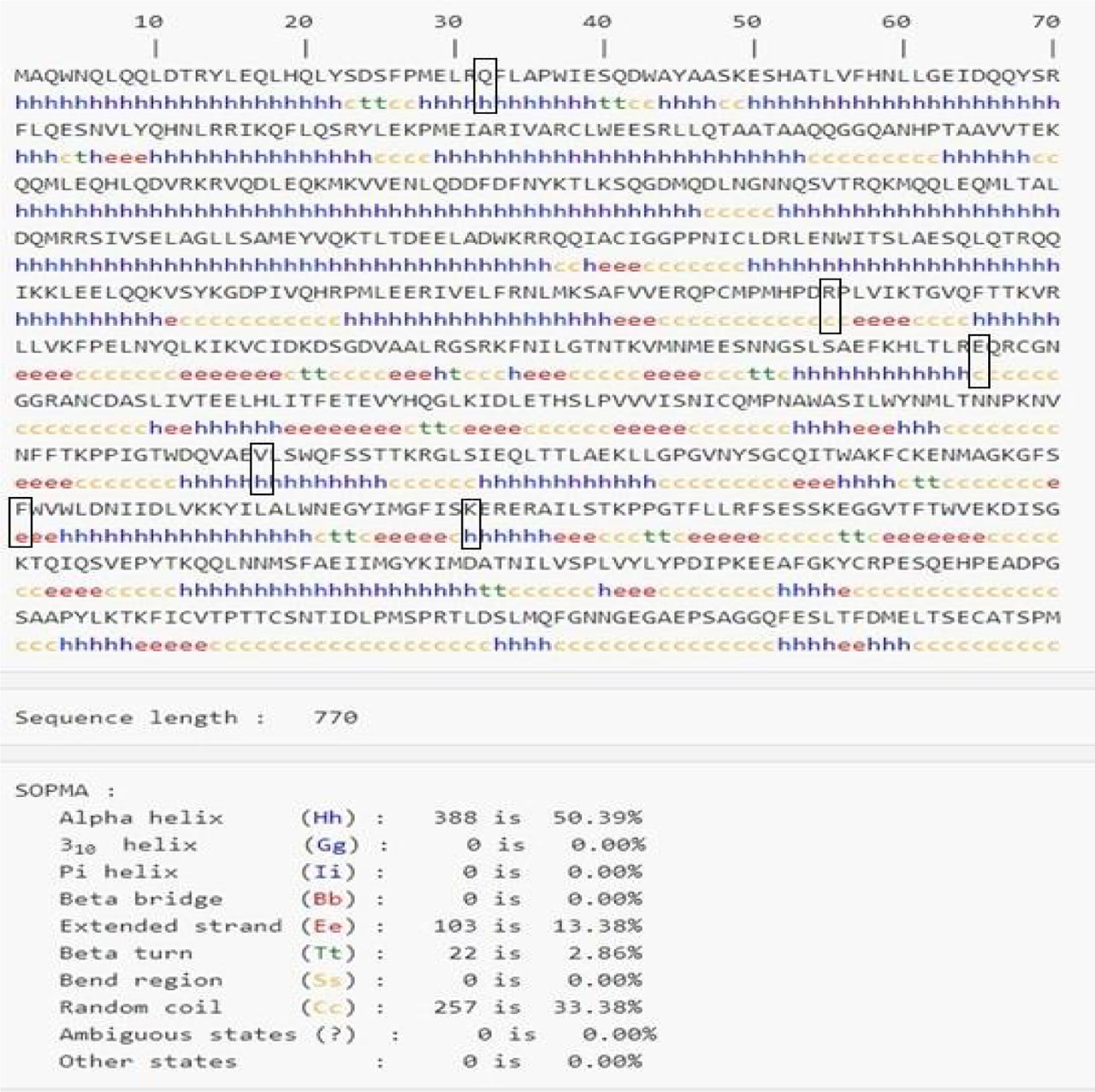
Figure 3.
Secondary structure prediction and calculations using SOPMA. The SOPMA program predicts the secondary structure of the STAT3 protein. The black boxes represent wild amino acids that might be altered by STAT3 pathogenic nsSNPs. Alpha helix, extended strand, beta turn, and random coil are all represented by the letters “h,” “e,” “t,” and “c,” respectively. nsSNPs, non-synonymous single nucleotide polymorphisms; STAT, signal transducer and activator of transcription factors.
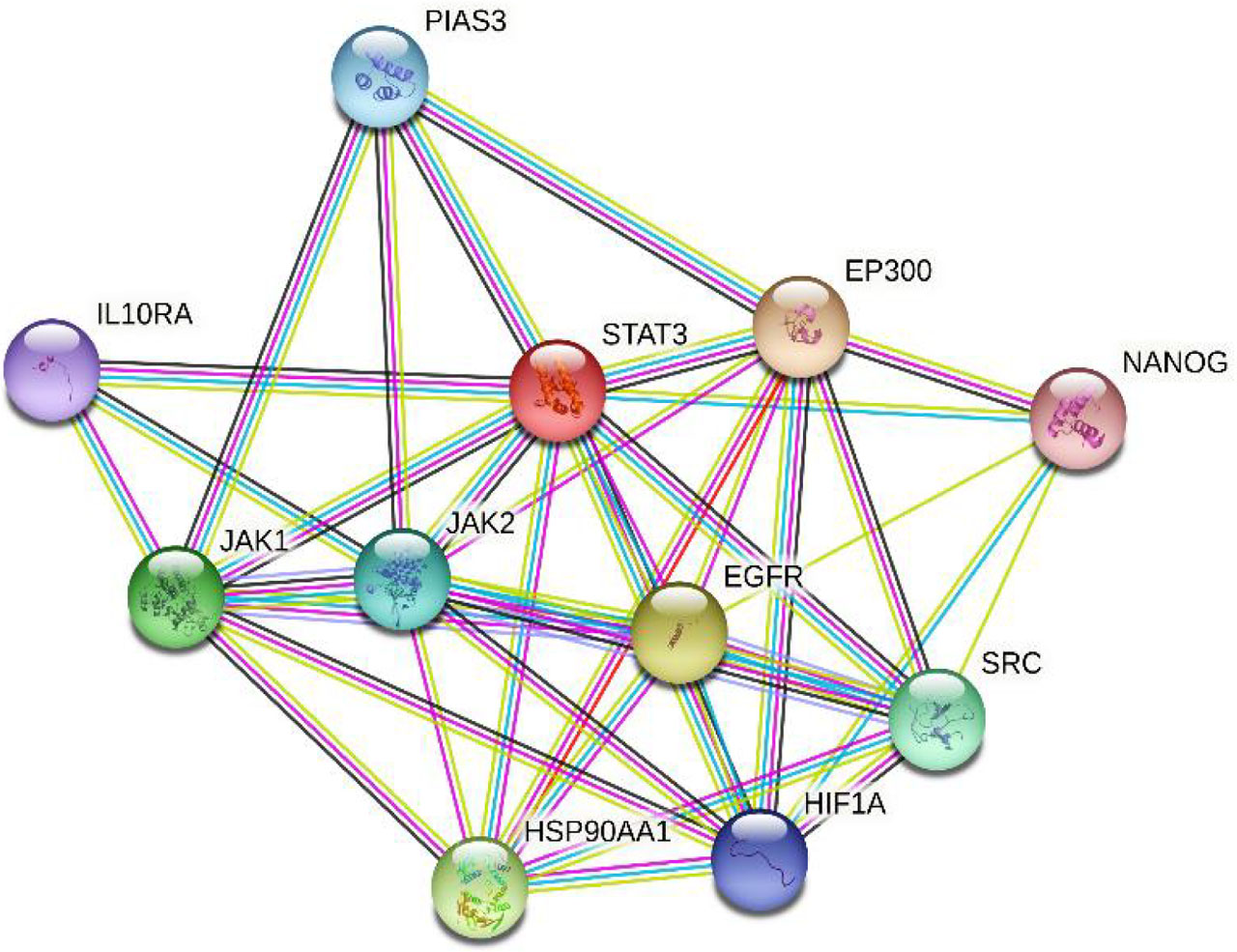
Figure 4.
Protein–protein interaction network of STAT3 using STRING server showing strong functional association with EP300, PIAS3, IL10RA, JAK1, JAK2, EGFR, HSP90AA1, SRC, and homeobox protein NANOG. A weak interaction has been observed for HIF1A. EGFR, epidermal growth factor receptor; EP300, histone acetyltransferase p300; HIF1A, hypoxia-inducible factor 1-alpha; HSP90AA1, heat shock protein HSP 90-alpha; IL10RA, interleukin-10 receptor; JAK, Janus kinases; PIAS3, E3 SUMO-protein ligase; SRC, proto-oncogene tyrosine-protein kinase; STAT, signal transducer and activator of transcription factors; STRING, Search Tool for the Retrieval of Interacting Genes/Proteins.
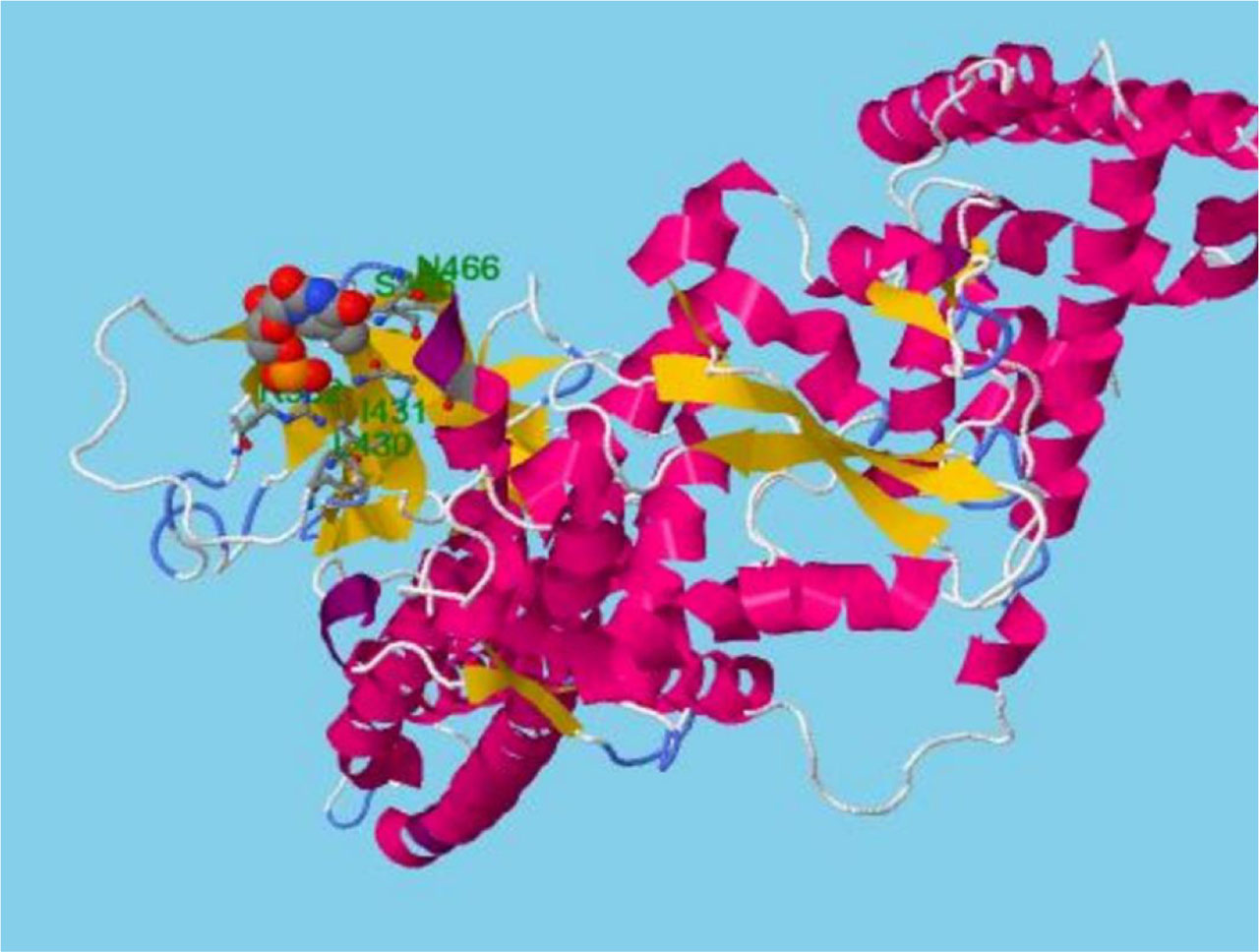
Figure 5.
3D model and binding site residues for domain 1 predicted by RaptorX.
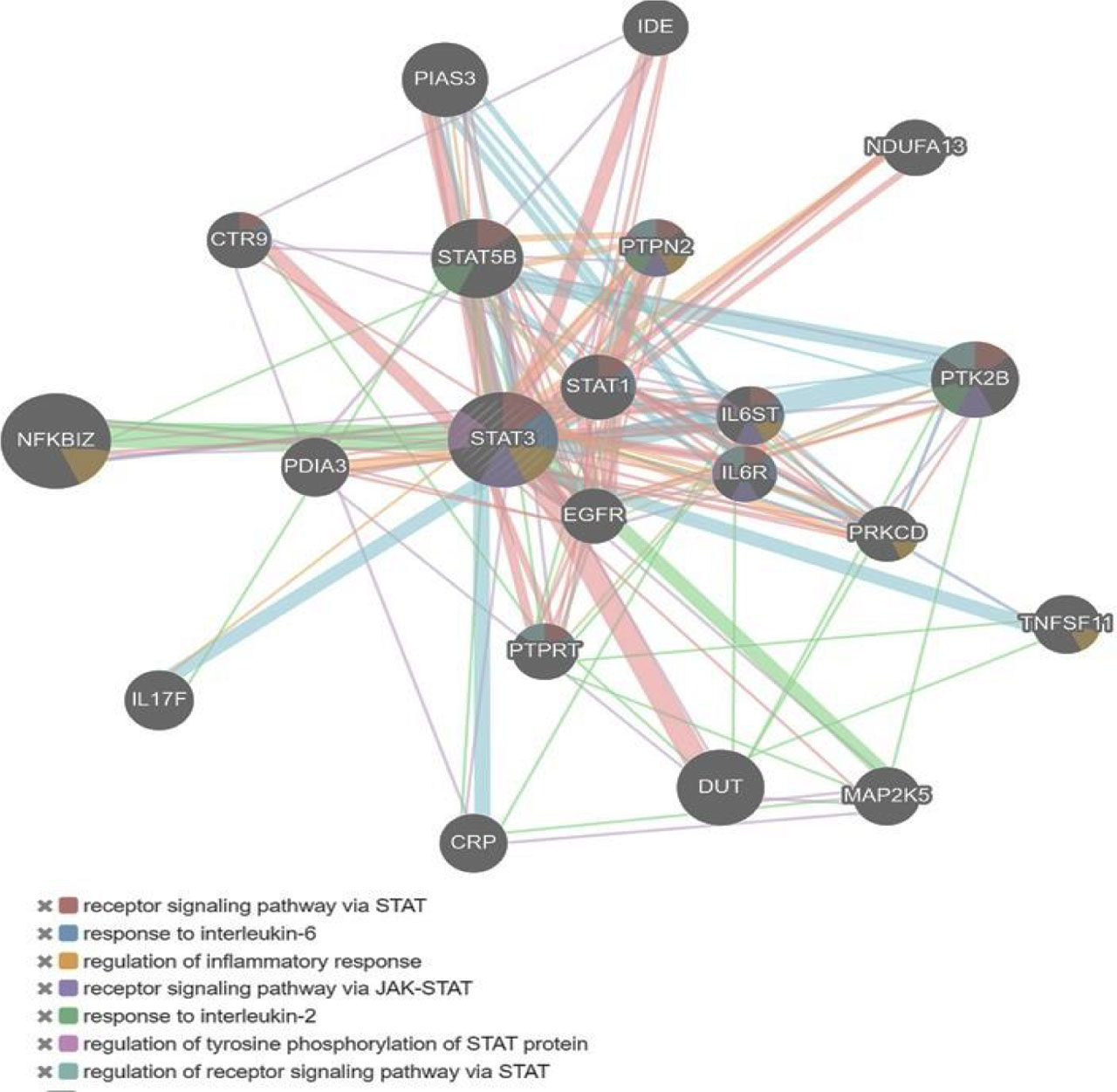
Figure 6.
Gene–gene interaction network of STAT3 gene shows physical and genetic interaction with nuclear factor kappa B subunit 1 (NFKB1Z) and mitogen-activated protein kinase kinase 5 (MAP2K5), EGFR, and signal transducer and activator of transcription 1 (STAT1). EGFR, epidermal growth factor receptor; STAT, signal transducer and activator of transcription factors.
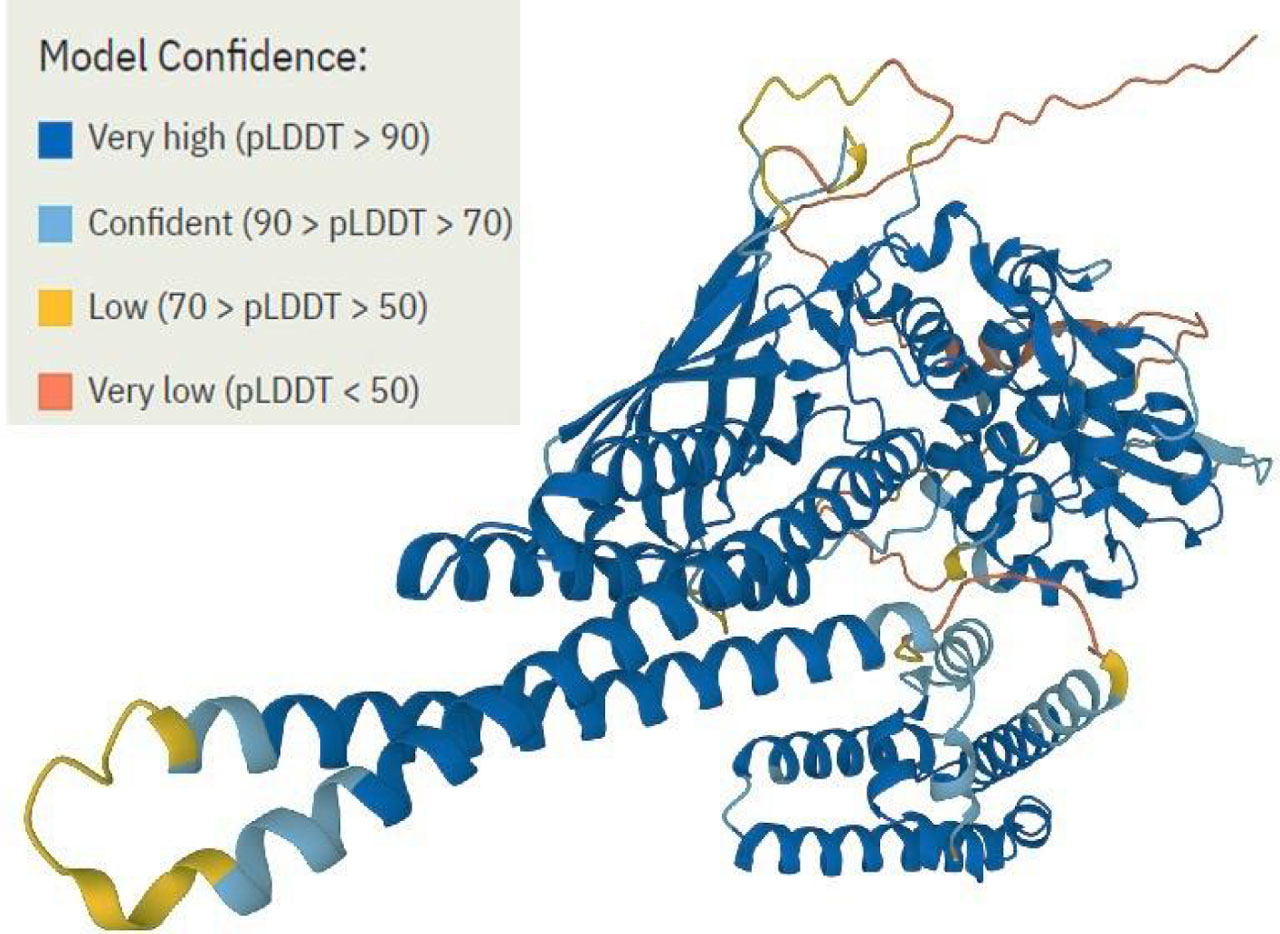
Figure 7.
3D structure prediction of STAT3 by AlphaFold. STAT, signal transducer and activator of transcription factors.
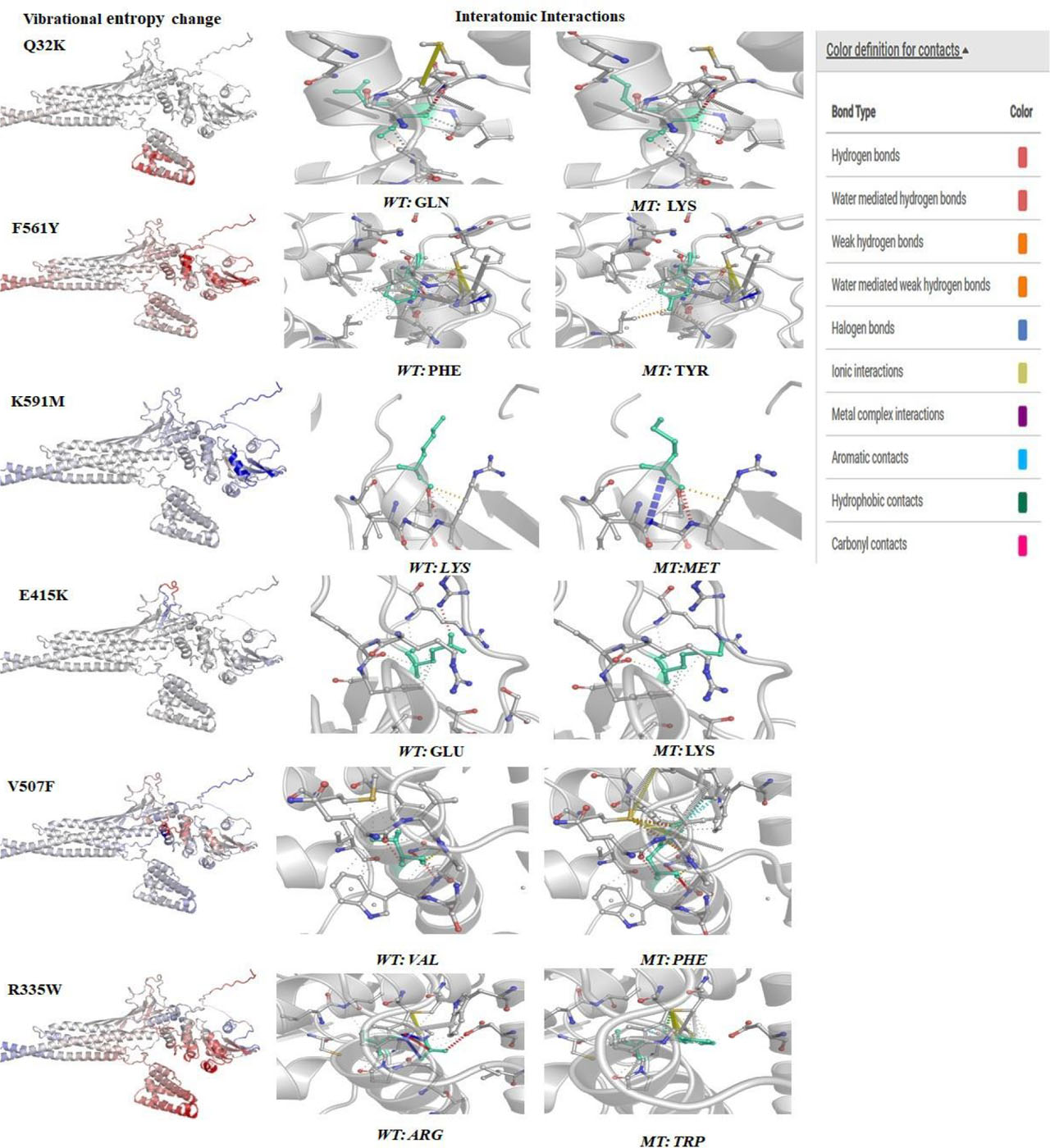
Figure 8.
Visual representation of protein flexible conformation based on the vibrational entropy difference (ΔΔS) and the interatomic interaction between wild-type and mutant structures on STAT3 structure. Amino acids colored according to the vibrational entropy change upon mutation. BLUE represents a rigidification of the structure and RED a gain in flexibility. WT and MT residues are depicted as light-green sticks alongside the surrounding residues that are involved in any form of interaction.
Table 4.
Prediction of protein stability using DynaMut server
| Amino acid change | Stability-based prediction | Δ Vibrational entropy energy | |||||
|---|---|---|---|---|---|---|---|
| ΔΔG kcal/mol | NMA-based predictions ΔΔG ENCoM | Other structure-based predictions | ΔΔSVib ENCoM (kcal/mol/K) | Flexibility | |||
| ΔΔG mCSM (kcal/mol) | DDG SDM (kcal/mol) | ΔΔG DUET (kcal/mol) | |||||
| Q32K | 0.087 (Stabilizing) | −0.009 kcal/mol (Destabilizing) | −0.453 (Destabilizing) | 0.030 (Stabilizing) | −0.019 (Destabilizing) | 0.012 | Increase of molecule flexibility |
| F561Y | −0.705 (Destabilizing) | −0.089 (Destabilizing) | −0.673 (Destabilizing) | −1.030 (Destabilizing) | −0.560 (Destabilizing) | 0.111 | Increase of molecule flexibility |
| K591M | 0.057 (Stabilizing) | 0.016 (Destabilizing) | 0.335 (Stabilizing) | 0.130 (Stabilizing) | 0.485 (Stabilizing) | −0.019 | Decrease of molecule flexibility |
| E415K | 0.107 (Stabilizing) | 0.023 (Destabilizing) | −0.461 (Destabilizing) | −0.150 (Destabilizing) | −0.062 (Destabilizing) | −0.029 | Decrease of molecule flexibility |
| V507F | 0.627 (Stabilizing) | 0.195 (Destabilizing) | −1.244 (Destabilizing) | −1.190 (Destabilizing) | 1.458 (Destabilizing) | −0.244 | Decrease of molecule flexibility |
| R335W | 0.050 (Stabilizing) | −0.172 (Destabilizing) | −0.198 (Destabilizing) | −0.010 (Destabilizing) | −0.447 (Destabilizing) | 0.215 | Increase of molecule flexibility |
[i] ENCoM, elastic network contact model; NMA, normal mode analysis.