
TABLE 1.
Characteristics of respondents of the questionnaire
| N | % | |
|---|---|---|
| Total | 521 | |
| Respondent | ||
| Biological mother | 421 | 81 |
| Biological father | 87 | 17 |
| Grandparent | 5 | 0.96 |
| Foster parent | 4 | 0.77 |
| Step parent | 1 | 0.2 |
| Other | 1 | 0.2 |
| Child | ||
| Age [mean (SD)] (years) | 9.92 (4.17) | |
| Male | 431 | 83 |
| Female | 90 | 17 |
| Diagnosis | ||
| Autism | 272 | 52.60 |
| High functioning autism | 128 | 24.70 |
| PDD-NOS | 76 | 14.70 |
| Asperger syndrome | 36 | 7 |
| Other | 7 | 1.40 |
| CDD | 2 | 0.40 |
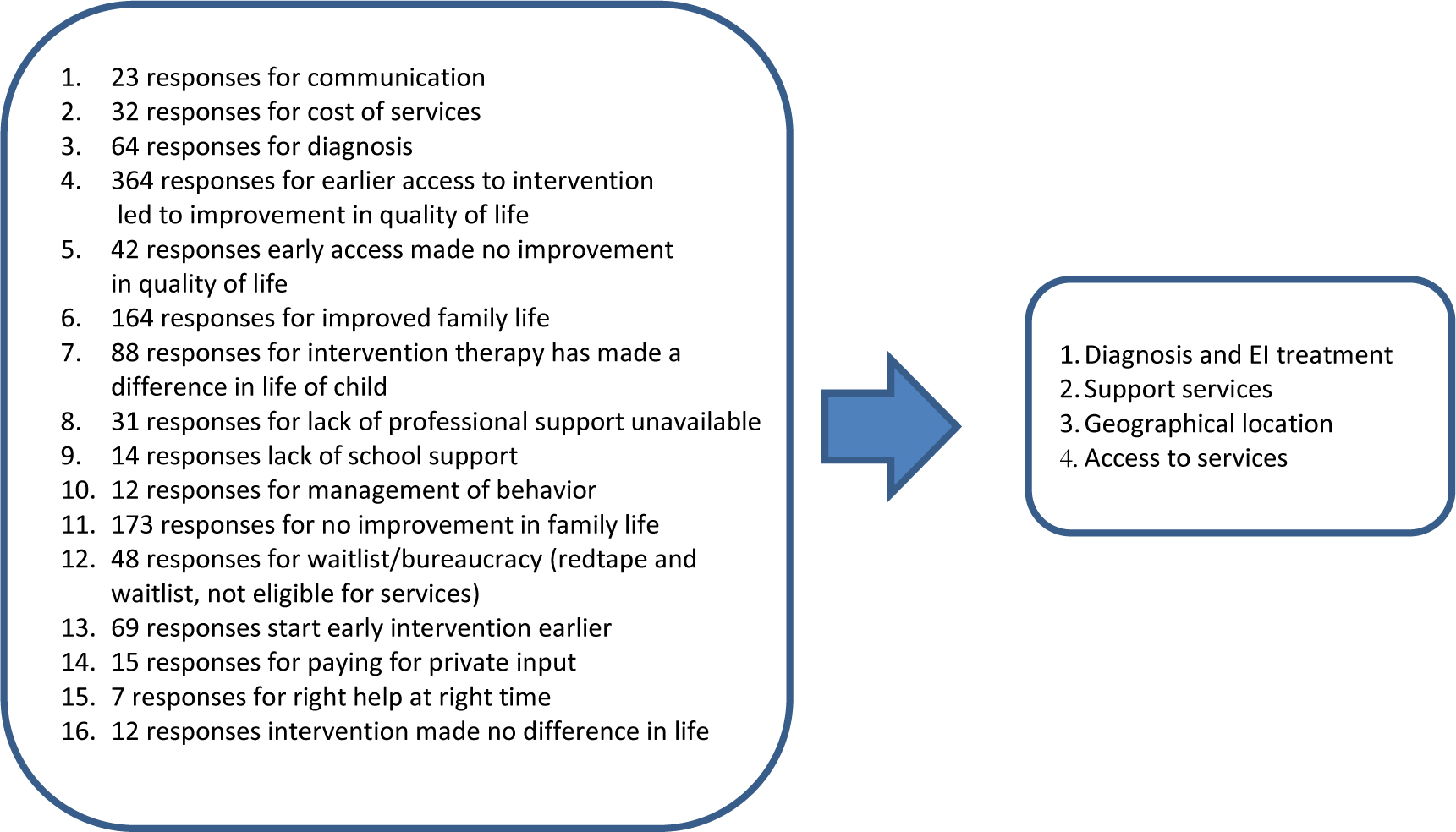
FIGURE 1.
Emerging subthemes and subsequent overarching themes
TABLE 2.
Frequency responses for Likert scale components of questions