Have a personal or library account? Click to login
Gut Microbial Compositions in Four Age Groups of Tibetan Minipigs Cover

Gut Microbial Compositions in Four Age Groups of Tibetan Minipigs

Open Access
|Sep 2018

Figures & Tables

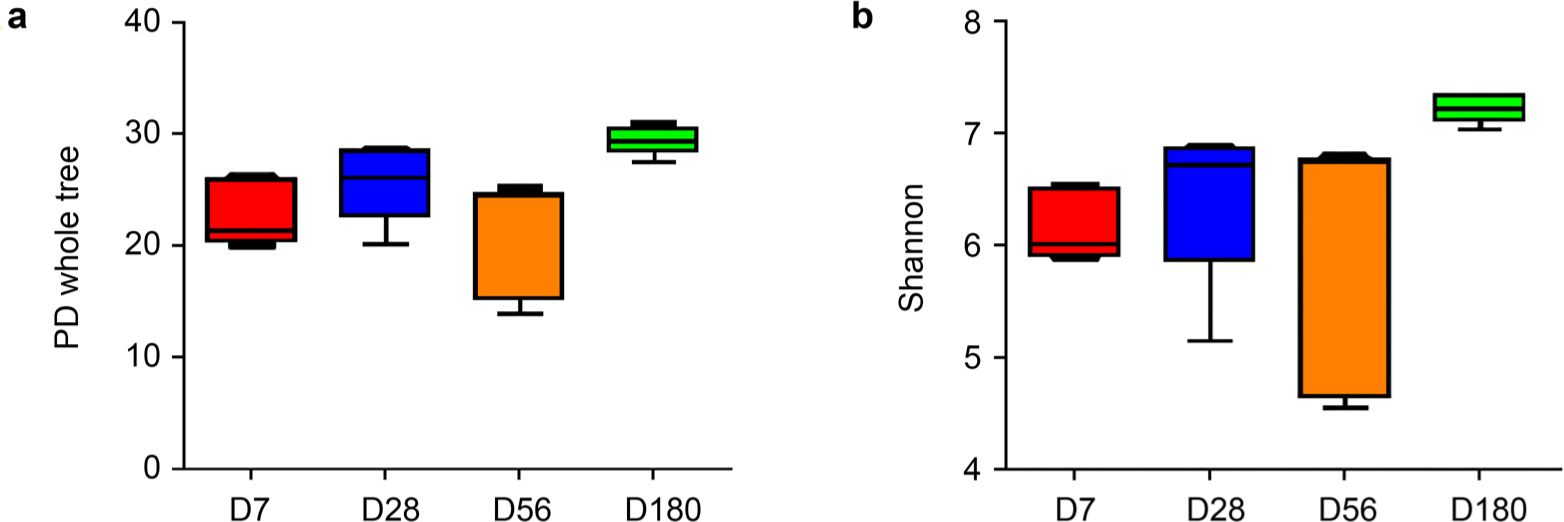
Fig. 1.

Alpha diversity comparisons among four age strata. Results of (a) the PD whole tree index and (b) the Shannon index evaluated by Kruskal-Wallis pairwise comparisons.
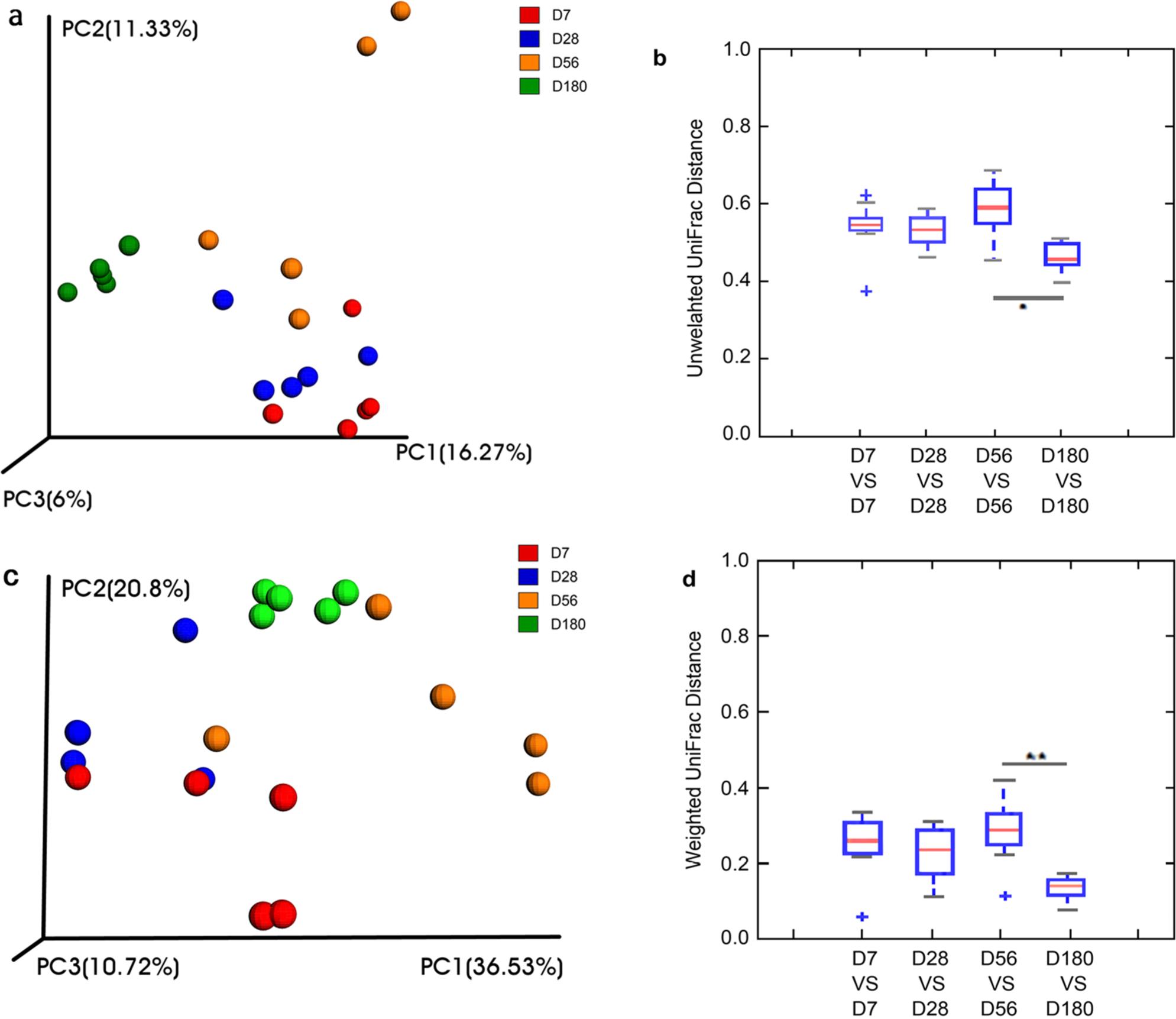

Fig. 2.

PCoA of unweighted and weighted UniFrac distances.(a) PCoA results – calculated with unweighted UniFrac distances – depicting the diversity of gut microbiota among four age groups. (b) Comparisons of unweighted UniFrac distances within each age stratum. (c) PCoA findings – calculated with weighted UniFrac distances – showing the diversity of gut microbiota among 4 age strata. (d) Comparisons of weighted UniFrac distances within each age stratum (*p < 0.05, ** p < 0.01, Kruskal-Wallis pairwise comparisons).
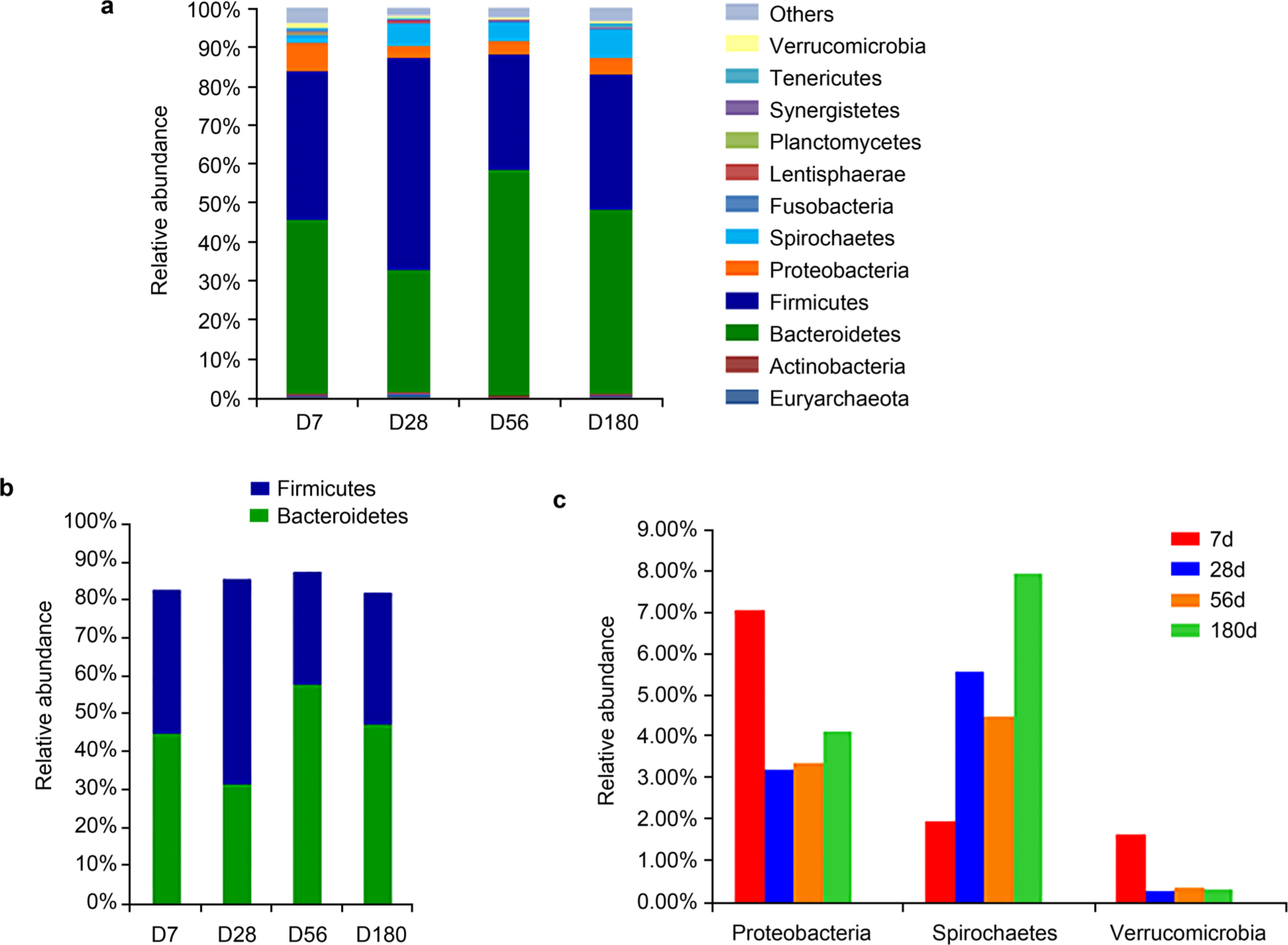

Fig. 3.

The average values of relative abundances of phyla within the five animals at each age group (a) phyla. (b) Firmicutes and Bacteroidetes. (c) Proteobacteria, Spirochaetes, and Verrucomicrobia.
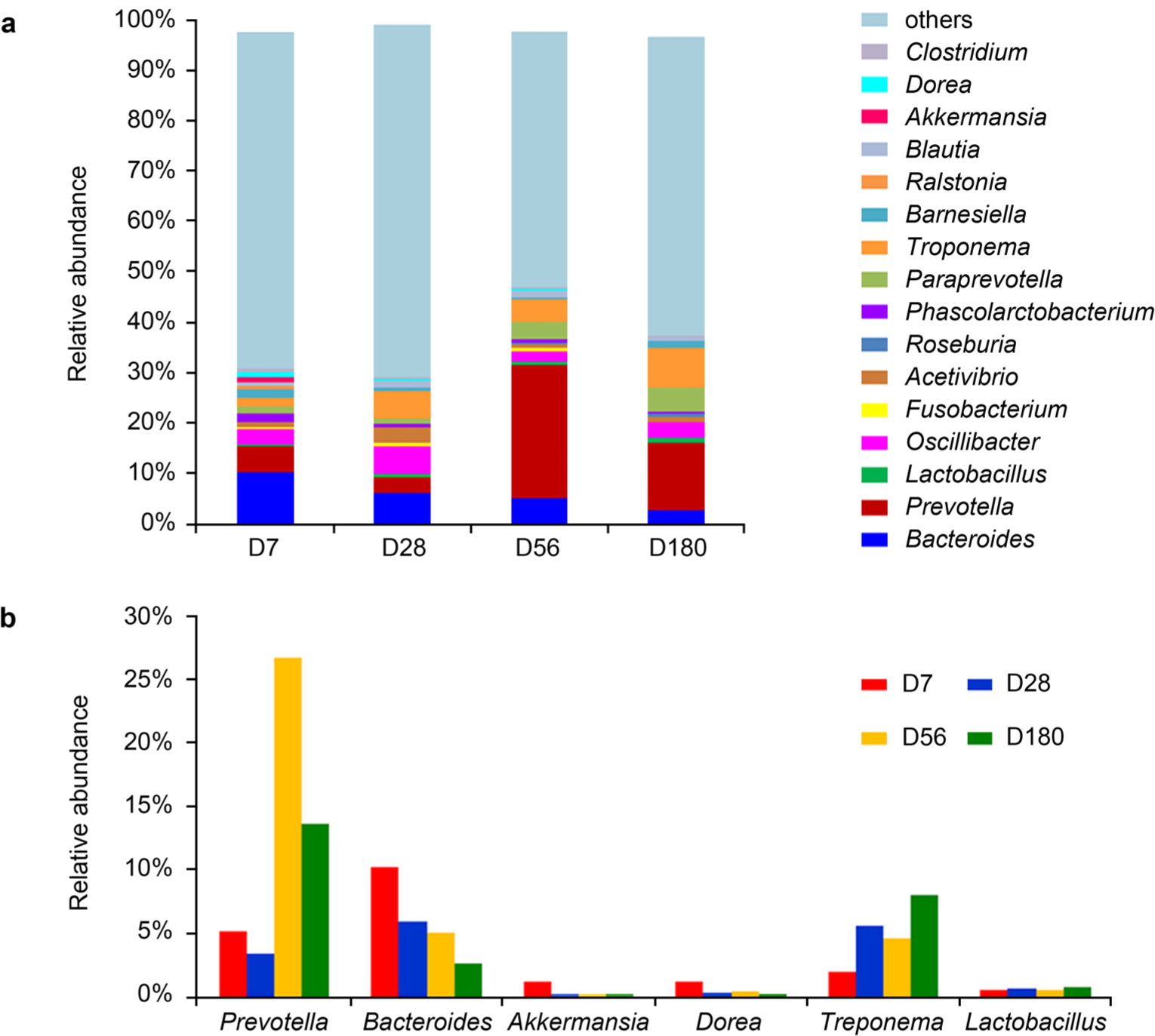

Fig. 4.

The average values of relative abundances of genus within the five animals at each age group (a) genus. (b) Prevotella, Bacteroides, Akkermansia, Dorea, Lactobacillus, and Treponema.
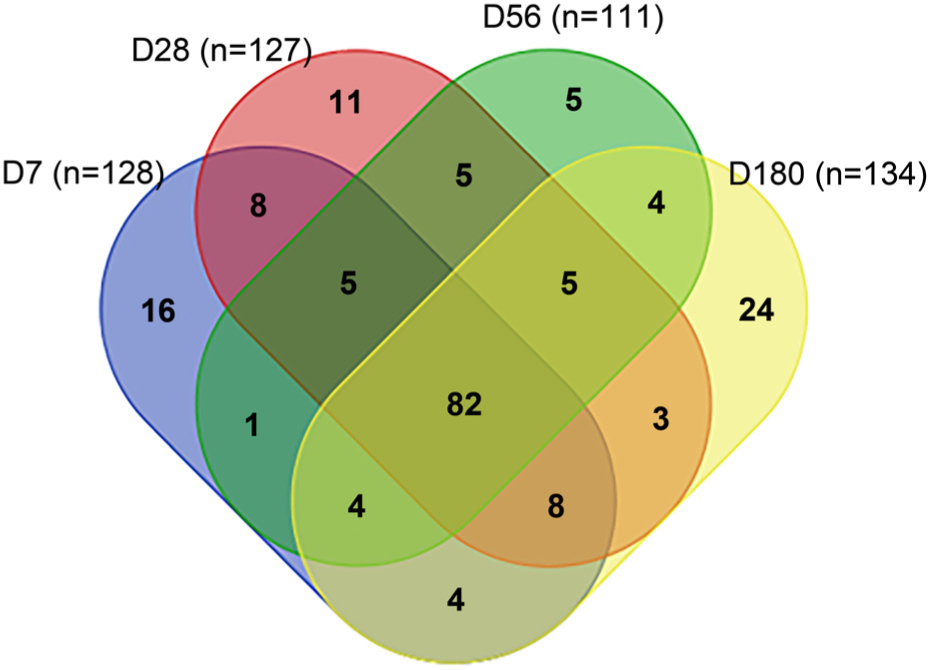

Fig. 5.

Venn diagram of genera by age group.
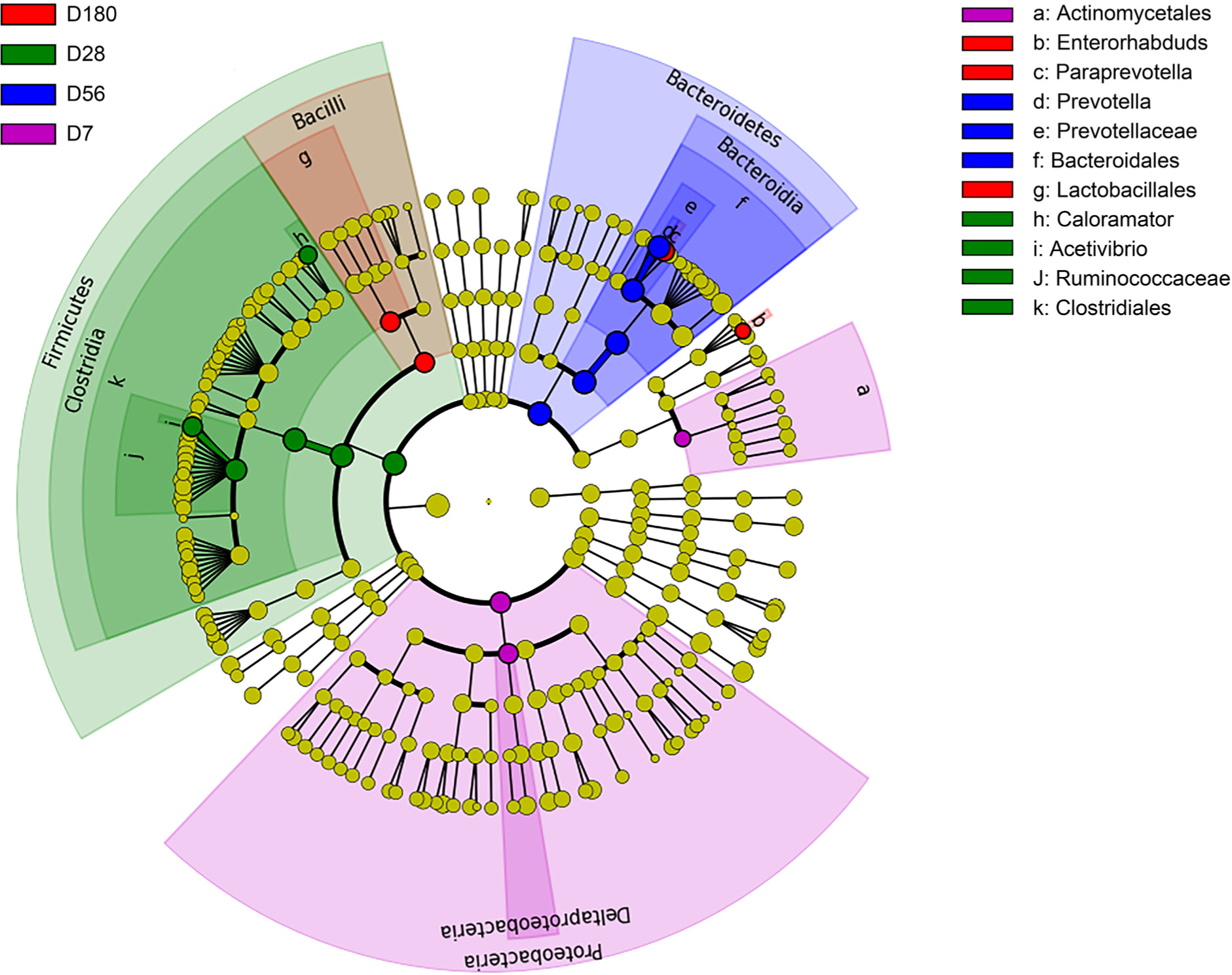

Fig. 6.

LEfSe results depicted as a cladogram of bacterial biomarkers in four age strata (linear discriminant analysis [LDA] = 4, p < 0.05).
DOI: https://doi.org/10.21307/pjm-2018-038 | Journal eISSN: 2544-4646 | Journal ISSN: 1733-1331
Language: English
Page range: 383 - 388
Submitted on: Mar 13, 2018
Accepted on: May 10, 2018
Published on: Sep 4, 2018
Published by: Polish Society of Microbiologists
In partnership with: Paradigm Publishing Services
Publication frequency: 4 issues per year

© 2018 XIA JIANG, BANGZHU CHEN, DONGSHU GU, ZUHUA RONG, XIAOHUA SU, MIN YUE, HONGWEI ZHOU, WEIWANG GU, published by Polish Society of Microbiologists
This work is licensed under the Creative Commons Attribution-NonCommercial-NoDerivatives 4.0 License.