
Table 1.
Clinical symptoms during the course of disease
| Age | Symptoms and signs |
|---|---|
| Infancy | “Uncontrolled” eyes (nystagmus) |
| Head and limbs movement | |
| Trunk twisting | |
| “Stiffness” | |
| Fatigability of lower limbs | |
| Childhood (early) | Sudden “absence states” |
| Balance disturbances | |
| Collapses | |
| Increased muscles strains | |
| The attacks resulted from even little effort | |
| Tension of muscles decreased in limbs | |
| The psychomotor development delayed | |
| Delayed walking, at the age of 2,5 yrs | |
| Delayed speech, at the age of 3 yrs | |
| The first generalized epileptic seizure at the age of 4 yrs | |
| The second and the last epileptic seizure at the age of 6 yrs | |
| Chlidhood | Sudden involuntary movements with collapses |
| Optic-motor coordination disturbances | |
| Adolescence | Paroxysmal speech difficulties (“aphasia”) with pyramidal symptoms in right limbs and involuntary movements of lower limbs |
| Gait disturbances lasting for several hours leading to falls, escalated by exertion | |
| Paroxysmal incidents during awaking and falling asleep (myoclonic jerks) | |
| Headaches | |
| Writing disturbances | |
| Abrupt body stiffness | |
| Tightened eyes followed by head and trunk dropping on a desk | |
| Incidents of hypoglycemia connected with symptoms | |
| Adulthood | Tremor of upper limbs |
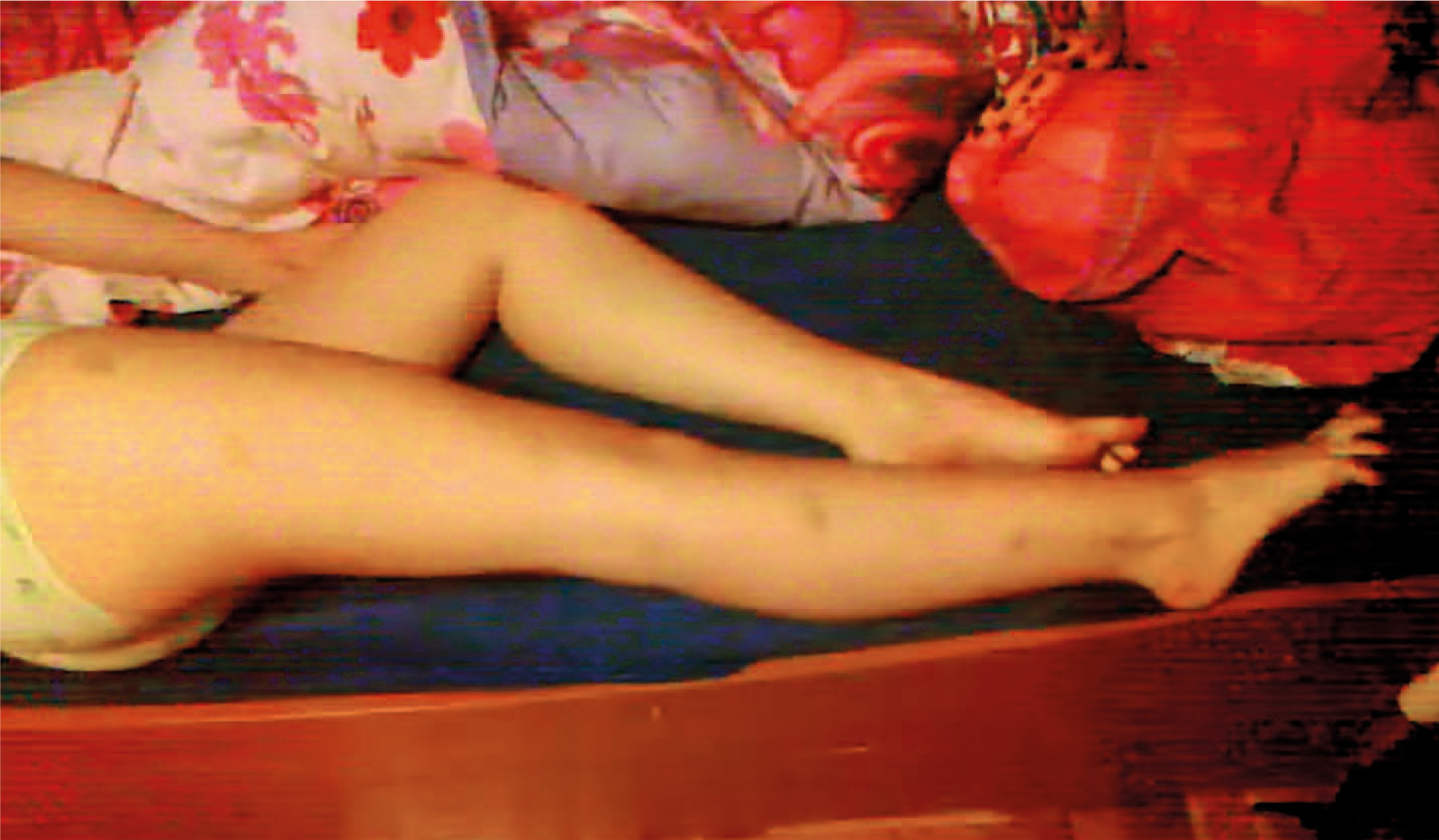
Figure 1.
Dystonic postures of upper and lower limbs during involuntary movements.