
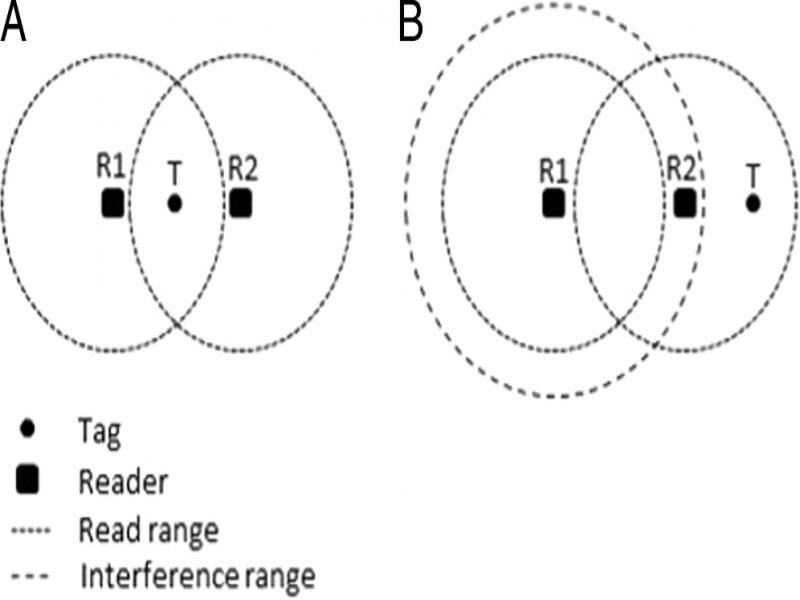
Figure 1:
(a) The readers-to-tag collision: the collision happens when R1 and R2 interrogate T simultaneously. (b) The Reader-to-reader collision: R1 interference range affects R2 reading range and hence R2 cannot read T.
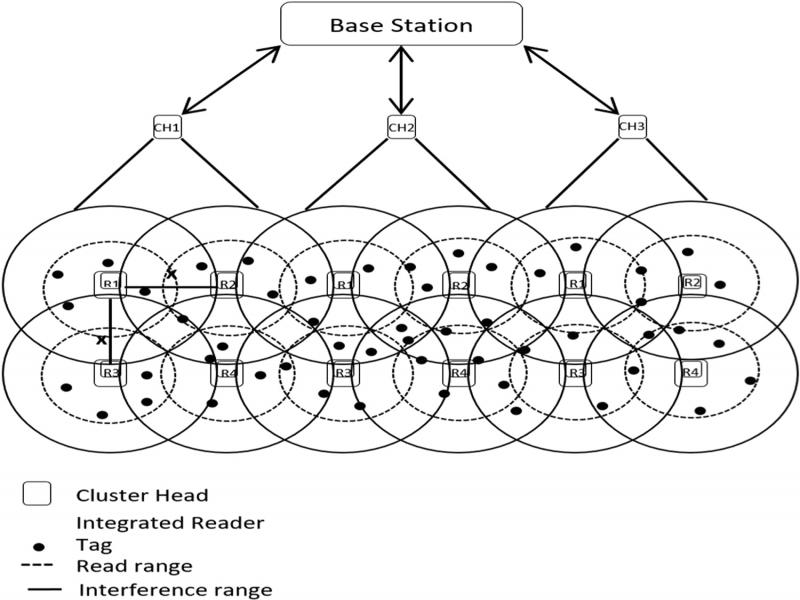
Figure 2:
Deployed RFID architecture of the stocktaking use case.
Table 1.
Set of the Protocol’s messages.
| Message | Semantic | Response |
|---|---|---|
| scnState | Inform the neighbors of start of scan | Ok |
| snsState | Inform the neighbors of end of scan | Ok |
| remScan | Ask the neighbor for his list of remaining scans | scanRep |
| continue_scan | Ask the neighbor to continue its regular scan | Ok |
| continue_scan_newSeq | Send the neighbor it’s updated scan sequence and ask him to continue the next scan | Ok |
| start_double_scan | Ask the neighbor to start synchronized double scan | Ok |
| continue_double_scan | Ask the neighbor to continue next synchronized double scan | Ok |
| start_triple_scan_newSeq_sesMem | Send the neighbor it’s updated scan sequence and the other neighbor’s address, and ask him to start the synchronized triple scan | Ok |
| start_triple_scan_sesMem | Send the neighbor the other neighbor’s address and ask him to start the synchronized triple scan | Ok |
| continue_triple_scan | Ask the neighbor to continue next synchronized triple scan | Ok |
| EOCS | Inform the neighbors of end of current scan | Ok |
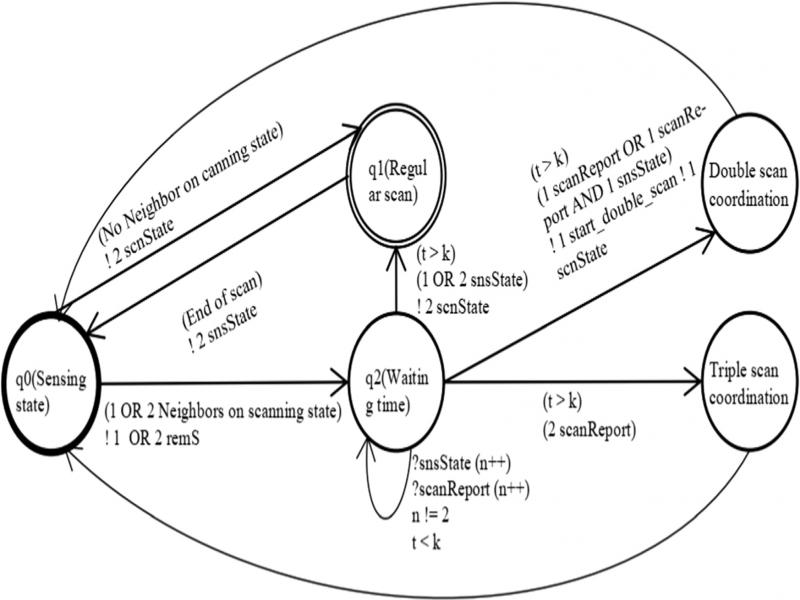
Figure 3:
General automata for the proposed protocol.
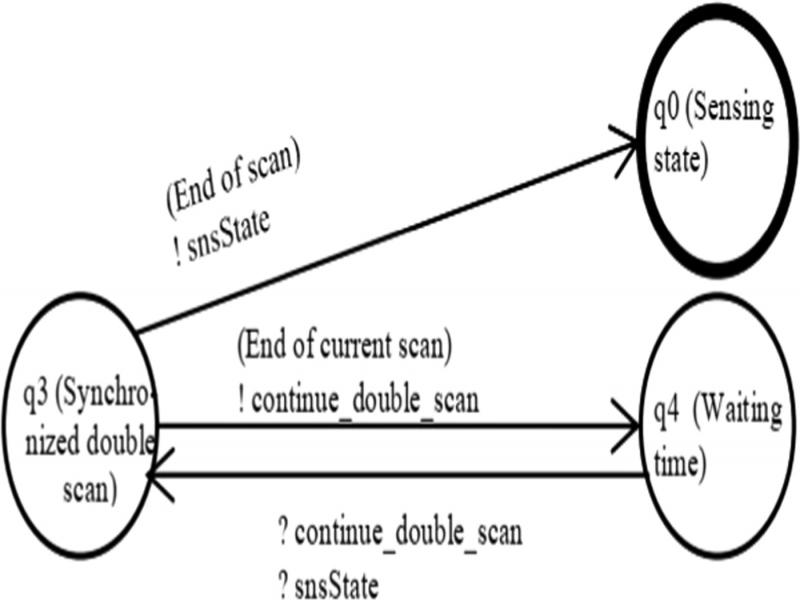
Figure 4:
Double Scan Coordination.
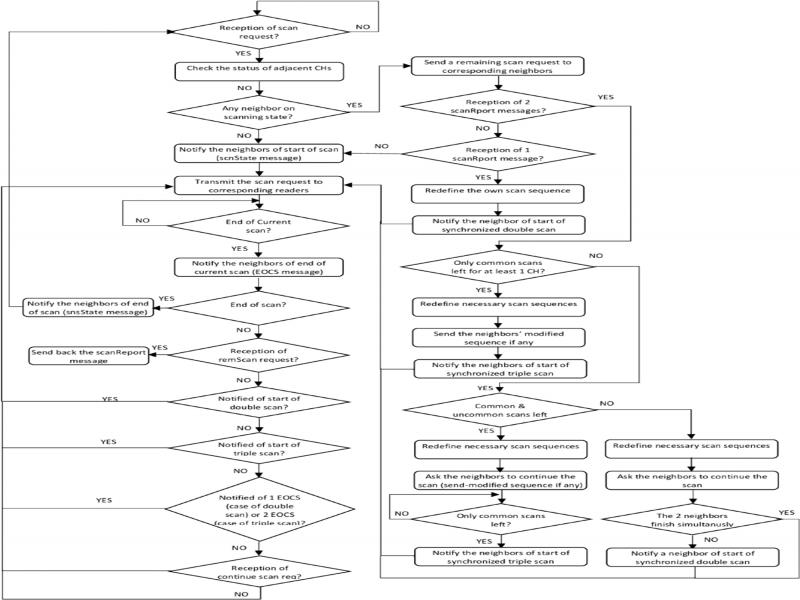
Figure 5:
Flowchart of the proposed protocol.
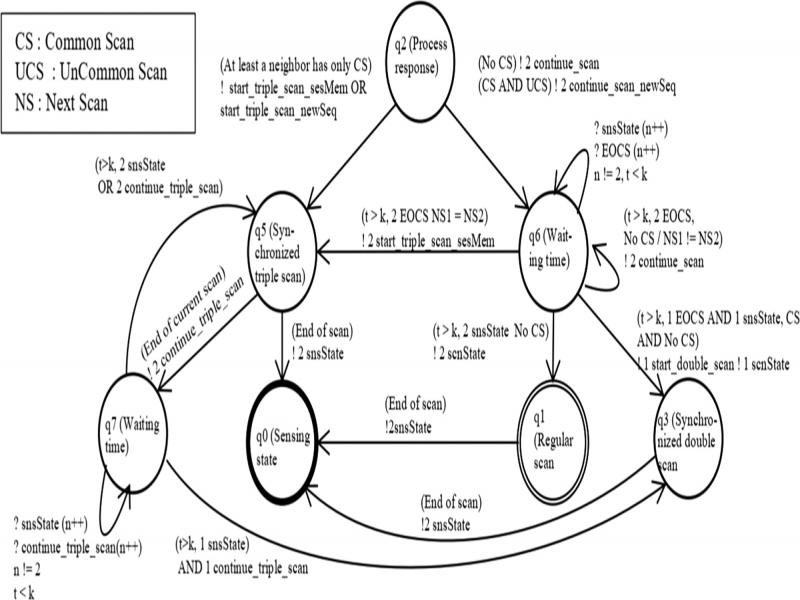
Figure 6:
Triple scan coordination.
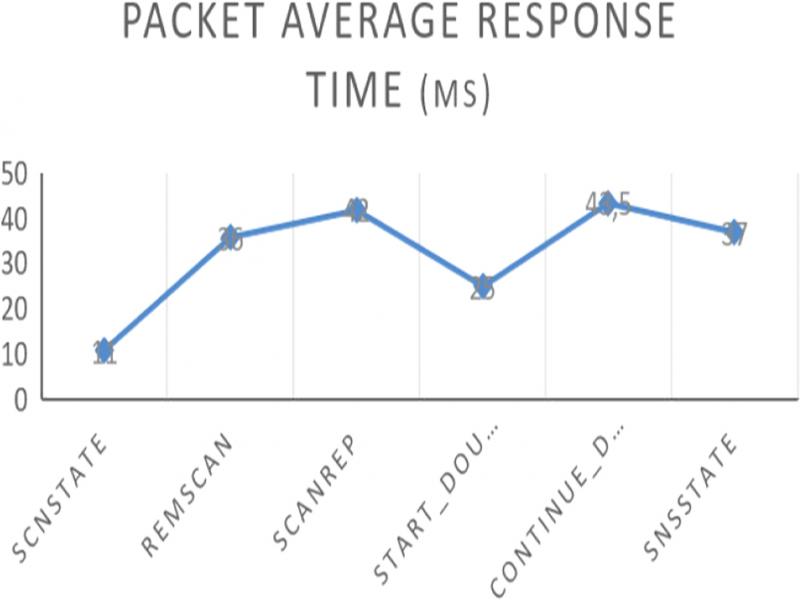
Figure 7:
Packet average response time in milliseconds.
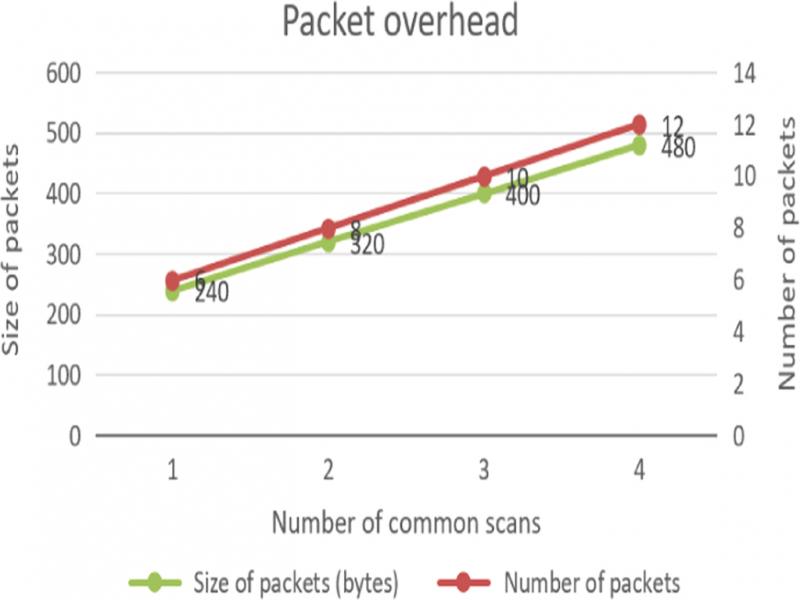
Figure 8:
Packet overhead.
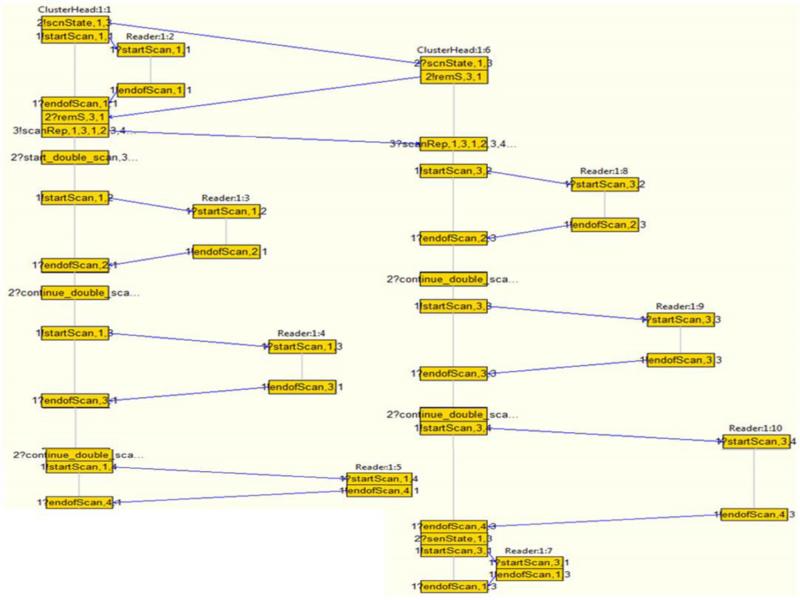
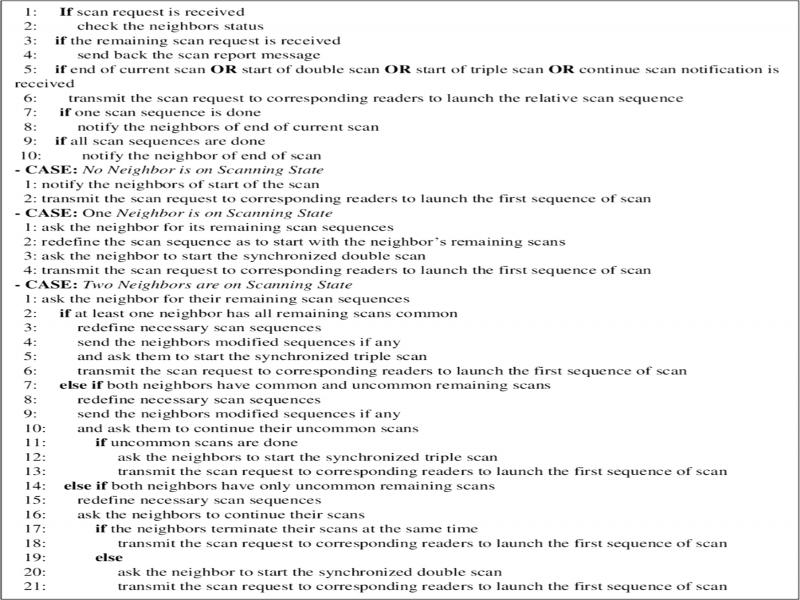
Figure 9:
Message sequence chart of double scan coordination.