
Table 1.
Notations.
| Notation | Definition |
|---|---|
| Rc | Chip rate |
| Tc | Chip duration |
| Rs | Symbol rate |
| Ts | Symbol duration |
| Rb | Data rate |
| SF | Spreading factor |
| CR | Coding rate |
| tai | Time on air of ith node |
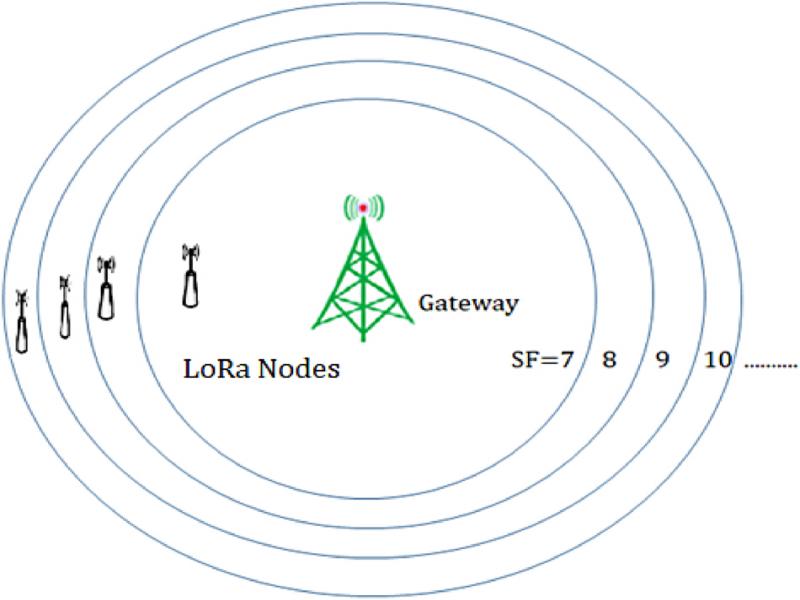
Figure 1:
Model of LoRaWAN.
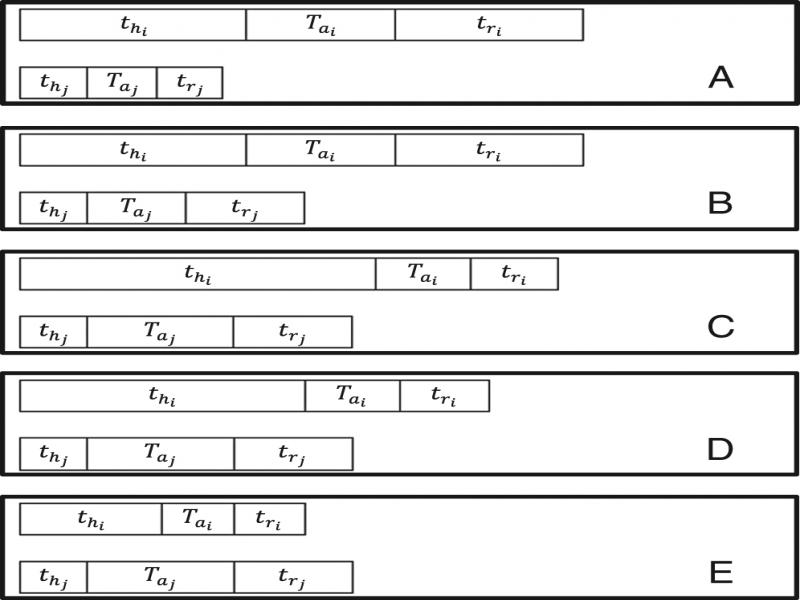
Figure 2:
Illustration of collision time for nodes as a function of their harvesting time, time on air and reception time.
| Algorithm PRIORLoRa |
| 1. Input: |
| 2. – number of devices covered by a gateway |
| : denotes number of SF of value s, |
| SENS: denotes sensitivity of the devices, |
| RSSI – nodes power levels. |
| PRSSI – priority nodes power levels. |
| 3. Output: |
| 4. function PRIORLoRa-SF . |
| 5. of end devices. |
| 6. for l = 1 to length (SFs) |
| 7. ) |
| 8. |
| 9. |
| 10. else |
| 11. r = c |
| 12. End if |
| 13. for k = 0 to r |
| 14. |
| 15. |
| 16. |
| 17. End for |
| 18. End for |
| 19. return . |
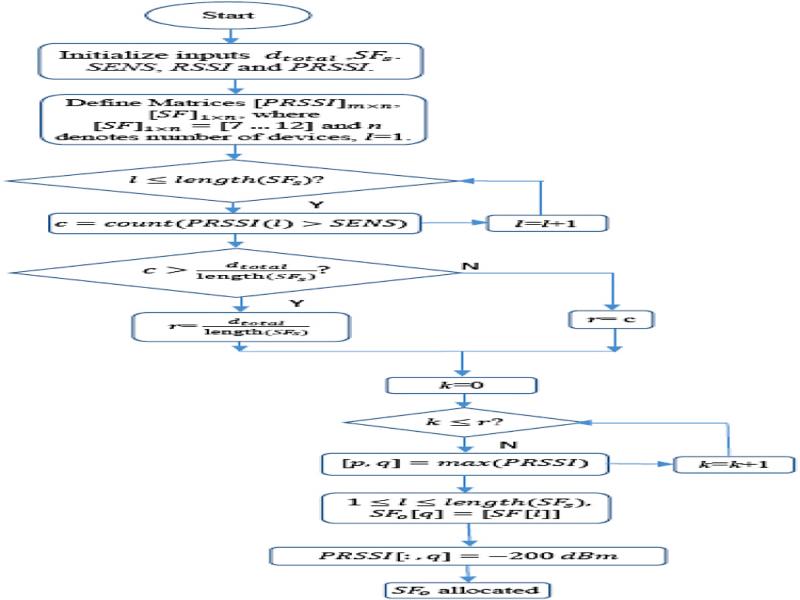
Figure 3:
Flowchart of PRIORLoRa algorithm.
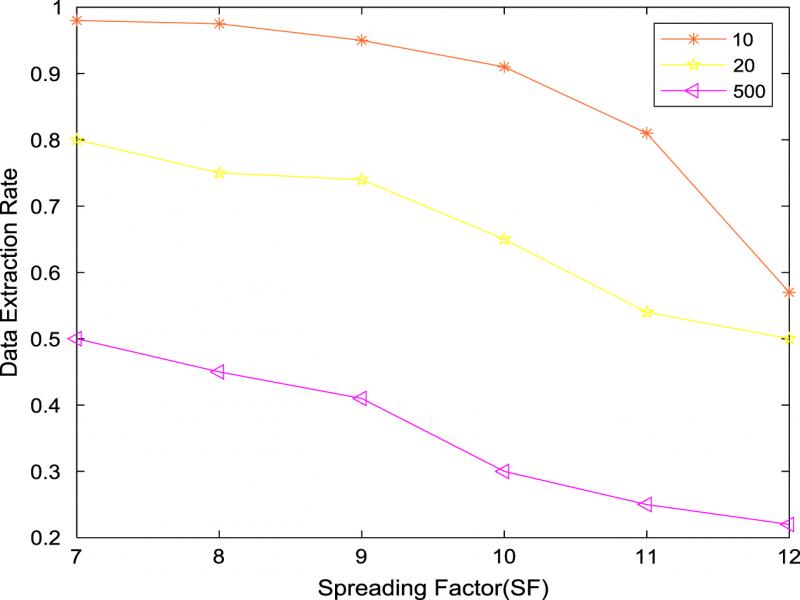
Figure 4:
Data extraction rate vs spreading factor (SF) for three different densities and square km.
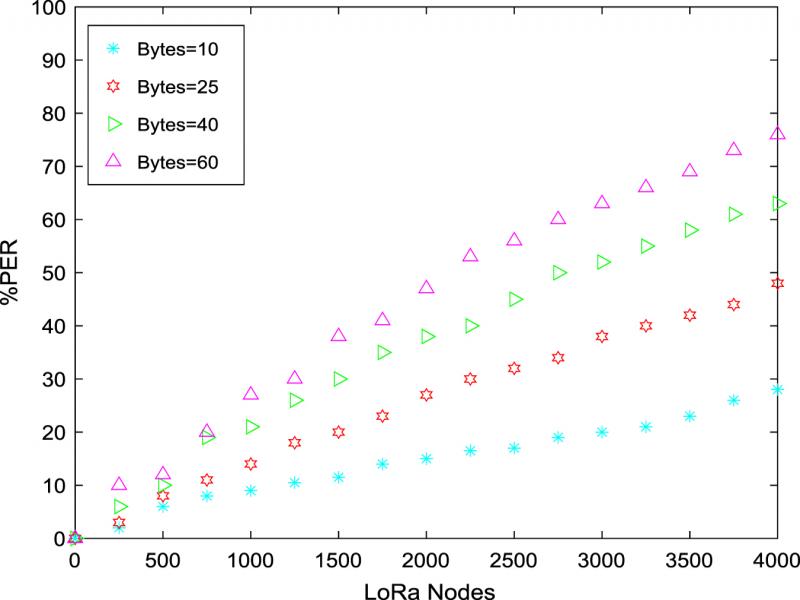
Figure 5:
The rate of increase of packet error as a function of increase in number of LoRa nodes for constant SF = 7.
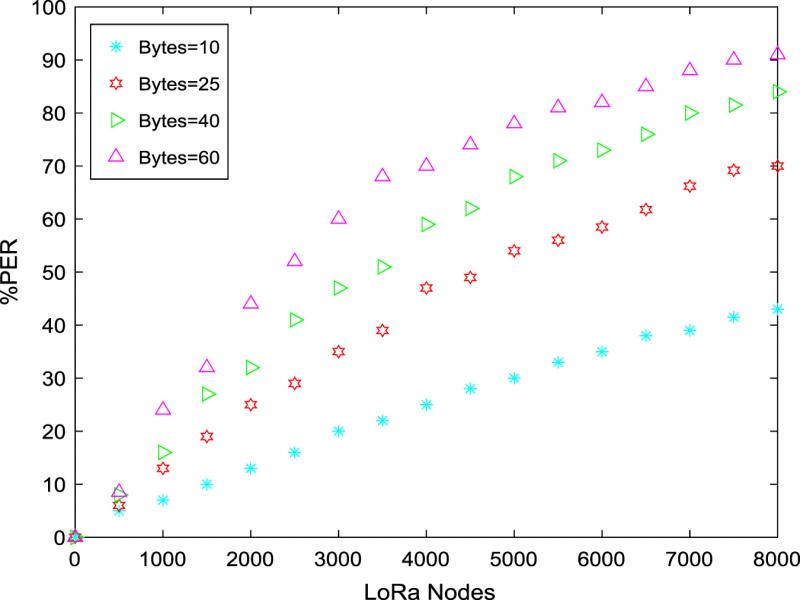
Figure 6:
The rate of increase of packet error as a function of increase in number of LoRa nodes for constant SF = 7.
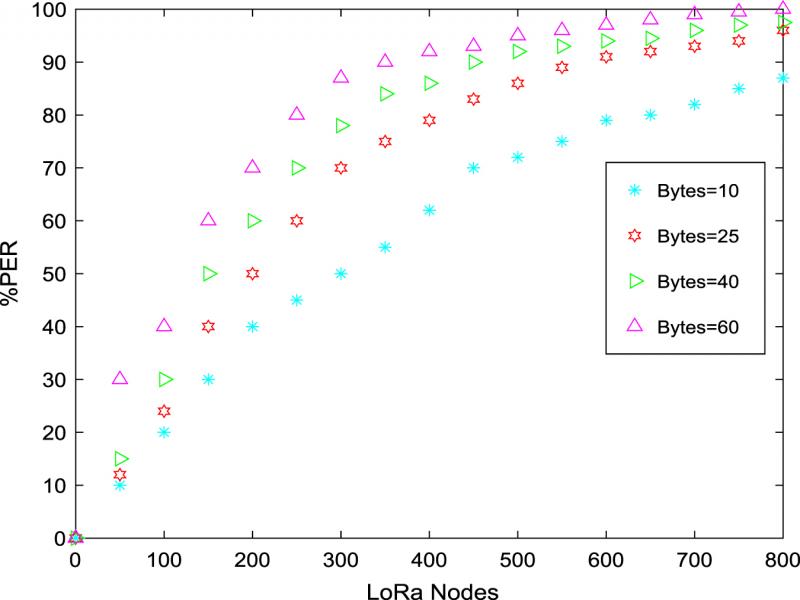
Figure 7:
The rate of increase of packet error as a function of increase in number of LoRa nodes for constant SF = 11.
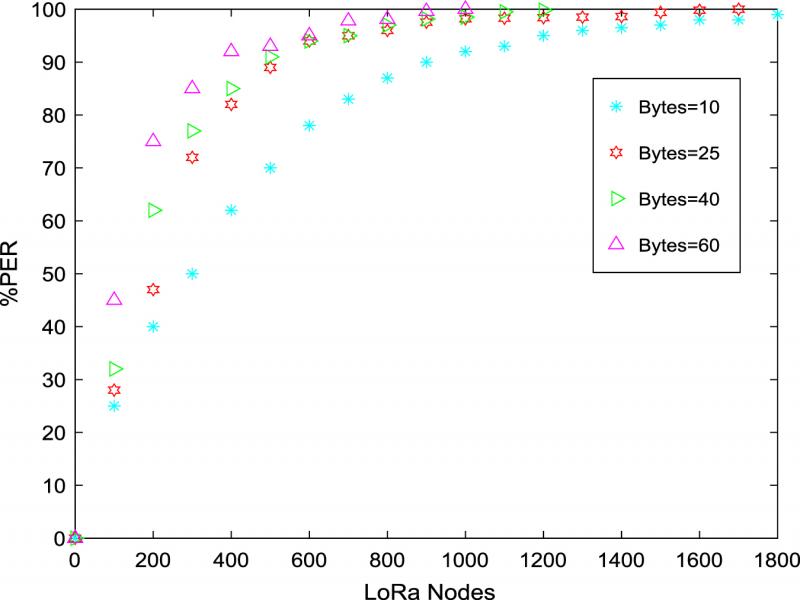
Figure 8:
The rate of increase of packet error as a function of increase in number of LoRa nodes for constant SF = 11.
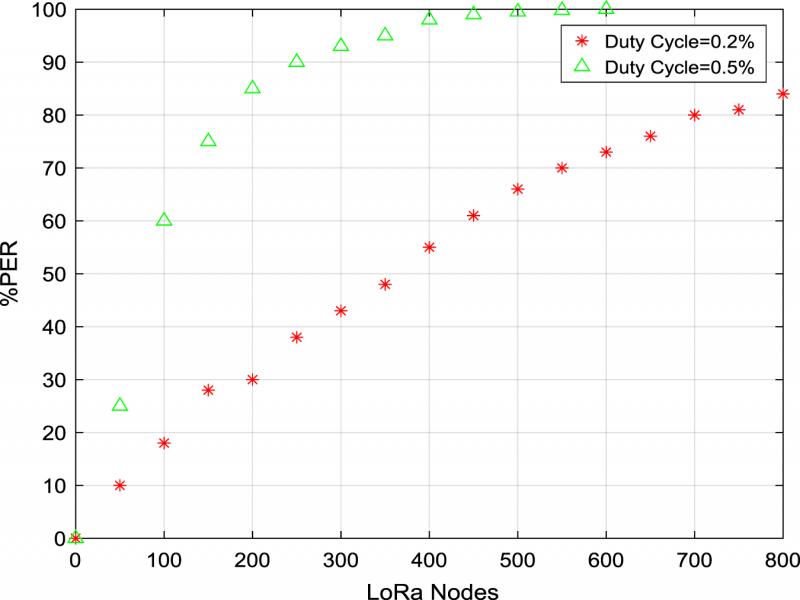
Figure 9:
The rate of increase of packet error as a function of increase in number of LoRa nodes and duty cycle for constant SF = 7.
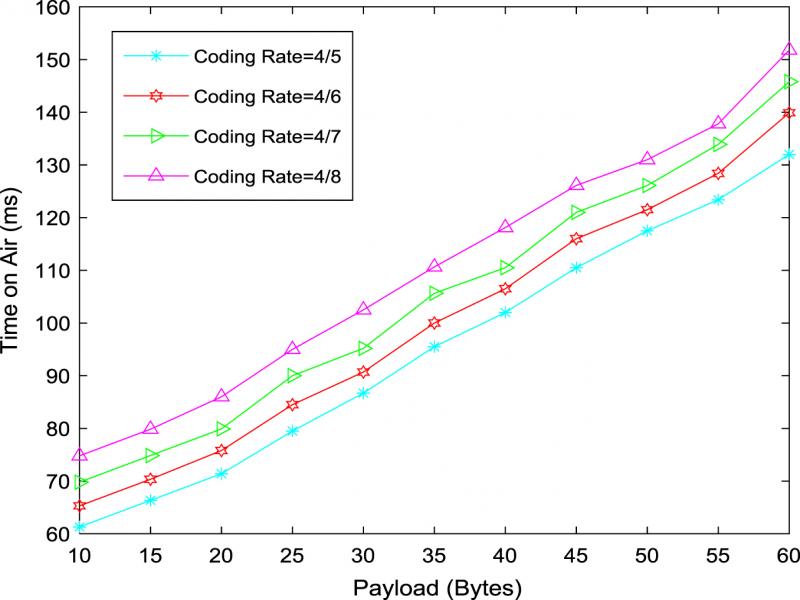
Figure 10:
Time on air (ms) as a function of payload (bytes) for different CR and constant SF = 7.
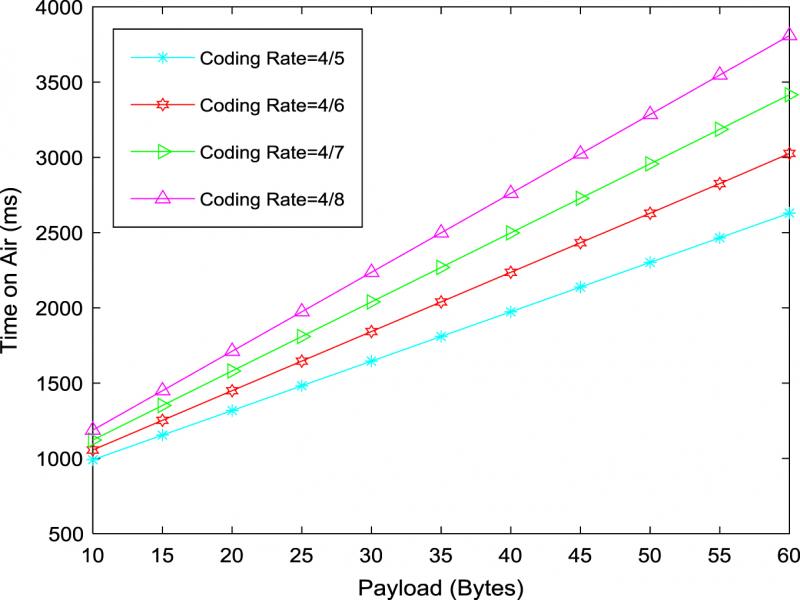
Figure 11:
Time on air (ms) as a function of payload (bytes) for different CR and constant SF =12.
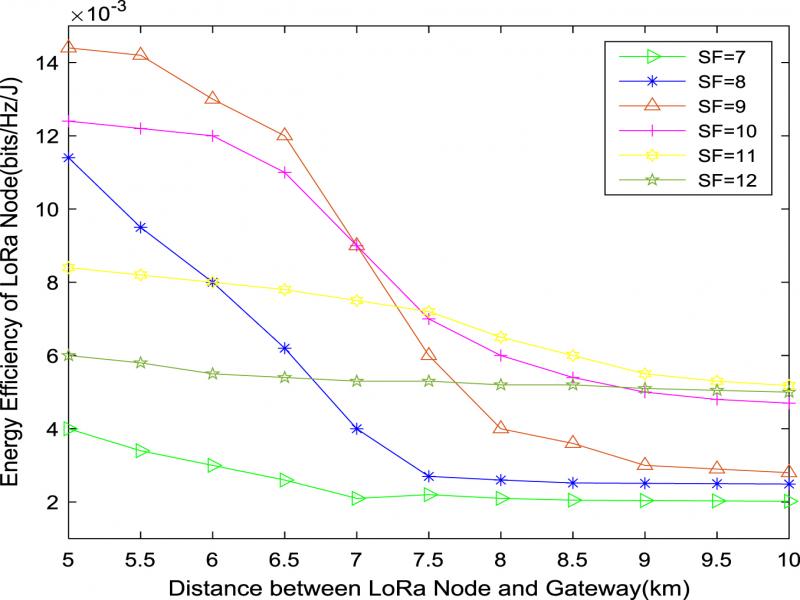
Figure 12:
Comparison of energy efficiency of LoRa node versus distance between LoRa node and gateway for different SF.
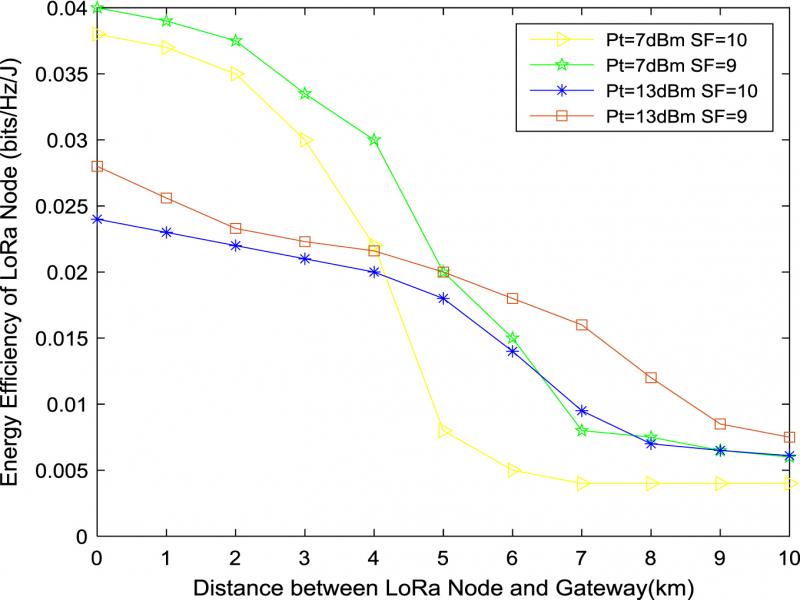
Figure 13:
Comparison of energy efficiency of LoRa node versus distance between LoRa node and gateway for SF = 9 and 10 with different transmission powers.