Have a personal or library account? Click to login
Networks and Institutionalization: A Neo-structural Approach Cover

Networks and Institutionalization: A Neo-structural Approach

By: Emmanuel Lazega  
Open Access
|Jun 2018

Figures & Tables

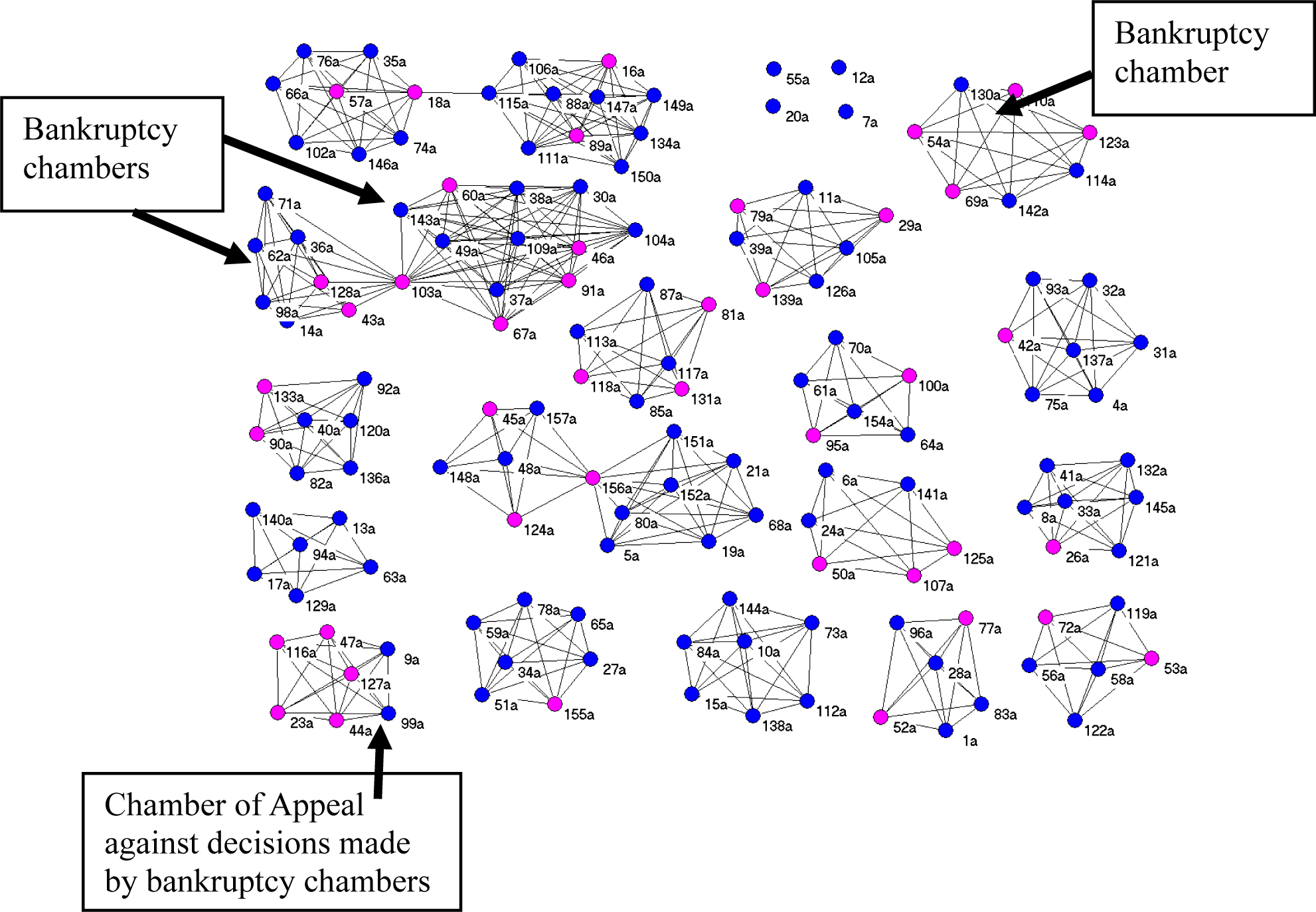
Figure 1

Status inconsistency and conflicts of interests at the Commercial Court of Paris: Composition of Chambers in 2000. Judges-bankers in pink
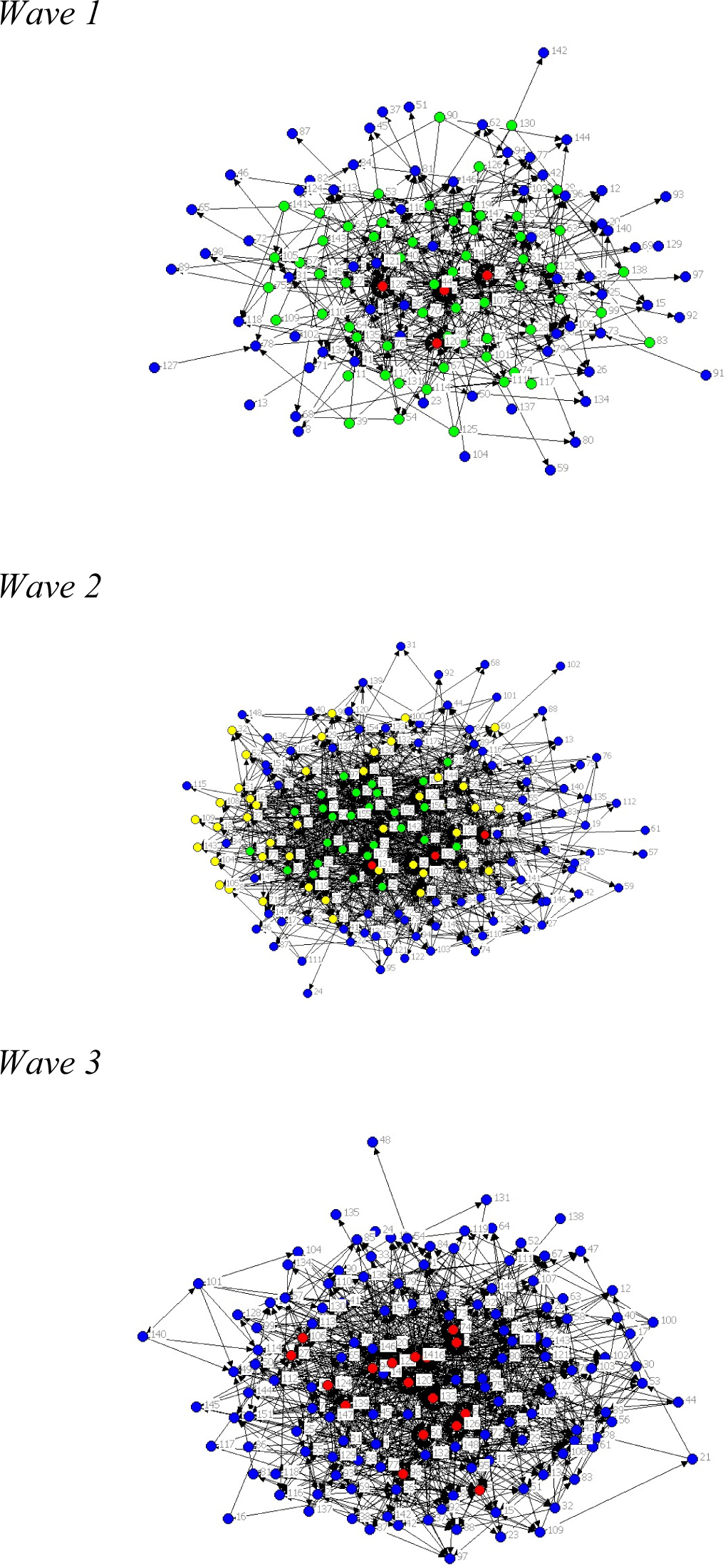

Figure 2

How do bankers exercise epistemic control in the court and dominate as multi-status oligarchs? Cyclical dynamics (centralization-decentralization-recentralization) of status in advice networks among all judges

Red: Super-central core, Green: 1st Semi-periphery, Yellow: 2nd Semi-periphery, Blue: Periphery
How do bankers exercise epistemic control in the court and dominate as multi-status oligarchs? Cyclical dynamics (centralization-decentralization-recentralization) of status in advice networks among all judges Red: Super-central core, Green: 1st Semi-periphery, Yellow: 2nd Semi-periphery, Blue: Periphery

Figure 3.1

Reading network
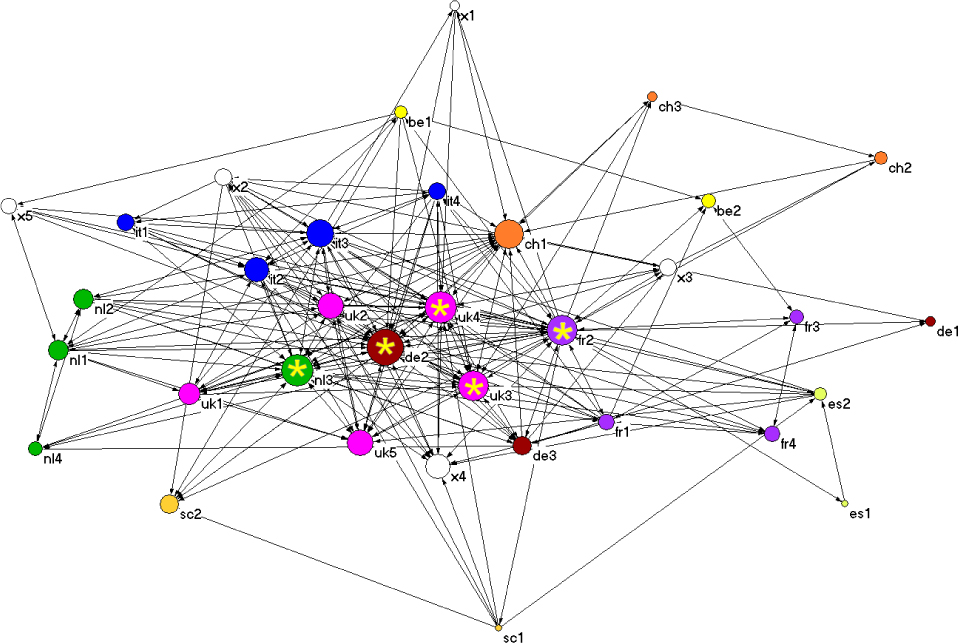
Reading network

Figure 3.2

Discussion network
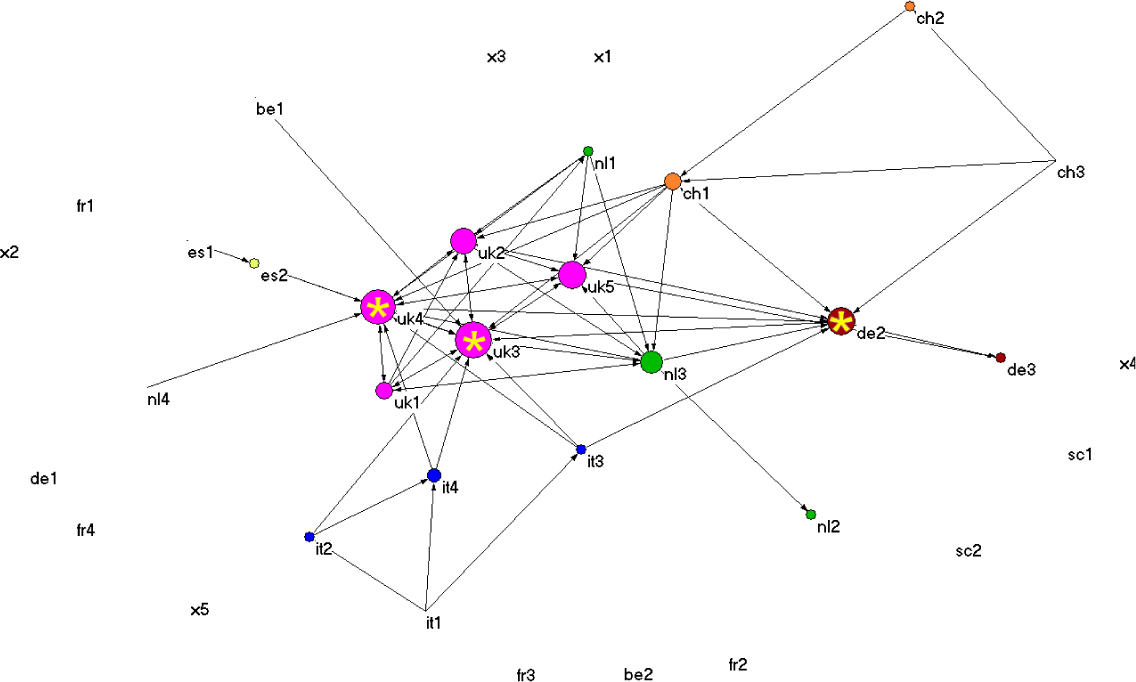
Discussion network

Figure 3.3

Reference network
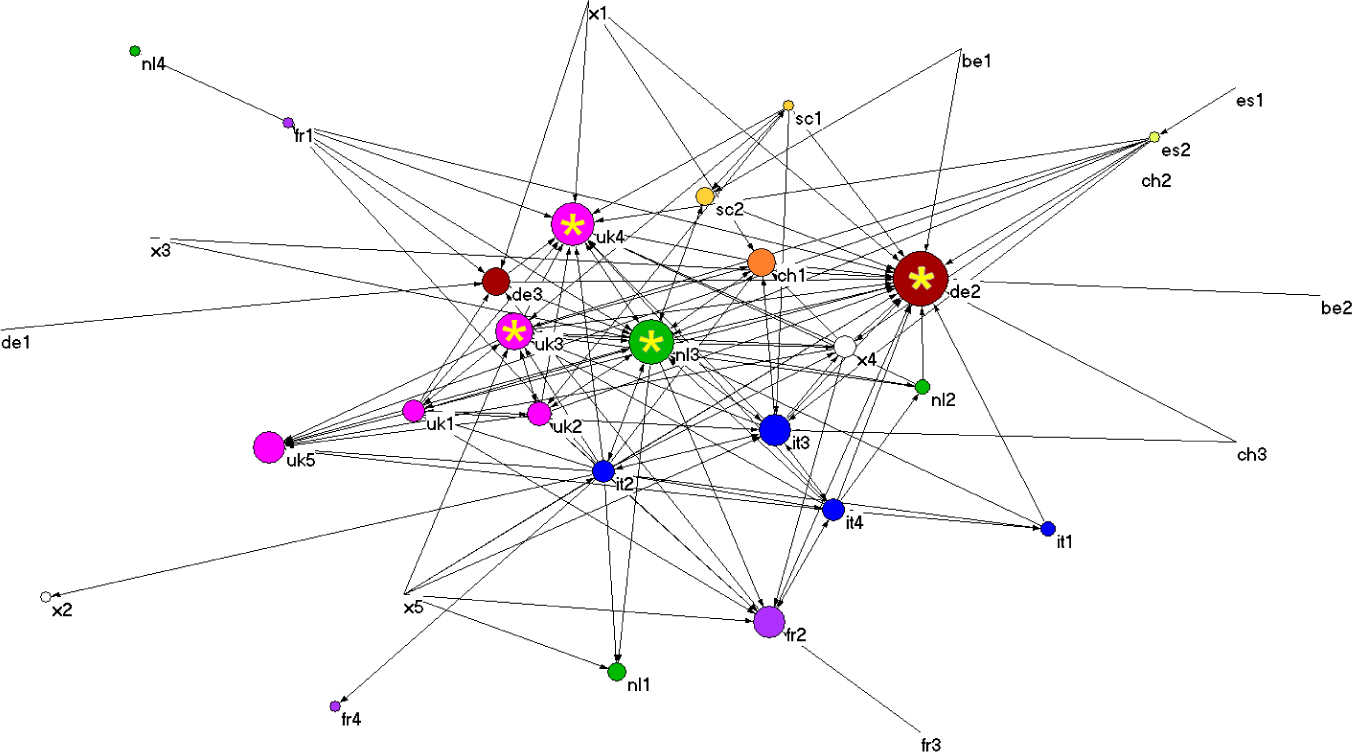
Reference network

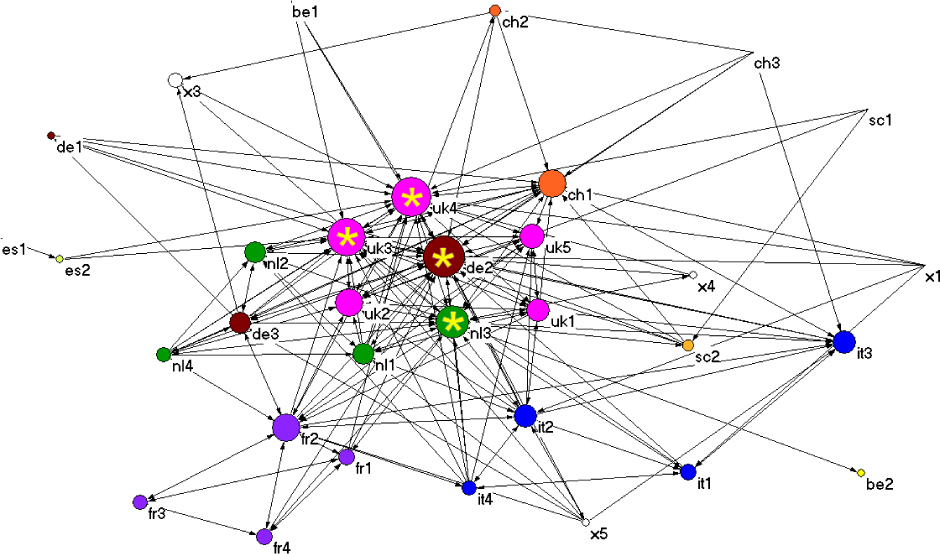
Figure 3.4

Uniform network. Judges perceived by their peers as closest to a future uniform European position (the future ‘European Compromise’, if any)
*: Super-central judges. Source: Lazega (2012)
Uniform network. Judges perceived by their peers as closest to a future uniform European position (the future ‘European Compromise’, if any) *: Super-central judges. Source: Lazega (2012)
DOI: https://doi.org/10.21307/connections-2017-001 | Journal eISSN: 2816-4245 | Journal ISSN: 0226-1766
Language: English
Page range: 7 - 22
Published on: Jun 4, 2018
Published by: International Network for Social Network Analysis (INSNA)
In partnership with: Paradigm Publishing Services
Publication frequency: 1 issue per year

© 2018 Emmanuel Lazega, published by International Network for Social Network Analysis (INSNA)
This work is licensed under the Creative Commons Attribution 4.0 License.