
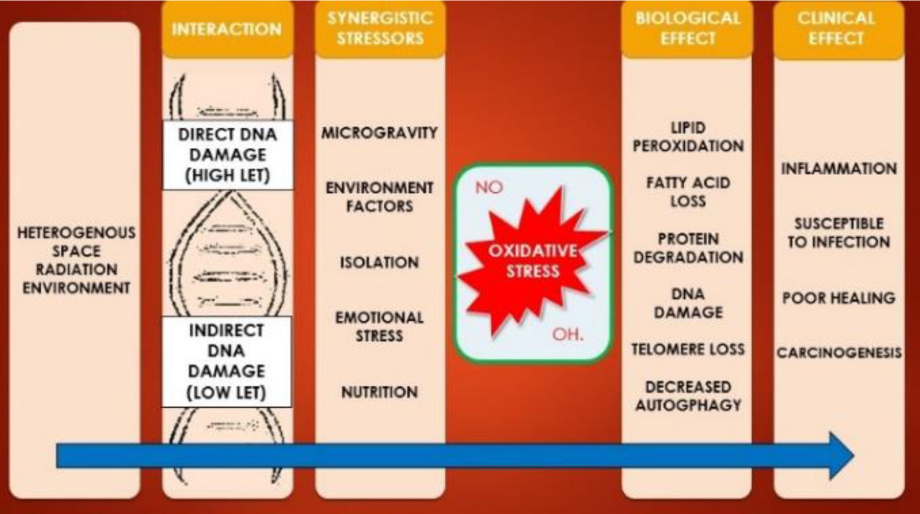
Figure 1
Increased cellular oxidative stress during irradiation in the cosmic radiation environment.
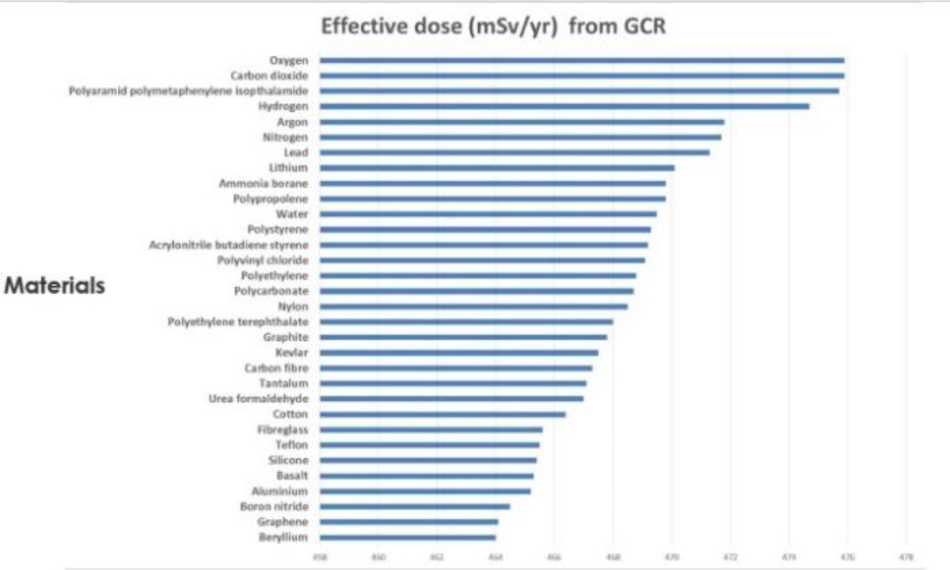
Figure 2
Effective dose received during Mars transit with varying materials at natural densities.
Table 1
Comparison of dose received behind liquid fuel tank and unshielded dose along with potential clinical effects experienced by astronauts from an unshielded exposure from an SPE.
| Organ | Dose Behind Liquid Barrier | Unshielde d Dose | Clinical Effect |
|---|---|---|---|
| Skin | 0.013Gy | 14.5Gy | Pain Erythema |
| Testes | 0.012Gy | 3Gy | Azoospermia Infertility |
| Heart | 0.012Gy | 8Gy | Coronary Artery Disease Valvular Fibrosis |
| Brain | 0.013Gy | 1.6Gy | Nausea/Vomiting Neurocognitive Effects |
| Lens | 0.013Gy | 7.5Gy | Cataract Formation |
Table 2
“Best and worst case scenario” incorporating potential launch, transit and habitation strategies.
| Best Case Scenario | Worst Case Scenario | |
|---|---|---|
| Crew Selection | No radiosensitive genes Resistant to sleep deprivation and psychological stress | General crew selection |
| Solar Cycle Launch Time | Solar maximum | Solar minimum |
| Propulsion System | Chemical, nuclear and electrical | Chemical |
| Intravehicular Suit | Graphene suit ∼ 162mSv | No additional shielding ∼ 213.3mSv |
| SPE Warning System | Solar flare telescope | No solar flare telescope |
| On-Board Storm Shelter During A SPE | Fuel tank barrier ∼ 44mSV | No barrier ∼ 3614mSv |
| Location On Mars For Habitation | Hella Planitia | Olympus Mons |
| Depth Below Surface For Habitation | 3m below surface ∼3mSv/yr | Surface ∼300mSv/yr |
| Total Radiation Dose | ∼209mSv/yr | ∼4127.3mSv/yr |
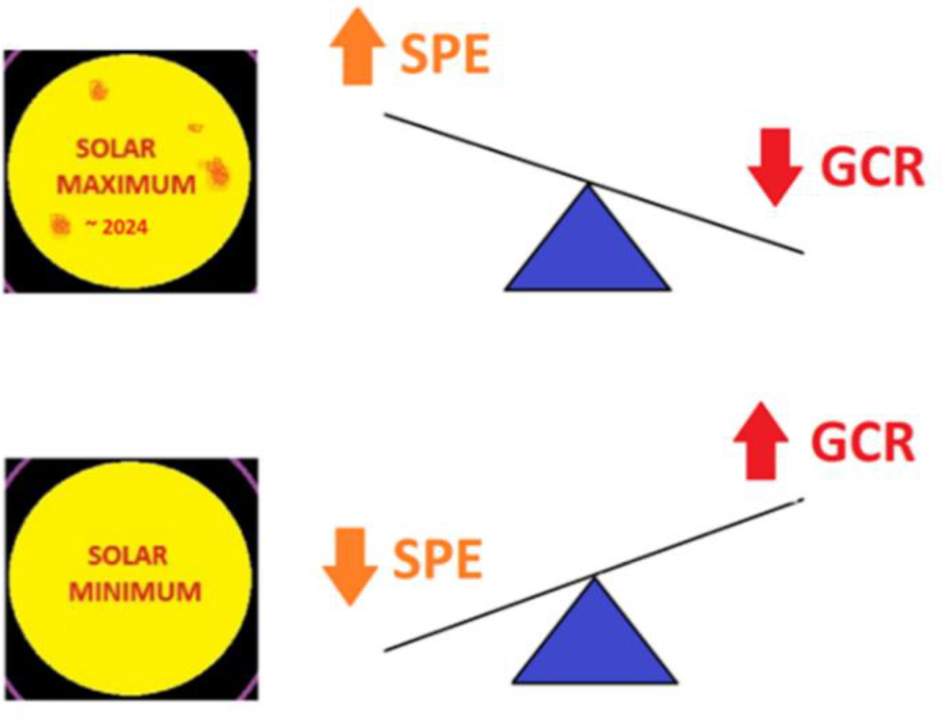
Supplementary data 1:
Balancing radiation dose from SPE and GCR during solar maximum and minimum. During solar maximum GCR is likely to contribute less radiation dose with an increase in frequency of SPE. During solar minimum there is likely increased dose due to GCR and less frequency of SPE.
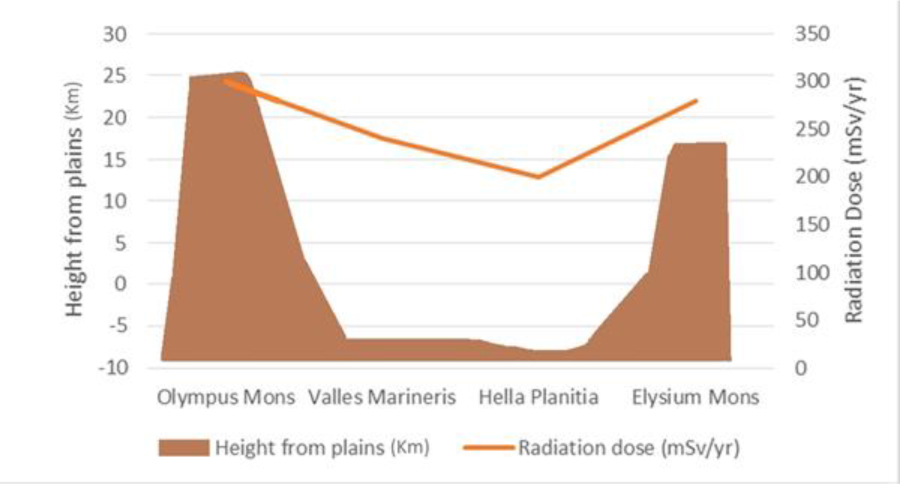
Figure 3
Increased radiation doses at higher altitude on the surface of Mars.
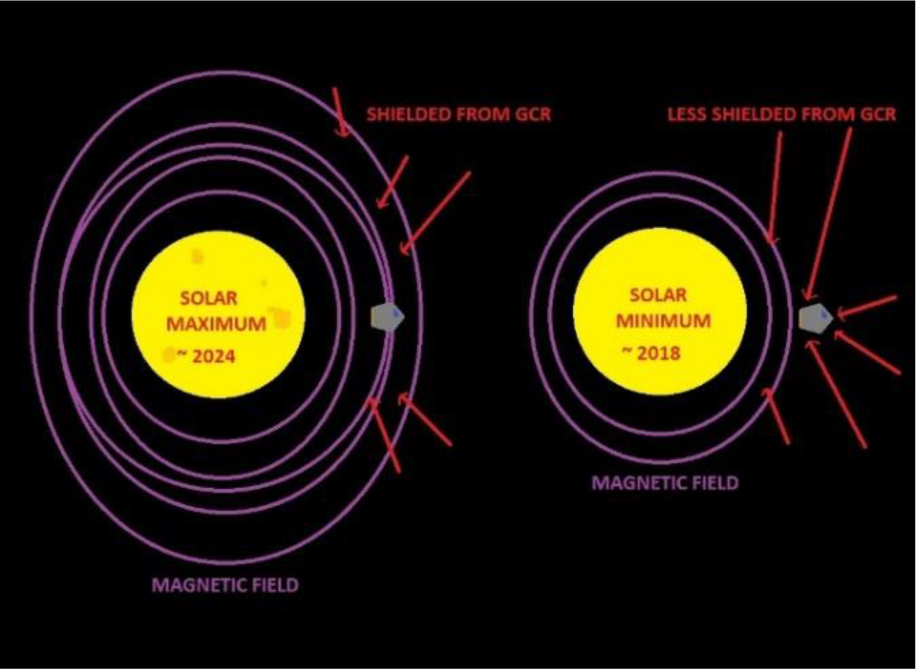
Figure 4
Decreased effective dose received during transit due to increased solar magnetic field strength during solar maximum compared with solar minimum.
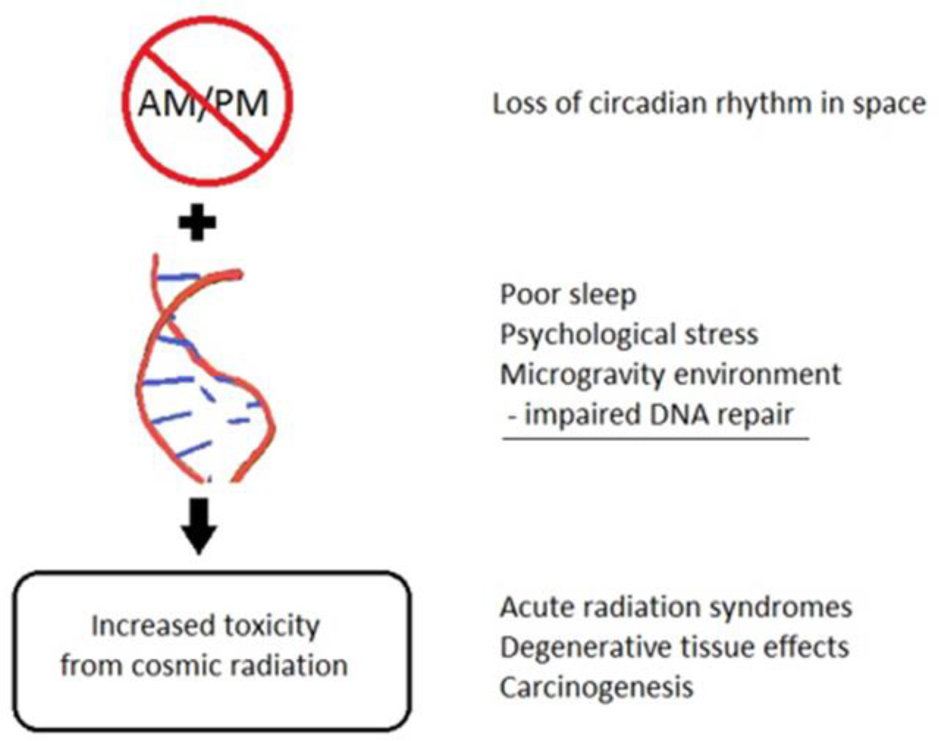
Supplementary data 2
Potential synergistic effect of loss of circadian rhythm with environmental factors resulting in increased toxicity from cosmic radiation.