Have a personal or library account? Click to login
The prevalence of posterior tongue tie in patients with transverse maxillary deficiency Cover

The prevalence of posterior tongue tie in patients with transverse maxillary deficiency

By: Wakako Tome and  Won Moon  
Open Access
|Oct 2021

Figures & Tables

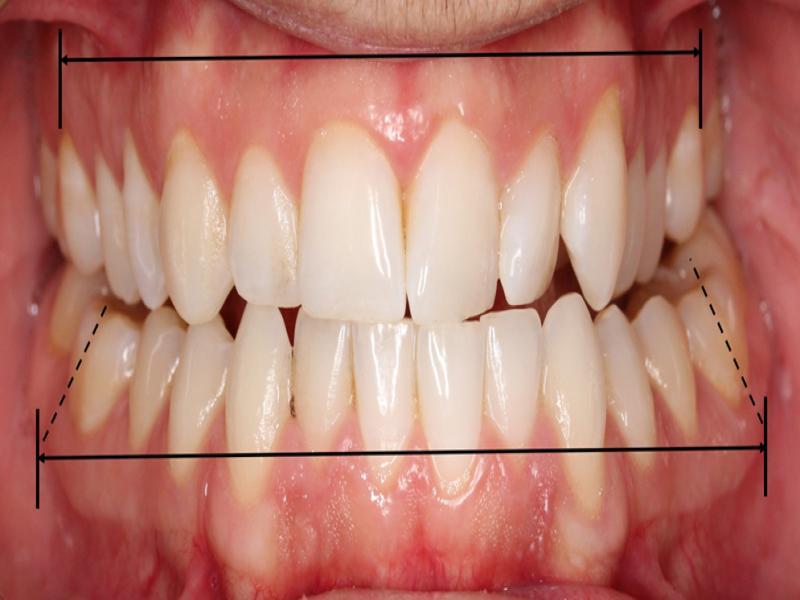
Figure 1.

Transverse discrepancy observed in a patient who was diagnosed of maxillary deficiency and required maxillary skeletal expansion. Maxillary basal arch width was significantly smaller than the lower basal arch width. Dental compensation was often observed in the lower molars.

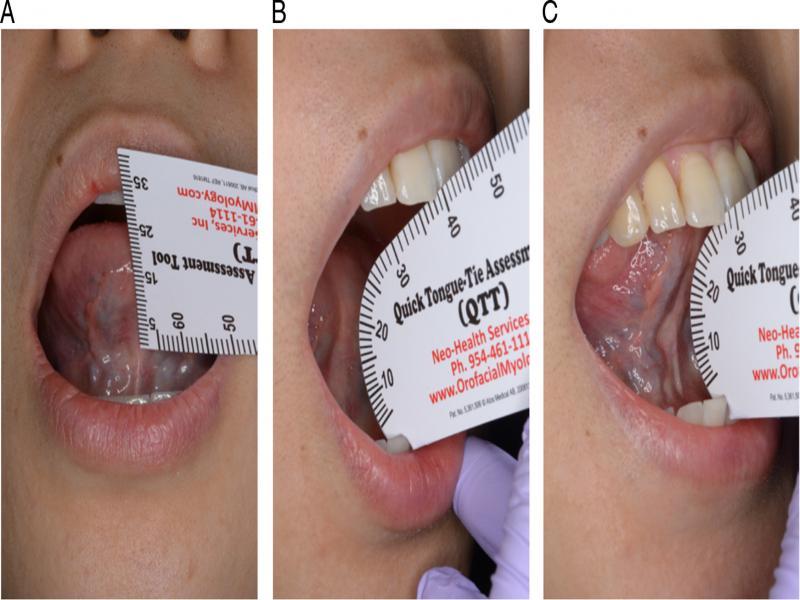
Figure 2.

A numerical assessment of the tongue tie and restriction of tongue mobility. (A) Kotlow free tongue measurement, (B) Maximal interincisal mouth opening distance (MIO), (C) Mouth opening distance with elevating tongue-tip up to the maxillary incisive papillae (MOTTIP).

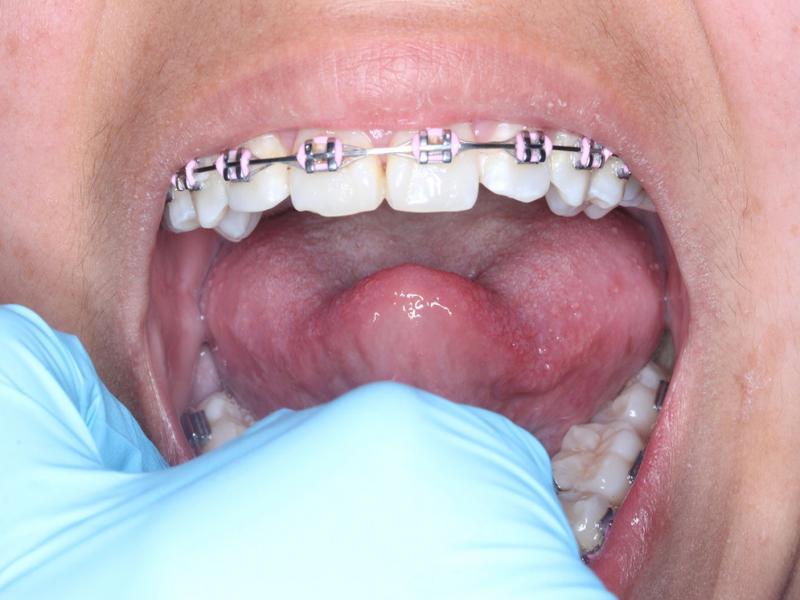
Figure 3.

A clinical assessment of posterior tongue tie. The patients with posterior tongue tie showed cupping of the tongue during attempted elevation when the bottom of the tongue was being held down by the examiner.

Correlation between the TRMR grade and clinical finding within patients with posterior tongue-tie_

Posterior tongue-tie (n = 47)
SubjectsProportion(%)
TRMR gradeGrade 136.4
Grade 24085.1
Grade 348.5
Grade 400.0

The intergroup comparison of proportion of each grade and clinical findings of tongue tie_

MSE group (n = 44)Control group (n = 35) p-value
Kotlow free toungue measurementNormal33 (75.0%)31 (88.6%)
Class 110 (22.7%)4 (11.4%)0.239
Class 210
Class 300
Class 400
TRMR gradeGrade 13 (6.8%)14 (40.0%)
Grade 236 (81.1%)20 (57.1%)0.001
Grade 351
Grade 400
Clinical assessmentAnterior tongue tie20
Posterior tongue tie32 (72.7%)15 (42.9%)
without tongue tie10 (22.7%)20 (57.1%)0.005
DOI: https://doi.org/10.21307/aoj-2021.033 | Journal eISSN: 2207-7480 | Journal ISSN: 2207-7472
Language: English
Page range: 294 - 300
Published on: Oct 19, 2021
Published by: Australian Society of Orthodontists Inc.
In partnership with: Paradigm Publishing Services
Publication frequency: 1 issue per year

© 2021 Wakako Tome, Won Moon, published by Australian Society of Orthodontists Inc.
This work is licensed under the Creative Commons Attribution 4.0 License.