
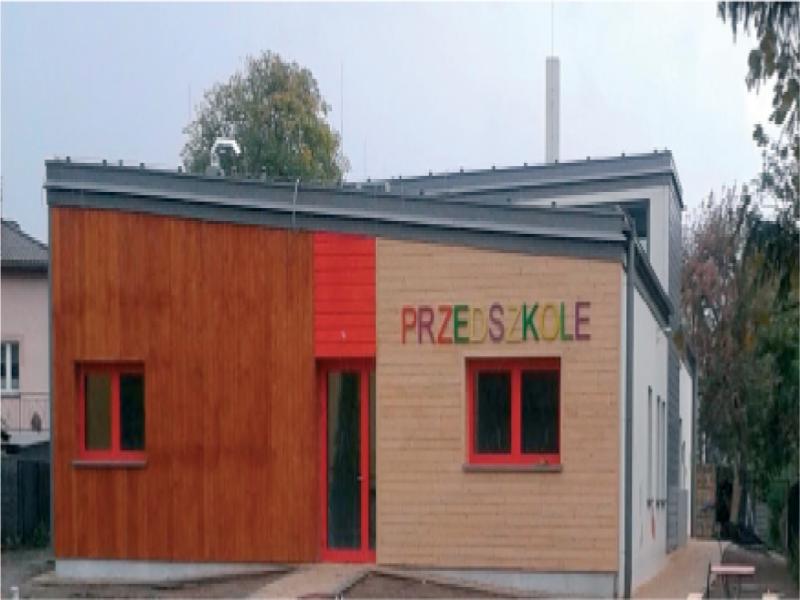
Figure 1.
A case study building – kindergarten. (photo A. Kołodziejczyk-Kęsoń)
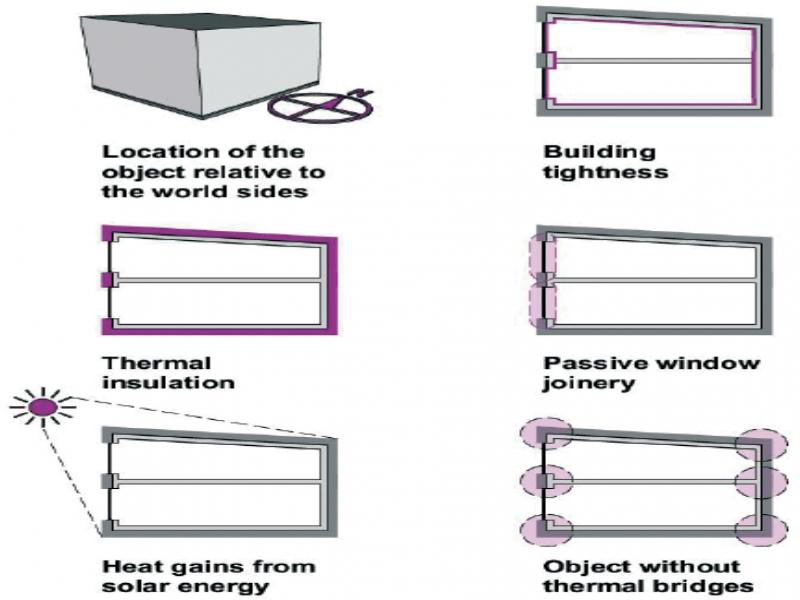
Figure 2.
Components of passive house building. Source own study based on PHI
Table 1.
Assessment of project assumptions with passive housing components – analysis, discussion of results and evaluation
| Analysis | Discussion of results and evaluation |
|---|---|
| 3.1.1. LIGHTNING CONDITIONS AND SOLAR ENERGY EFFICIENCY | |
| Location of the object relative to the sides of the world, heat gains from solar energy [15] (Fig 3). Kindergarten is a single-storey building with a usable area of 387.06 m2 located in Złoty Potok, Janów commune. It has an elongated tapered shape inscribed in the shape of a plot. Despite the specific shape of the building plot, a longer facade was designed with the largest glazing on the south-eastern side. It is a beneficial system that allows obtaining solar energy. Other façades from the unfavourable sides of the world – north and east, have smaller glazing. In this way, the heat escape has been minimised due to the minimum required glazing requirements. Despite the specific shape of the building plot, a longer facade was designed with the largest glazing on the south-eastern side. It is a beneficial system that allows obtaining solar energy. Other façades from the unfavourable sides of the world - north and east, have smaller glazing. In this way, the heat escape has been minimised due to the minimum required glazing requirements. [Fig. 4a, b, c, d]. The facility has two classrooms located on the south-west side (Fig. 5). Each room has the possibility of enlarging its area. Sanitary units and rooms for halls’ deckchairs were located from the north and south-east. At the main entrance from the north side there is a cloakroom for pre-school groups and a waiting room for parents. From the north-east there is a pellet boiler house with a fuel depot. Social space for teachers, an individual work room with a child, an office room, catering and washing rooms are located on the north-eastern side. Large glazing was located from the south-west side. Other façades have minimal window openings. Solar gains are obtained thanks to the use of special glazing with a coefficient of g at the level of 58% with the coefficient Lt = 70% and Lr = 16% The ratio of glazed walls to full ones for the façade:
Thanks to the glazing, direct solar gains are obtained. To prevent the object from overheating, blinds were used on the south-west facade. | The object was correctly located in relation to the sides of the world. The rooms were arranged in accordance with the rules of passive construction. Technical rooms from the north and east, rooms with large glazing from the south and west. The location of the rooms favourable to the sides of the world and the appropriate selection of the size of the window joinery made it possible to obtain solar profits and reduce heat losses [16]. |
| 3.1.2. THERMAL INSULATING PROPERTIES OF THE OBJECT | |
The object has been designed taking into account the following values of the parameters of the heat transfer coefficient through the partition U:
Scheme of thermal insulation is shown in Fig. 6. | All building compartments meet the requirement U ≤ 0.15 W/(m2K). |
| 3.1.3. AIR TIGHTNESS OF THE BUILDING | |
| According to the project, the kindergarten’s air tightness was assumed to be 0.6 h-1. After commissioning the facility, an air tightness test was carried out in accordance with PN-EN 13829. The test showed that the air exchange rate is n50 = 0.39 h-1[17]. The test was came out by PRUSDIS engineering services. Report from a ventilation test of a building’s air-tightness in accordance with PN-EN 13829, performance date 22/08/2017. The building’s volume of 1900 m3 (estimated accuracy of the +/- 5% volume) was tested in accordance with the method B. The ventilation and sewer ducts were closed during the test. The test was carried out in underpressure and overpressure in the full required pressure range. The author of the study is Ing. Sławomir Prus. As shown in the pictures (Fig 6 and 7) and based on the technical specification of execution and acceptance of construction works [18], the project has solutions that enable leak tightness at such a high level. These solutions include: the building structure made of reinforced concrete, the use of plaster for joining reinforced concrete elements, the use of butyl tapes for the assembly of windows and doors, the use of special leakproof gaps for installation of installation ducts. The project assumed that construction errors would appear on the construction site, resulting in insufficient gullibility. Bearing in mind the experience from various construction sites, designers have set the tightness level as the minimum required for passive housing. Thanks to the careful implementation of the project on the construction site, the intended values were achieved, and even higher parameters were achieved than expected. | The Blower-Door-Test tightness test showed much better results than the required building air tightness n50 < = 0.6 h-1. |
| 3.1.4. WINDOW JOINERY [2] | |
The object has windows with a coefficient of:
The windows in the building have the Uw coefficient compliant with the joinery table between 0.68 and 0.84 W/(m2K). Technical windows – fire resistance at 1.3 W/(m2K). | Worse glass parameters were obtained due to the necessity of using fire and technical joinery in the building. The coefficient of window heat transfer should be U < = 0.7 W/(m2K). Condition not met. |
| 3.1.5. ELIMINATION OF THERMAL BRIDGES | |
| Continuous thermal insulation of the object was used, under the foundation slab, on the walls and roof. The attic of the main cause of thermal bridges has been abandoned. The building is simple and compact. Thermal bridges connected with overhanging, balconies, concave corners, etc. were excluded due to this. Window joinery was installed in the insulation layer creating a uniform insulation. A freestanding steel structure was used for the installation of the shutter. In this way, thermal bridges created during the installation of blinds in insulation were eliminated (Fig. 7). The only bridges that appear in the facility are bridges formed during the installation of fire-resistant joinery. Due to fire approval, the installation of such joinery is necessary in the wall, in the construction element. | The facility is efficient, with the elimination of most thermal bridges (Fig. 6 and Fig. 7, Fig. 10). |
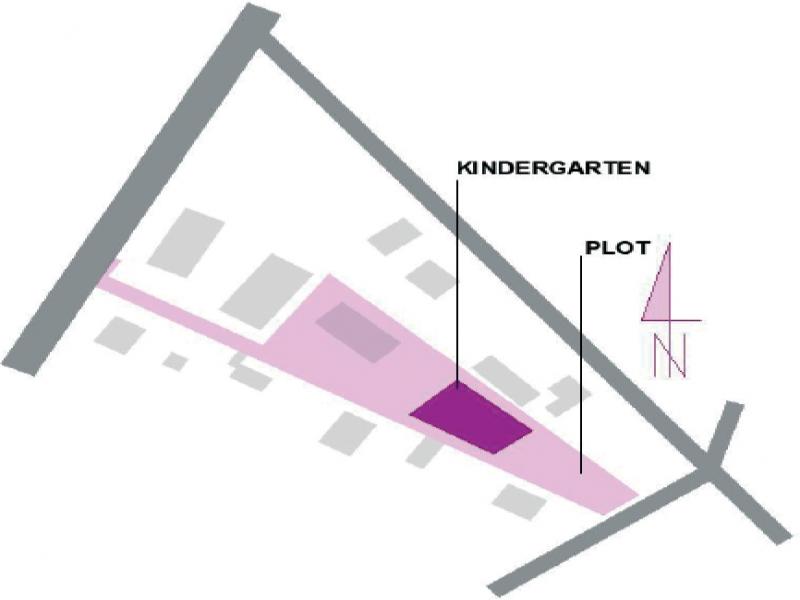
Figure 3.
Diagram of the location of the object on the building plot with reference to the world sides and other building objects. Source – own study based on a construction project and an executive project called “Construction of a kindergarten in Złoty Potok – Janów Commune, plot No. 910/2” made by a design studio architekciPL Jerzy Hnat [15]
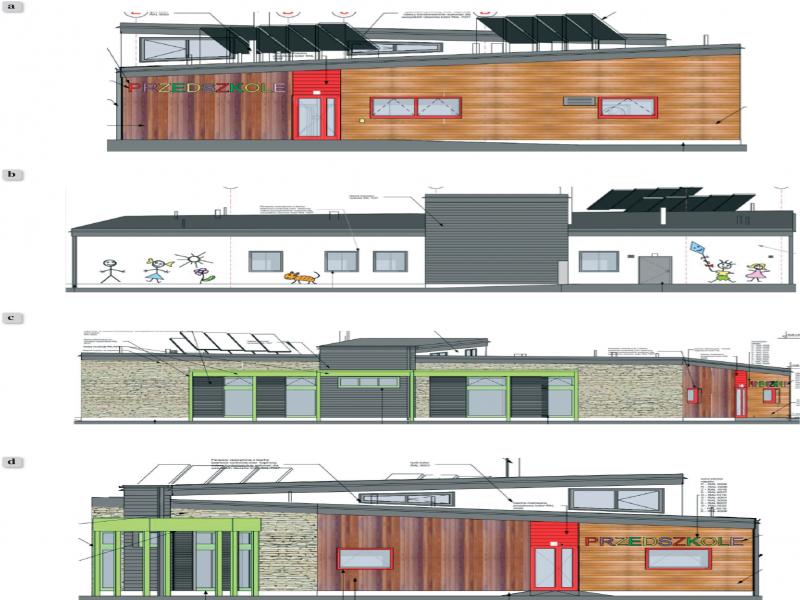
Figure 4.
a) North-west elevation; b) North-eastern elevation c) South-west elevation d) Southeastern elevation fragments of the drawing taken from the detailed design under the name “Construction of kindergarten in Złoty Potok – Municipality of Janów, plot No. 910/2” made by the design studio architekciPL Jerzy Hnat [15]
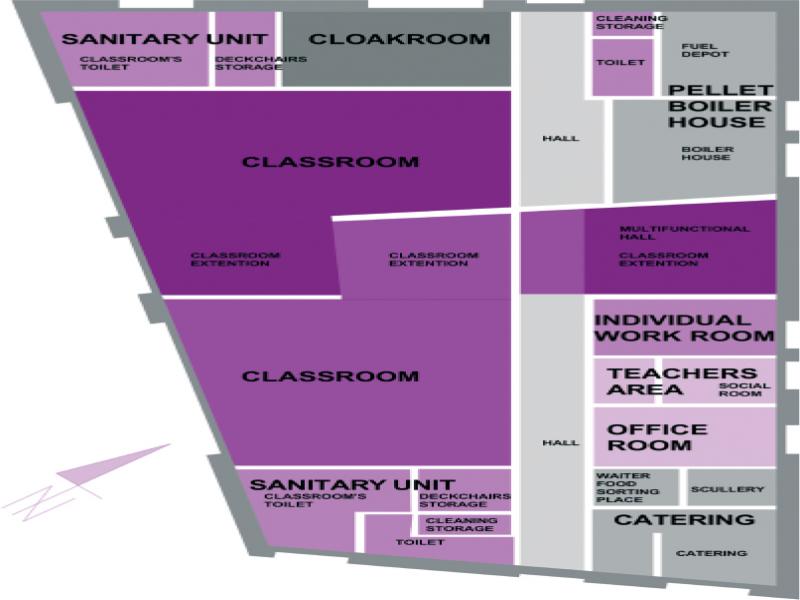
Figure 5.
Function diagram. Source – own study Southeastern elevation, fragment of the drawing taken from the detailed design under the name “Construction of kindergarten in Złoty Potok – Municipality of Janów, plot No. 910/2” made by the design studio architekciPL Jerzy Hnat [15]
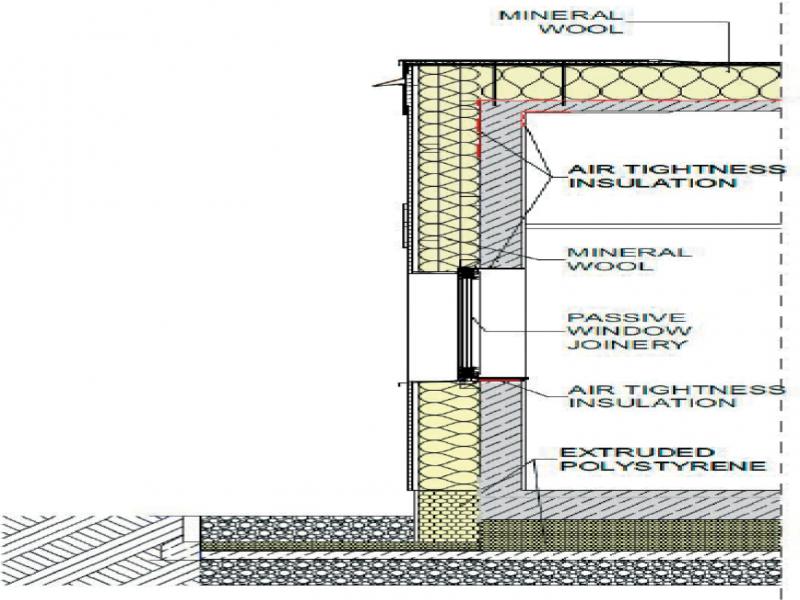
Figure 6.
Thermal insulation diagram. Source – own study Southeastern elevation, fragment of the drawing taken from the detailed design under the name “Construction of kindergarten in Złoty Potok – Municipality of Janów, plot No. 910/2” made by the design studio architekciPL Jerzy Hnat [15]
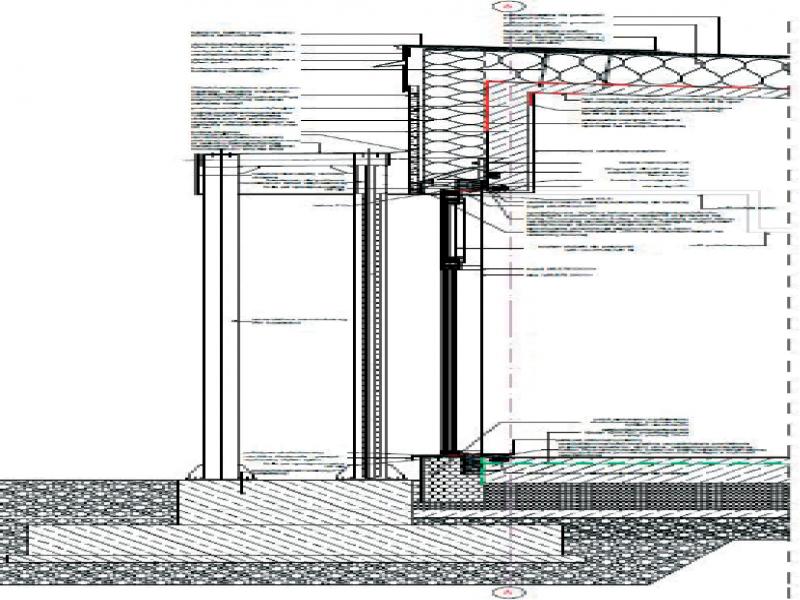
Figure 7.
Fragment of a detail drawing of the foundation of a freestanding structure under the blinds taken from the detailed design under the name “Construction of kindergarten in Złoty Potok – Janów Commune, plot No. 910/2” made by Jerzy Hnat, design studio architect [18]
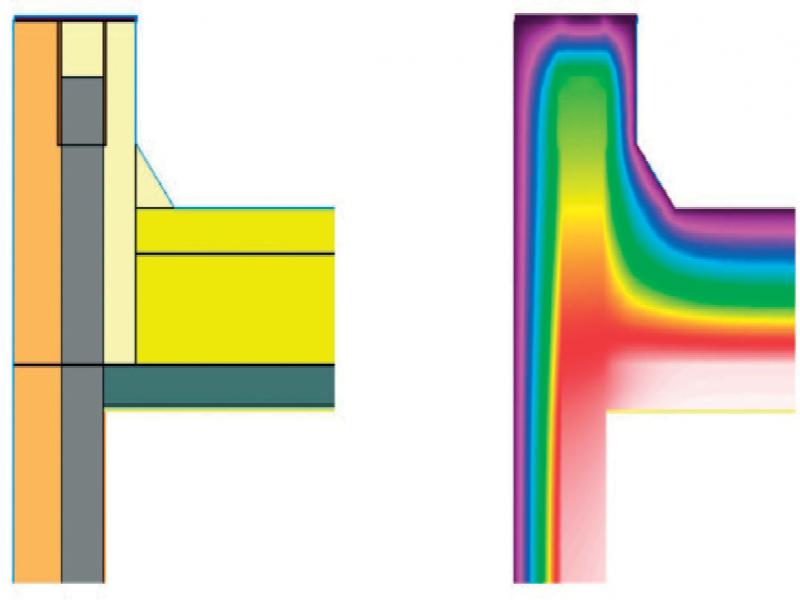
Figure 8.
Classic attic thermal bridge. Despite the fact that all construction is covered with insulation the heat loss is very significant. Source – own elaboration prepared in the THERM program
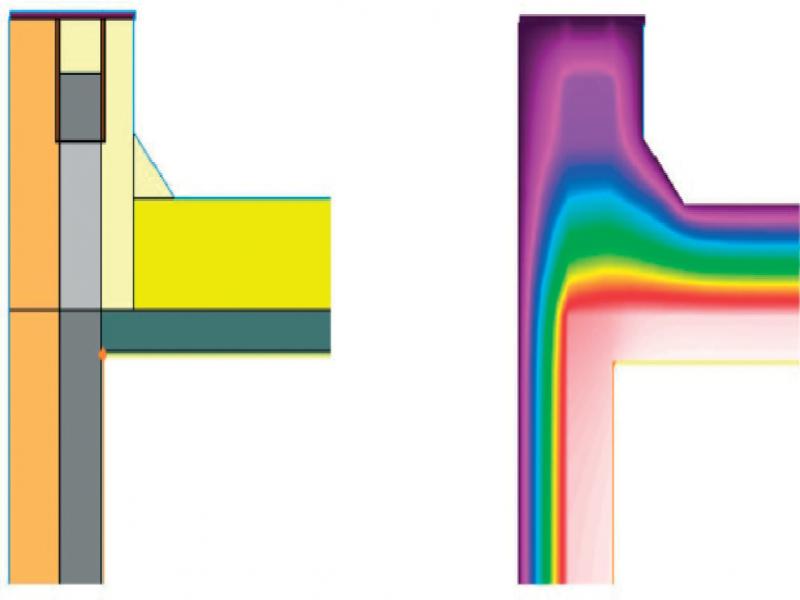
Figure 9.
Solution for improving detail of attic and make cold bridge less significant is to make filling made of insulating material such as insulation block between attic construction. Point thermal bridge remain in places of structural pillars. Source – own elaboration prepared in the THERM program
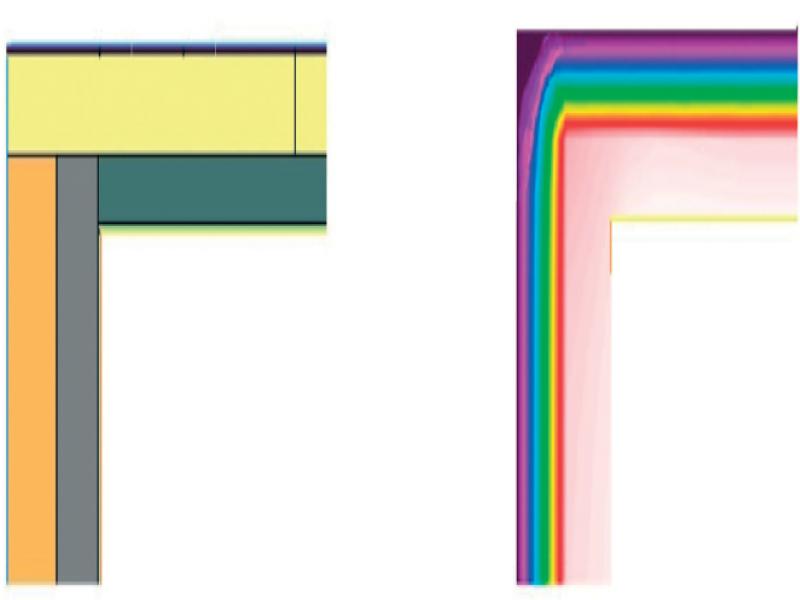
Figure 10.
Solution for improving detail of attic and make cold bridge less significant is to make filling made of insulating material such as insuIn order to eliminate thermal bridge in this area the building obtained specific shape of roof without attic. This procedure enabled liquidation of thermal bridge. Source – own elaboration prepared in the THERM program
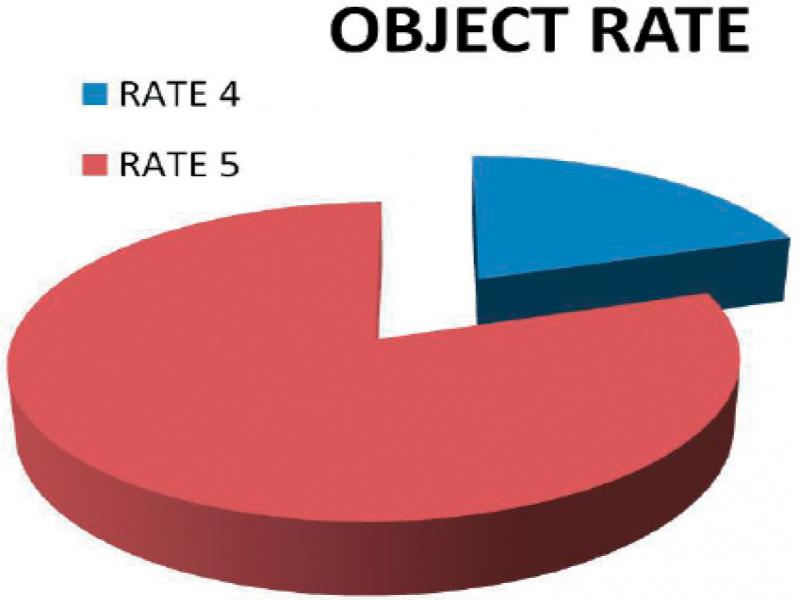
Figure 11.
Object rate chart. Source – own study

Figure 12.
Lower illnesses chart. Source – own study
Table 2.
Analysis with evaluation of project assumptions and research results of the object commissioned for use in terms of meeting passive building criteria – analysis, discussion of results and evaluation
| Analysis | Discussion of results and evaluation |
|---|---|
| 3.2.1. WARMTH DEMAND FOR HEATING | |
| According to the energy performance of the building, the demand for usable energy for heating and ventilation developed for this project was calculated at 1.41 kWh/m2 [15]. | The criterion of warmth demand for heating ≤ 15 kWh/m2a or thermal load of the building ≤ 10 W/m2 was met. |
| 3.2.2. PRIMARY ENERGY DEMAND | |
| According to the energy performance of the building, primary energy was calculated at 165.86 kWh/m2 year. The increase in the value of this criterion was influenced by the decision to use the air-conditioning in the facility. | The admissible value of primary energy for the building has been exceeded. The criterion assumes primary energy demand of ≤ 120 kWh/m2a The criterion was exceeded by 38.22%, the overrun is 45.86 kWh/m2a. |
| 3.2.3. AIR TIGHTNESS OF THE BUILDING | |
| Tightness of the building in accordance with the construction project was established at the level of 0.6 / h. After commissioning the facility, an air tightness test was carried out in accordance with PN-EN 13829. The test showed that the air exchange rate is n50 = 0.39 h-1 [17] | The Blower-Door-Test leak study showed much better results than the required building integrity n50 < = 0.6 h-1. |
| 3.2.4. FREQUENCY OF EXCESSIVE TEMPERATURES < = 10% | |
| A special freestanding frames for external blinds has been used. Blinds protect the kindergarten from overheating. A cooling system was designed to eliminate the possibility of excessive temperatures, which increased the demand for primary energy in the building. | No measurements or calculations have been made regarding the frequency of excessive temperature. Both shading and air conditioning were used. The use of air conditioning will not allow rooms to overheat. The criterion of the occurrence of excessive temperatures 10% has been met. However, it has not been achieved in a passive way, and in an active way, i.e. using air conditioning, which increased the demand for primary energy. |
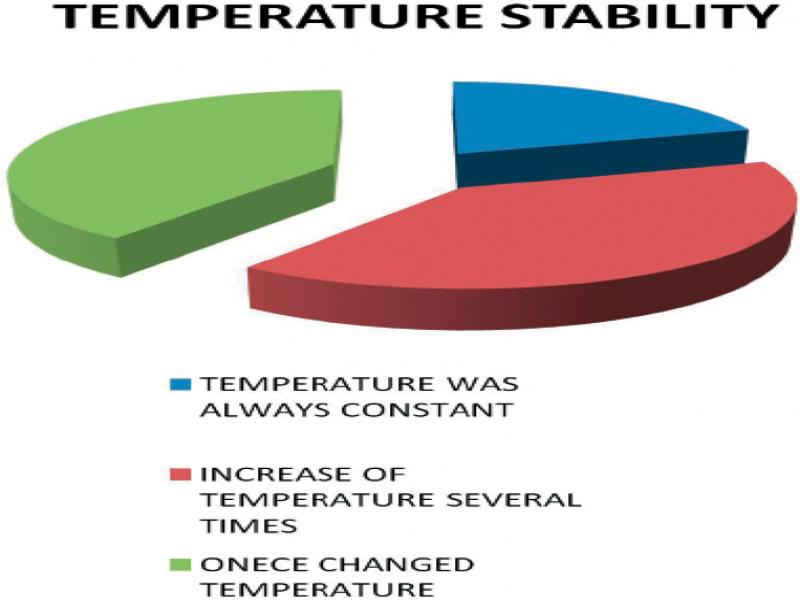
Figure 13.
Temperature stability chart. Source – own study
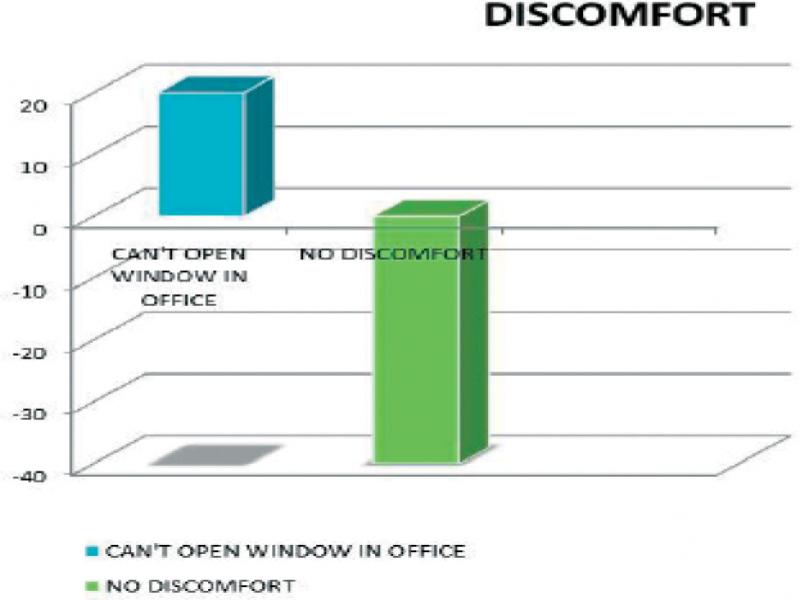
Figure 14.
Discomfort chart. Source – own study