
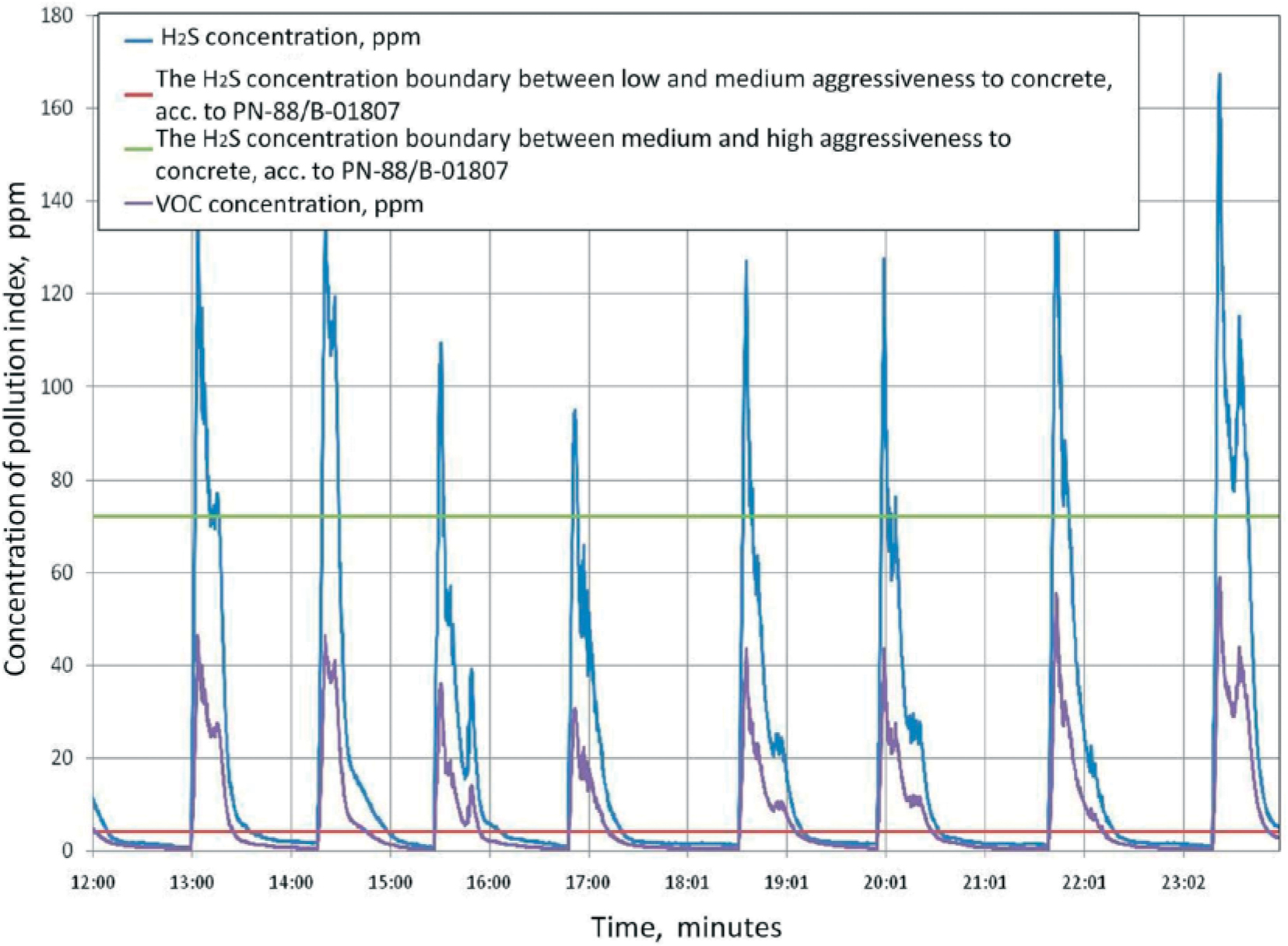
Figure 1.
Example of a change in the concentration of hydrogen sulphide and volatile organic compounds (VOC) in an expansion well, average retention time of sewage about 2 hours, pumping station for household sewage, measurements made with a multi-gas meter MX6 iBrid, measurement accuracy ±0.1ppm, enabling data registration [16]
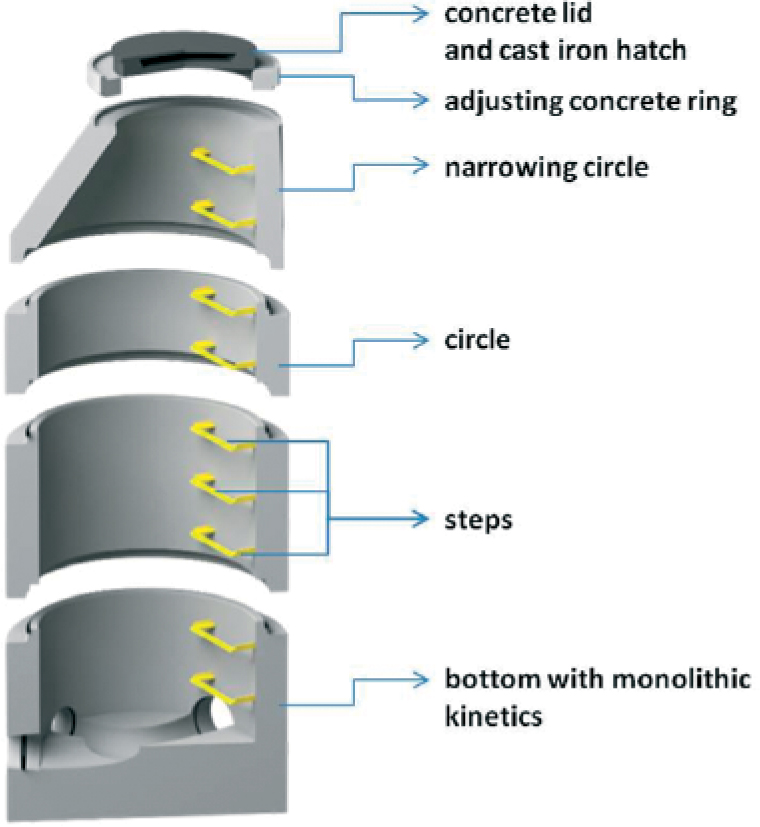
Figure 2.
Elements of concrete well (manhole)
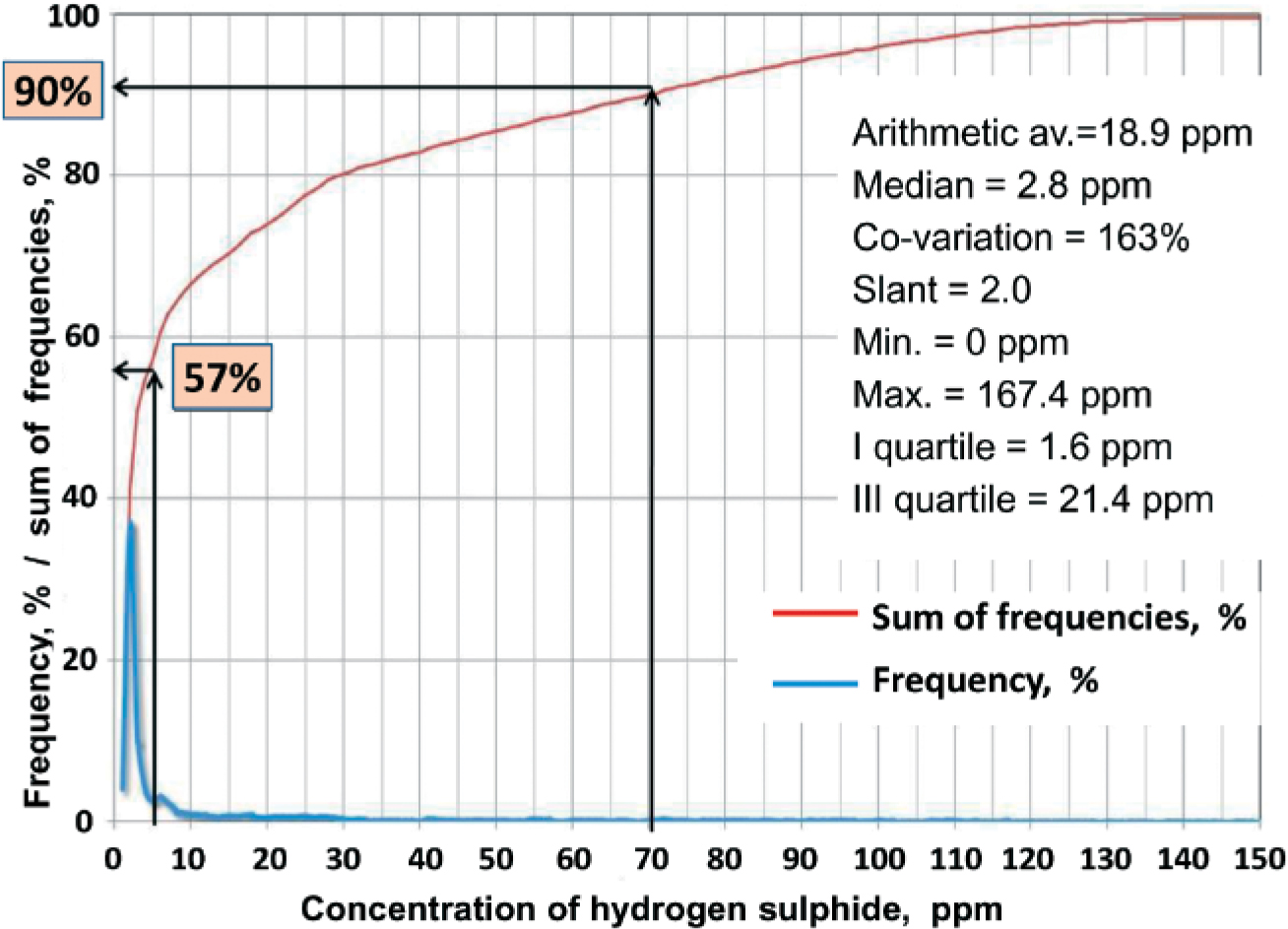
Figure 3.
An example of the frequency and sum of the frequency of occurrence of hydrogen sulphide (H2S) concentration in the expansion well, determined based on the data presented in Fig. 1
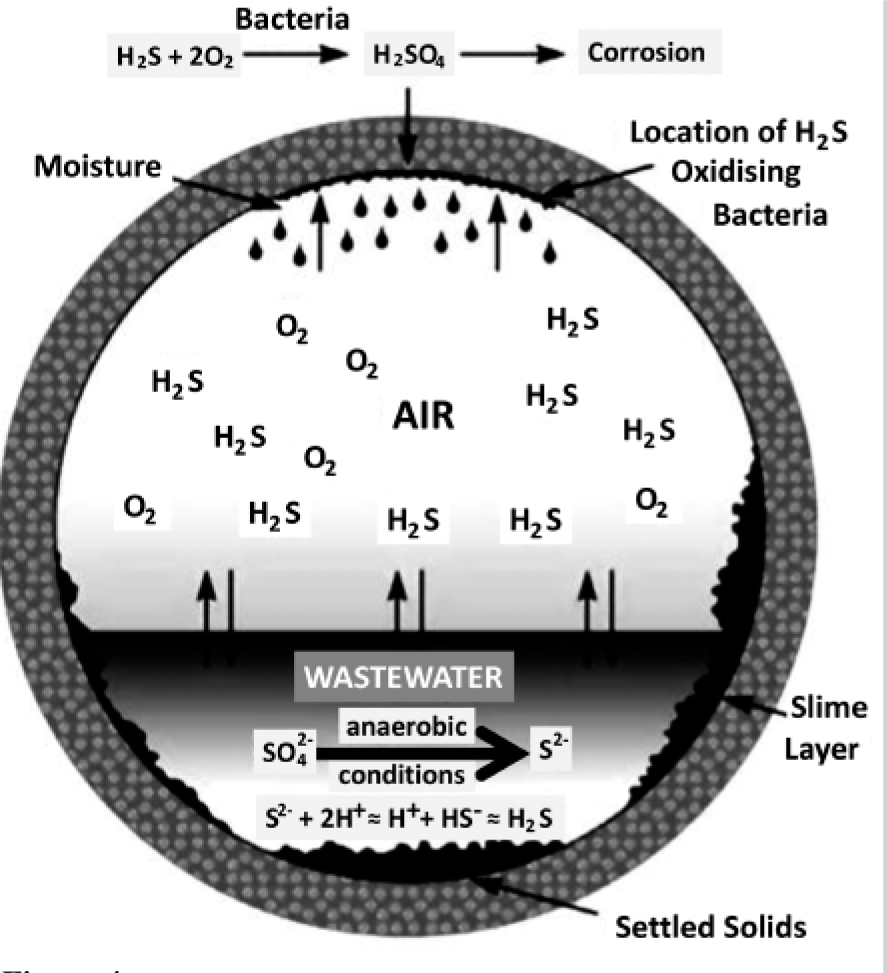
Figure 4.
Diagram of corrosive interactions and transformations of sulfur compounds, source: [21]
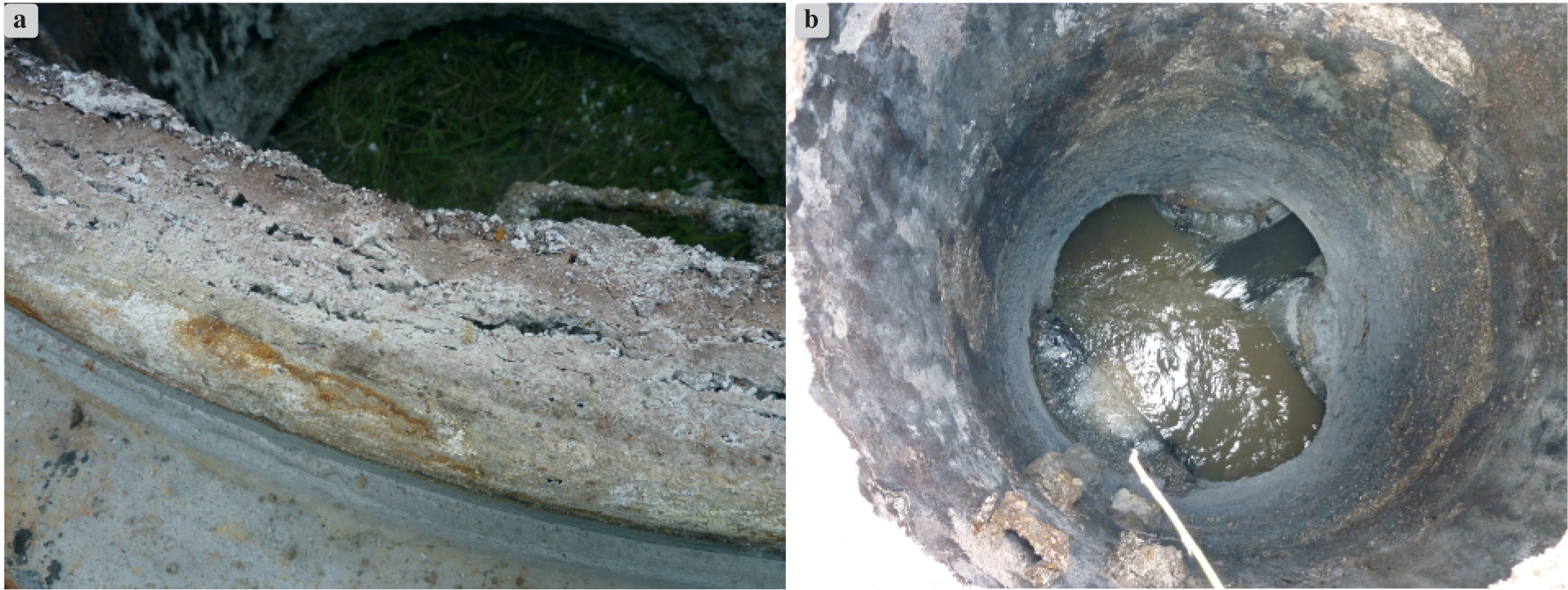
Figure 5.
Example of sewage manholes affected by sulphate corrosion of concrete [Photo: B.Słomka-Słupik, B.Gil]
Table 1.
Composition of microbiological media used for screening of selected groups of microorganisms
| Waksman medium | 9K Silverman and Lundgren medium | Winogradski medium | |||
|---|---|---|---|---|---|
| Component | Concentration g/l | Component | Concentration g/l | Component | Concentration g/l |
| (NH4)2SO4 | 0.2 | K2HPO4 | 0.5 | (NH4)2SO4 | 2.0 |
| KH2PO4 | 3 | (NH4)2SO4 | 3 | K2HPO4 | 1.0 |
| MgSO4 · 7 H2O | 0.5 | MgSO4 · 7 H2O | 0.5 | MgSO4 · 7H2O | 0.5 |
| CaCl2 · 6 H2O | 0.025 | Ca(NO3)2 | 0.01 | NaCl | 2.0 |
| FeSO4 · 7 H2O | traces | KCl | 0.1 | FeSO4 · 7H2O | 0.4 |
| S0 | 10 | FeSO4 · 7 H2O | 44.2 | CaCO3 | 10.0 |
Table 2.
Media used to determine the presence of selected groups of microorganisms in the samples
| Medium | A group of microorganisms | Method for determining the presence of microorganisms |
|---|---|---|
| Waksman | Sulfur-oxidizing bacteria | Determination of changes in SO4 2- ions concentration using reagent tests cat. No. 114791 (Merck, Germany) before and after incubation |
| 9K | Iron (II) ions oxidizing bacteria | Determination of changes in Fe2+ and Fe3+ ions concentration using a titration method with a EDTA solution against the sulfosalicylic acid index |
| Winogradski | Nitrifying bacteria | Determination of changes in NH4 + and NO3- ions using reagent tests cat. No. 100683 and cat. No. 109713 (Merck, Germany) before and after incubation |
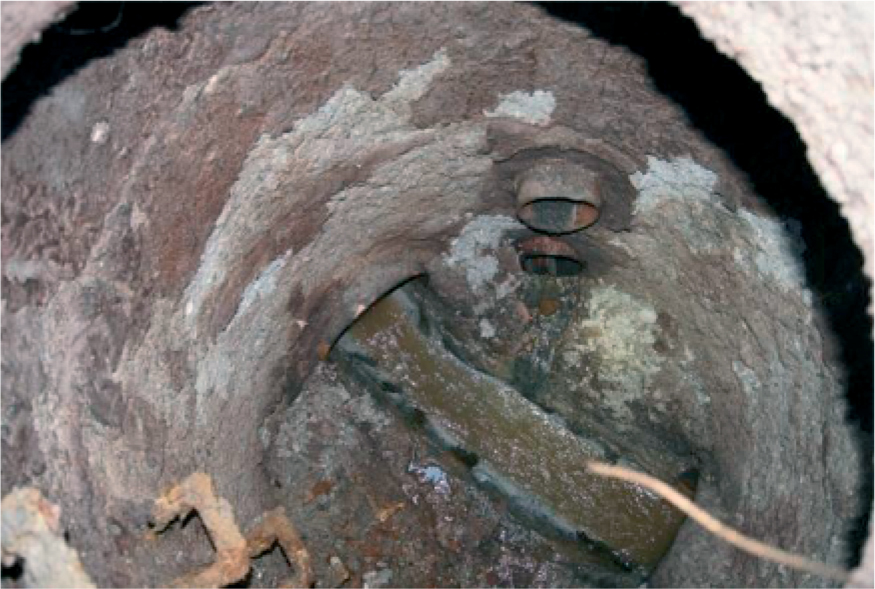
Figure 6.
The interior of the S50 well
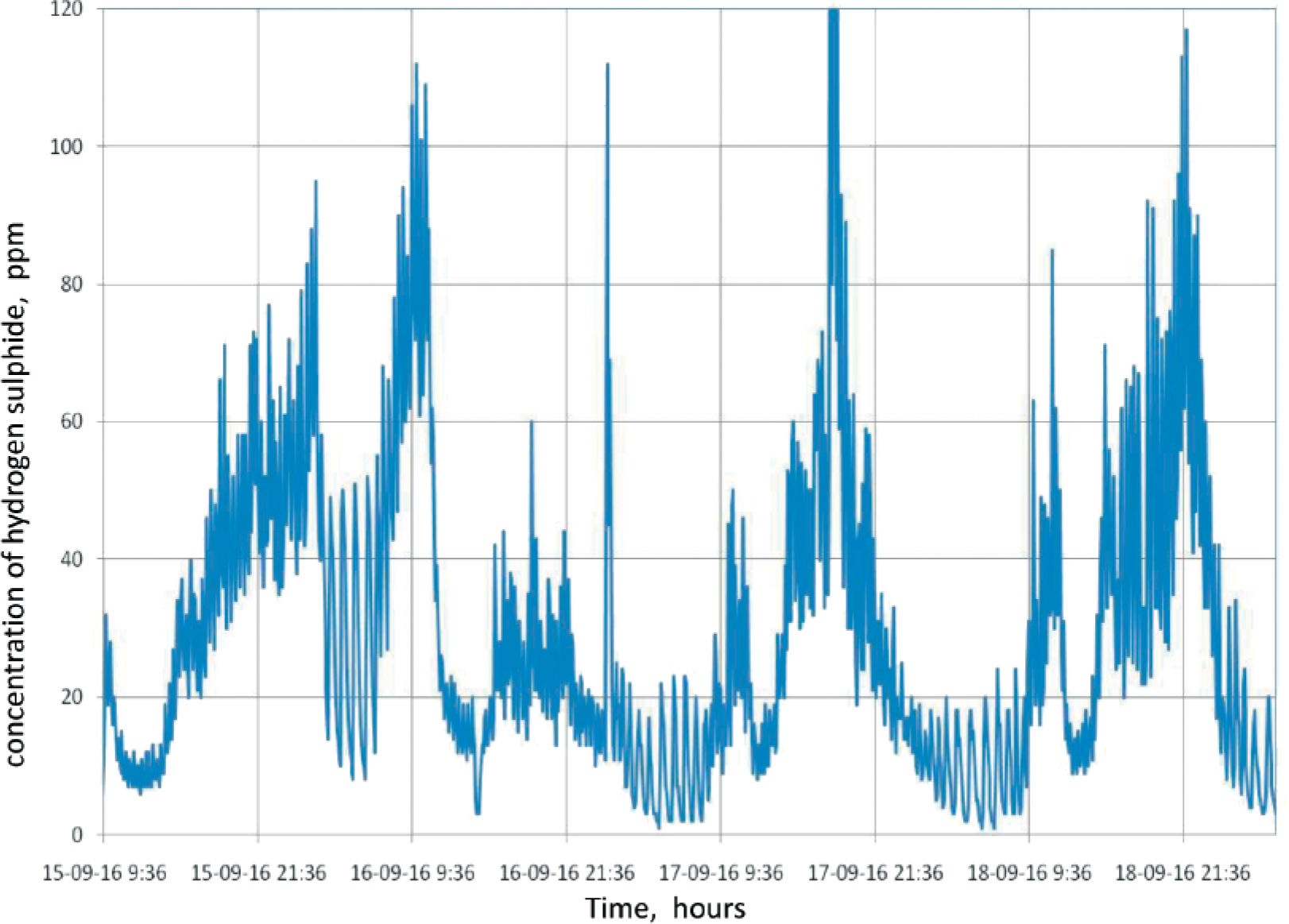
Figure 7.
The example of a change in the concentration of hydrogen sulphide in the S50 well. Measurements made with the OdaLog gas detector. September 2016 Figure 8.
Table 3.
Average values of sulphate concentration in concrete and pH value, concrete specimens taken from the height of 2.20 m above the level of sewage table, well S50
| Type of the test Specimen | pH | SO4 2- Concentration, %mas | SO4 2- concentration relative to the dissolved phase, %mas | Humidity, % |
|---|---|---|---|---|
| Concrete film, thickness: 1–2 mm | 7.1 | 22.4 | 54.8 | 23 |
| Concrete under the “film”, thickness: 2 cm | 7.7 | 18.5 | 43.6 | 25 |
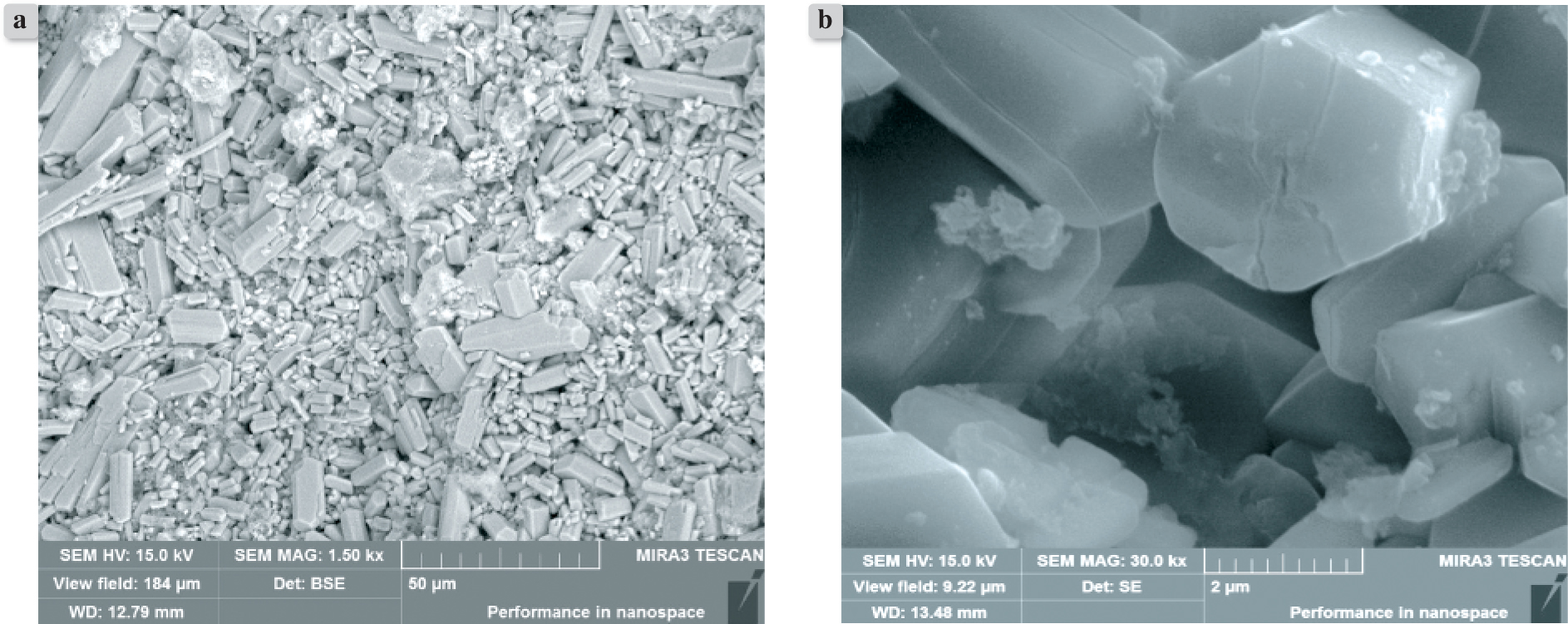
Figure 8.
Gypsum. SEM-BSE images of concrete film sample of 1 mm thick from the inside of the upper circle of the S50 drain well, scale: a) 50 µm, b) 2 µm
Table 4.
Types of microorganisms marked in preparations from S50 well
| o.n. | Location of sampling in a sewage well | A group of microorganisms | ||
|---|---|---|---|---|
| Cast iron plate of the well | Outer coating of concrete (concrete film, thickness approx. 1–2 mm) | Layer of concrete under the film; thickness about 2 cm | ||
| 1 | +/- | + | + | sulfur-oxidizing |
| 2 | - | - | + | sulfate-reducing |
| 3 | + | + | + | Fe2+-oxidizing |
| 4 | + | + | + | aerobic heterotrophs |
| 5 | - | + | + | anaerobic heterotrophs |
| 6 | - | + | + | nitrifiers and denitrifiers |