
Table 1
General interview schedule used during data collection. The schedule was followed loosely, with each part covered using questions similar to those listed below.
| Part 1 | How did you get into engineering? What was your purpose and/or goals? |
| When you think about your engineering courses, how would you characterize your cognitive engagement? Why do you engage in this way? | |
| In what ways has your cognitive engagement evolved over time? What were some of the biggest factors in its evolution? | |
| Part 2 | How would you describe your overall cognitive engagement with this course? What were some key factors that engaged you in this manner? |
| How useful do you perceive this course being to your career? How does that influence your engagement? | |
| In what ways did you perceive the instructor trying to engage you? How effective were they? | |
| What were the biggest factors limiting your engagement with this course? | |
| Part 3 | What are steps that instructors take that are the most cognitively engaging? The least engaging? |
| What advice would you give another student about their engagement? What advice would you give a faculty member seeking to engage their students? |
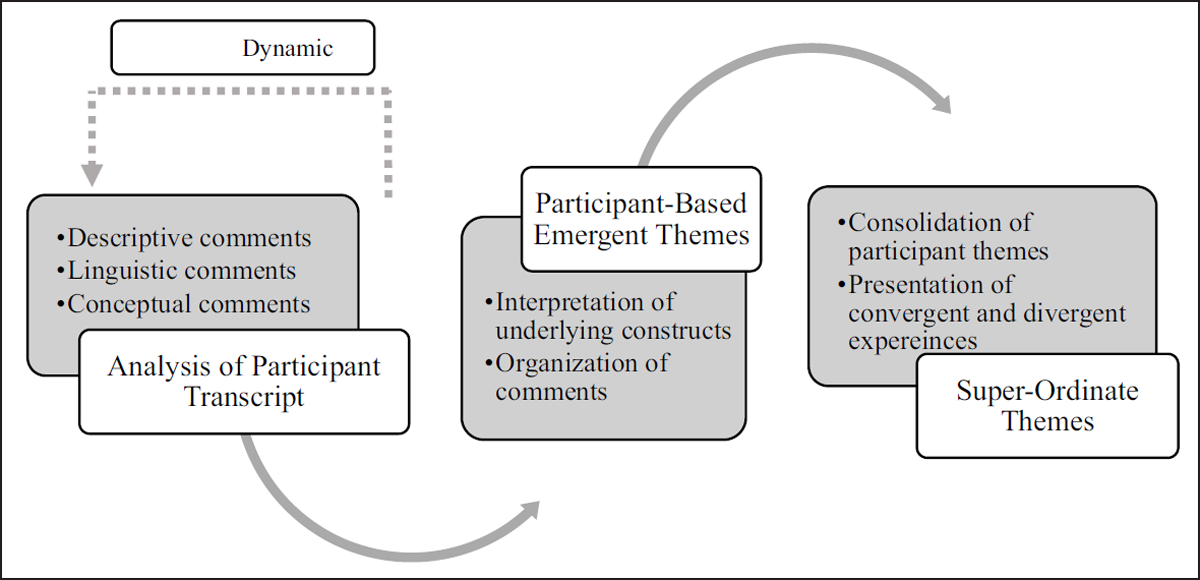
Figure 1
A visual depiction of the IPA process of this study.
Table 2
Summary of themes addressing what shaped the cognitive engagement within participants.
| Theme | Description | Example Quotes |
|---|---|---|
| Behaviors for Engagement Opportunity | Participants placed value on behaviors that resulted in them creating or failing to create an environment for themselves to cognitively engage | I’ve never not turned in an assignment I pay for it, I’m gonna sit there whether I pay attention or not, so yeah. I don’t skip unless I’m seriously sick or have a doctor’s appointment, or something |
| Engagement for the Future Self | The future self participants created guided their engagement potential; looking to their future self, participants determined meaningful and applicable curriculum | And then in the future, I know we’re not gonna do some of the exact same stuff, like we’re not gonna be doing steel design technicalities to the T, but I know that the concepts and theories are still really important for the future. |
| Engagement in Course Context | Both engagement potential and the future self was brought to the classroom by participants, where instructors played a primary influencing role in how students adjusted their cognitive engagement on a course-by-course basis. | As a student, like, I’m in this one class right now and the professor is totally engaged and writes all the stuff, it’s just very genuine that it’s his work, and it’s so easy to learn from. Last term I had some professors that were using other materials and they didn’t know how to do the homework assignments, they kind of just reading off the slides and it’s just really difficult to learn that way for me |