
International Students and the Challenge of Acculturation
Over the last decade, the number of international students has increased across the United States (Institute of International Education, 2023). In particular, colleges of engineering have seen a marked uptake. This increase in students from diverse cultural backgrounds, languages of origin, and educational experiences brings significant benefits to higher education institutions. On the other hand, there are areas of concern as well. International students often face challenges when moving to a foreign environment due to the acculturation process. Acculturation is the process through which individuals adopt certain elements of the host culture while retaining aspects of their original culture (Kim, 2001). For international students, adapting to the host culture is often not a choice but a necessity for academic success, such as adapting to the language, academic norms, and social practices (Bastien et al., 2018; Mori, 2000). For instance, mastering academic English, understanding faculty expectations, or participating in classroom discussions may require international students to modify their communication styles or behaviors to align with U.S. norms. While this adaptation may support academic achievement and interpersonal communication, when this process becomes problematic and generates stress, it is called acculturative stress (Berry, 1992).
Acculturative stress arises when individuals struggle to balance the demands of the host culture with their original cultural identity, leading to stress-related symptoms such as anxiety, confusion, depression, or feelings of marginalization (Berry, 2006). Multiple studies show that international students experience acculturative stress due to factors such as discrimination, social isolation, academic challenges, language barriers, cultural intolerance, and lack of school support (Bai, 2016b; Chavajay & Skowronek, 2008; Laufer & Gorup, 2019; Lee & Rice, 2007; Wilton & Constantine, 2003; Wu et al., 2015). Additionally, they experience a constant feeling of exclusion due to their immigration status. This sense of exclusion is often rooted in systemic barriers such as ineligibility for internships or fellowships, difficulties integrating with domestic peers, and limited opportunities to engage in their cultural traditions (Xu et al., 2023). This not only deepens acculturative stress but also interferes with their academic and personal development. Thus, addressing the institutional and systemic causes of exclusion is crucial for fostering inclusive environments where professors and academic staff can effectively support international students.
Latin American Undergraduate International Engineering Students
This study examines the phenomenon of acculturative stress among undergraduate international engineering students (IESs) from Latin America for three reasons. First, undergraduate international students constitute a minority group in U.S. universities that has not been extensively studied. They make up 5.6% of the total U.S. higher education population, with only 7.8% of that percentage being students from Latin America (Institute of International Education, 2023). Only 202,801 international students came to the U.S. to study engineering during the 2022–2023 academic year (Institute of International Education, 2023). Therefore, we can infer that there are only 15,818 Latin American international students pursuing an engineering bachelor’s degree in the U.S. Second, past studies often group international students from different countries together, without differentiating them by country of origin and background (Bastien et al., 2018; Chavajay & Skowronek, 2008; Gautam et al., 2016; Montgomery & McDowell, 2009; Smiljanic, 2017; Wu et al., 2015). This differentiation is important because, as Berry (2006) indicates, a complete study of acculturation needs to consider the culture of origin. The characteristics of the culture of origin, such as language, religion, and customs, are important factors in the acculturation process.
Third, there is a lack of research on international students in the engineering field. Existing research on international students in engineering has primarily focused on graduate students (Antonio & Baek, 2022; Campbell et al., 2018), while other related studies have examined international students broadly within STEM fields rather than engineering specifically (Pawar & Chanda, 2024). As mentioned by other authors, engineering as a field has a prominent culture of stress (Jensen et al., 2023). Several studies have highlighted that engineering students experience stress and anxiety at significantly higher rates than the average U.S. college student (Danowitz & Beddoes, 2018; Jensen & Cross, 2021). Therefore, studying acculturative stress specifically in IESs is important because academic stress can significantly contribute to the acculturative stress experienced by these students (Bai, 2016b).
Therefore, this study aims to understand how Latin American IESs experience and perceive acculturative stress and the factors that lead to it in their first year studying in the U.S. to provide insights for professors and academic staff to better support this group of engineering students. In addition, this study provides an empirical contribution to Berry’s acculturation framework by applying the theory within the context of undergraduate Latin American IESs and examining it empirically, offering valuable evidence that supports and extends the framework’s applicability in engineering education contexts. We focus on the first-year experience because, according to Berry’s (2006) acculturation process, the process begins when an individual first encounters a new culture. Berry refers to this as the Acculturation Experience, where individuals must navigate and engage with two different cultures, potentially leading to challenges.
Research Questions
To achieve the purpose of this study, we conducted a phenomenological study to explore the common shared experiences of acculturative stress (van Manen, 1990). The study involves interviews, photo-elicitation, and Q-sorting with four international students at a large public research university in the southeastern U.S. who are pursuing engineering degrees and come from various countries in Latin America. The research questions guiding this study are as follows:
RQ1: How do Latin American undergraduate international engineering students (IESs) perceive and experience acculturative stress during their first year of engineering at a large public research university in the U.S.?
RQ2: What are the main factors contributing to acculturative stress among these students?
Literature Review
The main motivation that attracts international students to the U.S. is the prestige associated with attending a U.S. university (Quaye et al., 2019). However, their motivations for studying in the U.S. vary according to their backgrounds and home countries. Chao et al. (2017) surveyed Chinese undergraduate students and found that they chose the U.S. “to break from the Chinese system of learning,” seeking education with a global perspective and greater intellectual freedom. Indian students, in contrast, are often motivated by the opportunity to gain experience through internships and projects with leading business organizations. For them, earning a U.S. degree is considered more prestigious and valuable within their home society (Pawar & Chanda, 2024). For Latin American international students, the motivation is different; they are often driven by the pursuit of better career opportunities and upward social mobility, combined with a sense of purpose and a desire to create positive change in their home countries after completing their studies (Chávez, 2016). Despite these different motivations, they experience a common phenomenon when moving to a foreign environment and encountering various levels of challenges: the acculturation experience.
Acculturation is the process through which individuals from one cultural background adopt certain elements of a host culture while retaining aspects of their original culture (Kim, 2001). When this process becomes difficult or results in psychological tension, it is referred to as acculturative stress (Berry, 1992). Among international students, common sources of acculturative stress include language barriers, social isolation, discrimination, and limited social support (Johnson & Sandhu, 2007; Smiljanic, 2017; Yakunina et al., 2013). Many international students report difficulties establishing social connections and finding a sense of belonging, particularly because they lack nearby family, friends, and established social support networks (Gautam et al., 2016; Wu et al., 2015). This lack of social support can reinforce feelings of loneliness and exacerbate cultural displacement.
Acculturative stress can affect both the academic and social adjustment of international students. Language proficiency, for instance, plays a dual role: it not only influences students’ ability to succeed academically but also shapes their confidence and willingness to seek help when difficulties arise (Bastien et al., 2018). Limited English proficiency can increase feelings of inadequacy and make it more difficult for students to access academic and social resources, thereby reinforcing the cycle of stress and isolation (Smiljanic, 2017). In addition, language barriers can hinder international students’ ability to socialize and form friendships with their American peers (Mori, 2000). These challenges may further limit students’ opportunities to build supportive relationships, increasing feelings of isolation and reducing their sense of belonging within the university community.
Research also suggests that acculturative stress varies across cultural groups. Bai (2016b) and Wilton and Constantine (2003) found that Latin American international students reported higher levels of psychological distress than their Asian counterparts, possibly due to differing cultural expectations, coping mechanisms, and perceptions of social support. These findings underscore the importance of recognizing the heterogeneity among international student populations rather than treating them as a uniform group. Despite growing interest in understanding international students’ adaptation, much of the existing literature examines international students as a broad population without disaggregating experiences by region of origin or cultural background (Bastien et al., 2018; Chavajay & Skowronek, 2008; Gautam et al., 2016; Montgomery & McDowell, 2009; Smiljanic, 2017; Wu et al., 2015). This gap is particularly evident among Latin American undergraduate IESs. Addressing this gap is significant because the first years of college are often marked by stress, anxiety and adjustment demands (Hako et al., 2023). Examining their lived experiences can shed light on the unique social, linguistic, and academic barriers they face.
In addition to differences across cultural groups, academic discipline may further shape international students’ experiences. A pervasive culture of stress has been documented within undergraduate engineering programs (Jensen et al., 2023). Several studies have shown that engineering students experience stress, anxiety, and burnout at significantly higher rates than the average U.S. college student (Danowitz & Beddoes, 2018; Jensen & Cross, 2021). This increased stress is often attributed to the demanding workload, sleep deprivation, and the competitive academic culture within engineering education (Asghar et al., 2024). For international students, these academic pressures are compounded by the acculturative stress discussed earlier, which stems from navigating language barriers, cultural adjustment, and limited social support systems. Although research has documented high stress levels among engineering students, little is known about how engineering culture intersects with acculturative stress among international students. Consequently, the ways in which engineering students experience the combined effects of disciplinary and acculturative stress remain poorly understood. This gap is particularly concerning because, like their domestic peers, IESs are expected to meet rigorous academic and technical standards while simultaneously adapting to a new academic and sociocultural environment.
Together, these gaps highlight the need for research focused specifically on Latin American international engineering students. Such research can contribute to engineering education in two important ways. First, it can guide engineering faculty and administrators in creating more inclusive learning environments that recognize and mitigate the additional challenges and stress faced by international students, thereby enhancing retention and academic success. Second, examining the specific experiences of Latin American IESs helps diversify the existing scholarship on international student adaptation, which remains predominantly centered on Asian populations (Bai, 2016a; Qi et al., 2018; Su et al., 2021; Ye, 2006; Zhang & Jung, 2017). Therefore, this study seeks to bridge these gaps by exploring the phenomenon of acculturative stress among Latin American IESs enrolled in undergraduate programs at a U.S. university. By identifying the factors contributing to their stress and adaptation experiences, this research aims to inform targeted institutional interventions and promote more equitable and supportive educational environments that foster wellbeing, retention, and academic achievement.
Framework
For this study, we draw on Berry’s (2006) theoretical perspective on stress, coping, and adaptation, adapted from his original framework on acculturation and adaptation (Berry, 1992). In his original framework, Berry (1992) conceptualized acculturation as a process of cultural adaptation following intercultural contact. Building on this work, Berry (2006) reframed acculturation from a stress perspective, defining acculturative stress as individuals’ responses to life events arising from intercultural interactions. His theory describes the process of acculturative stress in five phases, illustrated in Figure 1. Berry’s theory was used as a conceptual and analytical lens to guide the development of the interview protocol and to support the interpretation of participants’ narratives related to acculturative stress during their first year in a U.S. university.
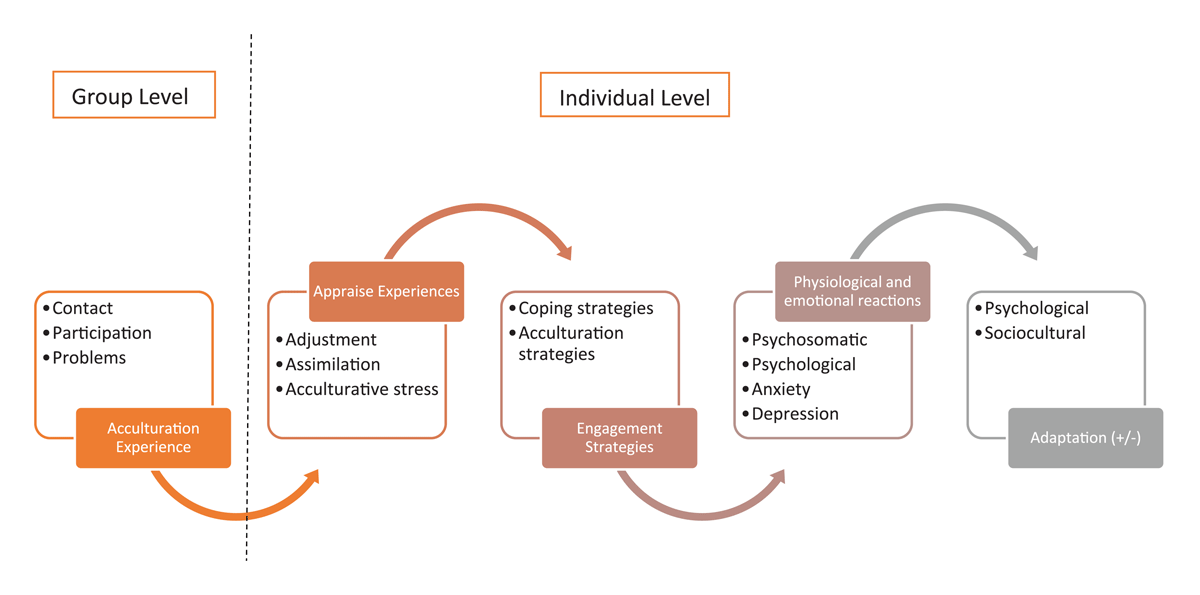
Figure 1
Process of acculturative stress adapted from Berry (2006).
Berry’s framework was used to situate participants’ experiences within the early phases of the acculturative stress process, particularly during their first year as undergraduate IESs in the U.S. The first phase begins when individuals come into contact with a new culture. Berry refers to this as the Acculturation Experience, where the individual must navigate and engage with two different cultures, and problems may arise from this clash of cultures. For this study, this phase corresponds to students’ initial transition into the U.S. university environment.
The second phase—appraisal of the acculturation experience—is the primary analytic focus of this study. During this phase, individuals evaluate their experiences as adjustment, assimilation, or acculturative stress. If the acculturation experience is evaluated positively and changes occur smoothly, the process is called adjustment. When the experiences involve some conflict and the individual has to change certain behavioral norms, the process is called assimilation. However, when the acculturation experience is problematic and generates stress, it is termed acculturative stress. This phase informed both the design of interview questions and the analytic attention to how participants made sense of their experiences during their first year.
In the third phase, the individual tries to cope with acculturative stress using various strategies. Berry discusses coping strategies proposed by Lazarus and Folkman (1984): problem-focused coping and emotion-focused coping, and Endler and Parker’s (1990) strategy: avoidance-oriented coping. While participants may reference coping strategies in their narratives, the present study does not systematically analyze coping processes. Instead, these accounts are used to provide contextual understanding of participants’ experiences. The fourth phase occurs when the individual goes through psychological and emotional reactions due to a problematic acculturation experience. When acculturative stress is successfully managed, stress levels remain low, and the immediate effects are positive. However, if this stress is not fully overcome, stress levels will be higher and can lead to anxiety and depression. Reflections related to this phase are considered descriptive, particularly when participants discuss retrospective impacts of their experiences.
The final phase is adaptation, which Berry describes as ranging from well-adapted to poorly adapted. Adaptation doesn’t just mean that people change to fit into the new environment; it can also mean they resist, try to change the environment, or reject it completely. This final phase supports the interpretation of participants’ reflections on how they perceived their overall adjustment at the time of the interviews. Overall, Berry’s framework is not used to test theory but rather as a sensitizing framework to support data collection and meaning making. It provides a structured way to understand how Latin American undergraduate IESs experience, appraise, and reflect on acculturative stress during their first year at a U.S. university. Figure 2 illustrates how each phase of Berry’s theory was operationalized within this study.
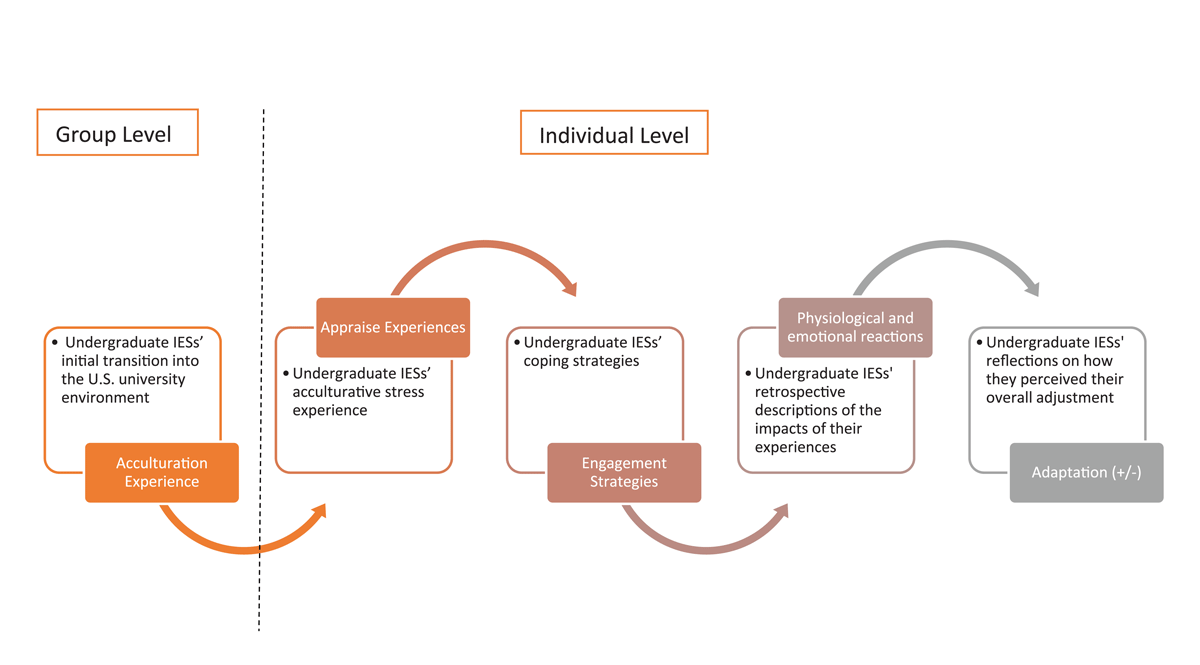
Figure 2
Application of Berry’s theory to Undergraduate International Engineering Students’ Acculturative Stress Experiences.
Methodology
This study employs a phenomenological research design to explore the lived experiences of undergraduate engineering students who have transitioned from Latin American countries to the U.S. Phenomenology is a qualitative research approach that focuses on understanding how individuals perceive and make sense of their experiences within the world (Moustakas, 1994). This aligns with our first research question, which seeks to explore how Latin American IESs perceive and experience acculturative stress. Phenomenology is particularly suited for this study because it investigates phenomena where the goal is to gain deep insights into participants’ subjective experiences rather than to generalize findings to a larger population (Creswell & Poth, 2018). Prior to data collection, this study received approval from the university’s Institutional Review Board (IRB 24-930), and all participants provided informed consent.
The methodological approach involved four core components: (1) engaging participants in rich, first-person descriptions of their experiences with acculturative stress; (2) using multiple data sources to support deep reflection and meaning-making; (3) iterative engagement with the data to identify significant statements and experiential structures; and (4) synthesizing shared meanings across participants while honoring individual experience. In practice, this methodology was operationalized through repeated in-depth engagement with each participant over time. Data collection unfolded in stages, allowing participants to reflect on their experiences, participate in structured sorting activities, and later engage in member checking of the results. This sequential design supported phenomenological reflection by enabling participants to revisit and deepen their narratives rather than treating their experiences as static accounts. Throughout the process, the researcher engaged in sustained immersion with the data, moving iteratively between individual experiences and emerging thematic structures to capture the essence of acculturative stress as lived by undergraduate IESs.
Participants
The participants were four undergraduate students from a large public research university in the southeastern U.S. The participants were required to be enrolled full-time in undergraduate engineering programs at the time of the study. All held international student status under an F-1 visa, which grants legal residence in the U.S. for the purpose of pursuing higher education. Each participant had traveled directly from their home country to begin their undergraduate studies in the U.S. In accordance with visa regulations, they were required to maintain full-time enrollment and were permitted to work only part-time jobs within the university. At the time of data collection, only one participant was employed on campus.
Participants were recruited using snowball (chain-referral) sampling, a technique commonly employed in qualitative research to access small or hard-to-reach populations (Ellard-Gray et al., 2015; Krathwohl, 2009). The researcher initially contacted students through Latin student organizations and personal connections, beginning with one international student from the Department of Industrial and Systems Engineering who agreed to participate and referred others who met the study’s criteria. This approach was particularly effective given the relatively small number of Latin American undergraduate IESs at the institution and the difficulty of identifying them through public records, as immigration status is confidential and not all Spanish-speaking students are from Latin America.
The decision to include four participants was both methodological and practical. Phenomenological research emphasizes depth over breadth, seeking to uncover the essence of lived experiences through rich, detailed narratives (Neubauer et al., 2019). As Creswell and Poth (2018) note, a sample size of three to fifteen participants is typical for phenomenological studies, allowing for intensive and meaningful engagement with each participant’s experience. Table 1 presents the participants’ demographic information; pseudonyms were used to protect anonymity.
Data Collection
The data were collected using three different methods: interviews, photo-elicitation, and Q-sorting. Each method served an independent purpose in exploring participants’ lived experiences with acculturative stress and contributed to methodological triangulation. Before initiating data collection, a pre-survey was sent via email to all four participants (Appendix A). This survey gathered demographic information and asked participants to indicate their preferred interview language. All four participants selected Spanish, which was also the primary language of the researcher.
In-depth, semi-structured interviews were the principal method of data collection, as they are particularly well suited to phenomenological research aimed at understanding participants’ lived experiences and meaning-making processes (Creswell & Poth, 2018). This interview format allowed participants to describe their experiences with acculturative stress in their own words while providing sufficient structure to ensure alignment with the study’s research questions. Each participant completed two interviews over a one-month period. The interviews were spaced two to three weeks apart to allow participants time for reflection and for collecting photographs for the photo-elicitation method. The interview questions were open-ended, allowing the participants to elaborate on their responses. Depending on each interview, the interviewer posed follow-up questions to clearly understand the meaning of what was being said and encourage deeper reflection.
The interview questions were developed by the researcher but originated from the two general questions that Moustakas (1994) considered crucial for a phenomenology study: “What have you experienced in terms of the phenomenon? What contexts or situations have typically influenced or affected your experiences of the phenomenon?” (Creswell & Poth, 2018, p. 78). Additional questions were informed by the study’s conceptual framework on acculturative stress. The full interview guide is available in both English and Spanish in Appendix B. Moreover, the interviews were conducted online via Zoom and recorded with participant consent. Each interview lasted between 45 and 60 minutes, was transcribed using Zoom’s captioning system, and subsequently reviewed and corrected by the researcher for accuracy.
The second data source employs the photo-elicitation method, which is a qualitative interview technique that asks participants to capture photos connected to the studied phenomena, and then these photos serve as provocations, triggering hidden experiences and emotions (Henderson et al., 2023). This data source complements interviews by accessing dimensions of experience that may be difficult to articulate through verbal language alone. This method was particularly appropriate given the linguistic and emotional complexity of acculturation, as visual materials can surface experiences that participants may not initially recognize as significant until prompted through reflection. After the first interview, participants were requested to take four to five photos that visually represented their experiences with acculturative stress. They were given two to three weeks to complete this task. In the second interview, participants shared the photographs they had taken, and these images served as visual prompts to facilitate deeper reflection. The photographs themselves, as well as the participants’ narratives about them, were considered data for analysis.
The third data collection method was Q-sorting, a step in Q-methodology in which participants rank words, statements, photographs, or objects to assign meaning (Lundberg et al., 2020). This method supported participant reflection and validation of topics emerging from earlier interviews. By asking participants to rank and explain the relative significance of themes identified from prior interviews, Q-sorting encouraged active engagement with and evaluation of emerging interpretations. Within this phenomenological study, Q-sorting enabled participants to reflect on and rank the aspects of their experiences that were most meaningful, helping ensure that the analysis was grounded in participants’ perspectives rather than solely in the researcher’s interpretations. Six words were generated, representing the primary sources of acculturative stress identified by the four participants in their first interview. The Q-sorting activity was conducted at the end of the second interview and took approximately 10–20 minutes per participant. Because participants had no prior experience with Q-sorting, the researcher provided a brief explanation and clear instructions before the activity. Participants were asked to rank the words based on how strongly each reflected their personal experience with acculturative stress and to explain their reasoning during the process. Both the sorting outcomes and participant explanations were treated as data and analyzed alongside interview and photo-elicitation data.
The use of multiple data collection methods was intentional and aligned with the goal of understanding acculturative stress as a lived experience. Interviews allowed participants to describe their experiences in depth and in their own words, photo-elicitation supported reflection on everyday and often embodied aspects of those experiences, and Q-sorting provided an opportunity for participants to validate and prioritize what they considered most significant. Rather than producing redundant data, each method offered a different lens on the same phenomenon. Together, these approaches added depth to the analysis and strengthened the trustworthiness of the findings by keeping interpretation grounded in participants’ meaning-making processes. To support transparency and clarify how these data sources were integrated, Figure 3 presents an overview of the data collection, illustrating the sequence of methods.
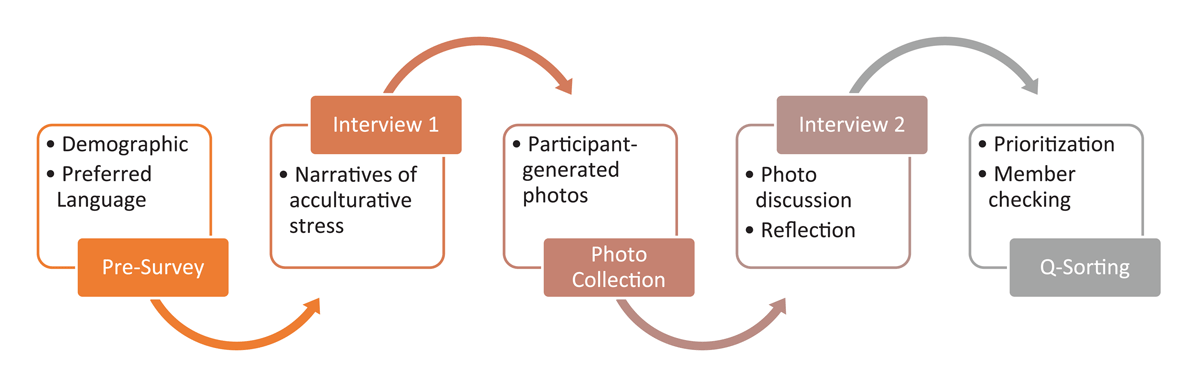
Figure 3
Sequence of Data Collection.
Data Analysis
For data analysis, the researcher followed the recommendations by Hopwood (2018) to capture the full essence of the participants’ phenomenological experience without losing any information during coding. Initially, the researcher reviewed the Zoom-recorded interviews, simultaneously correcting any discrepancies in the transcripts obtained from the Zoom captions. After this correction process, the researcher carefully re-read the transcripts of each participant’s interviews, identifying significant stories and statements related to acculturative stress, and wrote them on sticky notes. These sticky notes were then placed around the names of each participant on a whiteboard. Appendix C provides photographs of this process.
After the initial review of the interview data, the researcher analyzed the photographs generated through the photo-elicitation method as an additional entry point into participants’ lived experiences. All photographs were printed and labeled with participant identifiers to maintain analytic traceability across data sources. Following Thomson’s (2017) suggestion to work visually with images to explore relational and affective connections, the researcher examined the photographs collectively to identify potential conceptual and emotional linkages. This approach was selected to support inductive pattern recognition and to avoid imposing predefined categories onto the visual data.
The photographs were first grouped based on visible features and broad thematic similarities as an initial analytic step. This preliminary clustering allowed the researcher to identify recurring areas of experience that appeared salient across participants. Through this process, five initial clusters were identified: food, social life, environments, emotional support, and job opportunities. These clusters were considered preliminary and were refined through repeated engagement with participants’ narratives to ensure that the analysis reflected participants’ meanings rather than relying only on visual similarities.
Next, the researcher revisited the participants’ narratives about the photos to gain a deeper understanding and move beyond surface-level similarities, regrouping the images based on the subjective meanings participants attributed to them. As a result, two additional clusters emerged: language (reflecting the emotional and cognitive challenges participants associated with using English) and memories (representing photos tied to nostalgic or identity-anchored reflections). Thus, the final set of seven clusters: food, social life, environments, emotional support, job opportunities, language, and memories; was defined through iterative visual and narrative analysis. Appendix D includes the visual documentation of this process.
With these clusters in mind, the researcher revisited the sticky notes containing the experiences of all the participants. The researcher mixed all of them and grouped them into the seven clusters found in the photo-elicitation analysis. Upon examination, the researcher found that the cluster memories and the cluster environments did not yield any significant stories or statements, so these two clusters were discarded. Additionally, the cluster emotional support was changed to community because the word mentioned most frequently by participants when narrating their experiences of finding emotional support during their adaptation process was community. Therefore, the five clusters remaining for analysis were: food, social life, language, community, and job opportunities. After reading and analyzing the stories and statements in each cluster, the researcher realized that community and social life were often interconnected in many cases. Therefore, the researcher decided to combine these two clusters into one: social life/ community. Appendix E includes photographs of this part of the analysis process.
For the Q-sorting analysis, the researcher examined the rankings that participants provided at the end of the second interview. Because the Q-sort activity was conducted during the second interview, the words used in the exercise were selected after a preliminary review of the first-round interviews, before the full phenomenological analysis was completed. Thus, these words were intended to serve as discussion prompts that reflected salient issues emerging from participants’ early accounts rather than the final analytic themes of the study. The six words selected were: homesickness, social life, language, job opportunities, food, and ways of expressing affection. Participants ranked these words according to their perceived significance using the Zoom chat, where rank 1 represented the topic they perceived as contributing most to their acculturative stress. The combined results are presented in Table 2.
Table 2
Q-sorting Results.
| PARTICIPANTS Q-SORTING | ||||
|---|---|---|---|---|
| RANK | ANGELA | JACKIE | CAMILO | MARTIN |
| 1 | Homesickness | Job Opportunities | Social Life | Social Life |
| 2 | Social Life | Language | Ways of expressing affection | Language |
| 3 | Language | Ways of expressing affection | Job Opportunities | Food |
| 4 | Job Opportunities | Food | Homesickness | Homesickness |
| 5 | Food | Social Life | Food | Job Opportunities |
| 6 | Ways of expressing affection | Homesickness | Language | Ways of expressing affection |
Following the ranking activity, the researcher revisited the interview segments in which participants explained their ranking decisions and reflected on the meanings they assigned to each word. These narratives were analyzed alongside the interview and photo-elicitation data to provide an additional perspective on participants’ experiences. Three of the preliminary Q-sort prompts—social life, language, and job opportunities—were also identified as prominent themes in the final qualitative analysis. Other Q-sort prompts facilitated participants’ reflection during the interviews but were not retained as final themes after the iterative analysis of all data sources. Thus, the Q-sort served to enrich the interpretation of participants’ lived experiences rather than to validate or determine the final thematic structure.
Trustworthiness
To ensure the trustworthiness of the study, Tracy’s (2010) criteria for quality in qualitative research guided decisions across data collection, analysis, and interpretation. Rich rigor was addressed through deliberate sampling, sustained engagement with participants, and the use of multiple data sources. Participants were recruited using chain-referral sampling to access a small and specific population of Latin American undergraduate IESs. Although phenomenological studies typically involve small samples (Creswell & Poth, 2018), the inclusion of four participants allowed for in-depth engagement with each case across multiple data collection points, including two interviews, photo-elicitation, and Q-sorting. This design supported prolonged interaction with participants and facilitated deeper reflection over time. Rigor was also extended to the data analysis, providing readers with a comprehensive explanation of how the data was sorted, selected, and organized (Tracy, 2010). Data analysis involved repeated readings of interview transcripts, visual analysis of participant-generated photographs, and iterative clustering across data sources. By providing detailed descriptions of how data were examined, grouped, and refined, the study allows readers to trace how interpretations were developed.
Credibility was strengthened through methodological triangulation and participant validation. Three data sources—interviews, photo-elicitation, and Q-sorting—were intentionally integrated to examine participants’ experiences from different perspectives. Patterns identified in interview narratives were examined alongside visual data and participants’ prioritization of themes during Q-sorting. In addition, Q-sorting functioned as a form of member checking by allowing participants to prioritize and confirm the relevance of themes emerging from earlier interviews. Additionally, to ensure reliability in the process, the researcher shared the analyses, findings, and conclusions with the participants so they could assess their accuracy and credibility (Creswell & Poth, 2018). Member checking was conducted via email, and all participants confirmed their agreement with the researcher’s written interpretations. To address sincerity and reflexivity, the researcher engaged in ongoing self-reflection throughout the study. A positionality map, informed by Jacobson and Mustafa (2019), was developed to examine how the researcher’s background, experiences, and assumptions might shape the research process. Throughout the study, the researcher remained transparent about her positionality, making efforts to bracket herself during data analysis to minimize her influence on the study analysis and findings (Secules et al., 2021). To further support transparency, the researcher conducted multiple reviews of the analyzed data to ensure that interpretations were grounded in participants’ narratives and not influenced by preconceived expectations.
Positionality
I acknowledge my position as the researcher for this study, as a woman of color, an engineer, and an international student from Latin America. I recognize that my past experience as an undergraduate international student at a Hispanic-Serving Institution (HSI) in the U.S. brings an understanding of the phenomenon under study. To address potential biases that could come from my personal experiences, I did a self-reflection regarding my first time going through the phenomenon a decade ago (Moustakas, 1994, pp. 88). I documented this reflection in a statement where I wrote about the feelings and experiences I encountered during that moment.
To maintain transparency during interviews, I dedicated 15 minutes before each session to center myself as an interviewer, consciously setting aside my own experiences. I learned this method during my life coach studies, where I was taught techniques to be 100% present for the person you are interviewing. Furthermore, during the data analysis phase, acknowledging similarities between my experiences and those of the participants added transparency to the process. I believe it’s impossible to entirely bracket oneself from the study (Creswell & Poth, 2018; Moustakas, 1994). However, to honor each participant’s experience with the phenomenon, I dedicated one day to analyzing the data from just one participant at a time. Each day was solely devoted to one participant, and I made an effort to empathize and think from their perspective.
Findings
This section presents the findings addressing the two guiding research questions of the study: (RQ1) How do Latin American international engineering students (IESs) perceive and experience acculturative stress during their first year of engineering at a large public research university in the U.S.? and (RQ2) What are the main factors contributing to acculturative stress among these students? Guided by Berry’s (2006) framework of acculturative stress, the findings focus on participants’ appraisal of their early acculturation experiences and the stressors they identified as most salient during their first year. Analysis revealed four initial stressor clusters—language, social life/community, job opportunities, and food. However, three stressors—language, social life/community, and job opportunities—were consistently ranked as most significant in the Q-sorting activity and were most frequently described in participants’ narratives. Through the analytic process, these stressors were taken up as the primary themes of the analysis.
Before presenting the thematic findings, brief participant profiles are provided to contextualize the analysis and highlight similarities and differences in students’ backgrounds, language experiences, social networks, and academic trajectories. These profiles situate the themes that follow and illustrate how acculturative stress emerged through distinct yet overlapping pathways. The subsequent sections then present each primary stressor in turn, drawing on interview narratives and photo-elicitation artifacts to illustrate how students experienced and interpreted acculturative stress during their ongoing acculturation process.
Participant Profiles
To contextualize the findings, brief profiles of the four participants are presented below. Although all participants shared the experience of transitioning from Latin America to a U.S. engineering program and came from similar socioeconomic backgrounds, they differed in prior exposure to English, social networks, and academic trajectories. These differences shaped how acculturative stress was experienced and interpreted during the first year.
Angela entered the university with strong academic English skills due to her bilingual schooling but reported significant challenges in social communication and emotional expression in English. She experienced acculturative stress primarily in social and cultural domains and described a strong sense of loss related to lifestyle and leisure practices from her home country. In addition, Angela reported stress related to professional opportunities, particularly when comparing herself with domestic peers. Although she believed she had strong grades and qualifications, she felt discouraged when domestic students obtained internships more easily while she faced additional barriers due to visa restrictions. This comparison contributed to feelings of frustration and unfairness, as she perceived that her international status limited access to opportunities she felt academically prepared to pursue.
Martin arrived with high comprehension of English but experienced difficulty with spontaneous speech and social interaction. His acculturative stress was closely tied to language use and social belonging. Having a Peruvian roommate initially buffered feelings of isolation, but he continued to struggle to connect with domestic students during his first year. In addition, Martin reported experiencing moments of perceived discrimination in his student residence hall when others reacted negatively to him speaking Spanish. Although he tried not to dwell on these incidents, they made him feel uncomfortable and disappointed, particularly because he did not expect to encounter such experiences at a large and diverse university. These moments contributed to a heightened awareness of his international status and reinforced his sense of social vulnerability during his first year.
Camilo experienced acculturative stress primarily through social isolation and the absence of community during his first year. Although academically successful, he described profound loneliness and a persistent feeling that he did not belong in the university environment. During this period, he struggled to form meaningful friendships and often felt disconnected from those around him, which led him to consider returning to his home country. In addition to social isolation, Camilo reported stress related to professional opportunities. Because of visa restrictions and limited internship options for international students, he was unable to secure a summer internship in the U.S. and returned to his home country to work instead. Over time, he formed a support network with other Latin American international students in his department, which helped reduce feelings of isolation and provided a sense of belonging.
Jackie experienced acculturative stress most strongly in academic communication and professional development. Language barriers affected her confidence in presentations, and concerns about internships and future employment shaped many of her academic decisions. In particular, she reported that limited job opportunities for international students in chemical engineering led her to pursue a double major in construction engineering, a field she perceived as offering more options for students with visa restrictions. Despite this strategic decision, Jackie described feeling discouraged and anxious about her professional future, as she had not yet been able to secure an internship by the end of her second year. She perceived this lack of progress as both frustrating and disheartening, especially as she approached the later stages of her program and compared herself with domestic peers who accessed opportunities more easily.
Language
Language emerged as a central source of acculturative stress across participants and directly addressed RQ2 by identifying linguistic challenges as a primary stressor during the first year. Consistent with Berry’s (2006) appraisal phase of acculturative stress, participants evaluated their language experiences not only in terms of proficiency but in relation to social connection, identity expression, and academic performance. Although all participants met university language requirements, they described language as a persistent barrier to emotional expression, social interaction, and professional communication, shaping how they experienced and interpreted their early acculturation.
For students with prior bilingual education, language was less problematic academically but remained a source of stress in social contexts. For instance, Angela attended a bilingual school in her home country; therefore, she didn’t encounter language difficulties academically, but she struggled socially, especially when trying to express complex emotions or engage in casual conversation. To avoid feeling linguistically isolated in her daily life, she consistently looked for Spanish-speaking friends, but it was difficult for her. As she described, “Finding someone who speaks Spanish at this university is like finding a pearl among so many rocks.” Equally, Martin highlighted how the mental process of translating thoughts from Spanish to English impacted his social confidence:
“I understand English very well, but speaking can sometimes be a bit challenging because you first have to think about what you want to say and then translate it in your mind. So, sometimes communicating with Americans can be complicated… it takes effort to express what you really want to say. And that’s what makes social communication challenging.”
Martin feels that he is not truly himself when he speaks in English, which is why he prefers to engage in social activities only with students who speak Spanish. Martin also believes that because he and his friends cannot fully translate the way they communicate in Spanish, including slang or jokes, their American friends cannot truly understand their personalities and miss out on their fun side. Additionally, for students who did not have the opportunity to attend a bilingual school in their home country, language struggles extend to their academic lives. Jackie has been significantly affected by her inability to deliver effective presentations in English. Growing up, she learned presentation skills from her mother, a university professor. However, she now feels that she struggles to deliver presentations in English due to a limited English vocabulary:
“I’m very good at giving presentations. My mom was a professor at the university, and I grew up watching her. I have a very extensive vocabulary in Spanish, so I’m very capable of giving presentations in Spanish. But here, I struggle. I try to memorize the lines, I can’t deviate from the scripted lines because otherwise, I feel like I’m going to make mistakes.”
We can see that she struggles with giving presentations in English due to a fear of making grammatical mistakes if she deviates from the script. Consequently, this limitation hinders her ability to fully demonstrate her knowledge and confidence.
Social Life and Community
Social life and the process of building community emerged as a major source of acculturative stress for all participants and directly addressed RQ2 by identifying difficulties with social integration as a central stressor during the first year. Consistent with Berry’s (2006) framework, participants appraised their early social experiences as problematic when they were unable to establish a sense of belonging or form meaningful relationships in the new cultural environment. Across cases, students described feelings of loneliness, isolation, and loss associated with the absence of familiar social networks and cultural practices. These experiences illustrate that acculturative stress was shaped not only by the absence of social support but also by participants’ perceptions of whether they were successfully integrating into the university community, addressing RQ1 by revealing how social challenges were perceived and emotionally experienced during the first year. During the photo-elicitation process, Camilo shared a photograph of a football game at his university, shown in Figure 4, and described it as follows:
“This picture brings mixed feelings. I was excited to attend an American football game, but I also felt sad because I was alone and hadn’t found my group of friends yet. Seeing a stadium full of people made me realize that, despite being surrounded by others, I still hadn’t found my community.”

Figure 4
Photograph shared by Camilo illustrating feelings of isolation.
Camilo mentioned that he struggled during his freshman year to find friends with similar backgrounds to his own and was unable to form any real friendships with domestic students. For the second interview, he brought this photograph to illustrate the sense of isolation and loneliness he experienced during his first year as part of his acculturative stress experience. He even considered going back to his home country because he felt extremely lonely during that first year. Fortunately, by his second year, he met more Latin American international students in his department and was able to build a community with them. They are not only friends who go out together but also a support system for each other in various aspects.
Likewise, Martin and Angela emphasized the importance of having friends who share their background and international student status. Both were fortunate to have roommates who were also Latin American international students. Martin, for example, said:
“For us Latinos, who are very few in number, the first few weeks were particularly challenging when it came to socializing with American students. Since most of them come to a very American university, they have this strong desire to make American friends, and at first, that made things a bit difficult for us. However, over time, we started meeting other Latino students, and through them, we gradually gained more confidence in socializing.”
We can see from his statement that, even though Martin did not feel completely alone during his first year—since he had a Peruvian roommate—they both struggled during the first semester to find a community. They felt isolated from domestic students, believing that they were not interested in forming friendships with international students. It was only when they met more Latin American international students that they began to feel a sense of community and became more comfortable in their social interactions with domestic students. Similarly, Angela was fortunate to have a roommate from Bolivia, but she also struggled to adapt to social life in the U.S. She states:
“I came to the U.S. when I was 17, so I depended on my parents for everything. Back home, I was used to going out, dancing, traveling with friends, and being close to the beach. Here, there are no Latin nightclubs, weekends feel boring, and sometimes seeing my friends enjoying life back home really gets me down—it has even made me cry.”
Despite all these difficulties in their social life in the first year, participants have found ways to cope by forming communities with other Latin American international students. However, many acknowledge that their social lives in the U.S. are not and will not be the same as they were in their home countries. They feel they will not find in the U.S. the number of friends they used to have, the nightlife, and the expressions of affection among friends. Despite this, they appreciate the communities that they have formed and the opportunities for social interaction available in the U.S. and accept that they will find fulfillment in this area when they visit friends in their home countries.
Job Opportunities
Concerns about internships and future employment emerged as a significant source of acculturative stress for all participants and directly addressed RQ2 by highlighting professional opportunities as a key stressor shaping students’ early experiences. Although most participants were in the early stages of their programs, they consistently evaluated access to internships and future careers as central to their academic success and long-term adaptation. In line with Berry’s (2006) framework, participants’ appraisals of these experiences reflected anticipatory acculturative stress, as concerns about visa restrictions, sponsorship, and limited employer willingness to hire international students shaped how they interpreted their prospects in the U.S. These interpretations illustrate how acculturative stress extended beyond immediate academic adjustment to include uncertainty about long-term professional integration, addressing RQ1 by showing how students perceived and emotionally responded to structural barriers affecting their future trajectories.
For instance, Jackie shared a painful moment during a job interview: “I was cut off during an interview. They asked me, ‘Will you need sponsorship in the future?’ And I said yes, and they responded, ‘I can’t continue with the interview.’” As we can see, she was not even able to finish the interview and showcase her potential. This question was posed right at the beginning of the interview, serving as a screening mechanism for the company to avoid dealing with future sponsorship issues. Furthermore, as part of the photo-elicitation process, she presented the photograph in Figure 5, which illustrates a job search website. While initially searching for chemical engineering internships, she found over a thousand available positions. However, after applying a filter for companies that hire international students, the results dropped to zero. Frustrated by this outcome, she decided to pursue a double major in construction engineering, recognizing that the field offered more opportunities for international students.
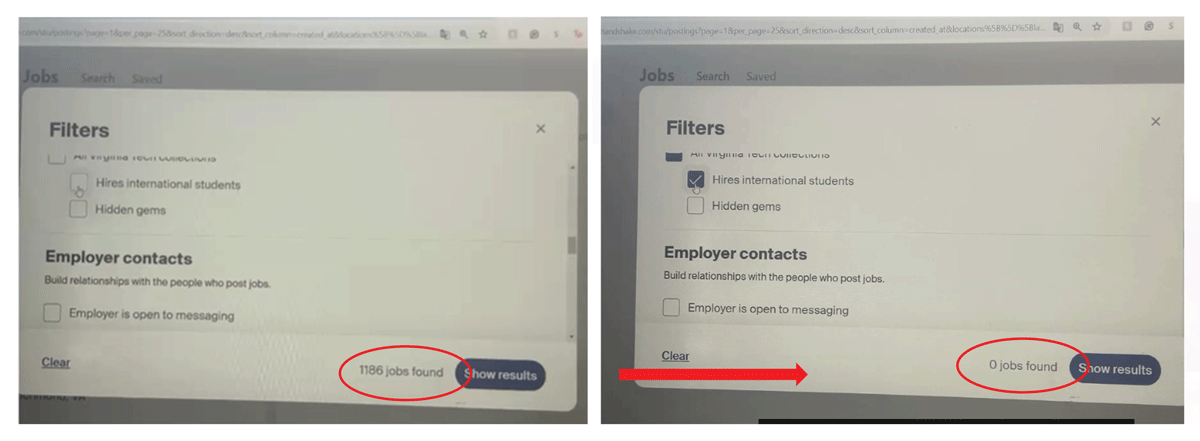
Figure 5
Jackie’s job search experience filtering companies that hire international students.
Similarly, Angela remarked: “It’s a reality, it’s so tough to find internships when you’re an international student. It’s a constant pressure because you want to be competitive, but you feel like things are against you… it’s horrible pressure.” Angela is clearly under a lot of stress due to this issue. As a junior student, internships are crucial for her curriculum. Otherwise, she fears that upon graduation, she would not be as competitive as her peers and would be at a disadvantage, compounded by the fact that she is an international student and not every company is willing to sponsor her work visa. Moreover, Camilo, the international student from Colombia, also discussed how this issue has become paramount for him and his international peers, it is something that gives him anxiety:
“Getting an internship is really difficult, especially as an international student. Many companies explicitly say they don’t hire international students, and I still haven’t secured a summer internship. This causes me a lot of anxiety because I know I need internships now to get a job after graduation.”
For these students, the job opportunity stressor was not just about immediate opportunities, but about the long-term trajectory of their careers in the U.S.
Discussion
This study aimed to explore the acculturative stress experienced by Latin American IESs and identify the key factors contributing to that stress during their first year of study at a large public research university in the U.S. Drawing on the experiences of four participants with distinct backgrounds and acculturation pathways, it became evident that, despite differences in their academic programs and personal trajectories, they encountered several shared stressors throughout their acculturation journey. Chavajay and Skowronek (2008) emphasized the need for qualitative approaches to study acculturative stress in international students, given the complexity of the phenomenon and the deeply personal nature of students’ experiences. In the present study, the use of a phenomenological approach, along with three data collection artifacts—interviews, photo-elicitation, and Q-sorting—proved essential in capturing rich and trustworthy insights into students’ experiences. The findings revealed that while each participant encountered unique sources of acculturative stress, certain factors were common across cases, and some persisted even after two years. In the findings section, these themes were presented using the same labels employed during the data analysis (language, social life, and job opportunities). However, in this section, the subheadings have been changed to more descriptively reflect the findings and claims emerging from the analysis.
Language as a Barrier to Self-Expression
Participants consistently described language as one of their most significant sources of acculturative stress, particularly in how they evaluated and interpreted their ability to communicate socially and academically. Even those who were academically fluent struggled to communicate naturally in social settings or to express emotion in English. They described not “feeling themselves” when speaking in English and missing the nuances of humor and affection characteristic of their Spanish-speaking identities. This finding reinforces what prior research has identified as the dual role of language in shaping both academic and social adjustment (Bastien et al., 2018). Studies have shown that limited English proficiency affects international students’ confidence and willingness to socialize, often leading to isolation or reduced participation in classes (Mori, 2000; Smiljanic, 2017). In this study, participants shared that speaking English in social settings restricted their ability to show their true personalities—especially their humor, spontaneity, and emotional nuance. For these Latin American international students, English functioned not only as a barrier but as a constraint on authentic self-expression. This echoes Bastien et al.’s (2018) assertion that language difficulties can limit students’ willingness to seek help and, in turn, reinforce feelings of isolation.
This theme connects directly to RQ1 and RQ2. Students’ experiences with language stress show how acculturative stress appears in everyday academic and social interactions (RQ1), and their struggles with presentations and informal conversations reveal that language is both a psychological and structural factor that causes them stress (RQ2). These findings highlight the need for institutional support that integrates language development with engineering communication. Presentation workshops for non-native English speakers could provide structured rehearsal opportunities, reduce cognitive strain from constant language monitoring, and support clearer pronunciation and technical vocabulary development. Complementary in-person workshops focused on everyday undergraduate language (e.g., slang, informal questions, and common abbreviations) could further enhance students’ social confidence and sense of inclusion. In addition, the university’s international student office could develop an AI-based app to familiarize international students with campus terms, abbreviations, and everyday aspects of VT life in multiple languages. These recommendations align with Bastien et al. (2018), who emphasize that confidence in language use—not only proficiency—is critical to student adjustment.
Social Isolation and the Search for Belonging
Participants consistently identified difficulties forming meaningful social relationships as a major source of acculturative stress during their first year in the U.S., often describing loneliness and disconnection in the absence of close-knit communities similar to those in their home countries. Although most eventually formed friendships—primarily with other Latin American international students—the process of finding community was slow and emotionally demanding. This pattern aligns with acculturation research identifying social disconnection as a strong predictor of acculturative stress among international students (Constantine et al., 2004; Gautam et al., 2016; Wu et al., 2015). Consistent with Berry’s (1992) framework, stress emerged from a perceived mismatch between students’ cultural expectations and U.S. social norms. For Latin American international students, social connection is often characterized by warmth, collectivism, and physical affection, which are less emphasized in U.S. contexts. Prior studies show that these differences and limited social support contribute to psychological distress among Latin American international students (Bai, 2016b; Wilton & Constantine, 2003). As Angela’s reflection illustrates, this mismatch affected not only social preferences but also identity and emotional wellbeing.
For the participants in this study, this difficulty led to a kind of dual disconnection: limited opportunities to socialize outside the classroom and difficulty integrating within academic spaces. To cope, many relied on friendships with other Latin American peers, which aligns with Kim’s (2001) argument that ethnic social networks can help individuals manage stress and preserve their cultural identity during the adaptation process. However, as Martin and Camilo’s experiences show, these connections can also reinforce separation from domestic peers, creating a “comfort zone.” Although this coping strategy helps reduce immediate stress, it may also limit long-term social integration, reduce opportunities to collaborate with domestic students, and restrict the global interaction that engineering programs aim to promote (Kim, 2001; Montgomery & McDowell, 2009).
This theme directly addresses RQ1, which explores how Latin American IESs perceive and experience acculturative stress during their first year. Their reflections show that social isolation is not a temporary discomfort but a defining emotional experience that shapes how they interpret their entire first year. It also contributes to RQ2, identifying the lack of community and cultural dissonance as key stressors that persist even as students gradually adapt academically. The students’ experiences challenge Berry’s (2006) model by revealing that some individuals reach a stage of acceptance rather than full adaptation. The researcher suggests that acculturative stress can simply lead to acceptance without significant adaptation. Rather than changing themselves to match the host culture, they learn to acknowledge and coexist with its differences. The participants have accepted the new ways of engaging in social life in their new environment, but they have not fully adapted to them, as they tend to return to their usual social practices when they go back to their home country. Acceptance entails understanding and acknowledging the differences in the new culture while recognizing that one does not need to change oneself to conform to it. Thus, the researcher argues that acceptance can lead to growth without necessitating complete adaptation.
Job Opportunities as a Barrier to Professional Development and Belonging
Participants described limited access to internships and job opportunities as one of the most enduring and distressing stressors of their undergraduate experience. Although this stressor often emerged during the sophomore year when students began applying for internships, it shaped their longer-term perceptions of career viability in the U.S., contributing to stress, anxiety, and a sense of exclusion from the American engineering field. This finding extends acculturative stress beyond cultural and linguistic adaptation to include structural and institutional inequities—an area less emphasized in traditional acculturation frameworks (Bai, 2016b; Berry, 1992). While Berry conceptualizes acculturative stress primarily as a psychological and social process, participants experienced it as embedded in systemic policies such as visa restrictions and sponsorship practices. Consistent with this, Xu et al. (2023) found that ineligibility for internships or fellowships heightens stress among international students, though limited research has examined how these barriers operate specifically within engineering education. In this context, internships are central to professional identity development and future employability (Ozek, 2018; Powers et al., 2018). The inability to access these opportunities thus undermines international students’ sense of competence and belonging in the engineering profession.
The stress surrounding job opportunities adds to the academic stress experienced by IESs. As Asghar et al. (2024) and Jensen et al. (2023) note, engineering students already operate in a culture of constant evaluation and competition. For international students, these pressures are compounded by external constraints they cannot control. This creates a layered form of stress in which academic performance anxiety is compounded by structural insecurity about future employment. Such multi-level stressors reveal that acculturation for IESs is not just about cultural adjustment but also about surviving within institutional systems that disadvantage them through policy. This theme contributes directly to RQ2, which seeks to identify the main factors contributing to acculturative stress. These findings suggest that job opportunity stress among Latin American IESs extends beyond individual or cultural challenges and reflects the influence of structural constraints related to immigration regulations.
The participants’ experiences suggest an expansion of the traditional definition of acculturative stress. In addition to interpersonal and cultural adaptation, international students face structural acculturative stress, stress arising from institutional and policy-level exclusion. This concept recognizes that adaptation is not only psychological but constrained by the systems in which students operate. For example, no matter how linguistically fluent or academically successful these students become, they remain limited by their visa status and the sponsorship policies of employers. This insight highlights a critical gap in Berry’s (2006) framework: while his model accounts for individual coping and adaptation, it overlooks how macro-level structures—such as immigration regulations and employer sponsorship policies—can systematically limit access to internships and employment and, in doing so, maintain stress beyond the individual’s control. Moreover, universities and engineering colleges should provide early-stage guidance about job search strategies and employer networks for international students. Partnerships with companies that actively hire international talent could mitigate this stressor and foster equitable professional pathways.
Across the three primary stressors—language, social life, and job opportunities—this study reveals that Latin American IESs experience acculturative stress as a layered and evolving process that interlaces emotional, cultural, and structural dimensions. Collectively, these findings demonstrate that acculturative stress for this population cannot be understood merely as an outcome of personal adaptation; rather, it reflects how individual coping efforts intersect with the broader institutional system of engineering education. Taken together, these insights suggest that, for the participants in this study, acculturative stress reflects both psychological processes and structural constraints. They highlight the need for engineering educators and administrators to recognize that supporting international students requires interventions that go beyond language and social integration to include policy advocacy and equitable career support. By reframing acculturative stress as both an individual and systemic process, this study contributes a more holistic understanding of how IESs navigate the intersection of culture, competence, and belonging in U.S. engineering education.
Limitations
The study has three main limitations. Firstly, socioeconomic status was not taken into consideration during the analysis, and socioeconomic status is a crucial aspect of one’s background that can influence how individuals perceive stressors. Since all participants shared a similar socioeconomic status, there was limited variation in this aspect, making it challenging to compare their experiences with individuals from different socioeconomic backgrounds. Secondly, the study did not delve into the motivations behind each student’s decision to pursue an engineering program in the U.S. Understanding these motivations could shed light on how individuals perceive stressors related to acculturation. However, the purpose of the study was to focus specifically on participants’ lived experiences of acculturative stress during their first year and the factors contributing to those experiences. Addressing these motivations could provide additional insights into students’ resilience and coping mechanisms in relation to acculturative stress in future studies.
Third, although the study included only participants from one large public research university, it would be beneficial for future research to include participants from a broader range of institutions, such as Historically Black Colleges and Universities (HBCUs) and Hispanic-Serving Institutions (HSIs). This would provide a more comprehensive understanding of how the phenomenon is experienced across diverse institutional contexts. Additionally, future research could explore the same phenomenon with undergraduate international students from different nationalities, not only from Latin America, to better understand how nationality and culture may shape the experiences associated with the phenomenon under study.
Conclusions & Implications
This study contributes to a deeper understanding of how Latin American IESs experience and make sense of acculturative stress during their early years at a large public research university in the southeastern U.S. Using a phenomenological approach and drawing on three data sources, the research illuminated three key stressors—language, social life, and job opportunities—that shape students’ acculturative process. These findings reveal that acculturative stress for this group extends beyond linguistic or cultural adaptation, encompassing structural and policy forces embedded within engineering education.
The study advances acculturation theory by applying Berry’s acculturation framework within the context of undergraduate Latin American IESs. This study provides empirical evidence that supports and extends the applicability of the framework. Through this application, the study introduces two conceptual refinements. First, it identifies acceptance as a distinct coping outcome, whereby students acknowledge cultural differences without fully assimilating or resisting them, allowing coexistence and psychological balance. Second, it proposes the notion of structural acculturative stress, recognizing that international students’ challenges are not purely individual but also rooted in institutional and policy-level inequities that limit access to community and career opportunities. Together, these insights call for a shift in how acculturative stress in international students is conceptualized and addressed, emphasizing that successful adaptation requires not only individual resilience but also institutional change.
For engineering educators and administrators, these findings highlight the need to design support systems that are both culturally responsive and structurally inclusive. Initiatives such as mentorship programs that pair international and domestic students, communication workshops embedded within engineering curricula, early guidance on job search strategies, and stronger employer networks open to hiring international students could help reduce stress and create more equitable professional pathways. Faculty, advisors, and institutional leaders must also recognize the compounded nature of international students’ stress, which stems not only from academic rigor but also from the realities of immigration status and limited employment opportunities.
Although this study offers a nuanced understanding of Latin American IESs’ experiences, it is limited by its small sample size and single-institution scope. Future research could build on these insights by examining different institutional contexts, exploring how gender, race, or socioeconomic background intersect with acculturative stress, and conducting longitudinal studies to trace how the process of acceptance evolves throughout the undergraduate journey and into professional life. Investigating how limited job opportunities influence academic performance and long-term career trajectories would further expand understanding and inform institutional practices and policies.
Additional File
The additional file for this article can be found as follows: