
Operational stress injuries (OSIs) among veterans are a major public health concern in Canada (Veterans Affairs Canada [VAC], 2006). OSIs are considered “any persistent psychological difficulty resulting from operational duties performed while serving in the Canadian Forces (CF) or as a member of the Royal Canadian Mounted Police” (RCMP; VAC, 2006, p. 1). Posttraumatic stress disorder (PTSD) is a common OSI among military or policing veterans and is recognized as a “psychological response to the experience of intense traumatic events, particularly ones that are life-threatening” (American Psychiatric Association [APA], 2013; VAC, 2017a). PTSD symptoms fall into one of four categories: (a) intrusive thoughts (e.g., flashbacks and nightmares); (b) avoiding reminders/numbing (e.g., avoiding events or places); (c) negative thoughts and feelings (e.g., pessimism, detachment, or flat affect); and (d) arousal/reactivity (e.g., hypervigilance and sleep problems; APA, 2013). Development of PTSD may be the result of exposure to potentially psychologically traumatic events (PPTE), such as direct combat duties or being in dangerous war zones, or can occur due to PPTE exposures prior to or after service (e.g., violent crime victimization, surviving an accident, etc.) and may be compounded with service scenarios (Carleton et al., 2020). An estimated 15,000 Canadian war service veterans and members of peacekeeping forces have been diagnosed with PTSD (Rebeira et al., 2017).
Veterans with PTSD are at an increased risk for developing a wide range of physical and mental health issues, including anxiety, depression, relational problems, employment difficulties, and homelessness (Whitworth et al., 2019; Yarborough et al., 2017), as well as substance use disorder (Banducci et al., 2016; Bowe & Rosenhack, 2015). Substance use disorder (SUD) is considered “a medical illness caused by repeated misuse of a substance or substances, characterized by clinically significant impairments in health, social function, and impaired control over substance use and are diagnosed through assessing cognitive, behavioral, and psychological symptoms” [Substance Abuse and Mental Health Services Administration (SAMHSA), 2020, p. 4]. Immediate and long-term health and social consequences of SUD can include chronic illness (e.g., heart disease, stroke), decreased workplace productivity, inability to manage commitments, relationship problems, financial problems, and mental health problems (McLellan, 2017). From a public health perspective, SUD can lead to healthcare costs, lost workplace productivity, and criminal justice costs, estimated to be in the millions [Canadian Centre on Substance Use and Addiction (CCSA), 2020].
More than 50% of male and 25% of female Canadian veterans reportedly use alcohol and substances to cope with PTSD symptoms (VAC, 2017a). The comorbidity of PTSD with SUD among veterans has been explained by high rates of prescribed medication use/misuse (e.g., opioids) and use of other licit (e.g., alcohol) and illicit (e.g., cocaine) substances as a means of coping with PTSD symptoms (Butler & Taylor, 2015; Harnish et al., 2016). For example, veterans with PTSD have a high likelihood of being prescribed opioids and experiencing negative health outcomes from opioid use (Bohnert et al., 2014; Macey et al., 2011; Seal et al., 2012). Increased cannabis use/misuse has also been reported among veterans to cope with their PTSD symptoms (Bonn-Miller et al., 2012; Browne et al., 2021). There are also reports of alcohol use being embedded within Canadian military culture, which might also explain veterans’ problematic substance use following service (Fetzner et al., 2013; Neighbours et al., 2014; Richer et al., 2016). Results of the 2016 Life After Service Survey indicated that 27% of veterans identified as heavy drinkers (i.e., five or more drinks per occasion; VAC, 2017b). Despite the high rates of PTSD and comorbid substance use disorder, veterans are hesitant to access mental health or addiction services (Gibson et al., 2021; Hoge et al., 2014). Among veterans with PTSD and comorbid SUD, stigma has been identified as a frequent barrier to help-seeking and treatment (Dell et al., 2017; Gibson et al., 2021; Hoge et al., 2014).
Stigma refers to a discrediting, norm-violating, and generally undesirable attribute an individual may possess (Goffman, 1963). Stigmatizing attributes may be visible/invisible, controllable/uncontrollable, and linked to appearance (e.g., physical deformity), behavior (e.g., child abuser), or group membership (e.g., LGBTQ community; Goffman, 1963). People or groups who possess a stigmatizing attribute may experience social disapproval, negative evaluations, exclusion, avoidance, prejudice, and discrimination from those without the attribute (Goffman, 1963; Major & Eccleston, 2004; Major & O’Brien, 2005). Link and Phelan (2001) outlined the following process for how stigma can result in discrimination: (a) distinctions based on characteristics are created and labels are assigned; (b) certain characteristics are deemed undesirable based on cultural norms; (c) labeled individuals are separated from non-labeled individuals, resulting in us/them dichotomy; (d) justifications for stigmatizing labeled individuals based on their perceived “otherness” are created; and (e) existing power differentials afford more powerful groups the ability to stigmatize a devalued labeled group.
Stigma can also activate stereotypes (Major & O’Brien, 2005). Stereotypes are defined as beliefs or generalizations about the characteristics of group members (Lyons & Kashima, 2001; Stangor, 2009) and are frequently accompanied by bias, prejudicial judgments, or discrimination (Bigler & Liben, 2006; Mills et al., 2007). Belief in stereotypes about a stigmatized attribute can subsequently trigger affective/emotional and behavioral reactions towards a person or group (Bos et al., 2013). Affective and behavioral reactions can vary based on whether an attribute is perceived as within a person’s control, the severity of the attribute, the perceived dangerousness of the attribute, and the perceived norm violation (Bos et al., 2013). Attributes perceived as controllable, low in severity, dangerous, and in violation of a social norm can trigger negative affective reactions, social censure (severe disapproval), fear, avoidance, anger, lack of sympathy, social exclusion, and social sanctioning such as facing a penalty (Dijker & Koomen, 2003; Feldman & Crandall, 2007; Weiner et al., 1988). Stigma can impact individuals via discrimination (i.e., enacted stigma), the experience or anticipation of being stigmatized (i.e., perceived stigma), and through psychological distress, shame, and reduced self-worth including internalized stigma (Herek, 2009).
Increasingly, veterans are relying on psychiatric service dogs (PSDs) to aid in managing their PTSD symptoms and comorbid SUD when traditional treatment modes are insufficient (Dell et al., 2022; LaFollette et al., 2019; Whitworth et al., 2019; Williamson et al., 2021). A PSD is encapsulated by the umbrella term assistance animal, defined as,
an animal who performs at least one identifiable task or behavior (not including any form of protection, comfort, or personal defense) to help a person with a disability to mitigate the impacts of that disability, and who is trained to a high standard of behavior and hygiene appropriate to access public spaces that are prohibited to most animals.
PSDs appear to serve as a complement to, rather than a replacement for, traditional PTSD and substance use treatment models (e.g., therapy, prescription medication; Rodriguez et al., 2020; Williamson et al., 2021; Williamson et al., 2022). In many ways PSDs seem to provide a holistic model of care and treatment by supporting veterans with their mental, physical, and social health (Williamson et al., 2022). Indeed, PSDs are specifically trained to meet the varying health needs of individuals with whom they are paired, including physical, sensory, neurological, and developmental/cognitive impairment (LaFollette et al., 2019). For example, PSDs can intervene when a veteran is experiencing a PTSD-driven flashback or nightmare by nudging or climbing onto them to guide them back to the present moment (Williamson et al., 2021). Further, PSDs can offer non-judgemental comfort, support, and companionship (Williamson et al., 2022).
Despite this being an emerging research area faced with criticisms (Herzog, 2014b; van Houtert et al., 2018), there is a growing evidence base that veterans with PTSD and comorbid substance use can experience symptom relief by working with a PSD (van Houtert et al., 2022; Williamson et al., 2021). Veterans have reported experiencing decreased PTSD symptoms such as nightmares, hyperarousal, hypervigilance, and anxiety, as well as improved sleep, quality of life, emotional health, interpersonal relationships, and increased physical activity (Husband et al., 2020; O’Haire & Rodriguez, 2018; van Houtert et al., 2022; Vincent et al., 2017; Vincent et al., 2018; Yarborough et al., 2017). Some studies have also shown that while working with a PSD, veterans can decrease their prescription medication use (Husband et al., 2020; Vincent et al., 2018), decrease their overall substance use (Dell et al., 2022), and engage in harm reduction practices related to their substance use (e.g., replace opioid prescriptions for medical cannabis to manage PTSD-related symptoms; Gibson et al., 2021; Williamson et al., 2021).
Currently, PSDs are not regulated by the Canadian public sector [Canadian Foundation for Animal-Assisted Support Services (CFAS), 2021] or standardized through Standards Council Canada (SCC; Graham et al., 2022). As such, training models and certification protocols vary across provinces/territories and service dog organizations within Canada [Canadian Association of Professional Dog Trainers (CAPDT), 2021]. A key component of training and working with a PSD involves accessing public spaces, particularly in cases where veterans have isolated themselves because of their PTSD (Dell et al., 2022; Rodriguez et al., 2020). The presence of PSDs in public spaces can be confusing, though, particularly when they are mistaken for other types of working animals, such as therapy or emotional support dogs (i.e., companion animals who are not specifically task-trained; Graham et al., 2022). There are also cases of “fake service dogs” that are considered by many as dogs that are inadequately task-trained to meet the disability needs of their handler and appropriately engage in public spaces or cases where a person does not have a disability but has their companion dog wear a service dog vest so they are granted access to public spaces, which can tarnish the public’s perception of PSDs overall (CFAS, 2021; Herzog, 2014a; Mills, 2017).
Given that PTSD and problematic substance use are “invisible illnesses,” a PSD can often bring undesired attention to a veteran’s mental health. Veterans have reported experiencing various iterations of stereotyping and stigma related to their mental health and partnership with a PSD, including people assuming they are not afflicted with PTSD, do not require a PSD, and therefore should not be allowed to bring their dogs into public spaces (Mills, 2017; Williamson et al., 2022). While PSDs may help decrease the isolation practices of veterans, being in public spaces with them and feeling stigmatized can ultimately exacerbate mental health symptoms (Williamson et al., 2022).
Stigma and stereotype activation can also negatively impact public support, including requests for tax increases and personal donations (Williamson & Lawson, 2021). Consumer demand currently exceeds the availability of PSDs in Canada, and very few individuals can afford a PSD on their own (CFAS, 2020). The cost of purchasing a fully trained PSD is estimated to be between $10,00–$30,000 CDN (CAPDT, 2021). The Canadian House of Commons Standing Committee on Veterans Affairs recently published a recommendation to create a PSD program for veterans and encouraged VAC to introduce a pilot project examining the impact of rigorously trained PSDs on veterans with PTSD (Committee on Veterans Affairs, 2022). In the meantime, many veterans are paying for PSDs out of pocket, training dogs on their own, relying on nonprofit programs to donate trained PSDs or training support, and requesting community donations via websites such as GoFundMe (CAPDT, 2021; CFAS, 2020). Because stigma can lead to stereotype activation and subsequent affective/emotional and behavioral reactions (e.g., discrimination) towards a person or group who possess a stigmatized attribute, examining the role of stigma and stereotyping in veterans’ requests for support in acquiring a PSD to help manage their PTSD and comorbid SUD is warranted.
Disclosure of mental illness can result in individuals being negatively treated due to stereotypes of their condition (Hipes et al., 2016). Mental illness labels generally evoke stereotypes of incompetence, dangerousness, uncleanliness, worthlessness, unpredictability, weakness, and ignorance (Link et al., 1999; Phelan & Link, 2004). Mental illness labels can also lead to negative treatment in social interactions, avoidance by others, and discrimination in housing, employment, and healthcare (Hipes et al., 2014). Individuals with SUD, specifically, have been stereotyped as dangerous, unpredictable, incompetent, weak-willed, dirty/unkempt, and responsible for their condition (Corrigan & Kleinlein, 2005; Corrigan et al., 2009; Crisp et al., 2000; Room et al., 2001; Sattler et al., 2017; Schomerus et al., 2011; Zwick et al., 2020). Studies have also found that people are more likely to social distance from individuals with SUD and are more willing to discriminate against them in terms of employment, housing, and governmental policy (Barry et al., 2014; Parcesepe & Cabassa, 2013; Pescosolido et al., 1999). While veterans might possess social capital and prestige based on their cultural value and societal desire to “support the troops” (MacLean & Kleykamp, 2014), research has shown that veterans with PTSD can be perceived by civilians as low in status, dangerous, incompetent, and unstable (Hipes & Gemoets, 2018; Hipes et al., 2014; Schreger & Kimle, 2017). Another study found that the top five assumptions or labels ascribed to veterans with PTSD were depressed, distant, unstable, angry, and on guard (Roscoe & Anderson, 2019). However, other studies have found that veterans with PTSD elicited more pity and were viewed as less in control of their mental health condition (Weiner et al., 1988; Wilson et al., 2011).
Research Questions and Hypotheses
While researchers have examined the stigma and stereotyping of individuals with SUD and veterans with PTSD, an examination of the stigma and stereotyping of veterans with SUD has not yet been undertaken. Additionally, the subsequent social censure and sanctioning projected onto veterans needing a service dog to aid with their mental health have not yet been examined. The purpose of the current line of research was to examine how Canadian veterans in need of a PSD are perceived by the Canadian public/civilians by exploring the stigmatization and stereotyping surrounding these individuals as well as the subsequent social censure and sanctioning projected on them.
The overarching research questions are: (a) What are the dominant societal perceptions of different categories of Canadian veterans needing a PSD? (b) What are the affective reactions elicited by each category? (c) What are the potential social sanctions placed on each category? To address these questions, the attributions associated with various groups of veterans in need of a PSD, as well as affective reactions to the groups, were examined. Further, (d) it was queried whether people would offer different modes of support to aid veterans in accessing a PSD to assist them with their mental health? The Stereotype Content Model (SCM; Fiske et al., 2002) and Weiner’s Attribution-Affect-Action (AAA) model of helping behavior (Schmidt & Weiner, 1988; Weiner, 1980) were adopted as theoretical frameworks to guide this project and address the dearth of atheoretical research on this topic.
The SCM posits that there are both positive and negative stereotypes (Fiske et al., 2002; Fiske, 2018). Within the SCM, groups are distinguished by the amount of competence and warmth they exude, resulting in four distinct stereotype categories (see Figure 1 below): admiration (high competence, high warmth); paternalistic (low competence, high warmth); contemptuous (low competence, low warmth); and envious (high competence, high warmth) (Fiske et al., 2002; Fiske, 2018). Competence, or the ability to be successful at tasks, and warmth, or the ability to comfort and support others, are often associated with higher-status groups and denied to lower-status ones (Cuddy et al., 2009; Fiske et al., 2002). Each SCM category elicits accompanying emotional reactions (Fiske et al., 2002). Specifically, groups assigned to the admiration stereotype category are considered in-groups, elicit feelings of pride and admiration, are seen as deserving of help, protection, and facilitation, and are seen as responsible for their positive outcomes (Fiske, 2012; Weiner, 1985). Groups in the paternalistic category tend to elicit pity, are seen as in need of help and protection, but are often neglected and demeaned, and are viewed as not responsible for their unfortunate situations (Cuddy et al., 2004; Fiske, 2012; Weiner, 1985; Weiner et al., 1988). Groups allotted to the contemptuous category tend to generate disgust, anger, and resentment, are viewed as cold, incapable, untrustworthy, and unfriendly, are often recipients of attacks, harm, and neglect, and are considered responsible for their personal choices (Cuddy et al., 2004; Fiske, 2012; Weiner, 1985). Finally, groups in the envious category can evoke envy, are viewed as worthy of respect and in control of their social standing, but are not well-liked and considered threatening, which can trigger hostility and resentment from others (Cuddy et al., 2004; Fiske, 2012; Fiske et al., 2002).
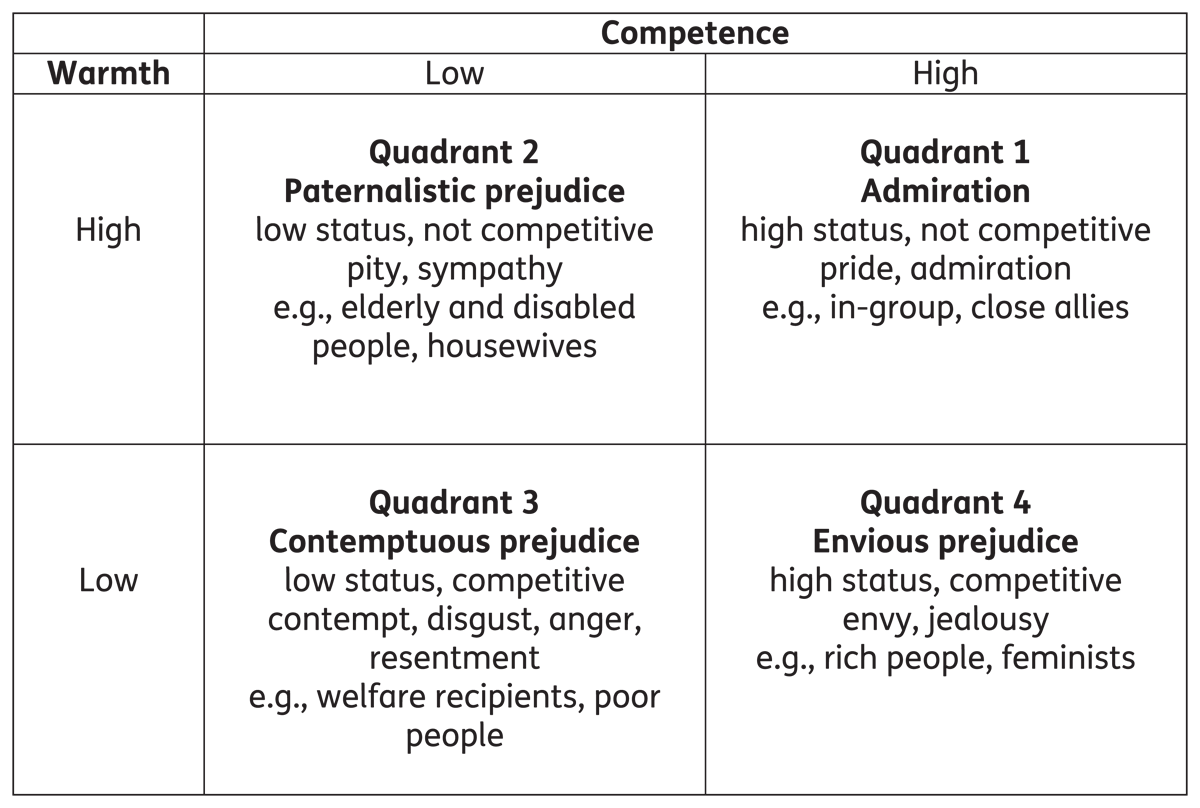
Figure 1
Stereotype Content Model (SCM).
Note: Figure 1 recreated by the authors from Fiske and colleagues (2002).
Weiner’s AAA model (Schmidt & Weiner, 1988; Weiner, 1980) proposes that when someone is “in need” we consciously or unconsciously make a causal assumption (attribution) about their situation, which elicits an emotional response for us regarding that person (affect) as well as our subsequent response (action) to them (see Figure 2 below). When we believe a person is in need due to factors outside of their control, we sympathize with them and want to help. In contrast, when we believe a person’s situation is under their control, we feel anger or contempt towards them and are less likely to offer help (Schmidt & Weiner, 1988; Weiner, 1980; Weiner et al., 1988). Neither the SCM nor the AAA model has been applied to the domain of veterans in need of a PSD. However, the SCM has been supported across various social and health issues (e.g., infertility; Williamson, 2019), and the AAA model has been supported within the domain of mental health stigma (Corrigan & Kleinlein, 2005).
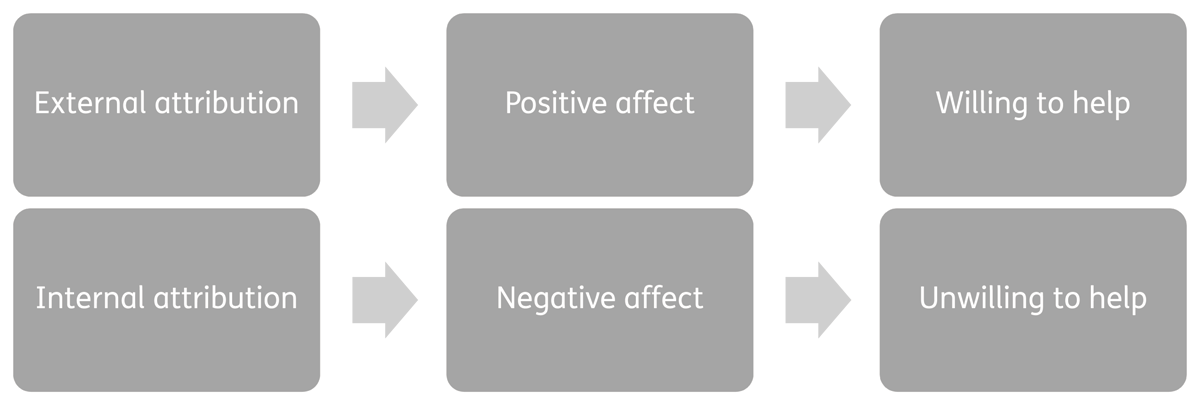
Figure 2
A Representation of Weiner’s Attribution-Affect-Action Model.
Hypotheses based on the SCM were posed:
H1: the individuals described in each vignette were expected to vary in terms of participant ratings of competence and warmth. These ratings will result in individuals falling into a distinct SCM quadrant.
H2: Each quadrant should elicit distinct affective reactions.
H2a: Quadrant 1 will elicit more admiration compared to the other quadrants;
H2b: Quadrant 2 will elicit more pity/sympathy compared to the other quadrants;
H2c: Quadrant 3 will elicit more contempt compared to the other quadrants; and
H2d: Quadrant 4 will elicit more envy compared to the other quadrants.
Hypotheses based on the AAA model are as follows:
H3: attributions of responsibility will be negatively correlated with the elicitation of sympathy, and both ratings of responsibility and sympathy will be positively correlated with support/helping behavior.
H4: the SCM quadrants will receive differential ratings of support/helping behavior.
H4a: Quadrants 3 and 4 will receive lower ratings of support/helping behavior relative to the other quadrants.
H4b: Quadrants 1 and 2 will receive higher ratings of support/helping behavior relative to the other quadrants.
Methods
Procedure
Approval for this study was acquired by the authors’ institutional research ethics board (Beh-2898). Participants were recruited via a Canadian-based third-party research vendor and platform that offers research participant recruitment products and management (Ekos/Probit). We requested that Ekos/Probit obtain a random, stratified sample by province/territory of English and French-speaking participants who were 18 years or older. French responses were translated into English by a third-party translator, and linguistic validation was achieved via reverse translation using an online neural translation service (www.deepl.com). Ekos/Probit emailed all subscribed members that advertised the study. Participation in this study was voluntary and participants received no remuneration.
After reading the consent form and providing consent, participants were randomly assigned to read one of four vignettes describing a veteran differentiated by the underlying need for a PSD (Appendix A). After reading their assigned vignette, participants completed an online questionnaire hosted by a Canadian-owned and managed company whose data is securely stored in Canada (Voxco). The questionnaire took, on average, 20 minutes to complete. Participants were directed to the debriefing form upon completing the questionnaire to explain the study rationale.
Participants
A total of 485 individuals (n = 212 men, n = 253 women) completed the online questionnaire and were included in the present analyses (n = 412 English version, n = 73 French version). The average age of participants was 49.90 (SD = 16.33), with a range of 19 to 86 years. Most participants were born in Canada (n = 423; 87.2%), identified as Canadian (n = 462; 95.3%), and identified as White or European (n = 405; 83.5%). Participants were primarily located in Ontario (n = 195; 40.2%), Quebec (n = 101; 20.8%), British Columbia (n = 69; 14.2%), and Alberta (n = 48; 9.9%). Regarding veteran and military identification, 26 participants identified as a veteran, seven identified as a member of the Canadian Armed Forces, and 12 identified as First Responders. Most participants had no personal experience with PTSD (n = 401; 83.4%), SUD (n = 455; 94.6%), or PML (n = 388; 80.7%).
With respect to experiences with dogs and other animals, most of the sample reported growing up with pets (n = 379; 78.1%) and currently having pets (n = 277; 57.1%), specifically dogs or cats. Forty (8.2%) participants reported working professionally with dogs, and 26 (5.4%) reported working professionally with other animals. A sizeable proportion of participants reported being bitten by a dog (n = 173; 35.7%), with fewer reporting having allergies to dogs (n = 92; 19.0%) and being fearful of dogs (n = 63; 13.0%). Very few participants had ever worked with their own service dog (n = 8; 1.7%) and less than a third of the sample personally knew someone working with a service dog (n = 140; 28.9%), but most would consider working with their own service dog if they ever needed one (n = 360; 74.5%).
Measures
Vignettes were developed using best practice recommendations for vignette design (Aguinis & Bradley, 2014), and questionnaire items were developed based on the SCM and AAA models. The vignettes and questionnaire were pilot tested by a sample of veterans and researchers advising the overall research project.
Vignettes
Each vignette described an individual named Alex who required a PSD. Two of the vignettes described a Canadian Armed Forces veteran who required a PSD to aid with either their PTSD or SUD, which were the primary focus of the current study. To account for general stigma and stereotyping related to veterans needing a PSD, the third vignette described a Canadian Armed Forces veteran with a physical mobility limitation (PML). To account for the potential stigma and stereotyping of veterans, one of the four vignettes described an emergency medical technician (EMT) with PTSD. Alex’s pronouns were kept ambiguous to measure sex/gender stereotypes related to veterans and EMTs. Participants were asked to report on Alex’s presumed gender (i.e., man, woman, or neither). A manipulation check was also performed to ensure participants read the vignette and understood the reason Alex required a PSD. Specifically, participants were asked three multiple-choice response questions: How many years did Alex serve in the Canadian Armed Forces/as an EMT? How long has Alex been retired from the Canadian Armed Forces/as an EMT? What is the reason Alex is considering acquiring a PSD? Participants who did not correctly identify why Alex required a PSD were removed from subsequent analyses (n = 9).
Attribution Items
Using a 5-point scale (1 = not at all to 5 = extremely), participants rated Alex in terms of how confident, competent, capable, efficient, intelligent, skillful, sincere, warm, well-intentioned, trustworthy, good-natured, and friendly they perceived them to be. Composites were created for both competence (confident + competent + capable + efficient + intelligent + skillful/6) and warmth (sincere + warm + well-intentioned + trustworthy + good-natured + friendly/6). Cronbach’s alpha for the competence composite was α = .86 and α = .90 for warmth, both of which are considered good (DeVellis, 2003).
Using a five-point scale (1 = not at all to 5 = extremely), participants rated the extent to which they thought Alex was:
Responsible for their PTSD, SUD, or PML
To blame for their PTSD, SUD, or PML
At fault for their PTSD, SUD, or PML, and
Personally accountable for their PTSD, SUD, or PLM.
Cronbach’s alpha for the responsibility composite for each vignette condition was α = .78 (PTSD), α = .88 (SUD), and α = .85 (PML).
Affective Reaction Items
On a scale of 1 (not at all) to 5 (extremely), participants rated the extent to which Alex made them feel proud, inspired, fond, admiring, respectful, accepting, angry, irritated, uneasy, disgusted, frustrated, hateful, envious, jealous, resentful, discontented, begrudging, anxious, pity, sympathy, compassionate, charitable, supportive, and kindness. Composites were created for admiration (proud + inspired + fond + admiring + respectful + accepting/6), contempt (angry + irritated + uneasy + disgusted + frustrated + hateful/6), envy (envious + jealous + resentful + discontented + begrudging + anxious/6), and pity/sympathy (pity + sympathy + compassionate + charitable + supportive + kindness/6). Cronbach’s alpha for each composite variable is as follows: α = .92 for admiration, α = .93 for contempt, α = .91 for envy, and α = .85 for pity/sympathy.
Action/Support Items and Composites
Participants were asked to indicate the extent to which they agreed Alex should have access to a PSD (1 = strongly disagree to 5 = strongly agree); how deserving Alex was of receiving a PSD (1 = very undeserving to 5 = very deserving); the extent to which they agreed that the cost of Alex’s PSD should be covered under Canada’s universal healthcare net (1 = strongly disagree to 5 = strongly agree); and, how supportive they would be if part of their current yearly taxes were allocated to ensure the cost of a PSD for Alex could be covered under Canada’s universal healthcare net (five-point scale, 1 = very unsupportive to 5 = very supportive). A “general support” composite variable was created with these items (α = 0.88).
Participants were also asked to indicate how supportive they would be of an increase to their yearly taxes to ensure the cost of a PSD for Alex could be covered under Canada’s universal healthcare net (5-point scale, 1 = very unsupportive to 5 = very supportive); how supportive they would be of an increase to their yearly taxes to provide additional funding to VAC to cover the costs of a PSD for a veteran (5-point scale, 1 = very unsupportive to 5 = very supportive); how willing they would be to donate money to Alex if they were to personally raise money through online means (e.g., GoFundMe) to acquire a PSD (5-point scale, 1 = very unwilling to 5 = very willing); how willing they would be to volunteer time to a nonprofit PSD organization to help with their daily operations (5-point scale, 1 = very unwilling to 5 = very willing); and, how willing they would be to donate money to a non-profit PSD organization in order for a veteran to receive a trained dog at no cost to them (five-point scale, 1 = very unwilling to 5 = very willing). A “charitable support” composite variable was created with these items (α = 0.72).
Finally, participants were asked the extent to which they agreed private Canadian insurance companies should fully cover the cost of a PSD (5-point scale, 1 = strongly disagree to 5 = strongly agree) and the extent to which they agreed on places of employment should offer extended medical coverage to employees for them to acquire a PSD (5-point scale, 1 = strongly disagree to 5 = strongly agree). These two items were combined to create a “corporate support” composite (r = 0.67).
Results
Participant responses did not differ based on demographics across vignettes (e.g., age, gender, and province). Most participants presumed Alex was a man (n = 287; 59.2%) or neither a man nor woman (n = 133; 27.4%), with relatively fewer assuming Alex was a woman (n = 12; 2.5%), nonbinary, transgender, genderqueer, or gender fluid (n = 16; 3.3%).
H1: Determining SCM Quadrant Allocation
Competence and warmth ratings for the veterans and EMTs described in the vignettes were averaged across participants. The mean for competence and warmth for the veterans and EMTs exceeded the scale midpoint, but the mean for competence was below the midpoint only for the veteran with SUD.
Grouping Based on a Median Split
After calculating the means for competence and warmth, median splits were calculated. The median value for each variable was 3.00, which was then used to create the SCM quadrant boundaries. Using the competence and warmth means, the veterans and EMTs were then arrayed on a two-dimensional Competence × Warmth space (see Figure 3 below). The veteran with SUD (V+SUD) was allocated to Quadrant 2 (paternalistic) based on their competence and warmth means. Based on their competence and warmth mean values, the other veterans and EMTs (V+PTSD, V+PML, EMT+PTSD) were all allocated to Quadrant 1 (admiration, in-group). No groups were allocated to Quadrant 3 (contemptuous) or Quadrant 4 (envious).
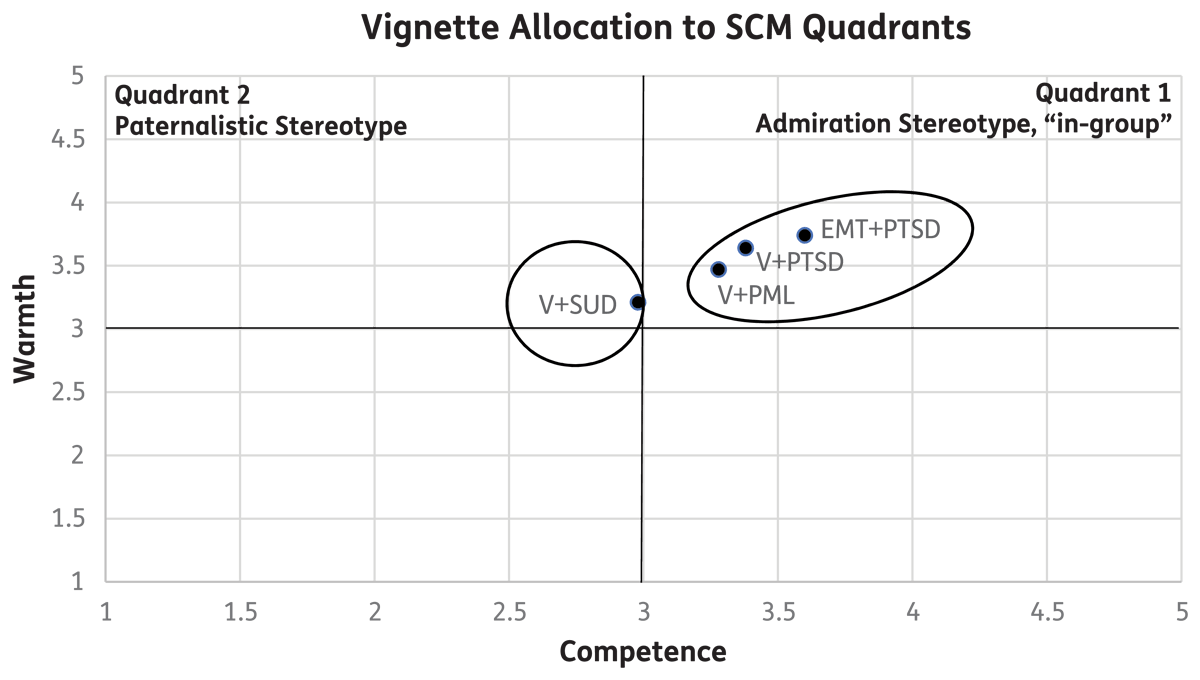
Figure 3
Two-dimensional Depiction of Mean Ratings for Warmth and Competence for the Veterans and EMTs Separated by Median Splits of the Variables.
Confirming the Separation of the Groups
Statistical confirmation of the separation of the veterans and EMT into the SCM quadrants was achieved using independent samples t-tests with competence and warmth as the dependent variables. Results suggested a significant difference between the quadrants for both competence and warmth, whereby Quadrant 1 (admiration) was rated statistically higher in competence compared to Quadrant 2 (paternalistic), t(459) = 6.86, p < 0.001, d = 0.72, and Quadrant 2 was rated statistically lower in warmth compared to Quadrant 1, t(467) = 6.21, p < 0.001, d = 0.66 (means in Table 1 above). These results supported the use of a median split for differentiating the veterans and EMTs into the SCM quadrants, supporting H1.
Table 1
Competence and Warmth Mean Values for the Veterans, First Responder, and Quadrant.
| COMPETENCE | WARMTH | |
|---|---|---|
| Veteran with PTSD (n = 129) | 3.38 (0.59) | 3.64 (0.62) |
| Veteran with SUD (n = 113) | 2.98 (0.64) | 3.21 (0.65) |
| Veteran with mobility limitation (n = 96) | 3.28 (0.55) | 3.47 (0.60) |
| First Responder with PTSD (n = 123) | 3.60 (0.61) | 3.74 (0.64) |
| Quadrant 1 (admired) (n = 415) | 3.43 (0.60) | 3.63 (0.63) |
| Quadrant 2 (paternalistic) (n = 118) | 2.98 (0.64) | 3.21 (0.65) |
[i] Note: A 5-point response scale was used (1 = not at all to 5 = extremely).
H2: Elicitation of affective reactions
According to the SCM, each quadrant is expected to elicit distinct affective reactions. To test this assumption, the affective reaction means were calculated for each quadrant (see Table 2 below), and independent samples t-tests were calculated to statistically compare the means. The quadrants significantly differed in participant ratings of admiration, contempt, and envy, whereby Quadrant 1 was rated significantly higher on admiration compared to Quadrant 2, t(465) = 5.29, p < .001, d = 0.56, while Quadrant 2 was rated significantly higher on contempt, t(466) = –4.05, p < .001, d = 0.42, and envy, t(463) = –2.25, p < .05, d = 0.22. There was no significant difference between the quadrants on ratings of pity/sympathy, t(462) = 0.16, p = ns. As no groups were allocated to Quadrants 3 and 4, effective reaction-related hypotheses were not tested for them. As such, H2 was only partially supported.
Table 2
Affective Reaction Means and Standard Deviations for Each Stereotype Quadrant.
| ADMIRATION | CONTEMPT | ENVY | PITY/SYMPATHY | |
|---|---|---|---|---|
| Quadrant 1 (admired) | 3.45 (0.93) | 1.61 (0.90) | 1.41 (0.68) | 3.44 (0.81) |
| Quadrant 2 (paternalistic) | 2.92 (0.96) | 2.00 (0.98) | 1.58 (0.82) | 3.42 (0.85) |
[i] Note: A 5-point response scale was used (1 = not at all to 5 = extremely).
H3: Testing Weiner’s Model
Aligned with the AAA model and H3, ratings of responsibility were negatively correlated with sympathy, positively correlated with elicited contempt, and negatively correlated with all the support/action variables (see Table 3 below).
Table 3
Attribution-Affect-Action Correlations.
| RESPONSIBILITY | SYMPATHY | CONTEMPT | |
|---|---|---|---|
| Sympathy | –0.25** | ||
| Contempt | 0.26** | –0.01 | |
| Deserve access SD | –0.50** | 0.37** | –0.13** |
| Deserve to receive SD | –0.40** | 0.40** | –0.14** |
| Healthcare coverage | –0.41** | 0.32** | –0.18** |
| Support tax coverage | –0.35** | 0.30** | –0.12** |
| Support tax increase | –0.29** | 0.23** | –0.10* |
| Donate funds | –0.18** | 0.28** | –0.05 |
| Volunteer SD non-profit | –0.18** | 0.19** | –0.08 |
| Donate money to SD non-profit | –0.22** | 0.26** | –0.03 |
| Support insurance coverage | –0.17** | 0.20** | –0.09* |
| Support employer coverage | –0.24** | 0.23** | –0.07 |
| Support tax increase for VAC | –0.24** | 0.19** | –0.04 |
[i] Note: ** = correlation is significant at the 0.01 level (2-tailed); * = significant at the 0.05 level (2-tailed).
Attributions of Responsibility
Mean ratings for the “responsible for mental or physical health issue” variable was below the scale midpoint for the veterans, EMTs, and quadrants (see Table 4 below). There was a significant effect of vignette on the mean ratings for responsibility, F(3,475) = 85.36, p < 0.001, f = 0.74, with post hoc analysis revealing that the veteran with SUD was perceived as statistically more responsible for their health issues relative to the other individuals in need of a SD (p < 0.05). An independent t-test confirmed Quadrant 2 was rated significantly more responsible than Quadrant 1, t(474) = –15.87, p < 0.001, d = 1.48.
Table 4
Means and Standard Deviations for Responsibility, Contempt, Sympathy, and Support Variables.
| VIGNETTE/QUADRANT | RESPONSIBILITY | CONTEMPT | SYMPATHY |
|---|---|---|---|
| Veteran + PTSD | 1.38 (0.50) | 1.63 (0.91) | 3.51 (0.79) |
| Veteran + PML | 1.52 (0.73) | 1.66 (0.89) | 3.40 (0.80) |
| First Responder + PTSD | 1.35 (0.65) | 1.56 (0.88) | 3.39 (0.83) |
| Quadrant 1 | 1.41 (0.63) | 1.61 (0.89) | 3.44 (0.81) |
| Veteran + SUD/Q2 | 2.64 (1.00) | 2.00 (0.98) | 3.42 (0.85) |
| VIGNETTE/QUADRANT | GENERAL SUPPORT | CHARITABLE SUPPORT | CORPORATE SUPPORT |
| Veteran + PTSD | 4.39 (0.67) | 3.48 (0.72) | 3.95 (0.85) |
| Veteran + PML | 4.40 (0.68) | 3.55 (0.71) | 4.07 (0.98) |
| First Responder + PTSD | 4.19 (0.85) | 3.48 (0.78) | 4.13 (0.93) |
| Quadrant 1 | 4.32 (0.74) | 3.50 (0.74) | 4.04 (0.92) |
| Veteran + SUD/Q2 | 3.94 (0.90) | 3.32 (0.82) | 3.95 (0.92) |
[i] Note: A 5-point response scale was used for all variables; Q2 = Quadrant 2.
Affective Reactions
Affective reaction means for the vignettes and quadrants are presented in Table 3 (above). With respect to contempt, a significant one-way ANOVA, F(3,467) = 5.68, p = 0.001, f = 0.19, and subsequent post hoc analyses indicated that the Veteran with SUD elicited the most contempt (p < 0.05). The contempt ratings for the other three vignettes did not significantly differ from one another. An independent samples t-test comparing the quadrants showed a statistical difference for contempt, t(474) = –15.87, p < 0.001, d = 1.48, with Quadrant 2 eliciting more contempt compared to Quadrant 1. There was no significant difference for sympathy across the vignettes, F(3,463) = 0.39, p = ns, or Quadrants, t(462) = 0.16, p = ns.
H4: Support variables
A 4 (vignette) × 3 (support type) mixed-design ANOVA with ratings of support categories as the dependent variable (see Table 4 above for means) was conducted. There was a significant main effect of the support category, F(2, 940) = 231.58, p < 0.001, f = 0.33, with participants most highly endorsing general support, followed by corporate support, and providing the least endorsement for charitable support (all at p < 0.001). A significant interaction between the vignette and support category emerged, F(6, 940) = 4.43, p < 0.05, f = 0.03. Post hoc tests indicated that participants were least supportive of each category of support for the veteran with SUD/Quadrant 2 compared to Quadrant 1 with the veteran with PTSD, a veteran with PML, and the EMT with PTSD (all at p < 0.05). Overall, H4 was partially supported.
Discussion
This study was designed to examine the stigma and stereotyping of Canadian veterans in need of a PSD as well as the social censure and sanctioning projected on them. Research questions and hypotheses focused on determining the dominant societal perceptions of different categories of Canadian veterans needing a PSD, the affective reactions elicited by each category, and the potential social sanctions placed on each category. H1 (varying competence and warmth levels) and 3 (correlations among Weiner’s constructs) were fully supported, while H2 (elicited affective reactions) and 4 (differential ratings of support/helping behavior) were only partially supported. Overall, the veterans with PTSD and a PML, as well as the EMTs with PTSD, were all positively stereotyped by participants, receiving high ratings of competence, warmth, admiration, and sympathy, thus rendering them part of the normative social “in-group” (Fiske, 2018; Fiske et al., 2002). Participants were more willing to support these individuals in acquiring a PSD. In contrast, the veteran with SUD was more negatively stereotyped and stigmatized. Specifically, they received low ratings of competence and admiration and relatively lower ratings of warmth, which resulted in them being allocated to the paternalistic stereotype quadrant (Fiske, 2018; Fiske et al., 2002). Participants were also more likely to endorse general and corporate support for PSD access than charitable support.
Findings that the veteran with SUD was perceived as less warm and competent relative to the other individuals and not considered a member of the “in-group” relates to past research on common stereotypes of individuals who use substances, including that they are incompetent and bad (Committee on the Science of Changing Behavioral Health Social Norms et al., 2016; Corrigan & Kleinlein, 2005; Corrigan et al., 2009; Crisp et al., 2000; Room et al., 2001; Sattler et al., 2017; Schomerus et al., 2011; Yang et al., 2017; Zwick et al., 2020). Further, participants rated the veteran with a SUD as relatively more responsible for substance use health concerns than the others, which may be due to beliefs that substance use is more of a personal or moral failing (Adams & Volkow, 2020). Indeed, PTSD and PML may be viewed as conditions that happen to a person rather than something they choose, like using substances to cope with PTSD symptoms or pain from physical injuries. However, the mean rating of responsibility for the veteran with SUD was below the scale midpoint, and they received comparable ratings of pity/sympathy as the other conditions, which contrasts the common stereotype that they are responsible for their condition (Corrigan & Kleinlein, 2005; Corrigan et al., 2009; Crisp et al., 2000; Room et al., 2001; Sattler et al., 2017; Schomerus et al., 2011; Zwick et al., 2020). While individuals may choose to enter potentially dangerous contexts, such as serving in the military, they cannot necessarily control the situations they ultimately encounter, which may lead to the development of PTSD or SUD. This reasoning is also applicable, for example, considering the high rates of opioids and other addictive substances prescribed to veterans with PTSD and other OSIs (Seal et al., 2012).
Contrary to past literature that veterans with PTSD are stereotyped by civilians as low in status, dangerous, incompetent, and unstable (Hipes et al., 2014; Hipes & Gemoets, 2018; Schreger & Kimle, 2017) as well as experiences of the perceived stigma of PTSD among veterans (Cascalheira & Smith, 2018; Hipes & Gemoets, 2018), current findings suggest that stigma and stereotypes of PTSD have become more positive. Veterans with PTSD reportedly fear they will be perceived as dangerous, violent, crazy, troubled, and responsible for having PTSD (Kleykamp & Hipes, 2015; Mittal et al., 2013). However, in the current study, the veteran with PTSD was considered warm, competent, part of the “in-group,” not responsible for their condition, and elicited pity/sympathy, which suggests that civilian perceptions do not reflect veterans’ concerns about being negatively stereotyped and stigmatized. Another encouraging finding was that participants were willing to provide various modes of support to each individual in the vignettes, regardless of the reason they needed to access a PSD. Increased knowledge and awareness of PTSD, mental health, trauma, and the benefits of PSDs among the general Canadian population may have created more positive stereotypes of veterans seeking a PSD, less stigma, and less discriminatory responses. The disability community has similarly raised awareness and developed a movement towards acceptance of people with PMLs and working with PSDs (Septian & Hadi, 2021; Yaghmaian et al., 2019). These findings may comfort veterans with PTSD who fear being negatively stereotyped and stigmatized for their mental health and working with a PSD in public.
Study Strengths and Limitations
The current study yielded causal conclusions using a true experimental design, including random sampling and random assignment to conditions (Shadish et al., 2002). The use of an online questionnaire offered participant anonymity, limiting social desirability responses (Joinson, 1999). Generalizability was enhanced by recruiting a Canadian sample, stratified by province/territory, and offering questionnaires in both official languages (English and French) (Kukull & Ganguli, 2012). Finally, testing two theoretical models provided greater insight into the stigma and stereotyping of veterans (Collins & Stockton, 2018).
Eliciting personal views rather than assumptions about what others might think may have resulted in more positive participant responses (Heider et al., 2013). While internal validity was enhanced by constructing the study vignettes using best practices (Aguinis & Bradley, 2014; Hughes & Huby, 2004) and a manipulation check was employed to ensure participants effectively engaged with them, external validity may have been compromised with the creation of artificial scenarios (McCutcheon, 2018). Future research in this area may benefit from refining and further testing vignettes describing veterans in need of support. Despite the appropriateness of the SCM and AAA model for examining the stigma and stereotyping of veterans, these theories do not examine the qualities or personality characteristics of study participants. Further, neither model can predict actual support or helping behavior, and the current study asked participants to consider hypothetical scenarios that can lower external validity (Kukull & Ganguli, 2012). Finally, the SCM and AAA models are limited in terms of the stereotypes and stigmatized attributes they measure. As such, future research may benefit from examining a wider range of variables.
Conclusion
This study contributes to the literature on the stigma and stereotyping of Canadian veterans with PTSD and SUD using two unique theoretical models. There are implications from the findings for the Canadian PSD industry, VAC, and Canadian healthcare policies regarding PTSD, SUD, veterans, and PSDs. While societal perceptions of veterans with PTSD may be more positive compared to previous research findings (e.g., Hipes & Gemoets, 2018), an accompanying SUD may counteract and result in stigma, negative stereotyping, and decreased civilian support for veterans accessing PSDs. Future research on these issues is warranted, including the development and testing of interventions aimed at addressing public knowledge and behavior about veterans with invisible illnesses, beliefs about SUD, and increasing empathy and compassion for individuals with SUD. In the meantime, veterans with PTSD may find comfort in the results of this study, knowing that stereotypes regarding them have become more positive and less stigmatizing over time.
Appendices
Appendix A: Vignettes
Vignette 1: Veteran + SD + PTSD
Alex is a veteran who served in the Canadian Armed Forces for 21 years. They have been honourably discharged for 15 years now. As a result of their role with the Canadian Armed Forces, Alex developed posttraumatic stress disorder (PTSD; i.e., a psychological response to the experience of intense traumatic events, particularly ones that are life threatening with symptoms ranging from negative thoughts and feelings to involuntary flashbacks and memories). Recently, Alex’s family physician suggested they acquire a service dog to help manage their PTSD. Acquiring a fully trained service dog from a reputable organization can be expensive (i.e., typically more than $15,000 CDN) and there are often 2 to 3-year minimum waitlists. Alex may not be able to afford the price of a trained service dog and is not able to train a dog at home on their own.
Vignette 2: Veteran + SD + Substance use
Alex is a veteran who served in the Canadian Armed Forces for 21 years. They have been honourably discharged for 15 years now. As a result of their role with the Canadian Armed Forces, Alex developed substance use disorder (SUD; i.e., patterns of symptoms resulting from the use of a substance that you continue to take despite experiencing physical, mental, emotional, and social problems as a result). Recently, Alex’s family physician suggested they acquire a Service Dog to help manage their SUD. Acquiring a fully trained service dog from a reputable organization can be expensive (i.e., typically more than $15,000 CDN) and there are often 2 to 3-year minimum waitlists. Alex may not be able to afford the price of a trained service dog and is not able to train a dog at home on their own.
Vignette 3: Veteran + SD + physical mobility limitation
Alex is a veteran who served in the Canadian Armed Forces for 21 years. They have been honourably discharged for 15 years now. As a result of their role with the Canadian Armed Forces, Alex developed a physical mobility limitation (i.e., a disabling condition which requires use of mobility aids such as canes, crutches, wheelchairs, or artificial limbs). Recently, Alex’s family physician suggested they acquire a service dog to help manage their physical mobility limitation. Acquiring a fully trained service dog from a reputable organization can be expensive (i.e., typically more than $15,000 CDN) and there are often 2 to 3-year minimum waitlists. Alex may not be able to afford the price of a trained service dog and is not able to train a dog at home on their own.
Vignette 4: Civilian + SD + PTSD
Alex was an Emergency Medical Technician (i.e., Ambulance Technician/Paramedic) for 21 years. They have been retired for 15 years now. As a result of their role as an Emergency Medical Technician, Alex developed posttraumatic stress disorder (PTSD; i.e., a psychological response to the experience of intense traumatic events, particularly ones that are life threatening with symptoms ranging from negative thoughts and feelings to involuntary flashbacks and memories). Recently, Alex’s family physician suggested they acquire a service dog to help manage their PTSD. Acquiring a fully trained service dog from a reputable organization can be expensive (i.e., typically more than $15,000 CDN) and there are often 2 to 3-year minimum waitlists. Alex may not be able to afford the price of a trained service dog and is not able to train a dog at home on their own.
Funding Information
This research was funded by the Canadian Institutes of Health Research (CIHR) Patient Oriented Research Transition to Leadership Phase 1 Fellowship held by Dr. Williamson.
Competing Interests
The authors have no competing interests to declare.