
Introduction
While a military career can be rewarding, research suggests that physical and mental health conditions are common among military personnel and veterans. For example, more than half of Canadian Armed Forces (CAF) Regular Force personnel who participated in the Health and Lifestyle Information Survey reported living with a chronic condition, mostly musculoskeletal injuries (Thériault et al., 2016). Symptoms and diagnoses of mental health conditions, including mood disorder, anxiety disorder, and post-traumatic stress disorder (PTSD) are also frequently reported by members of this population (Pearson et al., 2014; Thompson et al., 2016). Living with a physical and/or mental health condition has been associated with negative outcomes, such as social exclusion and discrimination, fragile economic and social positioning (Brittain & Green, 2012), and difficult adjustment to civilian life (Thompson et al., 2016).
Traditional forms of therapies have been used over time to treat and support ill and injured serving members and veterans, including pharmacotherapy and psychotherapy. Following the Second World War, experts began exploring alternative treatment avenues, including the value of sport in the rehabilitation of soldiers who had acquired incapacitating injuries in combat (for a review of the history of sport in the rehabilitation of military personnel with disabilities, see Brittain & Green, 2012). At the time, it was argued that sport could be a curative force, as it supported the overall fitness of injured individuals. The integration of sporting activities in one’s life was also linked to joy and pleasure, which could have important psychological value for participants (Brittain & Green, 2012).
The relevance of physical activity (PA)1 in the rehabilitation and treatment of ill and injured serving members and veterans has since clearly been recognized. Indeed, multiple PA-based programs are now being offered, such as the Adaptive Sports Program (Australia), Soldier On (Canada), and Battle Back (United Kingdom). Overall, studies on PA-based programs have highlighted their positive impacts on participants’ psychosocial well-being, including improvements in their quality of life (Sidiropoulos et al., 2022) and general mental health (Coulthard et al., 2024; Peacock et al., 2019), reductions in PTSD symptomatology (Wheeler et al., 2020), increased access to quality peer support (Coulthard & Therrien, 2022), and the promotion of a positive self-identity and a reconnection with military identity (Brittain et al., 2022). Positive impacts on physical well-being have also been noted, including improvements in mobility skills and physical endurance (Sporner et al., 2009), and increased physical activity levels (Coulthard et al., 2024). Systematic reviews of the literature have generally reiterated the multiple benefits of PA-based programs for ill and injured military personnel and veterans (Caddick & Smith, 2013; Shirazipour et al., 2019).
Enablers of Positive Experiences in PA-Based Programs for Veterans
Extending research on PA-based programs, Shirazipour and colleagues (2017) sought to uncover the specific elements most likely to generate positive impacts among veterans with disabilities who engage in these programs. Using material from qualitative interviews, the authors extracted four elements that delineate the contours of quality experiences: group cohesion, being challenged, having a role, and being granted independence and choice.
The authors further identified three precursory conditions that enable quality experiences in PA-based programs. First, Shirazipour and colleagues (2017) found that the physical environment should meet certain criteria, including accessibility and suitable geography (i.e., central locations that are close and easy to access). Second, the social environment of the program should be encouraging and promote PA among participants. In addition to highlighting the importance of camaraderie, communication, and a shared focus among participants, Shirazipour et al. (2017) noted the relevance of external social actors, such as family and friends. Indeed, allowing family and friends to participate in or otherwise be involved in the program could provide participants with additional support, thus fostering a positive experience. Lastly, the authors found that PA-based programs should be well-structured. This included ensuring that the program staff promoted the participation and safety of participants, and that the program was well resourced and offered enough PA opportunities for all.
Null and Negative Experiences Related to PA-Based Programs for Veterans
While the current literature generally reports and focuses on the benefits of PA-based programs for ill and injured serving members and veterans, some researchers have offered a more nuanced picture. For example, Hyer et al. (1996) found that participation in a five-day PA-based program did not significantly reduce PTSD symptomatology among veterans living with combat-related trauma, while Lundberg et al. (2011) found that a similar program did not significantly improve quality of life among veterans with various disabilities. Evidence further suggests that the positive impacts of PA-based programs might not last past the immediate post-test measurement included in many study designs (Shirazipour et al., 2019). For example, Walter and colleagues (2021) found that while anxiety, depression, and social functioning among ill and injured veterans significantly improved after their participation in a PA-based program, all of them returned to baseline levels at a three-month follow-up.
In addition to these null findings, recent research has highlighted some of the negative experiences of veterans involved in PA-based programs. In their process evaluation of the Invictus Pathways Program in Australia, Post and colleagues (2023) found that while most participants were satisfied with the program overall, others expressed dissatisfaction with some of its components. For instance, these participants reported being discontent with the selection process for the Australian Team for the Invictus Games, which they saw as opaque, and influenced by politics and favouritism. Not being selected for the team also had negative mental health impacts for some of the participants, while others opted out of the program altogether. Relatedly, participants described feeling unsupported by the program when they were not performing well. They further explained how certain participants seemingly received preferential treatment, especially those that performed well in competitive events. Dissatisfaction with personal goal achievement, issues around communication and information sharing, as well as negative interactions with program staff also adversely affected participants’ experiences.
Barriers to Positive Experiences in PA-based Programs for Veterans
The negative elements related to PA-based programs described by the veterans interviewed in Post and colleagues (2023) are consistent with findings from the broader sport psychology literature. Sport performers with disabilities have been found to experience a range of organizational stressors, which can negatively affect their experiences and well-being (Arnold et al., 2017). Understood as “environmental demands (i.e., stimuli) associated primarily and directly with the organization within which an individual is operating” (Fletcher et al., 2006, p. 329), organizational stressors have been categorized into four main types: leadership and personnel issues (e.g., issues with coach/staff behaviour and interactions with sport performers, lack of support from the organization); cultural and team issues (e.g., issues with teammate behaviour and interactions, team atmosphere, communication, cultural norms); logistical and environmental issues (e.g., lack of adapted facilities and equipment, issues around selection, structure of training, travel, accommodation, technology); and performance and personal issues (e.g., receiving an incorrect diagnosis for an injury, finances) (Arnold et al., 2017).2
In the first analysis of organizational stressors in the military population, Roberts et al. (2019) found that veterans who participated in the Invictus Games experienced a range of organizational stressors before, during, and after the competition. The frequency of these stressors fluctuated over time as well. For example, cultural and team-related stressors were found to significantly increase in the build up to the games, before decreasing again after the competition. In a follow-on qualitative study, Roberts and colleagues (2021) reiterated the importance of these cultural and team stressors among veterans who described experiencing related issues through their involvement in the Invictus Games. This included their teammates’ personality and attitudes, the team’s cultural norms, and conflicting goals. Regardless of their specific form, organizational stressors may have consequences for veterans who engage in organized PA. Roberts et al. (2019), for instance, found that the intensity of organizational stressors experienced by veterans negatively impacted their performance, well-being, and mental health, highlighting the importance of understanding how these stressors affect veterans’ participation in PA-based programs.
Current Study
Some research suggests that PA-based programs may have limited impact under certain circumstances, or that they could foster negative experiences for ill and injured veterans. To date, however, the literature has tended to focus on the multiple benefits associated with participation in these programs, potentially presenting a fragmented picture of the issue. A complete understanding of PA-based programs and their impact on participants can only emerge from examining the entire range of experiences reported by ill and injured veterans participating in these programs—from the positive to the negative. Using survey data from Canadian veterans involved with the Soldier On program, the present study examined and contrasted the profiles and experiences of veterans who described positive, neutral, and negative impacts after participating in the program.
Materials and Methods
Sample
All individuals who had been involved with the Soldier On program3 in the past were invited to complete a survey on their experiences with Soldier On activities and events. To be included in the final study sample, respondents needed to be: (1) a CAF veteran (i.e., any CAF member who successfully underwent basic training and was honourably discharged [Government of Canada, 2024]), (2) have participated in a Soldier On event, and (3) have provided a response on at least one of the three impact measures (i.e., mental health, physical health, general activity and fitness level; see description below). While a total of 1,344 individuals accessed the survey, the final sample consisted of 784 respondents.
Procedure
Individuals who had participated in a Soldier On event and/or who had received a grant from the program were invited to participate in the survey, either through targeted emails or via Soldier On social media accounts. Respondents were first asked to provide background data, including information on their demographic and military profiles. They were then asked questions regarding their experiences with the program, and the perceived impact of these experiences on their well-being. Respondents were finally asked to complete key measures on their mental and physical health, life satisfaction, and sense of belonging. The survey was administered through an online platform from September 2022 to March 2023. The study was approved by the Department of National Defence/CAF Social Science Research Review Board (approval number 2031/22F).
Measures
Demographic and Military Profiles
Respondents were asked to provide information on their demographic profile, including their gender (i.e., woman, man, gender diverse); age (i.e., 24 or under, 25–34, 35–44, 45–54, 55–64, 65 or more); first official language (FOL: i.e., French or English); residential location (i.e., large urban centre, medium population centre, small population centre, rural area); and home situation (i.e., married without dependents, married with dependents, single without dependents, single with dependents, other). They were then asked to describe their military profile by providing information on their military rank at release (i.e., junior non-commissioned member [NCM], senior NCM, junior officer, senior officer); the number of years they had served in the CAF (YOS: i.e., 0–5 years, 6–10 years, 11–15 years, 16–20 years, 21–25 years, 26 years or more); the environment in which they had served for the majority of their career (i.e., air, land, sea); the time since they released (less than 6 months ago, 6–12 months ago, 13–24 months ago, more than 2 years ago); the type of release they had experienced (i.e., voluntary, medical, retirement age, involuntary, service completed); and the nature of their medical condition (i.e., physical, mental, both).
Health, Life Satisfaction, and Belonging
Respondents were asked to describe both their physical and mental health at the time of the survey, using a 5-point scale ranging from 1 (excellent) to 5 (poor). Respondents were then asked about their life satisfaction, which they rated on an 11-point scale meant to capture how they felt about their life at the time of the survey. Scores ranged from 0 (very dissatisfied) to 10 (very satisfied). The validated 10-item Social Provision Scale (SPS-10; Caron, 2013; Orpana et al., 2019) was included in the survey to assess respondents’ social support at the time of the survey. The items of the scale (e.g., I have close relationships that provide me with a sense of emotional security and well-being) were rated on a 4-point scale, ranging from 1 (strongly agree) to 4 (strongly disagree). A total SPS-10 score was computed by summing up the 10 items of the scale, with total scores ranging from 10 to 40.4 Scores above 30 are interpreted as having strong social support (Orpana et al., 2019). Lastly, respondents were asked to describe their sense of belonging to six distinct social groups, including both civilian and military groups (e.g., local community, military members and/or veterans; Soldier On participants/peers). For each social group, respondents were asked to rate their sense of belonging on a 4-point scale ranging from 1 (very strong) to 4 (very weak). Scores for each social group are reported separately.
Involvement with the Soldier On Program
Respondents were asked about their involvement with the program, including whether they had received a grant (yes, no), and had participated in any Soldier On event. An event participation type variable was computed by determining whether respondents had participated in either of three event categories: international (e.g., Allied Winter Sports Camp, Invictus Games, Warrior Games); national (e.g., golf, Army Run, virtual Navy Bike Ride, virtual smartphone photography, hockey camp); and local (e.g., virtual guitar, yoga/mobility, paddle sports, horseback riding). Respondents who had participated in at least one event in a given category were attributed a score of one for that category. Respondents could have participated in one, two, or all three event categories. The total number of events in which respondents had participated was also computed to assess whether extent of participation was associated with participants’ experiences with the program.
Well-being Impacts of Soldier On
The impact of the program on the well-being of respondents was measured through three questions, each focusing on a distinct form of well-being: mental health, physical health, and general activity and fitness level. Respondents were asked to describe these impacts using a 7-point scale ranging from 1 (major positive impact) to 7 (major negative impact), with a mid-point labelled ‘no impact at all.’ To ease the interpretation of findings, response options were merged into three categories: positive (including major positive impact, moderate positive impact, and minor positive impact); neutral (no impact at all); and negative (including major negative impact, moderate negative impact, and minor negative impact).
Three impact groups were then created based on the three well-being variables, following these categorization criteria: the positive impact group included all respondents who reported experiencing at least one positive impact and no negative impact, but could also report experiencing a mix of positive and neutral impacts; the neutral impact group included all respondents who exclusively reported experiencing no impacts on all three measures of well-being; and the negative impact group included all respondents who reported experiencing at least one negative impact, but could also report experiencing a mix of impacts, including neutral and positive,5 based on their experiences with Soldier On events.
Qualitative Data
In the survey, respondents were given the option to share comments and feedback on various aspects of the Soldier On program using an open-ended question. Responses to this question were included in this study, as they contain important insight into the experiences of program participants, including those who reported experiencing a negative impact on their well-being. Specifically, respondents were invited to share any additional comments or feedback regarding their experiences with the program. Responses were first reviewed for relevance, and comments that were not related to respondents’ experiences with Soldier On were removed from the sample.6
Analyses
Survey Data
Chi-square and Kruskal-Wallis (H) tests were conducted to assess the demographic, military, and personal profiles of the three impact groups, and to explore any differences and/or similarities between them. All quantitative analyses were conducted using SPSS version 28.
Qualitative Data
Responses to the open-ended question were analyzed, and relevant themes were extracted. Differences between the three impact groups were noted, where relevant, to provide a better understanding of their respective experiences. To support this analysis, a simple quantification strategy was adopted: when one of the themes was identified in a comment, a score of 1 was attributed for that theme. Percentages were then computed for the entire sample and for the impact groups, to highlight relevant distinctions. Qualitative analyses were conducted using Microsoft Excel.
Results
Table 1 shows that most survey respondents were male, 45 years or older, had English as their FOL, and were married. Considering their military backgrounds, the majority of respondents were NCMs and had 16 YOS or more. Most had been medically released more than two years prior to the survey and had both a mental health and a physical condition.
Table 1
Respondents’ Demographic and Military Characteristics (N = 784).
| VARIABLE | SURVEY RESPONDENTS (%)a |
|---|---|
| Demographic profile | |
| Genderb | |
| Men | 72.3 |
| Women | 26.1 |
| Age | |
| 25–34 | 2.0 |
| 35–44 | 12.2 |
| 45–54 | 32.7 |
| 55–64 | 43.9 |
| 65+ | 8.7 |
| FOL | |
| English | 80.4 |
| French | 18.4 |
| Residential location | |
| Large urban center | 33.5 |
| Medium population center | 21.2 |
| Small population center | 30.1 |
| Rural area | 15.2 |
| Home situation | |
| Married without dependents | 41.6 |
| Married with dependents | 37.9 |
| Single without dependents | 10.5 |
| Single with dependents | 9.6 |
| Other | 0.5 |
| Military profile | |
| Rank group | |
| NCM | 79.5 |
| Officer | 20.2 |
| YOS | |
| 0–15 | 23.1 |
| 16–25 | 36.0 |
| 26+ | 40.9 |
| Environment | |
| Air | 31.0 |
| Land | 56.1 |
| Sea | 12.5 |
| Time of release | |
| Less than 6 months ago | 2.8 |
| 6–12 months ago | 2.8 |
| 13–24 months ago | 10.3 |
| More than 2 years ago | 84.1 |
| Type of release | |
| Voluntary | 18.4 |
| Medical | 74.2 |
| Retirement age | 2.2 |
| Involuntary | 0.6 |
| Service complete | 2.6 |
| Nature of medical condition | |
| Physical | 20.8 |
| Mental health | 15.4 |
| Physical and mental health | 63.1 |
[i] Note. aMissing data and other response categories are not presented in the table. Percentages may thus not add up to 100. bToo few respondents identified as gender diverse or responded prefer not to disclose to report their results.
Impact Group Profiles
Most respondents (n = 691; 88.1%) described the impact of Soldier On on their well-being as positive, while 6.5% (n = 51) of participants described that impact as neutral, and 5.4% (n = 42) described it as negative. This section examines the profiles of the three impact groups based on their demographic characteristics, their military backgrounds, and their involvement with the program.
Demographic and Military Characteristics
Figures 1, 2, 3, and 4 depict the associations found in the demographic and military profiles of respondents from the three impact groups. While no significant associations were noted between the three groups on many demographic features, including gender, FOL, and residential location, results from chi-square analyses and comparisons of 95% confidence intervals (95% CI) highlighted significant associations between impact group affiliation and age, χ2 (2, N = 780) = 15.17, p < .001, as well as home situation, χ2 (2, N = 780) = 12.43, p = .002. Overall, the positive impact group had a larger proportion of respondents who were 45 years or older (87.2%) and a smaller proportion of respondents who were between 25 and 44 years old (12.8%) than the negative impact group (66.7% and 33.3%, respectively; see Figure 1). Similarly, the positive impact group had a smaller proportion of single respondents (18.6%) and a larger proportion of married respondents (81.4%) than the negative impact group (40.5% and 59.5%, respectively; see Figure 2).
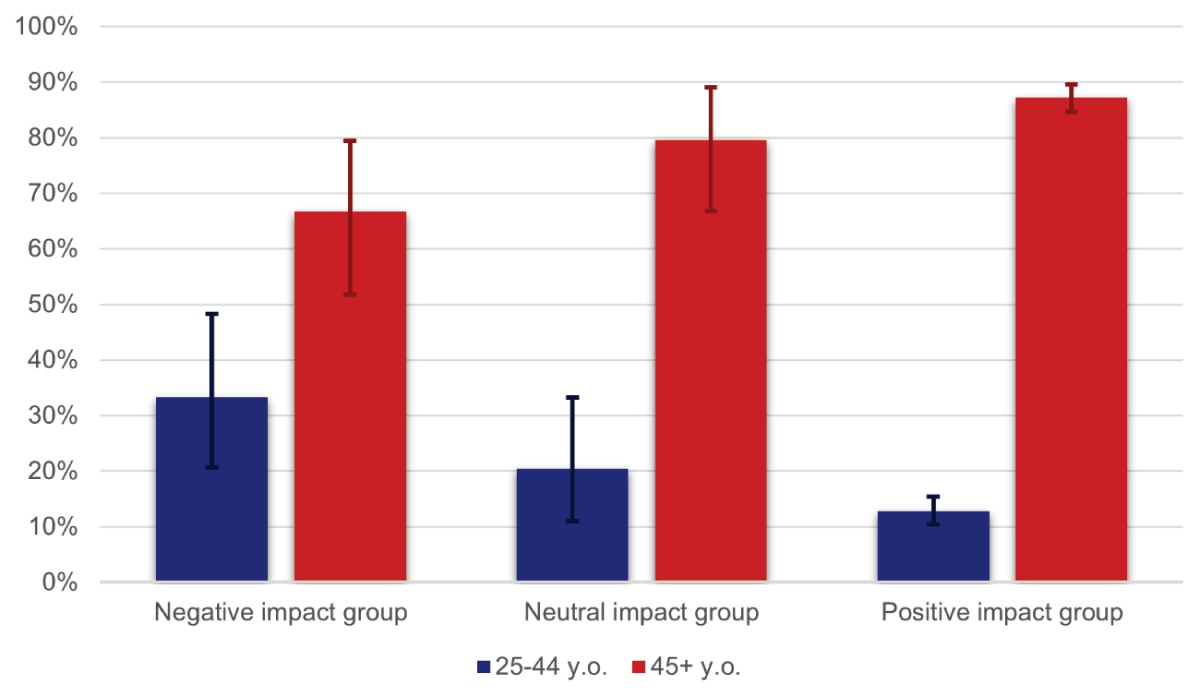
Figure 1
Age Profile of Three Impact Groups.
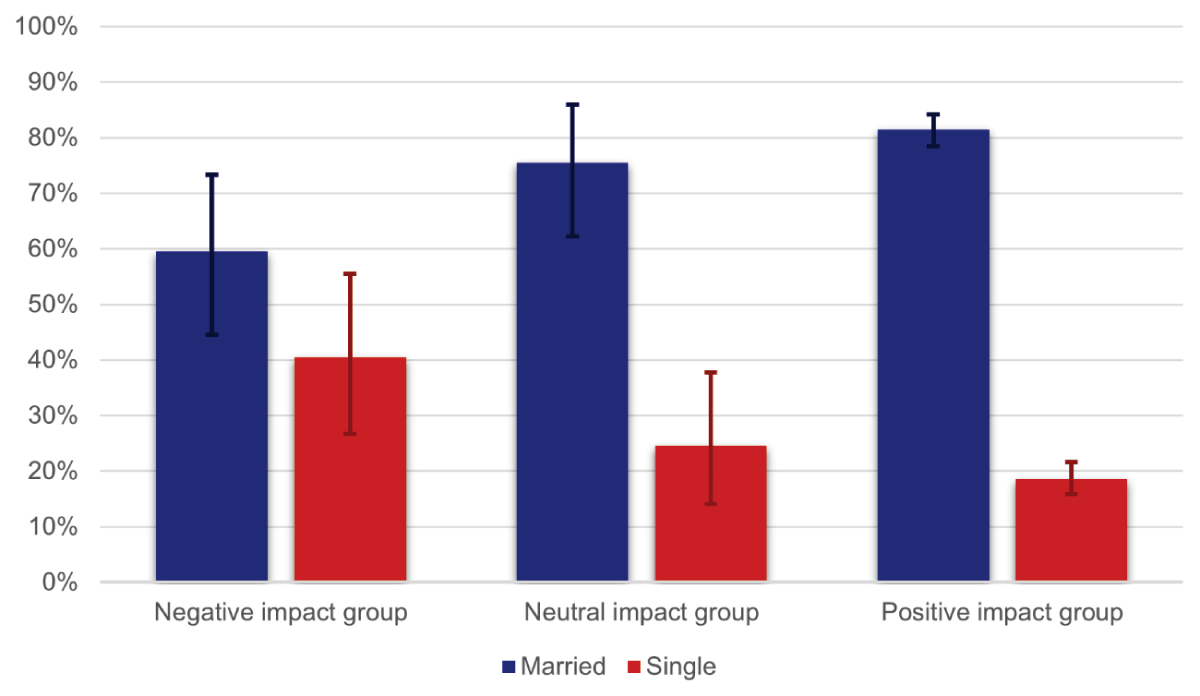
Figure 2
Home Situation Profile of Three Impact Groups.
Note. Home situation categories were dichotomized to ease interpretation of findings (married = married with or without dependents; single = single with or without dependents). The response option other was removed from the analysis, as too few respondents described their home situation as such.
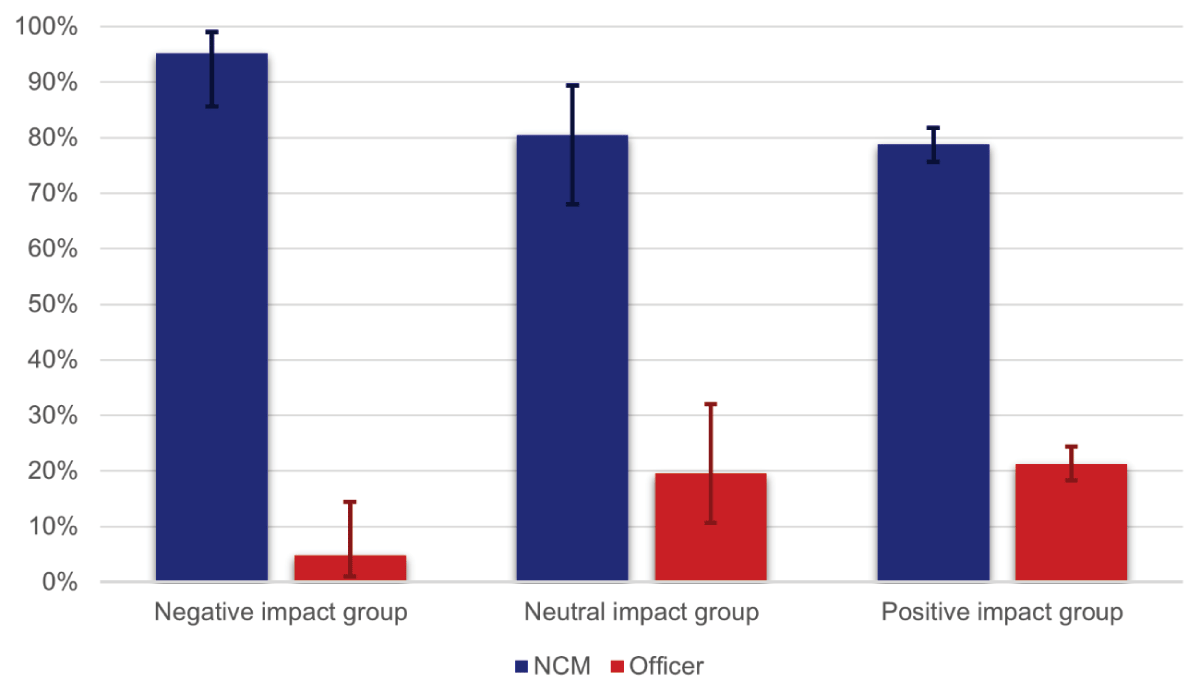
Figure 3
Rank Profile of Three Impact Groups.
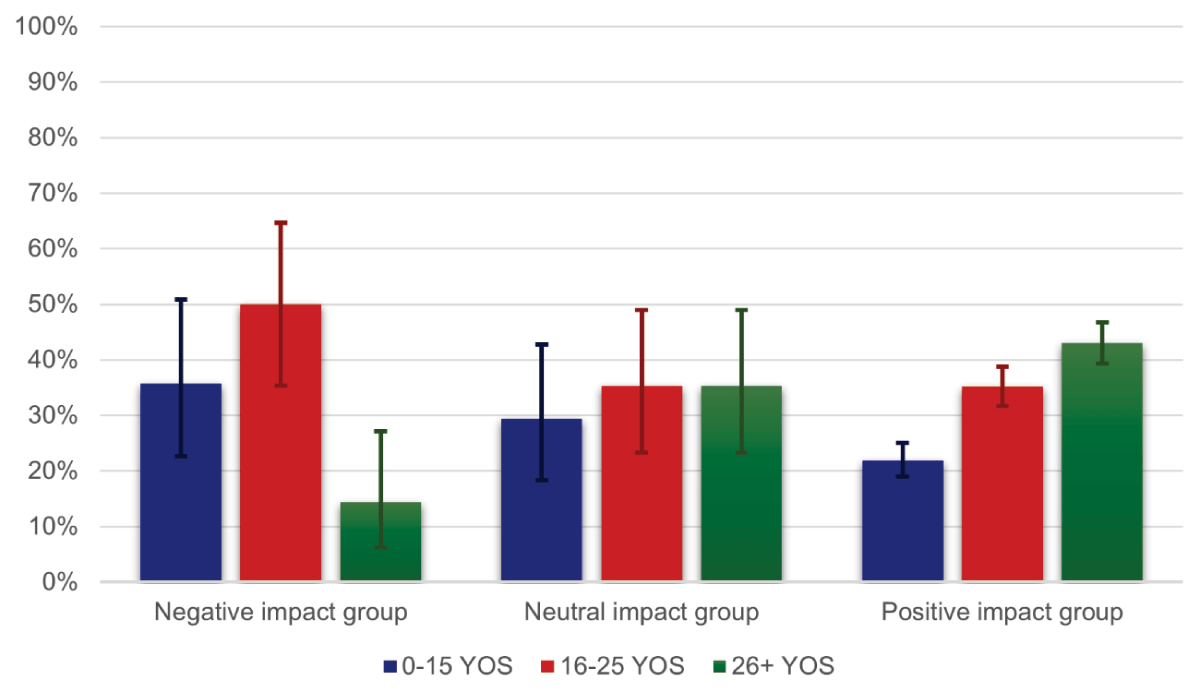
Figure 4
YOS Profile of Three Impact Groups.
Significant associations were also noted between the military profiles of the three impact groups, namely rank, χ2 (2, N = 781) = 6.66, p = .036, and YOS, χ2 (4, N = 784) = 15.06, p = .005. As shown in Figure 3, the positive impact group had a significantly higher proportion of officers (21.2%) and a lower proportion of NCMs (78.8%) than the negative impact group (4.8% and 95.2%, respectively). The positive impact group also had a higher proportion of members who had completed 26 YOS or more (43.0%), compared with the negative impact group (14.3%; Figure 4). No additional associations were found between impact group affiliation and the other elements of respondents’ military profiles, including environment, time of release, reason for release, and nature of medical condition.
Perceived Health, Life Satisfaction and Sense of Belonging
Results further highlighted that the three impact groups differed in their perceived health, life satisfaction and sense of belonging. Results from Kruskal-Wallis (H) tests first revealed a significant difference between the mean ranks of self-reported physical health across the three impact groups (Table 2). Specifically, a pairwise post-hoc Dunn test with Bonferroni adjustments indicated that the mean rank of self-reported physical health scores was significantly higher in the negative impact group than in the positive impact group (p = .003; Table 2), suggesting poorer physical health in the negative impact group than in the positive impact group.7 While a Kruskal-Wallis (H) test was also statistically significant for mental health (Table 2), none of the post-hoc tests with Bonferroni adjustments were significant.
Table 2
Health, Life Satisfaction, and Belonging Profiles of Three Impact Groups.
| NEGATIVE IMPACT MEAN RANK | NEUTRAL IMPACT MEAN RANK | POSITIVE IMPACT MEAN RANK | |
|---|---|---|---|
| Physical health | 480.11 | 389.83 | 370.28 |
| H(2, N = 754) = 11.11, p = .004 | |||
| Mental health | 441.18 | 425.08 | 367.16 |
| H(2, N = 749) = 8.12, p = .017 | |||
| Life satisfaction | 273.28 | 302.15 | 380.99 |
| H(2, N = 739) = 15.23, p < .001 | |||
| SPS-10 | 153.13 | 235.75 | 290.01 |
| H(2, N = 560) = 20.88, p < .001 | |||
| Sense of belonging to: | |||
| Local community | 420.85 | 403.43 | 316.45 |
| H(2, N = 653) = 18.41, p < .001 | |||
| Canada | 422.68 | 357.05 | 315.28 |
| H(2, N = 647) = 13.91, p < .001 | |||
| Ill and/or injured military members and/or Veterans | 394.17 | 412.13 | 319.88 |
| H(2, N = 658) = 14.19, p < .001 | |||
| Military members and/or Veterans | 401.17 | 409.82 | 320.31 |
| H(2, N = 659) = 14.43 p < .001 | |||
| Soldier On participants/peers | 463.31 | 477.75 | 300.64 |
| H(2, N = 636) = 56.61, p < .001 | |||
| CAF | 381.87 | 381.88 | 311.90 |
| H(2, N = 639) = 10.51, p = .005 | |||
A significant difference was also noted in life satisfaction levels, with mean rank of life satisfaction scores of 273.28 for the negative impact group, 302.15 for the neutral impact group, and 380.99 for the positive impact group. Post-hoc Dunn tests with Bonferroni adjustments indicated that the mean rank of life satisfaction scores was significantly higher in the positive impact group than in the negative impact group (p = .005) and the neutral impact group (p = .040). A Kruskal-Wallis test similarly highlighted a significant difference in SPS-10 mean rank scores across impact groups, H(2, N = 560) = 20.88, p < .001. Specifically, a post-hoc Dunn test with Bonferroni adjustments showed that the mean rank of SPS-10 scores was significantly higher in the positive impact group than in the negative impact group (p < .001; Table 2).
Kruskal-Wallis H tests also highlighted significant differences in the sense of belonging reported by the three impact groups. A series of post-hoc Dunn tests with Bonferroni adjustments showed that the mean rank scores in attachment to several social groups significantly differed in the positive impact group compared to the negative and the neutral impact groups. As shown in Table 2, the positive impact group had a lower mean rank score on attachment to local community than the negative (p = .002) and the neutral impact groups (p = .014). A similar pattern of results, with significantly lower mean rank scores for the positive impact group than the negative and neutral impact groups was also found for attachment to ill and injured military members and veterans (positive vs. negative: p = .045; positive vs. neutral: p = .008), to all military members and veterans (positive vs. negative: p = .025; positive vs. neutral: p = .012), and to Soldier On participants/peers (positive vs. negative: p < .001; positive vs. neutral: p < .001). Post-hoc Dunn tests with Bonferroni adjustments further highlighted significant lower mean rank scores in attachment to Canada and to the CAF in the positive impact group compared with the negative impact group (p = .001 and p = .050, respectively). Together, these findings indicate that the positive impact group had a stronger sense of belonging to all six social groups examined in the survey, compared with the negative impact group.8
Involvement with Soldier On
Significant associations between impact group affiliation and involvement with the program were also noted. For instance, as demonstrated by the comparison of the 95% CI (Table 3), a larger proportion of respondents in the positive impact group received a Soldier On grant compared with the neutral impact group. Differences between the positive impact group and the other two groups were also noted in terms of their participation in events. Indeed, a larger proportion of respondents from the positive impact group had participated in international and local events compared with members from the neutral impact group (51.1% and 53.3%, respectively). Differences between the positive and negative impact groups were also noted; while the negative impact group had participated in international events in proportions similar to those reported by the positive impact group, they had participated in fewer national and local events. On average, the neutral and negative impact groups had also participated in fewer events overall. While more than half of respondents in the positive impact group had participated in 3 or more events, over 70% of the neutral and negative impact groups had participated in only 1 or 2 events.
Table 3
Soldier On Involvement Profile of Three Impact Groups.
| NEGATIVE IMPACT (%) [95% CI] | NEUTRAL IMPACT (%) [95% CI] | POSITIVE IMPACT (%) [95% CI] | |
|---|---|---|---|
| Grant recipient | |||
| Yes | 54.8 [39.8, 69.1] | 33.3 [21.6, 46.9] | 62.2 [58.6, 65.8] |
| No | 45.2 [30.9, 60.2] | 66.7 [53.1, 78.4] | 37.8 [34.2, 41.4] |
| χ2 (2, N = 784) = 17.01, p < .001 | |||
| Event participation type | |||
| International | 74.4 [59.3, 86.0] | 51.1 [37.1, 64.9] | 71.4 [67.9, 74.8] |
| χ2 (2, N = 744) = 9.04, p = .011 | |||
| National | 48.6 [32.7, 64.7] | 71.1 [56.9, 82.7] | 70.0 [66.4, 73.5] |
| χ2 (2, N = 711) = 7.25, p = .027 | |||
| Local | 51.4 [35.7, 66.8] | 53.3 [38.9, 67.3] | 76.9 [73.5, 80.1] |
| χ2 (2, N = 698) = 22.67, p < .001 | |||
| Number of events | |||
| 1–2 | 69.0 [54.2, 81.4] | 74.5 [61.4, 84.9] | 49.8 [46.1, 53.5] |
| 3 or more | 31.0 [18.6, 45.8] | 25.5 [15.1, 38.6] | 50.2 [46.5, 53.9] |
| χ2 (2, N = 784) = 16.56, p < .001 | |||
Qualitative Data: General Comments and Feedback on Experiences with Soldier On
A total of 305 respondents used the open-ended question to share additional comments or feedback they had on their experiences with Soldier On. While respondents from each group took this opportunity to describe their involvement with the program, they did so in different proportions. Respondents in the negative impact group wrote comments in the largest proportion, with 64.3% of that group writing a comment (n = 27), followed by the neutral (41.2%; n = 21) and positive (37.2%; n = 257) impact groups. The analysis further revealed that respondents described their experiences along a continuum ranging from favourable to unfavourable.9 As will be examined in more depth below, the proportions of favourable and unfavourable experiences, as well as the proportion in which each theme was addressed, varied between groups.
Favourable Experiences
Of the 305 responses shared across all three groups, 131 (43.0%) contained at least one favourable element related to experiences with Soldier On. However, the proportions of comments containing a favourable element varied greatly between the three impact groups. Indeed, while close to half of the comments by respondents from the positive impact group contained a favourable element (49.0%), only 19.0% of the comments from the neutral impact group and 3.7% of the comments from the negative impact group highlighted such a favourable element. Overall, three major themes emerged from these favourable elements: praise and appreciation for the program, access to peer support and connection, and well-being impacts. As will be seen below, these elements were also raised in different proportions across the impact groups.
General Praise and Appreciation for Soldier On
Overall, the favourable element most frequently cited by respondents was a general praise and appreciation for the program, which was found in 27.5% of comments (n = 84). This theme was more frequently highlighted by the positive impact group than by the other two groups; while 31.1% of respondents from the positive impact group who offered a comment praised the program in their response, 19.0% of respondents from the neutral impact group did so. None of the respondents from the negative impact group praised Soldier On or described their appreciation for the program.
Regardless of the source of the comment, general praise and appreciation were expressed through a range of complimentary remarks, including gratitude towards the program organization and staff and appreciation for the experiences they provided. One respondent said:
This is genuinely one of the only programs that is successful and delivers as advertised. There are many systems in the Canadian Armed Forces[,] however, they do not operate as smoothly, as efficiently, or effectively as my experience with Soldier On. This program has a direct [and] immediate impact on soldiers[’] lives.
Others explained how their experience with Soldier On had been so good that they would “love to participate” again or that they “tell all the vets (sic) that have been hurt about this program.”
Access to Peer Support and Connections
Approximately one-sixth of respondents who shared a comment (13.4%; n = 41) described the benefits of peer support and connections that were derived from their experience with Soldier On. Again, a much higher proportion of respondents from the positive impact group (15.6%) addressed this theme in their responses than respondents from the negative (3.7%) and neutral (0.0%) impact groups.
Overall, these respondents explained that the structured environment provided by the program had not only fostered significant and supportive connections with other veterans, but also with peers who shared similar psychological and physical health challenges. Several positive outcomes were associated with these connections, including a smoother transition, as expressed by this respondent, “participating gave me access to military family members/environment[,] which greatly helped my transition as it made me feel I could still connect.” The peer support gained through Soldier On also eased transition to civilian life, as it allowed some to begin “accepting [their] injury,” after realising that they were “not alone.”10
The peer support and connections provided through Soldier On also had beneficial ripple effects that extended beyond the respondents themselves. Some respondents explained how their participation in program events had reignited their social lives, sometimes “after many years of hiding,” which encouraged them to pay it forward. For example, this respondent explained that “Soldier On ha[d] connected [them] with [the] True Patriot Love Foundation” and that they “now volunteer[ed] to help raise funds,” while another now “volunteered for the Adaptive Sports Foundation and helped wounded veterans.”11 Another respondent also explained how the connections made through the program had helped their personal and professional lives in significant ways:
Being in the Invictus team greatly strengthened my position to advocate for myself with [various] stakeholders in my transition, and inspired confidence that I could. It is the standout item on my resume that [allowed me to] be considered for a position after releasing. It’s changed how I interact with the world, but what I’m trying to say is that it really does change how the world interacts with me.
Well-Being Impacts
In total, 5.2% of all respondents who shared feedback explained how their involvement with Soldier On had impacted their well-being, including their mental and physical health, as well as their family well-being. This theme was exclusively found in comments from respondents in the positive impact group, 6.2% of whom discussed it.
Different aspects of the program were linked to well-being, as exemplified by this respondent who explained how the program grant had a significant and positive impact on them: “The hiking kit grant got me out hiking at a time when I was acutely mentally ill. I attribute getting out hiking having saved m[y] life.” Others described how connections to people, both Soldier On participants and staff, could also foster well-being: “The [four]-day national golf camp was life changing for me. To be with like[-]minded veterans was amazing. I also had an emotional experience with [the Soldier On] rep, she was amazing.”
Unfavourable Experiences
Overall, close to half of respondents (49.8%) who opted to share a comment or provide feedback included at least one unfavourable element in their submission. As was the case with favourable elements, the proportion of negative comments and feedback varied between the different impact groups. While 42.0% of all comments from members of the positive impact group contained a negative element, this figure rose to 85.7% in the neutral impact group and 96.3% in the negative impact group. Four themes emerged from the analysis of comments containing at least one unfavourable element: Soldier On programming limitations, frustrating processes and procedures, feelings of exclusion, and dissatisfaction with personnel.
Soldier On Programming Limitations
The most common unfavourable element in respondents’ comments and feedback, found in 32.1% of all comments (n = 98), was a general critique of Soldier On programming, specifically the availability, accessibility, and advertisement of its events and activities. While different proportions of each impact group highlighted this negative element, members of all groups raised it as an issue (neutral impact group: 61.9%; negative impact group: 40.7%; positive impact group: 28.8%).
First, many respondents expressed dissatisfaction with the availability of events and activities, especially in certain areas: “This program has great potential, however, [some] office[s are] lacking. It is discouraging to see other parts of the country having awesome activities but nothing being done [here].” Others further explained how certain activities offered too few spots for the enthusiasm and demand they generated, which, according to this participant, could “discourage certain people from applying to other activities in the future.”12 While in agreement with these critiques, others also offered potential solutions, like this respondent who suggested having more local Soldier On representatives:
This program is unfortunately not reaching the majority of veterans who do not live in one of the 3–4 major city regions. We need to get serious about resolving staffing issues and bring veterans onboard to run local programs. It is not acceptable in my opinion for some vets (sic) to get 25 events and many to have access to nothing.
Second, respondents expressed dissatisfaction with the accessibility of certain events and activities, which were too frequently “geared for able bodied individuals.” Others further highlighted how travel could impede the participation of members with any form of mobility issue, like this respondent who would have liked to be able to “sleep in [their] own bed at night as [they had a] lumb[a]r spine injury.” Other elements, such as language-related issues and a lack of variety in events, were also raised. These critiques were summed up in this respondent’s words:
Most sports and activities are either upper body dominant or involve impact––there are so few things offered that are lower body dominant (cycling and rowing). Being told ‘anything can be accessible to anyone’ is infuriating and not true […] Also accessibility to events is a major factor, due to the injury I don’t drive[,] and I live alone so no one can drive me.
Lastly, respondents reported being unaware of many Soldier On events and activities. For example, some were under the impression that one “need[ed] to know someone to be ‘in the loop,’” while others discovered the existence of many events and activities as they completed the survey.
Frustrating Processes and Procedures
Feedback related to the frustrating aspects of the processes and procedures of Soldier On was found in 18.4% of all comments provided to this question. Some distinctions between groups were noted: while just over 40% of respondents in the negative impact group who shared a comment addressed their frustrations with processes and procedures, less than 20% of respondents in the neutral (19.0%) and positive (16.0%) impact groups did so.
Many respondents expressed frustrations with the application and selection processes. For instance, some reported not being selected to any event despite having “applied to everything that comes out of [their] area,” while others explained how they had only been selected for activities with “no participation cap.” Others relatedly described an opaque selection process, with unclear criteria: “we are told we can only participate once, yet I know many members who have participated 2–3 times in the same activity.”13
Selection issues left some respondents reluctant to apply to Soldier On events, as they believed this would hinder their access to future activities. This might be particularly salient for high-profile activities, as highlighted in this respondent’s words: “I would like to participate in an Invictus of Warrior Games at some point in the future, so don’t want to participate in too many activities in case it hurts my chances.” The perceived opaque selection process described by participants would be particularly limiting for individuals with any form of restriction, as explained by this respondent: “When you can only apply to certain sports due to child custody agreements and injury[,] it makes it tough when you constantly get denied from participating in any of the Soldier On events.” When taken too far, issues with the selection process could even push participants away from the organization: “Only ever been selected for one event […] I am quite capable of looking after my own interests and got tired of applying and not being selected. I no longer support Soldier On.”
Some unfavourable aspects related to the unfolding of specific events were also raised in respondents’ comments and feedback. A participant in the Warrior Games, for instance, described a demanding schedule, which they saw as having repercussions on their ability to socialize with their family at the event. Although the required involvement for participating in the Warrior Games might have been misunderstood by this person, their expectations were not met, and they were dissatisfied by their experience:
[…] when my family got there[,] I wasn’t allowed to see them because we were supposed to participate in every sport that everyone else was doing[.] It was disappointing and a terrible experience. I definitely wouldn’t recommend to anyone. I was basically run like boot camp.
Others described a lack of support following their participation in an event, which made a negative impression on them:
For me, the problem is that while the program was beneficial during the activity, there is no transition period after the euphoria generated through experiencing a new sport and/or through the sense of belonging developed during the activity. It is then very difficult to return to a dark and empty place, through no fault of our own. In my case, this is because I have complex limitations and I’m in a wheelchair, which restricts my activities, especially without the help, support, structure, and accessibility provided during the event.14
Feelings of Exclusion
Overall, 10.5% of all comments addressed how respondents felt excluded or left out through their participation in program events. The analysis revealed that this theme was highlighted in different proportions across impact groups. While close to 40% of respondents from the negative impact group who made a comment addressed this theme, 19.0% of respondents from the neutral impact group and 7.0% of respondents from the positive impact groups did so.
Some of the sources of these feelings of exclusion included the lack of activities in certain areas and the limited number of activities, overall. For some, this could generate a negative experience in the application process: “Applying for activities can be both positive and negative. If not selected, it causes feelings of rejection, not being good enough to be part of the military ‘team[,]’ similar to how I feel having to medically release.”
Feelings of exclusion were also described by respondents identifying with diverse groups who may have various likes, dislikes, and interests, which were not always represented in Soldier On programming. For some, these feelings of exclusion were particularly poignant as some of their identity factors were related to their mental health challenges:
Include activities that WOMEN will enjoy!!!! Woodworking, golf, hockey, I don’t give a damn about that stuff. Art classes, painting, spa, meditation […] I participated in one activity for women veterans only. Many of us have been victims of derogatory comments, assault. We are afraid to encounter our assaulter during activities.15
Participation in specific events could also affect respondents’ feelings of exclusion, as exemplified by this respondent:
The only activity I was selected for was one with no participation cap. I was not selected for ones that I applied for previously, and when I did participate in the Army Run[,] I felt like I was an outsider [in] a group of people who all knew each other.
These feelings of exclusion could even persist beyond the activity, particularly for participants who do not socialize online: “The activities are a bit lonely. It takes weeks to connect with the other participants and by the end, no one remains connected, unless via Facebook. I am not one to use social media.”
Lastly, a few respondents felt that their inclusion in the program was negatively affected by the amalgamation of active and retired military members. While bringing serving members and veterans together for shared experiences and bonding is at the heart of the program philosophy, some did not appreciate this aspect of their experience, as exemplified by this respondent: “To[o] many serving members participate. It’s called Soldier On[,] not keep soldiering[.] Should be more for vets [sic]. Not serving members, they can get support from the unit or C[A]F.” Others expanded on their view, highlighting what they perceived to be the value of catering to veterans as opposed to active members: “There needs to be a clear divide between active and retired. The mental health of retired vets [sic] suffer[s] in most cases due to active military still drinking the juice and following blindly.”
Dissatisfaction with Personnel
A handful of comments (2.3%) mentioned issues related to personnel. The proportion of comments addressing this theme varied slightly across impact groups: 11.1% of respondents from the negative impact group shared a comment in response to this question, 4.8% from the neutral impact group, and 1.2% from the positive impact group.
When addressing this theme, respondents generally expressed discontent either with program staff, instructors, or with their chain of command. For example, one respondent suggested that retired military members should not be given leadership roles within Soldier On activities:
Here’s a good idea[:] don’t hire ex-military to be the group leaders. In fact, don’t allow […] military people to be involved in these events other than participating. [M]ilitary people have something wrong with [their] head[,] not all of them, but a huge number of them […] Don’t give them any position of authority. They’re retired. Let them be retired. They want a job. Let them go find one because a lot of the participants[,] including myself, can’t take that rude behaviour or dismissive behaviour, but the military really pushes into your head[,] really teaches you to be an ass.
Others, like this respondent who described not appreciating “rude or dismissive behaviours” from some group leaders, explained how they had experienced behaviour they perceived as improper from other participants, which they believed had not been appropriately addressed by the staff. One participant, for example, described how nothing happened after they informed the program instructors about “an unfortunate experience [they had] with a man who made inappropriate remarks” to them. Another reported not feeling welcome to an activity after their email communication with a member of staff.
Discussion
Past research has highlighted the numerous benefits of PA-based programs for ill and injured veterans, such as improvements in psychological and physical well-being (Coulthard et al., 2024; Peacock et al., 2019, Sporner et al., 2009), quality of life (Sidiropoulos et al., 2022), and socialization with peers (Coulthard & Therrien, 2022). While systematic reviews have generally supported these positive outcomes (Caddick & Smith, 2013; Shirazipour et al., 2019), studies have also found that participation in PA-based programs sometimes has limited impact (Hyer et al., 1996; Lundberg et al., 2011; Walter et al., 2021) or can even lead to undesired outcomes for some (Post et al., 2023). Extending this scholarship, the present study used both quantitative and qualitative data to examine the entire spectrum of veterans’ experiences with Soldier On, a Canadian PA-based program.
Overall, results from this study supported previous research, with most participants reporting that Soldier On had positive impacts on their well-being, including their mental health, physical health, and physical activity and fitness level. Contrastingly, some perceived that their involvement with the program had no impact on them, while others described experiencing at least one form of negative impact. Although the impact groups were created through a single series of items measuring the perceived impact of the program on participants’ well-being, the additional survey data highlighted potential distinctions in their respective profiles, supporting the relevance of studying the range of experiences reported by participants in PA-based programs. Specifically, the quantitative and qualitative findings from the survey underscored demographic, personal, social, and organizational nuances in the profiles of participants from each impact group. While such distinctions were especially pronounced at the two opposite ends of the well-being spectrum (i.e., between the positive and the negative impact groups), the neutral impact group also reported distinctive experiences from the positive impact group.
The first distinctions noted between the impact groups concerned their demographic and military profiles. Indeed, members of the positive impact group tended to be older, were more frequently married, more frequently held an officer rank at the time of their release from the CAF, and had served more years in the CAF than their counterparts in the negative impact group. While the data collected in this study cannot be used to examine the intricacies of the relationships that exist between these demographic and military characteristics and the reported impact of PA-based programs such as Soldier On, these differences align with the literature on transition to civilian life. The demographic and military characteristics of being older, married, holding an officer rank, and having longer years of service collectively form a profile that research has consistently linked to better outcomes for CAF Veterans. These characteristics are often associated with greater social support, more successful post-service adjustment, and more positive overall well-being. (Born et al., 2022; Cyr et al., 2023; Hall et al., 2024).
The findings from this study also revealed distinct personal well-being profiles among individuals who reported experiencing different types of impact after their involvement in Soldier On. For example, individuals from the positive impact group perceived their physical health as better than their counterparts in the negative impact group. Similarly, respondents in the positive impact group were generally more satisfied with their lives than members of both the neutral and negative impact groups. Qualitative findings further reiterated such distinctions in personal well-being. Some members of the positive impact group described how their involvement in the program had favourably affected their personal well-being, a perception that was found in neither the neutral nor negative impact group. While more research is needed to fully understand how pre-existing levels of personal well-being might affect the outcomes of PA-based programs for participants, research on sport performers has highlighted the need to consider personal stressors and hassles to better understand their performance and well-being (Arnold & Fletcher, 2021).
Relevant distinctions in the social experiences of participants from the three impact groups were also observed, with members of the positive impact group generally reporting more favourable views on their social embeddedness and connections. First, individuals who reported a positive impact after their involvement in the program described having stronger social support in their lives than those who reported a negative impact. Second, and in a similar vein, members of the positive impact group reported a stronger sense of belonging to numerous social groups, not only including Soldier On peers, but also groups outside of the program, such as their local community and ill and injured military members and veterans, than members of the neutral and negative impact groups. Respondents in the positive impact group also showed a stronger sense of belonging to Canada and the CAF than those in the negative impact group. Lastly, many participants from the positive impact group discussed the importance of peer support and the role it played in their experience with the program, a topic that was seldom addressed by respondents from the negative impact group and never addressed by those in the neutral impact group. In fact, more members from both the negative and neutral groups described feelings of exclusion during their involvement with Soldier On.
The importance of social connections and feelings of belonging have been addressed in past research on PA-based programs for ill and injured veterans. Participants in the Invictus Games, for instance, have indicated that relatedness to others had been an important element in their personal motivation (Roberts et al., 2021). Peer support and interactions with other ill and injured military members or veterans was also highlighted as a great benefit to Soldier On participants interviewed by Coulthard and Therrien (2022). While members of the positive impact group shared viewpoints and experiences in terms of their social life that were similar to those expressed by participants in Roberts et al. (2021) and Coulthard and Therrien (2022), our findings also highlight that some participants in PA-based programs might have a different outlook on and experiences with their social connections. Members of the negative and neutral impact groups expressed maintaining fewer social bonds in their life outside of the program. As Soldier On participants, they also expressed feeling more disconnected to others and often felt excluded. Some veterans even disliked the fact that it brought together serving members and veterans in their event, which negatively impacted their sense of belonging. This finding contrasts with the Soldier On participants interviewed by Coulthard and Therrien (2022) who found immense value in being part of activities that gathered members from both sides of transition. Coulthard and Therrien (2022) further found that the benefits of a PA-based programs such as Soldier On can depend on the timing in participants’ military trajectory. While our data cannot be used to explain why certain people had negative social experiences through their involvement in Soldier On, our findings and past research suggest that socialization experiences outside of the program and timing of participation might be important elements to examine.
Lastly, an examination of both quantitative and qualitative findings underscored distinctions between the three impact groups in terms of their experiences with the Soldier On organization. First, the positive impact group generally demonstrated greater involvement with the program than the other two impact groups. Indeed, members of the positive impact group had received grants more often than members of the neutral impact group, and had participated in more events overall than their counterparts from the neutral and negative impact groups. Additionally, members of the positive impact group were involved in a broader range of event categories, including local, national, and international events, suggesting they may have benefited from more varied PA experiences. Previous research on Soldier On found that grant recipients were more likely to report experiencing a positive impact on their mental and physical health, as well as on their general activity and fitness level than participants who had not been attributed a grant (Coulthard et al., 2024). Similar findings emerged among participants who had been involved in more events; those who had taken part in more events reported more positive impact on their mental and physical health, as well as on their activity and fitness levels than those who had participated in fewer events (Coulthard et al., 2024).
Second, many members of the positive impact group expressed their appreciation for Soldier On, an appreciation that was less frequently discussed by members of the neutral impact group and that was never addressed by the negative impact group. Contrastingly, many members of the negative impact group and some members of the neutral impact group highlighted their discontent with the program, expressing frustrations with its processes and procedures, and with some program personnel. While many respondents from the positive impact group also discussed their dissatisfaction with some aspects of the program and, to a lesser extent, of the program’s processes, procedures, and personnel, reports of unfavourable experiences were generally more common among the negative and neutral impact groups. These findings echo past research, some of which has highlighted negative experiences among veterans involved in PA-based programs. Some participants in the Invictus Games have, for instance, described discontent with several program components, which they perceived as having a negative impact on their mental health (Post et al., 2023). Additional studies have also found that veterans involved in PA-based programs could experience organizational stressors, such as leadership and personnel issues, cultural and team issues, logistical and environmental issues, and performance and personal issues (Arnold et al., 2017), all of which could negatively impact participants’ well-being (Roberts et al., 2019; Roberts et al., 2021).
Limitations
This study is not without its limitations, and some caveats should be highlighted. First, while this study has given voice to participants who reported experiencing null or negative impacts after their involvement with the program, it should be reiterated that the majority of participants described positive impacts. Similarly, a possible negativity bias may exist in our qualitative data. Indeed, many participants who used the open-ended question to share details about their experiences with the program described unfavourable experiences. While these comments are important to the development of a more complete understanding of the impact that programs such as Soldier On have on participants, past research has highlighted the existence of a negativity bias in open-ended questions included in surveys. For example, Poncheri et al. (2008) found that respondents who were dissatisfied were more likely to use open-ended questions to provide feedback than respondents who were more satisfied. Comments also tended to be more negative in tone, suggesting that the qualitative data collected in this study could over-represent unfavourable experiences.
Second, the retrospective nature of the survey might have been challenging for some respondents who were asked to reflect on the impact of events, some of which had occurred in the months or even years preceding the survey. Relatedly, the program encompasses a range of events, some of which differ in significant ways. For example, while some events are sports- or even performance-based, others are more focused on recreational activities. Since the sample collected for this study did not lend itself to disaggregated analyses, it is difficult to determine whether findings are generalizable to all types of events. The challenges described by participants and their overall experiences may indeed vary depending on the events in which they took part.
Notwithstanding these limitations, the findings of this study are generally aligned with past research on PA-based programs for ill and injured veterans. The findings highlight how several factors can act as enablers of or, conversely, barriers to positive experiences for participants. First, as described by Shirazipour et al. (2017), the physical environment should be favourable for PA and tailored to the needs of participants who live with a range of limitations. Such a favourable physical environment should, for example, include considerations for accessibility and location. Second, careful consideration should be put into the social environment (Shirazipour et al., 2017), which should be as welcoming and supportive as possible to avoid feelings of exclusion among participants. Findings from the present study suggest that peer support would be particularly important for participants in PA-based programs. Third, the program’s structure was also found to be important in participants’ experiences. As also highlighted by Shirazipour and colleagues (2017), Soldier On participants who took part in this study explained how issues related to programming, processes and procedures, and personnel had affected their experience. Relatedly, organizational stressors such as those described in Arnold et al. (2017) and in Roberts and colleagues’ (2019; 2021) work should be avoided when possible.
Adding to past research on enablers of and barriers to positive experiences in PA-based programs for ill and injured veterans, this study highlights the existence of nuanced profiles among participants. Indeed, the findings presented in this paper suggest that there are additional personal-level factors that complicate the experiences of participants and influence the program’s impact on them. For various reasons, including pre-existing levels of well-being, life satisfaction, and social connectedness, some participants may not benefit from an event or the program as much as others, even under the most favourable circumstances. Future research should seek to examine why or how such personal-level factors relate to experiences in PA-based programs.
Notes
[2] In this study, PA is broadly defined as any form of energy expenditure activity, including sport, exercise, and recreation (Caddick & Smith, 2013; Shirazipour et al., 2017).
[3] This work extends research on able-bodied sport performers, which has shown that sport performers experience additional forms of stressors, such as personal stressors, defined as “environmental demands associated primarily and directly with personal ‘non-sporting’ life events” (Arnold & Fletcher, 2021, p. 36).
[4] Soldier On is a Canadian program that supports ill and injured CAF members and Veterans through PA. The program has two components: (1) financial grants to purchase PA-related equipment or cover expenses related to PA, and (2) PA-focused events and activities (more information can be found on Soldier On’s website: https://www.soldieron.ca/; see also Coulthard & Therrien, 2022).
[5] Note that total scores are only computed for respondents with complete data on the scale (Orpana et al., 2019). A total of 224 respondents had missing data on at least one item of the SPS-10 and were thus removed from this analysis.
[6] The categorisation of the negative impact group is grounded in the assumption that PA-based programs are designed to generate positive outcomes and avoid any form of negative repercussions on their participants. Respondents who reported experiencing at least one form of negative impact, either on their mental health, physical health, or general activity and fitness level, regardless of whether they also reported experiencing positive and/or neutral impacts are therefore included in the negative impact group in order to examine whether their experience of the Soldier On program differs from those who have not reported any form of negative impact.
[7] This includes, for example, “this is being as to regards to the training camp [I attended] last summer” and “no comment.” In total, 15 comments were excluded from the sample: one from the negative impact group, one from the neutral impact group, and 13 from the positive impact group. A total of 305 comments from this question were included in the analysis (see Results section for more details).
[8] Higher scores on the physical health measure indicate poorer physical health (see Materials and Methods section).
[9] Lower scores on the sense of belonging measure indicate stronger attachment (see Materials and Methods section).
[10] Note that some comments contained both favourable and unfavourable elements, and that they were coded as such. Percentages presented in this section may thus exceed 100%.
[11] First author’s translation. Original French comment was « […] réalisons que nous ne sommes pas seuls ».
[12] First author’s translation. Original French comment was « […] je suis bénévole de la fondation des sports adaptés et aide des vétérans blessés ».
[13] First author’s translation. Original French comment was: « […] ce qui après quelques refus peut mener certaines personnes à ne plus appliquer ».
[14] First author’s translation. Original French comment was: « on nous dit ne pouvoir participer qu’une fois je connais plusieurs membres qui ont [été pris] 2–3 fois pour la même activité ».
[15] Author’s translation. Original French comment was: « Pour moi le problème est que le programme aura été bénéfique au moment de l’activité, mais puisqu’il n’y a pas de transition après l’euphorie des bons moments passés soit à l’expérience d’un nouveau sport ou loisir ou/et au sentiments d’appartenance pendant l’activité, il est très difficile de revenir ensuite de terrer de nouveau dans le trou sombre et creux qu’on est plongé, malgré nous, dans mon cas, parce que j’ai des limitation complexe et que je suis en fauteuil, limitant mes activités possible sans aide ou support ou l’encadrement et l’accessibilité qui nous ai fourni lors des évènements. »
[16] Author’s translation. Original French comment was: « Faite[s] des activités qui plaisent aux FEMMES !!!! La menuiserie, le golf[,] le hockey[,] j’en ai rien [à] foutre. Des cours d’art, peinture, spa, méditation. Fait[es] aussi des activités de femmes de [temps en temps], j’ai participé à une activité de vétérane seulemen[t.] Plusieurs d’entre nous avons été victime de commentaires désobligeant[s], agression, nous avons peur de rencontrer nos agresseurs lors d’activité. »