
The 2022 National Veteran Suicide Prevention Annual Report (NVSPAR) found that in 2020, suicide was the 13th leading cause of death for American veterans, and among veterans under the age of 45, it was the second leading cause of death (Office of Mental Health and Suicide Prevention, 2022). The 2022 NVSPAR further stated there were 6,146 total veteran suicide deaths in the United States (US) in 2020 (Office of Mental Health and Suicide Prevention, 2022). Although this number does show a slight decrease of 343 deaths in veterans attributed to suicidality from the previous year (2019), the continued high numbers of deaths, over 6,000 every year since 2008, illustrates a serious, ongoing public health issue in the US veteran population that needs to be addressed with rigorous, effective suicide prevention programs (Office of Mental Health and Suicide Prevention, 2022).
Rationale
The response to the issue of suicidality in veterans over the years has been widespread and varied in suicide prevention program implementation, program availability, and access for veterans (Nelson et al., 2017). Recognizing the need for a comprehensive program to address suicidality in veterans, the US Department of Veterans Affairs (VA) adopted The National Strategy for Preventing Veteran Suicide Program (NSPVS) in 2018: A public health-based initiative modeled after the 2012 National Strategy for Suicide Prevention (VA, 2018). This strategy, to be implemented over a 10-year period (2018–2028), included four strategic directions in which the VA intends to guide its suicide prevention programs: (a) healthy and empowered veteran, families, and communities; (b) clinical and community preventative services; (c) treatment and support services; and (d) surveillance, research, and evaluation (VA, 2018). The program is prevention-based, with a (veteran) population approach, focused on defining the (suicide) problem, identifying risk and protective factors, developing and testing prevention strategies, and assuring the widespread adoption of suicide prevention programs (VA, 2018).
Although the NSPVS appears to be a strong systematic approach for implementing suicide prevention for veterans, it is not possible at this stage to evaluate the effectiveness of the VA’s initiative, as it is ongoing and will not be fully implemented until 2028 (VA, 2018). Due to the ongoing issue of high numbers of veteran suicides each year, there is a need to systematically review the literature for suicide prevention programs that are currently available for US veterans and to evaluate their effectiveness in preventing suicidality in the veteran population. Numerous initiatives and laws including the Veteran’s Crisis Line, the Clay Hunt Suicide Prevention for American Veterans Act, and V.A. SAVE program have been established to address the serious concern of high veteran suicide rates, with varying degrees of effectiveness (Bagley et al., 2010; VA, 2018; VA, 2023).
We conducted a scoping review to identify the types of suicide prevention programs currently available to US veterans and to examine how effective these programs are with the target population. This process consisted of (a) following an evidence-based, systematic process; (b) identifying the available suicide prevention programs for veterans; and (c) mapping the available suicide prevention programs for veterans. The results of our efforts are presented herein.
Objective
Suicide prevention is a primary focus for health care initiatives for US veterans given the high rates of completed suicides reported each day (VA, 2018; VA, 2023; The White House, 2021). Two primary research questions were used to design this scoping review:
What are the types of suicide prevention programs that are currently available for US veterans?
How effective are these suicide prevention programs?
According to the systematic practice of scoping reviews, research questions should be used to guide all subsequent stages of the scoping review. We used these research questions to design and facilitate all steps of the scoping review (Arksey & O’Malley, 2005; Colquhoun et al., 2014). A third research question was also originally identified but was only applied when data were available: How readily accessible are the programs for US veterans (when data are available)?
Peters et al. (2015), further recognized the importance of identifying the framework used to focus the scoping review. This scoping review utilized the Population, Concept, Context (PCC) framework (Munn et al., 2018; Peters et al., 2015), which was also embedded in the inclusion/exclusion criteria:
Population: US military veterans;
Concept: Suicide Prevention Programs; and
Context: Endorsed or sponsored by the VA or published in a peer-reviewed journal.
The scoping review process and procedures were documented according to the PRISMA for Scoping Reviews (PRISMA-ScR) process (PRISMA, 2021; Tricco et al., 2018). Further details can be found in Appendix B.
Methods
As previously stated, scoping reviews are conducted to systematically explore the depth of literature available on a topic and may be used to summarize and disseminate research findings, identify research gaps, or make recommendations for future research on a topic using a priori research questions, domains, search procedures, and frameworks (Arksey & O’Malley, 2005; Colquhoun et al., 2014; Peters et al., 2015). A scoping review uses qualitative analysis to examine the identified articles and electronic resources to determine their relevance to the research question(s) using predetermined search parameters (PRISMA, 2021; Tricco et al., 2018). The knowledge and data are then synthesized (Colquhoun et al., 2014), and results may be presented through a logical, diagrammed, mapping process to allow strong dissemination of the scoping review’s results (Peters et al., 2015). A scoping review study was an appropriate selection for answering the identified research questions (see Objective section above).
Inclusion and Exclusion Criteria
Criteria for inclusion and exclusion were determined a priori.
Inclusion Criteria
Studies were included that
Focused on outpatient suicide prevention programs with a target audience of US military veterans.
Described suicide prevention programs with a primary outcome of preventing suicidal behavior or reducing suicidal ideation in US military veterans.
Described suicide prevention programs currently available to US military veterans.
Were endorsed or sponsored by the VA or published in a peer-reviewed journal in the last 10 years (2013–2023).
The scoping review also excluded inpatient suicide prevention programs, as the goal was to identify suicide prevention programs available for veterans on an outpatient basis. In addition, some inpatient suicide prevention programs are serving veterans on a nonvoluntary basis, which could cause difficulty in comparing populations and effectiveness (VA, 2018).
Exclusion Criteria
Studies were excluded that
Included all populations and/or did not focus on a target audience of US military veterans.
Did not have an expressed focus on preventing suicidal behavior or reducing suicidal ideation in US military veterans.
Consisted of inpatient suicide prevention programs.
Were not currently available to US military veterans.
Were not endorsed or sponsored by the VA or published in a peer-reviewed journal.
It is worth noting that there are numerous identified risk factors for suicidal behavior among veterans, including comorbid mental health issues (PTSD, depression, anxiety) and somatic issues including insomnia and/or sleep disorders (Blosnich et al., 2020; VA, 2018). Treatments studying the impact on these co-occurring disorders should also be examined. However, the focus of this scoping review was limited to examining suicide prevention programs that are currently in place in the US, with an expressed outcome of preventing suicide or reducing suicidal ideation in veterans. Preventing suicidal behavior is known to be a multifaceted issue, and as such, it would be impossible to study all components in one review.
A known gap for the veteran population is being aware of available suicide prevention programs and the efficacy of such programs (Tsai et al., 2020; VA, 2018). This was one primary focus of the present review. Given the unique nature of the veteran population and their high rates of suicidality (Office of Mental Health and Suicide Prevention, 2022), programs that did not target this population were also excluded. With higher rate of suicides than seen in the general population (Office of Mental Health and Suicide Prevention, 2022), it is important to complete a review specific to veterans and evaluate whether these programs are specifically reaching the veteran community (and thus will be prepared to serve the needs they bring that are unique and different than in the general population). This is not to say that a review of suicide prevention programs for the general population would not be pertinent or relevant to the veteran population, but rather to state that completing one for this high-risk, high-need population is of need at this time and has not previously been completed.
Information Sources
As previously stated, information sources for the scoping review were limited by the inclusion and exclusion criteria for two types: peer reviewed literature published in scientific journals and webpages/electronic sources on the VA website. A comprehensive literature search for peer-reviewed journal articles was conducted using the University of South Florida (USF) Library’s comprehensive database and PubMed’s database. The last date the search for peer-reviewed literature was conducted was February 22, 2023, to ensure that any recent literature published was collected. This search yielded a return of 361 articles, all of which were scanned for title and abstract for relevance and target audience.
Information sources located and included in the scoping study were descriptions of suicide prevention programs as part of the VA website, clinical practice guidelines that included descriptions of suicide prevention programs and procedures, and strategies for suicide prevention that were currently implemented as part of the VA suicide prevention procedures (VA, 2018; US Department of Veterans Affairs & Department of Defense [VA & DoD], 2019; VA, 2023). When applicable, additional links and resources were explored on suicide prevention resources in VA resources until saturation was reached.
Search
The search strategy was developed and finalized in collaboration with the study team and in consultation with a USF librarian. The same search strategy was utilized for the USF Library Database and for the PubMed Database (see Appendix A). A separate but similar search strategy was applied in searching the VA webpage/electronic sources (see Appendix A). Search terms for the databases included “veteran” and “suicide prevention” and “program.” The dates of the search were limited to the last 10 years (2013–2023), and results were limited to peer-reviewed articles only. Additionally, all meta-analyses and systematic reviews were removed as only primary sources were eligible for inclusion in the scoping review study.
The search of VA electronic resources included the search term “suicide prevention.” There was no date restrictions and the target population for the VA was veterans; thus, the limitation of veterans as a search term was deemed unnecessary. Suicide prevention programs were mentioned on multiple webpages; therefore, each suicide prevention program was only included once, and duplicates were removed.
Selection of Sources of Evidence
Peer-reviewed articles were initially reviewed for title and abstract, applying inclusion and exclusion criteria. The first author, Dr. Berumen, served as the primary reviewer. The primary reviewer conducted the initial screening and categorization of the articles. Dr. Bohn served as the secondary reviewer. The secondary reviewer reviewed articles, categorization, and selection determination of the primary reviewer. Discrepancies were resolved by the remaining two authors, who also served as final reviewers for categorization and selection determination.
Upon completing the initial review, 33 articles were identified as highly relevant and were selected for full review. An additional 22 articles were identified as needing further review for target population identification, relevance of the program described, or determination of availability of the suicide prevention program. The articles then went through a full review and application of the inclusion and exclusion criteria, and 28 articles were selected for inclusion in the scoping review (See Appendices A & B).
Suicide prevention programs were located through the VA webpage/electronic resources, and 26 suicide prevention programs were initially identified for review following the same primary and secondary reviewer protocol previously described. Upon application of the inclusion and exclusion criteria, 19 suicide prevention programs were deemed highly relevant and selected for full review. Full websites, articles, clinical guidelines, and national strategies were reviewed, and inclusion and exclusion criteria were applied. The final determination was to include 7 suicide prevention programs that were identified on the VA’s Suicide Prevention homepage (VA, 2023), 6 suicide prevention programs that were identified in the VA/DoD Clinical Practice Guideline for the Assessment and Management of Patients at Risk for Suicide (VA & DoD, 2019), and 3 strategies/suicide prevention programs were identified in the VA National Strategy for Preventing Veteran Suicide 2018–2028 (VA, 2018), for a total of 16 VA resources. The selection of sources process was documented following the PRISMA (2021) for scoping reviews extension (PRISMA-ScR; See Appendices A & B).
Data Charting Process
Data charting was conducted through Microsoft Excel. An initial spreadsheet was created for all data sources, with tabs sorted by each source location. As sources were reviewed, they were then moved into new tabs according to their category of “ineligible,” “highly relevant,” or “needs further review.” A second review was conducted at which time sources received their final determination of “included in the scoping study” or “ineligible,” and they were moved to a new spreadsheet according to this categorization.
According to Arksey and Malley (2005), themes recommended for charting scoping study data include authors, years of publication, study location, intervention type, study population, aims of the study, methodology, outcome measures, and important results. Therefore, these thematic recommendations were used to create the final data table and categorize data when applicable. Peer-reviewed articles that were selected were subsequently thoroughly reviewed and analyzed. Information on the following themes was included in the final Excel chart: date of publication, authors, aims of the study, study population, methodology, outcome measures, description of the program, and important results/outcomes (See Appendix C). VA electronic sources that were selected were also systematically reviewed and analyzed. Data were collected and charted on each of the following themes: date of publication, authors, category of suicide prevention, name of suicide prevention program, target population, description of the program, important facts, and source location (See Appendix D).
Data Items
Final data items included peer-reviewed journal articles, VA webpages, six suicide prevention programs described in the VA/DoD Clinical Practice Guideline for the Assessment and Management of Patients at Risk for Suicide, and three strategies described in the VA National Strategy for Preventing Veteran Suicide 2018–2028. These items included a combination of quantitative and qualitative studies and descriptive items. Most included some form of evaluation of the suicide prevention program, but there were some included without any evaluation of program effectiveness.
Critical Appraisal of Sources
Only highly reliable sources, as defined by those to have gone through a peer-review process either via a peer-review journal or through an internal government organization process, were included in the scoping study. These sources included peer-reviewed journal articles and sources from the US Department of Veterans Affairs website. Sources were reviewed according to the inclusion and exclusion criteria for target population, suicide prevention focus, and availability of the program. All criteria were identified a priori and aligned with the research questions.
Synthesis of Results
According to the scoping study framework, the final step is summarizing and reporting the results (Arksey and Malley, 2005; Colquhoun et al., 2014; Peters et al., 2015). Charting and summarizing the themes in the data sources allows for synthesis of results and presentation of the information in a map of the results (Peters et al., 2015). The extracted data and themes inform the mapping results to illustrate the strengths and weaknesses (e.g., gaps) of suicide prevention programs available for US veterans, based on the research literature and VA sources.
Results
As previously stated, 28 peer-reviewed articles met the criteria for inclusion in the study and were selected for inclusion in the scoping review (See Appendices A & B). Appendix C provides a detailed list of these included studies, which were all suicide prevention programs currently available for US veterans. Studies were evaluated on the following criteria: (a) study aim, (b) study population; (c) methodology used, (d) outcome measure; (e) program description, and (f) important results or outcomes.
Studies were categorized according to the type of suicide prevention program that was presented, with the majority of the programs focusing on screening for suicidal ideation or suicidality (n = 6), followed by research studies examining the effectiveness of suicide prevention messaging (n = 3), and studies discussing the Veterans Crisis Line (n = 3), both as a standalone suicide hotline, and also in utilizing partnership models to further knowledge of the hotline (Bossarte et al., 2014). There also were papers evaluating the role of safety planning (n = 2) and safety monitoring (n = 2) in suicide prevention, some of which was conducted in partnership with the VA (Brancu et al., 2020). On a more limited basis, only one paper met inclusion criteria on firearm safety (Dobscha et al., 2022) and gatekeeper training (Teo et al., 2022), despite both being main tenets of the VA’s suicide prevention initiatives (VA, 2023). The category of suicide prevention program represented in the literature is mapped in Figure 1 (below).
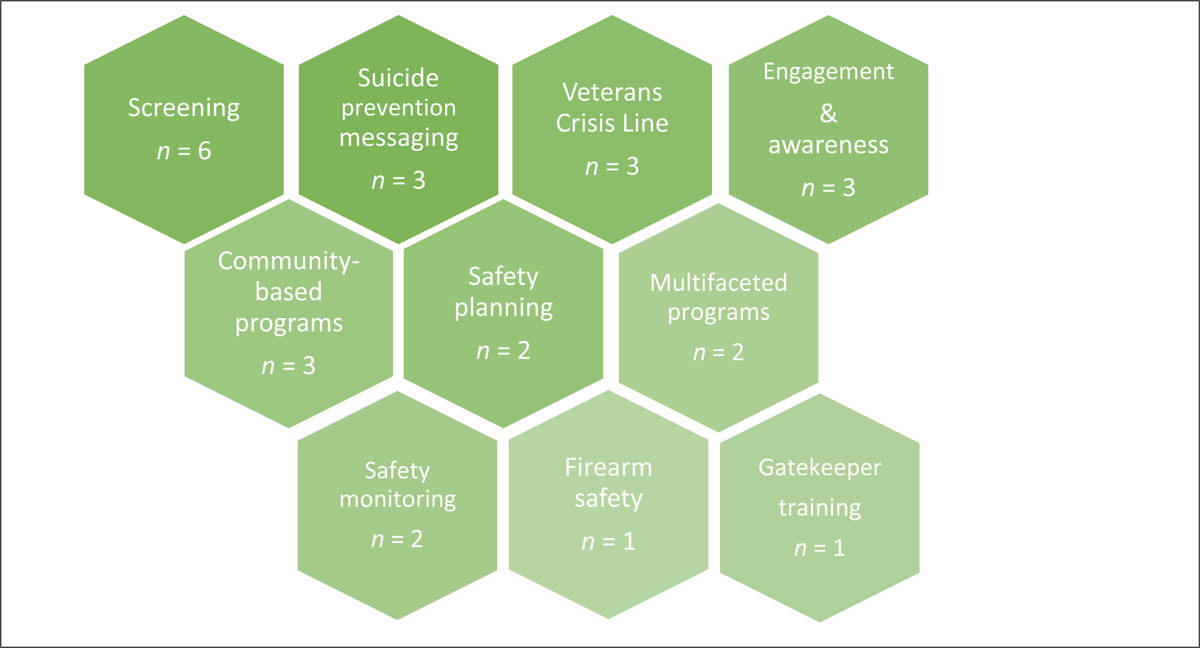
Figure 1
Map of Suicide Prevention Programs by Number of Studies in the Scoping Review.
The evaluated articles identified suicide prevention programs showing promising results for suicide prevention efforts. Gamarra et al. (2015) examined the effectiveness of safety plan implementation, an evidence-based suicide prevention program in use both in the VA and in the community and found that safety plans used with veterans were “mostly complete” and of “moderate quality,” although variability did exist. Other examined studies conducted research on the Veterans Crisis Line (Kirsch et al., 2014; Reger, Jegley, et al., 2022 and methods of using this feature to connect at-risk veterans to follow-up care (Bossarte et al., 2014; Krishnamurti et al., 2023). The results determined this resource was an effective method of connecting veterans to the care they need. Additional studies examined bridge programs to reach veterans leaving in-patient care (Brancu et al., 2020) or reintegrating after active duty (Geraci et al., 2022) with favorable results.
Suicide screening, another prominent suicide prevention program in use at the VA, was also included in the reviewed articles. Bahraini et al. (2020) showed evidence of the effectiveness of Risk ID, a screening program currently in use by the Veterans Health Administration (VHA). REACH VET, a screening program that uses a predictive analytic model, was evaluated in studies conducted by Matarazzo et al. (2023), Piccirillo et al. (2022), and Reger et al. (2019). It was found to result in veterans screened at risk of suicide being referred for services within two weeks, a significant improvement from previous findings.
Some of the evaluated articles had mixed results. Dobscha et al. (2022) identified low self-reported rates of staff discussing firearm safety with veterans, a proven effective suicide prevention program, and thus examined the development of an education program to improve staff efficacy at discussing firearm safety. Other studies assessed possible mechanisms of embedding suicide prevention programs in currently available programs serving veterans (e.g., primary care) to improve access; however, the programs had not yet been implemented (Landes et al., 2021).
Veterans are a unique population, and their preferences need to be considered when planning suicide prevention efforts. Examination of suicide prevention messaging campaigns showed mixed levels of effectiveness, with veterans expressing preference for specific types of communication that were not always present (Karras et al., 2022). Due to the multifaceted issues facing specific veteran populations, suicide prevention programs targeting populations such as homeless or rural veterans often identified available resources but failed to reach high levels of independent efficacy (Holliday et al., 2021; Mohatt et al., 2018). Other programs were in the pilot testing phase (Carras et al., 2021; Gorman et al., 2022; Kasckow et al., 2016) and will require more time and evaluation to determine their potential.
As previously mentioned, 16 sources from the VA met inclusion criteria and were included in the scoping review (See Appendices A & B). Appendix D provides a detailed chart of these (included) programs, all of which are currently available for US veterans through the VA. Suicide prevention programs were evaluated by the following criteria: category of program, target population, description of the program, and important facts. These suicide prevention programs included similar programs as those found in the literature, with two notable additions. The resources at the VA discussed multiple options for psychotherapy with a goal of suicide prevention or reduction of suicidal ideation, including cognitive behavioral therapy (CBT), dialectical behavioral therapy (DBT), and problem solving therapy (PST; see VA, 2023). These evidence-based therapies have been shown to help veterans with suicide-related thoughts and behaviors and are currently available to veterans through the VA (VA, 2023). Also found in the VA sources was a discussion of the options and effectiveness of pharmacological options including ketamine infusion, lithium, and clozapine (VA & DoD, 2019). Each of these options were recommended for veterans with suicidal ideation and the presence of a co-occurring mental health condition, specific to the treatment (VA & DoD, 2019). These data were added to the map of results as seen in Figure 2 (below).
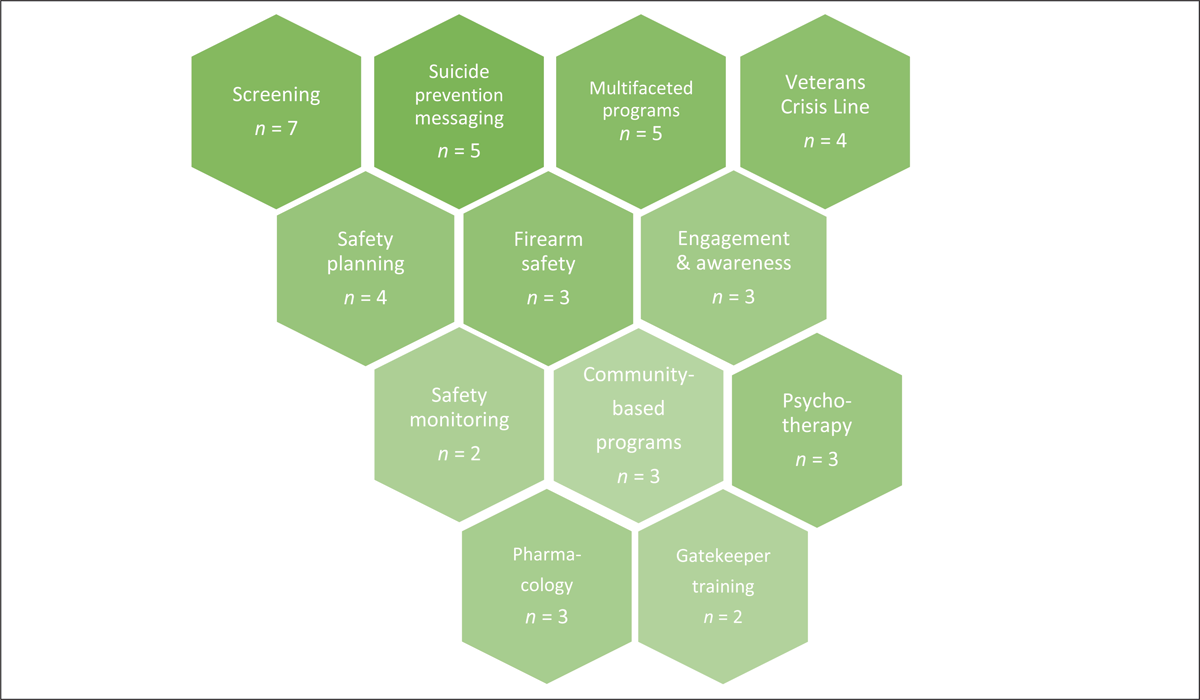
Figure 2
Map of Suicide Prevention Programs by All Source Results.
The evaluated VA programs identified eight different categories of suicide prevention programs (See Appendix D), with a variety of individual suicide prevention programs within each category. On the VA website, there was information about the Veterans Crisis Line (VCL) and specific information was provided for employees and veterans about how to reach the VCL (VA, 2023). Suicide screening programs are predominantly featured, and a discussion was included about increased efficacy in using validated screening tools (VA & DoD, 2019). Additionally, there were numerous types of suicide awareness campaigns and available resources available for dissemination to veterans (VA, 2023).
The VA also provided resources for their employees to help aid in suicide prevention, which are summarized in Appendix D. The VA/DoD Clinical Practice Guideline for the Assessment and Management of Patients at Risk for Suicide (VA & DoD, 2019) provided clear guidelines and resources for suicide prevention with veterans. Additionally, the VA (2018) has made the National Strategy for Preventing Veteran Suicide 2018–2028 (NSPVA) accessible to all employees and the public. The NSPVS is a comprehensive suicide prevention guide for all who work with veterans. This is an ongoing initiative for the VA, who have pledged their continued efforts through 2028 (VA, 2018).
Discussion
The high rate of suicide among veterans is a significant public health issue with over 6,000 completed suicides each year over the past 10 years (Office of Mental Health and Suicide Prevention, 2022). It is therefore a high priority of the US Congress, The White House, and the VA to prevent veteran suicides and enact strong suicide prevention programs (The White House, 2021; VA, 2018). The focus of this scoping review was to survey the peer-reviewed literature and VA resources to determine what suicide prevention programs are currently available for veterans and assess the effectiveness of these programs. According to our results, there are a wide range of suicide prevention programs available and targeted to US veterans that include suicide screening programs, safety planning resources, a veteran-specific crisis/suicide hotline, suicide prevention messaging campaigns, firearm safety programs, suicide safety monitoring programs for those deemed at high risk, community-based programs, evidence-based psychotherapy programs, and pharmacology treatments.
Effectiveness of the suicide prevention programs are overall positive. Significant effort is currently being given to identify veterans at risk of suicidality and connect at-risk veterans with appropriate services (See Appendices C & D). Care given at the VA has been shown to be most effective at preventing suicide in veterans (VA & DoD, 2019; VA, 2018), and thus VA-led programs such as the VCL (Bossarte et al., 2014; Kirsch et al., 2014; Krishnamurti et al., 2023; Reger, Jegley, et al., 2022; VA, 2023). The screening program REACH VET (Matarazzo et al., 2023; Piccirillo et al., 2022; Reger et al., 2019) showed promise. The VA is continuing to work to improve suicide prevention programs through a 10-year plan (VA, 2018), while also providing clear and concise guidelines for current care for veterans with suicidal ideation (VA & DoD, 2019). More research is needed to meet the unique needs of this population and address this significant public health issue.
Based on the literature reviewed and determined ineligible by study criteria, it is worth noting there was a significant number of papers published on causes and contributing factors of suicidality of veterans, although not included in this study’s parameters, are nonetheless important. It was further observed that many of the suicide prevention programs present and in practice at the VA were not present in the peer-reviewed literature. As access to quality mental health care and lack of engagement with VA services are known contributors to veteran suicidality, higher rates of dissemination of availability and VA practices appears vital (Hester, 2017; VA, 2018).
Limitations
There were a few limitations with this scoping study. Programs that may address risk factors of suicidal behavior (i.e., PTSD or major depressive disorder) were not included if they did not directly address suicide prevention as an outcome. In addition, programs that may help with suicidality (i.e., mindfulness and stress reduction programs) were also not included if they did not have a specified outcome of reducing suicidal ideation or suicidal behavior. Suicide prevention programs that were used in other countries were also not included, as the cultural background of each country’s veterans is unique and would likely impact the design and effectiveness of the suicidal prevention program. Finally, this scoping review limited its target population to US veterans only and did not include active duty or reserve service members of suicide prevention programs that are targeted towards these individuals, as the underlying causes and issues are often different from those of veterans (i.e., community reintegration and loss of brotherhood).
Conclusion and Implications for Public Health
Since 2001, age and sex-adjusted suicide rates for US veterans have been higher than civilians, with 6,146 veterans dying by suicide in 2020 (Hedegaard et al., 2021; Office of Mental Health and Suicide Prevention, 2022). Despite a small reduction in the overall veteran suicide rate in 2019, that discrepancy has not changed (Office of Mental Health and Suicide Prevention, 2022). The high rate of suicide has led to the prioritization of suicide prevention programs and initiatives targeting US veterans by the federal government and the US Department of Veterans Affairs (The White House, 2021; VA, 2018).
Our results show a range of promising suicide prevention programs are available to veterans. However, for these programs to succeed and achieve their objectives, veterans and their providers must be aware of the programs (Tsai et al., 2020; VA & DoD, 2019). It is therefore imperative that widespread dissemination of available suicide prevention programs take place and continued implementation of evidence-based suicide prevention programs targeted for US veterans and their unique needs remain a priority (US Government Accountability Office [GAO], 2018; VA & DoD, 2019).
Although suicide is a significant public health issue that disproportionately affects veterans and those serving in the US military (Carroll et al., 2020), it is not a problem unique to this population. The rates of suicidality are also serious in the general population, with 45,979 people having died in the US from suicide in 2020. For every death by suicide, there were four hospitalizations due to suicide attempts (Centers for Disease Control and Prevention [CDC], 2023). Lack of access to effective mental health care and suicide prevention programs are known contributing factors in veteran suicidality (Hester, 2017; VA, 2018) and the general population (CDC, 2022).
Effective, evidence-based suicide prevention programs, increased access to mental health care, and awareness of the availability of both are vital components of suicide prevention in both the veteran and general population (CDC, 2022; Hester, 2017; VA, 2018). Our results have demonstrated that although there is research and practice taking place in these areas for the veteran population, there is a need for continued work and expanded application of suicide prevention programs. Policy changes and legislation, combined with necessary federal funding, should be enacted to encourage continued development of evidence-based suicide prevention programs for military veterans.
Additional Files
The additional files for this article can be found as follows:
Appendix C
Summary of Peer Reviewed Literature Findings. DOI: https://doi.org/10.21061/jvs.v10i1.525.s3
Appendix D
Summary of VA Webpage/Electronic Resource Findings. DOI: https://doi.org/10.21061/jvs.v10i1.525.s4
Competing Interests
The authors have no competing interests to declare.