
Providing access to behavioral healthcare for the rural poor throughout California remains one of the most salient issues facing the region. In the rural agricultural areas of Northern California, access to subsidized mental health services for low-income veterans, tribal members, and other civilians remains difficult due to the unique geography, poor transportation, limited utility infrastructure, provider shortages, significant system-level barriers, and the resource-scarce environment public, private, and Veterans Health Administration (VHA) clinics operate in (Allen, 2018; Snell-Rood et al., 2021). Rural Northern California comprises a heterogeneous population of the working poor, agricultural workers, tribal nations, and military-affiliated communities. In recent years, public and private California rural hospitals have closed or are at risk of closing (Center for Healthcare Quality and Payment Reform, 2023) while substance use and mental health disparities have dramatically increased (Snell-Rood et al., 2021). Moreover, in the past decade, catastrophic wildfires (Rosenthal et al., 2021) and flooding have destroyed homes, livelihoods, and ways of life and have contributed to an increase in community-level traumatic stress (Heinz et al., 2022). Veterans returning home or resettling to rural Northern California after finishing their military service may face a number of these challenges.
Out of the approximately 18.2 million veterans living in the United States, 4.4 million live in rural areas (Veterans Health Administration [VHA], 2021). California is home to the greatest number of veterans, approximately 1.8 million, and about 8% of California veterans reside in rural and semi-rural agricultural regions where access to specialized trauma-informed mental healthcare remains a persistent challenge (Allen, 2018; Snell-Rood et al., 2021; US Department of Veterans Affairs, 2022; VHA, 2021). Given that housing and other costs are more affordable in this region, many veterans choose to live in these regions despite more limited healthcare options. To address these gaps in care, the VHA built 12 Community-Based Outpatient Clinics (CBOCs) in rural and semi-rural regions of California that are connected to tertiary healthcare systems in urban areas (US Department of Veterans Affairs, 2023). These clinics were part of a nationwide effort to bring patient-centered healthcare to resource-scarce communities where access to healthcare is understood as a social process determined by the characteristics of the healthcare system and its potential users (Singer, 1990). Two rural CBOCs, located in San Joaquin and Stanislaus counties, are the subject of this study and offer basic primary care and outpatient mental health services, including in-person group peer support for veterans diagnosed with posttraumatic stress disorder (PTSD). This study investigates the lived experience of veterans participating in group peer support (GPS) in the service area of two rural Northern California Veterans Health Administration CBOCs.
Literature Review
PTSD Care in the Veterans Health Administration
There is a need for access to sustained mental health treatment among trauma affected civilians and veterans alike. Despite the progress made in the delivery of evidence-based treatments for PTSD and related traumatic stress conditions, access to consistent and prolonged treatment for refractory PTSD remains an obstacle for many. In addition, national surveys of veterans indicated that living in rural and remote areas impedes access to behavioral healthcare and this subsequent lack of access to timely mental health treatment remains a major public health concern (Allen, 2018; Gulliver et al., 2023; Weiss et al., 2018). Consistent with this general trend, people residing in rural areas are less likely to access mental healthcare than veterans and civilians residing in urban areas. This is important given the growing number of veterans returning to rural areas upon completion of active duty (Azevedo et al., 2020). VHA clinics are well positioned to address combat-related trauma among US veterans regardless of how the condition is defined (Finley, 2012), debated, and understood by veterans, their families, the US military, and the VHA’s mental healthcare system (Finley, 2019).
Over the past several decades, VHA has advanced the study and treatment of PTSD in the form of manualized evidence-based therapies (EBTs) that are provided by psychologists, counselors, and medically licensed social workers (American Psychological Association [APA], 2017; Bufka et al., 2020; Lang et al., 2024; Moore et al., 2021; Sayer et al., 2023). In addition, a plethora of digital mobile apps have been developed by research psychologists at the National Center for PTSD (Jaworski et al., 2023). For refractory PTSD, intense residential programs, clinical research, and brain-based interventions (such as functional MRIs) are available in urban VHA campuses, often through collaborations with academic university-affiliated medical centers. Pharmacotherapy provided by VHA psychiatrists, psychiatric nurses, and/or clinical research teams often compliments other behavioral healthcare. Moreover, in many VHA campuses, art therapy, rehabilitation counseling, compensated work therapy, the whole health program (Haun et al., 2021), pet-assisted therapy, and a full range of recreational therapy programs (e.g., aquatic, horse, bike, and outdoor programs) are available and promoted. Despite the resources that have gone into medical treatments and other ancillary care programs to address the sequelae from PTSD and other traumatic stress conditions, not all eligible veterans take advantage of such care (Meis et al., 2019). While there have been components of collective veteran engagement in systemwide VHA quality improvement initiatives (Gray et al., 2023), at the local level, outpatient GPS has the potential to engage veterans directly in their care (Jain et al., 2014) in a way that creates the intrinsic motivation needed to take the next step.
Peer Support Programs in Veteran Populations
The VHA has pioneered the implementation of peer support programs integrated into outpatient mental health treatment clinics (Jain et al., 2016) to support veterans diagnosed with PTSD. These veterans often experience comorbid psychiatric conditions such as depression, anxiety, substance use disorder (SUD), and higher rates of suicidality (Milliken et al., 2007; Reisman, 2016; Richardson et al., 2010; Rytwinski et al., 2013) where, if left unattended, may result in worse treatment outcomes, poor social functioning, and greater risk for suicide (McCauley et al., 2012). Manualized evidence-based behavioral interventions for trauma are regarded as first-line approaches for PTSD, with cognitive behavioral therapy (CBT) having some of the strongest demonstrated efficacy (APA, 2017; Lang et al., 2024; Moore et al., 2021). However, many veterans lack confidence in the effectiveness of mental health interventions, and it is not uncommon for a veteran to start, but never complete treatment (Meis et al., 2019). This reluctance to seek mental health services includes concerns about confidentiality, fear of public stigma, professional ramifications, lack of access, and the effectiveness of treatments (Hitch et al., 2023; Ouimette et al., 2011). Improving and supporting therapeutic responses is critically important to veterans seeking relief for their symptoms. For patients reluctant to seek formal mental health treatment services, peer support in a group setting has the potential to accelerate and enhance behavioral health integration by making care more accessible (Jain et al., 2014).
VHA has been central to expanding peer support programs to address these concerns and increase access to care (Gulliver et al., 2023; Jain et al., 2014). Several studies have shown peer support services can be an effective way to manage symptoms related to trauma, substance use, and severe mental illness (Chinman et al., 2015; Joseph et al., 2015; Possemato et al., 2019). Incorporating peer support with evidence-based treatments can minimize dropout rates and facilitate re-engagement in trauma-informed therapies (Hernandez-Tejada et al., 2017, 2021). Peer support groups may improve interpersonal connection and activity, enhance well-being, encourage involvement in treatment, promote recovery-oriented attitudes, and facilitate awareness, trust, and posttraumatic growth (Donovan, 2022; Gulliver et al., 2023; Hundt et al., 2015; Jain et al., 2014; Mercier et al., 2023).
Another study by Weir and colleagues (2019) conducted with UK veterans demonstrated further benefits related to peer support through improved veteran engagement and enhanced mental health treatment. Properly facilitated GPS may provide social connection and social role modeling; offer connection to clinical and well-being support; bridge gaps between veterans and clinicians; and provide a pathway for veterans to dis-engage and re-engage with services as needed (Weir et al., 2019). Seasoned peer support specialists leverage similar military experiences to balance leadership alongside comradery to promote recovery and therapeutic change (Daniels et al., 2017). Through their own experiences in the military and with mental health recovery, peer support leaders conducting group sessions play a valuable role in helping veterans open up, build awareness, improve their well-being, and process their mental health struggles.
Moreover, community-based peer support groups for veterans show promise in meeting veteran-specific needs. The Vets and Friends (V&F) program promoted veteran reintegration by healing trauma and moral injury using a communalization of trauma (CoT) approach. Essential themes identified in this work included connecting emotionally with experiences, feeling heard and accepted by group members, and listening to others. Veterans reported restoration of trust, connection with group members, skill acquisition for improved symptom management, and more community acceptance and engagement (Balmer et al., 2021).
Given many of the VHA’s more specialized and/or intensive residential PTSD services are concentrated in urban VHA centers, veterans living in more rural areas may experience increased barriers to accessing traditional forms of PTSD intervention. However, GPS potentially represents a powerful tool within the continuum of PTSD care since specific peer groups can be developed organically based on local interests and veteran needs. Understanding how GPS experiences among veterans receiving services in small community-based rural clinics can help VHA clinicians and medical directors plan and maximize services between rural satellite VHA clinics and the corresponding tertiary VHA medical centers. In light of recent rural hospital closures and persistent provider shortages in these geographic regions, examining how current modalities such as GPS are leveraged within larger healthcare systems addresses an important gap in the literature. Of note, in rural regions where there are no VHA tertiary care medical centers, regional hospitals often handle psychiatric crises among veterans, and these hospitals are later reimbursed. Managing PTSD in the outpatient VHA rural setting is ideal for all involved, especially the veteran. It is critical, however, to understand the ways veterans perceive the outpatient GPS experience, how they make sense of their role in their care, and whether such participation impacts their overall PTSD care. Specifically, it is important to understand whether GPS experiences increase the likelihood of veterans taking advantage of more specialized services available in the tertiary urban VHA setting, which are often located a great distance from their rural homebase community.
Methods
Study Design
Previously our research group articulated how peer support facilitates the acceptance of PTSD rather than its absolute resolution (Kumar et al., 2019) and helps participants cope with sequelae from violent traumatic experiences (Azevedo et al., 2020). In this evaluation, a qualitative phenomenological design was used to understand the nuances of the lived experiences of veterans participating in rural group PTSD peer support. Phenomenological approaches, with its origins in philosophy (Frechette et al., 2020) and part of the interpretative tradition in anthropology (Lock & Scheper-Hughes, 1987; Sobo, 2011; Witeska-Mlynarczyk, 2015), are now utilized by an interdisciplinary group of researchers in applied medical social sciences and humanities. Although specific qualitative phenomenological design methodologies vary, overall phenomenology in this study emphasizes the unique micro-level contributions of individual lived patient experiences to inform further and more comprehensive and/or comparative macro-level studies (Bradley & Simpson, 2014; Lake et al., 2022; Maggs-Rapport, 2000; Ng & Barlas, 2023; Ryninks et al., 2014; Smith & Osborn, 2015). The theoretical underpinnings of this research assert that a phenomenological inquiry, as articulated in the tradition of medical anthropology, elucidates the agency of the patient voice (Witeska-Mlynarczyk, 2015) in applied research that is concerned with revealing and addressing health inequities, in this case, access to mental healthcare for veterans living in rural regions of California.
Participants
Participants were recruited for interviews on-site at two community VHA CBOCs serving veterans living in two rural/agricultural areas in California, specifically San Joaquin and Stanislaus counties. Interviews took place between January and March 2016 in each VHA CBOC’s respective community clinic. Twenty-nine participants (see Table 1 below) were consented, enrolled, and subsequently interviewed. Interviews were digitally recorded and lasted between 30 and 90 minutes. Veterans diagnosed with PTSD who attended peer support sessions in-person weekly for at least three months were included in the sample. In October 2015, this study was reviewed as research and granted approval by the Stanford University School of Medicine Institutional Review Board (IRB;13004).
Table 1
Participant Demographic Information.
| CHARACTERISTICS | n | % |
|---|---|---|
| Gender identity | ||
| Female | 3 | 10.0 |
| Male | 26 | 90.0 |
| Ethnicity/US racial categories | ||
| African ancestry/Black | 5 | 16.6 |
| European/White | 13 | 43.3 |
| Latine/Latinx/Hispanic | 7 | 26.6 |
| Asian ancestry | 2 | 6.6 |
| Other/Unknown | 2 | 6.6 |
| US era of military service | ||
| (OEF/OIF)a | 17 | 56.6 |
| Vietnam | 11 | 36.6 |
| Other | 1 | 6.6 |
| Rurality | ||
| Rural | 16 | 53.3 |
| Agricultural-semi-urban | 13 | 46.6 |
[i] Note. N = 29. Participants were on average 48.3 years old (SD = 16.0; range = 25–75).
aOperation Enduring Freedom/Operation Iraqi Freedom.
Of the 29 veterans who agreed to participate in the study, the average age was 48, they were predominantly male (90%), diverse, and from non-urban areas (100%), and the era of military service most frequently represented was Operation Enduring Freedom/Operation Iraqi Freedom (57%).
Measure
The semi-structured interview guide began with open-ended questions regarding the participant’s experiences, goals, and thoughts about GPS to address trauma, as well as benefits and limitations of GPS offered in the outpatient setting. Seven main questions, as well as 17 follow-up queries probed the participants lived experiences with GPS which allowed for an emergent dialogue. The questions were developed with the aim to uncover a rich understanding of the dynamics of the group peer support experience and the phenomenon under study, including soliciting feedback on areas for improvement.
Data Analysis
Consistent with the reflexive stance (Frechette, et al., 2020) in phenomenological inquiries, the research team examined the qualitative data through the lens of patient-facing providers interested in improving PTSD care among veterans, ultimately concerned about what factors contribute to GPS participation and the impacts of such participation. In preparation for data analysis of the interview transcripts, audio recordings were de-identified and transcribed verbatim using a secure VHA approved vendor. Using Atlas.ti qualitative analysis software on a previously unexamined portion of the data set, authors one, two, and three met weekly (September 2021 to July 2022) to iteratively code and analyze 220 pages of narrative passages until consensus was reached. Specifically, the process of analysis involved authors one, two, and three analyzing narrative transcripts three times and through an interpretative process (Doody & Noonan, 2013; Ricoeur, 1981), the research team identified three prominent themes and nine related sub-themes that illustrate the ways study participants diagnosed with PTSD experience GPS in two CBOCs in rural Northern California (see Table 2 below).
Table 2
Ways Study Participants Diagnosed with PTSD Experience Group Peer Support in Two Community-Based Clinics in Rural California.
| THEMATIC FINDINGS | DESCRIPTION |
|---|---|
| 1. Leveraging shared experience | |
| 1.1 Unlearning conditioned reactivity | Desire to unlearn unhelpful patterns\behaviors that were “programmed” during training. |
| 1.2 Impact of structural rigidity | Understanding the impact of a structured code of conduct and expectations: punctuality, following orders, suppressing emotions, respecting the chain of command, and focus on mission. |
| 1.3 Comradery as healing | Refers to an appreciation for the shared understanding of shared work culture: language, discipline, and sacrifice. The deep connection developed between those who served, imparting a sense of safety and belonging during peer group sessions. |
| 2. Facilitates connections | |
| 2.1 Synergy | Ways peer support exists in tandem with psychological and psychiatric care and provides linkages to other social and/or recreational programs that reduce social isolation. |
| 2.2 Transformative | Describes how peer group sessions can be life changing, cathartic, and how other care revolved around attendance at group. |
| 2.3 Collaboration for continuity of care | How VA providers worked together to address gaps to provide comprehensive PTSD care. |
| 3. Distinct from clinical approaches | |
| 3.1 Openness and freedom | Group peer support experiences described as free and open compared to clinical approaches. |
| 3.2 Perspectives on EBT experience | During peer support group sessions veterans reported appreciating the lack of diagnostic labels. Participants reported how flexibility, as opposed to more structured approaches, can improve patient-provider relationships. |
| 3.3 Guidance versus holistic support | Group peer support was viewed as supportive and therapy more as clinical/medical guidance. |
[i] Note. PTSD = Posttraumatic stress disorder; VA = Veterans Affairs; EBT = evidenced-based therapy.
Results
A phenomenological inquiry (Braun & Clarke, 2006) revealed three prominent themes and related sub-themes (listed in parentheses) which illustrate how veterans experience GPS: (a) encounters leverage shared experience to help participants unlearn detrimental cognitive patterns (conditioned reactivity and structural rigidity) where sustained participation may promote posttraumatic growth (comradery as healing); (b) participation facilitates connection to additional mental health services (synergy, transformative, continuity of care); and (c) sessions provide therapeutic value that is distinct from clinical approaches (openness, EBT experience, guidance versus holistic support). Study findings also illustrated the mechanisms by which participants may seek additional multidisciplinary PTSD care within the VHA.
Prominent Theme 1: Leveraging Shared Experience
One important finding was how a shared military experience was foundational to the peer support group experience for veterans dealing with trauma related conditions. Important sub-themes that emerged include unlearning conditioned reactivity, the impact of structural rigidity, and comradery as healing, as revealed in the following quotes. Veterans in this sample reflected on unlearning conditioned reactivity gained during military training.
P1: I mean, the one for me that was I think it was the second time I was there, and I learned about how basically boot camp breaks us down and builds us up and breaks down those, so our baseline is not the same and I was very frustrated by learning that fact (during group peer support). It really pissed me off really … I can be open and honest with like my emotions (during group peer support) and how I feel in there and the guys aren’t like, “Oh, he is crazy because he is all pissed off over this little thing” but for me it wasn’t a little thing.”
In the military, soldiers are trained to react quickly and decisively to threats while focusing on the mission. Recognizing how to unlearn conditioned reactivity was the first step to unlearning it, as the following two veterans reported.
P2: Now I’m understanding that it was–it was what I was taught to do. I was taught to react. I was taught to like not ask questions.
P3: Even though I may never get to where the normal, my normal was before the military, but to work to get as close to it. And that’s where I would like to, that’s what I’m trying to do, and that’s pretty much why I keep most of these appointments, or try to, is because, yeah. I don’t want to be the angry grouch. I want to be able to function with my kids without taking it out on them or just having those episodes. I hate it, because I see my kids pay for it now. And when I’ve–well, before the military, I was a calm, cool, collected, you know, hardly, didn’t speak much unless I had to. And now it’s like a ball of anger sometimes. It’s–I’ve never been that person, and, you know, it’s a 180 from what I was.
Military training does not only impact one’s behavior but also one’s thoughts and emotions. Veterans in this sample reported how the impact of structural rigidity influences how they think and experience emotions which make it difficult to adjust to civilian life.
P4: I guess this is the best way to say it, we’re not programmed to have feelings. We’re not programmed to be emotionally in tune with ourselves. It’s just getting it done, shut up, and move forward.
A female veteran adds:
P5: But no, like I said being in the military and stuff you don’t identify yourself as separate you know. Everyone’s kind of one in the same you know.
Military training takes a toll, in part, due to the negative effects of breaking down a person to rebuild a human that focuses solely on the mission. Veterans appreciated the peer support specialist’s shared military experience and understanding of veteran struggles. Peer support specialists that leverage this lived experience with military training to create a safe group space are in a prime position to lead challenging discussions, as these quotes illustrate:
P6: The fact that he is a veteran himself, there is a language, it’s an unspoken language, and it makes it easy because you don’t have to—usually you get like a—I don’t understand can you explain that to me, you know, and it kind of gets frustrating, you know, but obviously the person who hasn’t served, they don’t understand the term or what you’re talking about, this one you say it, he knows, you guys are chuckling about it or you guys feel the same pain you share.
P7: It’s good to know that somebody else has actually gone through that sacrifice and a total veteran too, like who has shared deployment expertise, who has shared training, who knows what you’re talking about, instead of somebody who doesn’t know the lingo or the jargon, to actually have no bias … whereas somebody who doesn’t… can’t really appreciate the sacrifice.
Another veteran reflects on the pivotal role the peer support specialist plays in helping veterans understand how past trauma influences reintegration into civilian life.
P8: And he knows that and he understands how that mentality works in that world and how in [civilian] society that doesn’t work and he lets us know before we get to those bumps in the road like “hey, just because the guy at the supermarket wouldn’t take your coupon, that’s no reason to pull him over the counter and tell him to look at it closer” because that’s not going to do nothing except get me in jail, but back when I was in the military if someone told me something was wrong and I knew it was right, it was alright to pick them up and take them to the place and shove their face in it and say “see how right I am?” as long as you were right. And you can’t do that here. You’ll get arrested.
Military occupations demand that soldiers are punctual, follow orders, suppress emotions, and prioritize the mission above all else while embedded in a clear hierarchical command structure. A seasoned peer support specialist understands that leadership and taking charge helps keep the focus positive and on the recovery journey, as this quote illustrates:
P9: I mean, it’s– he’s the leader (peer support specialist) of the group. He’s a platoon leader. He’s, you know, he tells us to fall in line, we fall in line. I mean, he’d never tell us to shut up, but if he did, we’d quiet right up. Just, hey, what do you got to say? Yeah. It’s like a real lax military setting (group peer support). And he, but he’s real open about it, to where he is like your platoon sergeant, where he can crack a joke with you and then, hey, but let’s get back to the subject, because we got offline real quick… He keeps us on point.
The themes and narrative passages illuminate the dual nature of the shared military experience–how valued characteristics, such as conditioned reactivity and structural rigidity, may predispose one to schematic beliefs and thought processes that contribute to diminished mental health. Comradery as healing can serve as a powerful mechanism of therapeutic change and for some, promote posttraumatic growth. One veteran highlights the new sense of comradery that is nurtured in these in-person group peer support sessions where healing begins.
P10: My wife is a drill sergeant. So, she’s been in the Military 14 years now. I can’t talk to her about PTSD. I can’t talk to her about why I’m not friendly to her coworkers or why I’m always looking mad when I’m out in public or why I’m always paranoid. I can’t talk to her about those things because she’s a soldier still. She’s like man up! Keep pushing. The peer support groups allow you to do that. They allow you to talk to other veterans who have the same issues, the same problems, and they allow you guys to work through them together. And it’s nice to know that there’s other people that are suffering from the same thing you are. Because a lot of veterans think it’s only them. Why is this only happening to me? But in actuality it’s happening to a million other veterans, but you don’t know because you don’t talk to other veterans because that’s how you’ve been programmed. So that’s the purpose (of the peer support group) I believe.
While the peer support specialist may take the lead in facilitating important discussions, it is the dynamic of the group experience where veterans learn from other veterans that is key. The comradery felt among veteran peers sets the stage for posttraumatic growth or a growth mindset. In this context of veterans talking to and learning from other veterans, GPS may also lead to discussions that promote better veteran integration into other behavioral health services within the larger VHA healthcare system, as the second prominent theme reveals.
Prominent Theme 2: Facilitates Connections
Facilitates connections refers to ways in which the experience of being in a peer support group potentially links veterans to other forms of behavioral healthcare. Three sub-themes were identified: synergy, transformative, and collaboration for continuity of care.
Peer support groups create synergy with and complement other mental health services. Veterans reported that peer support groups enabled access to further care, offered support in tandem with other care, and enabled more comprehensive care. This veteran reflects:
P11: I was referred maybe about in September of this–of last year. The therapist that I had been seeing recommended these groups because of the alcohol and drug intake that I was doing for temporary solution. She wanted to find me a long-term solution to fill the void of my emptiness, so she recommended this group to me, and I accepted and here I am now.
Another veteran states how the peer support group offers opportunities for those who may be reluctant to seek more formal mental health treatment.
P12: I believe that the purpose of the support group is just like first line, you know, your first step, it’s a group environment, it’s a way to test the waters and get your feet wet.
Others reported that they utilized peer support groups while also receiving care from other mental health providers, such as psychiatrists and licensed therapists, as the following quote demonstrates.
P13: The impression is it seems; it seems to work for me. At first, I wasn’t interested in it at all, you know, but my psychiatrist told me to give it a shot, so, you know, I told her I was a shy guy, I don’t really talk that much, so I went to find out for myself, and that’s–you know, I think it works. It works for me. Whatever, I guess, you know. Whatever you put in, you get out, I guess, you know? Am I answering the right question? I don’t know. Yeah. It’s, it’s a good group, I think. I think it’s helpful.
At times, clinical providers scheduled mental healthcare around the peer support group, given how life-affirming and transformative peer support group experiences can be for some veterans, as the following quotes demonstrate.
P14: So, I let all my other providers know how important this group is to me, and I will not go to another appointment on a Wednesday because this is where I need to be because this group gives me so much that I feel that it’s vital to my progress and my growth and how I feel, how we help each other, we’re there for each other, and it’s like a family.
Another veteran reflects:
P15: My wife knows where I’m at every Wednesday, my doctors cannot make appointments on this Wednesday or any Wednesday because that’s how important this group is to me and my wellbeing and for me to get through the week and the stuff that happens, I have a place. I see other people, but it’s different because those people, some of those people I talk to, we don’t share the same experiences, but when I come here, I can literally let down my guard and lay it out on the table.
Finally, veterans reported that licensed providers and peer support specialists worked to ensure comprehensive mental healthcare for the veteran, especially to ensure collaboration and continuity of care when gaps existed.
P16: She’s my psychiatrist currently. And I’m seeing her, I think next week, and the next week, and we’re going to see about–because they’re so over-burdened here, they’re doing, you know, a Veteran’s Choice referral to a practitioner somewhere in Stockton. I don’t know who that is yet or when that will begin, but that’s, that’s the intent at this point.
The GPS experience informs participants of the range of mental health and wellness options available, including the full extent of the variety of clinicians in the field of behavioral medicine. This is accomplished formally through clinician referrals and informally through what participants learn from other veterans. This newly acquired knowledge empowered some participants to seek out care for their condition in ways they were previously unaware of. Participants also described the impact and importance of GPS on their well-being and offered perspectives on how peer support and clinical services provided in tandem ensure consistent, comprehensive care. As the next prominent theme explores further, participants also offer a range of perspectives on mental health treatments and how the therapeutic value of GPS is distinct from professionalized clinical approaches for PTSD.
Prominent Theme 3: Distinct From Clinical Approaches
The GPS experience in this sample often changed veteran perceptions of their clinical provider relationships. For some, greater reflexivity occurred as to how the group peer support experience is distinct from treatment offered by a licensed mental health clinician. Three main sub-themes emerge: openness and freedom, veteran perspectives on evidence-based therapy (EBT) experience, and guidance versus holistic support. Together, these themes capture how more formal mental health treatments compare with the peer support group experience.
Most veterans in this sample were not new to PTSD treatment. In fact, most have had a variety of psychiatric and psychological interventions. Participation in the peer support group caused veterans to reflect on their experiences with their clinical providers, and inevitably, they made comparisons. The peer support group experience was characterized as having more openness and freedom, as the following quotes illustrate:
P17: With this guy he’s open. He’s open. He doesn’t condemn me. He doesn’t start taking notes. But why’s that? But-what were you thinking, none of that, no. It’s just laid back and it’s comfortable.
She says if you talk about harming yourself or others as a clinical psychologist I’m reported to–to the proper authorities … So right then you gonna clam up.
P18: I think it does, it benefits my mental health, because it’s a lot easier to talk. I know, we know that REDACTED has gone through training and what not, but he’s also a veteran that, well, doesn’t have judgment in his eyes when he’s looking at you. He’s looking at you as a brother and, you know, it’s a different, it’s a different environment when it’s not a doctor-patient type of thing, even though he does have the credentials, because it’s a family environment. It’s more open. It’s more relaxed. It’s–you can open up to him and talk, and you don’t feel like you’re getting looked down on from, like, a doctor, where he’s trying to dissect it and figure out the problem, when sometimes that’s not the way to go.
Veterans reflected and offered perspectives on their experiences with manualized therapies (EBT experiences).
P19: And I think it’s the therapist’s role like to follow a pattern and the peer support group is more off-line. “Let’s talk about how you’re doing with your sobriety, but at the same token, what’s really bothering you.” So, we go off subject at times, but we reel it back in. So, it’s okay for us to engage different topics, let alone a therapist. If I take one topic, the therapist likes to stick to the topic and then work at that one topic, where in this case, we can throw out many topics, so it’s kind of- what do I have to say- one is in line with the book and the other one is more for us- in line for us.
Openness and freedom in well-run peer support groups provide participants with more agency, contribute to more honest conversations, and promote a sense of control in managing their mental healthcare. At times, clinician-led care was seen as rigid, especially as it relates to the process of obtaining a diagnosis, which can sometimes engender fear of labels, as the following quotes illustrate:
P20: I mentioned that I had a liver and kidney thing. Right then she assumed it was drinking. And then come the questions. I said, “Well what’s the magic number? If I say three or four—what’s the magic number? What’s the cutoff point?” And then, “Oh well you have a drinking problem.” Well, if you have four then you an alcoholic.
P21: She went to school. And I—and my point. She read a book that somebody else wrote to give you a label about yourself.
P22: Like when I see them, I just expect them to prescribe me some new medication, tell me that I need to practice some meditation techniques, some breathing techniques, so to say. I expect to get some handout on anxiety or depression. That’s about it and then I expect her to make another appointment and see me again in 90 days and do the same thing all over again, which is about 30 minutes of their time. With the peer support group, I expect to be relaxed, talk about my problems, hear other people’s problems, come up with a solution for our problems, make some connections, feel comfortable – yeah that’s night and day with those things.
Clinical guidance from traditional mental health providers, whether they are psychologists, social workers, or psychiatrists, can feel structured and more medical in focus. Conversely, peer support specialist-led sessions provide holistic support. This veteran exemplifies this by stating:
P23: Well, I guess the top difference right there is that one can prescribe drugs and the other can’t. One probably has a little more in depth understanding on what the military members go through because they were also in the military, you know? Although, I have to honestly say that my psychiatrist was also in the military, so he understands that, too, but there are differences in regard to one for support [group peer support] and the other one for [clinical] guidance.
Participant responses offer a range of perspectives on mental health treatments and how the therapeutic value of group peer support is distinct from professionalized clinical approaches. Primary discrepancies were related to provider and treatment flexibility and goals. This impacted a veteran’s sense of agency, the type of support provided in a session, and their relationship with mental health services in general.
In summary, these findings illustrate how GPS sessions leveraged shared experience to help participants unlearn detrimental cognitive patterns; facilitated connection to additional mental health services; and how sustained participation may promote posttraumatic growth. In this sample, over time treatment reluctance was diminished as sessions provided therapeutic value that is distinct from clinical approaches.
Since this study was conducted before the COVID-19 pandemic, it is worth reflecting on how GPS was impacted. During the pandemic, the outpatient mental health clinics transitioned to telehealth (both telephone and video), including PTSD peer support groups. Post-pandemic, GPS offerings expanded but by and large the program has returned to an in-person format, although virtual groups are possible depending on veteran interest and staffing availability.
Discussion
This study illustrates ways rural military veterans from California experience GPS as part of managing their PTSD symptoms. Veterans benefited from identifying their shared experience, received more patient-centered care, and leveraged the complementary impact of group peer support on their concurrent treatments. The findings highlight how military training results in learned reactivity and predisposes veterans to diminished mental health while paradoxically creating the seeds for healing. Military training focused on prioritizing the mission over one’s individual needs, emotions, and feelings. This focus complicates the trauma recovery process and re-entry into civilian life. Nevertheless, military occupations instill a deep sense of comradery and a connection to one’s team. Peer support specialists conducting group sessions work through and emphasize this ingrained comradery to promote self-exploration, healing, and change, which sets the stage for posttraumatic growth for some participants. While measuring posttraumatic growth (Tedeschi & Calhoun, 1996, 2004) was not a focus of this study, its presence can be inferred from several of the narrative passages. GPS may also facilitate connection to additional services within the larger VHA system that support comprehensive treatment and provide continuity of care, even if that means travel to distant urban centers. The distinct differences and benefits offered by clinicians and evidence-based therapies versus peer support specialists highlight the unique role and the potential avenues through which GPS may enhance mental healthcare. Taken together, these findings illuminate how peer support can be salient to the comprehensive management of PTSD by facilitating individual posttraumatic growth, creating a bridge to other providers, and enhancing or complimenting other treatments.
The trauma-focused assistance rendered by the GPS experience and as part of an interdisciplinary mental health team can amplify patient-centered mental healthcare and, in some cases, build a bridge to evidence-based treatment. Overall, veteran involvement in the peer support group impacted their experience and relationship with other types of mental healthcare. Participants differed, however, on the role of GPS relative to other sources or forms of therapy. For some participants, the peer support group was their first experience with mental healthcare and more than sufficiently met their perceived needs. Similarly, for others dissatisfied with clinical providers, GPS offered an alternative satisfactory treatment option. For others, the GPS served as a gateway to clinically administered psychotherapy or pharmacotherapy. For some veterans, being in a group without hard expectations and an emphasis on functional challenges as opposed to re-living trauma (as is common with psychotherapy) made the experience less intimidating. Once engaged, peer support participation normalized traumatic experiences and helped ease veterans into more formal, evidence-based therapies. Still, for others, the groups served as the next stage, either to supplement therapy provided by a clinician or as a means of maintenance after clinical care was discontinued. Participants sharing this perspective felt they needed to work through more intimate or serious challenges before they could benefit from a GPS environment.
Veterans reported that both GPS and clinical treatments were essential to their recovery and that undergoing both simultaneously may be synergistic. Nevertheless, veterans qualified that while both modalities may be useful, they are distinct entities that offer distinct therapeutic benefits, and the need for these benefits may vary based on the individual. For instance, only prescribers (psychiatrists and nurse practitioners) can provide medications, but the need for medication depends on the individual. Alternatively, the GPS emphasizes practical application and offers experiential learning that is only possible in groups comprised of members with shared experiences that meet weekly for an extended period of time. Veterans also described ways in which shared experience impacted their ability to access and engage in healing.
Enhanced veteran PTSD care and connections were reported by participants, and these mechanisms reveal how, in this sample, GPS often minimized reluctance (see Figure 1) to seek mental health services and treatments and led to subsequent linkages to further treatment and/or other programs that reduce social isolation. These findings closely parallel those presented by Weir et al. (2019) and elucidate the potential salience of peer support in facilitating more comprehensive care. Moreover, veteran perceptions of peer support as being more flexible, open, and nonjudgmental than formal therapies with clinicians may position GPS as a pathway for engagement and disengagement with treatment as needed (Weir et al., 2019).
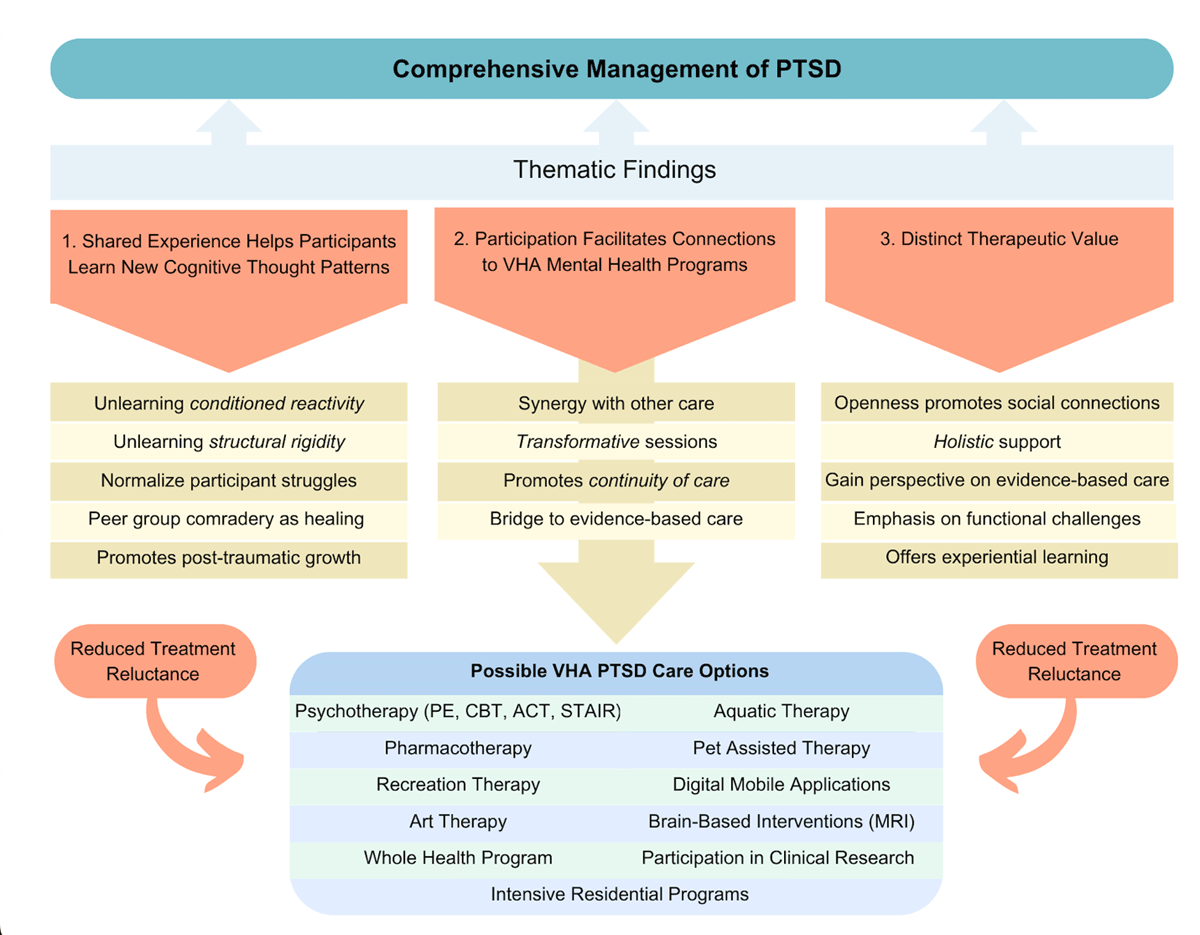
Figure 1
Mechanisms of Enhanced PTSD Care and VHA Connections Reported by GPS Veteran Participants.
In rural Northern California, GPS conducted in VHA community-based clinics had the added potential to support better linkages to more specialized tertiary PTSD care in affiliated VHA medical centers in urban centers. Unlike private and most public healthcare systems, the VHA provides a free shuttle system between rural and urban medical facilities. If a veteran wants to take his or her own transportation, they can be reimbursed for this travel. While daycare remains an obstacle for veterans with young children, specialized telehealth services are increasingly more available, allowing for specialized psychiatry and psychological services in the comfort of one’s home. Specifically, participation in GPS for participants in this study opened the window for veterans to reconsider psychological and pharmacotherapy therapies to treat their PTSD symptoms either by traveling to an urban center or participating in telehealth. In essence, GPS participation broke down barriers as it relates to stigma as newer participants could hear the benefits of such care from the voices of other veteran peers. Those who continued to decide not to seek formal manualized behavioral therapies became aware of the benefits of other types of PTSD care, such as recreational therapy, pet-assisted therapy, the whole health program, etc., available in urban VHA centers through GPS. As a result, some veterans chose to seek these services in tandem with GPS as part of their pathway to care. The pathways to PTSD care in the VHA are many and group peer support, in this sample, helped veterans understand the totality of what is available.
It is important to note, however, the substantial behind-the-scenes effort necessary to implement group peer support in the outpatient setting. To optimize success, an interdisciplinary team was involved in designing the program and deciding how peer support leaders would be supervised and supported. Licensed doctoral-level clinicians were available, educating and intervening to actively supervise. Nevertheless, even with careful planning, it goes without saying that group peer support is not guaranteed to always provide a positive experience. For example, participants can be bullied or feel marginalized, while some participants may dominate the session. Patients could feel torn or potentially get conflicting advice. Some individuals may have a negative reaction to group leaders “checking up” on them and encouraging them to engage during a session as a means to help them. There is a real art to facilitating group peer support sessions, and it is crucial that peer support specialists have the proper training, skills, and ongoing supervision to support effective group facilitation and provider well-being.
Limitations and Strengths
This study aimed to understand the critical gaps in knowledge around veteran experiences with group PTSD peer support in rural settings. Nevertheless, there are several limitations to the current study. While the data set was rich, the modest sample size and small number of female participants did not allow for a more gendered analysis of group peer support, especially as it relates to women and/or non-binary veterans. Moreover, the veterans who self-selected to participate may offer a more positive evaluation of the GPS experience than those who chose not to come forward to participate. The geographic area covered by this study encompasses several tribal communities, and none of the participants in this sample identified as Native American veterans. Since the data were collected before the COVID-19 pandemic, study findings are only applicable to in-person GPS and not the telephone and video GPS formats that were offered during the pandemic and post-pandemic. While this unique sample may not be generalizable to all outpatient clinical settings or even all veterans, the perspectives articulated in this manuscript can be applied to further develop pilot civilian, veteran, and active military outpatient group peer support programs, especially those that are trauma-focused.
Recommendations and Future Directions
This manuscript aims to provide a foundation for future studies examining the effectiveness of group peer support in VHA and civilian clinics. Further delineation of best practices for referring veterans to group session would be ideal to prevent improper referrals.
Even though this study leveraged a phenomenological approach in the analysis of individual experiences, it is important to acknowledge that macro-level political economic forces persist that contribute to inequitable access to behavioral health services in California’s rural areas, regardless of income and health insurance status. While these forces impact veterans living in California’s rural areas, the presence of VHA clinics in these regions addresses some of the issues related to access to basic behavioral health and primary healthcare services.
It should be noted that GPS was never designed to specifically address behavioral health disparities per se and, hence, should not be used as a remedy for behavioral health staffing shortages in rural outpatient clinics and affiliated urban VHA medical centers. Steps must be taken to ensure that GPS coexists with onsite multidisciplinary collaborations where linkages to more intensive services, even those offered in more distant urban centers, can be made in a timely manner when a veteran is in crisis. Nevertheless, given that GPS was perceived by some veterans as a sufficient stand-alone modality based on their needs, peer support groups may be a particularly valuable resource for addressing delays in care due to clinical provider shortages and greater acuity in traumatic distress related to interruptions in care. For example, GPS could function as a lower-level tier within a stepped-care approach to introduce veterans to the mental healthcare system. Alternatively, GPS could be leveraged in a way that encourages posttraumatic growth (Donovan, 2022) given how it can enhance a veteran’s social inclusion and sense of belonging.
To maximize impact, best GPS practices that ensure adequate supports, effective facilitation, and thoughtful placement of participants in group settings is essential. It is crucial that peer support specialists are provided sufficient, ongoing supervision and training and that the role and responsibilities of peer support specialists are clearly defined to ensure effective service utilization by other providers.
Building on the results of this study, future research and implementation recommendations include:
Ideally, future evaluation of GPS efficacy would examine whether or not post-traumatic growth changes with participation in GPS. This type of evaluation research would provide an important additional outcome measure besides the traditional PTSD inventories.
Specific outreach to veterans from tribal communities, women veterans, as well as those from sexual minority groups is critical for a well-rounded sample for the evaluation of GPS services. This recommendation would enhance both implementation and program evaluation goals.
Future implementation of GPS in outpatient rural settings should consider ways to enhance and support the career development of peer support leaders in the rural environment. In particular, consider training more veteran women and veterans who are members of sexual minority groups as peer group leaders. This may be particularly advantageous as this would encourage additional GPS options that may be able to specifically address PTSD related to military sexual trauma and other unique concerns.
Develop specific guidelines related to veteran referrals into GPS to prevent the discomfort caused when a participant may need to exit the group.
Consider exploring ways to enhance the PTSD pathway to care by developing written materials that illustrate how to obtain referrals into PTSD specialty care in the affiliated urban VHA medical centers and include information regarding temporary VHA housing and transportation options in such descriptions. This may enhance GPS sessions by allowing more time for focus on recovery as opposed to VHA procedures.
Given that these rural areas are in zones seasonally impacted by wildfires and floods, consider additional training and support to address climate related community-based trauma.
Since these regions often lack behavioral health services for the civilian population, explore ways where VHA can partner with local groups to expand such care as veterans often report that they are not able to find care for their family members, which in turn impacts veteran health. For example, there can be linkages with other federally qualified health centers in the region, such as Migrant and Community Health Centers where resources could be shared to partner with VHA such as co-sponsoring health fairs, vaccination events, special presentations, etc. Additionally, there could be agreements regarding facility sharing where VHA providers could be co-located with providers from other federal clinics in the region. This could extend the reach of GPS services.
Ultimately, understanding how veterans experience GPS in a small community-based rural clinic helps VHA clinicians and policymakers plan and maximize services along the continuum of PTSD care to better address the rural\urban divide, especially for veterans in crisis. Since more specialized, intensive, and/or residential PTSD services are concentrated in urban tertiary care healthcare systems affiliated with academic medical centers, managing PTSD in the rural setting has practical implications potentially allowing for more timely linkages to specialty PTSD care.
Conclusion
With proper supervision and resources, GPS can provide a critical resource to those living in resource-scarce communities, such as rural and/or agricultural areas. For rural veterans in this sample, GPS had the potential to “undo” isolation, increased social connectivity, normalized participants’ struggles, and helped guide emotion identification, coping, and processing of traumatic experiences. Additionally, study findings illustrate the mechanisms by which GPS may influence veterans reluctant to seek treatment to consider additional multidisciplinary PTSD care within the VHA. This study also suggests that providing veterans with the opportunity to address challenges within the context of a flexible group led by someone with a shared veteran identity can be particularly powerful and has the potential to fill gaps inherent to traditional clinical care. These findings inform the future design of peer-support programs in rural/agricultural settings, provides lessons on collective veteran engagement in the management of PTSD, suggests best practices for implementation, informs the future design of GPS and can help VHA clinicians and policymakers plan and maximize services along the continuum of PTSD care to better address the coordination between rural and urban VHA clinics. For veterans who have experienced exceptional traumas and live in isolated communities, in-person group peer support can provide a critical resource in rural settings.
Data Accessibility Statement
The study team did not seek IRB approval for online publication of narrative data due to the small sample and concerns related to veteran privacy.
Ethics and Consent
This study was approved by the Stanford University School of Medicine Institutional Review Board.
Acknowledgements
Special thanks to the veteran participants. Shaili Jain, Anusha Kumar, Adam Factor, Elon Hailu, and Jeremy Ramirez were instrumental in the initial phases of the project. We are also grateful to Savanna L. Kiefer and Kristen M. Azevedo who assisted us with the editorial review of this manuscript. This manuscript is dedicated to the memory of three remarkable women who devoted their lives to care for veterans– Jennifer Gonzales Shushereba PsyD; Christine Loeber, MSW, LCSW; and Jennifer Golick, PhD. They continue to inspire and are deeply missed.
Funding Information
This study was supported by a grant from the Arlene and Michael Rosen Foundation.
Competing Interests
The authors have no competing interests to declare.
Author Contributions
Kathryn J. Azevedo: Conceptualization, methodology, validation, formal analysis, data curation, writing–original draft, writing–review & editing, visualization, supervision, and project administration.
Stephanie J. Glover: Data curation, writing–original draft, writing–review & editing, visualization, and formal analysis.
Elsa L. Gay: Data curation, writing–original draft, writing–review & editing, visualization, and formal analysis.
Steven E. Lindley: Conceptualization, writing–original draft, writing–review & editing, supervision, and project administration.