
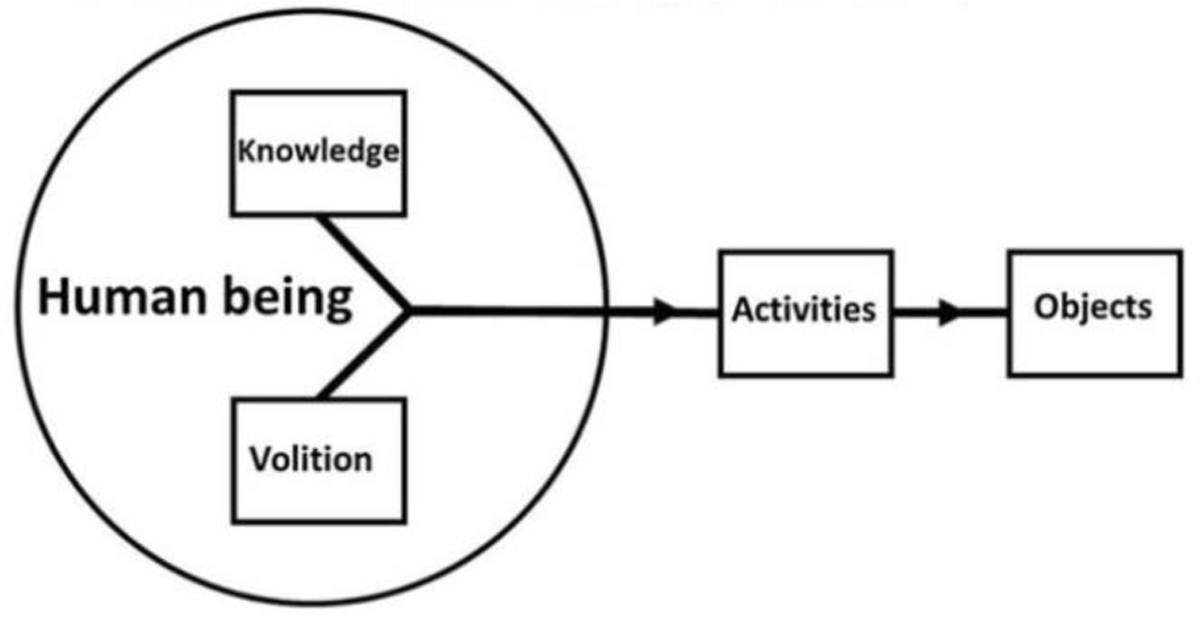
Figure 1
Model wherein technology is manifested (Mitcham 1994:160)
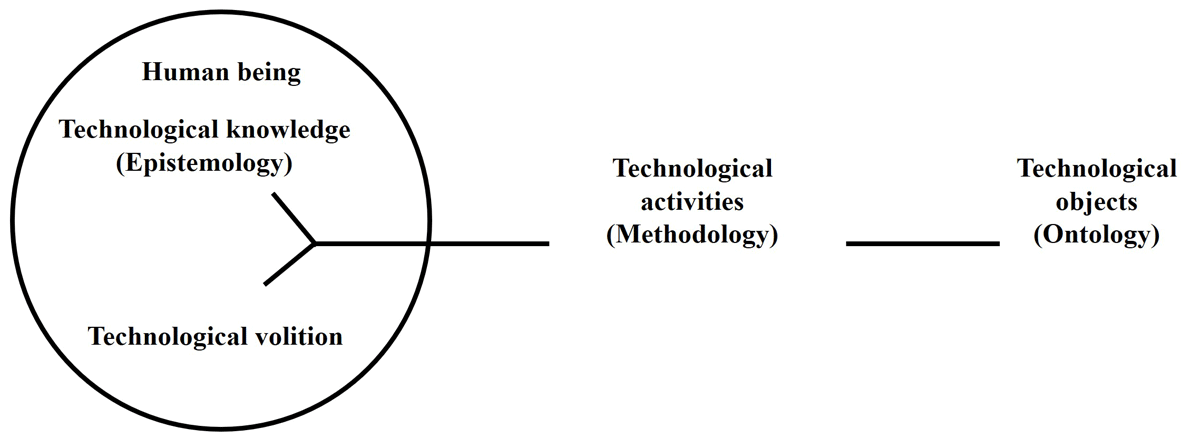
Figure 2
Ankiewicz’s modes of manifestation of technology to the Mitcham’s model (Ankiewicz et al., 2006)
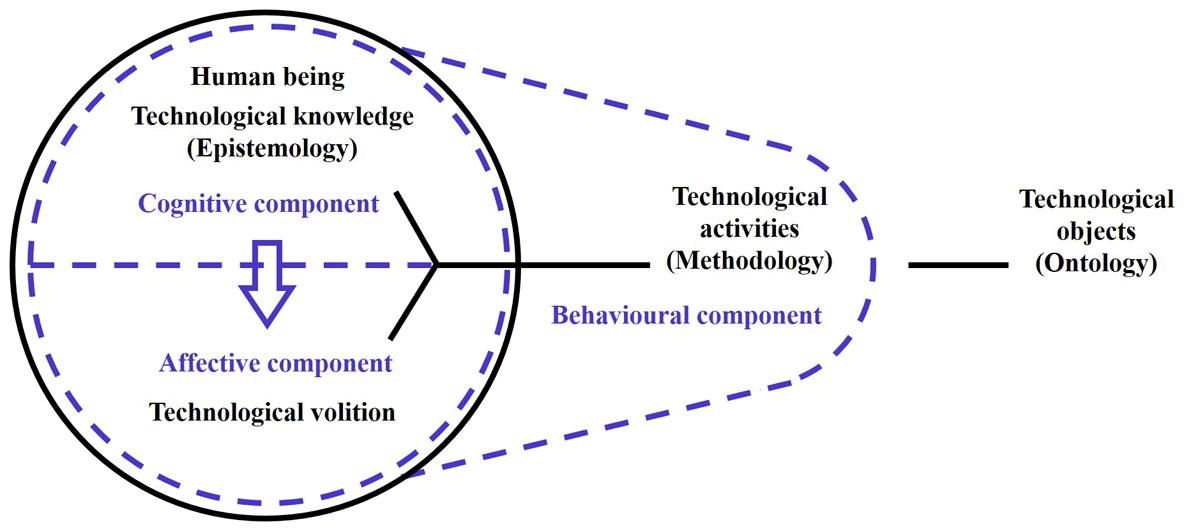
Figure 3
Superposition of the traditional approach to attitudes and Mitcham’s philosophical framework of technology (Ankiewicz, 2019)
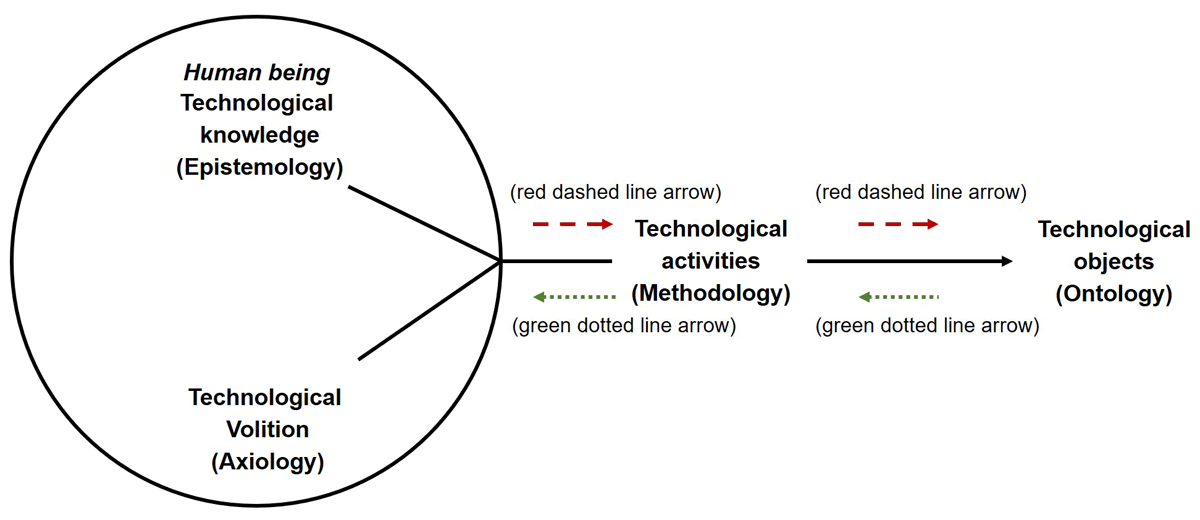
Figure 4
Adaptation of Mitcham’s model to include “axiology” and directional arrows (Hallström & Ankiewicz, 2023)
Table 1
Relationships between students’ attitudes toward technology subscales and the cognitive, affective, behavioral components of attitude
| Cognitive beliefs | Affective emotions | Behavioral intention | ||
|---|---|---|---|---|
| (based on Svenningsson et al., 2022) | ||||
| Affective (based on Ankiewicz, 2019) | Gender role/ role pattern | X | ||
| Importance/consequences | X | |||
| Difficulty | X | |||
| Interest | X | |||
| Boredom/ tediousness | X | |||
| Career aspiration | X | |||
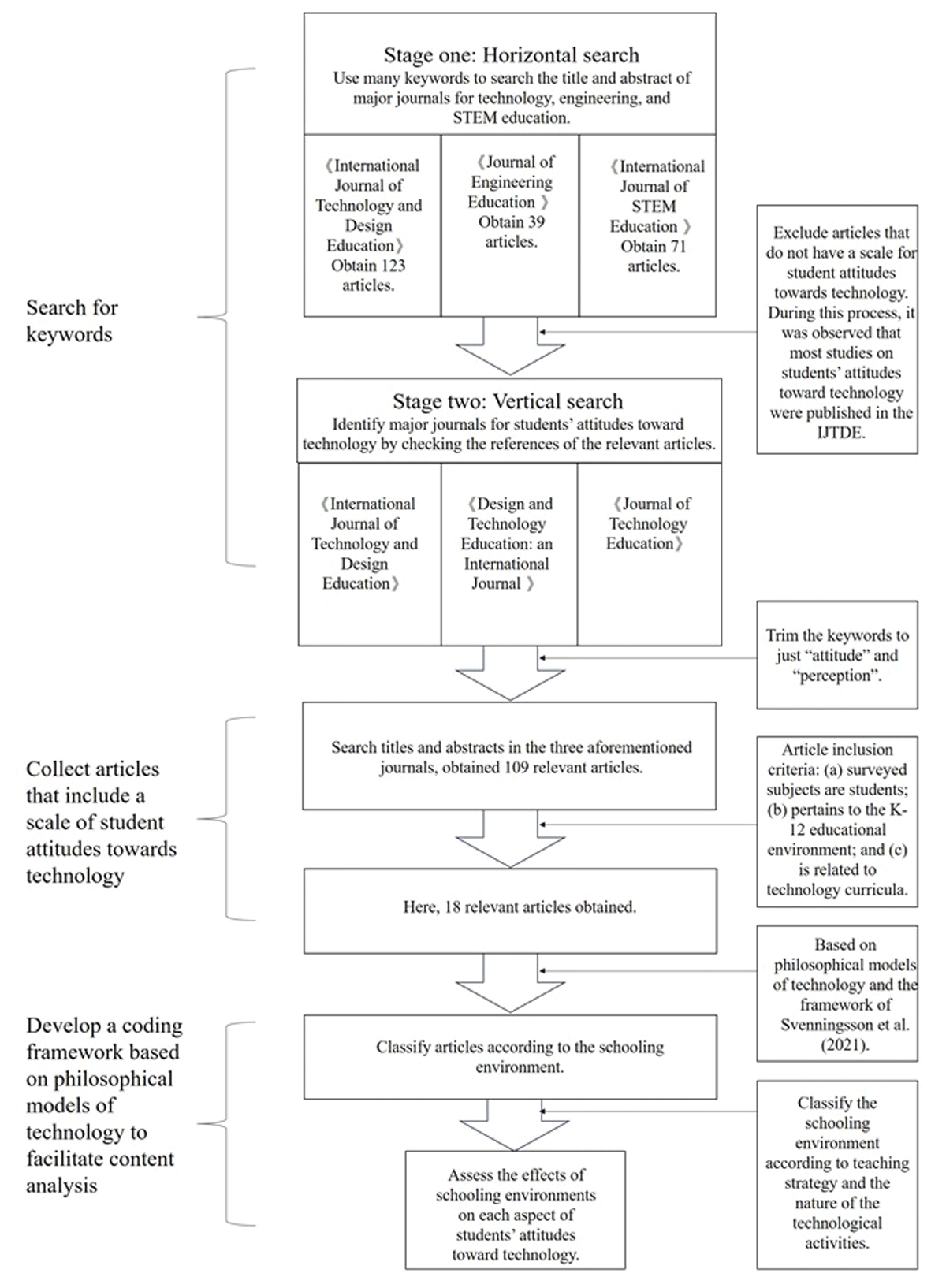
Figure 5
Flow chart: Procedure followed for conducting systematic review
Table 2
Coding Framework
| Components of Schooling Environment | |||||
|---|---|---|---|---|---|
| Cognitive Beliefs | Code G: | Code M: | Code D: | Code Co: | |
| Gender Role/Role Pattern of cognitive components | Importance and Consequences of cognitive components | Difficulty of cognitive components | Other subscales of cognitive components | ||
| Affective Emotions | Code I: | Code B: | Code Ao: | ||
| Interest of affective components | Boredom and/or tediousness of affective components | Other subscales of affective components | |||
| Behavioral Intentions | Code A: | Code Bo: | |||
| Career aspirations of behavioral components | Other subscales of behavioral components | ||||
Table 3
Article Analyses: Schooling Environment Assessment Methods
| Assessment Method | Article No. | Articles/Method | |
|---|---|---|---|
| Quant | Qual | ||
| Questionnaire | 3, 4, 6, 16, 17 | 5 | |
| Interviews | 8 | 1 | |
| Experimental design/ Intervention | 2, 9, 11 | 3 | |
| Text Descriptions: – school region – tech ed availability – student experiences – participation in technology curricula | 1, 5, 7, 10, 12, 13, 14, 15, 18 | 9 | |
Table 4
Articles incorporating schooling environment in their subscales
| Articles per Schooling Environment Subscales | ||||
| Cognitive Beliefs | Code G | Code M | Code D | Code Co |
| 4, 6, 8, 9, 11, 14, 15, 16, 17 | 4, 6, 8, 9, 11, 14, 15, 16, 17 | 4, 6, 8, 9, 11, 14, 15, 16, 17 | 1*, 2*, 3*, 5*, 7*, 10*, 12*, 13*, 15*, 16* | |
| Subtotal = 9 | Subtotal = 9 | Subtotal = 9 | Subtotal = 10 | |
| Affective Emotions | Code I | Code B | Code Ao | |
| 4, 6, 8, 9, 11, 14, 15, 16, 17 | 6, 8, 9, 11, 14 | 1*, 2*, 3*, 7*, 10*, 13* | ||
| Subtotal = 9 | Subtotal = 5 | Subtotal = 6 | ||
| Behavioral Intentions | Code A | Code Bo | ||
| 4, 6, 8, 9, 11, 14, 16, 17 | 1*, 3*, 7* | |||
| Subtotal = 8 | Subtotal = 3 | |||
[i] Note: see Table 2 for code descriptions
Total number of articles n=18
* = articles using self-defined subscale names or simple questionnaire items derived from mainstream PATT instruments