
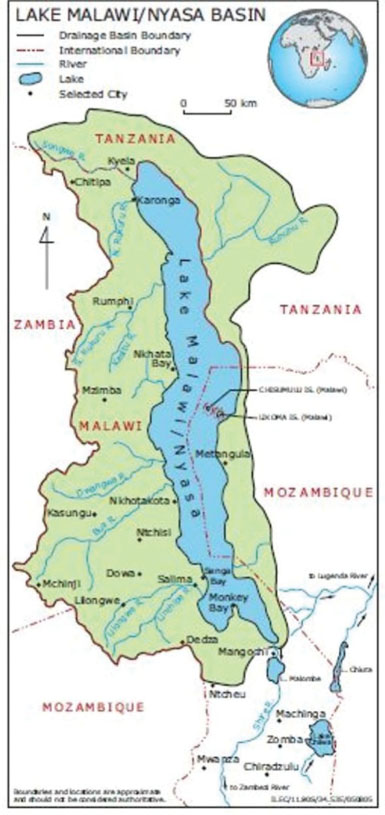
Figure 1
Lake Malawi basin (ILEC 2005).
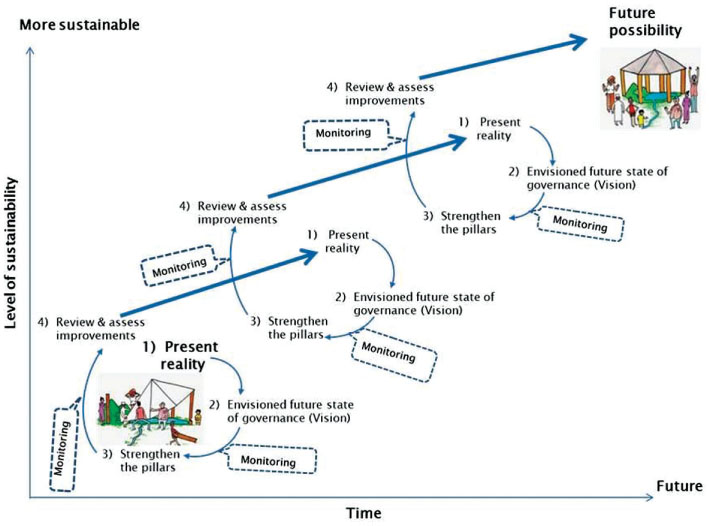
Figure 2
The cyclical process for improving lake basin governance through ILBM (Modified from Nakamura and Rast 2011).
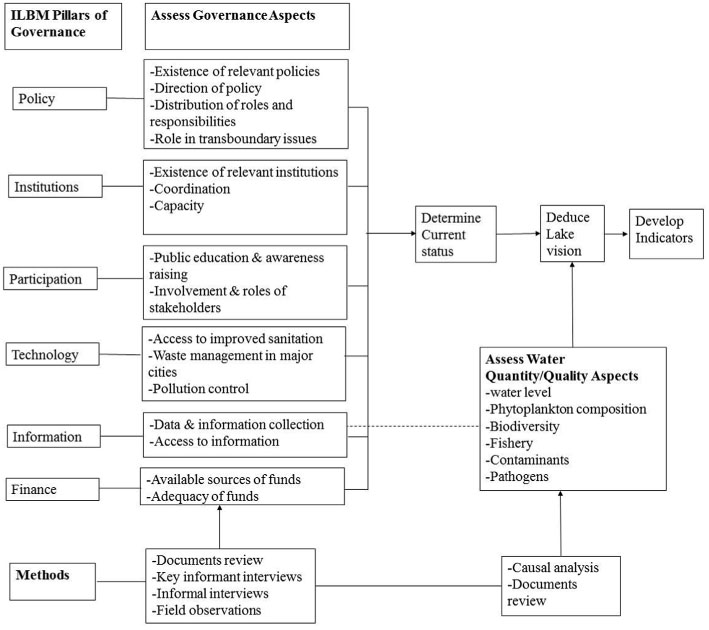
Figure 3
Analytical framework.
Table 1
Sample of indicators used in the approaches reviewed.
| Program | Categories | Indicators |
|---|---|---|
| GEF | Process indicators | Formation and documentation of high level committee meetings; country adoption of specific legal reforms etc. |
| Stress reduction indicators | Non-point source pollution control programs implemented; larger mesh fishnet policy enforced etc. | |
| Environmental status indicators | Changes in local community income and social condition; documented stakeholder involvement etc. | |
| World Bank | Policy | Clarity of direction; assignment of powers etc. |
| Institutions | Technical and administrative capacity etc. | |
| Rules | Recognized & respected source; inherently fair etc. | |
| Public Participation | All affected groups involved; clearly defined roles etc. | |
| Finances | Charge for resource use; legal authorization etc. | |
| Information | Reliable understanding; Long-term monitoring etc. | |
| TWAP | Biophysical conditions | Hydrological position; lenticity; projected lake volume etc. |
| Human use | Relative population pressure; human development index etc. | |
| Institutions | Government effectiveness; lake basin specific institution etc. | |
| Policies | Rule of law; zoning regulations and bans etc | |
| Participation | Voice and accountability; role of NGOs/CBOs etc. | |
| Technology | Access to improved sanitation; solid waste control etc. | |
| Information | Coverage in literature; resident scientific institutes etc. | |
| Finance | Gross national income; sufficiency of funds etc. | |
| Planning | National IWRM plans; integrated of plans etc. |