Have a personal or library account? Click to login
Placing the commons at the heart of community development: Three case studies of community enterprise in Caribbean islands Cover

Placing the commons at the heart of community development: Three case studies of community enterprise in Caribbean islands

By: Sarah McIntosh and  Yves Renard  
Open Access
|Sep 2009

Figures & Tables

figures/ijc2009-200924-001.jpg
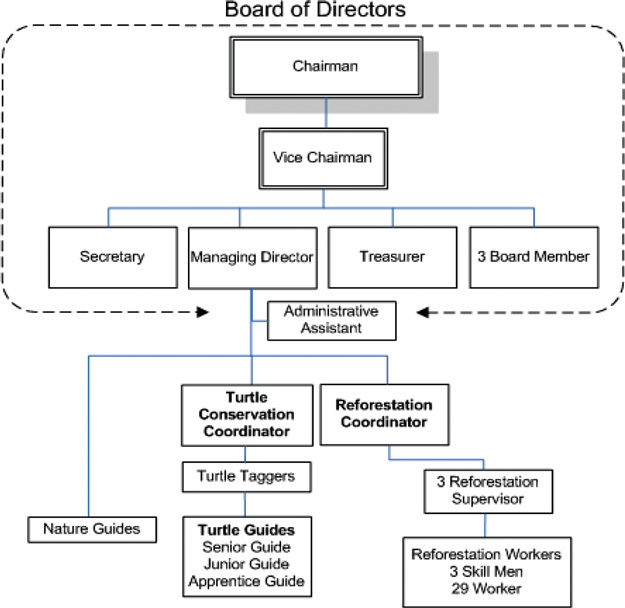
Figure 1

Nature Seekers governance structure (Source: Nature Seekers).

figures/ijc2009-200924-002.jpg
Map 1

Islands of the Caribbean with enlarged section showing the sub-region in which the case studies are situated, downloaded from www.paradise-islands.org on 15 May 2009.
figures/ijc2009-200924-003.jpg
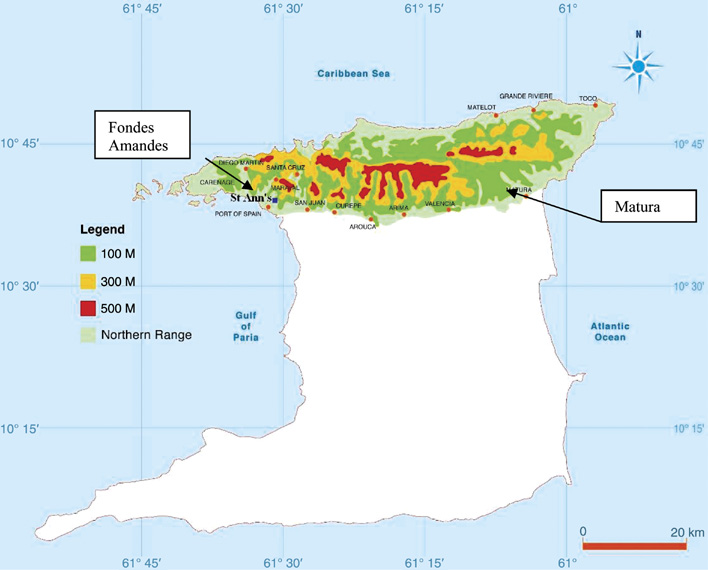
Map 2

Map of Trinidad highlighting the location of the case studies 3.1 and 3.2 (Source: www.mapscd.com/trindadytobago_illustrator.html, with St. Ann’s added to the map by the Forestry Division).
figures/ijc2009-200924-004.jpg
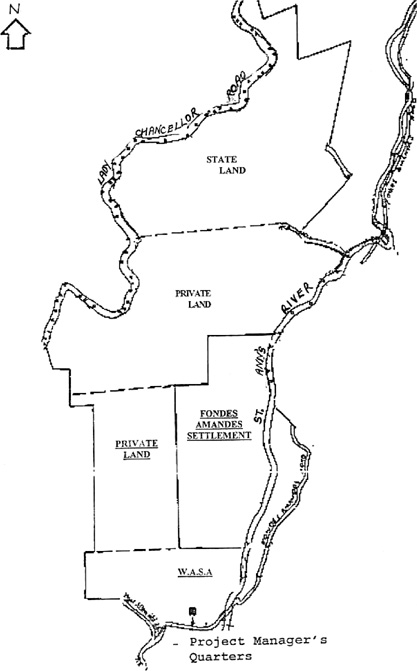
Map 3

Ownership pattern of the Fondes Amandes Development (Source: Eden Shand).
figures/ijc2009-200924-005.jpg
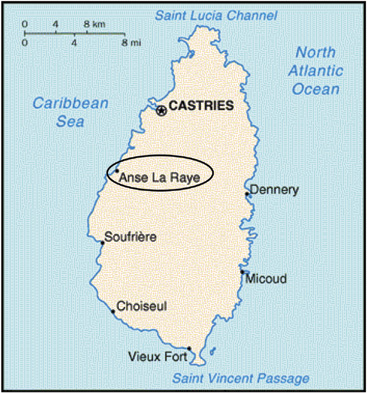
Map 4

Saint Lucia (Source: http://geography.about.com/library/cia/blcstlucia.htm)

figures/ijc2009-200924-006.jpg
Map 5

Grenada (Source: http://www.worldatlas.com/webimage/countrys/namerica/caribb/lgcolor/gdcolor.htm)

Table 1

Positive impacts on livelihood assets in Fondes Amandes (Sources: James 2003; Lum Lock and Geoghegan 2006; CANARI 2008a and b; Jaramogi pers. comm.).

AssetBenefits
Natural
  • Undisturbed, though not formally sanctioned, access to land for housing, agriculture and extraction of forest products.

  • 1700 trees planted, of which 1500 have survived.

  • Area free of fires since 1997.

  • Improved water supply and quality from reservoir.

  • Community composting and recycling.

Financial
  • FACRP employs around 40 people (full-time) and has an annual operating budget of ~US$75,000)

  • Management fee for NRWRP: 20% of actual salaries.

  • Revenue from food sales, rental of facility etc.

Physical
  • Access to pipe-borne water (negotiated by FACRP).

  • Offices, nursery and other enterprise-related structures.

  • Tools, office equipment, computers.

Human
  • Community capacities built in many areas including:

    1. fire prevention/fire fighting;

    2. tour guiding;

    3. organic gardening;

    4. community recycling/composting;

    5. community-based tourism;

    6. craft and cottage industries; and

    7. music and cultural arts.

  • Group capacity built in NGO management.

Social politicalReduced risk of being removed from land as a result of:
  • support from the formal management agencies;

  • strong network of influential supporters;

  • support from all political administrations.

Table 2

Positive impacts on livelihood assets in Matura (Sources: Lum Lock et al. 2005; Nature Seekers’ website; Sammy and Lakhan pers. comms; CANARI 2008b).

AssetBenefits
Natural
  • Over 100 acres of reforested land, including intercropping with fruit trees.

  • Increased population of nesting turtles.

  • Access to land for turtle tour visitor centre.

  • 5 acres of state land for agro-forestry (applied for).

  • 8 acres of land leased for organic farming

Financial
  • Annual revenue of about TT$600.000, (£60,000): derived from:

    1. annual government subvention;

    2. grants;

    3. turtle tours: 9909 tours in 2006 with fees ranging from about US$0.75–15.00;

    4. forest-based tours;

    5. Earthwatch volunteers;

    6. 30% share of revenue from guesthouse;

    7. reforestation management fee;

    8. consultancy services;

    9. sale of craft/souvenirs.

  • Small indirect impact on bar and shop sales in village.

Physical
  • Office building and equipment.

  • Stake in guesthouse.

  • Turtle tour visitor centre (leased).

  • Vehicles.

  • Tools and equipment for turtle research and reforestation.

Human
  • Group capacity built in many areas including:

    1. turtle protection/research;

    2. tour guiding;

    3. community-based tourism;

    4. leadership;

    5. strategic planning and visioning;

    6. NGO management;

    7. forestry;

    8. fire prevention;

    9. agro-forestry.

Social political
  • Support from the formal management agency.

  • Strong network of influential supporters.

  • Support from all political administrations, (in spite of Chairperson having been at one time publicly affiliated with the current opposition party).

Table 3

Impacts on livelihood assets in Gouyave and Anse La Raye (Sources: Wave Communications 2000; Pantin et al. 2004; Wyatt and Jules no date).

AssetBenefits
Natural
  • No assessment of impact of festivals on local fish resources, but observations suggest an increase in catches, with positive short-term economic impacts but potentially negative environmental impacts, in Anse La Raye.

  • Improved waste management in both villages.

FinancialGouyave:
  • 2007 estimated annual revenue of US$251,000 going directly to 15 vendors. With multiplier effect, it is estimated that over US$410,000 is being generated annually in the community through the event.

  • Net profit to vendors after management fees and purchases US$101,000 (Finisterre 2007).

Anse La Raye (ALR)
  • Tangible economic benefits to women (in 2004, 72% of ALR vendors were women, who are often single heads of households (61%), and to unskilled persons (83% only primary education). For most of them it is the primary source of income (83% of ALR vendors in 2004).

  • Multiplier effect generates benefits to local suppliers, especially fishers and farmers (vendors in ALR in 2004 indicating that they spent an average of US$130.00 per week on food items), but also bus and taxi drivers, craft producers, cultural performers and others.

Physical
  • Vending booths (ALR) and tents (Gouyave).

  • Toilets (ALR).

  • Equipment.

Human
  • Skills built or enhanced in areas such as food and beverage, micro-enterprise.

  • Standards developed.

Social political
  • Social impacts also significant in terms of community pride and identity, validation of cultural traditions and skills, social cohesion.

DOI: https://doi.org/10.18352/ijc.135 | Journal eISSN: 1875-0281
Language: English
Published on: Sep 3, 2009
Published by: Igitur, Utrecht Publishing & Archiving Services for IASC
In partnership with: Paradigm Publishing Services
Publication frequency: 1 issue per year

© 2009 Sarah McIntosh, Yves Renard, published by Igitur, Utrecht Publishing & Archiving Services for IASC
This work is licensed under the Creative Commons Attribution 4.0 License.