
1 Introduction
Adult animation has become a global market and now occupies a central position in the investment strategies of major SVOD (Subscription Video on Demand) platforms, including Netflix, Disney+, Hulu, Max, Paramount+, and Prime Video, as well as leading US broadcasters such as Warner Bros. Discovery through Adult Swim1. This article focuses on the European context and examines the competitive limitations faced by traditional commercial and public broadcasters within this market.
The analysis is framed around the relationship between the cultural and economic dimensions of the value proposition. Following Osterwalder and Pigneur,2 a value proposition is understood as the core offering through which a product creates value for specific audience segments. Within the audiovisual industries, it lies at the intersection of cultural value – aesthetic, symbolic, social, historical, and identity-related significance – and economic value, namely the ability to attract audiences and generate scalable market demand.3 The article explores how broadcasters’ production and distribution logics shape this relationship, either enhancing or constraining a product’s cultural distinctiveness and circulation potential. In doing so, it identifies three structural tensions that predate the rise of streaming platforms and continue to reinforce the perception that adult animation is poorly suited to traditional broadcasting environments.
The first section examines the relationship between cultural distinctiveness and market scalability, highlighting the persistence of cultural discount within European adult animation. It focuses on programmes broadcast by Channel 4, ITV and the BBC between 1995 and 2006, when British broadcasters were among the first in Europe to engage with a market largely shaped by the success of The Simpsons (1989–) and US prime-time animation.4 By revitalising the domestic sitcom through animation, The Simpsons established a dominant formula based on a dual-address strategy, combining slapstick humour for younger viewers with social satire, intertextuality and popular culture references aimed at adults.5
The second section explores how broadcasters’ underlying economic structure – namely the two-sided market model – has shaped the development of adult animation. It argues that the commercial imperatives of advertiser-funded broadcasting are often incompatible with the long-term investment and audience cultivation required by niche animated productions. As a result, both the economic potential and cultural distinctiveness of these works may be constrained. The analysis focuses on Channel 4 and ITV, whose contrasting approaches provide particularly revealing examples of this dynamic.
The third section examines the effects of broadcasters’ protective logics and institutional risk aversion on adult animation. These dynamics are rooted in the persistent perception of animation as a medium primarily intended for children, reinforced by regulatory frameworks designed to protect minors. Concerns over public controversy, advertiser withdrawal or regulatory intervention frequently encourage broadcasters to adopt pre-emptive forms of censorship. The Italian case of Gino the Chicken – Lost in the Net (2006) illustrates how a pre-emptive block imposed by the public broadcaster Rai affected the work’s cultural value, while the British case of Popetown (2005), which developed into a major European media controversy, demonstrates how a similar intervention by the BBC ultimately undermined the series’ economic value.
The concluding section reconnects these historical tensions to the platform era, where the traditional Simpsons model has increasingly given way to hybrid forms combining animated sitcoms and serialised drama, while on-demand viewing has further weakened the position of linear broadcasters. The commercial failure of Adrian (2019) demonstrates how many of the structural rigidities identified in the preceding sections remain embedded within legacy broadcasting institutions. By contrast, the French series Lastman (2016) shows how France Télévisions successfully overcame the limitations of traditional distribution and economic models by embedding the programme within a broader ecosystem capable of sustaining and expanding its economic value well beyond the domestic market.
Methodologically, the study combines perspectives from the economics and management of cultural and creative industries with media industry and television studies.
2 Cultural Discount: The Case of Early British Adult Animation
When the balance between the cultural and economic dimensions of a value proposition breaks down, and a product becomes deeply rooted in a specific cultural context, its economic value is likely to suffer. As Hoskins and Mirus argue, this generates a ‘cultural discount,’6 limiting a programme’s appeal and exportability in markets characterised by different values, references and lifestyles. Straubhaar’s theory of ‘cultural proximity’7 further suggests that audiences tend to favour content that reflects their own cultural background, making programmes built around universal narratives easier to export than those rooted in highly local forms of humour.
The British television landscape of the 1990s and early 2000s provides a particularly valuable case study for examining this tension. It was the only market in which the three major broadcasters – Channel 4, the BBC and ITV – simultaneously attempted to respond to the growing influence of American prime-time animation,8 albeit through markedly different strategies.
Channel 4 adopted an approach far removed from the mainstream, emphasising cultural differentiation, creative experimentation, emerging talent and the representation of marginalised identities.9 Series such as Crapston Villas (1995–1998), Pond Life (1996–2000) and Bob and Margaret (1998–2001) adapted the formula popularised by The Simpsons to distinctly British themes, values and social contexts. Crapston Villas translated the legacy of British Alternative Comedy into animation, combining social commentary with issues such as unemployment, multiculturalism and urban marginality10 (see Video 1). Pond Life centres on the everyday experiences of a young single woman dealing with insecure employment, friendships, romantic relationships and urban life, while Bob and Margaret depicts the daily life of a childless professional couple, exploring social relationships, the awkward realities of adulthood and the conventions of the British middle class.11
Video 1
Episode 1:1 of Cranston Villas, Channel 4, 1995. The series also stood apart through its claymation technique and Sarah Ann Kennedy’s grotesque hyper-realist visual style, which contrasted sharply with the cleaner aesthetics of conventional 2D animation (source: YouTube).
The BBC developed two distinct approaches, separated by the launch of BBC Three in 2003, a channel specifically designed for audiences aged 16–34. Before this shift, Stressed Eric (1998–2000) adapted The Simpsons formula to a British middle-class setting while retaining its dual-address structure. The series combined slapstick humour accessible to younger viewers with adult-oriented social satire centred on family dysfunction, financial struggles and everyday frustrations12 (see Video 2). Following the launch of BBC Three, Monkey Dust (2003–2005) moved decisively away from the domestic sitcom model.13 One of the broadcaster’s most controversial productions, it adopted a darker and more nihilistic tone, addressing subjects such as institutional corruption, dysfunctional relationships, social deviance, paedophilia, addiction and alienation. The series was equally distinctive visually, employing multiple animation styles tailored to the grotesque and unsettling nature of its sketches.
Video 2
Its protagonist, an ineffectual father overwhelmed by domestic and social pressures, echoed Homer Simpson’s existential inertia and social inadequacy, while Brian and Claire openly recalled Bart and Lisa. ‘The Nativity’ episode 1:1 of Stressed Eric, BBC, 1998 (source: YouTube).
ITV pursued a different strategy, using animation to extend entertainment formats already familiar to mainstream audiences.14 2DTV (2001–2004) transformed political satire and celebrity culture into animated caricature, offering a comic reinterpretation of current affairs through exaggerated portrayals of politicians, members of the Royal Family and public figures. Creature Comforts (2003–2006), by contrast, drew on factual entertainment traditions, combining the mockumentary format with vox-pop interviews in which clay-animated animals, voiced by ordinary members of the public, commented on everyday life through Aardman Animations’ distinctive aesthetic15.
These value propositions reveal two contrasting approaches. Channel 4 and the BBC primarily built their offerings around cultural value, drawing on distinctly British humour, references and social themes. In some cases, this differentiation was also aesthetic, as exemplified by Crapston Villas and Monkey Dust, both of which embraced visual styles and production techniques that diverged from mainstream animation conventions. By contrast, ITV relied less on cultural specificity than on the adaptability of the format itself in order to fit commercial broadcasting logics aimed at attracting large audiences and maximising advertising revenue (see next section).
These different editorial strategies had direct consequences for international scalability. In the case of Channel 4 and BBC productions, strong cultural value often became a barrier to export beyond linguistic differences. Attempts to localise these programmes in pursuit of economic sustainability frequently diluted the very identity on which their appeal depended.16 Bob and Margaret provides a clear example. Following the transfer of production to Canada from the second season onwards, the series underwent significant adaptation, losing much of its British specificity in references, settings and themes in order to appeal more directly to Canadian audiences.17 A similar process affected the BBC’s Stressed Eric, which was acquired by NBC and stripped of much of its British humour through dubbing, extensive editing and narrative alterations, culminating in the transformation of its protagonist into an American expatriate living in London.18 As a result of this erosion of cultural value, the series failed to compete within the US market and was cancelled after only three episodes.
A different dynamic can be observed in Creature Comforts, where highly local cultural references became secondary to the flexibility of the format itself.19 ITV represented only one stage in a much longer process of value regeneration orchestrated by Aardman Animations. Originally conceived as Nick Park’s Oscar-winning short film (1989), the format was subsequently adapted for the British Electricity Board’s successful Heat Electric advertising campaign in 1990, before being relaunched as an ITV series in 2003 and later remade for the American market in 2007.20
These examples suggest that cultural proximity and cultural discount were historically amplified by the logic of linear television, which treated culturally specific content as a means of differentiating domestic offerings from foreign competition.21 Yet, as Straubhaar argues, cultural diversity should not be regarded solely as a constraint. Although it may limit international scalability, it can also become a strategic resource for strengthening domestic markets when supported by adequate industrial development and coherent economic models,22 as the next section will demonstrate.
3 Two-Sided Markets and the Marginalisation of Value
The way free-to-air broadcasters assess the value of a programme represents an even greater constraint on adult animation than cultural discount itself. Indeed, this limitation constitutes one of the key gaps later exploited by SVOD platforms in building their dominance within the adult animation market.
Free-to-air broadcasters operate downstream within the value chain through a two-sided market model.23 Rather than selling content directly to consumers, they act as intermediaries between audiences and advertisers.24 As Rochet and Tirole argue, the two sides are linked through ‘indirect network effects’25 the larger the audience, the more attractive the broadcaster becomes to advertisers, who ultimately generate its revenues. The primary objective is therefore to maximise audience size, measured through ratings and evaluated according to short-term profitability criteria.26 Under this logic, the cultural significance and long-term economic potential of a programme become secondary considerations. Value is largely reduced to audience consumption and advertising performance. When audiences are conceived as an ‘audience-as-market’,27 adult animation can become problematic, particularly when it targets niche segments or relies on forms of cultural value that do not easily attract mass audiences and, consequently, advertisers.
This logic helps explain ITV’s deliberate approach to adult animation. Rather than pursuing fragmented niche audiences, the broadcaster integrated animated programmes into established entertainment formats and mainstream schedules. The sketch-comedy structure of series such as 2DTV enabled straightforward linear consumption, preserving broad audience appeal and the visibility28 necessary to sustain advertiser-funded revenues.
The problem becomes more acute when niche content is confined to late-night scheduling, reducing both its visibility and availability. In these circumstances, audiences become increasingly fragmented: not simply young adults aged 18–34, but young adults aged 18–34 who happen to be awake late enough to encounter the programme.29 This was the case with Channel 4, where series such as Crapston Villas, Pond Life and Bob and Margaret were largely relegated to late-night slots30 and designed for increasingly niche audiences, in a strategy comparable to that later adopted by Adult Swim in the United States.31 Unlike the American market, however, Britain lacked both the scale and the branding infrastructure necessary to transform these niche audiences into sustainable sources of revenue beyond conventional advertising.32 As a result, broadcaster logics often distort the economic value of culturally distinctive programmes. Works with strong cultural value frequently appear commercially unsuccessful simply because they fail to attract mass audiences, reinforcing the perception that cultural specificity is an obstacle rather than a potential asset.33
Yet the economic value of an audiovisual property cannot be reduced to the ratings performance of its initial broadcast window. Rather, it should be understood as a long-term promise, sustained through the continuous regeneration of value across stable production and distribution ecosystems.34
The emergence of SVOD platforms disrupted the traditional broadcasting value chain, which historically connected producers and audiences within the physical constraints of linear schedules. These platforms operate according to a radically different economic model, based on the principles of the long tail35 and direct subscription revenues. In this system, financial sustainability depends on the overall size of the subscriber base: the larger the number of subscribers, the greater the platform’s profitability and investment capacity. This model allows platforms to overcome both the short-term logic of ratings and the limitations of national niche markets. Content that may be commercially unsustainable within a single domestic market can acquire strategic value when aggregated across multiple territories. Through the simultaneous global distribution of content, platforms foster transnational communities of interest, effectively combining dispersed local audiences into a single global niche. This aggregation not only makes specialised content economically viable but also helps attract and retain subscribers who would otherwise remain underserved by generalist television. A key enabler of this strategy is the shift from the traditional deficit-financing model towards cost-plus or full-financing arrangements. Whereas broadcasters typically financed only part of a production budget, leaving rights ownership and commercial risk to producers, SVOD platforms generally cover the full cost of production while guaranteeing an immediate profit margin.36 In exchange, they acquire extensive global rights, capturing a substantial share of the value generated by the intellectual property.37 As Benghozi and Paris argue, platforms therefore function not merely as intermediaries between production and consumption but as active prescribers capable of shaping the conception, production, distribution and monetisation of content.38 This role extends beyond distribution into cross-media expansion across adjacent markets such as gaming, merchandising and live experiences, supported by sophisticated marketing strategies and recommendation systems designed to guide consumption. Finally, platform economics are increasingly driven by data. Unlike broadcaster models, where value primarily derives from audience attention sold to advertisers, platform value is built upon the extraction, analysis and commercial exploitation of user consumption data.39 The additional value generated by viewing behaviour and the global success of a title remains concentrated within the platform itself, enabling it to test, refine, relaunch and continually extend the economic life cycle of the value propositions.
4 Protective Rationality and Reputational Capital: The Cases of Gino the Chicken and Popetown
The third limitation lies in broadcasters’ risk aversion, fuelled by the long-standing cultural stigma that associates animation primarily with children’s entertainment.40 This perception also interacts with regulatory frameworks designed to protect minors, introduced through the Television Without Frontiers Directive (1989) and translated into scheduling practices such as watershed regulations.41
These dynamics can be understood through what Shoemaker and Vos42 describe as a logic of ‘protective rationality’. In this perspective, gatekeeping decisions are not driven solely by the pursuit of profit but also by the need to avoid sanctions, public controversy and reputational damage. For free-to-air broadcasters, this means protecting both sides of the two-sided market discussed in the previous section. Controversial content may trigger advertiser backlash, prompting brands to withdraw investment in order to avoid being associated with material perceived as inappropriate by audiences or advertisers themselves. Furthermore, for public service broadcasters the stakes are even higher, as controversy may undermine their institutional legitimacy and their role in serving the audience as a collective public.43
Adult animation is particularly vulnerable to this dynamic. By combining a form traditionally associated with children with themes intended for mature audiences, it can simultaneously unsettle advertisers and provoke public concern. As a result, broadcasters often resort to pre-emptive intervention. This tendency is reinforced by what Caves44 terms the ‘nobody knows’ principle: because the commercial success of cultural goods is inherently uncertain, broadcasters frequently prefer the certainty of avoiding controversy to the uncertain prospect of future returns. Institutional reputation, built over decades, becomes a highly specific and difficult-to-replace asset. In Williamson’s terms, organisations tend to adopt highly conservative strategies to protect such assets.45 Consequently, when adult animation appears to threaten this reputational capital, broadcasters often exercise their gatekeeping46 power by limiting or reshaping innovation rather than exposing themselves to potential criticism.47
A particularly revealing example of protective rationality can be found in the Italian animated series Gino the Chicken – Lost in the Net, co-produced by the public broadcaster Rai, My-TV and Lanterna Magica. Much like Creature Comforts, the television series represented the latest extension of a pre-existing property. The character originated in 1995 as part of an experimental video presented at a conference on the future of amateur digital networks at the Pecci Museum in Prato.48 Created by Andrea Zingoni, a member of the influential video-art collective Giovanotti Mondani Meccanici, Gino the Chicken was rooted in a distinctly countercultural sensibility. Its original value proposition combined digital activism, social satire and criticism of the emerging information society, particularly the risks associated with technological dependence, information overload and new forms of informational control.49 The character itself consisted of a real chicken transformed through dubbing and the hallucinatory aesthetics of early digital compositing.
A further distinctive feature of the project was its critique of television as a medium. Gino the Chicken celebrated the freedom and participatory culture of the early web in opposition to the rigidity of television schedules, the manipulation of reality and the passivity traditionally associated with broadcast audiences. This meta-televisual dimension continued in the character’s subsequent adaptations for My-TV, one of the first European web television initiatives. Initially, Gino served as the presenter of a satirical online news programme that mocked the sensationalism of traditional television journalism. He later became the protagonist of a successful webtoon series (2000–2003), in which contemporary political and social issues were addressed through parodic rewritings of well-known Italian songs.50 Among its most notable episodes was Tu vuo’ fa’ o’ talebano, often cited as one of Italy’s earliest examples of viral online content.
Video 3
Set to the melody of Renato Carosone’s Tu vuo’ fa’ l’americano song, the episode offered a satirical response to Osama Bin Laden and the post-9/11 political climate. “Tu vuo’ fa’ o’ talebano” of Gino The Chicken, My-TV, 2001 (source: YouTube).
In 2003 the webtoon attracted the attention of Rai, which entered into negotiations with My-TV and Zingoni to develop the character into an animated television series capable of competing with The Simpsons.51 This initiative emerged at a moment when Rai was increasingly challenged both by the rise of the web as a space for alternative and subversive expression52 and by the imported American adult animation on its commercial rival, Mediaset.53 However, the adaptation underwent a profound transformation. The original editorial ambitions were progressively abandoned in favour of a product much closer to established children’s television conventions. The target audience shifted from young adults – early internet users seeking alternative and independent voices – to preschool children. Much of the character’s satirical and countercultural edge disappeared, and Gino was recast as the protagonist of a musical cyber-fantasy designed to teach children about online safety and digital literacy. Although he remained a singing chicken, he was now integrated into the X Animals, a group of mutant creatures tasked with protecting the web from the villainous Capo Colby and his Chicken Investigation Agency.
The case of Gino the Chicken illustrates the operation of protective rationality and finds a formal explanation in the gatekeeper’s information dilemma:54 although broadcasters may aspire to innovation, they often impose strict thresholds of risk tolerance in order to protect their institutional reputation when faced with uncertainty and persistent assumptions that associate animation with childhood.55 While this form of pre-emptive intervention safeguarded the broadcaster’s image and its relationship with audiences and stakeholders, it also weakened the original value proposition of the work, diminishing much of its cultural value in terms of authenticity, originality and critical voice.
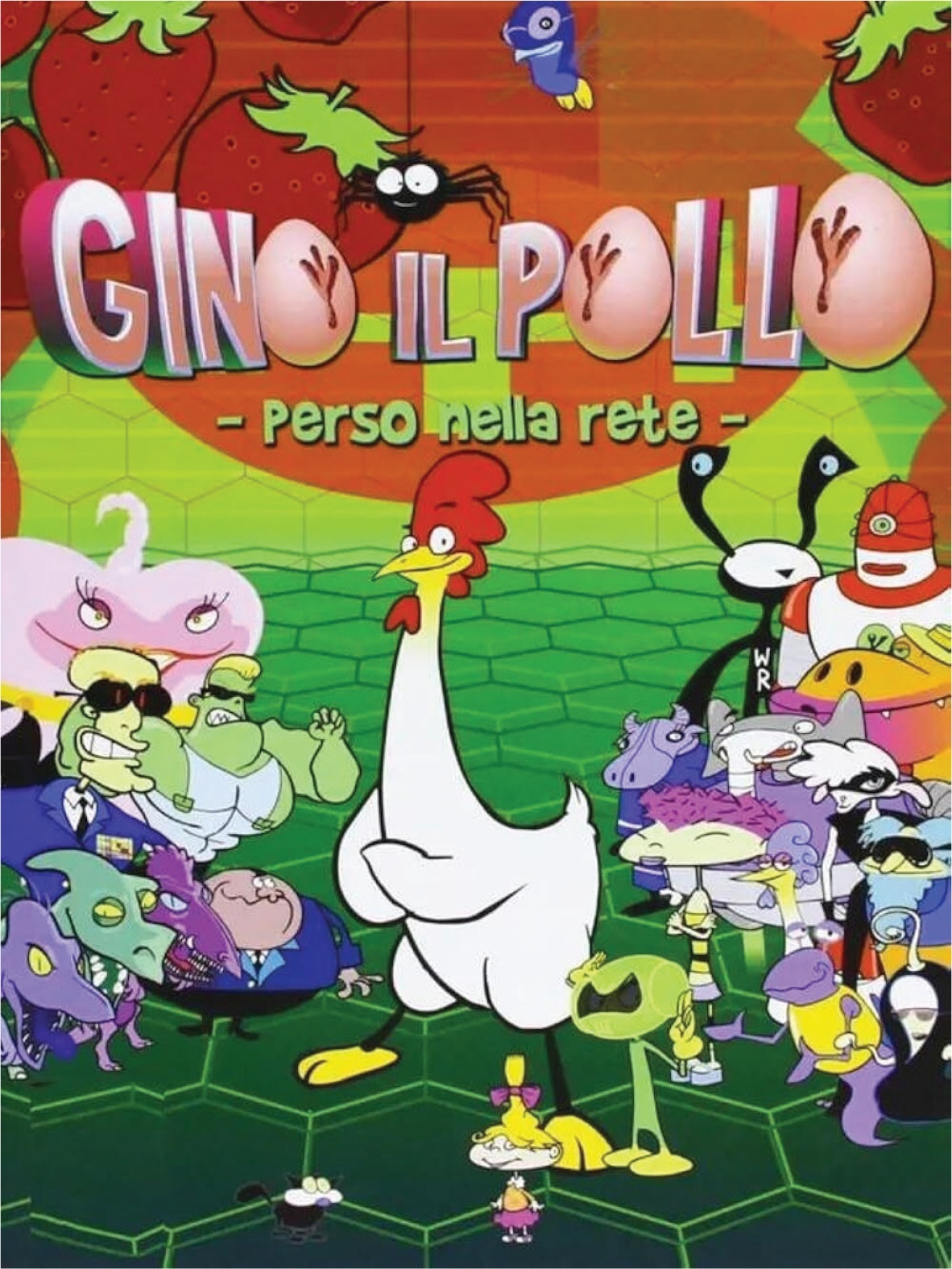
Figure 1
Gino The Chicken – Lost in the Net, Lanterna Magica, My-TV, Rai, 2006–2007 (copyright: T-Rex Digimation).
An even more radical example is provided by Popetown, commissioned by the BBC. Unlike Gino the Chicken, where protective rationality primarily undermined the cultural value of the property, in this case it directly affected its economic potential. The series became the centre of a major European media controversy, illustrating how deeply rooted cultural stigma surrounding adult animation could trigger pre-emptive intervention before a programme had the opportunity to prove its market value. Set in the Vatican, the series follows Father Nicholas, whose role resembles that of a babysitter assigned to care for a Pope portrayed as an irritable, hyperactive and deeply immature child. From the perspective of its original value proposition, the series possessed considerable competitive potential (see Video 4. By locating its satire within the Vatican, Popetown combined a distinctly European setting with an institution recognised across the globe, creating a balance between local specificity and transnational appeal. First part of ‘State Visit’ episode 1:2 of PopeTown, BBC, 2005). At the same time, the programme remained close to the established animated sitcom formula popularised by The Simpsons and Stressed Eric, albeit reworked through a more surreal and absurd style56 reminiscent of Cartoon Network productions.57
Video 4
By locating its satire within the Vatican, Popetown combined a distinctly European setting with an institution recognised across the globe, creating a balance between local specificity and transnational appeal. First part of ‘State Visit’ episode 1:2 of PopeTown, BBC, 2005 (source: YouTube).
Its commercial potential was already evident, as the series had been acquired by broadcasters in several countries, including France, Italy (Canal Jimmy), Germany (MTV Germany) and New Zealand (C4), even before its planned debut in the United Kingdom. Yet intense controversy and pressure from religious and institutional groups58 led the BBC to cancel the programme before transmission, triggering a chain reaction among international broadcasters. The episode revealed both the inability of broadcasters to shield controversial content from external pressures59 and the continuing strength of cultural anxieties surrounding adult animation. Faced with the prospect of reputational damage, the BBC and several international broadcasters chose to protect their institutional standing rather than defend the programme. In doing so, they not only undermined the economic value of a potentially successful property but also reinforced the wider stigma surrounding adult animation. More broadly, Popetown became a turning point in the history of European adult animation. The controversy encouraged greater caution among broadcasters, discouraged investment in similar projects and contributed to the decline of some of the more ambitious editorial strategies pursued by the BBC during this period.60
5 Applied Case Studies
Finally, the concluding section brings these three tensions into the post-platform era through two contemporary case studies that illustrate their divergent outcomes. Adrian, produced by the Italian commercial broadcaster Mediaset, sought to maximise short-term returns by bringing together different audience segments within a prime-time event strategy. The project failed to achieve its intended objectives, reinforcing the perception that adult animation remains difficult to reconcile with generalist broadcasting. The second case, the French young-adult series Lastman, represents the opposite outcome. Despite the cultural, economic and institutional constraints traditionally associated with broadcasters, it demonstrates how France Télévisions successfully extended beyond the limits of linear television, supporting the series’ long-term economic value through a broader production and distribution ecosystem. The two case studies discussed below provide a bridge to the article’s conclusions by offering insights into the future management of adult animation by broadcasters.
5.1 Mediaset’s Prime-Time Event Strategy: The Series Adrian (2019)
Produced and broadcast on Canale 5 by the Italian commercial broadcaster Mediaset in 2019, Adrian was conceived by Adriano Celentano, one of the most influential figures in Italian popular music. Set in a dystopian Milan of 2068 ruled by the corrupt dictator Dranghestein, the series follows Adrian – Celentano’s alter ego – as he seeks to awaken public consciousness and lead a revolt against a regime founded on conformity, consumerism and artificial well-being. The project aspired to become Italy’s first major adult animated dystopia, combining the artwork of renowned illustrator Milo Manara with Italian cultural iconography and contemporary concerns, ranging from environmental issues to critiques of consumerism.61 These themes were filtered through Celentano’s distinctive social and moral outlook, rooted in a Catholic-popular tradition, and reinforced by numerous references to his public persona and artistic career.
Mediaset built the project around the strength of the Celentano brand while simultaneously attempting to attract two distinct audiences: the singer’s long-established intergenerational fan base, largely composed of viewers over fifty, and younger viewers who had increasingly shifted towards global streaming platforms. This ambition was reflected in the programme’s scheduling strategy. Each episode was preceded by Aspettando Adrian [Waiting for Adrian], a prime-time live show broadcast from Verona’s Teatro Camploy, in which Celentano conversed with well-known figures from the entertainment industry. The programme acted as a lead-in to the animated series62, which was scheduled later in the evening, outside protected viewing hours. In this way, Mediaset sought both to maximise audience reach and advertising revenues and to reduce the reputational and regulatory risks traditionally associated with adult animation.
Convinced of the project’s strategic value, Mediaset co-financed the series alongside Clan Celentano with a reported budget of €20 million63. Yet, after achieving an audience share of almost 19% in its opening episode, viewing figures rapidly declined, eventually falling below 10%64.
This collapse can be traced to a series of tensions embedded within the programme’s value proposition. First, the series relied heavily on Celentano’s personal vision and cultural identity, to the point of appearing self-referential and disconnected from the interests and viewing habits of younger audiences. The protagonist’s songs and lengthy monologues served as the main vehicles for the programme’s social and moral message, as well as the narrative mechanism through which Adrian inspires resistance against the regime. However, these devices often appeared paternalistic and dated, making it difficult for younger viewers to engage with the series (see Video 5). Second, Adrian lacked the serialised narrative complexity65 that had become central to contemporary adult animation and young-adult television. Rather than presenting a flawed protagonist whose weaknesses drive narrative development, the series centred on an almost infallible and messianic hero.66 The absence of meaningful internal conflict or genuine narrative stakes limited both character development and viewer engagement. Third, the programme largely ignored the viewing practices of its intended audience. By 2019, young adults had become increasingly accustomed to the flexibility and asynchronous consumption offered by streaming platforms67, making late-night scheduled viewing a particularly ineffective strategy.
At the same time, Adrian sat uneasily within Mediaset’s established programming identity for its other target audience, Celentano’s long-standing fan base. Until then, animation had largely been confined to children’s channels such as Boing and Cartoonito or to afternoon schedules on Italia 1, where even imported anime and American animated series were frequently edited to comply with protected-viewing regulations.68
This mismatch produced an editorial short circuit that destabilised both sides of Mediaset’s economic model,69 reducing the value of advertising slots associated with the programme. The broadcaster ultimately resorted to a form of protective rationality, suspending Adrian after only five episodes in order to contain both financial losses and reputational damage. When the programme returned several months later under the title Adrian Live – Questa è la storia [Adrian Live – This is the story…] the format had been substantially reshaped. Modelled on Aspettando Adrian [Waiting for Adrian], it became primarily a variety show, with the animated component reduced to a secondary interlude.70
Video 5
The series-event also generated numerous online parodies, which mocked both its troubled production history and the self-celebratory nature of Adrian, highlighting its perceived disconnect from young-adult audiences. Source: Official YouTube channel of Cartoni Morti, a popular Italian animation YouTuber, 2019 (source: YouTube).
5.2 France Télévisions’ Niche-Aggregation Strategy: The Series Lastman (2016)
Lastman is a French animated series for young adults, produced in 2016 by Everybody on Deck and the animation studio Je Suis Bien Content for the public broadcaster France Télévisions. The story follows Richard Aldana, a rebellious and undisciplined boxer who, following the disappearance of his mentor Dave, finds himself responsible for protecting Dave’s young daughter, Siri, from mysterious demonic creatures originating from another dimension. The narrative combines strong serialisation with substantial character development, as Dave’s disappearance exposes Richard’s fatal flaw and sets in motion a process of personal transformation that becomes essential to overcoming the external threat.
The project benefited from a strong value proposition from the outset (see Video 6. The series appealed not only to fans of the original comic but also to broader niche audiences organised around shared interests, including anime enthusiasts, gamers, geek communities and viewers nostalgic for the popular culture of the 1980s and 1990s. Source: Official YouTube channel slash anim of France.tv Slash, 2022). As a prequel to the successful comic-book series created by Bastien Vivès, Balak and Michaël Sanlaville, it could already rely on an established fan community within the Franco-Belgian comics market.71 At the same time, its cultural discount remained relatively low, drawing on a broadly transnational formula that combined American action pulp, noir fiction, supernatural horror and the graphic aesthetics of Japanese anime.72
Video 6
The series appealed not only to fans of the original comic but also to broader niche audiences organised around shared interests, including anime enthusiasts, gamers, geek communities and viewers nostalgic for the popular culture of the 1980s and 1990s. Source: Official YouTube channel slash anim of France.tv Slash, 2022 (source: YouTube).
Despite these advantages, the series was not immune to the structural constraints associated with public-service broadcasting. First, the financial limitations of the French broadcaster shaped the project from the outset, leading Everybody on Deck to reduce investment risk through a network of domestic and international co-production agreements. During production, however, the withdrawal of an international investor created a significant funding gap73. Rather than abandoning the series, the producers launched a Kickstarter campaign that raised approximately €325,00074. Beyond its financial contribution, the campaign demonstrated the existence of a committed young audience willing to support the project directly, thereby reducing uncertainty for both producers and distributors.
Second, the series was constrained by its initial placement in a late-night slot on France 4.75 Its success, however, was not only determined by linear television but by France Télévisions’ subsequent decision to make the programme available on its free VOD (Video-on-demand) platform, France.tv.76 In doing so, the broadcaster adopted at a national level the same niche-aggregation logic employed by global streaming platforms, allowing the series to reach multiple audience communities while also aligning its distribution with the increasingly asynchronous viewing habits of young-adult audiences. The economic value of the series was ultimately realised through a long-tail model. Combined with its relatively low cultural discount, this enabled Lastman to attract international distribution partners, including Netflix,77 thereby extending the programme’s visibility beyond the domestic market.
France Télévisions thus played a key role in enhancing the economic value of the series within the domestic market by complementing its linear service with a more flexible and networked distribution model. This strategy allowed the broadcaster to aggregate dispersed audience niches and maximise the programme’s visibility and availability without altering its underlying economic model. In doing so, it also demonstrated a greater capacity for innovation, adapting public-service broadcasting to emerging patterns of platform-based consumption while preserving its institutional reputation. In turn, it created the conditions for Lastman to enter a wider ecosystem of international licensing, distribution and audience engagement, through which the value of the IP could be continually regenerated beyond the national market.
6 Conclusion
This article, together with the comparative analysis of the Italian case of Adrian and the French case of Lastman, offers a number of reflections and strategic recommendations for broadcasters and audiovisual producers operating in an increasingly competitive adult animation market shaped by global streaming platforms. While broadcasters’ cultural, economic and reputational risk aversion has long reinforced the perception that adult animation is incompatible with generalist television, Lastman demonstrates that this incompatibility is largely tied to linear broadcasting and can be overcome through digital ecosystems. In this context, proprietary AVOD (Advertising-Based Video on Demand) platforms represent a key opportunity for traditional broadcasters. Beyond extending linear viewing into asynchronous forms of consumption, they enable business models based on long-tail dynamics.78 As cultural proximity theory suggests, broadcasters and global streaming platforms do not compete on identical terms: the former primarily operate within domestic markets, while the latter target international audiences. Rather than competing directly with global platforms, broadcasters can strengthen local content and aggregate dispersed national niches, using domestic success as a form of industrial proof of concept for subsequent international circulation.79 Consequently, the economic value of a programme should not be reduced to television ratings alone. In line with long-tail theory, the domestic market functions primarily as a space for recovering production costs, while economic surplus emerges when intellectual properties are embedded within broader, scalable and transnational production and distribution ecosystems.80
Relocating young-adult content to AVOD platforms also helps free adult animation from many of the constraints imposed by linear schedules and protected viewing hours. This allows broadcasters to preserve and extend the logic of the two-sided market, connecting advertisers with highly specific audience niches that are difficult to reach through traditional television. At the same time, recommendation systems and census-based audience metrics provide a more accurate understanding of viewer behaviour, reducing uncertainty and mitigating the risk aversion that historically led to forms of pre-emptive intervention affecting programmes such as Adrian, Gino the Chicken and Popetown. Finally, the cases analysed suggest that cultural specificity should not be regarded solely as a source of cultural discount. Adrian and Gino the Chicken show that local identity becomes problematic only when disconnected from the expectations of its intended audience, while Lastman and Popetown demonstrate the international potential of culturally distinctive works. Through the hybridisation of local cultural identities and globally recognisable narrative structures, can effectively leverage cultural distance, transforming high specificity into a form of ‘cultural premium’.81 Such productions no longer address undifferentiated mass audiences but rather transnational niches connected by shared subcultural interests, viewing practices and highly specific aesthetic preference.
Acknowledgement
AI-assisted tools were used for language translation purposes. All analytical and argumentative content is the responsibility of the author.
Notes
[1] Parrot Analytics, Growing Demand for Adult Animation, December 7, 2023, https://www.parrotanalytics.com/insights/growing-demand-for-adult-animation/.
[2] Alexander Osterwalder, Yves Pigneur, Business Model Generation: A Handbook for Visionaries, Game Changers, and Challengers (New Jersey: John Wiley & Sons, 2010).
[4] Carol A. Stabile, Mark Harrison, Prime Time Animation. Television Animation and American Culture (London & New York: Routledge 2003).
[5] Jonathan Gray, “Television Teaching: Parody, The Simpsons, and Media Literacy Education”, Critical Studies in Media Communication 22, no. 3 (2006), 223–238.
[6] Colin Hoskins and Rolf Mirus, “Reasons for the US dominance of the international trade in television programmes”, Media, Culture & Society 10, no. 4 (1988), 499–515.
[7] Joseph D. Straubhaar, “Beyond media imperialism: Assymetrical interdependence and cultural proximity”. Critical Studies in Mass Communication 8, no. 1 (1991), 39–59.
[9] Clare Kitson, British Animation: The Channel 4 Factor (Brighton: Parliament Hill Publishing, 2008).
[14] Catherine Johnson, Rob Turnock, ITV Cultures: Independent Television Over Fifty Years (Maidenhead: Open University Press, 2005).
[19] Jeanette Steemers, Selling Television: British Television in the Global Marketplace (London: British Film Institute, 2004).
[23] Jean-Charles Rochet, Jean Tirole, “Platform Competition in Two-Sided Markets”, Journal of the European Economic Association 1, no 4 (2003), 990–1029.
[26] Bernard Miège, The Capitalization of Cultural Production (New York: International General, 1989).
[28] Pierre-Jean Benghozi, Thomas Paris, “The cultural economy in the digital age: A revolution in intermediation?”, City, Culture and Society 7, no. 2 (2016), 75–80.
[29] Hye Jin Lee, All kids out of the pool!: brand identity, television animations, and adult audience of Cartoon Network’s Adult Swim (Iowa City: University of Iowa, 2013).
[33] Jean J. Gabszewicz, Didier Laussel, Nathalie Sonnac, “Programming and Advertising Competition in the Broadcasting Industry”, Industry. Journal of Economics & Management Strategy 13, no. 4 (2004), 657–669.
[34] Derek Johnson, Media Franchising: Creative License and Collaboration in the Culture Industries (New York: New York University Press, 2013).
[35] Chris Anderson, The Long Tail: Why the Future of Business is Selling Less of More (Burbank: Hyperion, 2006).
[36] Amanda D.Lotz, Timothy Havens, Media Industries in the Digital Age: How Media Businesses Work Today (Cambridge: Polity Press 2024).
[37] Pierre-Jean Benghozi, Thomas Paris, “The economics and business models of prescription in the Internet”, in Internet and Digital Economics – Principles, Methods and Applications, eds. Eric Brousseau, (Cambridge: Cambridge University Press, 2007) 291–310.
[39] Michael Smith, Streaming, Sharing, Stealing: Big Data and the Future of Entertainment (Boston: MIT Press, 2017).
[41] Luca Barra, La programmazione televisiva. Palinsesto e on demand [TV Programming: Broadcast Schedule and On-Demand] (Bari: Laterza, 2022).
[44] Richard E. Caves, “Creative Industries: Contracts Between Art and Commerce”, The Journal of Economic Perspectives 17, no. 2 (2000), 73–84.
[45] Oliver E. Williamson, “The Economic Institutions of Capitalism”, Journal of Economic Issues 21, no 1 (1987), 528–530.
[46] Paul M. Hirsch, “Processing Fads and Fashions: An Organization-Set Analysis of Cultural Industry Systems”, American Journal of Sociology 77, no. 4 (1972), 639–659.
[52] Dan L. Baldwin, Micheal S. Daubs, John B. Ludwick, “Flashimation: The Context and Culture of Web Animation”, in Electronic Art and Animation Catalog, paper presented at the ACM Siggraph conference, New York, 2006; Fulvia Caprara, “Corto Maltese, un arcano per la Rai” [Corto Maltese, an Enigma for Rai], La Stampa, April 13, 2003, http://www.archiviolastampa.it/component/option,com_lastampa/task,search/mod,libera/action,viewer/Itemid,3/page,39/articleid,0158_01_2003_0102_0039_1070302/.
[53] Renato Pallavicini, “South Park, salviamoci dalla bambinizzazione” [South Park’: Let’s save ourselves from the ‘infantilisation], January 6, 2000, https://archivio.unita.news/assets/main/2000/01/06/page_015.pdf.
[55] The persistence of this evaluative bias is particularly evident in Italy. In 1999, the Italian Communications Regulatory Authority (AGCOM) intervened following controversy surrounding the prime-time broadcast of South Park on Mediaset, despite the programme’s explicit adult orientation. More than twenty years later, the regulator sanctioned The Walt Disney Company Italia for broadcasting an episode of Family Guy during protected viewing hours on Fox, notwithstanding the channel’s adult target audience. These cases illustrate the enduring tendency of Italian regulatory institutions to associate animation primarily with children’s content, regardless of its intended audience. Renato Pallavicini, “South Park”; AGCOM, Delibera N. 161/21/CSP [Resolution No. 161/21/CSP], July 29, 2021, https://www.agcom.it/sites/default/files/migration/delibera/Delibera%20161-21-CSP.pdf.
[56] Gherardo Ugolini, “Popetown, il cartoon che ride del Papa è grottesco e ai tedeschi piace” [Popetown, the cartoon that mocks the Pope, is grotesque and the Germans like it], l’Unità 83, May 5, 2006, https://archivio.unita.news/assets/derived/2006/05/05/issue_full.pdf.
[58] “Popetown, il cartoon anti-Vaticano” [Popetown, the anti-Vatican cartoon], Tgcom24, April 15, 2006, https://www.tgcom24.mediaset.it/televisione/articoli/305494/popetown-il-cartoon-anti-vaticano.shtml.
[61] Luciano Moscariello, “Adrian: Recensione finale dell’indecifrabile serie di Celentano” [Adrian: Final Review of Celentano’s Enigmatic Series], December 6, 2019, https://serial.everyeye.it/articoli/recensione-adrian-finale-indecifrabile-serie-celentano-46487.html.
[62] Aldo Grasso, “Attesa, sorpresa, delusione: L’effetto «Adrian» più in rete che in tv” [Anticipation, Surprise and Disappointment: The “Adrian” Effect Was Felt More Online Than on Television], January 26, 2019, https://www.corriere.it/spettacoli/19_gennaio_26/attesa-sorpresa-delusione-l-effetto-adrian-piu-rete-che-tv-0279cb1a-2179-11e9-b334-77e854371a4e.shtml.
[63] “Adrianeide, anatomia di un fallimento da 20 milioni di euro” [Adrianeid: Anatomy of a €20 Million Failure], February 26, 2019, https://www.corriere.it/spettacoli/19_febbraio_26/adrianeide-anatomia-un-fallimento-20-milioni-euro-376e7dd8-3994-11e9-a27a-3688e449a463.shtml.
[64] “Le peripezie di «Adrian», il cartoon di Adriano Celentano che torna in tv dopo la sospensione” [The Ups and Downs of Adrian: Celentano’s Animated Series Returns to Television After Being Taken Off Air], November 2019, https://www.corriere.it/spettacoli/cards/peripezie-adrian-cartoon-adriano-celentano-che-torna-tv-la-sospensione/ascolti-picchiata.shtml.
[65] Jason Mittell, Complex TV: The Poetics of Contemporary Television Storytelling (Rome: Minimum Fax, 2017).
[67] Amanda Lotz, Post network. La rivoluzione della tv [The television will be revolutionized], (Rome: Minimum Fax, 2017).
[68] Marco Pellitteri, Mazinga Nostalgia. Storia, valori e linguaggi della Goldrake-generation [Mazinger Nostalgia: History, Values and Languages of the Goldrake Generation] (Latina, Tenue 2018).
[71] Chris Perkins, “Kirkstart this: Lastman – The Animated Series”, August 3, 2016, https://www.animationforadults.com/2016/08/kickstart-this-lastman-animated-series.html.
[72] Matteo Watzky, “The talents of French Animation”, November 25, 2021, https://fullfrontal.moe/the-talents-of-french-animation/.
[75] “Lastman, saison 2: le producteur de la série animée didier creste nous en dit plus sur la suite” [Lastman, Season 2: Producer Didier Creste Reveals More About What Comes Next for the Animated Series], September 18, 2019, https://www.superpouvoir.com/lastman-saison-2-le-producteur-de-la-serie-animee-didier-creste-nous-en-dit-plus-sur-la-suite/.
[76] “Diffusion de Lastman sur France 4: le planning!” [Lastman on France 4: Broadcast Schedule Announced!], November 2, 2016, https://www.catsuka.com/news/2016-11-02/diffusion-de-lastman-sur-france-4-le-planning-du-22-novembre-au-13-decembre.