
1 Telenovelas in Brazil
In Brazil and many Latin American countries, telenovelas have historically occupied a central place in the social imagination, not only as a widely consumed cultural product, but also as a format that has shaped audience habits, forms of sociability, and industrial strategies over several decades. With their melodramatic serial narratives, extended episodic structure, and strong capacity for emotional engagement with the audience, telenovelas have become one of the main pillars of broadcast television in the region and, subsequently, an object of export and international reference. The genre thus established itself as an original cultural product with its own style, distinct from Latin American telenovelas and American soap operas, by highlighting social themes with a Brazilian flavor, using language that blends melodrama with realistic discourse based on verisimilitude.1
In recent years, however, this format has been progressively adapted to the dynamics of streaming platforms, in a process that involves both the transposition of its narrative logic to digital environments and the reconfiguration of its modes of production, distribution, and reception. The incorporation of Brazilian telenovelas into the catalogs of digital subscription services points to an attempt by major international players to attract audiences historically loyal to melodrama, mobilising both the tradition of the local cultural industry and the Latin American legacy. From the theoretical perspective of Peter Brooks2 and Martín-Barbero,3 we understand melodrama as a genre that articulates social and affective structures, mobilising universal emotions and promoting audience identification through melodramatic pleasure and emotional exaggeration. By describing feelings that lay bare the human experience, such as fears, frustrations, jealousy, desires for revenge, and romantic disappointments, through easily identifiable models, they expose ethical dilemmas and present a comforting moral framework by pointing to ways of overcoming suffering.
This article aims to analyse recent processes of transposing Brazilian telenovelas to streaming platforms, focusing on the case study of Beleza Fatal (2025). This is the first original Brazilian telenovela created by the US platform HBO Max, as part of its strategy to attract Latin American audiences through the production of narratives rooted in local contexts. Based on this case study, we seek to understand how the traditional format is revisited, updated, and mobilised in the context of digital audiovisual platforms, as well as the business logic involved in this appropriation.
Our analysis therefore focuses on the interface between tradition and innovation, narrative and market, local culture and global dynamics, using telenovelas and the melodramatic genre as a privileged analytical lens to understand historical rearrangements in the Brazilian audiovisual industry. To this end, the study adopts a qualitative and transdisciplinary methodological approach, favoring narrative analysis4 based on the experiences of market agents involved in the conception and production of the title, in order to offer an internal perspective on the challenges and strategies involved in adapting melodrama to the digital environment.
Among those interviewed are the author of the work, Raphael Montes; the general director, Maria de Medicis; the author and script consultant Silvio de Abreu, a central figure in the history of Brazilian telenovelas and a collaborator in the conception of the production, and Mônica Albuquerque, head of content at Warner Bros. Discovery at the time of production. The interviews, conducted between December 2023 and March 2025, help shed light on the difficulties and behind-the-scenes aspects of the project. Abreu and Montes were interviewed via Zoom, while Medicis and Albuquerque were interviewed in person.
Encouraging the production of narratives of personal experiences through interviews, as developed by William Labov,5 has proven effective both in deepening understanding of the structures of the narrative process through interrelationships between language and social life and in facilitating the transfer of the narrator’s experience to the listener. Barbara Czarniawska6 highlights narrative as a learning mechanism for organisations, an analytical proposal that contributes to the construction of meaning, similar to parables, allowing for an intelligible understanding of actions and events. In this sense, the recognition of narrative methodology in organisational environments attests to the political function of narrative as a symbolic form through which the structures, technical and ideological choices of a work or field are expressed and constituted.7
Thus, based on the expression of its productive agents, we seek to offer an overview of the aesthetic and productive elements of the telenovela, with special attention to the construction of melodrama, the use of hooks and narrative twists, the design of sets, and the distribution strategies adopted.
From a theoretical point of view, this research dialogues with different fields. First, it draws on studies of telenovelas and melodrama, which have consolidated the understanding of the genre as a central cultural form in Brazil8. Second, the study articulates with media and platform studies,9 focusing on the reconfiguration of audiovisual models in response to digital dynamics. Platforms not only alter access to content, but also directly influence production processes, labour regimes, narrative formats, means of circulation, and audience retention strategies. Thus, we seek to understand telenovelas as a cultural, economic, and political phenomenon, situated in a field of tensions between algorithms, local and global traditions, and cultural identities.
2 From Classic Melodrama to Digital Platforms: The Case of the Telenovela Beleza Fatal
The first original Brazilian telenovela produced for the HBO Max platform seeks to combine elements of the traditional format with the contemporary dynamics of streaming. Written by Raphael Montes, a screenwriter known for his literary works of suspense and crime, and starring renowned actors from Brazilian broadcast television, the production harnesses the power of classic melodrama while adopting narrative and aesthetic strategies geared toward on-demand consumption. The general director is Maria de Medicis, a professional recognized for several successful productions in Brazil. The acclaimed director and telenovela author Silvio de Abreu acts as script supervisor. Abreu is one of the most prestigious figures in the history of Brazilian television, responsible for iconic titles on TV Globo, the largest broadcast television network in the country.
Conceptually, melodrama can be understood as a narrative and cultural mode that articulates moral conflicts, intensified emotions, and clear symbolic oppositions, operating as a privileged way of giving visibility to social tensions. For Peter Brooks,10 melodrama emerges in modernity as a response to the crisis of traditional value systems, organising social experience based on a ‘moral imagination’ that makes good, evil, and injustice evident through emotional excess and the dramatisation of conflicts. Martín-Barbero11 shifts melodrama from a strictly aesthetic reading to situate it as a fundamental cultural matrix of Latin American popular communication, deeply rooted in social mediations, everyday practices, and forms of public recognition.
The structure of Beleza Fatal preserves the pillars of traditional melodrama: family conflicts, moral dilemmas, archetypal characters, and strong emotional twists. The choice of melodrama as a narrative matrix stems from the recognition of the historical strength of the genre in Brazil and its ability to engage the audience. The presence of familiar faces, commonly associated with TV Globo telenovelas, also serves as a mechanism for audience identification and loyalty.
The plot revolves around revenge, based on a past injustice against the young protagonist Sofia (Camila Queiroz) and her mother. As a child, she witnesses her mother’s unjust imprisonment and death, the result of a plot orchestrated by her cousin, the villain Lola (Camila Pitanga). As an adult, Sofia assumes a new identity to infiltrate the villain’s life, now a successful influencer linked to a cosmetic clinic, facing secrets, alliances, and emotional dilemmas that place her between revenge and love.
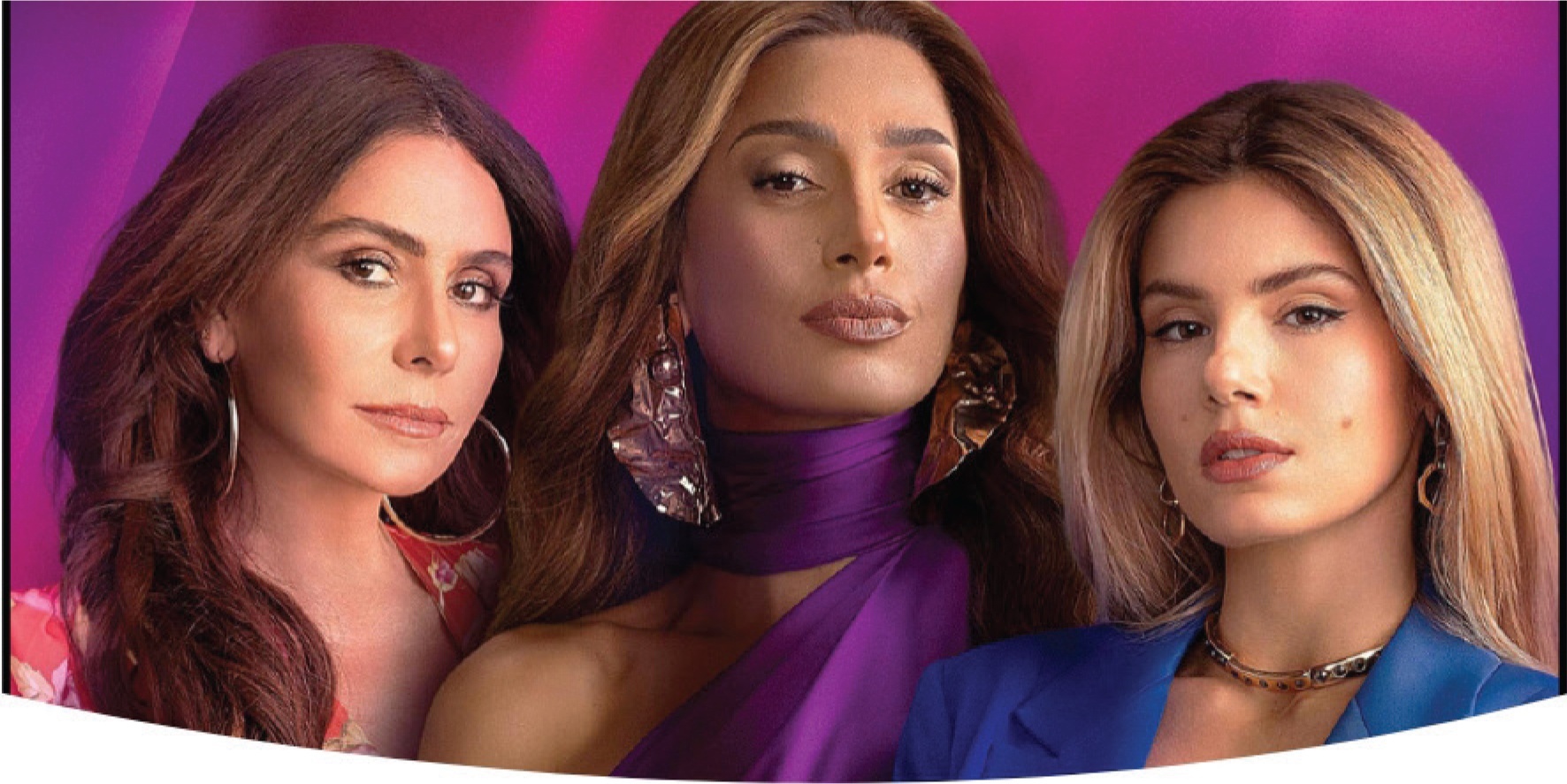
Figure 1
HBO Max’s promotional poster for the telenovela Beleza Fatal, featuring the protagonists Giovanna Antonelli, Camila Pitanga and Camila Queiroz.
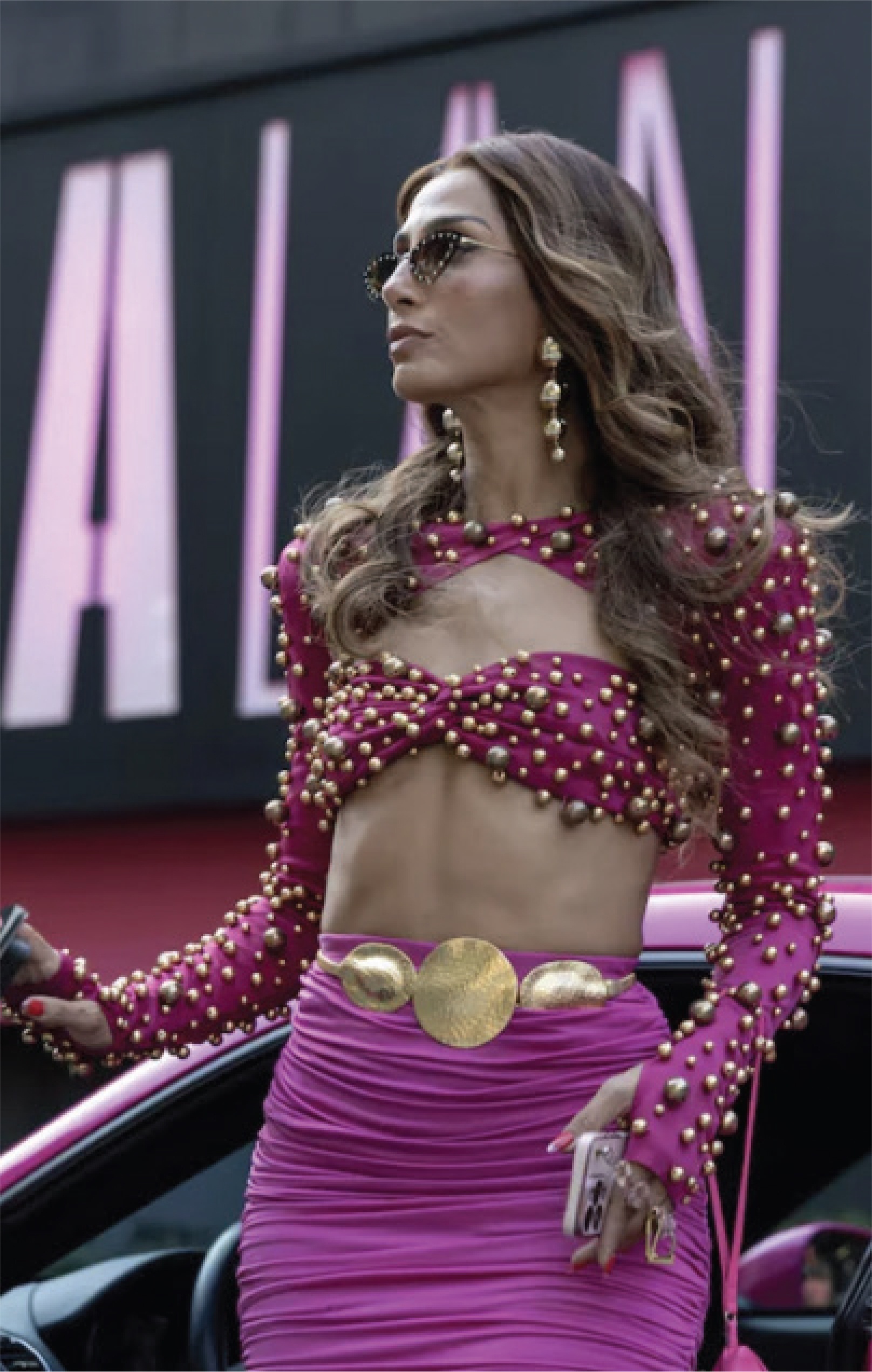
Figure 2
Scene of the villain Lola (Camila Pitanga) in front of her beauty clinic, Lolaland. Screenshot from the library of HBO Max. Beleza Fatal, 1: 5.
With forty episodes, significantly fewer than traditional telenovela on broadcast television, Beleza Fatal is closer to a hybrid format between a telenovela and a drama series. The incorporation of narrative elements aligned with the logic of streaming is evident in the intensification of cliffhangers, the faster pace of events, and the reduction in the number of episodes. The possibility of watching episodes consecutively, through binge-watching, influences the structure of seriality, which concentrates a greater number of revelations designed to keep the viewer engaged and continuously immersed.12 The system also offers viewing options that allow the audience to shape their consumption practices according to their preferences. Before each new episode, the platform presents a teaser for other titles in its catalog, which can be skipped using the skip button. This is followed by a partial recap of the plot, taking into account different consumption timescales.
Raphael Montes emphasizes that audience activity is a fundamental component of streaming consumption:
The big difference is that streaming requires a certain active attitude from the viewer. A telenovela is something a housewife watches while cooking, so she is not paying full attention and everything needs to be explained in detail. Streaming is different. The person sits down, presses the remote control and says: I want to watch this, ‘play’. If they go to the bathroom or turn off the stove, they pause and then come back. This means that some things that are usually required on broadcast TV, such as repetition and verbalization of actions, are not necessary.13
In addition, the strategy of releasing episodes in weekly blocks of five new chapters, always on Mondays, and reserving the final episode for a fixed date and time – Friday, March 17, 2025, at 8 p.m. – reveals an attempt to simulate the continuous engagement typical of broadcast television, combining the logic of binge-watching with traditional serialisation. In this way, Beleza Fatal faces the challenge of balancing logics that do not always align: the fluidity and speed of streaming versus the repetition, temporal dilation, and strong linearity characteristic of traditional telenovelas. Montes explains that his own writing process may have influenced this distribution model:
I wrote in blocks of five; that’s how I delivered the scripts. The telenovela has an overall arc, each chapter also has its own arc for the main characters, but each block of five also has an arc. Sometimes, the first scene of a block mirrors the last scene of the final episode of that block, showing that the character started in one place and ended up in another.14
From an aesthetic point of view, Beleza Fatal adopts a visual style much closer to cinema and a prestigious series, with darker photography, frequent use of close-ups to intensify the subjective drama, and art direction that favors more sober tones. This dramatic palette departs from the lighter, more everyday visuals of Brazilian telenovelas on broadcast television, signaling an attempt to reposition melodrama as a premium product within the platform. The settings in upper-middle-class urban spaces further reinforce the alignment with an internationally recognizable standard, contributing to its potential for global circulation.
This broader strategy of content localisation, whereby global platforms seek to adapt to regional tastes and consumption practices, corresponds to what Robertson15 calls ‘glocalisation’, a process in which local content is produced with specific cultural markers but with export potential. This configuration shows that cultural globalisation is permeated by unequal power relations, in which the appreciation of diversity coexists with mechanisms of aesthetic standardisation, algorithmic control, and economic concentration, straining local creative autonomy while expanding the possibilities for international circulation and visibility.
It is important to note that, despite the opening up of opportunities for circulation, international incision has brought precariousness and loss of autonomy for local professional agents, as director Maria de Médicis points out:
In streaming, the channel owns the project. It’s the most American system. Whoever pays owns it. HBO and Netflix are the ones paying. They own the product (…). We are experiencing an uberization of jobs. Nowadays, there are very few jobs with institutional stability, and the audiovisual industry has followed suit.16
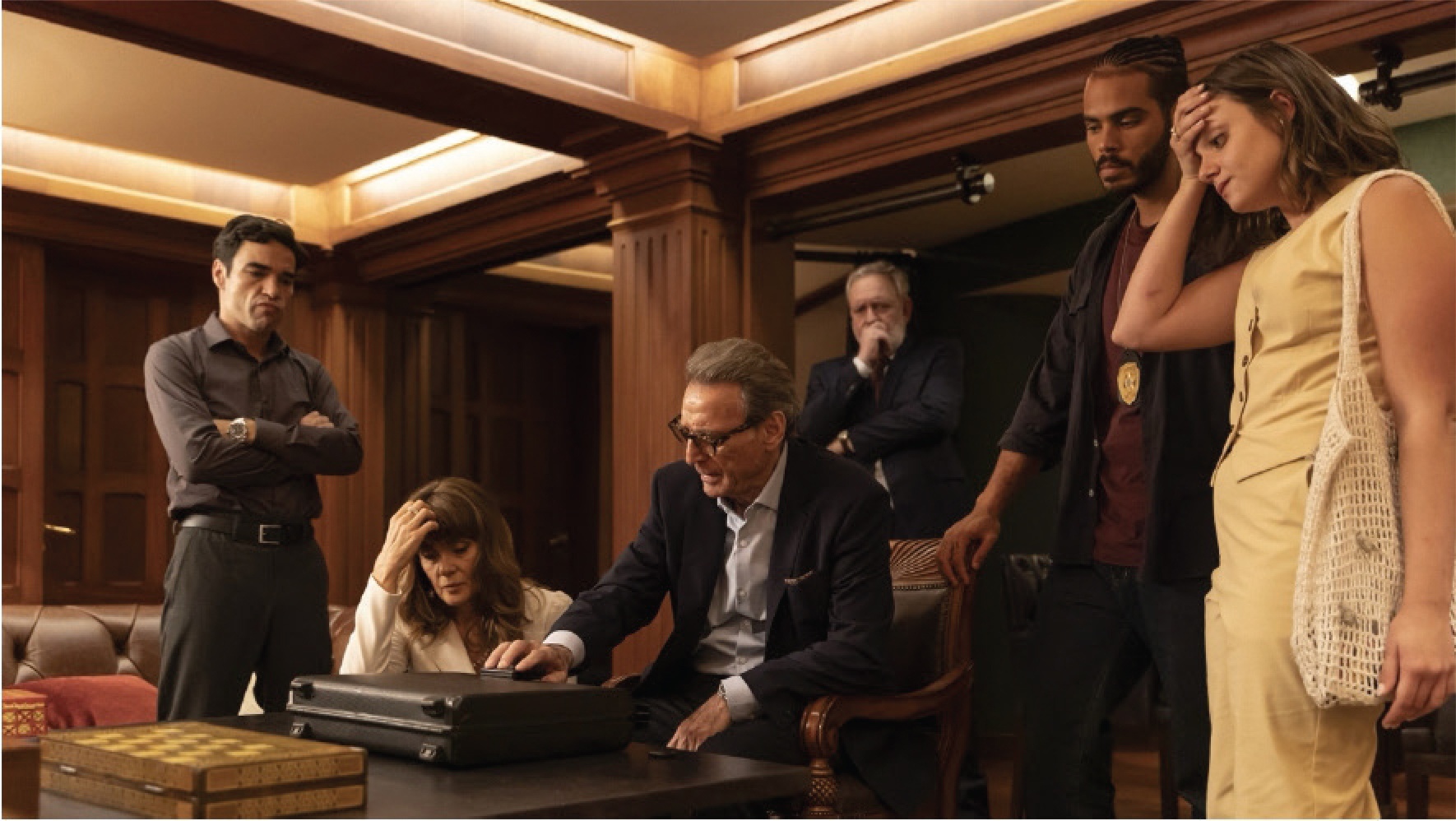
Figure 3
Scene of the wealthy storyline of the telenovela – the Argento Family. Screenshot from the library of HBO Max. Beleza Fatal, 1: 33.
According to Robertson,17 the global does not impose itself univocally on the local, but is constructed in constant interaction with it, producing hybrid arrangements that articulate cultural specificities and market strategies. In this sense, a productive tension emerges between attempts to create a modern, agile, and internationally oriented melodrama and the need to preserve the codes and affections that national audiences associate with the telenovela experience. This tension reveals the challenges faced by professionals in the search for hybrid formats that combine cultural tradition with formal and commercial innovation in an asymmetrical institutional environment.

Figure 4
Scene of the villain Lola in the bathtub. Screenshot of the library of HBO Max. Beleza Fatal, 1: 15.
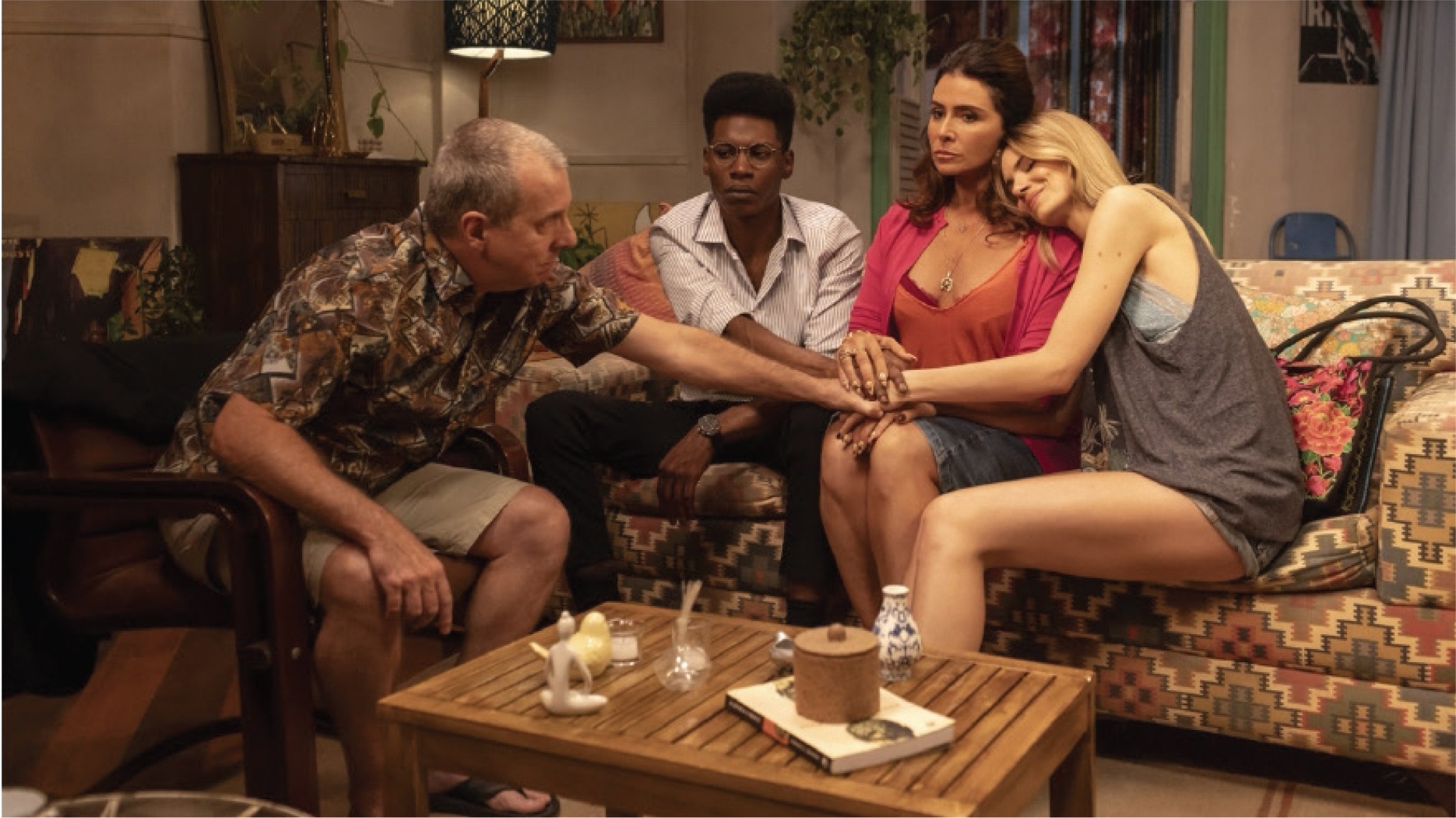
Figure 5
Scene of the working-class storyline of the telenovela – the Paixão Family. Screenshot from the library of HBO Max. Beleza Fatal, 1: 14.
As part of the experiments to boost the telenovela’s reach in a globalized context, its circulation through different viewing windows also stands out. After making the episodes available in full via streaming, Warner Bros. Discovery, the parent company of HBO Max, established a partnership to broadcast Beleza Fatal on the national free-to-air television channel Band. This marketing strategy seeks to activate the ‘long tail’ of the content, extending its life cycle and reaching audiences and generations more familiar with the long-running series characteristic of the Brazilian broadcast model. Author Silvio de Abreu believes in the success of this measure:
I think it (the telenovela) will have a future in both, right? Because linear television, broadcast television, will attract an audience that doesn’t have the money for streaming. (…) it will have to have a different kind of narrative, a simpler narrative. And streaming will have to have a more sophisticated narrative to appeal to a different kind of audience.18
The longevity of melodrama in different formats and circulation spaces has also been discussed by television executives such as Mônica Albuquerque, currently at Telemundo Studios. After working for two decades at TV Globo, she served as Head of Content Development at Warner Bros. Discovery during the period when Beleza Fatal was conceived and produced. In an interview with the authors, she states:
The telenovela is nothing more than the 19th-century serial, which has evolved alongside new technologies, but at its core lies the human condition. (…) The construction of melodrama starts with the human element, with the psychological attempt to understand what those characters, living in that moment, will do with their lives. It is not the theme that moves you (…) but family relationships, friendships – the most human things of all: hatred, love, joy, and sadness. (…) Of course, telenovelas need to draw on other sources. You can no longer tell a melodrama in the same way, with the same number of episodes. (…) But the power of a well-told story within this melodramatic universe is impressive – it circulates very well, anywhere.19
3 Final Thoughts
The study of the telenovela Beleza Fatal made it possible to examine reconfigurations of traditional Brazilian melodrama in light of contemporary streaming dynamics through narrative analysis of the professional experiences of the creators of the plot. Inserted into a new regime of audiovisual circulation, distribution, and consumption, the production preserves central structural features of the genre, such as emotional appeal, the construction of archetypes, and intensive serialisation, while incorporating aesthetic, narrative, and consumption patterns aligned with algorithmic logic, audience segmentation, and on-demand viewing. This combination reveals a deliberate effort by international platforms, such as HBO Max, to appropriate a format historically consolidated in Brazil and redefine it within a circuit of prestige and global reach.
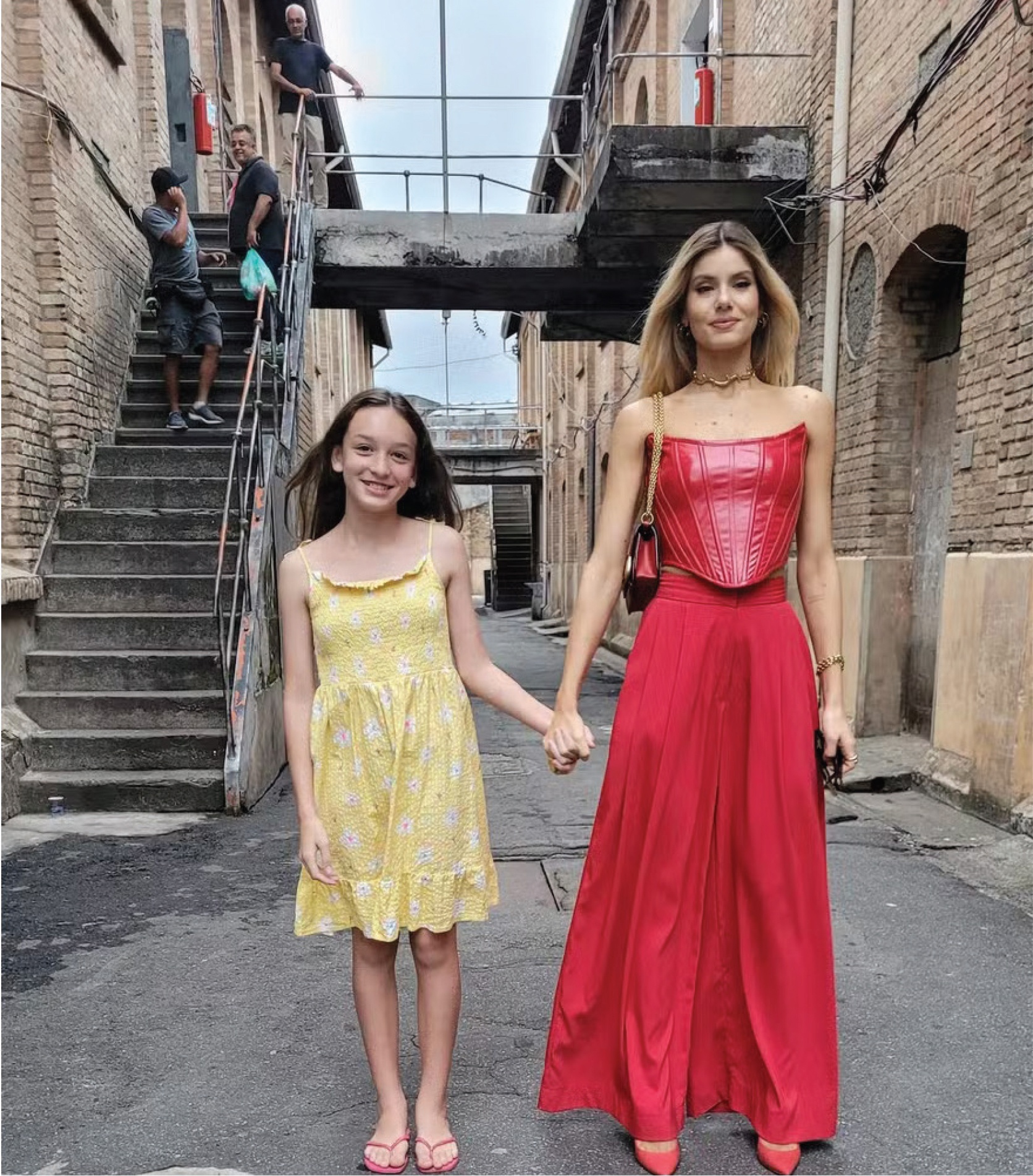
Figure 6
Final scene of the telenovela: Sofia, still a child, holds hands with Sofia, who carries out her plan of revenge. Screenshot from the library of HBO Max. Beleza Fatal, 1: 40.
Transposing telenovelas to streaming is proving to be complex, marked by tensions and contradictions: while local creativity and narrative diversity are valued, a power imbalance persists, with global corporations controlling financing, circulation, and visibility. This configuration reopens the debate around cultural imperialism, now reconfigured by the dynamics of the digital economy and the centrality of algorithms in mediating cultural experiences. As Joseph Straubhaar20 argues, media globalisation processes do not occur only through the direct imposition of foreign content, but also through economic and technological structures that condition production, distribution, and consumption, limiting the autonomy of national audiovisual systems even when they incorporate local content. In this sense, although the strengthening of culturally close narratives functions as a strategy for legitimising and engaging platforms in Brazil, it does not eliminate the unequal power relations that sustain the hegemony of transnational conglomerates, now exercised in a more diffuse, flexible, and opaque manner within digital ecosystems.
The trajectory of Beleza Fatal thus highlights the ambiguities of the current moment: while streaming platforms offer new spaces for circulation, visibility, and experimentation for Brazilian telenovelas, they also reproduce (and intensify) inequalities and instabilities that challenge both professionals and the institutions that regulate the sector. However, Brazilian telenovelas demonstrate their vitality by adapting to this new scenario, updating the melodramatic matrix to the digital rhythm and contemporary language, remaining a central cultural artifact for understanding contemporary disputes in the audiovisual field and in Brazilian society more broadly.
Notes
[1] Maria Immacolata Vassallo de Lopes, “Telenovela Brasileira: Uma Narrativa sobre a Nação [“Brazilian Telenovela: A Narrative about the Nation”], Comunicação & Educação 26 (2003).
[3] Jesús Martín-Barbero, Dos Meios às Mediações [From Means to Mediations] (Rio de Janeiro: UFRJ, 2008), 305–6.
[4] William Labov. “Some further steps in narrative analysis”. The Journal of Narrative and Life History 7, no. 1-4 (1997).
[6] Barbara Czarniawska, Narrating the Organization: Dramas of Institutional Identity (Chicago: The University of Chicago Press, 1997).