
1 Introduction: Studying the Audiovisual Archives of a Commercial Broadcaster
In today’s fast-paced environment – where the information overload and digital plenitude1 increasingly affect our daily routines – it is widely known how media and entertainment companies need to manage their digital assets efficiently, increase revenue opportunities and streamline production costs. The reciprocity between media and audiovisual repositories has experienced a radical transformation, and fully accessible digital resources are playing a pivotal role in corporate branding as well as in the opportunities for reuse and enhancement. It is therefore not surprising that, in the face of such an infinite accumulation of digital resources, now approaching redundancy, the practices of managing and exploiting video archives are rapidly evolving. In this context, the television industry – which has always dealt with a inherently ephemeral medium, ‘lost’ in the flow of its broadcast – represents a particularly significant area for understanding the strategic importance of archives within the sector and, most importantly, the new values (and functions) held by audiovisual collections.
This contribution explores the history, growth and advancements of Mediaset’s audiovisual archive, examining the rationale behind the retrieval, storage, cataloguing as well as commercial re-use of its TV content. Founded by Silvio Berlusconi, Mediaset is the largest private media outlet and leading commercial television operator in Italy,2 central in the national (and international) media scenario from its inception (in 1980 with the national free airwave transmission of Canale 5) to the present, as part of the MediaForEurope parent company. In its 45 years of activity, the group has expanded along the entire value chain, performing the main operations that, along with programme scheduling, contribute to the functioning of a television broadcaster, including the purchase of rights, the internal production of programmes, an advertising portfolio and the direct management of the signal transmission apparatuses.
Without any claim to exhaustiveness and avoiding more technical details, the evolution of Mediaset’s archive will be traced from its origins to the current trends of digital resource management, with the implementation of AI and an increasing automation of processes. Within this framework, the commercial core of the company should not be underestimated, distinguishing it from the status and mission of public service broadcasting, even in the management of its digital repository. For this reason, it is useful to provide a glimpse behind the scenes and into the internal procedures of this archive, attempting to shed light on the negotiations and inevitable compromises between the various levels of its operational chain. Even in the case of archives, therefore, the process seems as relevant as the final product; as will be demonstrated, the Italian case of Mediaset is both paradigmatic and exceptional: based on its business needs, the company has adapted a specific model for archiving its materials, developing its own methods for the preservation and management of content according to various purposes. In a history which also intertwines with the logistics of TV’s transmission spaces and locations, therefore, the company’s repositories (and their respective datasets) serve logistical, technological and organisational functions, impacting on all aspects related to the television program (production, distribution, and preservation). The audiovisual archives which have supported a private broadcaster like Mediaset, influencing its long-term strategies and daily operations, seem thus to be the result of a reconciliation between inevitably different demands and objectives, within a framework where creative and editorial components are only some of the factors at play.
On a methodological level, this industry-oriented contribution grounds on a in-depth interview with Emanuele Balossino, Head of Media Management at Mediaset;3 the interview was supplemented by the exchange of some internal materials, as well as additional corporate sources (i.e. annual reports, financial statements, press releases), contextualised on the basis of a scientific literature review. Moreover, the presentations of some company representatives given at public events, as well as the possibility of accessing the company database which hosts the group’s audiovisual repository, have proven to be valuable tools for refining the analysis.
2 The Establishment and First Developments of the Company Storage Site
In the absence of a national archive, Italian television groups manage the cataloguing, preservation, and digitization of their content directly, covering the associated costs, thereby often addressing such a void in imperfect, disorganized, and discontinuous ways. In the case of Mediaset, the extensive corporate archive is primarily the result of pragmatic demands, beginning in the early 1980s after the launch of Canale 5’s broadcasting from the Milano 2 headquarters,4 at a time when the channel still operated as a network, propagating its signal nationwide through a number of affiliated stations.5 Emanuele Balossino explains:
It is no coincidence that my operational area is situated within the Broadcast and Digital Media Department, with a strong focus on the logistical aspects essential for the airing of content, which is still the primary core of the Department. Therefore, it is not surprising that Mediaset’s archive was initially created to meet the contingent needs and the more practical tasks related to the transmission of programs.
In its first configuration, the archive was structured as a mere storage facility: it was a media warehouse located in Milano 2, in the basement of the Palazzo dei Cigni (literally, ‘Swans’ Building’), which served as the initial production centre for Canale 5 (since 1980), Italia 1 (since 1982), and Rete 4 (since 1984), before the transfer of ownership to the broadcaster of the Cologno Monzese studios, in the outskirts of Milan. Balossino:
It was mainly a storage site for large tape reels used to produce and air programs, which frequently underwent physical handling, for instance when they were sent to the different network locations. […] In fact, the warehouse in Milano 2 gained a gradual importance for the exchange of high volumes of videos between various production centres, especially when the broadcaster started to use the studios in Cologno Monzese and in Rome.
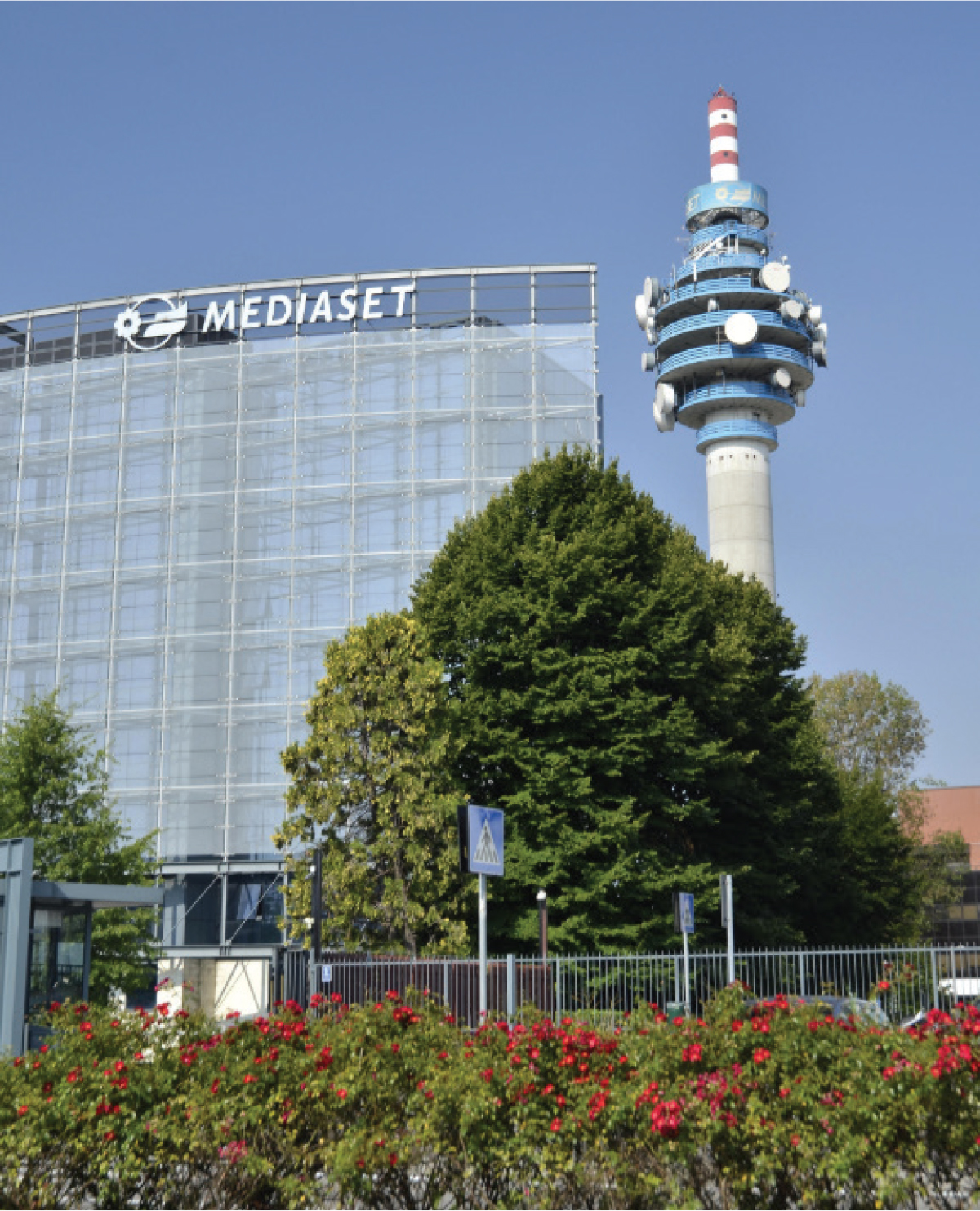
Figure 1
Mediaset headquarter in Cologno Monzese (Milan) (courtesy of Mediaset Press Office).
This was a period during which there was little awareness of the potential necessity to preserve broadcasted material, except for re-airing purposes: until 1991, live broadcasts were prohibited for any private television operators active on a national scale, and the opportunity to store and preserve full records or fragments of already aired programs became a crucial challenge also for Mediaset, involving issues of material feasibility, editorial advantage, and, not least, economic viability. Balossino adds:
Over time and especially in the case of records of interviews with famous personalities, in addition to finished products (aired footage and licensed materials), raw footage began to be stored; […] gradually, it was also understood that, beyond storing the programmes, it was essential to describe them, to make them reusable in a sequential logic: it was there (late Eighties) that the nature and scope of the stored materials expanded, in a more ‘archival’ logic: reels and video tapes started to be increasingly accompanied by supporting documentation.
Those first metadata were all annotated manually, and programme definition was based on ‘pen and paper’ processes: nonetheless, what is crucial is that it was the very conservation culture (and mindset, it could be argued) to advance, with the transition from an informal, scattered, and somewhat chaotic archive to a more robust and better coordinated repository, which would soon be systematically structured in an automated videolibrary.
3 The 1990s and the Operational Deployment of the Automated Video Library
The inauguration of the ‘videoteca meccanizzata’ (mechanised video library) dates back to 1991, marking a significant improvement in storage infrastructure and process automation. The video library was set up in a dedicated complex in Segrate, northeast of Milan, within the area occupied by the TOC (Technology Operation Centre), where until 2008 the broadcasting of Mediaset’s channels was coordinated. Over time, it gradually incorporated the materials previously stored at the Milano 2 warehouse (BVU-3/4, videotapes and Betacams). The facility occupies 1000 square metres and houses approximately 38.000 items, organised according to the ‘shelf moving to the operator’ principle: thanks to a sophisticated system of drawers, rails, mechanical arms, and digitally controlled lifts, the robotic mechanisms identify where the material is stored and easily reaches the dedicated staff. This is the place ‘where flow and ether regain their physicality’:6 the archived materials are primarily used to provide images and sounds for news broadcasts, documentaries, and magazine-inspired programmes that rely heavily on archive footage. Since the early 1990s, moreover, the videolibrary has been supplemented by the so-called ‘magazzino originali’ (original materials warehouse), a building which houses less frequently used titles and serving as a kind of historical memory of the company, located a few hundred metres away from the videoteca.
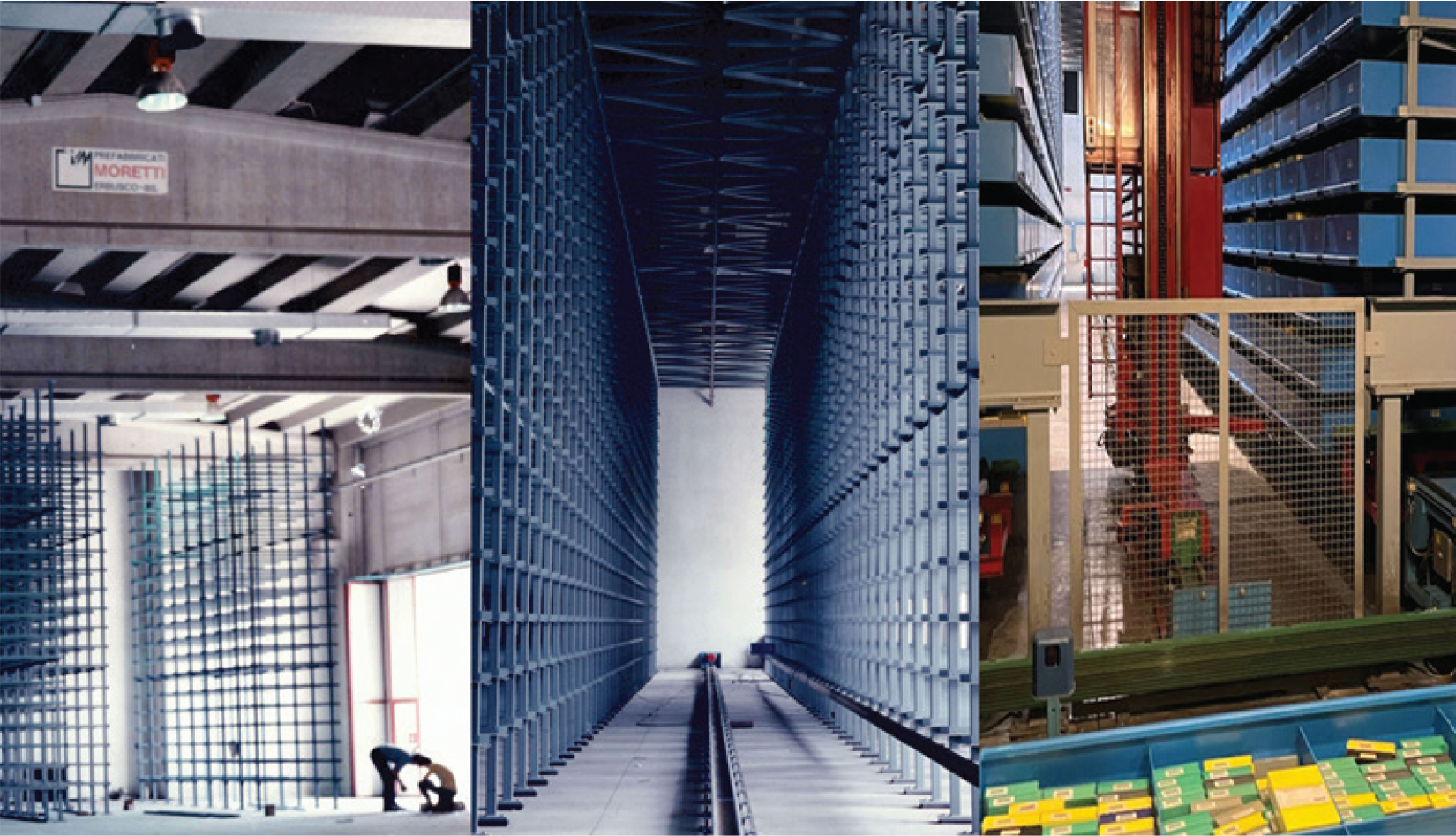
Figure 2
Glimpses of the mechanised video library (courtesy of Emanuele Balossino – Broadcast and Digital Media Dpt.).
Together with the automated video library, the Mediaset archive accommodates nearly one and a half million physical media items (data as of 2020). The technologies supporting the video library are optimised by an ERP (Enterprise Resource Planning) system which simplifies the recognition of each item’s identifier code, progressively integrated with a series of descriptive metadata to facilitate search. In fact, the launch of the Segrate mechanised video library prompted the company to refine its material cataloguing standards, establishing a new approach to the archive, which began to be incorporated into protocols governing its operations. Additionally, the Documentation Centre was developed, a dedicated facility for research and the enhancement of historical materials.7
The interviewee clarifies:
In the 1990s, there was growing awareness of the possibilities for internal reuse of previously aired material, both from a production perspective and for ‘generative reuse’. In particular, the news sector began to develop a dedicated preservation model, directly managing raw footage for reuse in programmes, with accurate cataloguing designed to meet editorial requirements.
It is worth highlighting that the commencement and implementation of the mechanised video library occurred in a context of ‘triumphant generalism’ for Italian TV: programming hours were extended, and the industry saw a shift from heavy media to lighter formats, with ever-thinner and more portable devices. For Mediaset, the decade from 1990 to 2000 was the period of definitive consolidation of its commercial scheduling and the effective refinement of the relationship between programming and production, with exponential growth in channels and content. Chronologically, it should also be noted that in 1997 Rai began implementing its digitalisation plans with the establishment of the Direzione Teche,8 which oversees the monumental task of inventorying, preserving, and completing dataset for all broadcasts from the public service network since 1954 (when Rai began regular transmissions in Italy), culminating in the creation of the Multimedia Catalogue, which also became the primary reference point for Mediaset in recovering, promoting, and disseminating material.
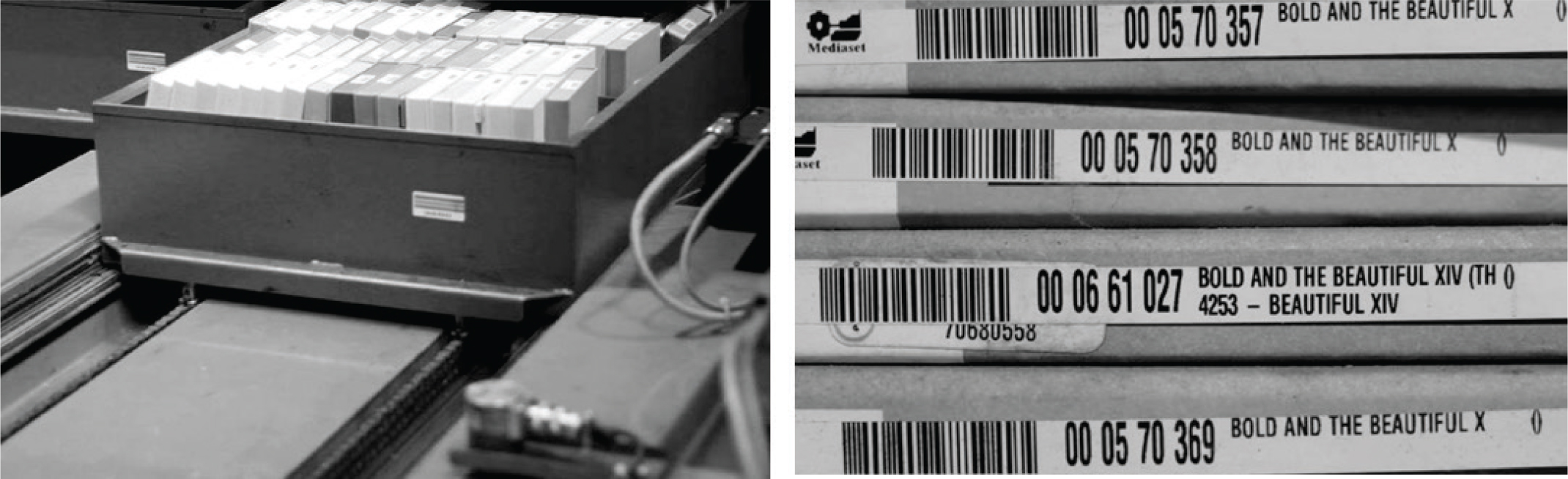
Figure 3
Other details from the mechanised video library (courtesy of “Link. Idee per la televisione”).
4 The ARCA Project: Content as the Fuel, Metadata as the Spark
The completion of the digital transition in the 2010s prompted Mediaset to recognise the need for a subsequent step in the management and structuring of its archives, following the lead of other similar European initiatives.9 With the shift to DTT and the digitalisation of the entire production pipeline, as well as signal ingestion and transmission, it became clear that the archive unit – and its respective workflows – needed to embrace new technologies and evolve within an enterprise framework, redefining itself from a cost into a profit centre.10 The company, in particular, acknowledged the potential ROI stemming from a more careful management of the stored material, which it seeks to leverage and capitalise on in order to maximise revenue, in line with the commercial nature of its activities.
Based on these premises, after several years of development, the ARCA Project (literally ‘ark’, an acronym for Analysis and Retrieval of Content in the Archive, with a reference to the biblical vessel) became fully operational in 2017.11 The project aims at the recovery, preservation, and revitalisation of Mediaset’s archived content by acquiring and migrating it from legacy archives (i.e. the analogue tape library) to a secure, fully digital environment. In summary, this initiative – which required the collaborative effort of various corporate areas, including Logistics, Technologies, Legal, Organisation, Strategic Marketing, Distribution and Scheduling, Broadcast and Digital Media, and Digital Business – focuses on the digitalisation, management, and long-term retention of self-produced audiovisual content (make assets) and acquired materials (buy assets) by the Mediaset group, including a substantial volume of raw footage.
From an operational perspective, the starting point of the project was the mapping of all the archived content, followed by the creation of a database, the identification of editorial and technical priorities and of criteria for selection and hosting, leading to the overall migration of the collection into a digital format.
The entire operation is centred on improving the accessibility and discoverability of this heritage, which began to be carefully enhanced by metadata strings. Balossino explains:
We carried out everything in-house within our ‘digitalisation farm’, which depended on approximately 10 staff members and was equipped with digital readers, converters, video servers, and memory stacks.
Particularly crucial for the success of the project was the development of an effective data model and information architecture that could support each inventoried item with a data sheet containing essential details for its accessing and retrieving. In this regard, the management of the Mediaset archive demonstrates that digitalisation alone is insufficient unless it is accompanied by a comprehensive, verified, and searchable set of metadata which provides a series of details about its production, distribution, and consumption. Among the indicators identified to better categorise the items are the title, timecode and duration, aspect ratio, audio quality, editorial type, genre, and cast – a successful blend of technical and descriptive information that Mediaset has patented in a corporate tagging system. All content is made available on Dalet, a MAM (Media Asset Management) system that allows for viewing and downloading via the company’s Intranet network, serving as the entry point for the archive’s entire digital supply chain.
The ARCA project was developed by the company to address various needs which have arisen its corporate trajectory. First and foremost, ARCA serves a logistical purpose, also aimed at mitigating congestion and overaccumulation in the physical warehouses where all company materials had been stored for nearly three decades, resulting in economic rationalisation and cost efficiency (the management costs of the digital library are lower than those of physical storage environments). Despite the uncertainty surrounding the evolution of computational standards and the high environmental impact, digital preservation prevents mechanical obsolescence and the deterioration of physical media, while also mitigating the associated costs of inaction.
Secondly, ARCA significantly supports the editorial needs of the group, facilitating the reuse of legacy content, which has become increasingly valuable within the generalist programming framework. Such productive reuse of archives involves both the re-running of previously aired programmes (typically, series and films, to be aired also on the group’s thematic channels) and the integration of fragments of previously broadcast materials into new productions. Balossino:
In this way, the company’s staff has access to far more content, better described and classified […]; it is no longer necessary to physically move copies to include archive footage into new programmes, thus reducing the risk of material loss. From content request to delivery, lead time is shortened, and the content becomes exploitable by every business department, on a multiplatform basis.
In the realm of television – which constantly remediates and reshapes itself – this is particularly advantageous for the editorial teams, who, especially when working on infotainment productions, frequently find themselves responsible for crafting emotional clips or ‘best of’ compilations derived from previously broadcast segments.12 Furthermore, following the example of public service broadcasting, Mediaset has also launched programmes based on the reuse and remixing of its television archive, such as Ieri e oggi in tv (Yesterday and Today on TV, Rete 4, 2000–), and 100 di questo giorno (100 of this day, Rete 4, 2019, Canale 5, 2021),13 as well as the Vintage and PlayCult sections of the Mediaset Infinity streaming platform, which revisit key moments in the broadcaster’s history, often featured as playlists of iconic or particularly emblematic moments.
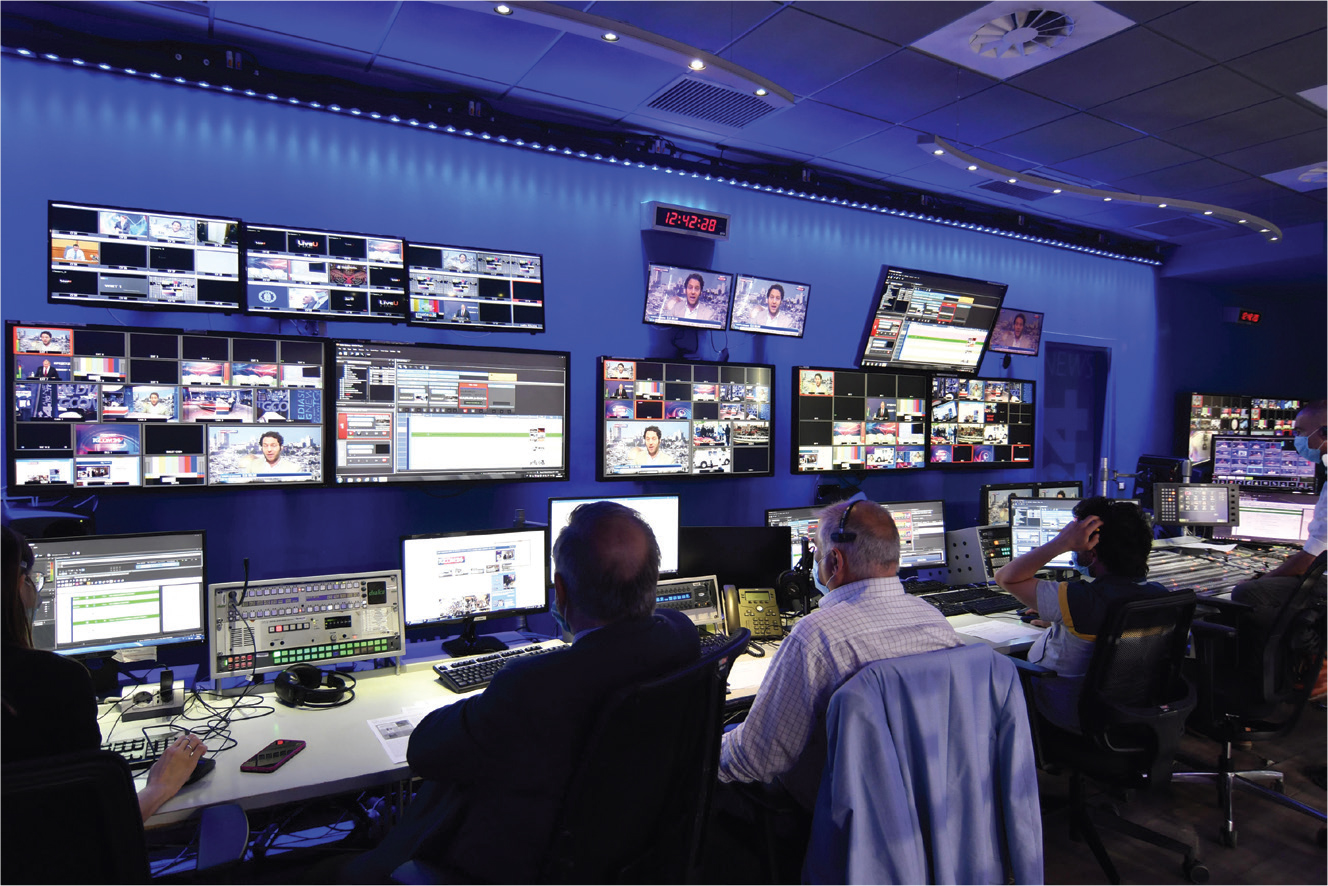
Figure 4
Control room at Mediaset’s Production Centre in Cologno Monzese (Milan) (courtesy of Mediaset Press Office).
Thirdly, ARCA enables more careful management of intellectual property and copyright, with increased gatekeeping over the company’s assets. A fourth key driver for the implementation of the digitisation project was the need to enhance the governance and distribution of licences, as well as the commercialisation to third parties of audiovisual content owned by the group (films and fiction, sports, entertainment, news), with economic terms depending on the type of content requested, the duration of the excerpt, the period and territorial usage limitations, as well as the purpose, destination, and methods of exploitation (linear TV, VOD, SVOD, TVOD, theatrical, video games, etc.). Fifthly, it is also worth noting that, following the development of ARCA, the broadcaster was able to benefit from a form of cultural legitimisation from its heritage, as proved by the commencement of some collaborations with various Italian and international universities (ETH Zürich, SIC. Lab Méditerranée and Sorbonne Université, Università della Calabria, Università di Bari, Università di Bologna) within research projects which, in various capacities, intersect the past and present of the company’s television offerings.
Finally, it should be stressed that the refinement of the metadata grid involved in the digitisation of the company’s archive boosts the integration with Mediaset Infinity streaming platform, which combines an extensive free video-library with both linear and non-linear premium content, following a freemium funding model. In this environment, thus, the data required to feed the content-based algorithms of the recommendation systems are directly derived from the archive tagging system implemented as part of the ARCA project, supplemented by specific AI applications.
5 Ai, Machine Learning and Digital Transformation: Some Conclusions
It is against this backdrop that the continuous increase in the volume of media stored in Mediaset’s archives, alongside the growing demand for greater granularity in image searches, makes the use of automatic cataloguing techniques almost unavoidable. This is an area where the company is making strides through various AI and automation-led software which operate on ingested footage. In particular, Mediaset is exploring the use of artificial intelligence in automatic metadata extraction and autotagging, geographical landmark recognition, face/voice identification, speech recognition, audio detection and transcription, segmentation and cue-point detection, and subtitle synchronisation. As Balossino explains:
It is undeniable how machine learning and deep learning can simplify the management and retrieval of stored items, primarily by helping to automate coding, classification, and description systems. […] However, one must also be cautious of futuristic or techno-deterministic rhetoric, due also to the many ethical and deontological implications. […] Artificial intelligence is increasingly central to our business intelligence, and we are experimenting extensively, but it remains a myth, still unpredictable in terms of its potential, and must therefore be approached with prudence. […] Moreover, it must be said that the accuracy and reliability of many applications are still low. The human factor is and will remain essential, and for this reason, it is important to adopt an integrative rather than a substitute approach.
These are technologies – partly acquired off-the-shelf from external providers, and partly developed in-house – which prove particularly valuable in enhancing the search engines and recommendation systems of Mediaset Infinity platform. In fact, these systems are AI-based, offering personalised suggestions to users, thus re-intermediating the content selection process based on contextual information while optimising the economic value of the editorial offering. The platform’s CMS (Content Management System) is the primary area of impact of the company’s recommendation system, which operates both on a content-based model and through collaborative filtering, deploying data on the browsing habits of the individual users.14 Typically, the goal is to maximise user engagement on the portal, increasing its reach and interactions.
In this context, particularly concerning Mediaset Infinity, the evolution of analytics is becoming increasingly enhanced by big data, leveraging a user database expected to exceed 20 million profiles by the end of 2025. In this framework, the item description system remains human-centred and human-curated because it always derives from editorial considerations, which may then be optimised automatically to better organise, select, and present content.15 As previously noted, the connection to the tagging, indexing, and query techniques developed under the ARCA project becomes clear: here, the potential for AI to significantly enhance metadata annotation and enrichment is particularly evident. Balossino:
Moreover, AI itself may assist in the production, distribution, and archiving of material to meet copyright standards, detect restrictions, define content usability, track content usage, and prevent improper content exploitation. Furthermore, automatic fingerprinting and watermark detection could help to identify restrictions on ingested content; however, there’s still a gap between the potentialities of AI and the results achievable through human intervention.
Unsurprisingly, hence, this technological advancement is driving developments in archive management, as stressed by the interviewee:
Archivists and media managers play an increasingly vital role in content production, asset management, and archiving. They oversee the entire process, from ingest to cataloguing and storage, and are also responsible for managing data.
Based on this account, the Mediaset case does ultimately suggest that while AI may eventually replace individual repetitive and routine tasks, human professionals will continue to play a crucial role in the initiation and management of the entire media lifecycle. The human contribution, paradoxically, becomes paramount even in navigating abundance and simplifying decision-making processes:16 as shown by the management of the audiovisual collection examined in this report, the key to the contemporary archive lies not only in its storage or accumulation capacity, but in its very principle of order.17 This seems a task which archives are increasingly required to undertake in the current scenario, in a context which increases the fluidity, dynamism, and volatility of the television product.
Through its trajectory, the Mediaset archive also appears to have introduced a new paradigm for accessing content, facilitating the creative process and promoting the reuse and enhancement of archival footage, while ensuring its usability. In the case of Italy’s leading commercial broadcaster, such an operation is particularly meaningful: often accused of offering an overly mass-consumption-oriented service - unworthy of belonging to the ‘Grand history’ of European broadcasting - the near philological recovery of the company’s repository and its historical programming challenges a cultural canon for the company, giving new life to its footage. Therefore, the television of the past emerges as a more vibrant medium than ever, rich in memorial and testimonial significance, providing valuable insights into the zeitgeist and the socio-cultural history of the nation and of its creative industry.
Notes
[1] Jay David Bolter, The Digital Plenitude. The Decline of the Elite Culture and the Rise of New Media (Cambridge, Massachusetts: MIT Press, 2019).
[2] Mediaset’s channels in Italy on DTT include the flagship networks Rete 4, Canale 5, and Italia 1, which cater to a broad audience with general programming. In addition to these, the group operates several thematic and semi-generalist channels, offering content tailored to specific interests, such as news, movies, and cartoons. This diversified portfolio allows Mediaset to reach various segments of the audience, enhancing its presence across different viewing preferences and contributing to its competitive position in the Italian broadcasting landscape.
[3] The interview was conducted remotely on December 12, 2024; essential for the preparation of this contribution was also the presentation by Emanuele Balossino at the “Le televisioni locali in Italia: dall’archivio alle storie del territorio” seminar held at the University of Cagliari on September 16-17, 2024, as part of the ATLas research project.
[4] Milan 2 is a residential complex commissioned by Silvio Berlusconi, located in the outskirts of Milan. Built in the 1970s, it was designed as a modern, self-contained community, reflecting a vision of a suburban utopia that combined residential living with commercial and recreational spaces.
[5] To retrace the history of Mediaset, see: Gabriele Balbi, and Prario, Benedetta, “The History of Fininvest/Mediaset’s Media Strategy: 30 Years of Politics, the Market, Technology and Italian Society”, Media, Culture & Society 32 no. 3 (2010): 391-409; Mario Molteni, Il gruppo Fininvest. Imprenditorialità, crescita, riassetto [The Fininvest Group. Entrepreneurship, Growth, Restructuring] (TurIn: ISEDI, 1998). An international account on the company can be found in Matthew Hibberd, The Media in Italy (Maidenhead: Open University Press, 2007); a contextualisation of Mediaset within the history of Italian television is available in Luca Barra, Paola Brembilla, and Veronica Innocenti, La televisione italiana. Storie, generi, linguaggi [Italian Television. Histories, Genres, Languages] (Milan: Pearson, 2024). See also: Peppino Ortoleva, Un ventennio a colori. Televisione privata e società in Italia (1975-1995) [A Twenty-Year Period in Color. Private Television and Society in Italy (1975-1995)] (Milan: Giunti, 1995) and Enrico Menduni, Televisione e società italiana 1975-2000 [Television and Italian Society 1975-2000] (Milan: Bompiani, 2002).
[6] Matteo Stocco, and Matteo Primiterra “La memoria a pezzi. Reportage dall’archivio Mediaset” [Memory in Pieces. Report from the Mediaset Archive], Link. Idee per la televisione 14 (2013): 92-103.
[7] Thanks to the materials found at the Documentation Center, for example, it was possible to reconstruct the history of TeleMilano 58, the predecessor of Canale 5, which was later included in a dedicated publication; see VV.AA., “TeleMilano 58”, Link. Idee per la televisione 17 (2014) (some excerpts are available here).
[8] Literally, teche means ‘display cases’; for more details on the Teche Rai, see: Luca Barra, and Massimo Scaglioni, “La storia che si ripete. Alcune note sugli archivi della televisione” [A Repeating History. Some Notes on Television Archives], in Appassionati dissodatori. Storia e storiografia della televisione in Italia [Passionate Discoverers. History and Historiography of Television in Italy], ed. Massimo Scaglioni (Milan: Vita e Pensiero, 2019), 115-122; Luca Barra, and Cecilia Penati, “Catch-up con gli archivi. Digitale terrestre e patrimonio Rai” [Catch-up with Archive. DTT and Rai’s Heritage], in Storie e culture della televisione italiana [Histories and Cultures of Italian Television], ed. Aldo Grasso (Milan: Mondadori, 2013), 438-447; Barbara Scaramucci, “Che cosa sono le Teche della Rai” [What Are the Rai Teche?], in Fare storia con la televisione. L’immagine come fonte, evento, memoria [Making History with Television. The Image as Source, Event, Memory], ed. Aldo Grasso (Milan: Vita e Pensiero, 2006), 123-127.
[9] An overview of the development of European private broadcasters is given in Luca Barra, Christoph Classen, and Sonja De Leeuw, eds., “History of Private and Commercial Television in Europe”, View. Journal of European Television History and Culture 6, no. 11 (2017) (available here) and Luca Barra, and Massimo Scaglioni, eds., “Moving at Different Speeds. The Commercialization of TV Systems in Europe and Its Consequences”, Comunicazioni sociali, 35, no. 1 (2013).
[10] A reference useful to better understand the shift from analogue to digital formats in TV archives is Jean Michel Rodes, “Gli archivi audiovisivi: dall’analogico al digitale” [Audiovisual Archives: from Analogue to Digital Formats], in Fare storia con la televisione. L’immagine come fonte, evento, memoria [Making History with Television. The Image as Source, Event, Memory], ed. Aldo Grasso (Milan: Vita e Pensiero, 2006), 107-116.
[11] A fundamental source to reconstruct the premises and evolution of the ARCA project is Giorgio Avezzù, “Il recupero e la valorizzazione dell’archivio Mediaset. Il progetto Arca” [The Retrieval and Enhancement of the Mediaset Archive. The Arca Project], L’avventura 2 (2020): 241-257.
[12] For further insight into the use, recontextualisation, and resemantisation of historical fragments taken from previously aired shows in brand-new programmes, see Luca Barra, and Massimo Scaglioni, “Making the Most of the Archive: Commercial Exploitation of the Digital Archive on Contemporary Italian Network TV”, VIEW. Journal of European Television History and Culture 1, no. 1 (2012): 40-47 (available here). On the topic of the ‘hybrid repertoire’, in the context of a constant renegotiation of collective memories and nostalgic self-perceptions of the past, see Berber Hagerdoon, “Television as a Hybrid Repertoire of Memory: New Dynamic Practices of Cultural Memory in the Multi-Platform Era”, VIEW Journal of European Television History and Culture 2, no. 3 (2013): 52-64 (available here); see also: Jaimie Baron, The Archive Effect. Found Footage and the Audiovisual Experience of History (Oxon: Routledge, 2013). Additional Italian sources on the process of historicisation of televisual memory are Aldo Grasso, ed., Fare storia con la televisione. L’immagine come fonte, evento, memoria [Making History with Television. The Image as Source, Event, Memory] (Milan: Vita e Pensiero, 2006), Aldo Grasso, La storia pubblica. Memoria, fonti audiovisive e archivi digitali [The Public History. Memory, Audiovisual Sources, and Digital Archives] (Milan: Vita e Pensiero, 2020) and Peppino Ortoleva, “Gli archivi audiovisivi e la ricerca storica” [Audiovisual Archives and Historical Research], Archivi e cultura 31 (1998): 25-38.
[13] The list should also include the rather unsuccessful experiment of Supershow (Canale 5, 2008), which reassembled content broadcast by Canale 5, Italia 1, and Rete 4 in a comedic format. Given that it was scheduled in 2008, when the ARCA project had not yet been launched, the production of the programme relied on collections stored in the physical video library in Segrate.
[14] For a benchmark with the practices in use at Rai, see: VV.AA., Algoritmi di servizio pubblico [Public Service Algorithm] (Rome: Rai Libri, 2022).
[15] A comprehensive contribution on the future of AI and automation within Mediaset’s production workflow, with a focus on sport programmes, is available in Emanuele Balossino, “Sport Media in a Fully Digital Landscape: Re-Engineering Digital Workflows and the Content Value Chain”, Journal of Digital Media Management 8, no. 2 (2020): 1-11.