
1 Introduction
Television’s ability to enter into people’s homes lends it a special character of communication. The living word speaks from the screen. Although we cannot respond to the person on screen, he or she is still our companion to a far greater extent than the person on the movie screen.1
In 1967, the authors of an academic article on East German television journalism reflected upon the special potential of television. By then, just like in the rest of Europe, television in the socialist German Democratic Republic (GDR) had developed into a mass medium that allowed the moving image to enter the domestic sphere. In addition, rising numbers of personal TV sets allowed for increasingly individual practices of consumption.2
As television experts of the time highlighted, the new medium’s popularity was built upon its “special character of communication” which enabled a new connection between the private sphere and the outside world. It was TV’s audio-visual component that was seen as being most influential: television, experts suggested, did more than transmit live events like radio had done. Analysts and practitioners alike believed that it created a certain type of “companionship”, closeness and intimacy with the people on the screen that was only possible because the moving image was viewed in the privacy of the home.
These assumptions about the medium also shaped its uses. From the beginning, television was an important medium in education in general and health education in particular.3 As I will show in this paper, the unique ability that was attributed to television to directly speak to the individual, herein establishing emotional bonds and intimacy, was part of a broader discourse on the preconditions and effects of social communication in the GDR, which was prominently featured in health education films on TV. The connection between social communication and health was built upon an important link: the role of emotions in personal relationships and their impact on the body.
I would like to illustrate that the management of emotions not only served to support socialist ideals of social interaction but also to create healthy bodies.4 The “education of emotions”5 that GDR medical experts propagated was a central feature of health education on television. Analysing health education films from the 1970s and early 1980s, I discuss how television framed emotions as health risks and how this corresponded with ideas on communication and media theory. More specifically, I argue that television and public health concurred in their aim to cultivate trust, which was intended to reduce health risks and foster a functioning community.
This study is not the first to address the connection of health, emotion and audio-visual communication.6 However, it goes beyond the question of how public health actors used audio-visual media and their emotional impact on audiences, which has been the main focus of study so far. Instead, it delves into emotions as an object of public health: in what ways and why were emotions relevant to GDR health educators? How were they visualized and portrayed on the television screen?
2 Risky Emotions: Perspectives of GDR Health Education
When television established itself as a new mass medium in both East and West in the 1960s, there was already a long tradition of health education films. Since the early twentieth century, pre-feature short films in the cinema had shown documentary or fictional productions that were intended to inform the population about diseases, hygiene rules or health-promoting activities.7 In the GDR, health education was in the hands of the state and health film commissions were largely produced by the state-owned production company Deutsche Film-Aktiengesellschaft [German Film Corporation] (DEFA). In the 1960s, at the onset of the television age, the Deutsches Hygiene-Museum Dresden [German Hygiene Museum in Dresden] (DHMD) became an important commissioner for films that were at the time mainly produced for cinema but increasingly also broadcast on TV or specifically commissioned for television. The DHMD has been one of the main players in German health education since the pre-war period. While subject to state control in the GDR, it was able to maintain a certain independence. Many films for cinema and television originated there, such as the early evening TV series Werbung auf Sender [Advertising on Air], which dealt with topics like alcohol abuse, nutrition, sports or cholesterol in 5-minute clips.8 The presence of an episode entitled ‘Emotionen’ [Emotions] may at first seem jarring in such a list.9 Yet, in 1981, GDR television produced this short film with the specific aim to warn viewers against harmful emotions. How and why did emotions take centre stage in health education campaigns?
Take, for example, this excerpt from the programme below:
Video 1
‘Emotionen’ [Emotions], Werbung auf Sender, DFF, 1981 (© DHMD).
To illustrate the development of “unhealthy” emotions, the film presents a scene of failing social communication in the workplace. Two men are getting more and more caught up in their emotions and we hear them literally referring to their health: “His arrogance makes me sick.” and “This injustice will kill me one day.” Though these statements might be interpreted as colloquial expressions and everyday metaphors, they stand at the core of the film’s educational goal. Using common visual methods of health education, staged scenes are combined with infographics and expert voices: commenting on the scene, Karl Hecht, professor of physiology at the Charité Hospital in Berlin, stresses that emotions must be taken very seriously, since they “can be a risk factor for the heart and circulatory system”. The physician locates their causes in social misconduct through “unresolved conflicts, exaggerated desires, fear of risk, anger and bitterness and, finally, tensions in the communities or in the collective”. Emotions, we learn, can endanger social relationships, so it is important to “regulate our behaviour”.10
Addressing emotions was not a new concern for health education. Rather, this programme should be understood as deliberately emphasizing ideas that had previously been conveyed in other contexts: 1) Emotions are entangled with styles of communication, 2) Emotions can endanger the health of a person’s organs. In socialist health education, emotions were relevant because they intertwined specific ideas of social communication with specific body images, i.e. they coupled the social with the physical. This can be illustrated with further film examples.
3 Communication in the Collective: Fighting the “Disturbing Factor”
All of these complex links between communication, emotions, and physical health resonated in health education films broadcast in the 1970s and 1980s. East German television vividly showcased socialist ideals of interpersonal relationships and framed them as forms of health prevention. New forms of social conduct were central to the socialist agenda. Based on direct, interpersonal exchange, they placed a premium on the spoken word and conflict resolution through dialogue, most prominently subsumed under the term “Aussprache”. In the politically thawing climate of the 1970s, when the GDR’s economic backwardness was becoming undeniable, the idea of a “socialist way of life” gained the upper hand over economic and political messages, thus giving new weight to a specifically socialist style of emotional communication.11
This was also closely linked to the status of work and productivity in the GDR. The task of managing emotions to create a good working atmosphere and reduce frustration had been a focus of work psychology since the first decades of the twentieth century, and it lived on in socialist accounts of economic productivity. In the self-proclaimed Workers’ and Peasants’ State, physical health was key.12
This understanding of a socialist style of conduct was intensely played out in public health. The 1975 health education film ‘Arbeitskollektiv’ [Work Collective]13, also commissioned by the German Hygiene Museum and part of the series Wegweiser Gesundheit [Guide to Health], clearly emphasized the connection between “incorrect” social interaction and sick leave – and the resulting drop in productivity. It cited the burden of negative emotions as a threat to the realization of collective goals. With a combination of animated and staged scenes, it depicted the management of emotions as the core of a functioning community, be it at work, at home, or in social life. Like ‘Emotionen’, the film presented a confrontation between boss and employee as an example.
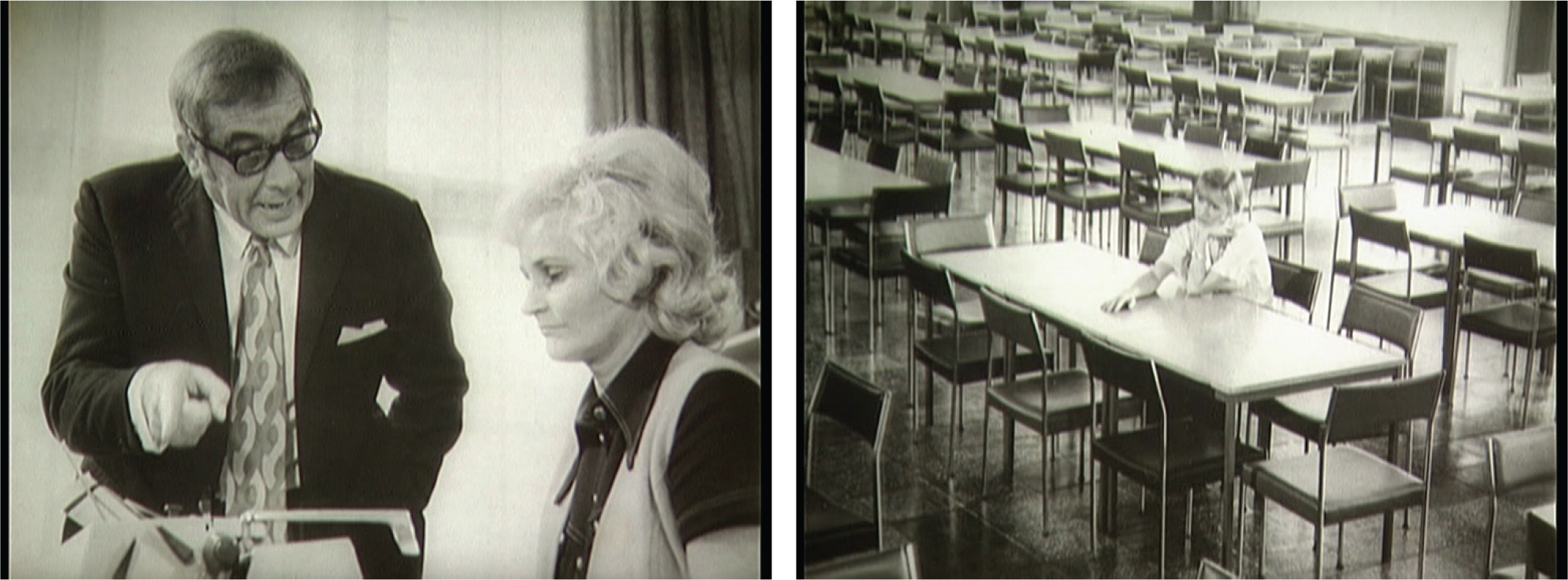
Figures 1-2
Bad vibes at work: ‘Arbeitskollektiv’ [Work Collective], Wegweiser Gesundheit, DFF, 1975 (©DHMD).
In contrast to the other film, however, ‘Arbeitskollektiv’ included the effects of negative emotions in the visual narration. The film not only shows the conflict itself, but also puts into perspective the emotional world of the employees involved: although the dining room is crowded, the woman feels isolated, lonely and frustrated. The mise-en-scène shifts from bustling tables to yawning emptiness (Fig. 1-2). The failed social communication causes a change in perception and creates pressure, which is relayed by the film: images of the emotionally misbehaving boss are cut in a loop, using the repetition to emphasize this constant source of bad vibes on a visual level. The film focuses on the transfer of negative emotions and reciprocal emotional actions. The interrelation of emotions, health and communication is visualized in a very specific way here:
Video 2
‘Arbeitskollektiv’ [Work Collective], Wegweiser Gesundheit, DFF, 1975 (©DHMD).
Humans are depicted through a technical model of transmitter and receiver that situates them in a continuous feedback loop. Emotions are visualized as bad vibes that make the transmitter a “disturbing factor” in social interactions, and then trigger new bad vibes in return. “Every person giving off tension becomes a disturbing factor in interpersonal relationships. It’s bad when leaders themselves become a disturbing factor. It impairs mutually fruitful relationships between the leader and the collective”, the voiceover explains.
This process is herein connected to the body. Emotions, as is visually illustrated, reach the organs via the brain and affect our health. Anger, dissatisfaction, stress, and unresolved problems are shown as they directly impact the body’s organs, causing diseases. A voiceover lists the effects of these negative emotions.
Video 3
‘Arbeitskollektiv’ [Work Collective], Wegweiser Gesundheit, DFF, 1975 (©DHMD).
This image of the body was influenced by the scientific field of cybernetics, which guided understandings of the body as a complex self-regulatory system with feedback loops and was particularly popular for helping explain the nervous system.14 In the 1970s, health educators like Karl Hecht worked to expand cybernetic knowledge, bringing psychosomatic relations to clinical attention and calling for an in-depth study on the connection between the social and biological aspects of emotions. He and his colleagues from the Zentralinstitut für Herz- und Kreislauf-Regulationsforschung [Central Institute for Research on Cardiovascular Regulation] in Berlin were interested in the relatively new field of cortico-visceral research, which examined regulation mechanisms between brain and inner organs, and in the effects of emotions on organ activities – in short, exactly what the film excerpt shows.15
4 Long Trajectories and New Challenges: Socialist Body Concepts
This interest in research on emotions and the films’ various warnings on the need to carefully regulate them were rooted in a specific conception of emotions and of the body in socialist health education. Emotions were understood as states of tension that needed to be followed by states of relaxation; they were elements of a stimulus and response model in which the body was easily threatened by overstimulation. This message was often illustrated by graphs: an ideal alternation of emotional tension and relaxation stood was depicted alongside a model of the effects of permanent emotional tension (Fig. 3-4).
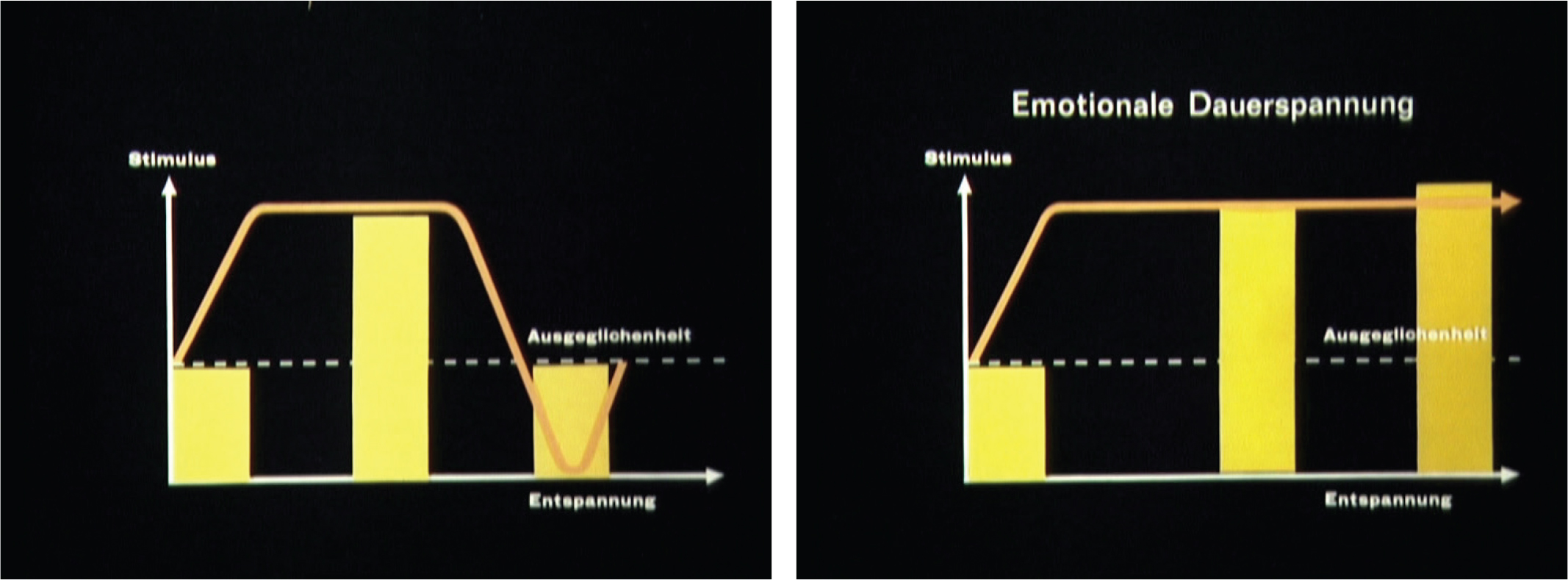
Figures 3-4
Tension and Relaxation versus Permanent Emotional Tension: ‘Emotionen’ [Emotions], Werbung auf Sender, DFF, 1981 (©DHMD).
The conception of the body that informed these films was clearly influenced by models that can be traced back to the nineteenth and early twentieth centuries, and particularly to the interwar period, when physiologists turned their attention to the workings of the nervous system and its effects on the organs.16 After the Second World War, these studies were expanded upon in the GDR with the findings of Russian physiologist Ivan Pavlov, who saw human thinking and feeling as determined by nervous activity.17 Medicine and physiology experts popularized understandings of the body as a system that needs to be placed under constant control in order to ensure a healthy balance of stimulation and relaxation. Following the mid-1950s, they contributed to an extensive body of non-academic advice literature on health issues that discussed the issue of balancing emotions.18 Here, feelings were the central switch point between social interaction and nerve activity. Interpersonal communication could have both positive and negative effects on the body in the form of emotional stimuli.
This view was also strongly influenced by the discipline of social hygiene. Situated at the intersection of medicine and sociology, this scientific field emerged in the late nineteenth century and focused on the relationship between health and social circumstances. It sought to raise awareness of the medical impact of living and working conditions and of the quality of social interactions.19 In contrast to West Germany, where social hygiene was dismissed as part of the National-Socialist past, the GDR picked up on pre-war traditions of the discipline in the 1950s and granted it a central place in public health.20 Its focus on the social function of medicine and the analysis of diseases as consequences of social inequality fit the GDR’s socialist agenda.
However, new scientific approaches spread across Europe in subsequent decades and challenged this tradition. The health education films of the 1970s and 1980s analysed here give us a glimpse of these changes. In addition to older stimulus-response models, they presented a new dimension: the measurement of the “right” stimulation to sustain health was now quantified through a complex system of risk factor analysis. The so-called risk factor model, invented in the USA and implemented in the GDR from the late 1960s on, created new ways of measuring and visualizing health, and the loss thereof. Taking into account individual lifestyles and evaluating physical data, this quantification of health led to its long-term standardization and individualization by suggesting causal relations between certain behaviours and illnesses.21
While the risk factor model brought the GDR on the international scientific stage, it fundamentally challenged traditional notions of social hygiene, since it allowed structural and social factors to take a backseat.22 However, health education films found a way to combine both approaches and to revitalize social hygiene by visual means.
5 Emotional Education as Health Education: Psychohygiene in the 1970s
Despite the risk factor model’s decidedly mathematical approach to defining health, East German health education adjusted it to the ideas of social hygiene. Especially concerning the topic of emotions, health education films like ‘Die Herznerven’ [The Cardiac Nerves],23 broadcast on television in 1979, made older traditions compatible with new concepts in public health.
‘Die Herznerven’ [The Cardiac Nerves], a co-production between the German Hygiene Museum in Dresden and the Institute for Health Education in Sofia, Bulgaria, was one episode of a series on the organs of the body. The series’ roughly fifteen-minute episodes were originally produced for movie theatres, but were more commonly viewed on television, where they were broadcast from 1977 to 1983.24 The title of the film itself offers insights into the conception of the body that it presented: it does not read ‘The Heart’, but ‘The Cardiac Nerves’. In fact, the film is as much about the heart as about the nervous system: images of stimuli and their effects underscore the need to balance stimuli and to ensure that our nerves are not overtaxed.
Again, emotions are brought to the fore here as an influential link between the body and social communication. Although the series’ primary topics are medicine and physiology, the framing of the information makes it clear that the social dimensions of health are emphasized. The first scenes illustrate how and when we become aware of our heart. Yet, they do not depict physical activity – physical work or exercise – as one might expect, but instead show social interactions and emotional situations: scenes of someone being praised by a teacher, a couple kissing, a frightened person, and two people arguing (Fig. 5-6). From the very beginning, viewers are encouraged to see the medical explanations in light of their social implications. The ways in which we communicate, the images suggest, affect not only individual’s hearts but also the collective: The teacher’s words have an impact on the young pioneer; how the peasant handles her emotions is part of her responsibility as a member of the socialist community.
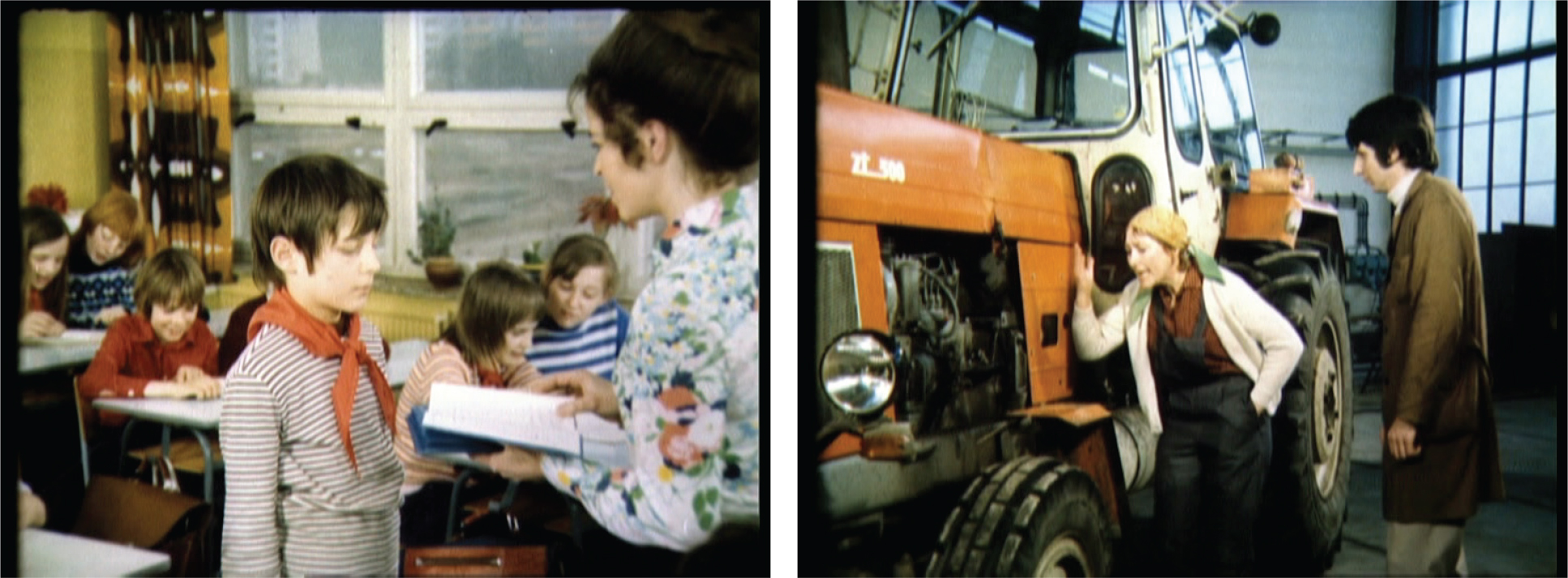
Figures 5-6
How we become aware of our hearts: ‘Die Herznerven’ [The Cardiac Nerves], Du und Deine Gesundheit, DFF, 1979 (©DHMD).
This becomes even more obvious if we turn to the protagonists of the film that again appear in a series of staged scenes. As in the first two film examples, the workplace is introduced as a space where health risks arise. However, in addition to this, there is a focus on private relationships. Since the late 1950s, medical experts had increasingly shifted their attention to the emotional structures of family life, following a similar ideological realignment among the socialist leadership.25 In the workplace and at home, communication skills were seen as basic means for creating an egalitarian society, and shaping them properly was understood to be foundational for the formation of the socialist personality, both within and in relation to the collective.26
As highlighted before, the management of emotions was considered key for maintaining functioning social relationships and preventing illness. The film ‘Die Herznerven’ pointed to the meaning of one particular emotion in this regard: trust.
Video 4
‘Die Herznerven’ [The Cardiac Nerves], Du und Deine Gesundheit, DFF, 1979 (©DHMD).
This scene depicts a husband’s distrust of his wife as a health risk. It suggests not only that negative emotions themselves endanger the heart by overstimulating the nerves, but also that they can lead to other unhealthy behaviours: the husband who cannot find rest turns on the TV, opens a bottle of beer, takes sleeping pills – references to common themes of health education at the time.27
Although ‘Die Herznerven’ is not presented as a film about psychological wellbeing, this is a leading topic of the film. It ends with the couple reunited, the voiceover reminding the audience to “care for their hearts”, in deliberately ambivalent phrasing. In fact, ‘Die Herznerven’ employed risk factors as an argument to support some key tenets of social hygiene, connecting the need to balance emotions to new models of measuring cause and effect relations. As a result, emotions were conceptualized as statistically valid entities for measuring health. In particular, as the voiceover states, negative emotions were considered one of the main risk factors for high blood pressure and heart attack.
This was especially relevant since chronic diseases and heart diseases in particular were on the rise in the mid- to late twentieth century. Due to higher living standards and changes in work and lifestyles, new challenges for physical health emerged in Western societies. Despite divergences in economic systems and in the speeds of transitions from industrial to service societies, the socialist GDR was just as much affected as its non-socialist neighbours.28 To address the problem of the growing number of chronic diseases, however, East German health educators turned to ideas of the socialist self.29 The direct and data-based connection between emotions and health that the risk factor model offered provided a new justification for the importance of emotion management and communication skills, which were considered indispensable in an egalitarian society.
For this reason, managing and actively forming one’s emotions were key components of public health initiatives. Experts like Karl Hecht, mentioned above, claimed that in the 1970s, disorders of the vegetative nervous system had increased, one reason being a lack of popular knowledge on the negative effects of emotions on the body. Even before being named a professor in 1971, he started publishing popular advice manuals in work physiology and psychology, turning to “Psychohygiene” in 1970s. Hecht appeared regularly on GDR television and often featured as a scientific advisor when health related topics were debated.30 According to him, the increase of stimuli in modern life caused “stress”. Denoting an overstimulation of the nervous system, the concept built upon older discourses on neurasthenia and was on the rise in health debates at the time.31 Likening it to a form of psychosomatic treatment, Hecht explicitly suggested the “education of emotions” as a remedy against stress, as well as a means of prevention.32
Films like ‘Emotionen’ and ‘Die Herznerven’ precisely addressed these issues in the 1970s and 1980s. Often broadcast between popular television programs, they used television to convey a new sense of urgency about the longstanding issue of emotional balance. The portrayal of work-related stress in both examples clearly addresses what was referred to as the “Managerkrankheit” [managers’ disease] in German speaking countries, a diagnosis of stress that grew popular in the 1950s in the West. It associated excessive working habits with chronic disease and heart attacks, identified most commonly in high-level, male office workers.33 Health education in GDR television made a clear connection between this phenomenon and questions of emotional and social skills, picking up on ideas of social hygiene and socialist community building. At its core was the cultivation of trust as a form of emotional education.
The husband in the first excerpt of ‘Die Herznerven’ is not the only character suffering from distrust. The film also presents a second example of an unhealthy husband, a workaholic referred to as a “slogger” [Wühler] (Fig. 7). The man’s negative emotions and behaviours are explained not only by his poorly organized work schedule, but also his failure to build trust, leading to isolation and overwork: “Everyone knows this type. Everything, really everything, he believes he has to do alone.”
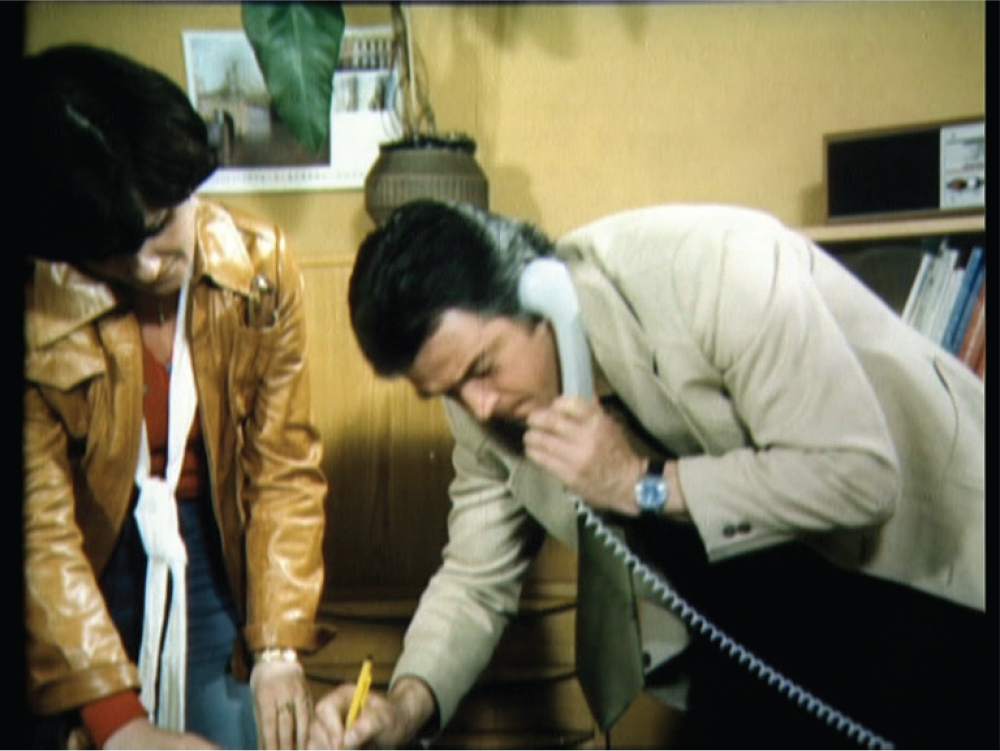
Figure 7
Overwork: ‘Die Herznerven’ [The Cardiac Nerves], Du und Deine Gesundheit, DFF, 1979 (©DHMD).
The film resonates with the findings of the social hygienist and well-known author of advice books Rudolf Neubert, who in 1966 characterized persons suffering from managers’ disease as
a restless bunch of people who think that they know everything better, that they have to do everything on their own. These people do not trust others. They have no confidence in their employees. […] Since they do not trust others, they also get into quarrels with others. This results in disruption of their nerve activity, manifesting itself mostly in heart attacks, heart anxiety or in ‘functional’ stomach disease.34
From this perspective, managers’ disease was an effect of emotional incompetence, an inability to trust. Health education pleaded for an emotional education that served social and physical ends: cultivating trust was considered key for cultivating health.
Not only did the voiceovers state the need to actively develop the ability to trust, as in ‘Die Herznerven’, but visually the films also contributed an educative element: often scenes of failing emotion management and social communication were followed by scenes showing the correct behaviours, for example in ‘Emotionen’ and ‘Arbeitskollektiv’. To educate one’s emotions, thus to regulate them and make them fruitful for social interactions was cast as highly significant for individual health and self-care.
In this regard, the films mirror broader trends in European public health, which increasingly focused on individual responsibility in disease prevention.35 With a particular emphasis on the importance of community, however, these GDR films repeatedly framed individuals’ negative emotions as causes of collective health issues. Here, too, social-hygiene approaches continued to be influential: the conflicts presented were depicted as the problems of certain classes and power structures.
The main problem appeared to be the male middle-class leader who produces negative emotions and suffers from a lack of trust. The visuals leave no doubt about which social group and gender was mainly addressed. Although GDR public health stressed that the managers’ disease was not limited to high level employees,36 the staged scenes in ‘Emotionen’, ‘Die Herznerven’ and ‘Arbeitskollektiv’ revolved around leading middle-class engineers or office managers.37 The psychosocial effects of the incompetence of this social group, however, were often illustrated with the employees working under them.
Emotions were, in other words, portrayed as social and collective health risks.38 Dwelling on negative emotions meant not only risking your own health, but also the health of others. This was especially relevant for persons in leading positions. Styles of leadership were framed as health issues in GDR health education. Whereas approaches to human resources in the US and Western Europe gained impact in the 1960s that centred around the individual, the GDR preserved and even expanded its focus on interpersonal relationships and leadership styles in the workplace.39
Health education on television mirrored this trend. The films drew their persuasive quality from their visual connections between the social and the physical and their illustrations of the mechanisms of communication. Such visualization complemented the narratives on emotions and health contained in printed studies and advice books. Whereas the manuals published by Karl Hecht mostly used illustrations and graphs to elucidate physical processes, the audio-visuals highlighted the interactions between individuals and clearly marked them as members of certain social groups.40
Further, the visualization of humans as “disturbing factors”, mentioned above in ‘Arbeitskollektiv’, moved social interactions into the realm of transmission issues and media theory. Negative emotions were depicted as sound waves, bad vibes that radiate and affect others. On screen, the human being was presented as a medium that sent out signals or waves and was part of a feedback loop – just as the images of the conflict were set in repetition. As Karl Hecht had claimed in his popular advice book on socialist leadership, the third edition of which was published in 1972, wording and intonation were to be considered “signals” and bodily “stimuli”. The films made these “reciprocal effects between speaker and listener” visibly corporeal; they materialized emotions and made tangible the health risks they might cause.41 In this way, the narrative of emotions as health risks was influenced by ideas about communication that were closely bound to the evaluation of different media – including TV – in the GDR.
6 Cultivating Trust: Health Education and Television’s Promises
Like every new medium, television had its share of critics concerned about its damaging effects, during its rise. Some of these concerns related to health, as critics thought that TV would seduce people into adopting bad eating and drinking habits and reducing physical activity.42 Relevant for political as well as health education, the fact that broadcasts were generally viewed in the privacy of the domestic sphere diminished the state’s ability to exert control over viewing habits and reactions to content.43 These downsides, however, were also read as opportunities by health educators, who were eager to benefit from television’s capacity to be embedded in people’s daily lives, to get closer to them, and to capture reality with greater flexibility than in film.44 They saw television’s communication potential as very much in line with the needs of public health, provided it was used correctly.
This was to a great extent due to the high value ascribed to face-to-face dialogue, which influenced East German evaluations of different media. In fact, television did not necessarily replace other medial forms of health education, but instead complemented them.45 As a major textbook on social hygiene from 1970 claimed, “[t]he word, spoken from person to person, is and remains the most effective means of health education”.46 For decades, health education films shown in movie theatres or community centres had often been accompanied by lectures for this very reason.47 A personal address was understood to have greater impact on thinking and feeling, because, as the medical expert Hanns Schwarz stated, “the spoken word appeals to the listener personally, touches him intellectually, and engages him emotionally”.48 Print media could only touch on the surface, he further claimed. Social hygienists also deemed radio broadcasts to have “the widest range but the lowest intensity and the least personal impact” because they lacked personal interaction.49 In contrast, audio-visuals, and television in particular, were believed to have a greater effect. The liveliness and companionship offered by the small screen in the living room, media practitioners claimed, could “reunite thoughts and feelings to an extent that human history has not yet encountered”.50
In comparison to other media, television seemed to be the closest to the experience of in-person interaction. Viewers could see and get to know the featured characters and experts. “Because of its vividness, the fact that we see the human on screen, the person is closer to us than the voice from the radio”, stated R. A. Borezki and A. J. Jurowski, the authors of the text on television journalism quoted above.51
In fact, in contrast to printed guides, health education films defined the protagonists more sharply. As the film excerpts presented here convey, the images inevitably revealed their gender, social class, but also details such as their living situations, thereby fostering a sense of intimacy. The medical experts featured, in turn, aimed at direct contact with the audience by speaking straight into the camera.
When defining the qualities of television, Borezki and Jurowski did not focus on visual composition per se, but dedicated considerable space to the speaker or voiceover. They did not think that a good production needed a “complicated visual-plastic solution”. Instead, they attributed more significance to their belief that “[t]he specific nature of the reception of the television programme – at home – determines the special character of the words heard from the screen”.52 Addressing the audience in the domestic sphere, the speaker’s text was supposed to be “emotional, gentle, sometimes even intimate”. “A good script always gives the speaker the opportunity to create an invisible emotional bond with the television viewer”. Producing such an “intimate and trusting tone” was considered “the characteristic of TV”.53
Health education films also clearly made use of voiceover to create familiarity with the audience. Sentences such as “We know that” (in ‘Emotions’) often applied a pinch of humour to introduce a community-building effect. By repeatedly addressing the audience with “we” or talking about “everyone”, the films met the recommendations of the television experts. Thus, television sought to facilitate the kinds of interpersonal relationships and emotional communication that were highly esteemed in GDR social hygiene.
Health education and media theory were joined on two levels here: the shared goal of creating trust and intimacy was relevant for engaging with the audience, which in turn was of great importance for health education. Secondly, health education in the age of television increasingly turned to the question of creating trust and intimacy in the content, shaping it as a central issue of physical health.
7 Conclusion
Following socialist ideals of communication, trust was understood as a precondition of a functioning collective; in contrast, lack of trust was perceived to lead to emotional tensions and an overstimulation of the nervous system, and ultimately cause organic disorders. Accordingly, bad vibes in social interactions were framed as health risks that were to be addressed via emotional education. Drawing on models of media theory and cybernetics, individuals who channelled negative emotions were detected as sources of disturbances that directly affected others. Public health increasingly focused on people in leading positions and marked them as health workers, for their own and for their employees’ health. The implementation of the risk factor model gave this physical side of socialist emotional education a new statistical validation and heft. However, East German health education films of the 1970s and 1980s did not adhere to the general trend of “replac[ing] social hygiene traditions”54 with the risk factor model. Rather, television, the new medium inside the family home, helped to reinforce old understandings of the connection between emotions, health and social interaction. In line with socialist media experts of the time, public health laid emphasis on how to build relationships of trust. Television, with its “special character of communication”, its sense of intimacy and ability to address the viewer personally, seemed predestined for this effort.
Author’s note
This project has received funding from the European Research Council (ERC) under the European Union’s Horizon 2020 research and innovation programme (grant agreement No 694817). Thanks to the Deutsche Hygiene-Museum Dresden for providing the embedded archive films, to Elisabeth Fuchs, Camille Monhaupt and Sherry Stanbury for subtitling the film excerpts and to Jean-Yves Bart and Adam Bresnahan for editing. Additional support was provided by the Excellence Initiative of the University of Strasbourg, funded by the French government’s Future Investments program.
Notes
[1] R. A. Borezki and A. J. Jurowski, “Die darstellenden Ausdrucksmittel des Fernsehens” [Television’s Figurative Means of Expression], Theorie und Praxis 37 (1967): 77 (highlighting in the original).
[2] Anikó Imre, TV Socialism (Durham and London: Duke University Press, 2016), 8. The trends in East and West Germany were similar: by the early 1970s, three quarters of the population owned a TV set. Cf. Rüdiger Steinmetz, “Television History in Germany. Media-Political and Media-Ethical Aspects,” in German Television. Historical and Theoretical Perspectives, eds. Larson Powell and Robert Shandley (New York and Oxford: Berghahn Books, 2016), 133–54; Konrad Dussel, Deutsche Rundfunkgeschichte [History of German Broadcasting] (Konstanz: UVK, 2010), 136–43.
[3] See Jessica Borge, Tricia Close-Koenig and Sandra Schnädelbach, eds., “Broadcasting Health and Disease: Bodies, Markets and Television, 1950s-2000s,” Gesnerus 76, no. 2 (2019); Kirsten Ostherr, Medical Visions: Producing the Patient through Film, Television and Imaging Technologies (New York: Oxford University Press, 2013); Timothy Boon, Films of Fact: A History of Science in Documentary Films and Television (London and New York: Columbia University Press, 2008).
[4] On the concept of the management of emotions and the connection between body concepts and emotions, see Arlie Russell Hochschild, The Managed Heart: Commercialization of Human Feeling (Berkeley: University of California Press, 2012). There is also a rich body of literature in the history of emotions. See for example Bettina Hitzer, “Healing Emotions,” in Emotional Lexicons. Continuity and Change in the Vocabulary of Feeling 1700-2000, Ute Frevert, Monique Scheer, Anne Schmidt, Pascal Eitler, Bettina Hitzer, Nina Verheyen, Benno Gammerl, Christian Bailey and Margrit Pernau (New York and Oxford: Oxford University Press, 2014), 118–50.
[5] Karl Hecht, “Umweltfaktor Stress und die Psychohygiene” [Environmental Factor Stress and Mental Hygiene], Sitzungsberichte der Akademie der Wissenschaften der DDR, no. 9 (1974): 10.
[6] Cf., Anja Laukötter, “‘One Feels so Much in These Times!’: Emotional Education and the Construction of New Subjectivities: Sex Education Films in Early 1960s GDR,” in Body, Capital & Screens. Moving Images and Individual’s Health in Economy-based Twentieth Century Societies, eds. Christian Bonah and Anja Laukötter (Amsterdam: Amsterdam University Press, forthcoming 2020), 129–48; Christian Bonah, David Cantor and Anja Laukötter, eds., Health Education Films in the Twentieth Century (Rochester, NY: University of Rochester Press, 2018); Andreas Killen, Homo Cinematicus: Science, Motion Pictures, and the Making of Modern Germany (Philadelphia: University of Pennsylvania Press, 2017).
[7] Christian Bonah, David Cantor and Anja Laukötter, “Introduction,” in Health Education Films in the Twentieth Century, Bonah et al., 1–40.
[8] Uta Schwarz, “Vom Jahrmarktspektakel zum Aufklärungsinstrument: Gesundheitsfilme in Deutschland und der historische Filmbestand des Deutschen Hygiene-Museums Dresden” [From Fairground Spectacle to Educational Tool: Health Films in Germany and the Historical Film Collection of the German Hygiene Museum Dresden], in Kamera! Licht! Aktion! Filme über Körper und Gesundheit 1915-1990 [Camera! Light! Action! Films about Body and Health 1915-1990], eds. Susanne Roeßiger and Uta Schwarz (Dresden: Sandstein Verlag, 2011), 23–39.
[9] ‘Emotionen’ [Emotions], Werbung auf Sender, DFF, 1981, 5:05 min, commissioned by the German Hygiene Museum/Ministry of Health, produced by Film-Kollektiv Dresden, DHMD 2007/424. For further information (in German) please consult the digital collection of the German Hygiene Museum.
[11] Imre, TV Socialism, 35; Till Großmann, “Moral Economies of Love and Labor in the GDR: Family Values and Work Ethics in Advice Correspondence, circa 1960,” Geschichte und Gesellschaft 26 (2019): 228.
[12] Sabine Donauer, Emotions at Work – Working on Emotions: The Production of Economic Selves in Twentieth-Century Germany (Berlin: PhD diss., Free University Berlin, 2013), 47–62, 109–68; Großmann, “Moral Economies of Love and Labor,” 217-218; more general: Peter-Paul Bänziger and Mischa Suter, eds., Histories of Productivity. Genealogical Perspectives on the Body and Modern Economy (New York and London: Routledge, 2017).
[13] The film was part of the black-and-white series Wegweiser Gesundheit [Guide to Health], broadcast on GDR television from 1974-1984 between 6 and 7 pm. ‘Arbeitskollektiv’ [Work Collective], Wegweiser Gesundheit, DFF, 1975, 6:00 min, commissioned by the German Hygiene Museum, produced by DEFA Studio for Documentary Films/Gruppe Spektrum, DHMD 2007/577.
[14] Jakob Tanner, “Die kontroverse Karriere der Kybernetik,” [The Controversial Career of Cybernetics] in Auf der Suche nach einer anderen Medizin: Psychosomatik im 20. Jahrhundert [In Search of a Different Medicine: Psychosomatics in the 20th Century], eds. Alexa Geisthövel and Bettina Hitzer (Berlin: Suhrkamp, 2019), 274–5, 281–3; Erich Hörl and Michael Hagner, “Überlegungen zur kybernetischen Transformation des Humanen” [Reflections on the Cybernetic Transformation of the Human], in Die Transformation des Humanen: Beiträge zur Kulturgeschichte der Kybernetik [The Transformation of the Human: Contributions to the Cultural History of Cybernetics], eds. Michael Hagner and Erich Hörl (Frankfurt am Main: Suhrkamp, 2008), 11–9.
[15] Hecht, “Umweltfaktor Stress und die Psychohygiene,” 3–21. On the history of the Institute see Carsten Timmermann, “Americans and Pavlovians: The Central Institute for Cardiovascular Research at the East German Academy of Sciences and its precursor institutions as a case study of biomedical research in a country of the Soviet Bloc (c. 1950-1980),” in Medicine, the Market and the Mass Media, eds. Virginia Berridge and Kelly Loughlin (London and New York: Routledge, 2005), 244–65.
[16] Philipp Sarasin, Reizbare Maschine: Eine Geschichte des Körpers 1765-1914 [Irritable Machines: A History of the Body 1765-1914] (Frankfurt am Main: Suhrkamp, 2001), 344-55.
[17] Stefanie Neuner, “Die Diktatur des Großhirns: Die Lehren Pawlows im populärwissenschaftlichen Film der Stalin-Ära” [The Dictatorship of the Cerebrum: Pavlov’s Teachings in the Popular Science Film of the Stalin Era], in Kamera! Licht! Aktion!, Roeßiger and Schwarz, 71-77; Großmann, “Moral Economies of Love and Labor,” 221.
[19] Wilfried Heinzelmann, Sozialhygiene als Gesundheitswissenschaft: Die deutsch/deutsch-jüdische Avantgarde 1897-1933. Eine Geschichte in sieben Profilen [Social Hygiene as Health Science: The German/German-Jewish Avant-Garde 1897-1933: A History in Seven Profiles] (Bielefeld: Transcript, 2009), especially 129–50; Rudolf Neubert, Leben und Gesundheit. Ein Ratgeber für jedermann [Life and health. A Guide for Everyone] (Leipzig: Urania, 1966), 8.
[20] Jeanette Madarász-Lebenhagen, “Perceptions of Health after World War II: Heart Disease and Risk Factors in East and West Germany, 1945-75,” in Becoming East German: Socialist Structures and Sensibilities after Hitler, eds. Mary Fulbrook and Andrew I. Port (New York and Oxford: Berghahn Books, 2013), 122.
[21] Timmermann, “Americans and Pavlovians,” 244-65; Carsten Timmermann, “Risikofaktoren. Der scheinbar unaufhaltsame Erfolg des Ansatzes aus der amerikanischen Epidemiologie in der deutschen Nachkriegsmedizin” [Risk Factors. The Seemingly Unstoppable Success of the Approach from American Epidemiology in German Post-War Medicine], in Das präventive Selbst. Eine Kulturgeschichte moderner Gesundheitspolitik [The Preventive Self. A Cultural History of Modern Health Policy], eds. Martin Lengwiler and Jeanette Madarász (Bielefeld: Transcript, 2010), 253-62.
[22] Timmermann, “Risikofaktoren,” 253-62. On narratives stressing modernization and change, see also Madarász-Lebenhagen, “Perceptions of Health after World War II,” 121-140; Christian Sammer, “Die ‘Modernisierung’ der Gesundheitsaufklärung in beiden deutschen Staaten zwischen 1949 und 1975: Das Beispiel Rauchen” [The ‘Modernisation’ of Health Education in Both German States Between 1949 and 1975: The Example of Smoking], Medizinhistorisches Journal 50, no. 3 (2015): 249–94.
[23] ‘Die Herznerven’ [The Cardiac Nerves], Du und Deine Gesundheit [You and Your Health], DFF, 1979, 14:25 min, commissioned by the German Hygiene Museum, produced by DEFA Studio for Documentary Films/Gruppe Spektrum, DHMD 2007/689.
[24] Philipp Osten, “‘Wer lässt sich schon gern belehren?’: Die Entstehung der Filmreihe ‘Du und Deine Gesundheit’” [‘Who Likes to Be Lectured?’ The Making of the Film Series ‘You and your health’], in Kamera! Licht! Aktion!, Roeßiger and Schwarz, 55–6.
[26] Angela Brock, “Producing the ‘Socialist Personality’? Socialisation, Education and the Emergence of New Patterns of Behaviour,” in Power and Society in the GDR 1961-1979: The ‘Normalisation of Rule’?, ed. Mary Fulbrook (New York and Oxford: Berghahn Books, 2009), 220–52. On socialist understandings of ‘communication’, see Petra Gansen, Wirkung nach Plan. Sozialistische Medienwirkungsforschung in der DDR: Theorien, Methoden, Befunde [Effect According to Plan. Socialist Media Impact Research in the GDR: Theories, Methods, Findings] (Opladen: Westdeutscher Verlag, 1997), 102–6.
[28] Madarász-Lebenhagen, “Perceptions of Health after World War II”; Carsten Timmermann, “Appropriating Risk Factors: The Reception of an American Approach to Chronic Disease in the Two German States, c. 1950-1990,” Social History of Medicine 25, no. 1 (2012): 157–74.
[29] Stefan Offermann, “‘Now even Television is Promoting Health?’ On the Intertwined History of Television and Cardiovascular Disease Prevention in the German Democratic Republic, 1950s-1970s,” Gesnerus 76, no. 2 (2019): 247–8.
[30] Hecht’s advice book Der Mensch neben Dir [The Person Next to You] was even adapted for television in a series that began in the mid-1960s, Deutsches Rundfunkarchiv, DRAB-H. See also note 37.
[31] Stemming from the concept of ‘homeostasis’ developed in the 1930s, stress denoted a disorder of the biochemical regulatory process in the nervous system that hindered the body’s ability to rest after activity and was from the 1960s on understood as cumulative and as an inability to cope associated with certain personality types. Cf. Anne Harrington, The Cure Within: A History of Mind-Body Medicine (New York: Norton, 2009), 144–52, 161–2, 186–9; Mark Jackson, The Age of Stress: Science and the Search for Stability (Oxford: Oxford University Press, 2013), 11–20; Timmermann, “Americans and Pavolvians.”
[32] Hecht, “Umweltfaktor Stress und die Psychohygiene,” 8–10. For the early history of psychosomatic medicine in the GDR see Viola Balz, “Dietfried Müller-Hegemann oder psychophysische Medizin à la Pawlow” [Dietfried Müller-Hegemann or Psychophysical Medicine à la Pawlow], in Auf der Suche nach einer anderen Medizin [In Search of a Different Medicine], Geisthövel and Hitzer, 211–21.
[33] Patrick Kury, “Zivilisationskrankheiten an der Schwelle zur Konsumgesellschaft: Das Beispiel der Managerkrankheit in den 1950er- und 1960er-Jahren” [Civilisation Diseases on the Threshold of a Consumer Society: The Example of Managers’ Disease in the 1950s and 1960s], in Die vergangene Zukunft Europas: Bevölkerungsforschung und -prognosen im 20. und 21. Jahrhundert [Future of Europe: Population Research and Prognoses in the 20th and 21st Centuries], ed. Petra Overath (Köln and Wien: Böhlau, 2011), 185-207; Patrick Kury, Der überforderte Mensch: Eine Wissensgeschichte vom Stress zum Burnout [The Overstrained Person: A History of Knowledge from Stress to Burnout] (Frankfurt am Main: Campus, 2012), 109-175. With a focus on English speaking countries: Harrington, The Cure Within, 157-161; Elizabeth Siegel Watkins: “Stress and the American Vernacular: Popular Perceptions of Disease Causality,” in Stress, Shock, and Adaptation in the Twentieth Century, eds. David Cantor and Edmund Ramsden (Rochester: University of Rochester Press), 49–70.
[35] Martin Lengwiler and Jeanette Madarász, “Präventionsgeschichte als Kulturgeschichte der Gesundheitspolitik” [History of Prevention as Cultural History of Health Policy], in Das präventive Selbst, Lengwiler and Madarász, 22–4.
[36] Jeanette Madarász-Lebenhagen and Antje Kampf, “Prävention in zwei deutschen Staaten: Geschlechterbilder im Umgang mit chronischen Erkrankungen des Herz-Kreislauf-Systems” [Prevention in Two German States: Gender Images in Dealing with Chronic Diseases of the Cardiovascular System], in Asymmetrisch verflochten? Neue Forschungen zur gesamtdeutschen Nachkriegsgeschichte [Asymmetrically intertwined? New Research on Germanl-German Post-War History], ed. Detlev Brunner (Berlin: C. H. Links, 2013), 161.
[37] However, gender issues and the stress that the combination of household tasks and work caused for mothers in particular were common themes in health education films. Mostly, though, men were seen as responsible here, too, and were blamed for their social incompetence. On the topic of gender in the GDR, see Großmann, “Moral Economies of Love and Labor”; Offermann, “Now even Television is Promoting Health?”
[38] On the balance of individualization and community in socialist TV see also Imre, TV Socialism, 26.
[39] Donauer, Emotions at Work, 324-333; Stefan Busse, Psychologie in der DDR: Die Verteidigung der Wissenschaft und die Formung der Subjekte [Psychology in the GDR: The Defense of Science and the Formation of Subjects] (Weinheim: Beltz, 2004), 263-265. Between 1966 and 1971, GDR television broadcast over twenty-five episodes of a series on good leadership, based on Karl Hecht’s Der Mensch neben Dir. In the 1970s, the USA too came to pay special attention to the complex of emotional competence and health, linking better health to better social networks and community. Cf. Harrington, The Cure Within, 160-2, 186-204.
[40] Karl Hecht, Gesundheit und Menschenführung [Health and Leadership] (2nd ed.,Leipzig: Urania, 1972); Karl Hecht, Der Mensch neben Dir: Psychologische Probleme sozialistischer Leitungstätigkeit, [The Person Next to You: Psychological Problems of Socialist Leadership] (3rd ed., Leipzig: Urania, 1972).
[43] Thomas Beutelschmidt, Sozialistische Audiovision: Zur Geschichte der Medienkultur in der DDR [Socialist Audiovisual: The History of Media Culture in the GDR] (Potsdam: Verlag für Berlin-Brandenburg, 1995), 357–60.
[46] Alfred Beyer and Kurt Winter, eds., Lehrbuch der Sozialhygiene [Textbook on Social Hygiene] (Berlin: VEB Verlag Volk und Gesundheit, 1970), 277.
[47] Anja Laukötter, “Listen and Watch: The Practice of Lecturing a Film and the Epistemological Status of Sex Education Films in Germany,” Gesnerus 72 (2015): 66-8; Rudolf Neubert, “Gesundheitliche Aufklärung und Erziehung” [Health Information and Education], in Lehrbuch der Sozialhygiene, eds. Alfred Beyer and Kurt Winter (Berlin: VEB Verlag Volk und Gesundheit, 1953), 736.
[48] Hanns Schwarz, Die Sexualität im Blickfeld des Arztes [Sexuality in the Doctor’s Field of Vision] Schriftenreihe des Deutschen Hygiene-Museums Dresden, H. 10, (Berlin: VEB Verlag Volk und Gesundheit, 1953), preface, 3.
[50] Dialogue between the film critic A. W. Karaganow, Secretary of the Administration of the Association of Filmmakers of the USSR, and Alexander Wassiljewitsch, Theorie und Praxis 37 (1967): 11.