
Introduction
The Vlaanderen sisters ran a photographic portrait studio from the 1930s until 1972, as the third and last generation of an Alkmaar family business. Tonny (1901-1993) was the photographer and her sister Sophie (1905-1995) worked as her assistant (see figure 1). Both lived practically their entire lives right above their studio on the Oude Gracht in Alkmaar.
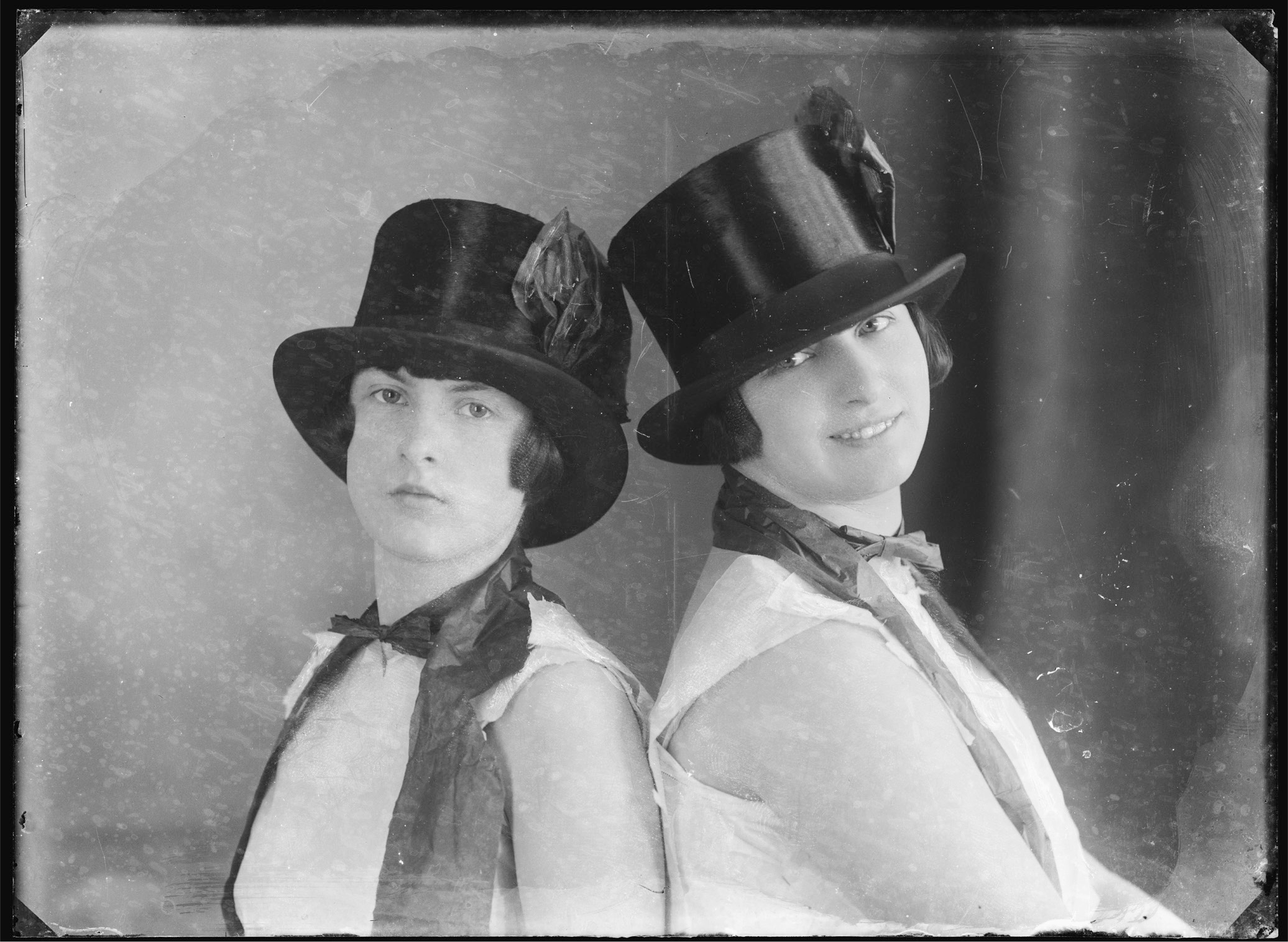
Figure 1
Portrait of Tonny (left) and Sophie Vlaanderen. https://hdl.handle.net/21.12106/ff9acb5f-72f3-5d6e-1356-5ea597328d93 . All illustrations are scans from undated glass negatives from the Vlaanderen collection and can be consulted on the website of the archive: https://www.regionaalarchiefalkmaar.nl/collecties/beelden/beelden-2/
In a sense, the Vlaanderen studio was an ordinary portrait studio as they existed in every city and town in the Netherlands and abroad since the last quarter of the nineteenth century. But in other ways it was extraordinary. First of all, because Tonny Vlaanderen persisted in working with obsolete techniques (glass plate negatives). Although glass-plate photography had become antiquated in the post-war period, the investment in know-how and equipment must have prevented the sisters from transferring to working with celluloid negatives. Secondly, because the slightly eccentric sisters became locally well-known Alkmaar residents and they even earned a brief stint of nation-wide media attention, mostly long after their active career as photographers. Thirdly, because an extensive collection of the studio has been preserved this allows an inside look into the practice of an ‘ordinary’ photo studio in the post war era and how this practice intertwined with the social life of the sisters Vlaanderen. And incidentally, the work of the Vlaanderen sisters provides the reader with a portrait of an era, the baby boom and its aftermath, when large families were a common sight, a society celebrating its momentous anniversaries, engagements, marriages, childbirth and parenthood.
This essay strolls through the history of the Vlaanderen studio by juxtaposing the social personas of the sisters – which they actively tried to shape through their public appearances in the street as well in the media – to their photographic craftswomanship that was founded on their artisanal experience with staging their clients in front of the glass-plate negative camera and the subsequent processing and post-production (retouching) of the negatives.
The story of the Vlaanderen studio contributes to media historiography by investigating the place of studio photography in everyday life as a form of locally embedded crafts(wo)manship, rather than approaching it as an art form. In particular, this account of the Vlaanderen sisters focuses on the latter days of the photo portrait studio, which has received scant scholarly attention. The historical narrative of the professional portrait photo studios emphasises the nineteenth century and appears to run dry around the time of the Second World War. Historical surveys of photography generally treat the portrait studio in the nineteenth-century section, with scant attention for the twentieth-century ‘epilogue’ of the professional portrait studio.1 The historiography maps how, in the course of time, photographers broke away from the painted portrait as their key aesthetic reference and developed their own stylistic models.2 A characteristic (early) twentieth-century example is the introduction of artificial lighting allowing the glamour photography typical of the Hollywood star portrait.3 But in the second half of the twentieth century, the golden age of the photographer’s studio was over: the wide diffusion of amateur photography had structurally transformed and deflated the economic viability of the portrait studio, although the phenomenon remains in existence until the present day.4
Little scholarly work is available about the ‘ordinary’ photo portrait studio in the post-war Netherlands, notwithstanding interesting recent exceptions such as the work on Frans Grummer in Maastricht, or on the lesser-known studio work of the accomplished architecture photographer Werner Mantz.5 An important point of reference is the in-depth study of the Merkelbach studio, which examines the Amsterdam-based family business that operated between 1913 and 1969.6 The post-war operation of the studio, even though it comprised over two decades, is covered in less than a single page in the chapter on the studio’s history. The studio had, by that time, become ‘an oasis of tranquillity’ that no longer seemed to fulfil the vibrant pivotal role in well-off society that it had played earlier.7 This suggests a period of stasis, tinged with a nostalgic longing for better days. This article does not debate this proposition, but argues that this later period does deserve a closer look, during which the photo studio remained an prolific place of cultural production, as the Vlaanderen studio did, capturing a kaleidoscopic image of the people of Alkmaar and its surroundings.
The Merkelbach company was a high-end establishment where the mighty and famous came to immortalise their likeness in silver molecules on paper. The Vlaanderen studio was a local shop with nowhere near the same prestige or economic value. Still, noteworthy parallels exist between Mies Merkelbach who ran her Amsterdam studio until it closed in the late 1960s, and Tonny and Sophie Vlaanderen, likewise women entrepreneurs, persisting to work with techniques that were becoming rapidly outdated (monochrome glass plate negatives and retouching), living in a nostalgic atmosphere and also closing the shop not long after Merkelbach did (1972) when reaching a pensionable age.
On another level, an interesting similarity exists: both studios have left us a colossal legacy of glass plate negatives, whereas most of these photo studio inventories have been lost.8 This allows us to investigate more closely the pictorial practices in a small professional photo studio in the 1940s, ‘50s and ‘60s. The Vlaanderen collection contains around 20,000 glass negatives, a few hundred original paper prints, a collection of personal papers, and -which is quite unique for the Netherlands- a complete inventory of both the studio and the dark room. The vast negatives collection is hardly accessible because metadata is not available. Tonny Vlaanderen could find her way between the long rows of plates by memory and never documented the archive so an administrative record was never written down. A random sample of about 1500 glass plates was digitised in 2012 and can be consulted online.9 In 2013 the Stedelijk Museum Alkmaar devoted an exhibition to the Vlaanderen studio.10
This account is based on the materials in the Vlaanderen collection, that were inventoried and studied by the author during a guest curatorship in 2011-2013, supplemented by newspaper sources, including a series that appeared in 2008 in the Alkmaarder Courant in which memories of former patrons of the studio were recorded. The article starts out with a brief historical overview of the studio as a family business that harks back to the 1860s. Then the focus shifts to the social position of the sisters and how they managed and performed their personas, in an attempt to control how they were perceived by their contemporaries and by posterity by presenting carefully crafted portraits both in mediated and in daily life appearances in public. Finally, we turn to the photographical images that originated in the Vlaanderen studio that were also meticulously shaped both during the staging of the portrait and in the post-processing through retouching. In conclusion, we will seek out the connections between the personal and the commercial image crafting by the Vlaanderen sisters.
A century of studio Vlaanderen
Media coverage of the Vlaanderen photo studio consistently mentions its respectably long history dating back to more than a century. The anniversaries in 1947 and 1967 were celebrated extensively and were reported in the local newspapers. The respectable lineage of three generations of portrait photographers gave the studio an aura of craftsmanship and tradition, the groundworks for the nostalgic discourse that still permeates memories of the studio and its products.
Tonny and Sophie’s grandfather, Pieter Vlaanderen (1840-1878), born in Amsterdam, took his apprenticeship with photographer Johannes Hulk, who was in charge of the Amsterdam photography studio De Rembrandt around 1860.11 Like many other photographers of this period Hulk had received a fine arts education. He became a trader in art supplies dedicated to the new technique of photography when it gained popularity during the 1860s. Pieter Vlaanderen became his business partner in 1864, but their association already ended after three years, when Pieter Vlaanderen opened his own studio in Alkmaar on the 6th of May in 1867, also called De Rembrandt.12 Initially the studio was located at Verdronkenoord D34, but apparently business was going so well that in a short time he could afford an establishment at Verdronkenoord 95 with a bigger garden, which enabled him to expand his daylight-studio. At the time daylight was indispensable for a photography studio. In 1873, Vlaanderen started a collaboration with business partner Camille Steensel van der Aa, a Belgian photographer. After the death of Pieter Vlaanderen in 1878 Steensel van der Aa continued the business, assisted by the widow of Vlaanderen, Teuntje Molenberg. She remarried Jacques Chrispijn, who also became a participant in the company in 1884. The studio, which during the following century would be moved to new locations on a regular basis, was relocated to the Langestraat.
Of course Vlaanderen and partners did not run the only photo studio in town, as every similar sized city had its share of portrait studios.13 The yellow pages show that multiple photographers were active in Alkmaar at the time.14 Just like some of their competitors in Alkmaar, the Vlaanderen studio was also active in the surrounding region. During certain periods of the year there were temporary branches in Den Helder, Hoorn and Schagen. Presumably, this was the case during special occasions, such as yearly markets, fairs, or other events that attracted many visitors.
The son of Pieter Vlaanderen, Leonard (1871-1941), learned the trade under Steensel van der Aa. Leonard left for Amsterdam in order to work as retoucher in the studio of M. Buttinghausen, and then for Willy Zimmerman. After his apprenticeship he returned to his hometown and opened his own studio on July 31, 1902. After several relocations the studio found its ultimate place of business at Oude Gracht 289. Here, Leonard’s daughters Tonny and Sophie would live and work for the rest of their lives (see figure 2). An advertisement from 1933, published right before the busy period around the children’s feast day Sinterklaas, indicates that the studio was open until 9 in the evening – apparently Leonard had already been working (for quite some time?) with artificial lighting. According to the advertisement, the photographer would also work on location, outside of the studio.
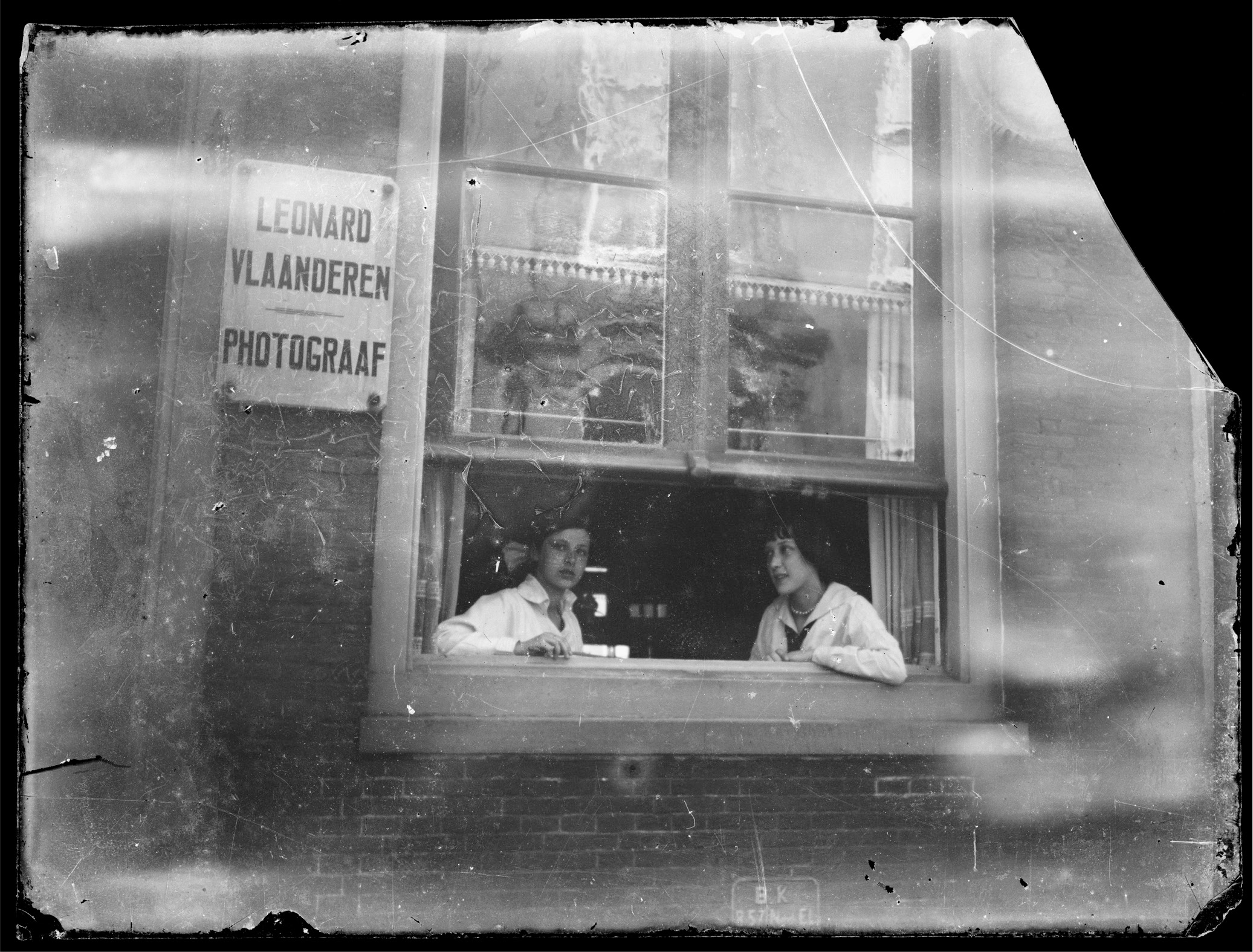
Figure 2
Sophie and Tonny Vlaanderen sitting in the window of the studio of their father, photographer Leonard.
Already at a young age, Leonard’s daughters worked in the shop. Initially they would welcome the customers, deliver orders, and sell postcards in the waiting room. According to Tonny’s own statements, she already learned the retouching of negatives at the age of twelve. Leonard fell ill in 1923, and consequently his wife Guurtje (1876-1955, maiden name Twisk) and their daughters took over the company’s day-to-day management. In 1938 Tonny advertised under her own name for the development and printing of films. In 1939 the company was put in the names of both sisters, before the death of their father, who passed away in 1941. The shop’s interior was redesigned for the reopening in November 1940, promoting prints in ‘the most modern tints’: prints varying from green, through velour (brown-black) to black.
It turned out that the war brought favourable business conditions. Looking back in 1967, Tonny recounted that the studio had never been busier than during the war years. Mandatory identity cards forced citizens to have a passport photo taken, and many customers would send pictures to relatives (forced to) labouring in Germany. German soldiers would also have themselves portrayed in studio Vlaanderen to send their pictures to relatives back home.15 The collection contains many glass negatives with members in uniform from the Kriegsmarine, Wehrmacht, and SS (see figure 3). In addition, Sophie recalled in 1993 that many customers ordered reproductions of pictures of deceased family relatives. When the supply of electricity was interrupted in wartime, Tonny could benefit from her skills in daylight photography that her father had taught her.16 The acquired craftswomanship of working with the glass plate camera and the development and especially the retouching of the negative prompted Tonny Vlaanderen to adhere to a method of operation that was rapidly becoming outdated with the introduction of celluloid negatives, a technology that was never introduced in the Vlaanderen studio.
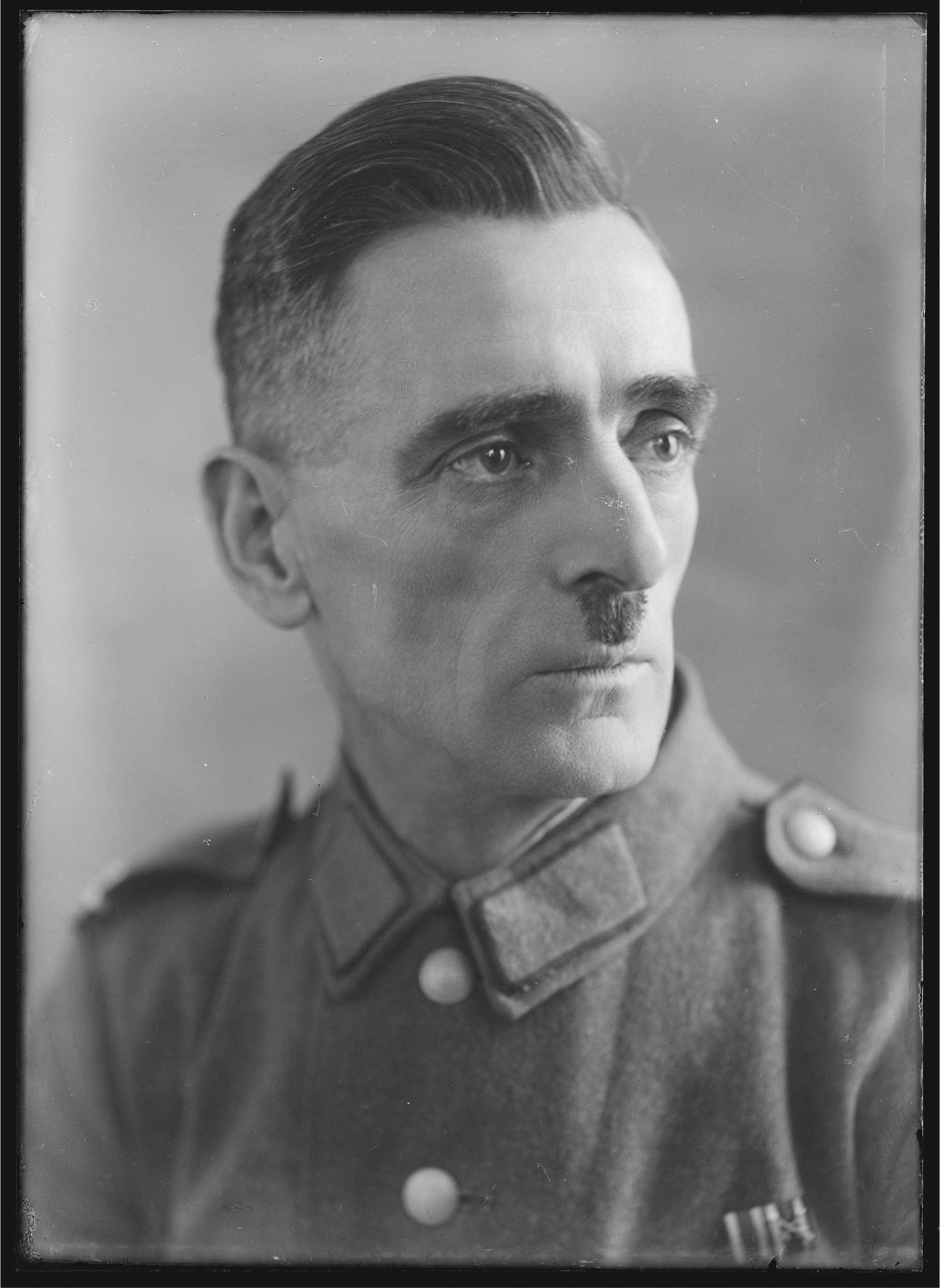
Figure 3
Portrait of a man in military uniform.
(Self) Portrayal of the Vlaanderen sisters
Especially the elder sister Tonny, who often was the one speaking during interviews, was highly self-conscious in her interactions with journalists. Tonny was as scrupulous in controlling the way she and her sister were depicted in newspaper coverage as she was meticulous when portraying her customers, retouching the negatives until all little spots and wrinkles were refurbished. In 1960, a reporter noted that Tonny had been thoroughly prepared: ‘In her lap rests a densely written sheet of paper. It is a short summary of her life, her career.’17 A typical example of how Tonny managed to direct her media presence is a successful censorial exertion – or perhaps, more appropriately, a ‘retouching’ – dating from 1967. In honour of the centennial of the Vlaanderen studio, the photographers’ trade journal Mededelingen NFPV dedicated an article to the atelier. A proof of the article (preserved in the Vlaanderen collection) contained a phrase about the brother of Tonny and Sophie, from whom the sisters had become estranged years earlier, and whose name and existence was a taboo in the residence at the ‘Oude Gracht.’ When the article was published in the local newspaper, the reference to the brother had been left out.18
In their media presentation, the Vlaanderen sisters would consciously try to shape the perception that posterity would have of them. Already in 1971 Tonny Vlaanderen indicated that she intended to donate the inventory of the studio and the darkroom, which included the massive collection of glass negatives, to the municipal archives. The women attached great importance to the idea that all the negatives and the materials in their studio and darkroom would be preserved for future generations. The urge to preserve the past pervades the narratives about the ‘dames Vlaanderen.’ In a sense, it also became part of their trademark, because Tonny Vlaanderen resolutely continued to use equipment and techniques that had been utilised by her father, or even her grandfather. There was a practical reason for this: Tonny had a talent for retouching. With a flimsy pencil she would emend the photographic emulsion in order to remove undesired shadows, as well as irregularities such as wrinkles, pimples and undesired shadows – Photoshop avant-la-lettre. Individuals photographed by Tonny Vlaanderen would receive an idealised representation of themselves, that was not only shaped by the meticulous staging, but also determined in ‘postproduction’ by painstaking retouching. This artisanal technique was rooted in the past. The craftsmanship, embedded in a respectable family tradition passed on by father to son to (grand)daughter became a business characteristic of the Vlaanderen studio.
In the discourses that fed into the personas of the Vlaanderen sisters, which they actively tried to sculpt to their own preferences, two themes stand out. First, the nostalgic treatment of the past and secondly, the unmarried status of both sisters and the moral and social connotations that were associated with their household of two single, unmarried sisters living together during their entire lives.
The first theme, the nostalgic discourse, places the sisters, their home, and their studio in a romanticised past. The presence of the Vlaanderen sisters in local media did not emerge until the 1960s, during the last years of the enterprise’s operation. And only after their retirement did they start appearing in the national media, from the late 1970s onwards. But already during an interview in 1960, a local reporter imagined the sound of carriage wheels in a stately fin-de-siècle Alkmaar. He regarded the ladies as ‘the last representatives of a certain social class in Alkmaar. Their attitudes and mannerisms are characterised by a certain reservation that is not of our times.’ An article from 1979 recounted that the ladies originated directly from the Victorian period, and in 1991 their studio is described as a ‘museum in and of itself.’ Similarly, several national television and radio portrayals of the sisters evoked an idealised yesteryear.19
A recurring topic that connects the themes of nostalgia and unmarried household format, is the special relationship between the Vlaanderen studio and the Cadet School, which had been located in Alkmaar between 1893 and 1924 – so the school closed when the sisters were in their twenties. It provided training to young officers and mainly attracted recruits from the higher social ranks. Supposedly, the cadets provided Leonard Vlaanderen with a steady stream of business. Among the limited number of digitised glass negatives in the collection presumably made by Leonard Vlaanderen, several depict young soldiers in full dress. When a reunion of the cadets was celebrated in 1953, the route of the procession deliberately passed by the Vlaanderen studio, as was explicitly mentioned in the newspaper reporting. The local paper reminisced that the Vlaanderen studio had acted as a kind of living room for the cadets, a fixed hangout where they could go for a chat and a cup of hot chocolate. On the occasion of the 1953 reunion, Tonny Vlaanderen had reprinted old photographs and posted them in the room where the meeting of the old cadets had taken place. In 1973 there was another reunion of old cadets, and once again the ladies Vlaanderen featured prominently in the newspaper report with a photo.
The marital and sexual status of the sisters was a more implicit but constant motif in their media portrayal. Just before their death, the sisters spoke more freely in public about this subject. Tonny told a reporter from national paper Het Parool that she once seemed to have found her love, a cadet, no less. But he left for the Dutch East Indies without an engagement and when he returned, Tonny was hurt too deeply to consider taking him back. The previously always unspoken topic of sexuality even came up in this interview, albeit somewhat concealed, when Tonny explained how the family dealt with feelings of ‘fiery love’:
“Splash on a bucket of water, that will freshen you up.” And when we ourselves were in danger of getting a little excited, [our mother] would always hold us back: “It is no big deal.” Mother has always guarded us well.20
The fact that both sisters were able to manage completely autonomously during most of their adult life without the presence of a male family member (father, brother, husband), was not explicitly mentioned in the various media expressions, even if it was an deviation from the norm of the nuclear family that prevailed during the period they were professionally active.
The Vlaanderen sisters were a quite well-known appearance in the Alkmaar cityscape during the 1980s and 1990s. In their colourful outfits of old-fashioned dresses and matching hats, jewellery and haircuts, they would go for their customary tea at a local lunchroom, sometimes even apprehended by tourists requesting them to pose for a picture.21 Their emphasis on a well-kept appearance far predated the 1980s. In a 1960 report to a local journalist, Tonny stated that the sisters made their own clothes, and also styled their hair themselves. According to their own account, they were the first to use facial make-up in Alkmaar, resulting in the mockery by some of their fellow townsmen. Tonny actually wanted to be a stage star. The glamorous juvenile self (?) portrait in figure 1 betrays some of this sentiment. Also, a vinyl sound recording is preserved of Tonny Vlaanderen performing a song from the operetta Madorah. During an interview in 1991, Tonny vividly recalled a youthful visit to a performance of cabaret star Fien de la Mar. She remembered the lyrics word-by-word.
Their characteristic appearance sometimes resulted in ridicule from the community, and according to the sisters, it was retrospectively even viewed by them as an obstacle to finding a marriage partner. Tonny claimed they were too artistic for the provincial city of Alkmaar and certainly for the men there. Ironically, during their lifetimes, the sisters seldom left the same city where they apparently felt so misunderstood at times. They never went abroad, Alkmaar was the centre of their world. The picture emerging here shows two women who found themselves in a somewhat awkward social position, as Tonny illustrated already in a newspaper report in 1967:
They called us here frivolous, wasteful, because on Monday my father did nothing, then we went, in the good days, with the carriage to Bergen, and she (Sophie) hidden at the bottom [of the carriage], because of course she was not allowed to leave school. Then we’d be at the beach all day, we’d be the first!22
In an interview with Sophie Vlaanderen, after the death of her sister, she paints a more bitter picture, one of social exclusion even. During the Second World War the sisters had done well, commercially. It was whispered that all these merits could not have been attained legally, and that there must have been prostitution involved. According to Sophie, such slander would have been the reason why gentlemen did not dare to court them.
“In town, we got the reputation that we were very proud women,” says Sophie. “But that was only an illusion. We kept our pride. That’s quite different. To show that we weren’t broken by all that gossip.” “We never went out. Not to the theatre or anything, because that’s where we had the chance to run into those people who had smeared us.”23
Tonny Vlaanderen’s style of portrait photography
Unlike the sisters’ sometimes ornate appearances in public, Tonny Vlaanderen’s photographic style was fairly minimalist, far from being either exuberant, monumental, or self-reflexive. And neither was it instilled with nostalgia but rather straight-forward and emotionally aloof. Even if the portraits might look old-fashioned in the eyes of the present-day beholder, they were not out of touch with contemporary taste. Tonny Vlaanderen worked with neutral, plain grey backgrounds that markedly differ from the more elaborately furnished decors her father used. The fluting of a pilaster positioned in the setting is the only shape in the background of the studio that can be recognised in many of Tonny’s photos (see for example figures 4, 5, 15 and 17). It seems that the studio interior remained the same for many years, if not for the entire period that the sisters ran it. Usually, if props were used, it was in a relatively discrete manner, not demanding a lot of attention. Figure 5 is one of the few exceptions that confirm the rule. In arranging a group tableaux, the furniture was used functionally and to a large degree obscured from view (see for example figures 4 and 6). The studio did have an inventory of smaller objects that recurred as props, such as a vase with flowers (see figure 7) and several toys for the children portraits: the stuffed animal in figure 8 (see figure 8) recurs in many portraits and has been preserved in the collection of the Stedelijk Museum Alkmaar. Pictorial variations originated mostly from the subjects themselves: in their physical features, and the costumes and props (such as the occasional cigarette) selected for the session (see figures 9 and 10).
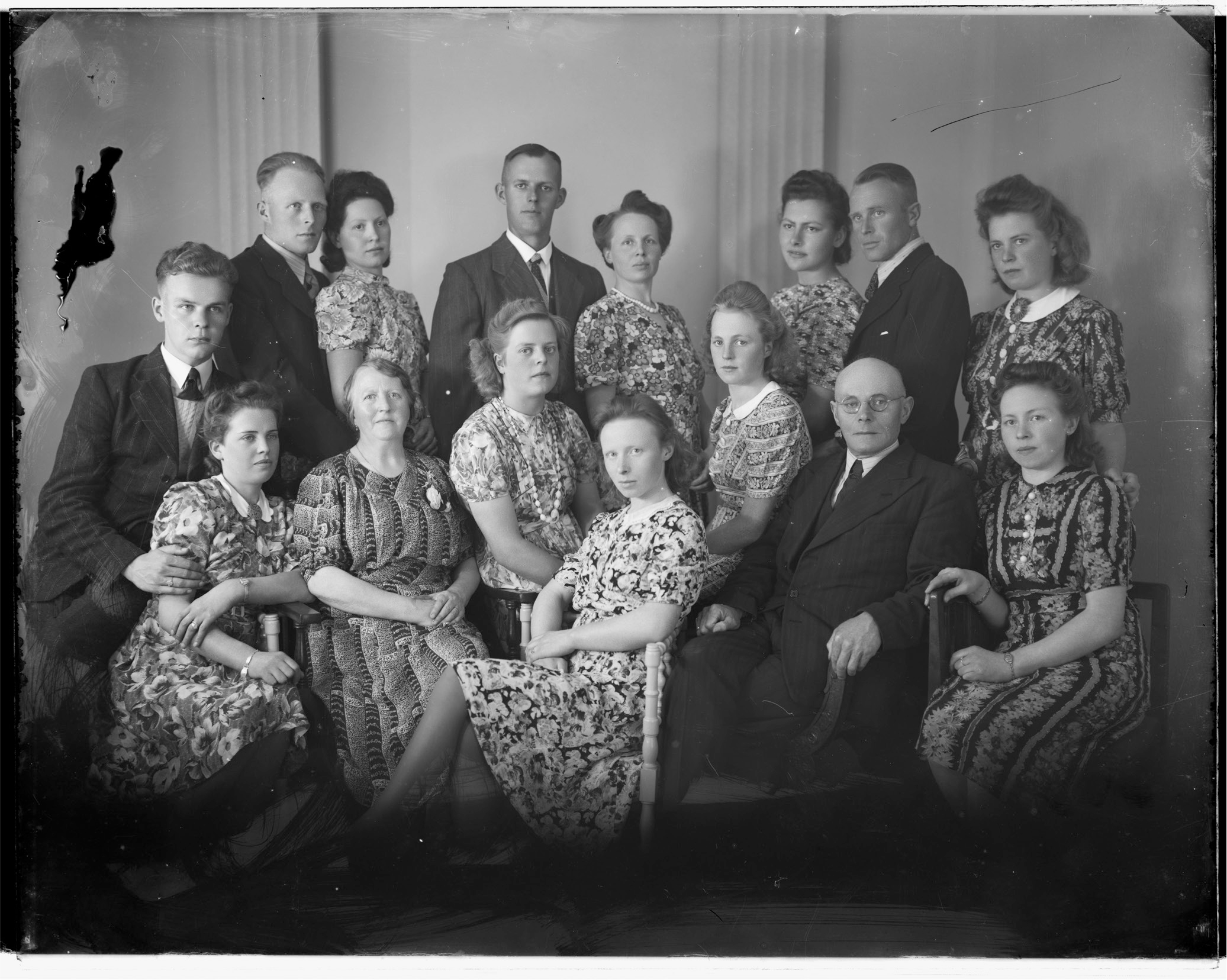
Figure 4
Group portrait.
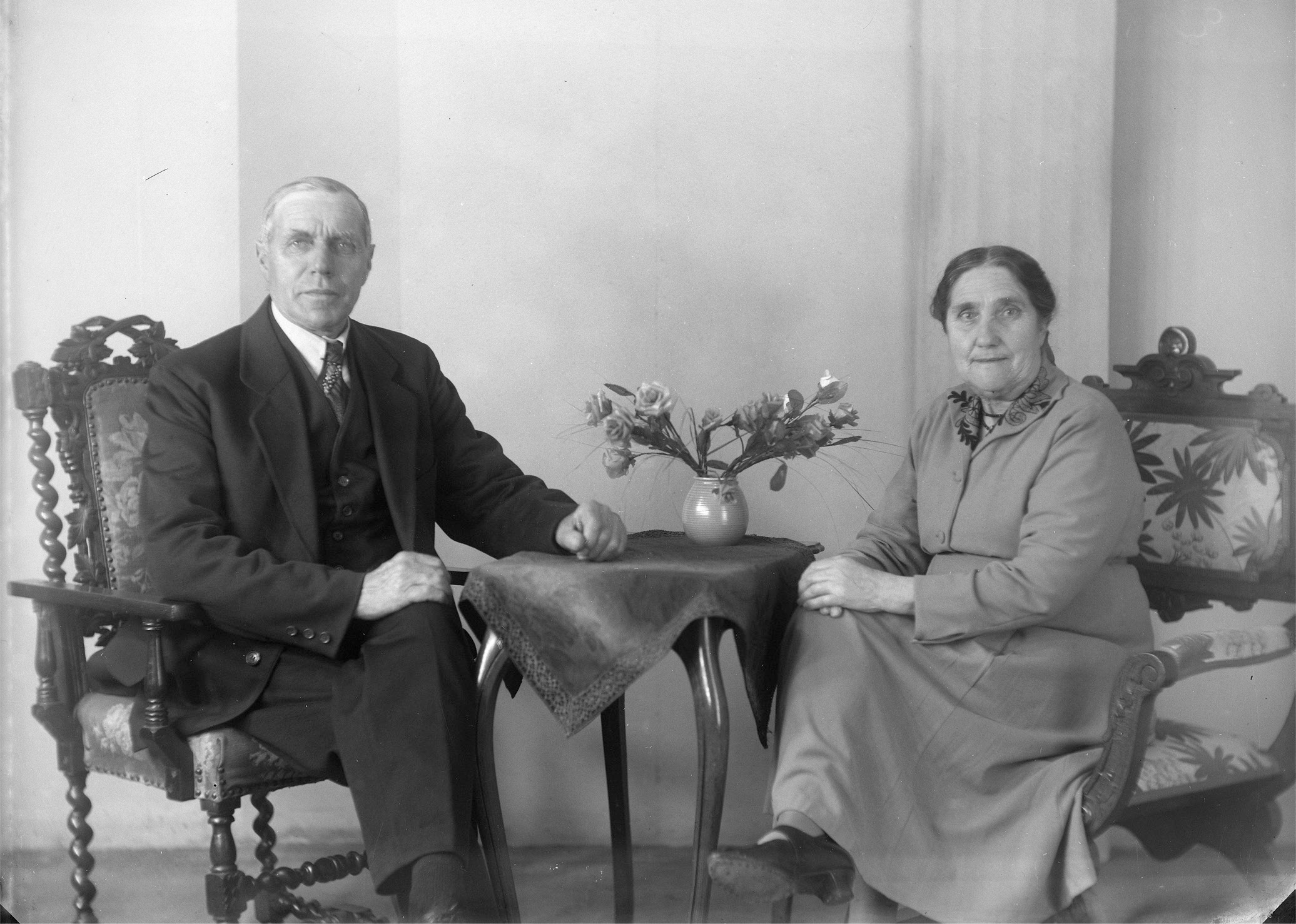
Figure 5
Portrait of an elderly couple seated at a table.
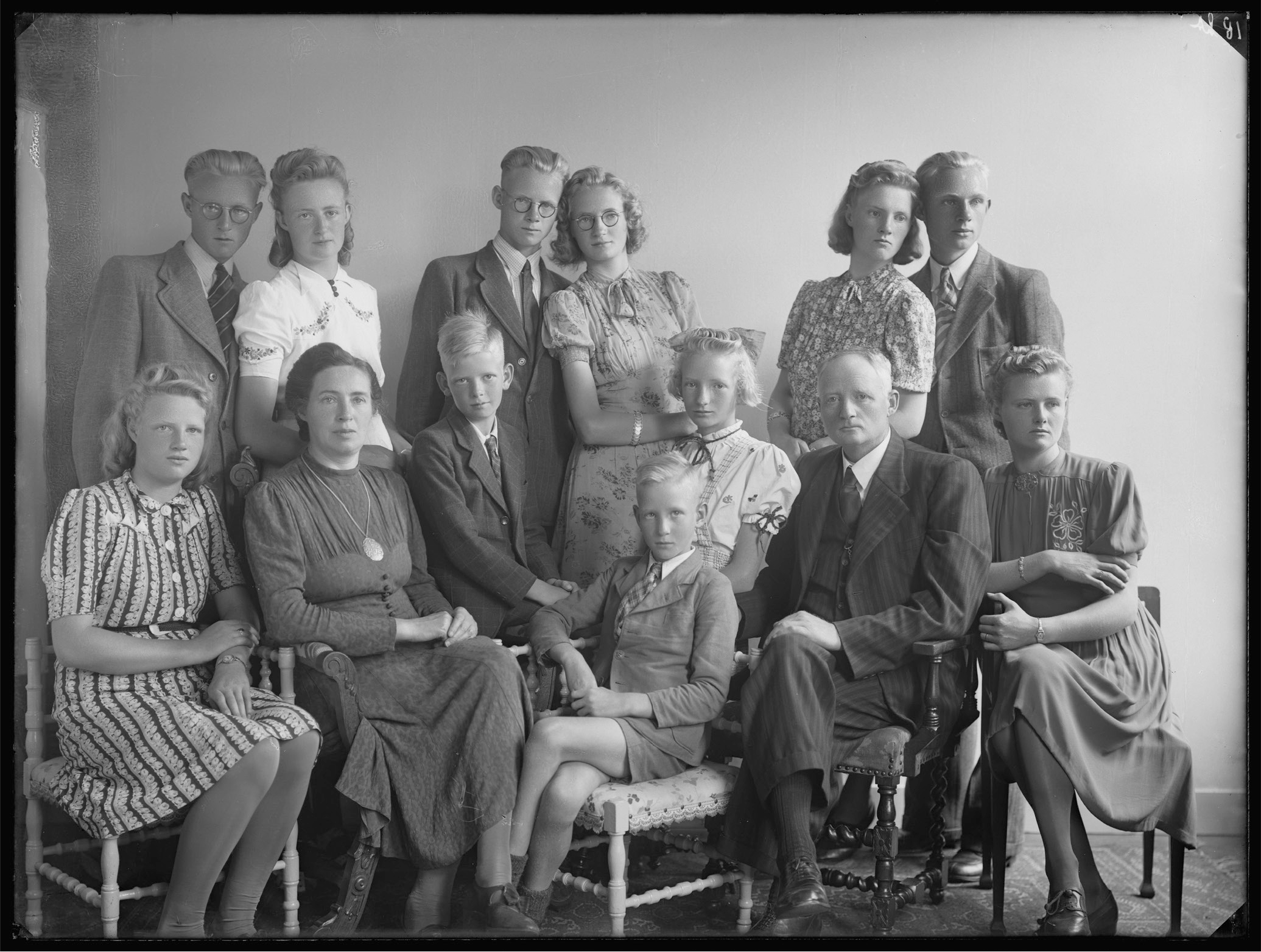
Figure 6
Group portrait.
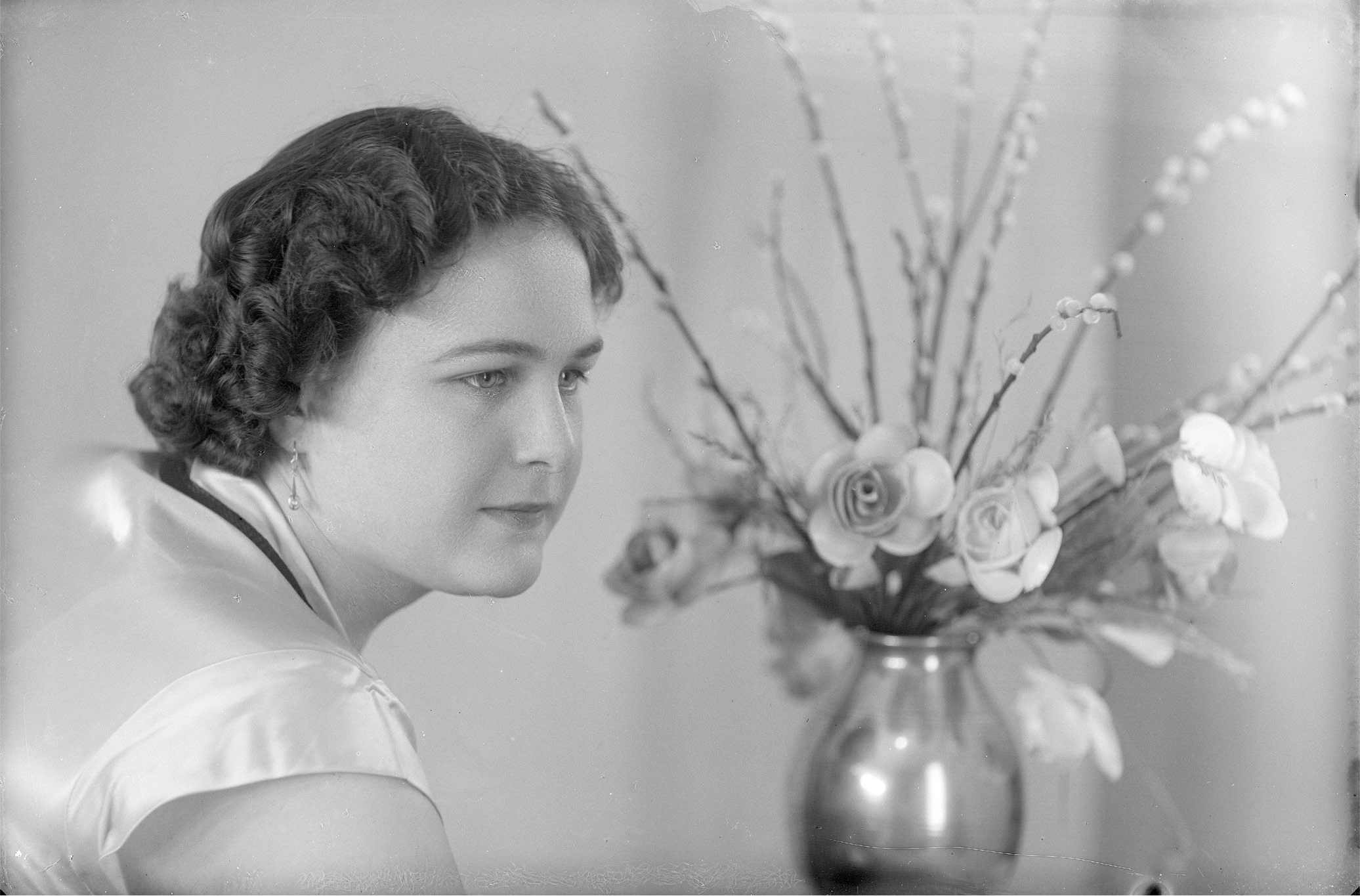
Figure 7
Portrait of woman with flower vase.
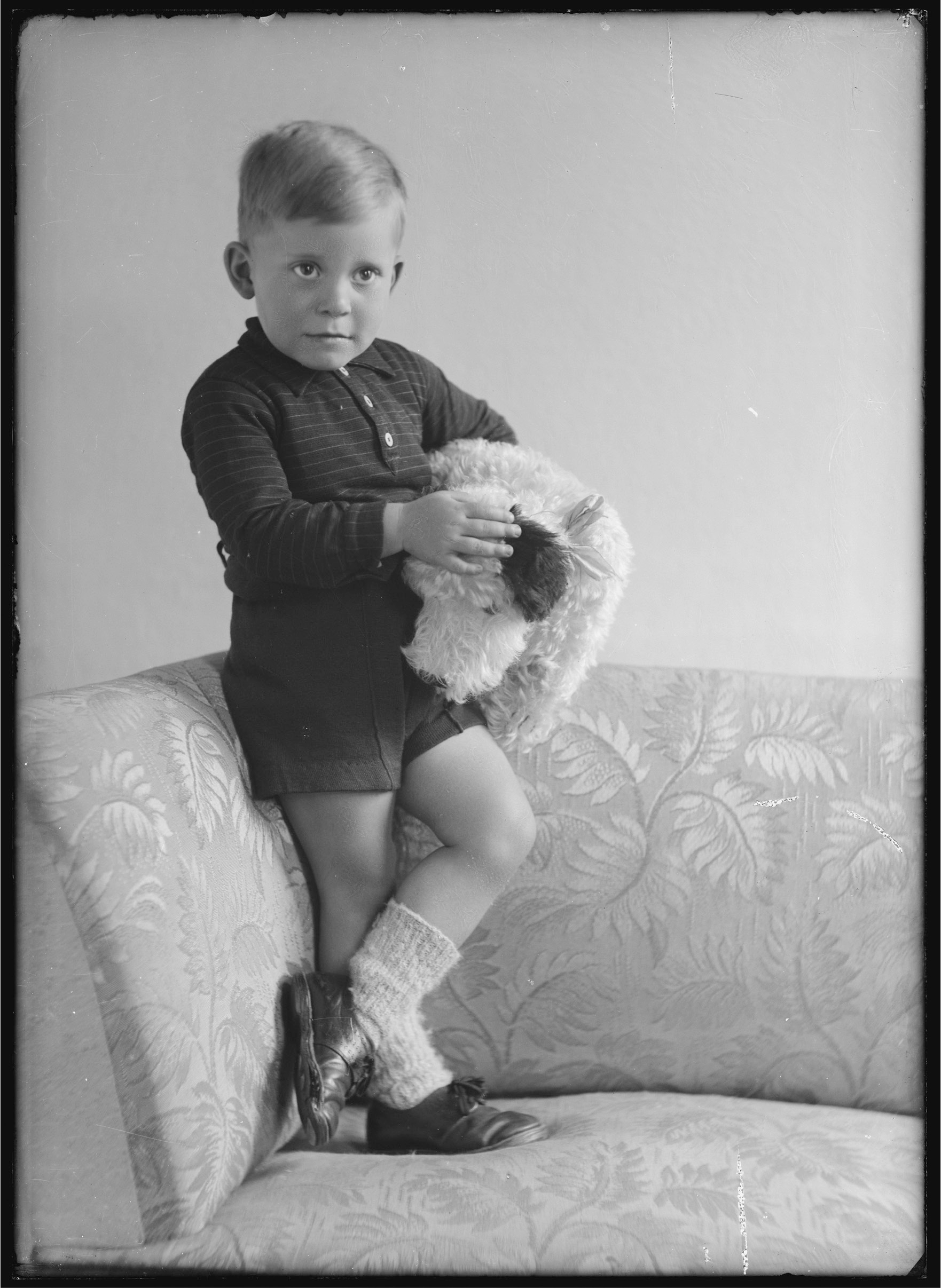
Figure 8
Portrait of a boy with stuffed toy.
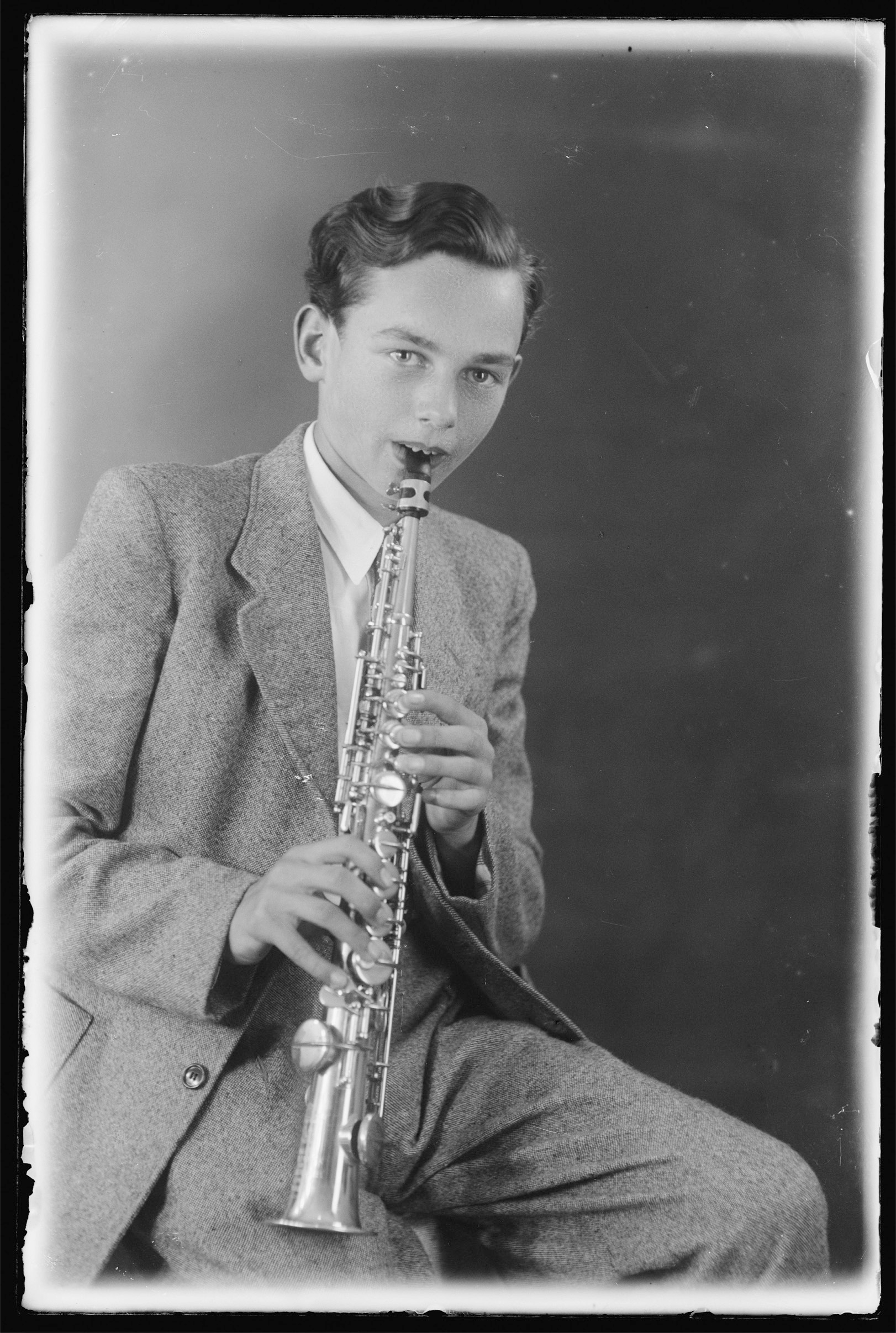
Figure 9
Portrait of a boy with wind instrument.
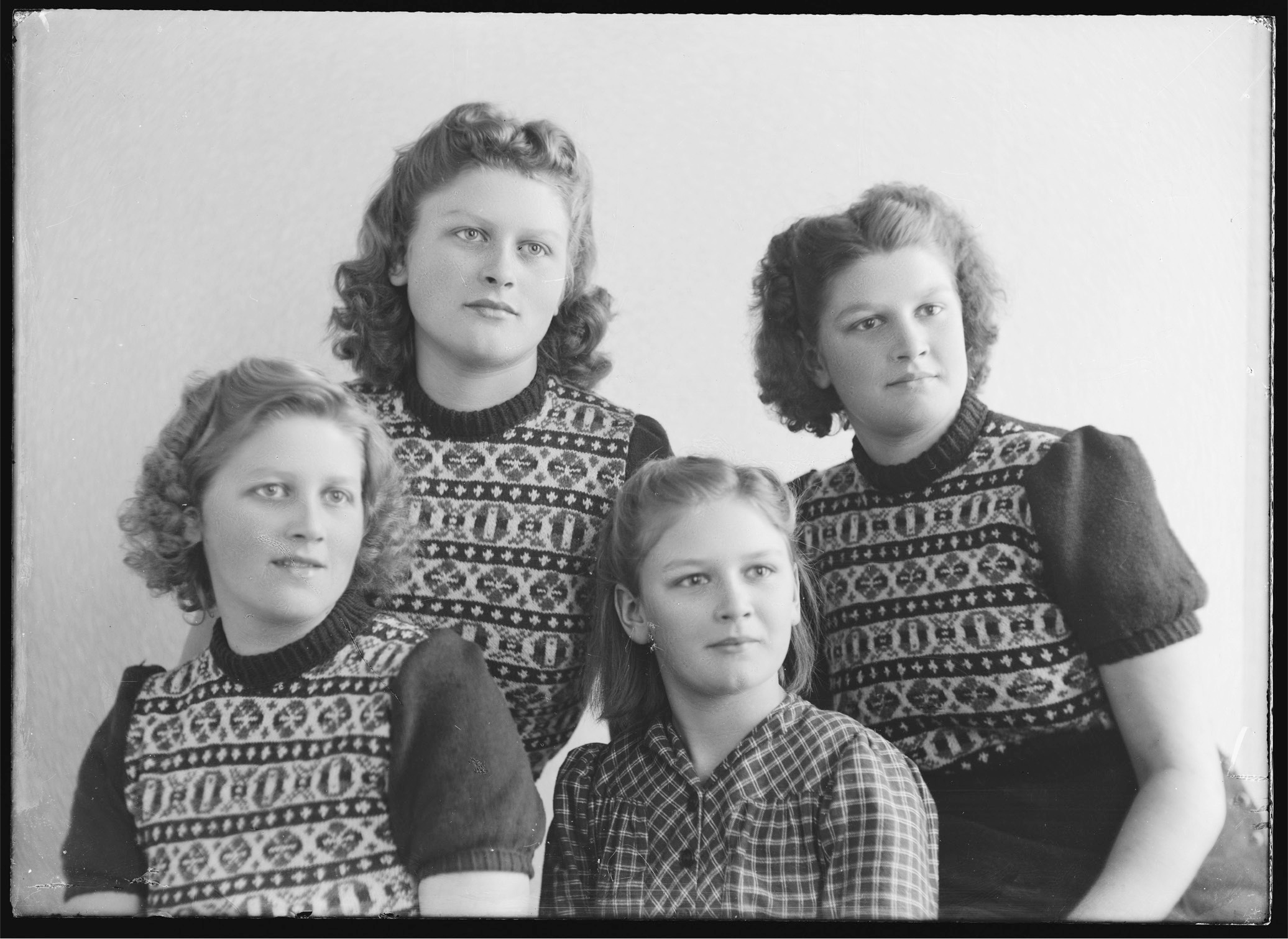
Figure 10
Portrait of four young women, presumably sisters.
In her lighting plans, Vlaanderen did not look for spectacular effects either. She did use subdued backlighting to detach the subjects from the background, often keeping the back wall out of focus. A regularly used set-up highlighted the back of her subject’s hairdo (see for example figure 11). In general, she used soft light, preventing hard contrasts.
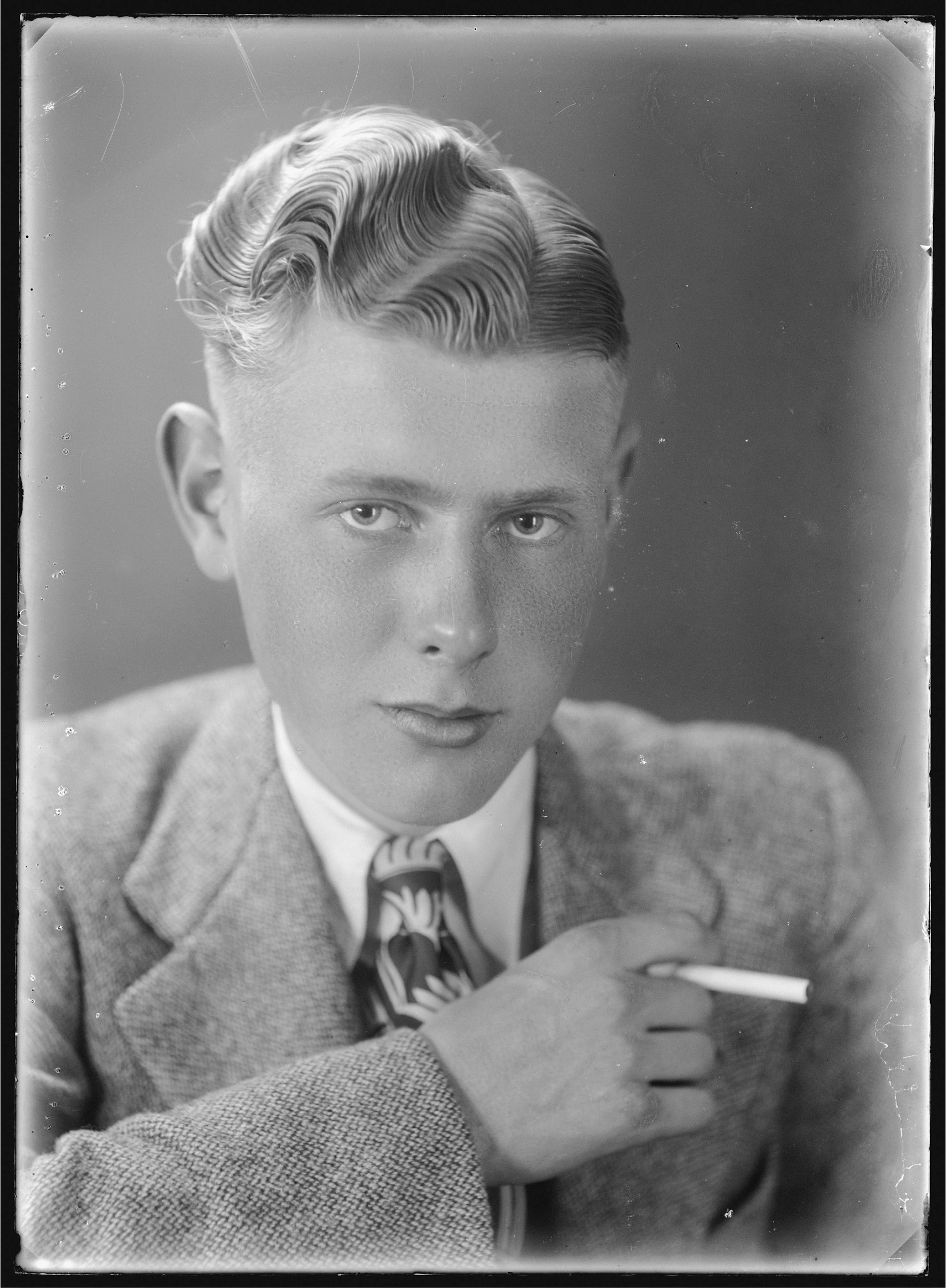
Figure 11
Portrait of young man with cigarette.
Tonny appears to have had a repertoire of regularly used figure arrangements. Only seldom did she deviate from this standard range for a more rarely used composition, such as the triangle-shaped composition in figure 12, or the three-quarter profile seen in figure 7. The placement of figures reflected social family relations: parents were sitting, sometimes with young children in their lap, and (other) young children in the foreground. Around and behind the parents stood the elder children, sometimes with their partners (see for example figures 4 and 6). Evidently, this was no invention of Tonny Vlaanderen but a standard formula used by portrait photographers, like her father Leonard had done before her (figure 13 is probably a group portrait produced by Leonard Vlaanderen, judging from the decor and the periodisation of the dress).
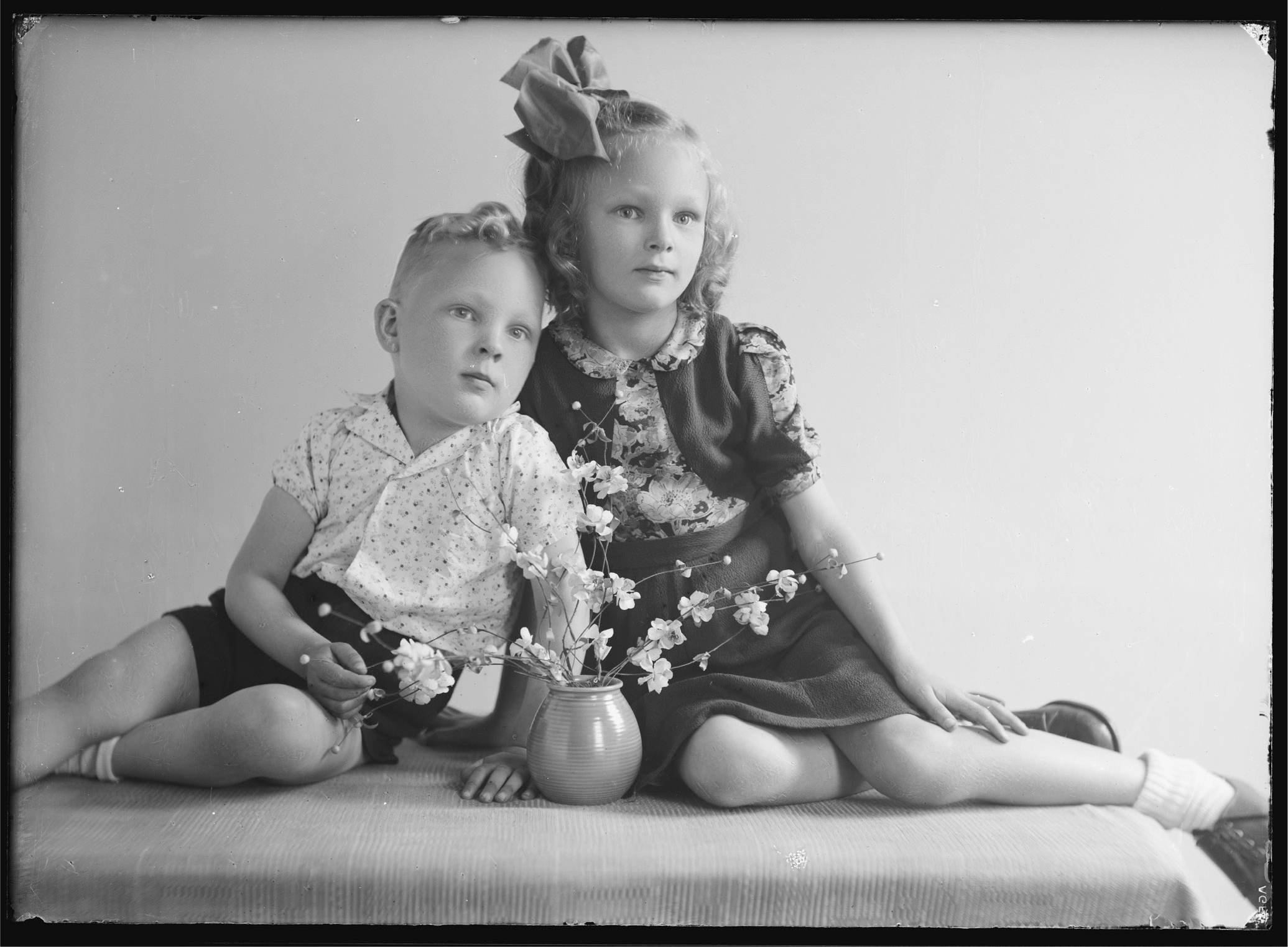
Figure 12
Portrait of boy and girl and flower vase.
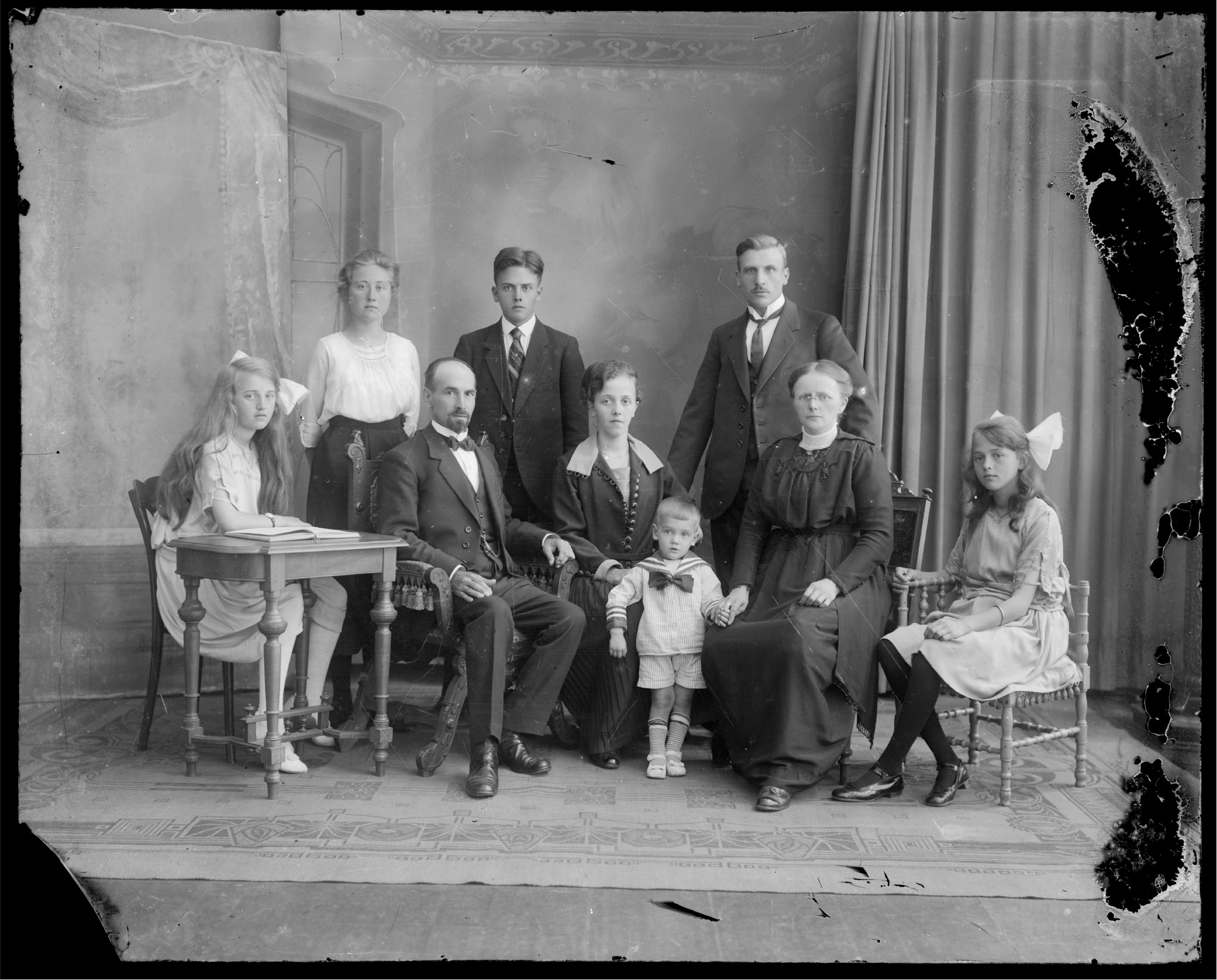
Figure 13
Group portrait.
The direction of glances of the portrayed seems to have been arranged according to fixed templates, either directed to gaze at a point next to and behind the camera (see figure 14), and in other cases directly into the camera (see figure 15). And judging from the portraits, customers were normally not invited to smile. Both of these aspects derived from the photographic evidence can be confirmed by a very different source: the memories of former patrons, chronicled by the local newspaper Alkmaarder Courant in a 2008 series on the Vlaanderen collection. One of the portrayed, Coen Ouweltjes, recalled a family portrait session in 1968: ‘They were rather strict and we were not allowed to smile.’24 Tonny’s severe and serious instructions not to laugh, led to fits of giggles with some of her younger customers, instilling the portrait as an object to preserve family memories with very different kinds of recollections than the photographer had intended: Ria Wagenaar-Donker reminisced that the session in which Tonny Vlaanderen photographed her and her family in 1970 still functions as a source of amusement about the stern treatment they received during the sitting.25
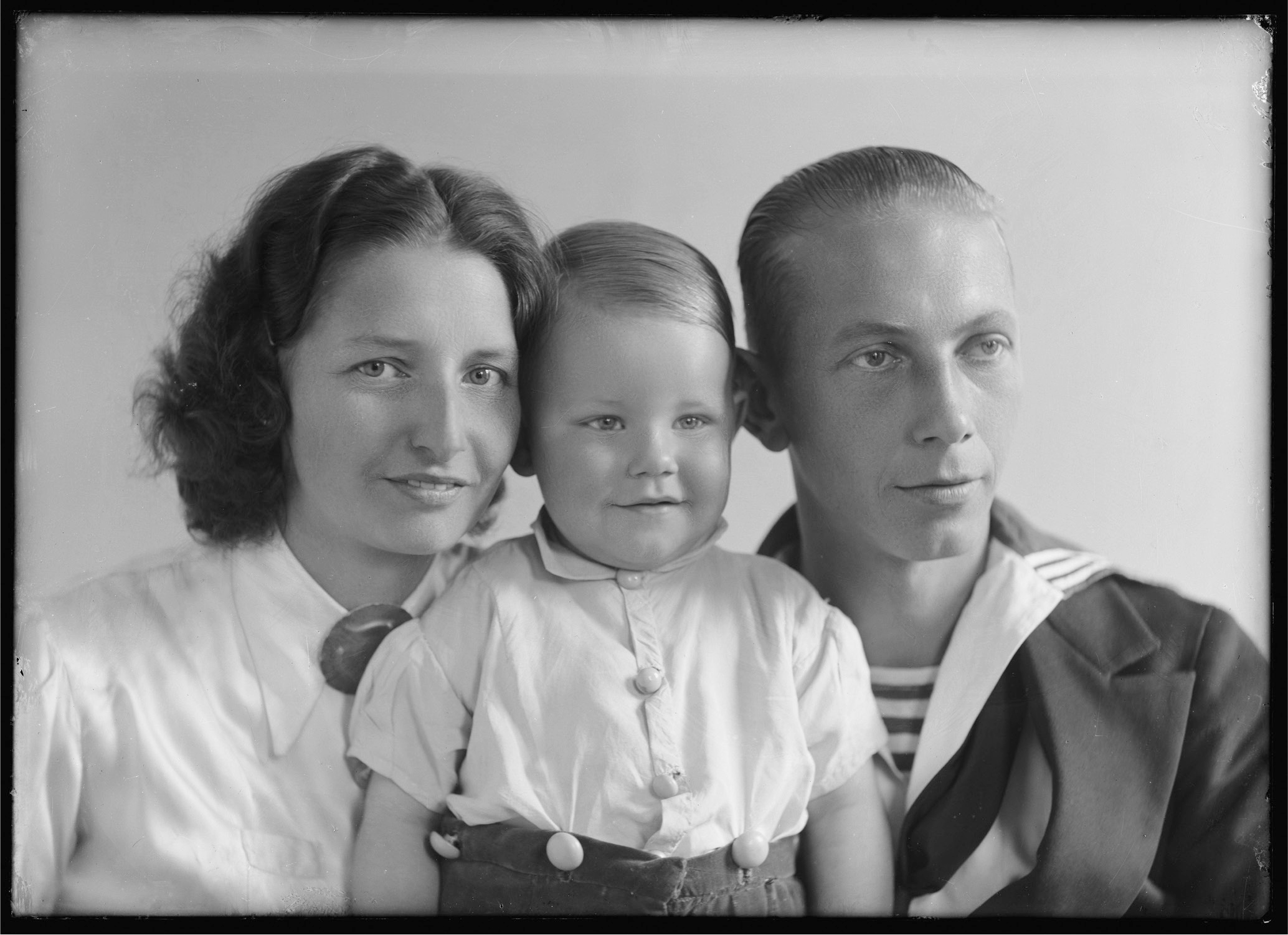
Figure 14
Portrait of two adults and a child.
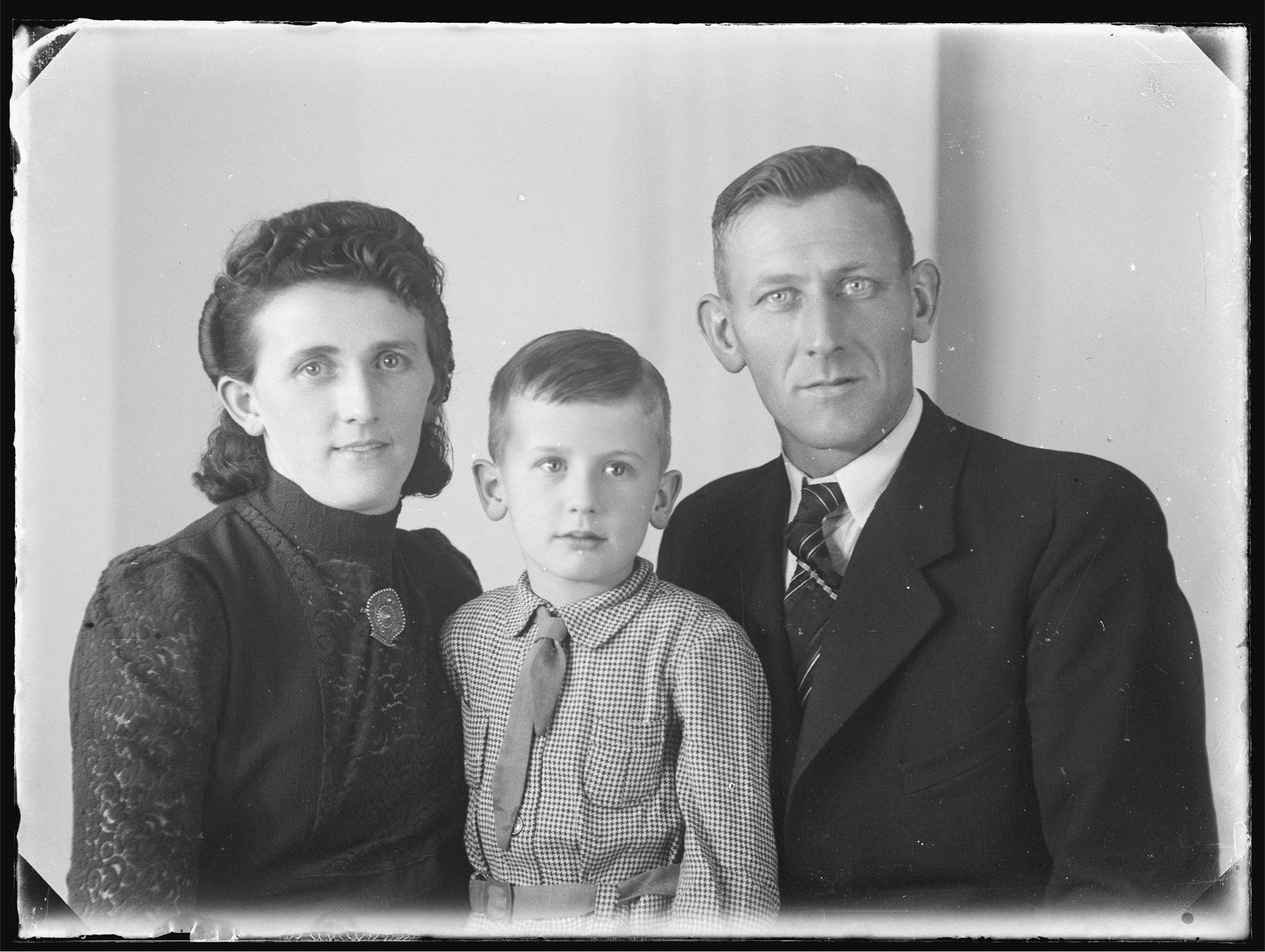
Figure 15
Portrait of two adults and a boy.
Tonny Vlaanderen was remembered to have been very strict and demanding in her instructions, also with regards to the direction of the gaze during portrayal. We know from these memories that a family portrait session in the Vlaanderen studio – usually for anniversaries and other special occasions – was often considered a special outing in itself.26 A recurring subject in these recorded memories are the lengthy preparations. It took Tonny a lot of time to methodically arrange the group in order to get the composition right. Several of the portrayed had literally painful memories of having to maintain an uncomfortable pose for an extended period of time.
In contrast to the Vlaanderen sisters’ personal reputations, their photographic style was not eccentric, nor did it explicitly betray artistic aspirations on Tonny’s part. If you wanted a glamorous portrait that would make you look like a movie star, the Vlaanderen studio was not your obvious choice, you would be better off at Merkelbach’s in Amsterdam.27 Even further removed from the Vlaanderen studio than glamour or any kind of formalist avant-garde was the snapshot style prominent in street photography; that would completely go against the carefully staged and controlled environment that Tonny pursued. No glamour, no harsh realism, and no monumentalism either: all grand emotions were subdued. Tonny Vlaanderen’s modest and unobtrusive aesthetics were in line with the mentality of unpretentiousness and soberness that was pervasive throughout the post-war reconstruction era. Occasionally, only a muted echo of the cultural rebellion of the 1960s would reach the Vlaanderen studio, for instance visible in hairdo or make-up, or in the occasional rock ‘n roll band photo (see figures 16 and 17).
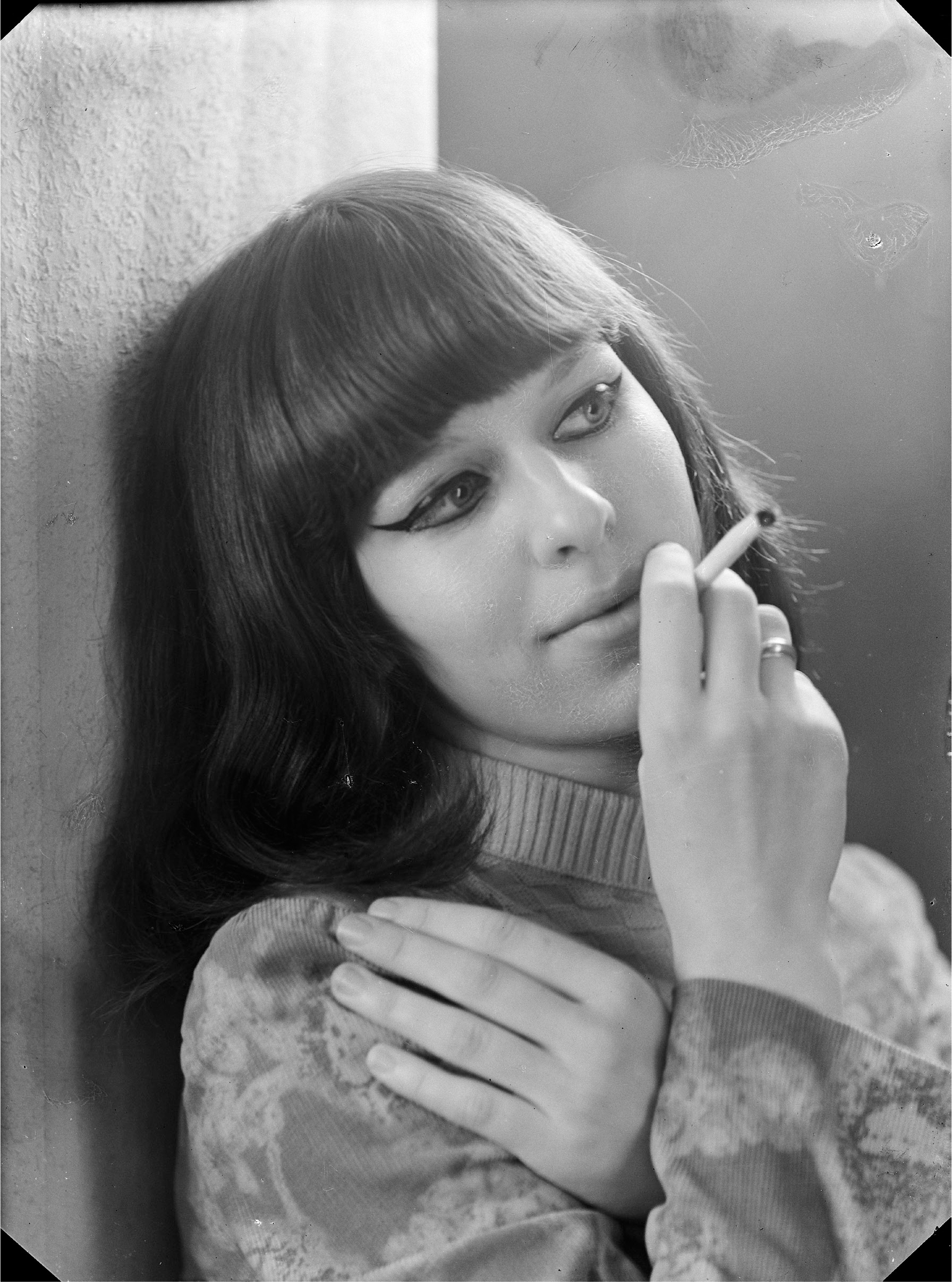
Figure 16
Portrait of a woman with cigarette.
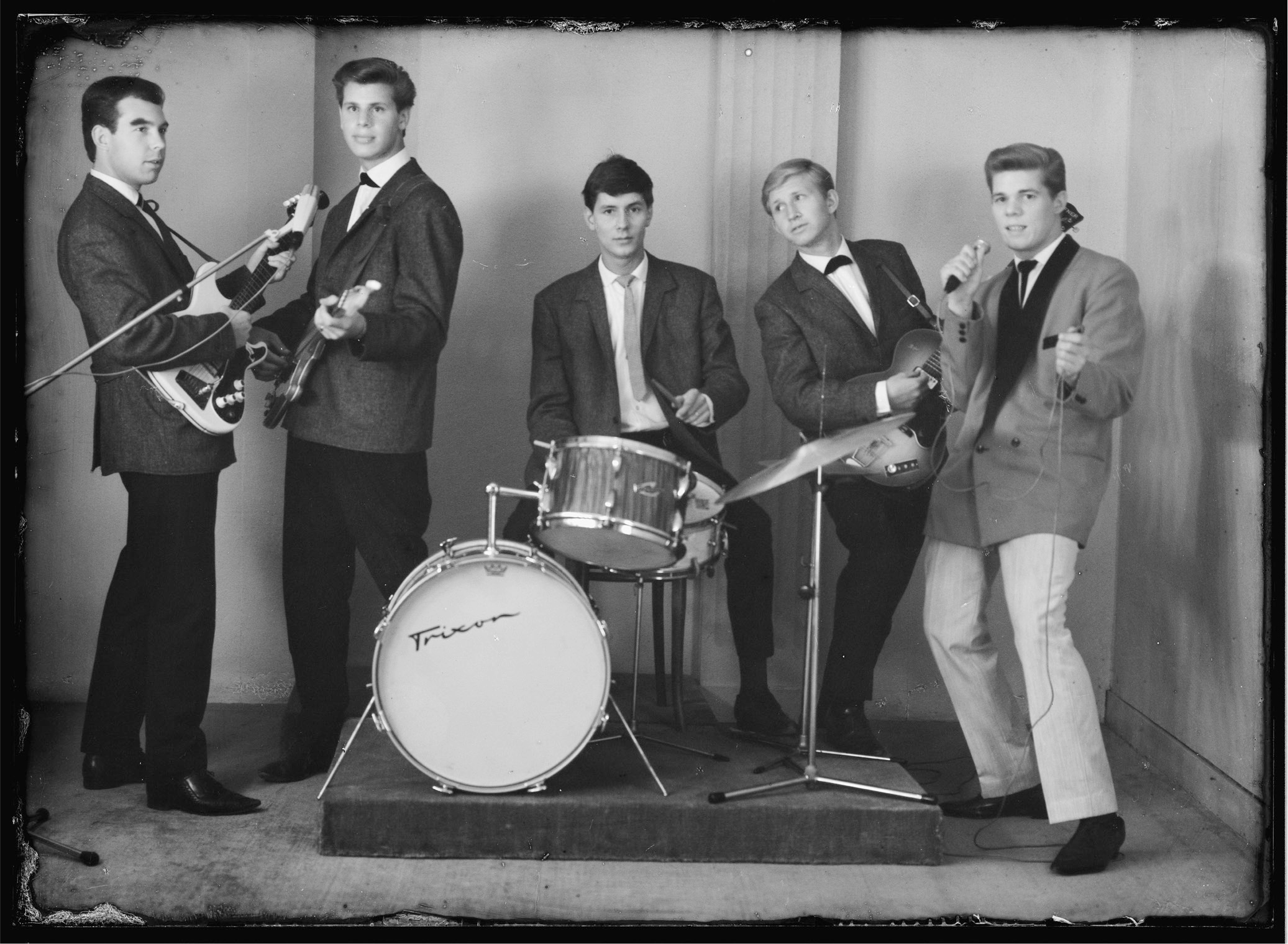
Figure 17
Portrait of the band ‘Johnny and his Drifting Four’. From left to right: Bert Afink , Hans Spruit, Joop Sanders, Hannes de Waard and John Voskamp (1962) (Catalogue nr. RAA003018462).
Retouching
Once Tonny Vlaanderen had recorded the portrait images, much of the work was still ahead of her. Together with Sophie, she developed the glass negatives in the dark room. The most successful recording was selected. A portion of the negatives in the collection were never nominated to be printed. The negatives we can assume that were printed are those that Tonny retouched. The (unexplained) fact that Tonny apparently kept both the unprinted negatives of a session as well as the negative that was selected for retouching and printing, allows us to compare unretouched and retouched portraits. She could easily spend over an hour, or even several hours, to retouch a negative, applying very small pencil marks to remove imperfections.
A crucial question is, of course, what is considered imperfection and what degree of idealization is acceptable? A Dutch publication dating from 1921, at a time Tonny was already active as retoucher, states the following advice:
There are cases where retouching is unnecessary. For children up to eight years old this is usually the case. However, if a young woman looks too old as a result of grief or illness, the retoucher has the obligation to express her real age in the portrait.28
To the contemporary eye, the retouched faces look flat, overly smooth, resulting in a somewhat surreal, distancing effect. In the more extreme cases one could wonder to what degree the portrait reflected the identity of the portrayed. And also, to what extent this was a conscious and intentional effect? For instance, was the removal of freckles of the girl in figures 18 and 19 a deliberate accommodation to a ‘spotless’ beauty ideal? It might have been a factor, but to be sure, the photochemical process, in which yellow light affects the emulsion relatively strongly, brought out freckles more pronounced than they would have appeared in daily life. So which portrait would be the most authentic representation? Retouching could even affect the ethnic identity of the portrayed. The woman seemingly of Asian descent in figures 20 and 21 has a lighter skin in the retouched version of her portrait. There is a risk of over-interpretation if we would suggest this was a premeditated effort to look lighter-skinned, because most faces turn out lighter after retouching. Nonetheless, whether this client pursued it or not, the whitening of the skin tone did alter the ethnic characteristics captured in this memory token.
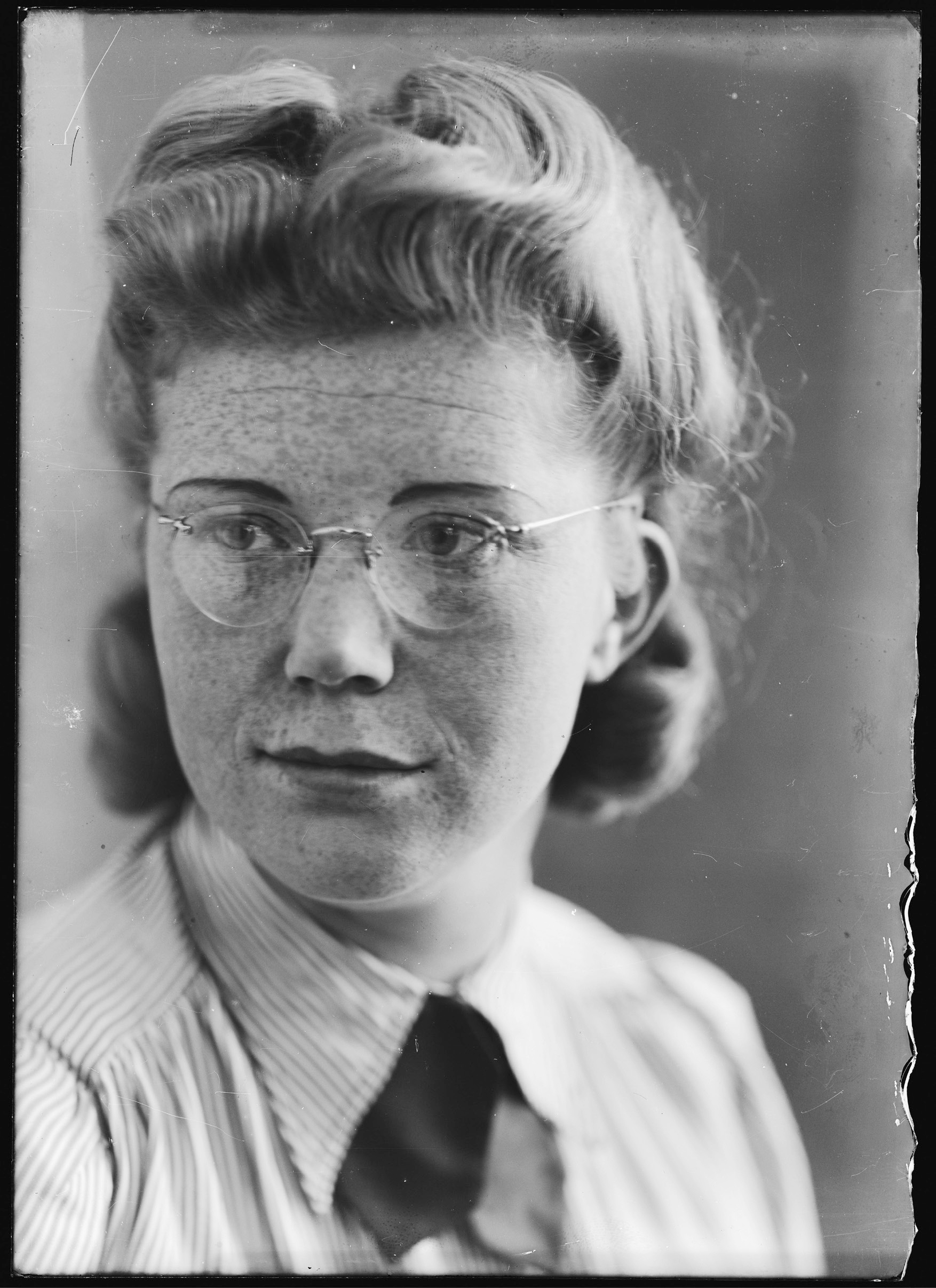
Figure 18
Portrait of woman, unretouched (with visible freckles).
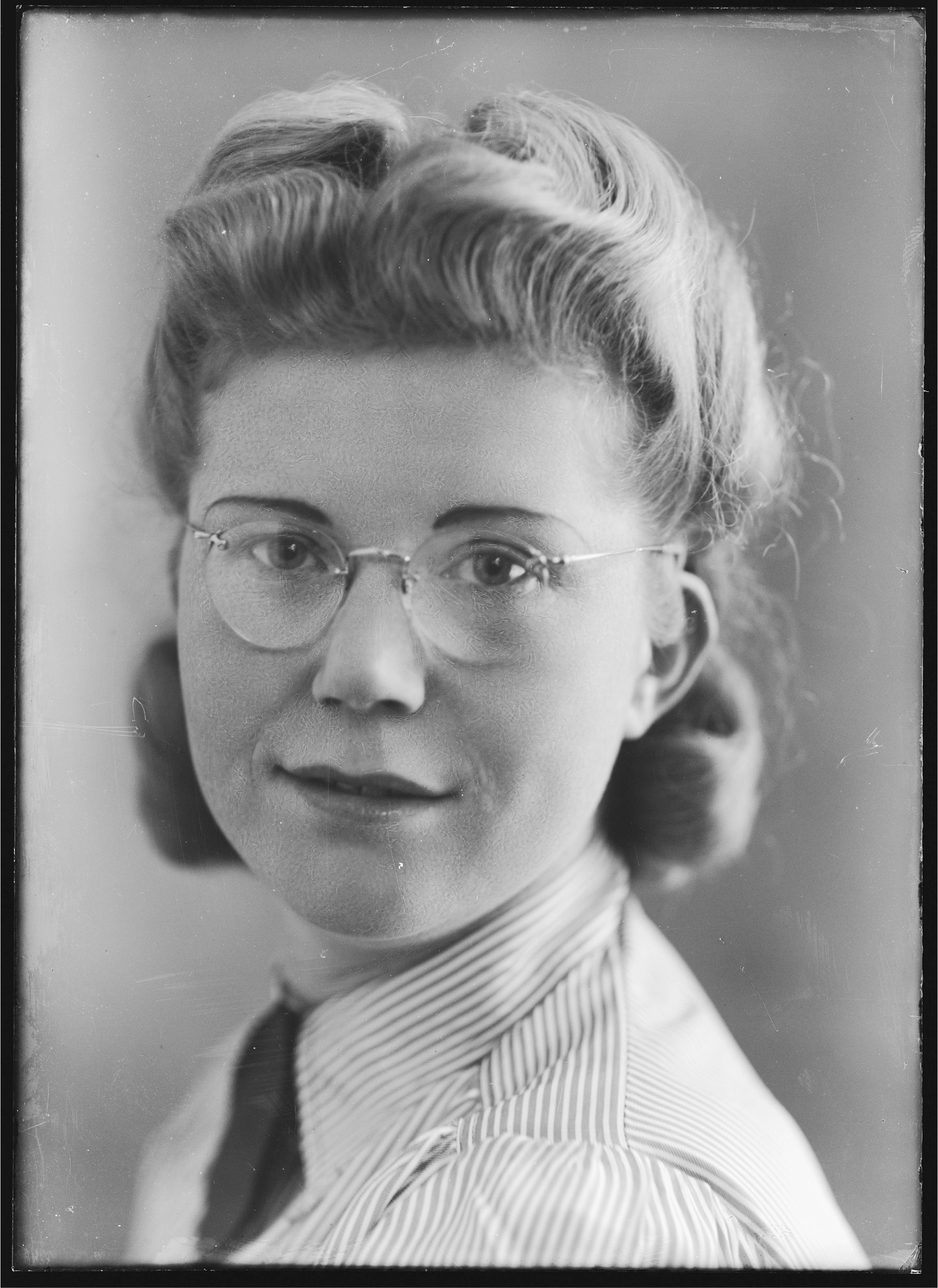
Figure 19
Portrait of woman, retouched (no freckles visible).
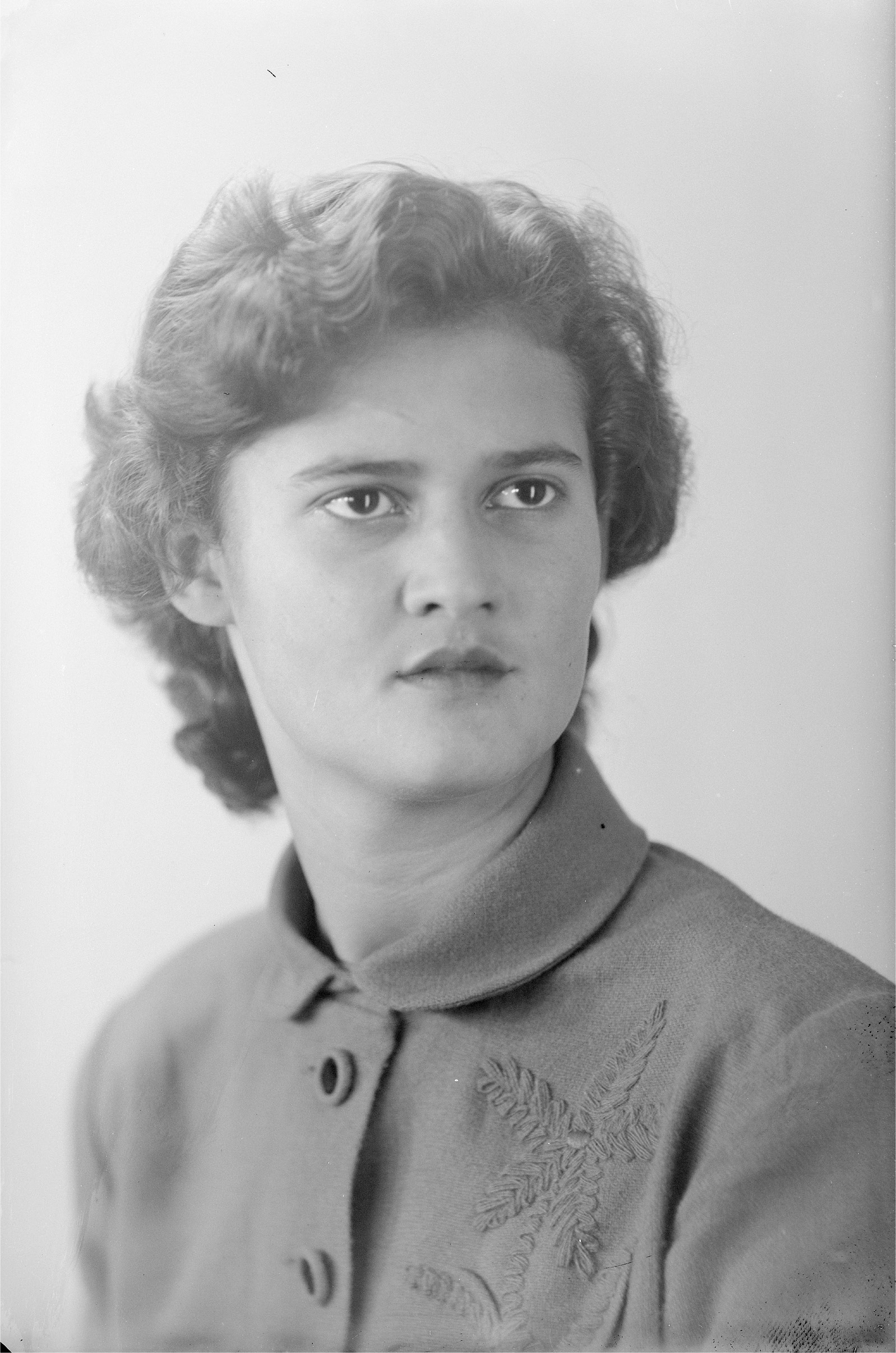
Figure 20
Portrait of a woman, not retouched (darker skin).
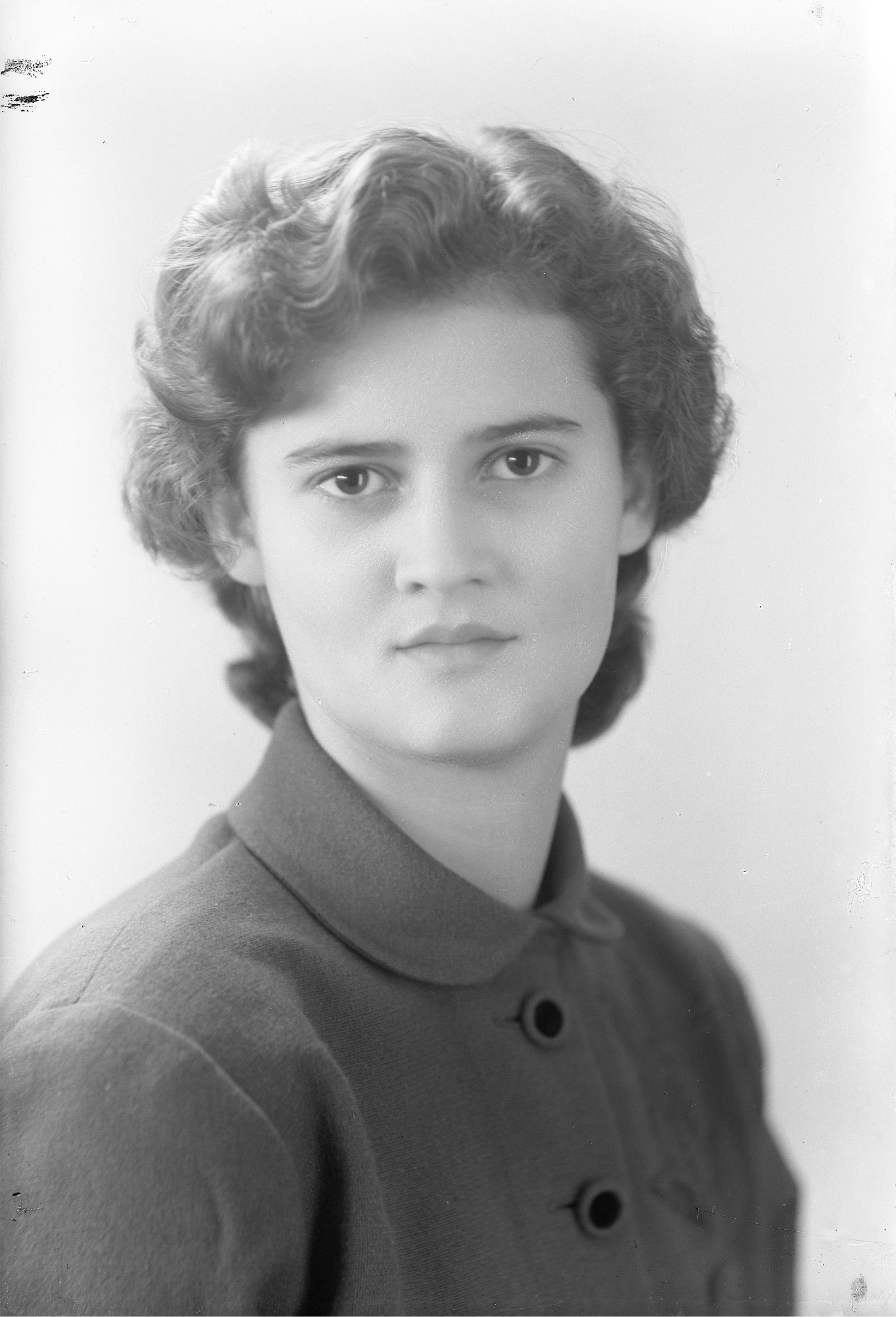
Figure 21
Portrait of a woman, retouched (lighter skin).
Crafters of images
The history of the Vlaanderen sisters shows a divide between the mild eccentricity of their personal lives and the conventionality of their photographic work. One of the paradoxes that emerges out of this history is the fact that Tonny and Sophie apparently felt, to some extent, to be outsiders in their own community, while their richest legacy is a thousand-headed portrait of that very same community, of which many have embraced the Vlaanderen sisters as a component of Alkmaar folklore. The sisters’ reputation and self-presentation became saturated with nostalgia and for some patrons this has infused the portraits with an extra layer of significance.
What brought clients to a post-war photo studio, in an age where a growing number of consumers possessed their own photographic equipment? The Vlaanderen sisters’ main asset was their artisanal command over both the staging and (post)processing of the portraits. And it was their meticulousness and dedication to detail in crafting these images that ties their photographic work to their laborious efforts in fashioning their social appearances. The Vlaanderen studio did not adapt to changing consumer demand by selling photographic equipment or by offering developing and printing services, as their estranged brother Jacques Vlaanderen (1900-1986) did with his successful network of Flandria photography shops in the wider Alkmaar region, catering to the growing amateur market. For official passport photos, customers could visit the Vlaanderen studio, and during the war this had been a lucrative slice of business. But the main product that the Vlaanderen studio delivered after the war were family portraits, that were intended to be personal mementos displayed at mantelpieces and in albums. Of their father Leonard Vlaanderen, evidence has survived of publicity photos (of storefront displays, for example), and other work on location. But the sisters Tonny and Sophie kept their unwieldy camera in the studio. The controlled environment of the studio was Tonny’s and Sophie’s universe where they would eternalise the festive moments of an era.
Acknowledgements
I would like to thank Regionaal Archief Alkmaar, Stedelijk Museum Alkmaar, Jesse van Dijl, Christi Klinkert, Helen Westgeest.
Endnotes
[1] See for example Flip Bool et al, ed., Dutch Eyes - Nieuwe geschiedenis van de fotografie in Nederland (Waanders, 2007); Michel Frizot et al, ed., A New History of Photography (Könemann, 1998); Henk Wierts, Photographieën & dynastieën. Beroepsfotografie in Groningen 1842-1940 (Egbert Forsten/Profiel, 2000).
[2] Mattie Boom, “Portret/Portraits,” in Een nieuwe kunst. Fotografie in de 19de eeuw. De nationale fotocollectie in het Rijksmuseum, Amsterdam. A New Art. Photography in the 19th Century. The Photo Collection of the Rijksmuseum, Amsterdam, ed. Mattie Boom and Hans Rooseboom (Snoeck-Ducaju & Zoon, 1996), 55-64; Ingeborg Th. Leijerzapf, Fotografie in Nederland 1839-1920 (Staatsuitgeverij, 1978).
[3] Thunnis van Oort, “Bobby’s diva’s. Filmfotografie en de glamourfactor,” in Fotostudio Merkelbach 1913-1969, ed. Anneke van Veen (Komma/d’Jonge Hond, 2013), 157-190.
[4] Pierre Vaisse, “Portrait of Society: The Anonymous and the Famous,” in A New History of Photography, ed. Michel Frizot et al (Könemann, 1998), 495-513.
[5] Frans Grummer, Portretten van hier, 1955-1966 (Stichting Zuidervrienden, 2022); Frits Giertzberg, Werner Mantz. The Perfect Eye (Hannibal, 2022).
[7] Anneke van Veen, “Merkelbach: een studio en zijn klanten,” in Fotostudio Merkelbach, 7-50, there 48.
[8] Van Veen, “Merkelbach,” 50. See Grummer, Portretten van hier for another example of a studio archive from Maastricht that has survived.
[9] See “Beeldbank,” Regionaal Archief Alkmaar, accessed March 10, 2025, https://www.regionaalarchiefalkmaar.nl/collecties/beelden. No dates or other identifying marks are available on the containers of the negatives. Therefore, a random sample was taken in 2012 for digitisation by selecting an equal number of negatives from each row. Only incidentally have particular images been identified, mostly via crowdsourcing: portraits published in the regional press have led to identifications and dating. The problem of unidentified portraits is of course not unique. The Merkelbach collection also contained many portraits of unknown individuals that have to some extent been identified using crowdsourcing: see “Red een portret,” Stadsarchief Amsterdam, accessed March 10, 2025, https://archief.amsterdam/uitleg/beeldbank/79-red-een-portret.
[10] The author was the guest curator who designed this exhibition in collaboration with the museum. See the exhibition brochure: Hans Duncker, ed., Dames Vlaanderen. Het excentrieke fotografenduo uit Alkmaar (Stedelijk Museum Alkmaar, 2013); Thunnis van Oort, “Glas… en meer. Tentoonstelling over fotostudio Vlaanderen in het Stedelijk Museum Alkmaar,” NFg. Fotografisch geheugen 80 (2013): 10-12.
[11] For more detailed references to primary sources (in Dutch), see Thunnis van Oort, “Portretten van een portretteuse. Nostalgie en beeldvorming van de ‘dames Vlaanderen’,” Oud Alkmaar. Tijdschrift van de historische vereniging Alkmaar 37.1 (2013): 10-19.
[12] Rob van der Spek and Barbara Cremers, “Atelier De Rembrandt te Alkmaar,” Photohistorisch Tijdschrift 7.2 (1984): 12-14.
[15] See also R. Kok, H. Selier and E. Somers, Fotografie in bezettingstijd. Geschiedenis en beeldvorming (Waanders, 1993).
[18] Gerard Smit, “Oude vakliefde (honderd jaar atelier Vlaanderen),” Mededelingen NFPV 3 (1967): 16-17; Alkmaarsche Courant, October 12,1967.
[19] Alkmaarsche Courant, November 3, 1979; Alkmaarsche Courant November 26, 1991. In 1979 national broadcasting organisation TROS made television recordings in the Vlaanderen residence and studio for an episode in the serial “Kunstig. Over kunst en kunstenmakers” broadcast under the title “Van pose tot werkelijkheid. Fotografie in Nederland van 1880-1950.” Apparently the collaboration with TROS was a success, since in 1980 the same broadcast organisation filled two episodes with a conversation between Kees Brusse and Tonny and Sophie Vlaanderen. During this interview the topic of “Alkmaar around 1910” was elaborately discussed. In 1989 the ladies were discovered by NCRV broadcasting organisation. First they were invited as guests for a Studio 55 radio program that targeted elderly audiences. Their pinnacle of fame emanated from a performance in the program “De stoel” (the chair) in 1993. This appearance was followed by portrayals in (Amsterdam) newspapers with national coverage, such as De Telegraaf and Het Parool.
[22] Smit, “Oude vakliefde.” With ‘first’ in this context she likely meant being the first in the community to make recreational trips to the beach. Some of their outfits are included in the Vlaanderen collection.
[26] Observation in this paragraph are based on a series of articles that was published weekly in the Alkmaarder Courant between January 26, 2008 and July 18, 2008, which featured a Vlaanderen photo and the responses of readers that had identified last week’s photo: a successful example of citizen science.
Biography
Thunnis Van Oort is an historian interested in digital methods and techniques, citizen science, cultural heritage, colonial history and media history. He has researched and/or taught at Radboud University, University of Amsterdam, Oxford Brookes University, Antwerp University, University College Roosevelt and Utrecht University. He was editor at TMG Journal for Media History in the period 2008-2021.