
Introduction
On 29 August 1950, my Indo-Dutch grandparents boarded the P. & O. S.S. Ranchi, a ship that would carry them from Tanjung Priok (Jakarta, Indonesia) to Amsterdam, the Netherlands. Traveling with them were my father, 3-months old at that time, his brothers and sisters, and 365 other repatriates, all embarking on the same journey. What was it like to leave behind everything they had ever known? Did they feel like they were going home, as they had been told, or did it feel like an exile from the only home they had ever known?
Upon arrival in the Netherlands, my family was relocated to Petten, a small seaside town. There, they were housed in army barracks (Figure 1) that the municipality had acquired from the German Wehrmacht after the Second World War. Growing up, my grandmother would tell me stories about how the barracks they lived in were poorly insulated; in winter, the cold seeped through every crack, and in summer, the heat was so intense that tar melted in the seams of the roof and dripped down the walls. This gave the ‘village’ its name, Teerdorp (tar village). On the hottest days, the floors had to be kept wet with water. What was it like to step into a country that was supposed to be theirs, yet felt unfamiliar? How did they make sense of their place in a country that saw them as both part of its past and yet somehow foreign?
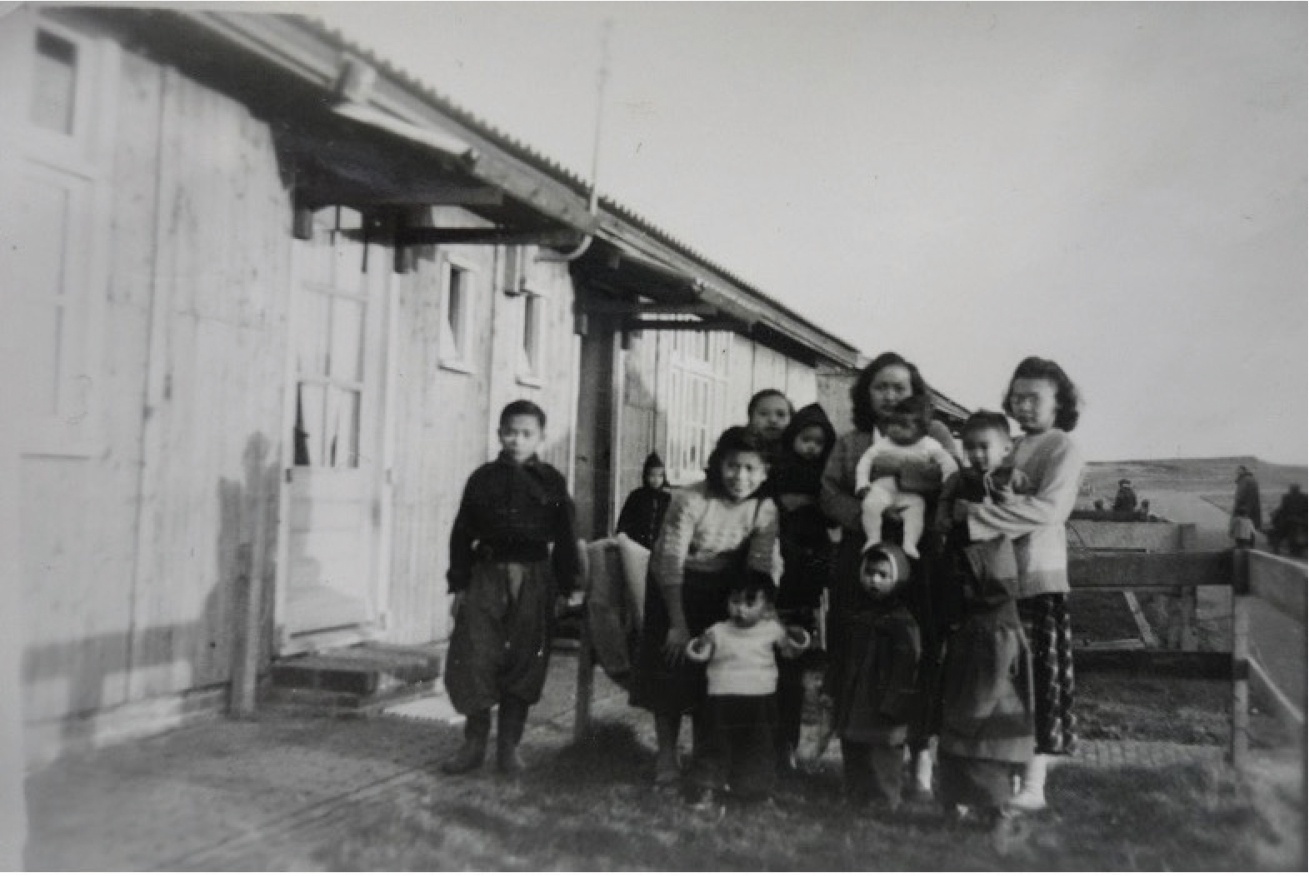
Figure 1
Repatriates (the author’s family) near barracks in Petten, the Netherlands (family archive)
My family was not alone in migrating to the Netherlands. Between 1949 and the mid-1960s, approximately 300,000 people migrated from Indonesia to the Netherlands.1 This is regarded as the most notable instance of Dutch citizens returning to the Netherlands in its history.2
The repatriation in the 1950s and 1960s followed Indonesia’s independence and the broader process of decolonisation. After Indonesia declared independence in 1945 and the Netherlands formally recognised it in 1949 following a violent conflict, hundreds of thousands of people, Indo-Europeans, Moluccans (many former KNIL soldiers), and totoks (white Dutch who had lived in the colony for generations), faced growing pressure to leave, caught in the political and social aftermath of Dutch colonial rule.
After independence, the Indonesian government promoted a nationalist identity that marginalised those with colonial ties. As Pattynama notes, it was generally expected that white settlers would return to the Netherlands, while people of mixed heritage would adopt Indonesian nationality.3 Although Indo-Europeans had been legally classified as European in the Dutch East Indies, the Dutch state viewed them as belonging to Indonesia and considered their integration into Dutch society undesirable. Migration was discouraged and even obstructed. Yet their Dutch citizenship and strong ties to the Netherlands ultimately gave them political leverage.4
Although framed as ‘repatriation,’ for most migrants this was a forced departure from the only home they had known. The Dutch government, unprepared for their arrival, placed many in temporary housing, military camps, barracks, former concentration camps, and emergency shelters, where conditions were harsh and isolating. The Moluccan community faced particular hardship, as the promised independent South Moluccan Republic (RMS) never materialised, leaving them in limbo without a clear future in the Netherlands.5
The arrival of repatriates from Indonesia in the 1950s and 1960s coincided with the emergence of television as a mass medium in the Netherlands, shaping how migration was represented. Broadcasting began in 1951, just as repatriates were settling into their new lives. While print and radio still dominated, television played a key role in constructing postcolonial migration discourses. Its audiovisual format enabled more immersive storytelling, reinforcing narratives of belonging and integration in postwar Dutch society.
The intersection of television history and migration history raises several questions. How were repatriates represented in early television broadcasts? How did the specific characteristics of (early) television, its visual immediacy, narrative structure, and capacity (and limits) for emotional engagement, shape the representation of repatriates? How did early television serve as a tool for integration and empathy, and/or how did it contribute to a sense of otherness and distinction? And how to understand these representations in the post-war 1950s and 1960s?
This article employs visual, narrative, and discourse analysis to explore these questions. In line with a Foucauldian approach,6 discourse is treated as a site where language and power intersect. Visual analysis, as developed by scholars such as Mirzoeff and Bordwell and Thompson, focuses on how meaning is constructed through (moving) images.7 Narrative analysis, drawing on the work of Vande Berg et al., attends to how audiovisual texts structure stories and cultural meaning.8 Together, these methods unpack the discursive formations through which repatriation was made visible, sayable, and thinkable. The analysis is based on 36 public broadcasting television programs from 1950 to 1969, documenting the arrival, integration, and daily lives of repatriates (see appendix 1). Although settlement continued into the 1970s, television coverage declined significantly after the 1960s. The programs were sourced from the Archive of Sound and Vision (Beeld en Geluid) via the CLARIAH Media Suite, using search terms such as repatriëring, Nederlands-Indië, Indo, and Moluccan.
This article examines both Indo-Dutch and Moluccan repatriation narratives due to their distinct yet intertwined histories and representations in Dutch media. Although both groups arrived after the decolonisation of the Dutch East Indies, their experiences diverged: Indo-Dutch repatriates were framed as returning Dutch citizens, while many Moluccans - former KNIL soldiers and their families - were treated as temporary residents. Comparing these groups enables a more comprehensive analysis of how television constructed (different) narratives of migration, citizenship, and belonging. Focusing on 1950s and 1960s broadcasts, the article situates these representations within broader Dutch post-war and decolonial contexts. Scholars such as Pamela Pattynama, Arnoud Arps, and Fridus Steijlen have illuminated the complex processes of identity formation among Indo-Dutch and Moluccan communities in the Netherlands.9 Pattynama’s work “Cultural memory and Indo-Dutch identity formations” reveals how cultural memory is a dynamic process, actively shaping Indo-Dutch identity through imaginative constructions and reflecting the enduring impact of colonialism.10 Arps, in “The Fabrics of Home” demonstrates that Indo-European repatriates developed a unique culture of remembrance centred on the concept of ‘home,’ which is intricately woven from threads of place, belonging, and citizenship, often articulated through cinematic forms by the second generation.11 Concurrently, Steijlen’s research on Moluccans highlights their distinct trajectory from stateless exiles to acknowledged migrants, asserting that the formal ‘closing of the KNIL chapter’ in 1986 was a pivotal moment that redefined their identity within Dutch society while preserving their cultural heritage.12
Building on these insights into the dynamic and fragmented nature of these identities and their formation through various cultural practices, this article specifically focuses on how early television broadcasts from the 1950s and 1960s served as a crucial, yet understudied, site of identity construction, generating narratives and imagery that significantly contributed to the later formation of postcolonial cultural memory in the Netherlands. It explores how Dutch public television, through its intimacy, immediacy, and narrative form, shaped public perceptions of repatriates and influenced the emotional terms of postcolonial belonging.
This article also draws on Sara Ahmed’s theories of hospitality, affect, and conditional inclusion to examine how postwar Dutch television shaped narratives of Indo-Dutch and Moluccan repatriation. In Strange Encounters, Ahmed critiques hospitality as a framework that positions the host as generous and the guest as indebted, reinforcing power hierarchies.13 Her concept of the ‘happiness duty’, the expectation that minoritised subjects show gratitude for inclusion, offers a lens to analyse how emotions circulate in media representations of migration.14 Rather than treating television as a neutral recorder of history, the article explores it as a medium that mediates national affect. I will particularly explore how televised hospitality narratives can function as mechanisms of conditional belonging, where the promise of inclusion is tied to the expectation of compliance, gratitude, and adjustment. By bringing Ahmed’s insights into dialogue with 1950s and 1960s broadcasts, the article aims to situate Dutch television and its discourses of repatriation within broader discussions of affective power, postcolonial identity, and the terms on which national belonging is extended or withheld.
Coinciding histories: repatriation and the rise of television in the Netherlands in the 1950s and 1960s
Dutch television began with Philips’ experiments in the 1920s, but its official launch occurred on December 12, 1949, after approval by the Minister of Transport and Water Management. In 1951, the NTS (Nederlandse Televisie Stichting) was founded, and the first official broadcast aired on October 2, 1951, from 20:15 to 22:15 in Bussum. At the time, there were only 500 television sets in the country. The broadcast opened with speeches by State Secretary Jo Cals and NTS chairman Joannes Kors and featured a documentary on carillon bell production, a history of the medium, and the play De Toverspiegel (The Magic Mirror). The play took place in the past, present, and future, illustrating the idea that the medium of television allowed viewers to look both backward and forward in time.15
From that point onward, evening programs were broadcast twice a week on the sole channel, Nederland 1. Throughout the 1950s, television became increasingly popular. The first news broadcast aired on January 5, 1956. As Wijfjes notes, newspapers still dominated with 62 dailies and a combined circulation of 2,873,000.16 Meanwhile, TV ownership rose from 50,000 sets in 1956 to 100,000 in 1957 and 240,000 in 1958. Early TV aired ten hours per week. Radio, with its established audience and broad programming, remained dominant, though fragmented providing news headline summaries, music, and entertainment.17 Television surged in popularity during the 1960s. By November 14, 1961, there were 1 million TV sets in the Netherlands, signalling its full integration into daily life. Families began gathering around the TV instead of the dining table. Alongside news, entertainment programming expanded. Weekly broadcasting time increased to 30 hours in 1962, and in 1964, a second channel, Nederland 2, was launched, diversifying content further.18 Although television broadcasting in its early years was limited, early television programs did seek to inform and educate viewers about the repatriates, placing their arrival in the 1950s and 1960s within broader narratives of decolonisation and national reconstruction. I focus specifically on television, since moving images, unlike print media and radio, have the ability to convey emotion, atmosphere, and a sense of immediacy through audiovisual storytelling. Television allowed Dutch audiences to see repatriates in their new environments for the first time, observe their expressions, and witness their daily lives, offering an immersive experience.
1950s: Broadcasting repatriation as a post-WW II national success story
In the 1950s, repatriates appeared mainly in news and current affairs programs, which documented their arrival, migration, and integration. As I will argue in the following, the television programs broadcast in the 1950s construct a discourse in which the migration and settlement of repatriates, despite their large numbers (with the term exodus commonly used), are depicted as seamless processes, facilitated in part by the efforts of the Dutch government and society. While repatriates were officially referred to as ‘Dutch’, the combination of the technical limitations of television at the time, journalistic conventions, and specific narrative and aesthetic choices contributed to their depiction as ‘other’, a discursive figure that helps ‘define Europe (or “the West”) as its contrasting image, idea, personality, experience’.19
The repatriates are constructed as ‘others’ in several ways. First, although they are formally Dutch citizens, they are commonly referred to as ‘foreigners’ (vreemdelingen) or ‘passport-Dutch’ (paspoort-Nederlanders), terms that reinforce their perceived difference. The program Spiegel van Nederland (1950/1955) even defined them as ‘people who have never seen the Netherlands.’ Such labels position them as distinct from, and not fully equal to, Dutch people in the Netherlands, emphasising their outsider status despite their legal citizenship.
The earliest televised images of repatriates, seen in Spiegel van Nederland (1950/1955), often obscure their faces due to black-and-white technology’s difficulty with darker skin tones and poor outdoor lighting (see figures 2-3). In contrast, white individuals in studio settings, like Minister Klompé during her speech about repatriates, are well-lit and clearly visible (see figure 4). This visual contrast creates a hierarchy: repatriates appear faceless and indistinct, while those talking about them are individualised. These technical and aesthetic limitations of early television not only shaped how repatriates were (not) seen, but also reinforced their othering, positioning them as outsiders in Dutch society.
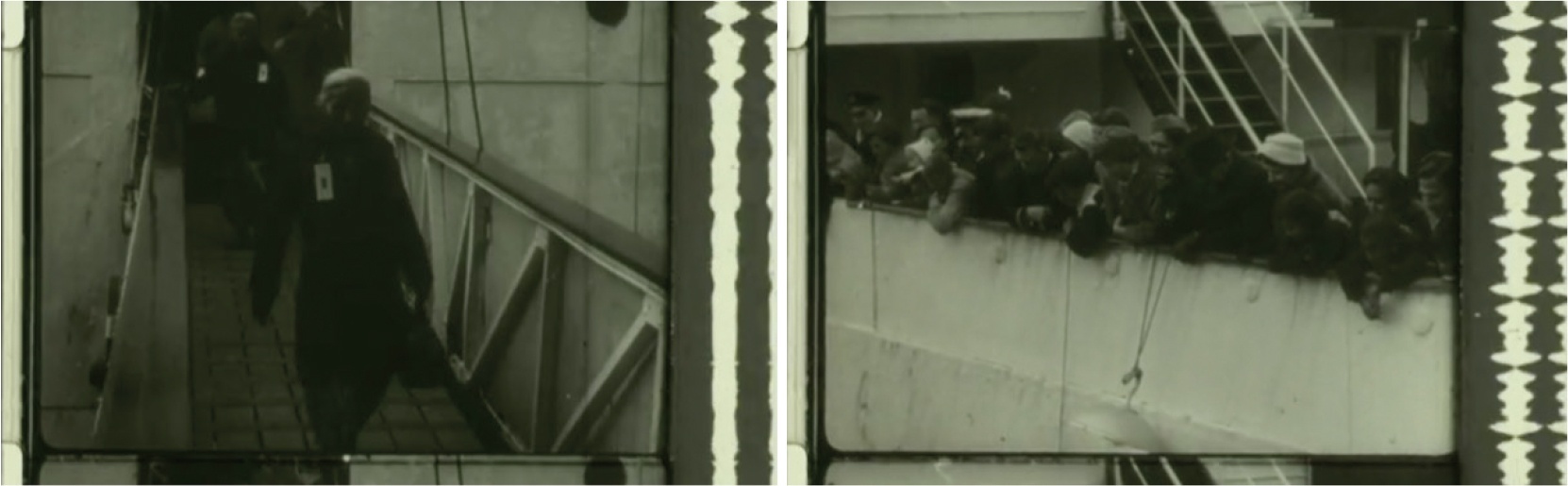
Figures 2-3
Arrival of repatriates (1950) in Spiegel van Nederland (1950/1955)
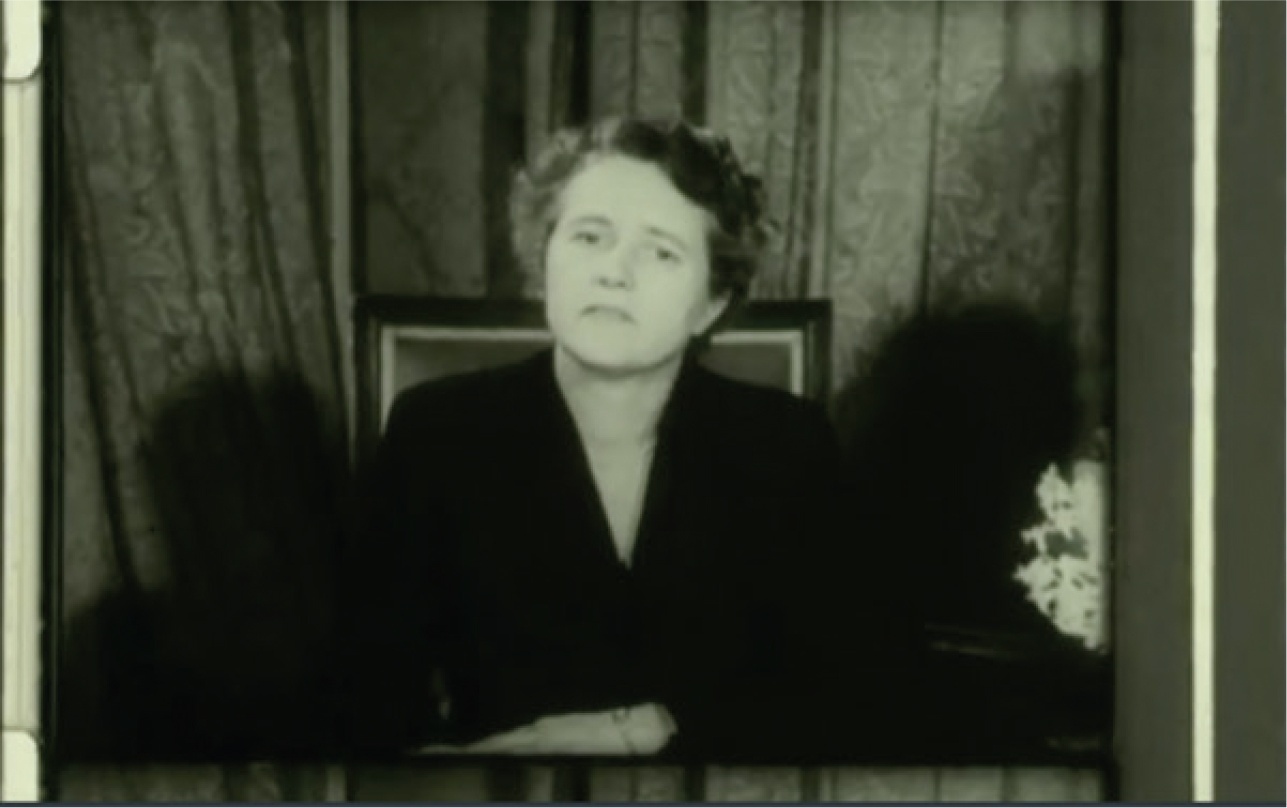
Figure 4
Minister Klompé (Minister of Social Affairs and Public Health) in Spiegel van Nederland (1950/1955)
In Dutch television programs covering repatriation, repatriates were often referred to in literal numbers, emphasising the scale of migration rather than their individual experiences (see figure 5). They were frequently filmed in large groups (see figure 6), and their migration was described as an ‘exodus’, a term evoking biblical and large-scale population movement. This framing reinforced their othering, reducing them to statistics and collective imagery, and positioning them as external group rather than as part of the national community.
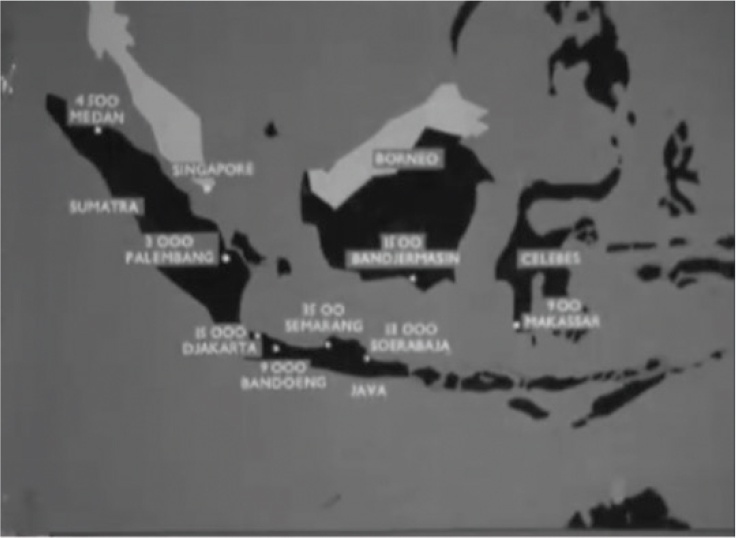
Figure 5
When speaking of repatriates, Journaal (10-12-1957) represents them as numbers
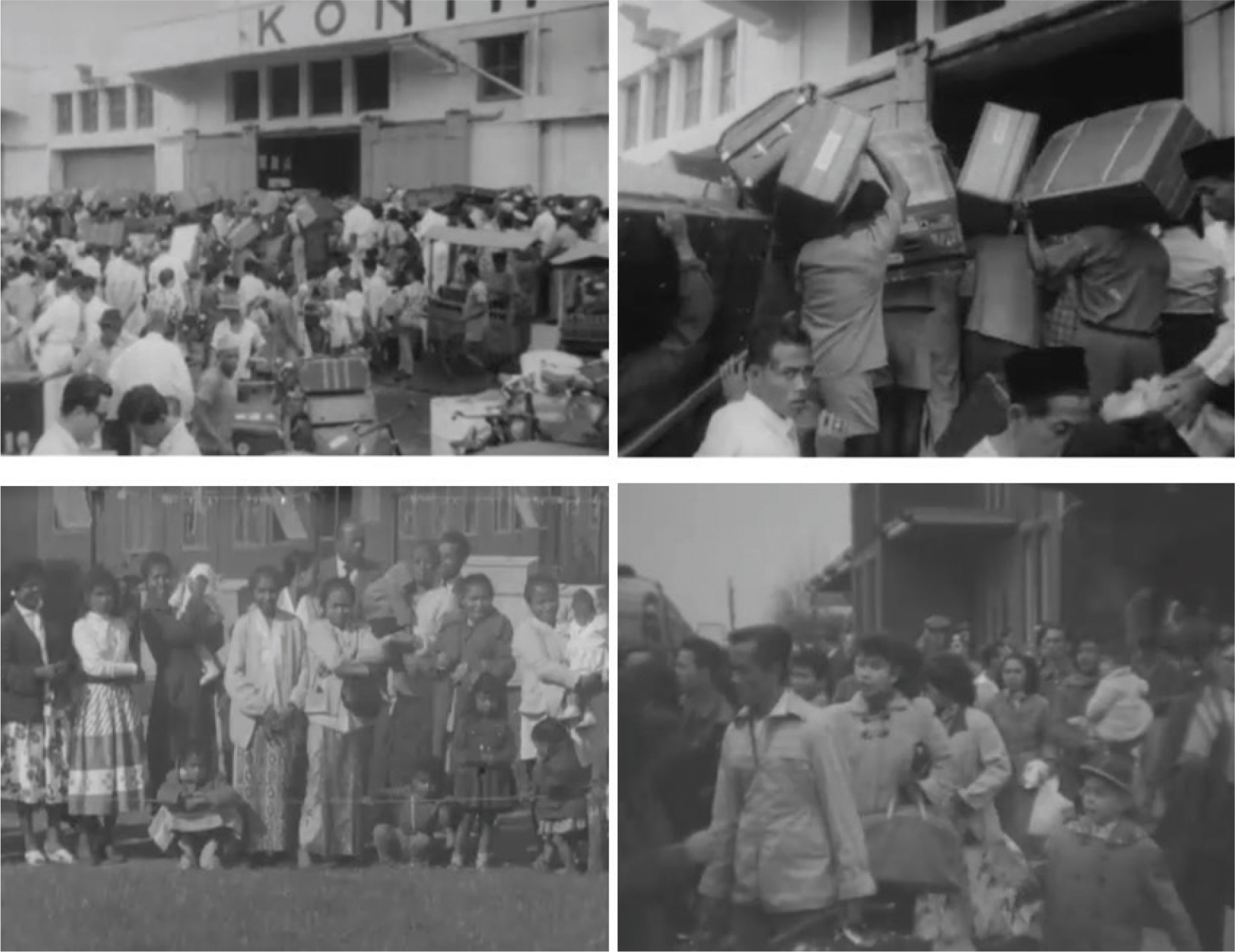
Figure 6
Collage of ‘Exodus’ shots from Journaal dated 04-01-1958, 15-02-1958, and 11-09-1958
Meanwhile, Dutch citizens are often framed as spectators to the arrival of repatriates, both literally and figuratively. Television programs frequently depict Dutch onlookers watching the migrants arrive and disembark, sometimes with curiosity, other times in a leisurely, detached manner, reinforcing a sense of distance between the two groups (see figures 7-8).
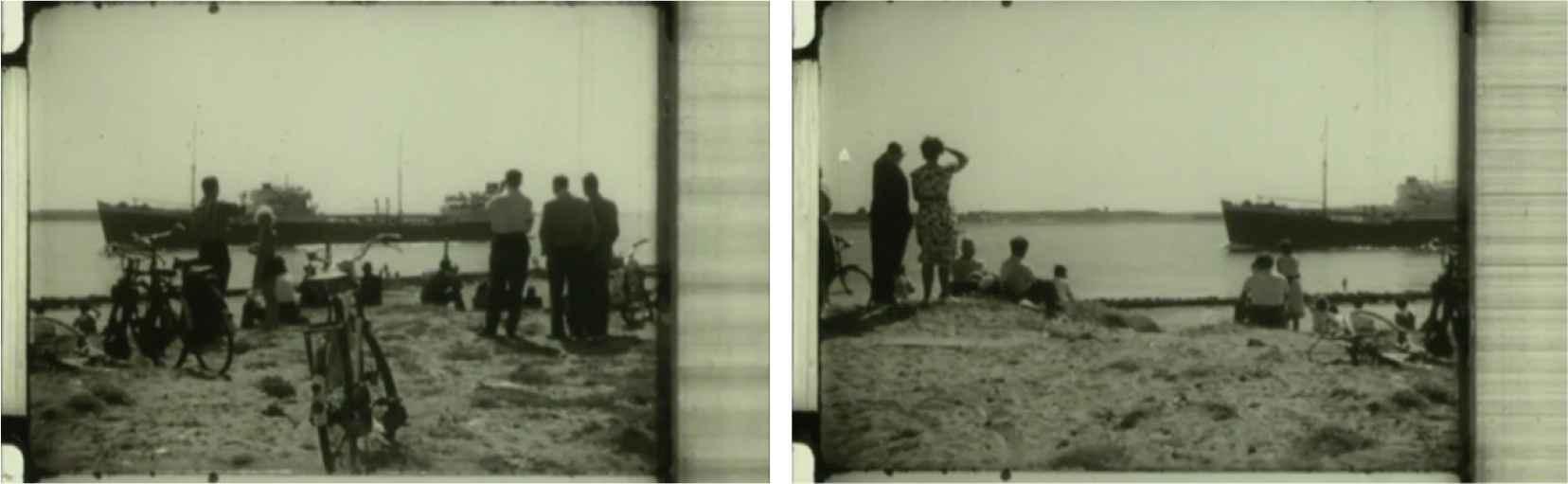
Figures 7-8
People leisurely watching the arrival of repatriates in Spiegel van Nederland (1950/1955)
At the same time, the narrative structure of the majority of the 1950s broadcasts positions the Dutch television audience in a similar role, as observers, viewing the repatriates’ arrival as an external event to be observed. This construction of repatriates as (exotic) subjects of observation is reinforced through an almost anthropological mode of address, which highlighted ‘unique’ traditions like dance and clothing (see figures 9-10), framing repatriates as exotic. Voice-overs, such as in Spiegel van Nederland (1950/1955), further depersonalised them by categorizing individuals into groups to be observed and discussed like ‘the repatriate women,’ ‘the men,’ ‘the elderly,’ or ‘the children.’
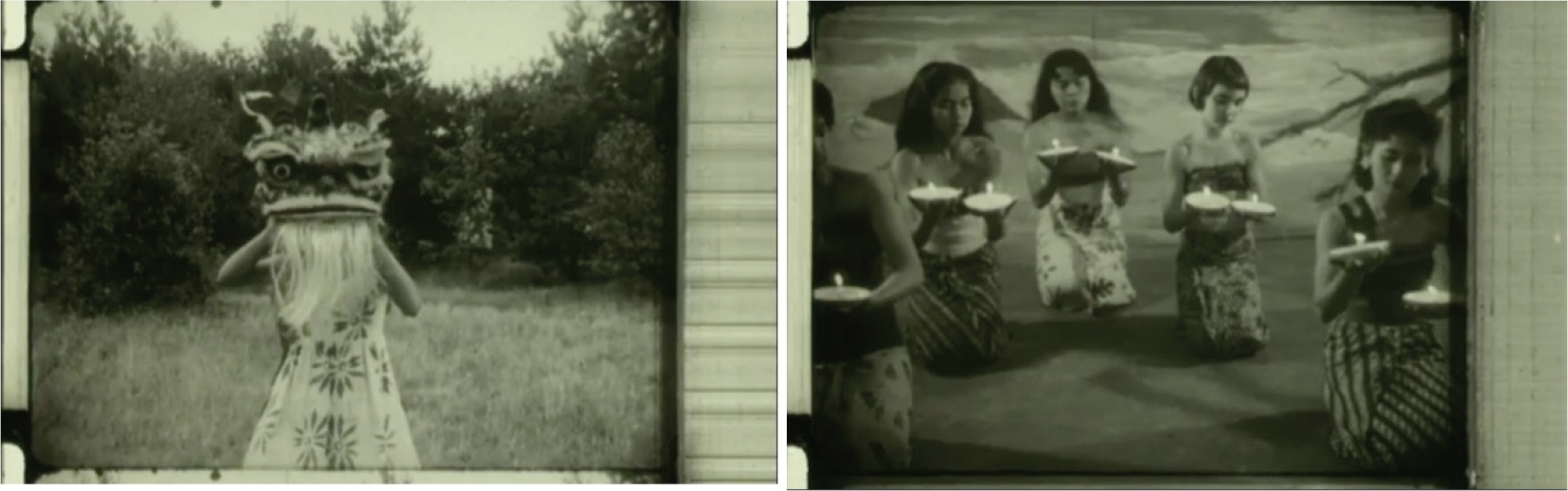
Figures 9-10
‘Unique’ traditions of repatriates in Spiegel van Nederland (1950/1955)
In 1950s television programs, repatriates do not speak, they are spoken about. News reports, shaped by technical limitations and journalistic norms of that time, relied on a single voice-over, with no interviews included.20 This absence of direct speech reinforces their passive representation, making them objects of observation rather than active participants in their own story. As Edward Said describes, Orientalism constructs the ‘other’ through representation, not engagement.21 Just as Said notes how the Orient is represented as exotic, passive, and fundamentally different from the West, these television broadcasts position repatriates as a subject to be observed, categorised, and explained by Dutch television commentators rather than allowing them to articulate their own experiences.22 The use of visual and narrative techniques, depicting repatriates in mass group shots, highlighting their ‘foreign’ traditions, and denying them a voice, reinforces a hierarchical relationship in which the Dutch are positioned as active, knowing subjects, while the repatriates are rendered passive objects of study. Through this lens, the repatriates are not simply returning citizens but are framed as an unfamiliar presence that must be interpreted and contextualised for the Dutch viewer.
Despite depicting repatriates as a large influx, 1950s broadcasts frame their migration as a national success, smooth and enabled by Dutch government and societal efforts. Programs show warm welcomes: Queen Juliana greets repatriates (see figures 11–12), and (white) Dutch citizens are shown offering care, clothes, eggs, and coffee (see figure 13). Social workers also play a prominent role in these broadcasts, actively helping repatriates adjust to their new surroundings. This discourse of national hospitality is also constructed through speeches of officials, who frame the repatriation process as smooth and well-organised. For instance, in Spiegel van Nederland (1950/1955), Minister Klompé speaks to the Dutch audience in direct-address (see figure 4), emphasising this narrative of national hospitality when speaking about the first repatriates:
The first repatriates who arrived by ship last Sunday and Monday, under great public attention in Rotterdam and Amsterdam, are being received with all warmth and love by both the government and private initiatives to welcome them in our cold winter. […] To their relief, the Budel military camp turned out not to be a bleak site, but a pleasant residence where every effort was made to accommodate families temporarily.
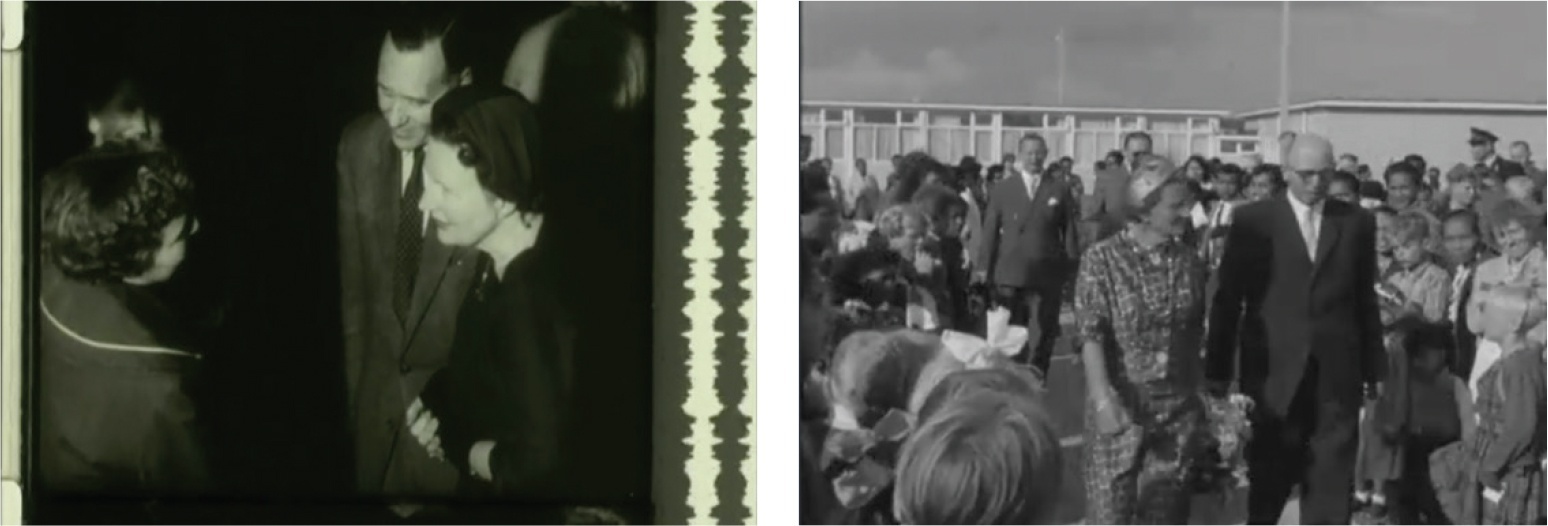
Figures 11-12
Dutch Queen Juliana welcoming and visiting the repatriates in Journaal 11-09-1958 and Spiegel van Nederland (1950/1955)
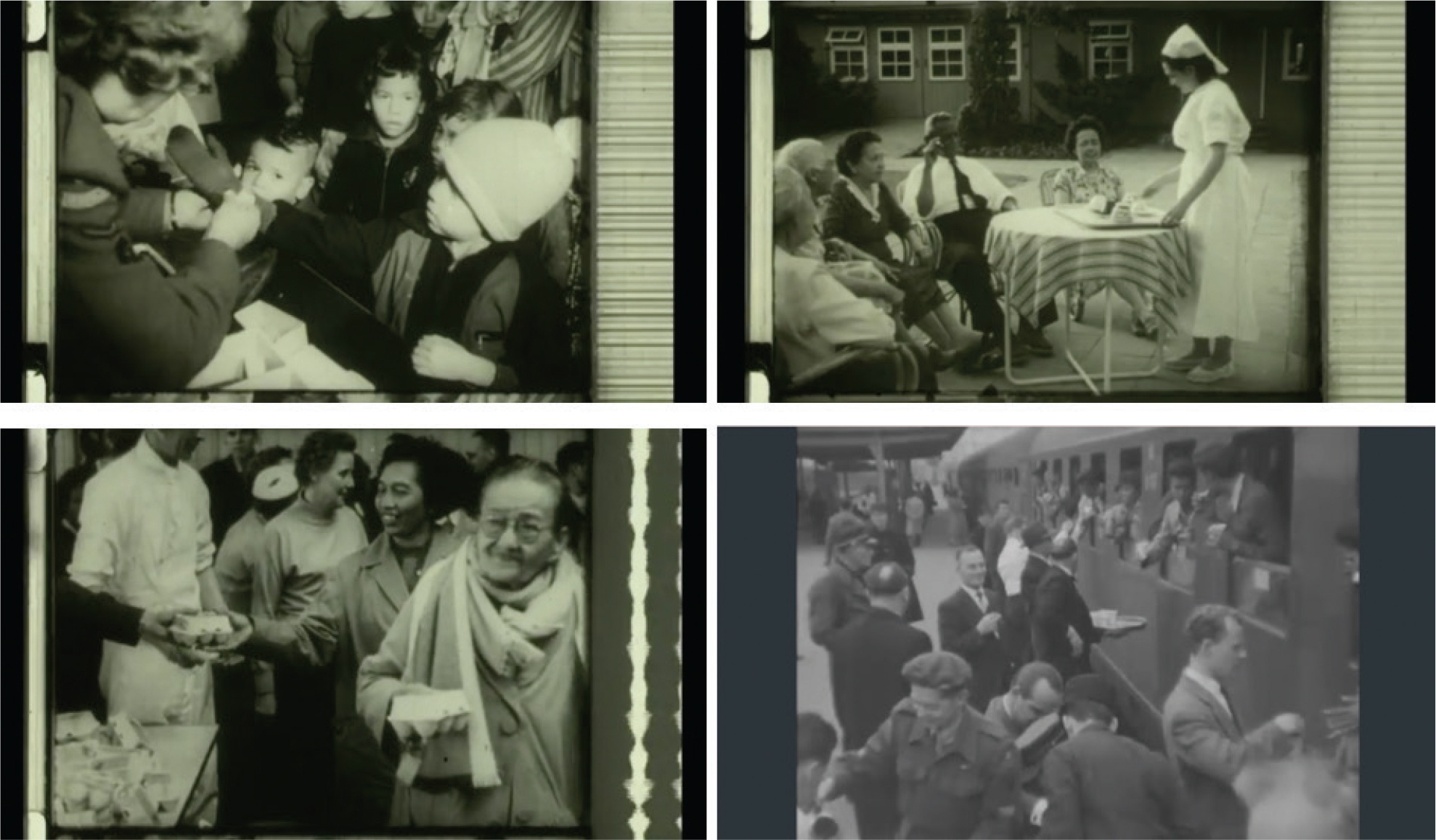
Figure 13
Collage of Dutch people taking care of repatriates in Journaal 15-02-1958 and Spiegel van Nederland (1950/1955)
Such portrayals construct the image of repatriation as a collective national effort, in which the Dutch state and its citizens are presented as generously extending their care to repatriates.
Other voice-overs in Spiegel van Nederland emphasise state and community efforts to support repatriates, reinforcing the image of a nation extending its care. The representation of elderly and chronically ill repatriates further underscores this discourse of care, as the voice-over describes how they were accommodated in special homes designed to provide them with comfort and familiarity:
Among the large wave of repatriates, about 1,600 elderly and chronically ill individuals arrived. They were housed in twenty specialized homes and institutions, where care was tailored as much as possible to their former way of life. The warmth of this reception is evident in the words of the director: “We start from one principle, and that is that in our attitude towards these defenseless elderly people, we must act as if they were our own parents.”
Similarly, the narrator describes how Indo-Dutch children are quickly integrating into the Dutch education system, presenting them as eager and adaptable students benefiting from the extra support of Dutch teachers:
Due to the turbulent years in Indonesia, the children have often fallen behind in their education, but they prove to be diligent students, and with the help and extra care of the teaching staff, they quickly catch up.
While children are framed as successfully integrating, Indo-Dutch housewives are represented as struggling to adapt to Dutch customs. Here, the programs emphasise the supportive role of Dutch society, showing church and private initiatives helping them adjust:
It is more difficult for housewives to adjust to Dutch society. That is why church, and private initiatives have undertaken various activities to familiarize them with the customs and traditions here.
These examples illustrate how the television programs of the 1950s, through their narrative structure and voice-over commentary, construct a national success story of repatriation, positioning the Netherlands as a hospitable, benevolent, caring nation. This narrative aligns with the broader discourse of governmental control and benevolence, portraying repatriation not as a complex, often difficult process, but as an orderly and well-managed transition facilitated by Dutch institutions.
The silencing of repatriates aligns with Gayatri Spivak’s argument in Can the Subaltern Speak?, where she critiques how marginalised groups, particularly in postcolonial contexts, are often spoken for (by dominant institutions) rather than given the space to articulate their own experiences.23 In the television broadcasts of the 1950s, repatriates exist as subjects of discourse, not as active participants in shaping their own narrative. The dominance of the voice-over narrator, a figure of authority, positions them as objects of care rather than as individuals with agency, reinforcing a hierarchical structure in which the state and its representatives mediate their visibility and voice. However, unlike Spivak’s example of the total silencing of the subaltern, repatriates are not completely erased from the visual field. They are present on screen, but their representation is carefully controlled. The broadcasts render them visible yet voiceless, allowing them to be observed but not heard. Instead of complete exclusion, they are selectively included in ways that reinforce their dependency on the Dutch state. This form of partial visibility suggests that while Spivak’s framework explains their lack of agency, it does not fully account for the strategic ways in which they are displayed to serve a national narrative of benevolence.
Sara Ahmed’s critique of hospitality narratives in Strange Encounters is helpful here. Ahmed argues that hospitality is often framed as an act of generosity that positions the host as benevolent and the guest as indebted.24 In these broadcasts, the Dutch government and white Dutch citizens are presented as gracious hosts, while repatriates are positioned as grateful recipients of care, reinforcing a power imbalance. This mirrors Ahmed’s insight that inclusion is conditional. Migrants are expected to integrate on the host’s terms, reinforcing their dependency rather than recognising them as rightful members of society.25 The framing of Indo-Dutch housewives, for example, struggling to adjust to Dutch customs while being aided by church initiatives, exemplifies this asymmetrical dynamic, where belonging is granted rather than inherent. The act of welcoming migrants often serves to reaffirm the power of the host rather than genuinely include the guest.26 The broadcasts function as a symbolic performance of national hospitality rather than an authentic reflection of repatriates’ realities. The depiction of repatriates receiving care, food, and housing supports a discourse of national benevolence that reassures Dutch viewers of their country’s ability to ‘absorb’ and integrate migrants. This benevolence discourse should be understood in the context of the post-war 1950s. In the aftermath of World War II, Dutch national identity was being reconstructed around values of resilience, morality, solidarity, progress, and national unity.27 The Netherlands aimed at positioning itself as a modern, organised, and morally responsible nation, and this is reflected in the television broadcasts. The repeated image of white Dutch citizens helping repatriates, whether through volunteer work, housing programs, or labour offices, aligns with the self-image of the Netherlands as a caring, ethically-just,28 cohesive society, emphasising state-led support.
What is striking is that the television programs of the 1950s dedicate significant attention to the employability of repatriates, representing them as a valuable addition to Dutch society. The programs emphasise their willingness to work, their adaptability, and their smooth integration into various professions. Through extensive series of shots (see figures 14-15), different programs represent repatriates as diligent workers who are capable of contributing to the economy, reinforcing a positive portrayal of their presence in the Netherlands. However, this positive framing primarily serves a larger discourse, one that underscores how well the Dutch state has managed their reception and integration. The emphasis on repatriates’ employment success is less about acknowledging their individual agency and more about showcasing the efficiency of Dutch institutions in organising their labour participation. This is evident in the voice-over from Spiegel van Nederland (1950/1955), which, while acknowledging initial difficulties, highlights how the Dutch state provided reskilling programs to ensure repatriates could enter the workforce:
For those with administrative skills, immediate employment opportunities were not always available, but retraining courses were provided. […] Many have been retrained and placed in technical industries, where they have quickly developed into skilled professionals.
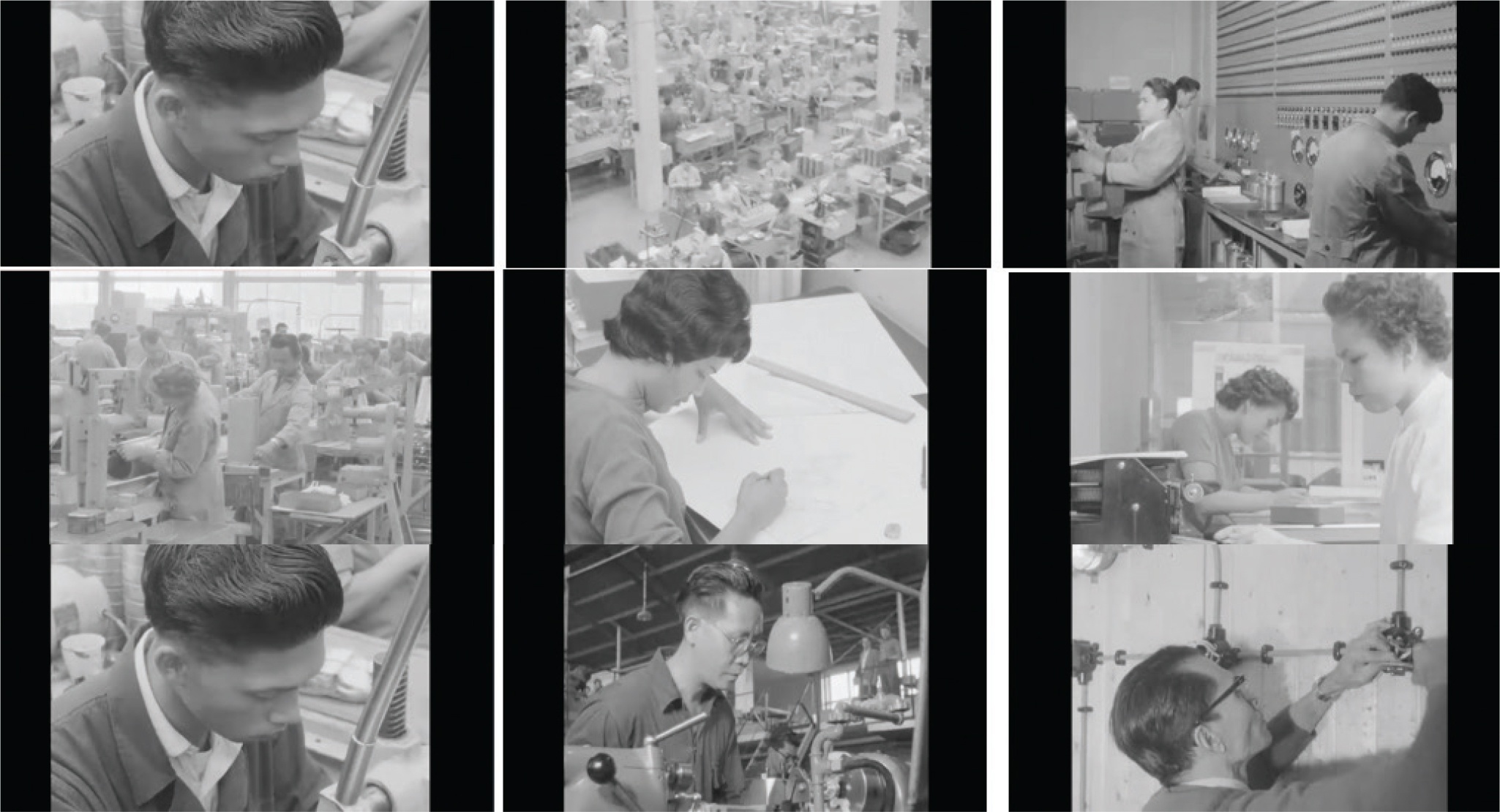
Figure 14
Collage of repatriates at work in Hun leven werd anders (1959)
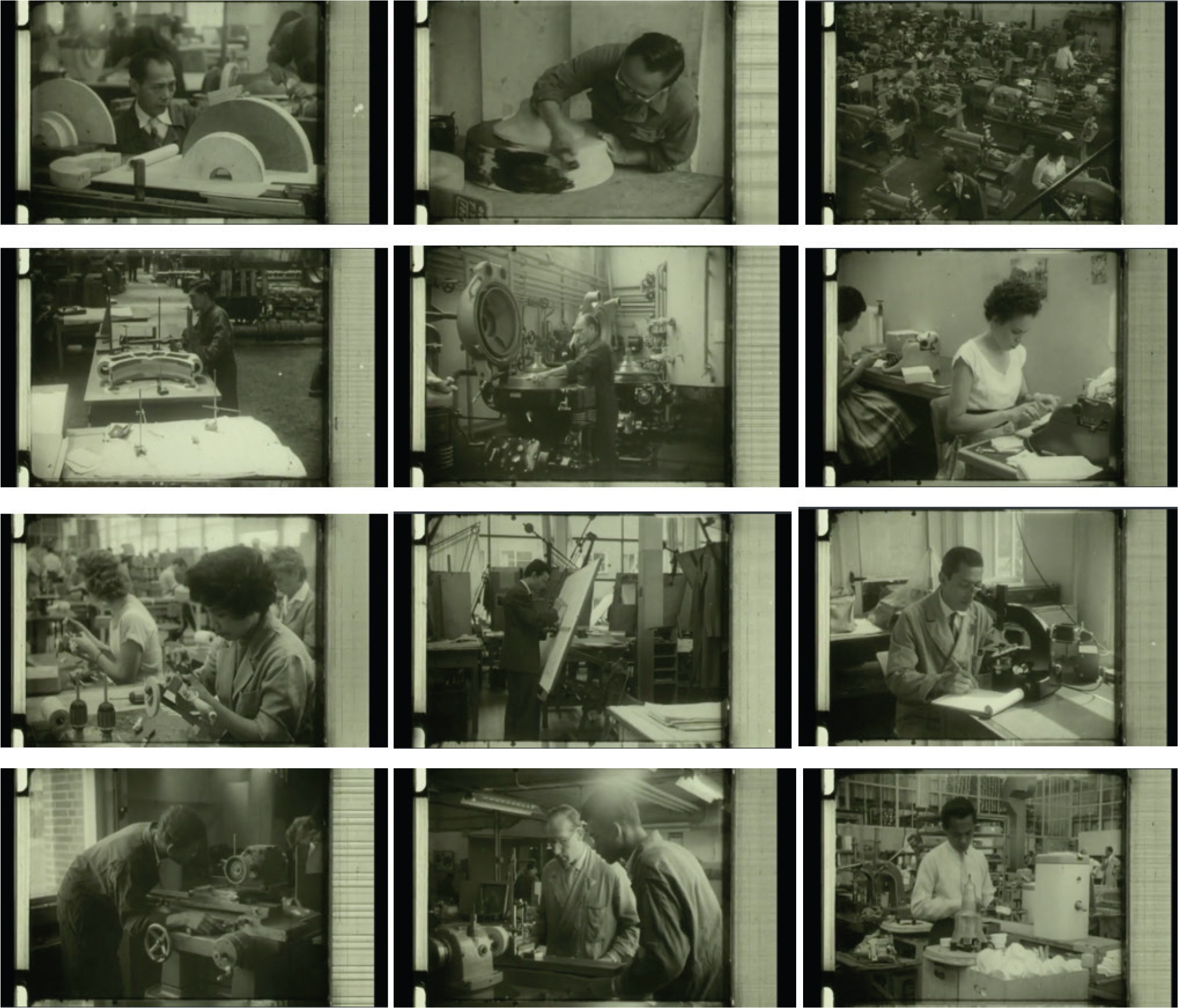
Figure 15
Collage of repatriates at work in Spiegel van Nederland (1950/1955)
Similarly, in Hun leven werd anders (1959), the integration of repatriates into the labour force is framed as a testament to Dutch success, rather than as a reflection of the migrants’ own efforts:
It is worth taking a closer look at the employment of repatriates. First and foremost, we can proudly state that since 1957, we have integrated 8,000 men and 1,700 women into the workforce. Most found employment through labor offices, and today, only 1,000 men and 2,000 women remain unemployed. The integration has been almost seamless for the general public. This is no small achievement for a country with an already high population density and a rapidly growing population.
Ahmed’s concept of hospitality as a mechanism of power helps to understand how these broadcasts tie repatriates’ belonging to their ability to integrate into the workforce.29 Ahmed argues that hospitality is conditional, positioning migrants as guests who must prove their value to the host society. In this case, repatriates are presented as being ‘welcomed,’ but this welcome is contingent on their economic usefulness. The positive depiction of their employability serves as evidence that they deserve inclusion, reinforcing the idea that belonging is granted on the terms of the host nation rather than being an inherent right. The state, rather than the repatriates themselves, is portrayed as the primary agent ensuring their smooth transition into Dutch society. This framing should be understood in the broader post-war Dutch context, where economic reconstruction, national unity, and decolonisation shaped migration narratives. The Netherlands, still recovering from the devastation of World War II, was engaged in large-scale economic rebuilding efforts, including labour market expansion, housing development, and social welfare structuring.30 Within this context, the integration of repatriates was framed not just as a migration issue, but as part of a national recovery project, in which the Dutch state positioned itself as both a humanitarian actor and an efficient manager of social and economic stability. The Dutch government sought to rebuild the economy and regulate labour markets, making workforce participation a key measure of successful integration. The broadcasts reflect this logic of productivity, emphasising repatriates’ ability to contribute rather than their individual struggles. The repeated emphasis on numbers, how many repatriates have been employed, where they have been placed, and how efficiently the system has absorbed them, suggests that their integration is valued less as a social or cultural process and more as a bureaucratic achievement of the Dutch state. Aligned with a national process of rebuilding, the broadcasts reinforce the idea that repatriates are ‘useful’ citizens because they contribute to economic recovery, rather than focusing on their personal struggles, displacement, or adaptation challenges.
Television in the 1950s thus constructed the idea of a ‘homecoming’ for repatriates as a smooth process. This stands in stark contrast to the complexities of ‘home’ described by Arps, who shows how Indo-European identity emerges through shifting relations to place, belonging, and citizenship.31 The televised framing of repatriation helps produce a particular idea of ‘home’, rather than acknowledging its contested and layered nature. What we see in 1950s television is the construction of a discourse in which repatriates are framed as ‘others,’ hospitality is conditional, belonging is bureaucratically managed, and recognition is granted primarily through economic utility. It offers not so much a home as a provisional space of acceptance, contingent on compliance.
1960s: Between critique and defense, television’s changing representations of repatriates
In the 1960s, Dutch television shifted in format and content, introducing new genres like children’s programs, TV plays, and short films, which changed how repatriates were represented. Unlike the 1950s, when repatriation was framed as a state-led success and repatriates were largely voiceless, the 1960s saw a more contested discourse emerge. Television became a space of negotiation, producing two parallel narratives: a critical discourse giving repatriates a voice, and a defensive discourse reaffirming Dutch hospitality. Despite these shifts, aspects of the 1950s anthropological gaze remained. This section explores how these tensions unfolded through evolving representations and power dynamics.
One of the most significant shifts in the 1960s was the introduction of new formats - documentary interviews, investigative reports, and personal testimonies - that gave repatriates a voice. This allowed for direct critiques of Dutch society, as repatriates shared experiences of misrecognition, discrimination, restricted mobility, and marginalisation. As I show in the following, the critical discourse that came into to being is personal and affective, focusing on lived experiences rather than statistics or institutional narratives.
One of the most striking features of 1960s television was the way repatriates themselves framed their migration, not as (voluntary) ‘repatriation’, but as forced displacement. The program Tussen wal en schip (1960) was among the first to feature a repatriate speaking in direct address to the Dutch audience, challenging the official narrative of ‘repatriation’:
It is not about “repatriation”; it is about forced migration, a flight. How would it feel to experience something like this? […] What we ask for is friendship, understanding, and a little appreciation, because as newcomers, one constantly wonders: are we appreciated? Do we count? Are we allowed to participate? What we ask for is a place of our own. In the midst of society.
Similarly, other programs feature repatriates reframing their migration, not as voluntary ‘repatriation’, but as forced displacement, citing experiences of violence and trauma as key reasons for their departure:
We had no life anymore, there were jobs for men, a lot of discrimination. […] Children were beaten up by groups of other children at school. (Spijtoptanten, 1961)
There was no life for us there, my wife was so traumatized by what she had been through there that she had to be hospitalized upon arrival here. (Televizier, 1960)
There is little understanding of what we have been through. We had to leave. […] It was unsafe. I have experienced things that I would rather not talk about. (Tussen wal en schip, 1960)
Many repatriates described how they were not recognised as Dutch upon arrival, even though they were legal citizens. Their encounters with Dutch people reveal a deep sense of misrecognition:
When we arrived here, many people did not even know we were Dutch. They asked why we had not stayed in our own country, why we had left Indonesia. (Tussen wal en schip, 1960)
I met a farmer on my walk. He asked if I was Indonesian. I told him: I am just as much Dutch as you are. (Tussen wal en schip, 1960)
The girls at school all had blonde hair, a different skin color. They called me ‘zwartje’ [diminutive for black]. I looked at my father and asked: is that an insult? Why are they calling me that? I am Dutch too. (Tussen wal en schip, 1960)
Through these testimonies, a counter-narrative to the 1950s discourse is constructed. Rather than presenting repatriates as smoothly absorbed into Dutch society, these programs exposed their alienation, struggles for acceptance, and the racialised barriers they encountered. Beyond social discrimination, the programs also suggest that many repatriates also struggled to find work and housing, revealing the limitations of the Dutch state’s integration policies. In Tussen wal en schip (1960), several repatriates express frustration at being systematically placed in lower-ranking jobs despite their qualifications:
The man who was looking for workers among the repatriates had promised me a job in the machinery department, but when I arrived, I was sent to the warehouse. (Tussen wal en schip, 1960)
All the diplomas we earned are worthless here. We are treated as unskilled laborers. People assume we are less capable than full-blooded Dutch citizens. (Tussen wal en schip, 1960)
These interviews contradict the narrative of repatriates as seamlessly integrated workers that had dominated 1950s television. Instead, they highlight how repatriates were systematically undervalued in the Dutch labour market, unable to transfer their skills and qualifications to their new environment.
Dutch television was also addressing more explicit racism and violence faced by repatriates. Programs such as Zwart of wit (1961), Televizier (1960), Kenmerk (1964), and Brandpunt (1964) featured interviews with repatriates who had experienced racial harassment, vandalism, and social exclusion:
I live in Midden-Beemster. My daughter and I are discriminated against. People shout at me, “Hey Soekarno wijf [invective for woman], go back to your country! What are you doing here?” They write horrible things on the walls, they throw dirt at our windows and laundry. (Zwart of wit, 1961)
When you enter the church, people stare at you as if you’re some strange curiosity, and that’s not pleasant - after all, we are all Christians among each other. People here are cold towards us; you can feel the condescension. (Kenmerk, 1964)
These testimonies reveal a stark contrast with the 1950s representation of the Netherlands as a hospitable and inclusive society. Rather than being welcomed, repatriates often faced racial hostility, exclusion, and even violence. By giving repatriates a platform to speak, television in the 1960s created space for a critical discourse on Dutch society, challenging the narrative of successful state-led integration that had dominated the previous decade.
This emerging counter-narrative resonates with Arps’s observation that Indo-Europeans developed a cultural memory rooted in audiovisual forms, weaving belonging into an imagined ‘home’.32 While Arps focuses on later generations, the televised moments examined here, featuring first-generation migrants, can be read as early articulations of that fabric, laying the groundwork for future memory and identity formation.
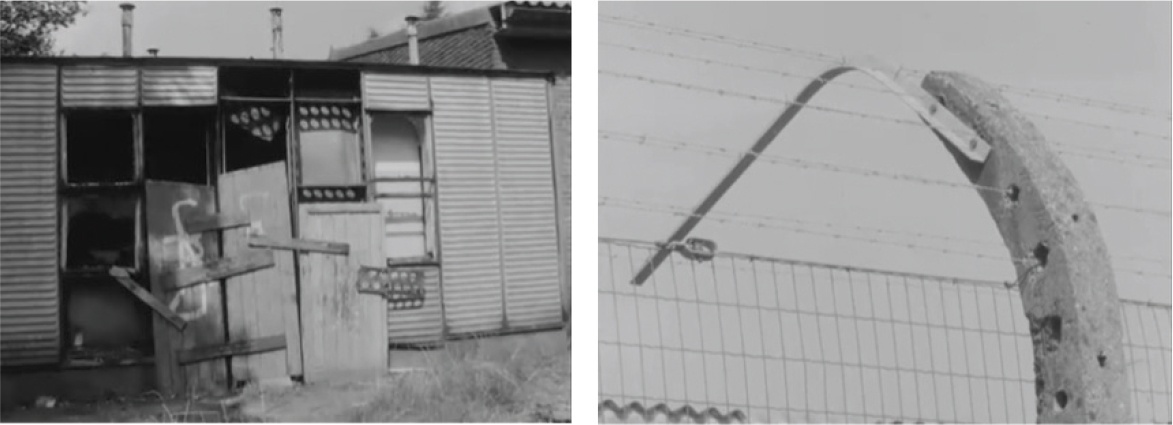
In addition to programs that gave repatriates a direct voice, critical perspectives on their conditions also emerged through narration and imagery alone. A striking example is found in the Televizier (1968), which focused on the deteriorating living conditions of Moluccan families. The voice-over and visuals construct a powerful critique of state neglect and broken promises. Camp Schattenberg, previously the Nazi transit camp Westerbork, where Moluccans live is described as ‘old, rotten, and neglected.’ Televizier contests the celebratory tone of 1950s coverage by emphasising the material consequences of prolonged marginalisation: ‘It will still take years before Schattenberg becomes a thing of the past,’ the voice-over notes, while describing the psychological and financial toll of leaving the camp as a form of ‘giving in’ to unkept promises (of return). Through its sombre tone, critical narration, and evocative imagery, such as crumbling barracks (see figure 16), barbed wire once used to confine Jewish people (see figure 17), and dilapidated playgrounds (see figure 18), the program disrupts the dominant narrative of care and seamless integration.
Figures 16-17
Crumbling barracks and barbed wire in Televizier (1968)
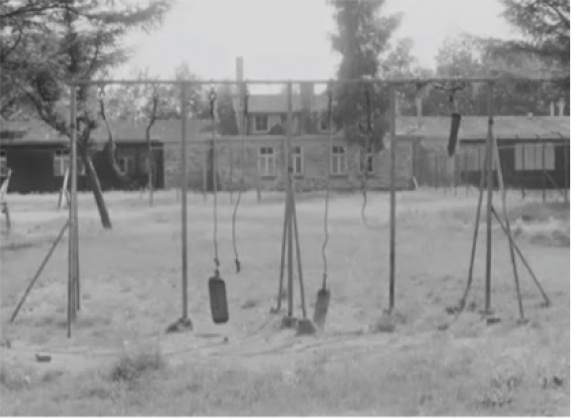
Figure 18
Dilapidated playgrounds in Televizier (1968)
The programs of the 1960s thus foregrounded personal experiences of discrimination, economic marginalisation, and racialised exclusion, positioning repatriates not as grateful beneficiaries of Dutch hospitality but as individuals struggling for recognition and equality. The mere existence of this discourse on television suggests a broader shift in Dutch media and public discourse. By the 1960s, repatriation and integration were no longer uncontested state narratives; instead, they became subjects of debate and negotiation.
While many 1960s programs gave space to repatriates’ critiques, others reinforced the image of the Netherlands as fair and hospitable, forming a counter-discourse. This consisted of three sub discourses: (1) repatriates are well cared for and have little reason to complain; (2) they must first adapt and take personal responsibility before voicing discontent; and (3) in the case of Moluccan repatriates, communal living and hopes for an independent South Moluccan Republic are dismissed as unrealistic, with integration presented as the only acceptable path. The first sub discourse is one of reassurance, presenting repatriates as well cared for and smoothly integrated. It highlights state efforts and institutional support, framing integration as largely successful. In a 1964 episode of Brandpunt, the voice-over confidently declares: ‘They [arriving repatriates] are on their way to a future that, for most, will not be bad. It has been shown that integration in the Netherlands has gone smoothly and that they have been gladly accepted into the workforce.’ Integration is portrayed not as a challenge, but as a natural transition.
This portrayal is reinforced in Kenmerk (1964), which shows Indo-Dutch repatriates arriving at spacious, peaceful locations: bungalow parks, villas, and countryside pensions (see figures 19–20). The commentary notes: ‘It may be a summer pension in the countryside, a large villa at the edge of the city, or a bungalow park like the one in Soesterberg.’ These scenes contrast sharply with earlier, more critical depictions of poor housing and marginalisation.
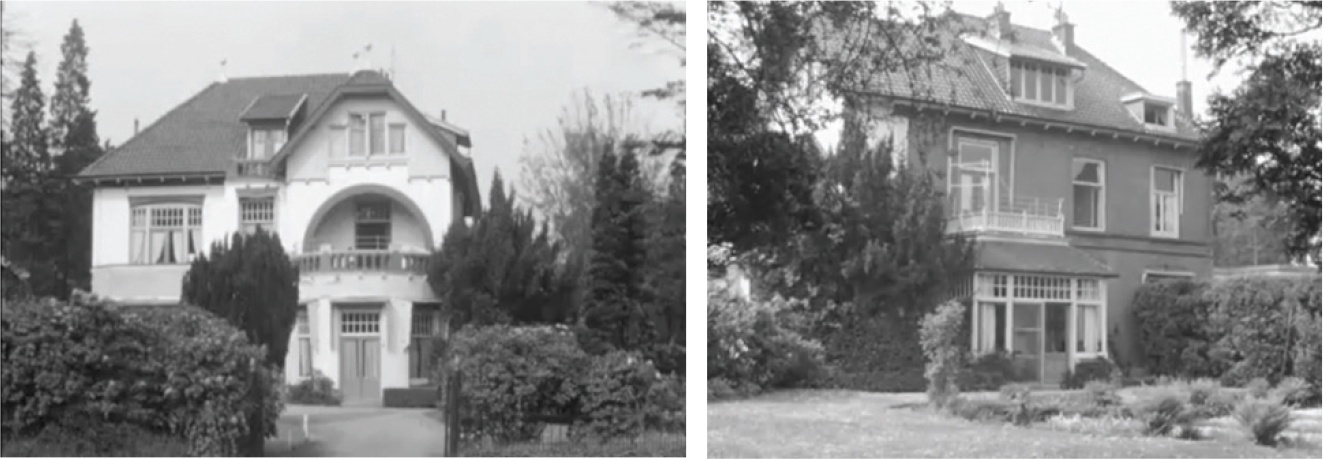
Figures 19-20
Luxurious accommodations in Kenmerk (1964)
Institutional voices also support this positive framing. F.W. Hopster, deputy director of the CCKP (Central Committee for Church and Private Initiatives for Social Care for Repatriates), highlights the joint efforts of the state and religious groups: ‘Every single day, caretakers help the Indo-Dutch find their way in a completely different, Dutch environment.’ This emphasis on care and guidance reinforces the moral image of the Dutch state and counters criticism by suggesting repatriates have been treated with generosity and dignity.
The second sub discourse that emerges in response to repatriate critiques revolves around the idea that integration requires understanding how Dutch society operates, and that repatriates must first take personal responsibility before voicing dissatisfaction. A clear example of this can be found in the 1964 episode of Kenmerk, in which repatriates openly express their disappointment with Dutch church life. Their comments reflect deep feelings of alienation: they criticise the impersonal atmosphere, the materialism of repeated collections, and the lack of reverence and community. One interviewee laments, ‘The church here is cold and impersonal. Very different from over there. There, you experience everything together. Here, you are alone.’ Another states, ‘When you enter the church, people stare at you like a strange wonder... you feel the condescension.’ Yet rather than validating these experiences or questioning Dutch institutional practices, the program pivots to a defence of the status quo. The voice-over poses the question, ‘With so much criticism, is a response possible?’ This rhetorical shift signals the transition from critique to correction. Two Dutch priests are interviewed in response, and their answers reveal the underlying logic of this sub discourse. They acknowledge some of the repatriates’ concerns, such as the abstract sermons and the frequency of collections, but ultimately frame these as necessary elements of Dutch religious life. More importantly, they reposition the responsibility back onto the repatriates: ‘You must understand that the collections are necessary,’ one priest explains. Another suggests that Indo-Dutch repatriates should not remain passive but contribute actively to church life: ‘They have something to offer... it is important that they provide that contribution.’
This reframing shifts the burden of integration from Dutch institutions to the repatriates themselves. The problem is not presented as systemic exclusion or cultural insensitivity, but as a lack of effort or understanding on the part of the newcomers. The subtle implication is that repatriates’ feelings of exclusion result from their own unwillingness to adapt, and that true belonging requires participation on Dutch terms. Even as one priest acknowledges the emotional distance and bureaucracy of the Dutch church compared to the familial warmth repatriates were used to, he concludes that Indo-Dutch Christians must ‘ensure their contribution’ and not ‘passively wait.’ In this way, the sub discourse minimises structural critique and reaffirms Dutch norms as neutral, placing the onus of integration, and its success or failure, squarely on the shoulders of repatriates.
The third sub discourse targets the Moluccan community, portraying their desire to return to the Moluccas and their communal living in camps as unrealistic and obstructive to integration. Their hope of repatriation is framed as a nostalgic illusion, needing to yield to the pragmatism of Dutch integration. Pulang ke Ambon (1969) exemplifies this discourse by confronting the Moluccan community with the material realities of life in Ambon.
The program begins by presenting a Moluccan longing for return, illustrated through two women translating the lyrics of the titular song ‘Pulang ke Ambon’: ‘I am homesick. I long for my family, I long for Ambon, for my homeland, that is where my relatives are.’ This emotional introduction is quickly undercut by the presenter, a white man, who announces that the community in the Vaassen camp will be ‘confronted’ with the present-day reality of Ambon, implying that their dream is built on illusion. The presenter continues: ‘With their dreams, they escape reality. In a small classroom in a dilapidated camp, they watch images of a reality their dream can never match.’ Through this staging, with Moluccans in a classroom and a white narrator explaining, the desire for return is framed not as a valid political or emotional stance, but as naïve escapism. The didactic tone and hierarchical setup cast the Moluccans, seated in a classroom, as students in need of correction, while the white figure embodies reason, reducing their longing to an unrealistic fantasy.
The footage of Ambon shown to the community reinforces this narrative. The documentary depicts poverty, decline (see figures 21–22), and regretful returnees. One says, ‘I worked at Philips in the Netherlands, there we were spoiled. Here, everything is disappointing. I long to return to Holland. Holland is a paradise for me.’ The voice-over adds, ‘Ambon, like the rest of Indonesia, lives from bankruptcy.’ These scenes frame return as hardship and disillusionment, undermining the desire to go back.
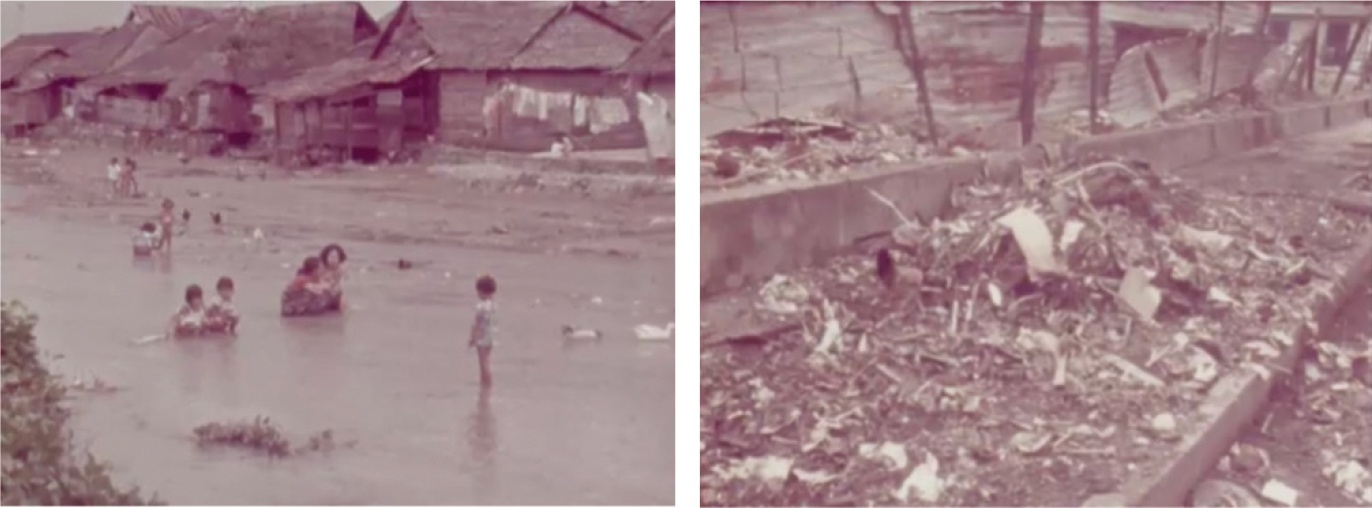
Figures 21-22
Footage of Ambon in Pulang ke Ambon (1969)
The presenter sharpens the confrontation with accusatory questions. He asks young girls if they are ‘afraid of having roots here,’ implying their Dutch upbringing conflicts with their imagined identity. Others face sharper inquiries: ‘How are you going to liberate Ambon? How do you see that happening? Are you going to do it yourself?’ and ‘Why do you continue to live in the residential camp? Isn’t that a form of Apartheid in the Netherlands?’ Such questions suggest that Moluccans who resist integration are not only unrealistic but also socially disruptive, even morally suspect.
In this sub discourse, the Moluccan dream of return is dismissed as both impractical and dangerous, as an obstacle to social cohesion. Communal living is equated with self-segregation, and true belonging is framed as possible only through dispersion, assimilation, and the abandonment of divergent political or cultural ties. Instead of fostering understanding of Moluccan history or trauma, the program promotes a one-way path to integration on Dutch terms. As Steijlen shows, Moluccans were not positioned as repatriates but as temporary exiles, living in segregated residential camps with minimal autonomy.33 Television largely mirrored this framing, often omitting political complexities such as the RMS aspirations or the imposed statelessness that defined Moluccan life in the Netherlands. Despite more critical voices and personalised storytelling in 1960s television, the anthropological gaze and portrayal of repatriates as ‘other’ persisted. Repatriates, especially Moluccans, were still shown as collective subjects, framed by cultural practices, numbers, and difference. In Patah Tjengkih (1961), Moluccan children perform traditional dances and games while a white man from the Museum of Ethnology explains their meaning (see figures 23–24), reinforcing an ethnographic lens. The presenter urges viewers to ‘go learn from the Ambonese children in the Netherlands, as there are many,’ casting them as exotic bearers of tradition, distinct from the Dutch norm.
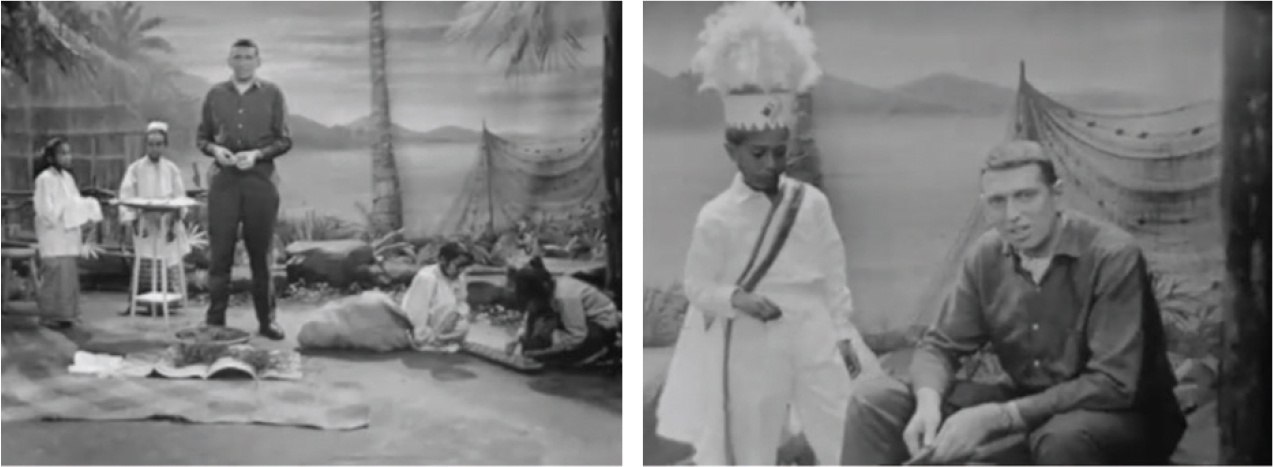
Figures 23-24
Moluccan traditions explained in Patah Tjengkih (1961)
Similarly, Brandpunt (1964) offers a strikingly Orientalist portrayal of Moluccans: ‘Excellent soldiers, fiery royalists, fanatical and militant... and when their warm temperament flares up in the Dutch winter cold, smoke fills the air.’ This essentialising description relies on racialised and exotic tropes that associate Moluccans with emotion, aggression, and spectacle, drawing on the legacy of colonial categorisation. Such representations obscure individual subjectivity and reinforce cultural otherness.
Even in critical programs like Kenmerk (1964), Moluccan and Indo-Dutch repatriates are portrayed as needing instruction and discipline. Pension directors state they act as caretakers, educators, and moral guides. One says repatriates must learn to use appliances, maintain hygiene, and adapt their diet: ‘They must learn not to always eat Indonesian food, but also Dutch food - local customs, local honor.’ Another claims his time in Indonesia helps him ‘to better understand them,’ reinforcing the view of repatriates as culturally distant and in need of translation.
The objectification of repatriates also manifests through their consistent framing as demographic figures. In Televizier (1968), Moluccans are presented through escalating statistics, reinforced by a montage that cross-cuts numerical growth projections with images of children reciting multiplication tables. The effect is one of multiplication and threat: the viewer is invited to perceive this community in terms of its increasing size and potential strain on the nation. The voice-over draws a direct line from 3,500 KNIL soldiers arriving in 1951 to a potential population of 100,000 by the turn of the century, warning that Moluccan families are ‘twice as large’ as Dutch ones and ‘do not practice family planning.’
Finally, in fictionalised or satirical segments such as the sketch in Spijtoptanten (1961), repatriates are discussed by immigration officers in bureaucratic, exclusionary terms. They are reduced to numbers in a debate about housing shortages and economic risk, framed not as fellow citizens returning home but as burdens to be managed. One officer remarks: ‘Look, the Netherlands is overpopulated, we’re already short on housing, and if anything happens to the economy, we’ll be back in the middle of unemployment again.’ This striking claim echoes present-day anti-migration rhetoric, where similar arguments about scarcity and national capacity are invoked to justify exclusion. Another line: ‘We’re not here to play Sinterklaas’, dismisses any notion of moral obligation or historical responsibility, replacing it with a logic of restriction and control.
Together, these examples demonstrate that even as 1960s television created more space for repatriates to speak, it continued to reproduce a visual and narrative economy in which they were constructed as fundamentally different. Their cultural practices, demographic presence, and perceived need for guidance were framed through an anthropological and administrative gaze that kept reinforcing their otherness. The expectation remained that they should integrate into Dutch society on its terms, dispersed, depoliticised, and stripped of collective identity, suggesting that full belonging remained conditional, monitored, and ultimately constrained by dominant norms.
Relating the findings of the 1960s broadcasts to the broader post-war Dutch socio-political context offers valuable insight into how television reflected and reinforced dominant narratives. In the aftermath of World War II, the Netherlands was not only rebuilding its physical infrastructure, but the post-war period also marked the final phase of Dutch decolonisation, with Indonesia’s independence and the repatriation of Indo-Dutch and Moluccan people. While these groups were legally Dutch citizens, their inclusion into Dutch society was represented as deeply conditional. The broadcasts stressed that repatriates had to adapt to Dutch norms, whether in workplace behaviour, religious practice, or daily life, reinforcing an assimilationist model of belonging.
The 1960s were also marked by growing tensions around the limits of inclusion, particularly as the welfare state’s capacity was increasingly scrutinised in relation to migration. While repatriates were formally Dutch citizens, their difference, marked in terms of culture, appearance, religion, or political aspiration, was presented a source of social friction. The broadcasts from this decade reveal these tensions: on the one hand, the state and its institutions continued to present themselves as hospitable and fair, extending support to those in need; on the other hand, when repatriates voiced critique or resisted assimilation, their claims were met with defensiveness, moral correction, or bureaucratic distancing. The broadcasts discourage repatriates from forming their own social networks, with programs emphasising the need to integrate into Dutch society and not form isolated groups, a sentiment that reflects the post-war desire for national unity over cultural plurality.
Sara Ahmed argues that national narratives of inclusion often require minoritised subjects to adopt the emotional posture of gratitude, and those who challenge this script risk being seen as ungrateful.34 In this case, repatriates who expressed dissatisfaction were not only viewed as resisting integration, but also as disrupting the affective economy of national benevolence. Their complaints interrupted Ahmed’s ‘happiness duty’, the expectation that migrants must express gratitude for being included, however conditionally.35 This helps explain the defensive discourse present in many 1960s broadcasts, which responded to repatriate critiques not with structural reflection, but with moralising reminders of how much has been done for them.
The persistence of the anthropological gaze in these programs reflects a colonial hangover, one in which cultural difference was not only highlighted but often essentialised. Even as the Netherlands positioned itself as a postcolonial nation, it continued to look at its repatriated citizens through a lens shaped by empire, rendering them as subjects to be managed, educated, and, ultimately, absorbed. The imperative of integration, on Dutch terms, was framed as a duty, and resistance to it (whether in the form of political hope or communal cohesion) was interpreted as failure or ingratitude.
The 1960s broadcasts can thus be understood as a cultural expression of a post-war nation grappling with its colonial legacies while trying to project an image of moral responsibility and national unity. They reveal how television participated in the construction of postcolonial Dutch identity, not simply by documenting migration, but by shaping the terms on which repatriates could belong, and the emotional conditions under which that belonging would be granted.
Conclusion: televising belonging - negotiating the limits of postcolonial inclusion
This article has examined how Dutch public television in the 1950s and 1960s represented Indo-Dutch and Moluccan repatriates, and how these representations reflected broader post-war narratives of nationhood, hospitality, and belonging. It has shown how television functioned not simply as a mirror of migration but as a key medium for producing and managing the emotional and political terms of postcolonial inclusion.
In the 1950s, television constructed a celebratory narrative of repatriation as a national success story. This discourse emphasised benevolence, order, and integration, portraying the Dutch state as an efficient and moral actor. Yet beneath this narrative of hospitality lay a deeper asymmetry. Repatriates were visible but voiceless, portrayed through group imagery, numbers, and exoticised cultural practices. Their belonging was conditional, granted only through compliance, gratitude, and especially economic utility.
The 1960s brought significant shifts in format and tone. New genres such as documentary interviews and TV plays enabled more personal, critical, and affective storytelling. Repatriates began speaking for themselves, recounting experiences of forced displacement, racism, marginalisation, and misrecognition. This period saw the emergence of a counter-narrative: one that challenged the idealised image of Dutch hospitality and exposed the limits of inclusion. Repatriates’ affective disobedience (e.g., sadness, anger, critique) unsettled the image of a generous Dutch nation and challenged the assumed terms of belonging. Yet even in these more critical representations, the framing of repatriates as ‘other’ persisted. The 1960s show how television was a key cultural site where the boundaries of Dutch identity were policed and negotiated. While 1960s programs opened space for critique, they also reinforced dominant norms: repatriates could be heard, but only within frameworks that demanded emotional conformity, individual responsibility, and depoliticised forms of belonging. Inclusion remained conditional. Repatriates on television were granted belonging only to the extent that they did not disturb the dominant national narrative. Their growing visibility, their personal stories of hardship, and their emotional appeals did not always lead to recognition or justice. Instead, they sometimes provoked defensiveness or renewed calls for conformity. In this way, the discourse of hospitality shifted from celebration to tension, from symbolic welcome to contested belonging. As Pattynama has argued, postcolonial identity is shaped within distinct memory communities.36 Yet Dutch media rarely acknowledged this fragmentation. While television created affective narratives of inclusion, it offered limited space in which repatriates, Indo-Dutch and Moluccan alike, could articulate their own layered histories and cultural memories. These were often subsumed under a national framework that demanded coherence, consensus, and emotional conformity.
The case study of the repatriates offers a historically situated contribution to Sara Ahmed’s theories on affect, conditional inclusion, and national belonging.37 Whereas Ahmed primarily focuses on contemporary institutional settings, such as universities or diversity policies, this article demonstrates that the emotional politics of inclusion, particularly the demand for gratitude and the management of complaint, were already clearly articulated in Dutch television programming of the 1950s and 1960s.
Moreover, this article adds a postcolonial dimension to Ahmed’s affect theory by foregrounding how the legacy of colonialism shaped the emotional terms of inclusion. While Ahmed has noted how the figure of the stranger is racialised and positioned as the site of national anxiety, the Dutch case shows how this stranger could be simultaneously legally Dutch and yet still constructed as foreign, exotic, or even burdensome.38 The repatriates’ ambivalent position, citizens by law, but ‘others’ in the cultural imagination, offers an extension of Ahmed’s argument about the uneven distribution of comfort and belonging. This case study shows how national affective economies operate not just through policy or interpersonal relations, but through the representational practices of media, which normalise certain emotions (like pride, gratitude, or suspicion) and delegitimise others (like critique, or alienation). It thus suggests the need to include historical media discourse in the study of how affect structures national inclusion, exclusion, and the limits of diversity.
The emotional and representational structures explored in this article are not abstract phenomena. They shaped how families like my own were seen, and how they learned to see themselves. The televised story of repatriation was not only broadcast to the Dutch public; it also echoed in the homes of repatriates, framing their presence as both legitimate and precarious. Returning to the barracks of Teerdorp, and to the stories my grandmother told, we can now better understand how national belonging was never simply granted, but negotiated, through policy, through perception, and through the medium of television.
Notes
[1] Gert Oostindie, “Migration and its legacies in the Dutch colonial world,” Dutch colonialism, migration and cultural heritage (Brill, 2008), 18.
[2] Arnoud Arps, “The Fabrics of Home: Remembering the Indo-European Repatriation in Contractpensions-Djangan Loepah!” Journal of Migration History 8.3 (2022): 376.
[3] Pamela Pattynama, “Cultural memory and Indo-Dutch identity formations,” Post-Colonial immigrants and identity formations in the Netherlands (2012): 182.
[5] Hans van Amersfoort, “The waxing and waning of a diaspora: Moluccans in the Netherlands, 1950–2002,” Journal of Ethnic and Migration Studies 30.1 (2004): 151; Fridus Steijlen, “Molukkers in Nederland, een sociale geschiedenis van uitersten,” Groniek 208/9 (2015): 225-226.
[7] David Bordwell and Kristin Thompson, Film Art: An Introduction. 7th ed. (McGraw-Hill, 2004); Nicholas Mirzoeff, An Introduction to Visual Culture (Taylor & Francis, 1999).
[8] Leah Vande Berg, Bruce Gronbeck, and Lawrence Wenner, “Narrative Criticism,” Critical Approaches to Television (Houghton Mifflin Company, 2004), 196–209.
[9] Pamela Pattynama, “Assimilation and masquerade: Self-constructions of Indo-Dutch women,” European Journal of Women’s Studies 7.3 (2000): 281-299; Pamela Pattynama, “FORGOTTEN PAST,” Migrant Cartographies: New Cultural and Literary Spaces in Post-colonial Europe (2005): 239; Pamela Pattynama, “Memories of interracial contacts and mixed race in Dutch cinema,” Journal of Intercultural Studies 28.1 (2007): 69-82; Pamela Pattynama, “De rol van koloniale foto’s in Indisch en postkoloniaal Nederland,” Van felle kritiek tot feuilleton: De Indische pers en de literatuur (2013): 87; Pamela Pattynama, “Cultural Memory and Indo-Dutch Identity Formations,” Post-Colonial Immigrants and Identity Formations in the Netherlands, ed. Ulbe Bosma (Amsterdam University Press, 2012), pp. 175–192; Arnoud Arps, “The Fabrics of Home,” 374-403; Fridus Steijlen, “Moluccans in the Netherlands: From exile to migrant,” RIMA: Review of Indonesian and Malaysian Affairs 44.1 (2010): 143-162; Fridus Steijlen, “Closing the ‘KNIL chapter’: a key moment in identity formation of Moluccans in the Netherlands,” Post-colonial immigrants and identity formations in the Netherlands (2012): 117-34; Fridus Steijlen, “Molukkers in Nederland, een sociale geschiedenis van uitersten,” Groniek 208/9 (2015).
[12] Steijlen, “Moluccans in the Netherlands,” 143-162; Steijlen, “Closing the ‘KNIL chapter,” 117-34.
[15] Huub Wijfjes, “Inleiding: zeventig jaar televisie in Nederland,” De televisie: Een cultuurgeschiedenis (Boom, 2021), 9.
[16] Huub Wijfjes, “De journalistiek van het journaal: Vijftig jaar televisienieuws in Nederland,” TMG Journal for Media History 8.2 (2005): 8.
[18] “Hoe werd de televisie het middelpunt van de woonkamer?” NPO Kennis, last modified April 22, 2024, npokennis.nl/longread/7560/hoe-werd-de-televisie-het-middelpunt-van-de-woonkamer.
[23] Gayatri Chakravorty Spivak, “Can the Subaltern Speak?,” in Colonial Discourse and Post-Colonial Theory, ed. Patrick Williams and Laura Chrisman (Columbia UP, 1994), 75.
[27] Rob van Ginkel, “Re-creating ‘Dutchness’: cultural colonisation in post-war Holland,” Nations and Nationalism 10.4 (2004): 425.
[28] Gloria Wekker, White innocence: Paradoxes of colonialism and race (Duke University Press, 2016), 12-13.
[30] Pieter Lieftinck, The post-war financial rehabilitation of the Netherlands (Springer, 2012), 7.
Appendices
Appendix 1
Corpus overview
| Title | Date (d-m-y) | |
|---|---|---|
| 1 | Spiegel van Nederland | 1950 (made) 06-05-1955 (broadcast) |
| 2 | Journaal | 10-12-1957 |
| 3 | Journaal | 19-12-1957 |
| 4 | Journaal | 28-12-1957 |
| 5 | Journaal | 04-01-1958 |
| 6 | Journaal | 11-01-1958 |
| 7 | Journaal | 14-01-1958 |
| 8 | Journaal | 11-02-1958 |
| 9 | Journaal | 15-02-1958 |
| 10 | Journaal | 11-09-1958 |
| 11 | Journaal | 15-09-1958 |
| 12 | Hun leven werd anders | 15-07-1959 |
| 13 | Tussen wal en schip | 04-03-1960 |
| 14 | Journaal | 05-08-1960 |
| 15 | Televizier | 16-11-1960 |
| 16 | Patah Tjengkih | 17-06-1961 |
| 17 | Spijtoptanten | 16-10-1961 |
| 18 | Zwart of wit | 07-11-1961 |
| 19 | Achter het nieuws | 11-11-1961 |
| 20 | Brandpunt | 18-11-1961 |
| 21 | Journaal | 30-12-1961 |
| 22 | Journaal | 31-07-1962 |
| 23 | Attentie | 16-08-1963 |
| 24 | Brandpunt | 23-01-1964 |
| 25 | Pangillan | 20-02-1964 |
| 26 | Indische jongen | 30-03-1964 |
| 27 | Kenmerk | 08-06-1964 |
| 28 | Televizier | 13-08-1964 |
| 29 | Journaal | 02-11-1964 |
| 30 | Brandpunt | 05-11-1964 |
| 31 | Journaal | 24-04-1965 |
| 32 | Kenmerk | 13-09-1965 |
| 33 | Televizer | 04-10-1968 |
| 34 | Pulang ke Ambon | 20-01-1969 |
| 35 | Info | 27-03-1969 |
| 36 | Hier en nu | 04-04-1969 |
Biography
Dr. Leonie Schmidt is an Associate Professor at the Media Studies Department at the University of Amsterdam and a researcher at the Amsterdam School for Cultural Analysis. Her research interests include climate change narratives, Indo-Dutch cultural memory, and popular culture and religion in Southeast Asia. Leonie is the author of Islamic Modernities in Southeast Asia: Exploring Indonesian Popular and Visual Culture (Rowman & Littlefield, 2017) and It’s My Party: Tat Ming Pair and the Postcolonial Politics of Hong Kong (Palgrave, 2024), and she is the co-editor of Provocative Images in Contemporary Islam (Leiden University Press, 2023). In 2024, she was awarded an ERC Consolidator Grant to explore Islamic popular-cultural approaches to climate change in Southeast Asia.