
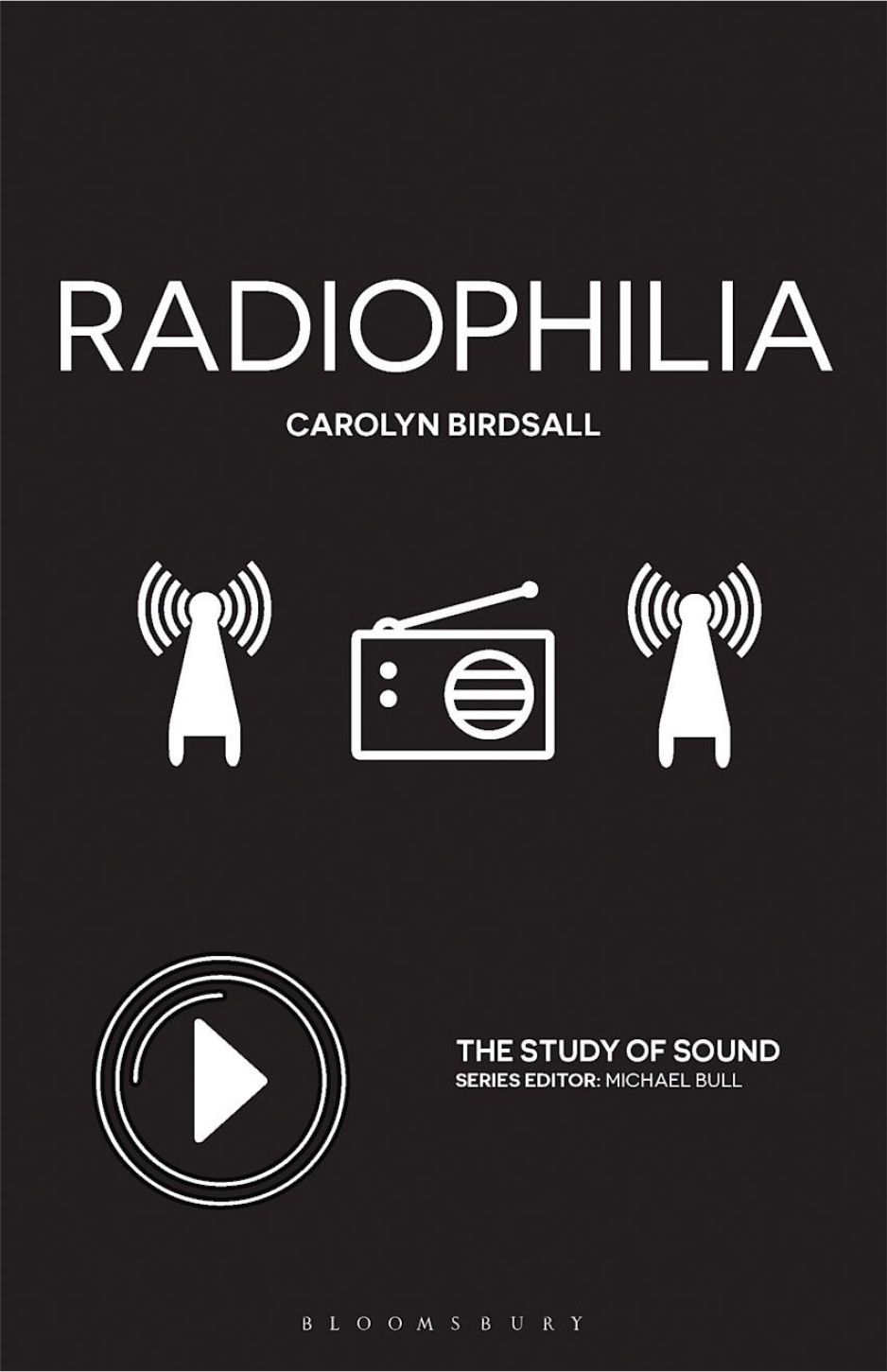
In Radiophilia, part of The Study of Sounds Series, Carolyn Birdsall covers a century of radiophilia, defined as ‘the love for, or strong attachment to, radio’ and offers a comprehensive and rich analysis of how this love has been manifested across different times, places and cultural contexts. Drawing on bell hooks’ conceptualisation of love as a domain of action and practice, Birdsall presents radiophilia not merely as an emotional bond, but as a complex set of practices shaped by personal experiences alongside broader social and cultural contexts. Radiophilia is organised around four distinct dimensions of love: “Loving”, “Knowing”, “Saving”, and “Sharing”, each addressing a different question: ‘what is the love of radio, and how do you enact or express this loving of radio? How do you know the thing you love? How do you save the thing you love? How do you share your love of radio?’.1
In the first dimension, “Loving”, Birdsall explores the various qualities and attractions that foster affection for the medium, highlighting elements such as radio’s culture of liveness, the voices broadcast, easy access to information, and the ability to integrate radio into everyday life. Birdsall expands on the concept of radiophilia, emphasising that the experience of radio transcends auditory engagement to involve all the senses in the interaction with the radio. By incorporating material and visual aspects of radio, she illustrates how the physical presence of radio infrastructure, its design as a consumer object, and the promotion through visual media have all played significant roles in nurturing a deep affection for radio. This emphasis on the importance of including multisensory dimensions in the study of radio reappears throughout Radiophilia, shining new light on the various ways in which people connect with the medium.
The second dimension, “Knowing”, examines how the love of radio is developed through different forms of knowledge acquisition and dissemination. For example, radio clubs emerged early on as vital spaces where early radio enthusiasts, often male, exchanged technical knowledge and spurred innovations in radio. Later, the medium’s appeal broadened to the wider public through accessible forms such as radio films, exhibitions, and radio encyclopaedias. Birdsall further underscores the importance of interpreting radio’s appeal beyond its sonic qualities and urges the consideration of radio’s material culture, such as periodicals and magazines, illustrating how these physical manifestations have further helped to legitimise radio fandoms and establish a broader cultural connection to the medium. The chapter concludes by emphasising that a thorough understanding of radio’s appeal must include its connections to other media forms , such as music and film, and argues how this intermediality plays an important role in shaping radio’s popularity.
In “Saving”, Birdsall shifts her focus to the efforts made by amateur collectors and professional archivists alike to preserve radio’s material and sonic heritage. Birdsall exposes the traditional understanding of radio heritage as being predominantly sound-focused and argues that this view overlooks significant aspects of radio history. In the first part of this chapter, several non-sound objects are discussed, such as QSL cards — handwritten confirmations of radio signal reception — scrapbooks, badges, and magazines. These material artifacts are shown to have been instrumental in shaping the identity and self-expression of radio fans. In the second part of this chapter, Birdsall discusses the efforts made by amateur collectors and professional archivists to preserve radio’s sonic heritage and highlights the motivations behind preservation efforts and the challenges faced by those who are dedicated to saving radio.
The last dimension, “Sharing”, examines the diverse avenues through which radiophiles have expressed their love for radio. Including both top-down initiatives and self-organised efforts, Birdsall focuses on dedicated spaces such as museums, both nationally funded and curated by radio hobbyists, and pre-war music shops and music cafes.
Next, the chapter shifts from physical places to immaterial spaces such as the internet and radio broadcasting itself. It explores how curated shows and playlists contribute to the creation and dissemination of a shared radio and national music heritage.
In all four chapters, Birdsall cunningly brings together insights from different fields such as global and feminist media studies, fan studies, radio studies, audio studies, material culture, and heritage studies. One of Radiophilia’s major strengths is the inclusion of many different voices and perspectives, from critically pointing out ‘[t]he default assumption that amateur radio practitioners are men’2 and the resulting ‘scant nature of information about amateur enthusiasts who were not white or male’3 to the role of radio in Zambia ‘as a social object taking up various public uses and that can dynamically move between its owners and friend and in kinship networks’.4 The broad coverage of (the love of) radio in various historical periods and cultural contexts can sometimes lead to a somewhat fragmented reading experience, as Birdsall strives to be as inclusive as possible within the limits of a single book. In the end, however, this extensive scope can only be applauded. It allows the reader to engage with non-Western aspects of radio history and brings attention to narratives that challenge the traditionally male-centred focus, making Radiophilia an incredibly valuable touchstone for diversifying our understanding of radio and its history.
Notes
Biography
Loren Verreyen is a PhD student at the University of Antwerp, funded by FWO (11PTV24N).