
The official jubilees of important organisations often provide incentives for historical research. At such moments, obtaining research funding can be easier, and publishers are keen to produce books that can leverage the free attention generated by festivities that accompany jubilees. It is no coincidence that four academic books were published in November 2022, at the moment when the BBC celebrated its official start (after an experimental period that began in 1920) one hundred years ago. This illustrates that organisations or companies with a long history, outstanding reputation, and broad influence can stimulate particular interest in history. The BBC is a nice example; with its programs (estimated at an astonishing 10 to 20 million over 100 years), the BBC contributed considerably to every part of British culture. You name it, and the BBC has been there to mediate it. In politics, news, sport, science, art, religion, and education, the BBC is crucial, and is often closer to indispensable than critics of all types think.
As an historian, how, though, do you make this enormous role visible? The BBC has been present in everyday life with all sorts of programmes, on all subjects, in radio, television, and online. Nowadays this presence – which began with one radio station, for a few hours a day, reaching to the outskirts of greater London – stretches 24/7, out to radio, television, and online channels worldwide. Apart from the fact that most of the programmes have not been preserved, or have even been thrown away, how can one get a grip on such a variety of contents and realities? For that, we need experienced analytical historians.
The history of the BBC has been – and still is – filled with public praise and admiration, but also with criticism. This underlines the BBC’s lasting relevance to public life. In historical perspective, this relevance cannot be underestimated. ‘Auntie’ was part of everyday life for more than four generations, and developed into one of the crown jewels of British culture. The BBC is now a world-renowned producer of quality programs and digital content, with influence throughout the globe. In the USA, trust in the BBC News organisation is greater than in any other native television or online station.1 Numerous countries have duplicated the BBC’s public service organisation model, and the BBC exports programmes to every corner of the world.
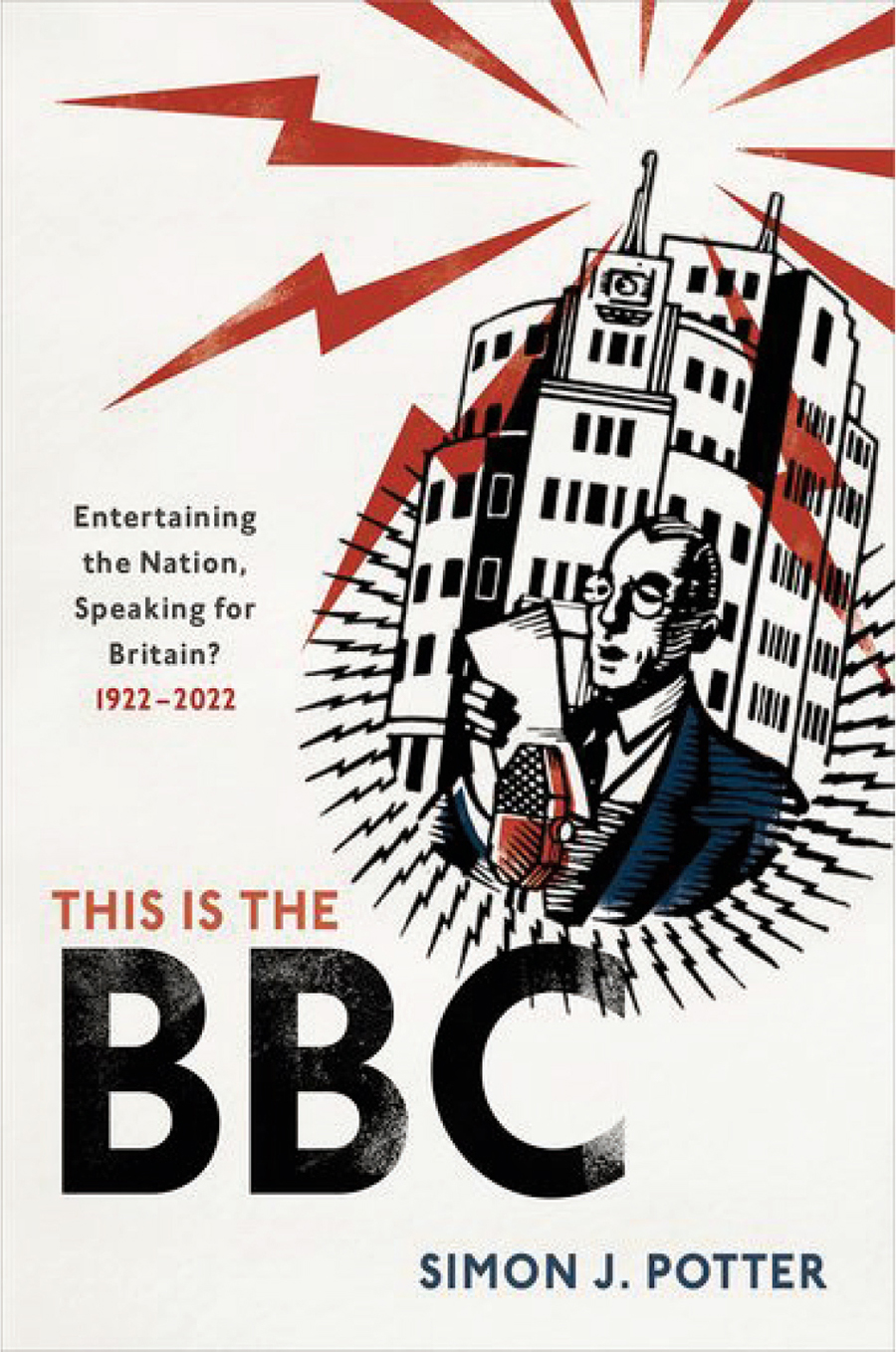
This position has been neither inevitable nor unchallenged, says professor in Modern History at Bristol University Simon Potter, in his latest book accompanying the BBC’s jubilee year. Potter’s book This is the BBC can best be seen as a summarising study of the abundant BBC literature, with a special focus on broadcasting’s international function. Potter pays significant attention to the BBC during World War II and later international conflicts. World War II is of special interest because during this period, the BBC founded its public image of independence and trustworthiness as a news provider. After the war, the BBC built its international reputation on this foundation.
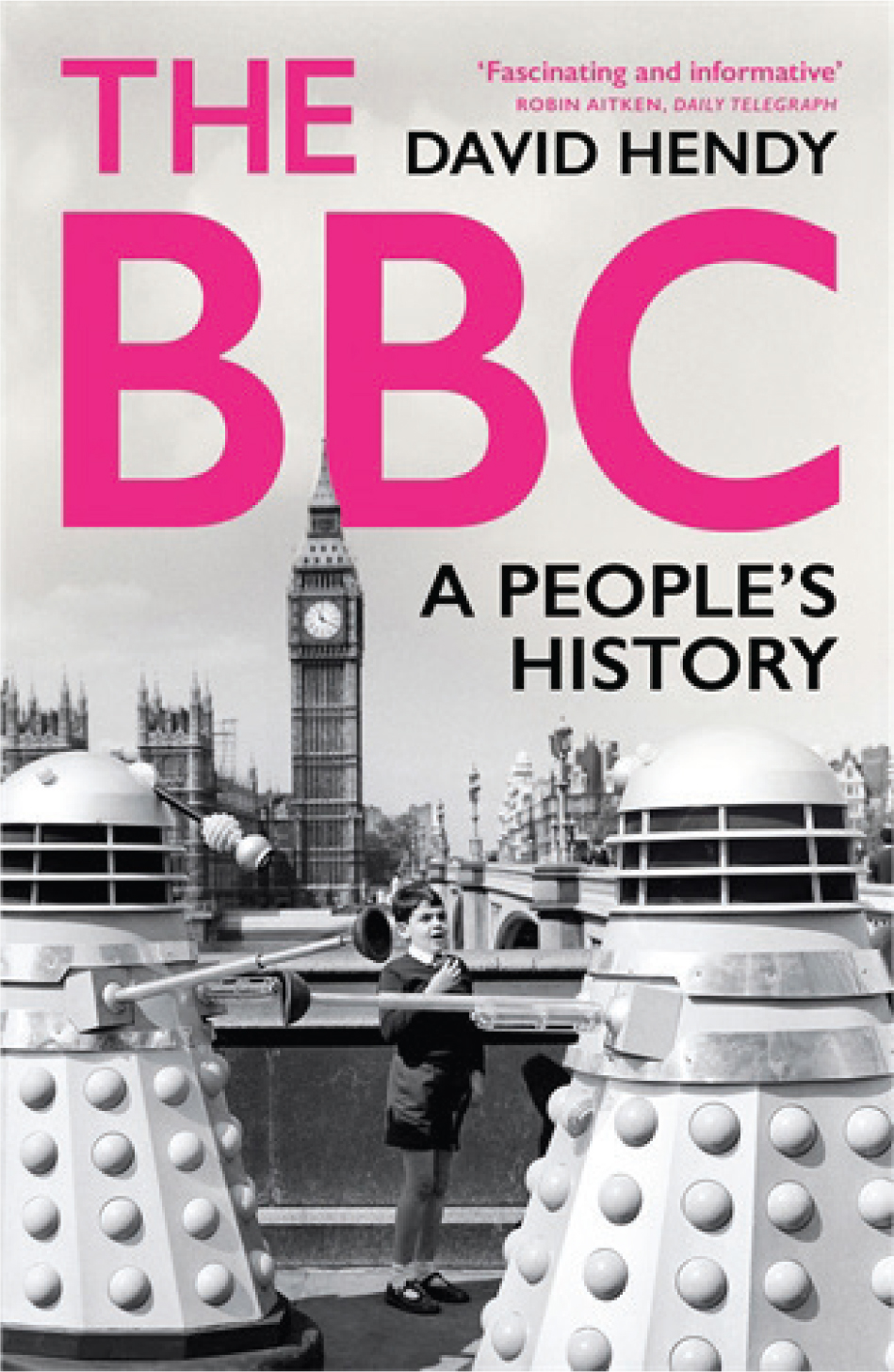
Despite this special focus, Potter attempts to capture an overview of the BBC throughout its entire period of existence, and on all aspects of its actions. Emeritus Professor of Media and Cultural History at University of Sussex David Hendy attempts to do the same in The BBC: a People’s History. However, where Potter takes 280 pages for this task, Hendy needs 600. That is nothing compared to the monumental five-volume, 3500-page series cultural historian Asa Briggs wrote between 1957 and 1995 about The History of British Broadcasting in the United Kingdom. Briggs’ enormous and intimidating effort, however, received significant criticism from modern media historians because of its strictly institutional focus on the BBC’s internal affairs, official broadcasting policies, and large affairs and debates. Some critics have also said that the official character of Briggs’ authorised work covered up the important cultural and social roles programmes play in daily life, and neglected the creative processes of making programmes that developed in relative autonomy from official policies and organisational matters.
So, despite (or, perhaps, thanks to) Briggs’ mountain range examining the BBC’s history, there has been plenty of room for new perspectives and vistas. In this respect, Hendy’s and Potter’s books are a bit disappointing. Both authors also choose a mainly institutional perspective. Although Hendy claims to have written a ‘people’s history’, his chronological story is not a social history of either the BBC or the people who have listened to radio and watched television. Nevertheless, Hendy’s book is an outstanding piece of analytical historical research into the BBC’s position in the UK and the dilemmas and conflicts that have shaped its history.
Using original archival material and oral history, Hendy tells this story in a catchy style with a nice eye for the balance between long-term development and illustrative detail. Whereas Briggs’ history stops in 1974, Hendy draws the lines further into our age, covering what in later historiography will undoubtedly become known as one of the most interesting periods in media history. Commercial competition, globalisation of news and culture, technological digitization of the media landscape, and dramatic changes in political culture, have structurally disrupted the media field, including journalism, broadcasting, and other media trades. All of this has threatened the BBC’s survival, but Hendy and Potter both claim that it is better to say that the BBC has been forced to reinvent itself in relation to the public and society. The interesting part of this process is that the BBC has presented old public norms like reliability, accuracy, trustworthiness, and independence, in new digital, interactive, and responsive forms. Despite the ever-fiercer attacks on the BBC’s existence, mainly from conservative politicians (who have at times called the BBC ‘Biased, Bankrupt and Corrupt’), the BBC has survived. Considering the depth of crisis caused by, for example, the Diana interviews by Martin Bashir, the covered-up sexual abuses by Jimmy Saville, and the sexed-up BBC claims about the government’s policies on participating in the Iraq war, remaining both relevant and trustworthy is an amazing achievement.
The BBC’s hundred years of adaption to modernisation, criticism, and disruption is a fascinating process that Potter calls ‘endurance’, a strong and lasting effort to overcome ‘wrenching changes and profound transformations’. Because Potter is an international media specialist, the cases he analyses are mainly connected to the BBC’s struggle to maintain independence during wars like World War II, the Suez crisis, the Falklands war, the Troubles in Northern Ireland, and the Iraq war. Hendy evaluates these in further detail, so the reader experiences a tendency to see the two books as rather similar: Potter’s being the more concise and stimulating, Hendy’s the better written and more thoroughly based on extensive archival research.
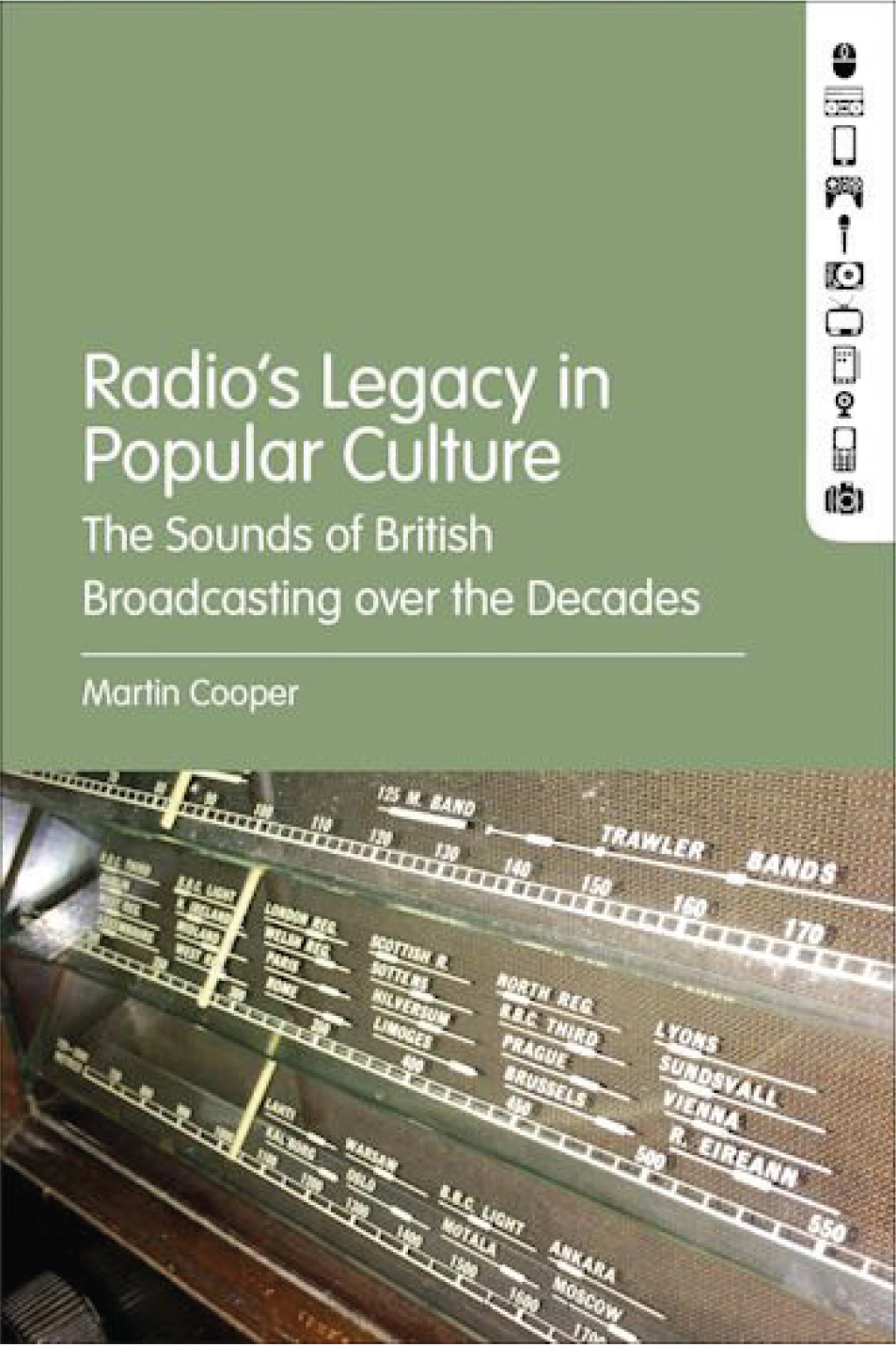
For media historians who want to explore specific areas of the BBC’s history in more depth, it is nice to see that some have also taken the jubilee as both opportunity and challenge. The BBC has itself commissioned several documentaries, exhibitions, and retrospective programs about specific subjects, and two historians have chosen to each overview a clear-cut subject on which they have spent significant amounts of time. Radio historian Martin Cooper from University of Huddersfield has written a concise history of Radio’s Legacy in Popular Culture. It focuses on how radio was imagined in literature and film. Basing his narrative on public debates about films and books in which radio and television have played main roles, he sketches changes in people’s attitude towards listening and watching. In the long-term transitions from communal consumption of broadcasting to solitary consumption on the one hand, and from ‘domesticated Auntie’ to individualised ‘baby boom pop radio’ on the other, broadcasting has remained a conversation-starter and a marker of social class. Without further elaborating, Cooper sees in the long run a transition from ‘listening radio towards hearing radio’, creating more ‘equal relations in gender, class and ethnicity’. One can imagine what is meant, but further research is needed to clarify the picture.
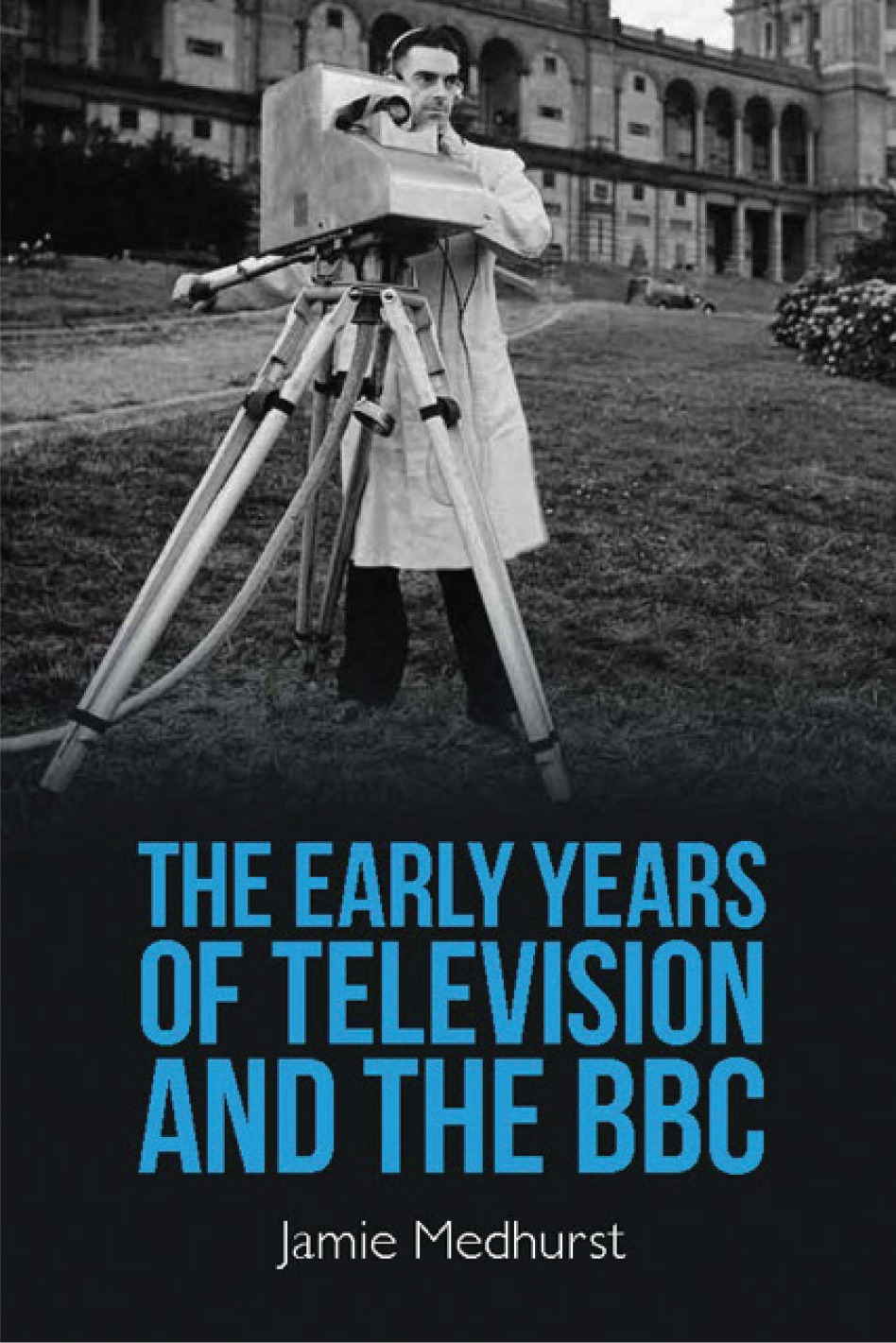
Professor of Media and Communication at Aberystwyth University Jamie Medhurst has decided to summarise portions of his earlier research into an examination of The early Years of Television and the BBC. In a meticulously fine analysis of historical sources, he reconstructs television’s freakish take-off in the interwar years. Starting in the early nineteen-twenties with the sensational experiments of John Logie Baird, Medhurst describes the growing involvement of the BBC in what the organisation saw as its exclusive line of business: using wireless telephony to serve public interest for the entire nation. He then carefully reconstructs the battle between Baird and Marconi-EMI that followed. Medhurst’s is a fascinating story of how technological innovation and political considerations maintained the monopoly of the BBC in broadcasting. In doing so, Medhurst claims the idea that John Reith, the BBC’s big boss, was opposed to television and saw no future for it as an extension of radio, is a myth.
That brings us to the major advantage of all four books: Each invites scholars and students to make more thorough case studies related to the BBC’s startling history, which can be characterised as balancing rigid conservatism with sparkling innovations, seeking to maintain relevant relationships throughout swiftly changing audience behaviours and preferences. This characteristic is observable in the public broadcasting organisations of all democratic countries; broadcasting is so closely involved in every change in society, technology, culture, and politics, that the broadcast media are part of those transformations. Often, they even spearhead the modernisation process. This is what makes media organisations interesting to historians; it underlines that media history is the combination of social, cultural, technological, and political history.
Note
[1] Linley Sanders, “Trust in Media 2022: Where Americans Get Their News and Who They Trust for Information,” YouGov, last modified April 5, 2022, https://today.yougov.com/topics/politics/articles-reports/2022/04/05/trust-media-2022-where-americans-get-news-poll.
Biography
Between 2009 and his retirement in 2022, Huub Wijfjes was a professor of the History of Radio and Television at the University of Amsterdam. Most recently, he published a three-volume book series on the Dutch cultural history of the newspaper (2019), radio (2019) and television (2021).