
Introduction
The 1980s in Turkey were marked by the military coup of 12 September 1980 and the right-wing policies that followed, which aimed to implement liberal economic policies whilst at the same time suppressing political opposition. After the 12 September coup, the state turned its back on modernising society, and the resurfacing of repressed cultural identities fuelled elitist and populist disputes over existing cultural differences between conservative and liberal perspectives, leading to a new approach to cultural policy.1 The film and video industry underwent significant changes under the conditions of neoliberal policies. The increasing focus on the market and consumption in a society transitioning to a market society led to a clash between ideology and economics in the film industry.2 In particular, the social and economic upheaval caused by the coup led to a stagnation in film production, thus paving the way for the spread of video technology.
Turkey was introduced to video in the 1980s. Analogue video, which had become widespread in those years, produced meanings and values that conflicted with or harmonised among social segments. Whilst the flexible structure of video allowed it to be compatible with neoliberal transformation, its legitimacy varied according to the social structure, group or class in which it acted and was active. Video represented and produced ideology. As Daniel Herbert emphasises, whilst redefining what film is in an environment in which films become tangible and concrete objects and when nostalgia is being made marketable, new film viewing practices through video are invented.3 Hereby, video – which transforms the dominant view, the production network and the nature of the film by enabling viewing and reception in the private or public sphere, individually or in groups – points to a power shift, breathing new life into the sector.
For more than a decade, video sustained the industry in Turkey amidst an economic and political landscape fraught with risk and crisis. Video disrupted the dominant viewing habits of audiences, created new visual spheres, and became an integral part of everyday life. This transformation led to a restructuring of the production and distribution network and the introduction of new film genres, preferences, and habits. Video has been seen as legitimising social differences, depending on the economic or cultural context. This article assesses the impact of these dynamics on the use of video by Turkish migrants in the Federal Republic of Germany (West Germany), considering a transnational, local and translocal perspective that requires a comprehensive investigation.4
In the field of migration studies, scholars are primarily analysing the role of the media in migration and transnational interactions about the transformation of experiences and reflections in the cultural sphere.5 These studies provide a structural framework for both national and transnational spaces and highlight the impact of cultural policies on these structures. The transnational nature of media networks is evident in countries such as Germany and Turkey, which have significant social and economic interdependencies as a result of extensive migration.6 A transnational research approach is essential to explore how social connections between migrants from Turkey in Germany and the society in Turkey were formed and managed through video.
Sonja Weber-Menges examines the connection between Turkish migrants in Germany and the media during the 1980s.7 Weber-Menges uses a six-stage model that blurs temporal progression and interweaves media-supported processes. The phases show overlaps and parallels. Weber-Menges’s phase model places video in the third phase. The first phase, roughly from 1961 to the end of the 1960s, marked the beginning of press and broadcasting initiatives aimed at temporary workers. In the next phase, from the late 1960s to the end of the 1970s, migrant television, the Turkish cinema market, and the expansion of ethnic broadcasting initiatives were prominent developments. The third phase marks the beginning of the video boom and the emergence of a video market. The market was mainly identified by the influx of migrants from Turkey and Italy.8 Weber-Menges’s article provided essential guidance in addressing the issues presented in this thesis.
This article therefore focuses on the significance of video as one of the dominant media technologies for the establishment of political, cultural, economic, and social networks between Turkey and Turkish migrants living in Germany in the 1980s. Dona Kolar-Panov’s Video, War and the Diasporic Imagination is one of the most stimulating studies on migration and video.9 Dietrich Klitzke’s study Das 4. Programm. Studie zum türkischen Videomarkt and Manfred Oepen’s “Media, Migrants and Marginalization: The Situation in the Federal Republic of Germany” are also among the pioneering works dealing with the relationship of Turkish migrants in Germany to the medium of video.10 Aslı Gön’s 2021 dissertation on the development of video, spectatorship, and use of video in Turkey, can be seen as a relevant contribution to this topic.11
However, there are no studies that analyse in detail the significance of video and video technology in the relationship between Turkish migrants living in Germany in the 1980s and Turkey. This study argues that Turkish migrants in Germany had an ideological framework in their communication with Turkey via video that emphasised conservative and liberal political views and lifestyles. Based on this assertion, Benedict Anderson’s concept of ‘long-distance nationalism’ makes an important intellectual contribution that promotes a paradigm shift. Anderson suggests that ‘long-distance nationalism’ and ‘ethnicisation’ provide a specific way of imagining the home country and the host country in relation to each other. More broadly, ‘long-distance nationalism/ethnicisation’ refers to how individuals conceive of regions that are far from their spatial proximity.12 In the development of this idea, i.e. in the experience of long-distance nationalism, different media and means of communication can play a role.
The study is divided into three main chapters, the theoretical framework of which has been outlined above. The first chapter is a historical overview of the political and economic structure of Turkey in the 1980s, as well as a presentation and evaluation of the cinema and video industries. The perspectives of policymakers, the industry and the cultural sector are examined. The second chapter provides an assessment of the video and cinema industries in Turkey. The third chapter analyses the relationship between Turkish migrants living in Germany and the video industry; there, the impact of migrants in Germany on the video landscape in Turkey and the mutual exchange are discussed in terms of their basic components. Important information in this section also includes the films distributed via video. The final chapter examines how video reproduces the conservative-liberal discourse in the context of migration, economic and technological transfer between the two countries and code exchange, and how it becomes a symbol or a substitute for this discourse. This thesis aims to show the historical significance of video about a specific geography and period, as well as its impact on the media landscape.
The article is based on a comparative reading and is supported by discourse analysis. In this way, socio-historical information about a specific time and place in history is analysed. It relates to video technology, film, cinema culture and image politics. The study does not focus on the significance of home videos for Turkish migrants in Germany, which should be underpinned by empirical data. Nor does it focus on the question of how the ‘idea of nation’ was represented in the Turkish immigrant community through video, which can be collected through the method of oral history. Instead, this research treats migration as an experience situated between the transnational and the local/translocal, focusing on an (‘imaginary’) notion of home through video; it asks what this can mean in an ideological context by examining social discourse, cinematographic images and transmitted information. It discusses how video technology is used in the experience of long-distance nationalism. The simultaneous examination of a wide range of interrelated themes is another feature of the article. Migration/video, memory/communication and transfer/relationship are closely intertwined in the study. Situated at the intersection of sociology, history and media studies, this study addresses a wide range of research topics and interests such as migration, transnationalism, video, film, media and the interactions between the social and the technological.
Video Between Modernity and Conservatism in 1980s Turkey
In the classical liberal economy, the state is the arbiter of the market. Economic breakthroughs are performed by the private sector, whilst the state assumes a position that watches over legal matters and tries to maintain the market balance.13 However, in real politics, this system has not always worked this way. Whereas statism was the dominant understanding in Europe and other countries, the United States saw the way out of the bottleneck it fell into with the oil crisis in the programme of economic expansion to other countries, that is, a kind of market expansion. New markets were needed for products to circulate. It is seen that neoliberalism and the rise of the new right assumed this as their basis. Thus, the new right-wing politics, based on neoliberal ideology in the 1980s and beyond, and frequently used to describe liberal/conservative political understandings, took its place on the stage.14 The ‘new right’ comprised diverse conservative movements that advocated policies affiliated with neoliberal economics. It linked moral evolution with economic deterioration and offered a market-driven welfare system centred on privatising production and consumption whilst assigning the private sector the responsibilities of economic, political, and social stability.15
In Turkey, the new right, which identified with Turgut Özal and came to power through elections in the early 1980s, created the synthesis of liberalism-conservatism.16 Neoliberals’ demands such as limited government, a market economy, economic efficiency and individual freedom acquired a unique and complex character by being combined with the neoconservatives’ search for law and order based on authority and tradition.17 Although liberalism was advocated in the economy, the basis of liberal-conservative policies was defined by anti-inflation measures, rigorous monetary policies, intervention in trade union rights, safeguarding of conventional family values, and government initiatives to endorse these values.18 The new right project involved loosening bureaucratic regulations in the economy, implementing privatisation and strict budgetary discipline known as ‘austerity’ (or, in Turkish, ‘kemer sıkma politikaları’) in Turkey, and centralising and monopolising political decision-making to promote a free market and a powerful yet small state.19 The principles of neoliberalism can be simply summarised as follows: Contracts were established with the centres and periphery to facilitate technology transfer and trade, and to remove global market obstacles. The precondition for this was the state’s withdrawal from industry and trade sectors. This eliminated state intervention, which was deemed the cause of market failure and paved the way for private enterprise. The impact of the neoliberal–conservative shift on Turkey’s film industry and mass communication technologies was significant.
Turkish cinema flourished in the 1960s and early 1970s and has consistently been popular, except during times of crisis. Television broadcasting started later in Turkey than in the West, propelling cinema to the forefront as a mass medium and an instrument of entertainment. During this period, so-called Yeşilçam cinema dominated, characterised by a stereotyped conception of cinematic art. Anatolia was partitioned into economic regions and sub-regions, while the amount of films produced peaked. In 1961, 97 films were produced, rising to 266 by 1971.20 Yeşilçam cinema catered solely to the local market and failed to make an international breakthrough. Despite the substantial quantity of films made, the returns were not reinvested in developing and advertising further films. There were no established organisational structures in the film industry. The decline of the ‘golden age’ began in the mid-1970s and ended in the late 1980s, as demonstrated by political developments. Specifically, the 1970s saw the oil crisis, the devaluation of Turkey’s currency, the Cyprus operation and the US embargo. These factors created a shortage of foreign currency, which placed producers, who relied on cost-benefit analyses, under significant pressure. The increased production costs forced film companies to shutter their operations. Additionally, the rise of television led to a decline in cinema attendance, particularly among affluent families. The introduction of expensive colour films from 1967 onwards worsened the cinema crisis. Alongside this trend, there was a rise in low-budget erotic and adventure films. Turkey’s cinema industry struggled with frequent crises and an unstable economic setup due to insufficient infrastructure and protection mechanisms. In an economy based on the regional operator model, capital owners possessed significant influence in determining the format and plot of films. The operators were responsible for making production decisions, and during bottlenecks, it was the producers who suffered the greatest consequences.21 According to the journalist Mahmut Tali Öngören, Turkish cinema followed a capitalist approach, but did not fully embody capitalist ideals:
Turkish cinema works with a capitalist approach but cannot become capitalist. Cinema showed itself in Turkey with the understanding of company, capital and income. But in general, neither companies resembled companies nor capital resembled capital. The ledgers of companies were in uncertain hands and the accounts were not clear. Capital could not be collected in any way.22
Öngören labelled this working model ‘alaturka’ [alaturca], explaining that it prevented the establishment of a capitalist film industry in Turkey.23
Before 1980, there was limited interaction between the Turkish state and cinema. However, since the 1980s, this dynamic has undergone a transformation resulting in more film policy actors with increased efficacy. Liberal and conservative political ideologies have influenced this shift, alongside the economic and cultural circumstances outlined above. To summarise the period, it can be stated that: The military coup on September 12, 1980, set the stage for the emergence of a new right-wing that enforced its power through violent oppression of the masses, leading to depoliticisation among individuals. The state’s administration and economy fell under the control of a small group of functionaries.24 Following the coup, Turgut Özal led the country with restructured economic models that yielded economic growth and political stability, paired with stifling social and political opposition.25 The state concept implemented on 12 September left no room for dissenting political perspectives. As a result, big capital retained its autonomy while significant portions of society remained divided.26 The dominance of foreign films in Turkish cinema was a product of prevailing circumstances at the time. A solution to this problem was the implementation of a policy that supported the development of domestic cinema. Starting in 1980, the state introduced legislation to regulate the unrestricted import and distribution of foreign video. One of the first actions taken by the state in the video industry was the creation of a regulating mechanism that governed the importation, distribution, and taxation of video technology.
To prevent the illicit circulation of technology and films, Law No. 2936 was amended in 1983, updating several articles of legislation. The prime objective of this law was to preclude the dissemination of pirated material. The corresponding regulations highlight two aspects. Firstly, innovations in broadcasting technology and the ubiquitous use of devices like televisions, tapes, video devices, computers, CDs, and others, have made controlling broadcasting piracy more challenging. The result was a redefinition of the boundaries and the new technologies. The Film and Video Law was amended to prohibit the commercial reproduction of intellectual and artistic works without the author’s consent and to control the public use of videos using tax stamp and copyright provisions, without affecting private use.27 Member of Parliament Nihat Akpak hoped that the legislation would introduce regulation of video, which had recently emerged in Turkey. He also hoped for state backing of the film industry, a flow of financial resources from the state-created Cinema Support Fund to the cinema, and an enhancement of production quality that would foster access to the international market. As a result of this restructuring, he expected the outflow of foreign currency to decrease.28 The regulation of illegal video distribution within the country, as well as the control of the video medium, which acted as a prominent symbol of the 1980s media sector, were widely debated. Insufficient analysis by the state regarding the function and usage of video technology during its introduction to the country, coupled with unclear audience interest at the outset, can be cited as reasons for the state’s argument for ‘control’ of videos.
Turkey’s Video Years
The emergence of video in Turkey began in 1980, with the importation of electronic goods from overseas, particularly by German migrant workers, which contributed significantly to the introduction of video as a new media technology in the country. Subsequently, video, which was imported from abroad and gradually gained a foothold in the marketplace during the early 1980s, revolutionised the cinema industry. The affordability of video films, inflationary pressures, exorbitant production expenses, audience inclination towards television, and conservative attitudes towards film production instigated a structural transformation premised on striking a balance between outlays and earnings. Despite the popular notion that video would drive audiences out of the cinema and damage the film industry, the opposite was true: Film production increased, and cinema staff were provided with a new source of income.
In Turkey, video was initially regarded as a technical innovation that allowed the audience to watch films outside the cinema. This enabled film enthusiasts to access films that were either unavailable on the market or that they had missed previously, without having to leave the comfort of their own homes. Viewers could also manipulate the film’s playback functions, including pausing, fast-forwarding, and rewinding. In a nation such as Turkey, which relied heavily on imported science and technology, video revitalised the film industry, and generated fresh enthusiasm, particularly in relation to viewing habits.
The video industry played a pivotal role in altering the film production process. The low budget of films created specifically for video underpinned this production model, with the average cost of a film being 5 million Turkish lira.29 Video professionals purchased old films and provided financial support to producers, effectively jumpstarting film production with their advances. The video phenomenon thus contributed to the preservation and rebirth of cinema. In the same period, an average cinema film required a budget of at least 20 million Turkish lira. Whilst films with a budget of approximately 100 million Turkish lira were the most expensive, production costs of 5 million Turkish lira negatively affected the cinema. The low-cost, rapid production cycle, which focuses on the quantity rather than the quality of films, had led to the neglect of aesthetic or intellectual concerns in the majority of films produced for video. According to film scholar Nilgün Abisel, Turkish film production in the 1980s was dominated by two categories: those produced for cinema and those produced for the video market.30 Independent film production companies and established enterprises with the ability to conceive cutting-edge cinema projects were driving the industry. Although video production had adversely affected movie quality, it had also provided a boost to the industry.
In response to a decline in cinema attendance and a shift towards video, multiple shops emerged in Turkey for renting videotapes and producing pirated copies of foreign films. By 1983, these shops and clubs numbered approximately 2,500 to 3,000, generating between 50 to 60 billion Turkish lira in turnover. Due to insufficient legal regulations on production, sales and distribution, neither the content nor the commercial aspect of these shops could be fully monitored.31 Media scholar Erol Mutlu evaluated the effects of this situation as follows:
When video’s uncontrollability intersects with the market economy’s belief that the highest quality goods are those which are the most popular and costly, even the most insignificant mass culture products are consumed widely and easily through video.32
Mutlu argued that the emergence of a free video market in Turkey provided a relatively unregulated environment. In 1984, 5,600 videotape rental companies were renting out more than one million videotapes. Additionally, 5,000 video clubs rented an average of 50 tapes each day, with a total of 250,000 tapes rented daily. Notably, the income from these businesses was not taxable. The report by FİYAP revealed that the cinema industry suffered due to uncontrolled development, leading to creators being deprived of their royalties and security forces resorting to arbitrary and diverse practices resulting in abuses.33 For instance, Journalist, author and screenwriter Mahmut Tali Öngören pointed out the prevalence of violence, sadism and sexual content in video products and their possible cultural impact.34 Öngören stressed the need to implement control mechanisms to address inadequate monitoring. He advocated for tighter regulation of specific aspects of video and asserted that ‘certain bans’ were necessary. He also highlighted that the circulation of foreign films in the country by video clubs violated copyright laws, as no royalties were being paid to foreign sources.
Additionally, he pointed out that foreign films were being screened exclusively in cinemas in only eight provinces in 1985.35 However, films could also be screened in other provinces due to the use of video technology. Nonetheless, the author conveyed dissatisfaction with the new regulations implemented to curb film piracy in 1987. Although Öngören believed that even high-quality and pirated foreign films reached the video audience before the introduction of the law, the video sector suffered from the mandatory display of tax stamps. The video industry transitioned to creating low-quality, low-copyright films to sustain profits. Öngören suggested that due to this legislation, approximately 200 small video distributors in Istanbul and 100 in Izmir were forced to shut down. Despite this, the Anavatan Partisi (ANAP) government occasionally overlooked pirated videotapes, facilitating a trend toward monopolisation.36
In 1983, the Cinema and Video Law was followed by the Foreign Capital Law and in 1986 by the Film, Video and Music Works Law (no. 3257), which aimed to prevent the sale of pirated films. Despite the expectation that foreign capital would depart from the market, the video and film industry in Turkey drew the attention of these companies as the Offshore Media Law would withdraw foreign capital from the market.37 As a result, Turkey became a market dominated by foreign firms. In the light of the above data, it can be said that this transformation of the cinema industry had moved the relationship between the state and the cinema beyond taxation and censorship practices. However, by facilitating the entry of foreign capital into the country, the Turkish cinema industry had been forced into unfair competition. Thus, the Turkish cinema industry, especially the small companies, had become vulnerable to foreign companies.
Video Boom: Visions and Discussions
When studying the evaluations and debates regarding video in Turkey, three key points can be identified. Firstly, it is suggested that video was the primary reason behind the declining cinema audiences. Secondly, the prevalence of videotape piracy is highlighted. However, in contrast to these first two points, the third perspective emphasises the rejuvenation of Turkey’s film industry that video brought. Although economic considerations underpin these views, the socio-economic impacts of video technology sparked extensive debate in the 1980s.
In the statements arguing that new technologies were appropriate to the level of development, the dominant argument was that society should benefit from advanced technologies and not be prevented from doing so.38 This argument supported the view that importing not only freedom and politics but also technologies such as cars, video and colour television from abroad was a necessity, not a luxury.39 The discussion about video was considered absurd because the West had moved on to three-dimensional television,40 which is one of the signs that the video age had arrived. The rapid spread of video in the villages was, in a way, the criterion for picking up on the trend.41 Nevertheless, the author and journalist Çetin Altan claimed that ‘although great progress has been observed among the former villagers with luxury cars returning from Germany, Turkey has not yet been able to get rid of the cave life,’ and that video could be a vehicle for the emergence of a free and civilised formation in the villages.42 This belief shows the importance of video in the mission of progress and modernity.
Video became a mirror reflecting the social expectations of the time, as it was ‘the new passion of the middle classes almost everywhere.’43 It is yet to be determined to what degree these expectations aligned with the reality (e.g. whether the function of time-shifting video could be effectively utilised despite technical hindrances such as power outages or inconsistencies, or alterations or cancellations in broadcasting schedules). Furthermore, it is crucial to examine whether the anticipated functions and advancements of video were practicable.44
Video was considered a symbol not only of modernity but also of wealth and success. The politics of Turgut Özal and his party in the 1980s played a crucial role in popularising the use of video. In this context, video was effortlessly integrated into neoliberal politics as an instrument of propaganda. The election campaigns, particularly the propaganda activities in coffee houses, were instrumental in making the promises of political parties – as well as video technology and its audience – visible in the public sphere, and to achieving widespread dissemination. With the employment of American-style propaganda techniques, video content was deployed extensively in these political campaigns.45 Although video came to represent an affluent lifestyle, its position was identified with the middle class who bought the video set on credit or borrowed it.46 Video was part of the neo-liberal discourse in the sense that it measured the households in which it appeared according to their income and aligned itself with the liberal-conservative discourses summarised above. Another important target group for these propaganda activities were Turkish migrants in Germany, who played a key role in shaping the video market in the 1980s.
Following the German policy of classifying migrants from Turkey as Gastarbeiter, with the expectation that they would eventually return to their home country, the primary strategy of the German media indicates a lack of attention to the integration of Turkish migrants into German society. After the conservative government of Germany promoted internal migration in the 1980s and many Turkish migrants settled in Germany as a result, media policies changed: Turks came to be characterised as ‘local migrants,’ leading politicians to overlook the transnational contexts of migrants, as Kosnick describes.47 In Turkey, however, there was a fear that Turkish migrants living in Germany would lose their ‘sense of belonging’ and that video would serve as a means of reinforcing ‘national identity.’ This idea is illustrated in a conversation between film producer Türker İnanoğlu and Turgut Özal. İnanoğlu was in the process of introducing video technology to Turkey in the 1980s and approached Özal about the opening of a video store. Özal stipulated that the business had to be in line with the prevailing cultural values: ‘You’ll be out in Europe first. The second-generation children of Turkish workers living there are losing their identity and their Turkishness. Let’s at least reach them through films.’48
As it can be understood from these words, the imaginary and political bond established by Turkish migrants in Germany with video, which became an actor in reinforcing the national identity in Turkey, is discussed in the next part.49
Turkish Migrants in Germany and Video
This chapter analyses data on video technology transfer by Turkish migrants in Germany and its impact on the industry in Turkey. Subsequently, it explores how migrants in Germany were reached through video. Additionally, it delves into the experience of long-distance nationalism through video technology and cinema in the light of historical data.
Turkish migrants living in Germany played an important role in the introduction of video to Turkey – as both a media technology and as an ideological instrument. Before about 1983, the video devices introduced into Turkey in the early 1980s were imported from abroad, mainly through Turkish migrants in Germany. Between 1980 and 1983, it is estimated that an average of 250,000 video devices were imported into Turkey from abroad each year. By 1983, there were more than 1 million video devices and approximately 5 million video users in Turkey.50 Migrants working in Germany played a crucial role in Turkey’s video technology and contributed to the economic growth of the film industry by increasing the demand for films and shaping the content of those films for years to come. The introduction of video technology led to a commercial and cultural shift: Migrants brought video equipment, and Turkish films were imported into Germany. This exchange of cultural codes partially influenced the historical political context. This hybrid among between the transnational, local and translocal also impacted the status and identity of video.51 In February 1985, Video-Magazin published an article entitled ‘Fresh Blood for Yeşilçam from Migrants.’ The article stated that Turkish migrants in Germany were managing the Yeşilçam industry, which was in a bottleneck. In West Germany operating twelve video companies acquired the screening rights of Yeşilçam productions by paying more than 1 billion Turkish lira to provide services to foreign workers who had a wide range of videos. It was also expected that these developments, experienced by Turkish workers abroad, would provide the resources for the new films and increase the quality of the productions.52
In 1985, the expectations regarding the influence of migrants on the video and film industry in Turkey were objectively formulated. In the same year, Video Yıldız magazine defined Federal Germany as ‘the cradle of the Turkish video world.’53 Analysis of the data shows that Turkish migrants abroad had a double effect on the adoption and spread of video technology in Turkey: These effects were achieved by migrants taking their devices with them either on holiday or on their return. For many migrants who came to Turkey, the videos they bought in the European countries where they lived and worked were an essential part of their household goods, a kind of everyday possession. However, especially in the first years of video, they had to overcome a number of obstacles due to uncertainties about the status of electronic goods and video equipment in Turkey. For example, the customs exemption of the device often created confusion. According to information obtained from the newspapers, the video device might be exempt from customs on a one-time basis, if it was documented that the device had been purchased and used at least six months before the final return to Turkey; and if the person had been living abroad for at least two years, there was also a tax exemption.54 Some people also acquired video equipment for commercial purposes to resell it. When crossing the border, every family member was entitled to have a video device registered in their passport.
The resulting situation prompted numerous commercial ventures. Those who used the video equipment brought in from abroad for some time before returning to the country where they were working and intended to sell it.55 Those who intended to sell or use for commercial purposes a device that had not been declared to customs but was found during a search, were observed to pass on the video device to cover travel expenses, thus turning the video device into a commodity.56 The payment of tax was a sign of confidence that the video had not been smuggled into the country and had been released by the authorities.57 Some brought video devices to sell, that is, for commercial purposes. Advertisements such as ‘I will buy a colour television and video from workers,’ or ‘your videos and your televisions with customs receipts are bought and sold,’ reveal this.58 Mahmut Tali Öngören noted that sales of video devices produced and put together by foreign companies in Turkey came to a standstill in 1983; this was due to the prioritisation of sales of video devices imported from Europe by migrants. As a response to this situation, the domestic market initiated the sale of video devices via instalments.59 The fact that some migrants who returned to Turkey became active in the video business in Turkey was also seen as an advanced migration of technology and information that would benefit the video market and generate further enthusiasm.60
Turkish migrants in Europe, especially in Germany, had another important impact on the video market by revitalising the economic situation of the film industry and creating a new demand for films. Turkish migrants therefore played a crucial role in the production of film content. Combining imported videotapes with domestic films and selling them to Turkish migrants in Germany was a common strategy.61 This reduced the cost of videotapes, copyrights, and film production to almost nothing, broke the dominance of regional suppliers and created a demand for films in Germany that was characterised by emotion and nostalgia – and, thus, a new film market. In the late 1970s, video stores responded to the decline in production by regional distributors by buying up large quantities of old Yeşilçam films to sell to Turkish migrants in Germany. In this way, they acquired the screening rights to the films and were able to provide funds to produce new films, which ultimately led to an economic revival of the cinema industry.62 The success of this marketing strategy led many video companies, including some in Germany, to acquire the video rights to Turkish films.63 Germany thus became a business region. This commercial move also created a demand for films from Germany to Turkey, and the audience’s taste, choice or preference became important at this point.64 In Turkey, a consensus relationship was established between Yeşilçam cinema and Turkish migrant audiences living in Federal Germany.
Video technology was successfully integrated by migrants into their everyday lives, allowing them to view images of their familiar former surroundings from Turkey.65 This type of integration offered the migrants the opportunity to connect with their cultural roots and to link their current lives with their pre-migration experiences. In this process, in which the concept of familiarity came into play, Turkish migrants were able to connect to their supposedly familiar social environment through video and transfer what they had learned and experienced to their living environment. It should be noted that it was sometimes difficult for migrants to understand and reflect on changes in a distant Turkey66 and that they allegedly communicated with an ‘imaginary reality’ that conveyed the prevailing cultural and social codes and symbols of Turkey. They cultivated nostalgic relations with Turkey to maintain a sense of familiarity after migration and thus preserve their familiar memories. This also supports the thesis that video represented a kind of escape for migrants who traditionally have felt lonely in Germany.67
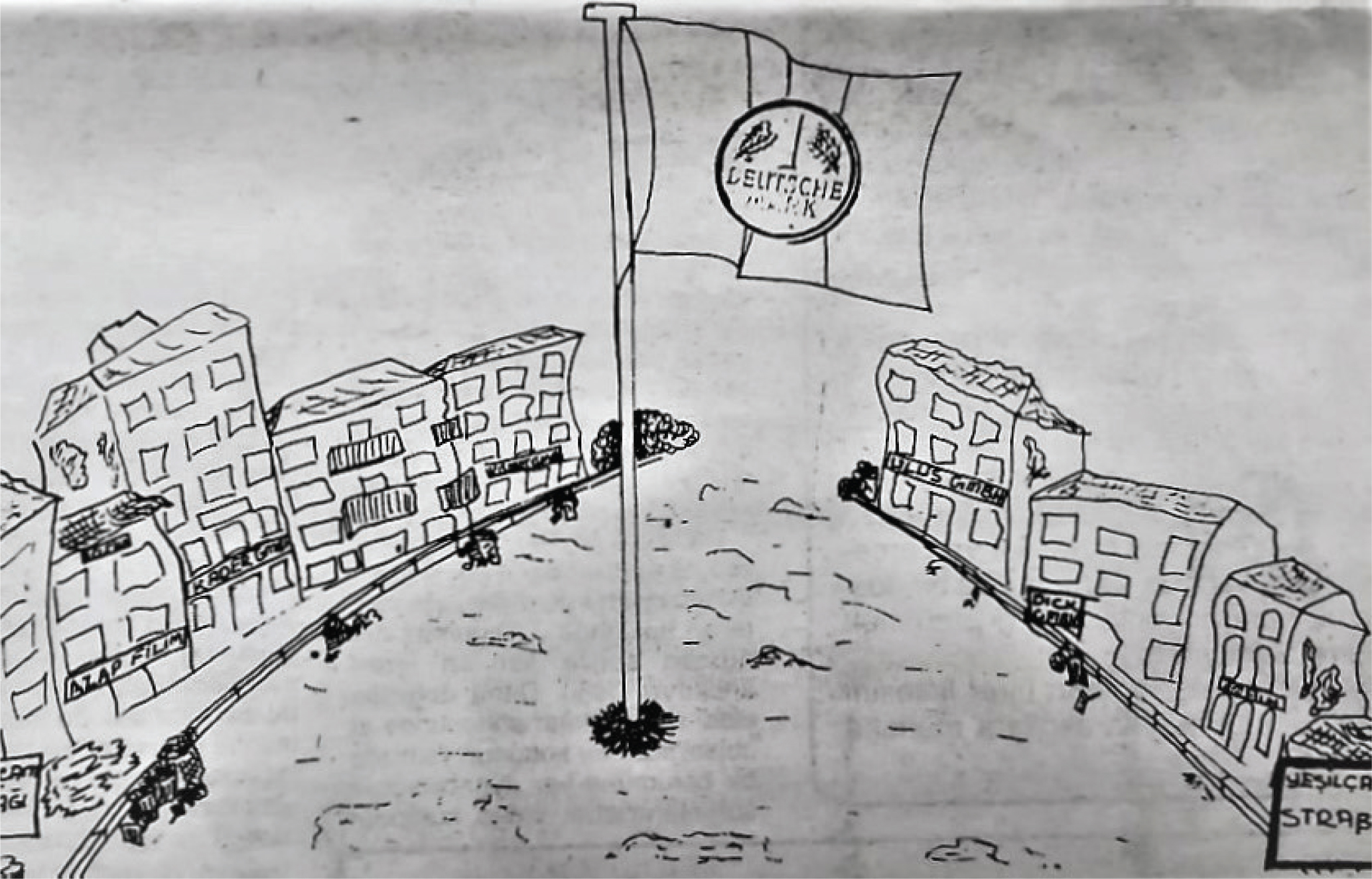
Figure 1
Capital emigrated from Germany to the Turkish cinema and video branch. ‘Almanya’daki Videocularımız Türkiye’ye Akın Ediyor. Panik mi, Göç mü?’, Video Yıldız, no. 1, September, 1985, 17.
Aslı Gön argues that the opportunity for the audience to identify with the films should be seen as a stronger argument for evaluating these discourses in terms of viewing habits, as opposed to the time-shifting function of video.68 Barriers to time-shifting video use may have included the language barrier and a closed lifestyle. The common perception of Turkish ‘guest workers’ in Germany was that they lived in self-created ghettos in the suburbs and rejected the German language. The challenges they faced in real life and their resistance to their environment under these conditions were perceived as an opportunity to retreat to their homes and ‘stop time’ by watching Yeşilçam films on videotape.69 The migrants from Turkey created their own public space by establishing a communication network with their compatriots in Europe and by creating places of socialisation such as markets, cafés, Quran courses or video stores. They used Turkish-language films to alleviate their homesickness and to realise that they were physically abroad and mentally in Turkey.70 The function of videos in alleviating homesickness for an ‘imaginary homeland’ was sometimes stylised as an emotional propaganda element in video commercials for migrants from Turkey who lived in Germany. This is illustrated by a Minareci advertisement video for the German market. In the video, Osman, who cannot go to his homeland to save money, fulfils his longing for his homeland with a Minareci videotape, which ‘brings his homeland to his home’ and contains ‘the most beautiful films of his homeland.’ Advertising codes appealing to emotions direct the audience to their target with the slogan ‘My homeland is with me, long live Minareci!’71 Therefore, homesickness was turned into a strategic marketing slogan for companies that imported videotapes.
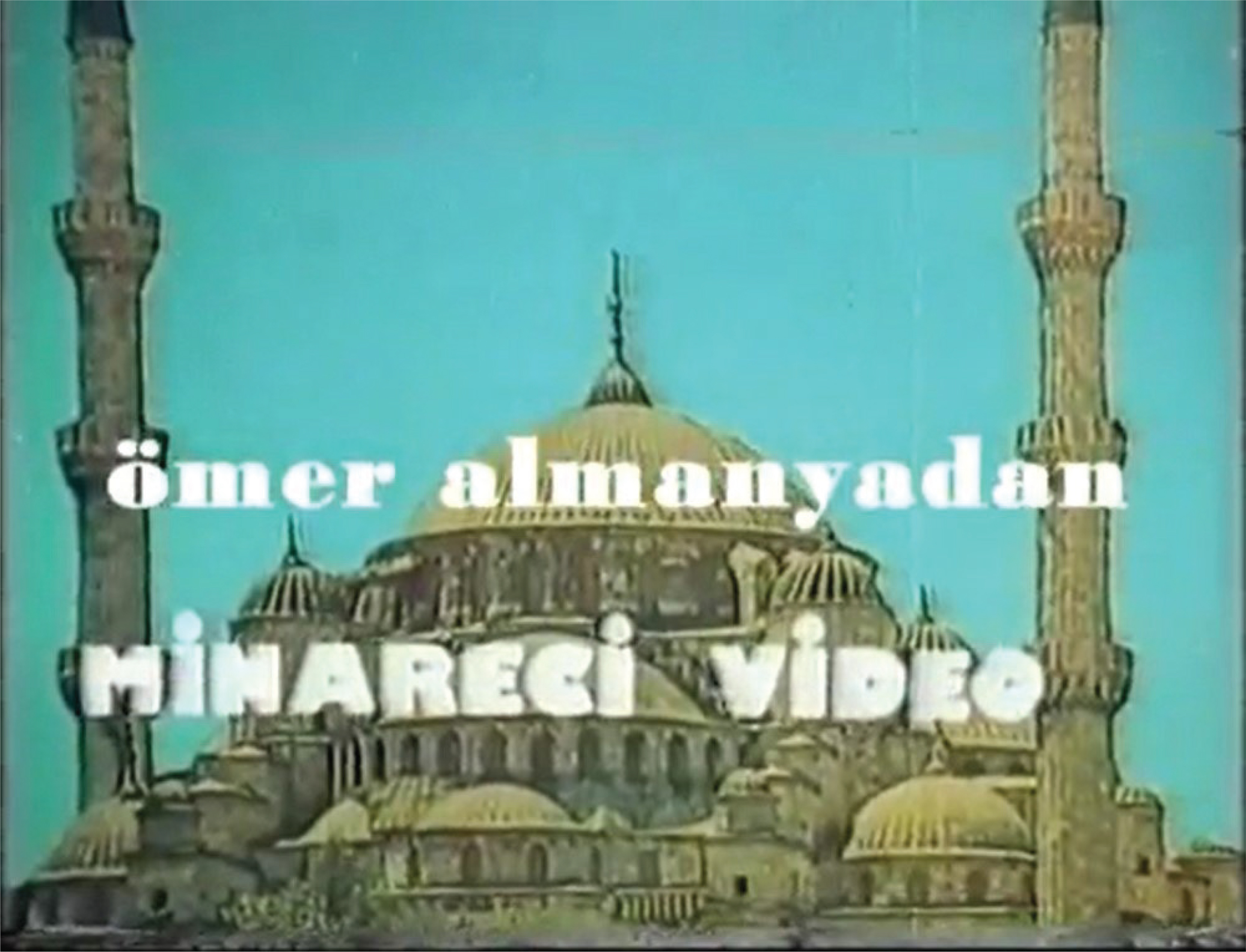
Figure 2
Ömer Almanyadan. Minareci Video [Ömer from Germany. Minareci Video] Advertising Film for Videotape. Ömer Almanyadan Minareci Video, https://www.youtube.com/watch?v=YDQkSNqlMl0. (accessed August 6, 2022).
The phenomenon of strengthening one’s sense of belonging through these nostalgia-fuelled films existed among immigrants from Turkey before the advent of video. In particular, film screenings held for migrant workers in Germany from the mid-1960s onwards helped Turkish migrants to establish an (imaginary) media connection to Turkey through film. According to a 1974 study by Ursula Mehrländer, 74% of Turks living in Germany went to the cinema occasionally.72 In the 1970s, going to the cinema was the preferred leisure activity of workers from Turkey.73 At the same time, ethnic media experienced a boom74 with the emergence of the video industry in the 1980s, bringing ‘their own Turkey’ directly into the living room. Sonja Weber-Menges argues that the ethnic video market has, at least in part, been able to establish a connection with Turkey.75 Following Max Weber, she suggests that social behaviour is based on emotional or traditional feelings and that a form of social relationship and communication has emerged that creates a subjective sense of belonging.76
The language was crucial to the popularity of video among Turks. According to Metin Şentürk, the owner of the studio Video Istanbul, in the early years of video production, there were no films in Turkish. Instead, all available films were in either English or German. In 1979, original films were shown in only a few video clubs in Turkey. In 1980 and 1981, ‘under the leadership’ of Şentürk, Turkish films were imported from Germany and reproduced in Turkey to allow Turkish audiences to see Turkish films for the first time.77 These were films that had been shown in Germany in the 1970s.78 According to Winfried Günther’s research, the foreign cinema market expanded throughout Germany from 1975 as the number of migrants increased. During this period, the cinema market was dominated by eight distribution companies: three German, four Turkish, and one Greek company were involved in this business. The Turkish market was shared by Ata Film (Cologne), Ersel (Istanbul), Kalkavan Film (Neuss) and Sanver Film (Munich). In 1975, Toro Film (Waiblingen) gained recognition for their Italian and Turkish productions.79 During the same year, Turkish film companies imported between 300 and 600 Turkish movies to Germany that were showcased in approximately 30 to 100 cinemas. These films consisted primarily of melodramas, action movies and comedies. The screening of films in German cinemas during the early stages of video involved recording them on videotapes and returning them to Turkey as films with Turkish dubbing.
This practice continued for two years until the revival of cinema operations in Yeşilçam towards the end of 1982. In the initial stages, the companies in Yeşilçam were prohibited from selling licences and therefore resorted to selling dubbing rights to enter the video industry. The influx of video companies in 1982–1983 led Yeşilçam to shift closer to the video market. Video clubs were opened, but there were also video sellers who put together 50 videotapes because the copyright was uncontrolled and not properly enforced.80 During the summer of 1983, Kâzım Minareci, the manager of Videola, highlighted the primary aim of Yeni Minareci’s subsidiary in Germany to fulfil the company’s requirements in the country for producing feature films, documentaries, and shows of exceptional standard. Minareci reports that Yeşilçam’s producers had not met the demand of video producers abroad. The stocks sent to Europe were depleted, and no programmes were available. Minareci added that producing Turkey-centric programmes was a goal. Over a month, the company produced video programmes for German clientele, created commercials, and conducted editing and dubbing work for Turkish companies. Occasionally, studios or equipment were also hired.81 During the interview, Minareci also expressed his belief that the services he provided through the studio would prevent the country’s foreign exchange loss and could contribute economically to Turkey.82
The transportation of Turkish-dubbed films from Germany to Turkey, to which Metin Şentürk referred, indicates a transfer of technology and taste. Thus, the language barrier and the associated (lack of) intercultural communication emerged as an important factor in the video boom among Turkish migrants living in Germany. Turkish migrants, who could watch or listen to broadcasts in their language in Germany in the early 1980s, bought videorecorders to see films coming from Turkey. As Dona Kolar-Panov underscores, above all, video served as a means of bringing the language and culture of the home country into the living room.83 A reader who wrote their observations about the relationship of Turkish migrants in Germany with video in Bilim ve Sanat magazine stated that while Germans filled cinemas in the late 1980s, Turkish migrants shifted from cinemas to video clubs opened by people from their homeland, and cinemas in Germany could no longer show Turkish-made films. For the reader, this was a ‘ridiculous’ situation, because videotapes, which were cheaper than a pack of cigarettes and rented for three marks a day, increased the watching of films on video and the competition between video clubs. Consequently, families who spent their weekends visiting each other started to spend the whole weekend at home with four to five videotapes that they rented for the weekend. According to the information given by the reader, half of Turkish migrants in Germany who owned a video recorder had two devices. Initially, they preferred comedies and Arabesk [arabesque] films, but over time their preferences shifted toward three-hour Indian films with lots of music as well as films with religious content. According to the reader, these films, which did not feature sexual content out of consideration for rural and conservative migrants, corresponded to their values and morals. An interesting finding is that in Turkish immigrant families who chose films on video based on their moral values, adults also watched porn films that they rented at night, and even ‘these kinds of films are [were] at the top of what Turkish women are attracted to tell [told] each other about them at work.’ The reader who complained that Turkish migrants in Germany have no criteria or knowledge when it comes to choosing videotapes explained that audiences watched every film that came on the market and sometimes even forgot which films they had watched and would have to ask the videotape seller again for the same film title.84
In North Rhine-Westphalia, where there is a high density of Turkish migrants, until 1990, five companies were engaged in video production and distribution, and approximately 300 companies were engaged in the video rental business. During this period, the total number of Turkish films available on the market was around 600. The Turkish video market in Germany began to decline in 1988. Watching films on video five to six times a week began to fall out of favour. One of the most important changes affecting this was the spread of satellite and cable broadcasts in Germany as well as the increase in Turkish broadcasts.85 According to Manfred Oepen, the reason for the video boom from the early to mid-1980s was the lack of information and entertainment broadcasts, and video was a symptom of unsatisfied needs. As stated by Oepen, an average video user rented three to four cassettes a week, 70% of users were between the ages of 15 and 30, and more than half were unemployed. The main reason for watching videos was the language and the fact that the films were in Turkish. Turkish audiences who were fluent in German were also very interested in these films on video. More than 25% of video users watched films every day and 50% watched films several times a week. This is why video was the most important media and leisure activity of the 80s.86 Oepen evaluated this situation as follows: ‘The individualisation which goes along with video consumption is about to erode traditional, social and communication patterns in Turkish families.’87
As previously noted, there was no cohesive information policy during the early years of immigration to Germany, and migrants were viewed as temporary labourers. Information policy was assigned two primary objectives: first, to provide practical guidance and assistance in the process of adapting to the new cultural surroundings, and second, to establish a connection to the countries of origin of the migrants through information about their culture. However, Oepen writes that both functions were not successful at that time and that the German-made information and entertainment programmes for migrants were quite inadequate.88 Consequently, video became the way out of this deadlock for Turkish migrants.
The popularity of video amongst Turkish migrants is evident in the statistics: Approximately 14% of the 25,000 Turkish families in West Berlin in 1980 owned a video device. Of the available video equipment, 60% were equipped with VHS, 25% with Video 2000, and 15% with Beta. By 1982, 20% of Turkish immigrant households had video devices, which was three times the ordinary rate of ownership in Germany. It was found that one third of the consumers who bought a video recorder also bought a camera.89 About a dozen Turkish companies recorded roughly 380 films, released on an average of 600 videotapes each, and distributed them commercially. The majority of these films were B- and C-films.90 In the early 1980s, it was found that Turkish migrants bought and rented three to four tapes each week for a cost of 8 to 10 DM per day.91
Most of the films shown on video demonstrated nationalist tendencies, and in some cases, exhibited neo-fascist and fundamentalist views. Concerns were raised about the possibility of political groups and forces, which had negative opinions towards intercultural communication in the 1980s, dominating the market for video films.92 A segment of the Turkish populace regarded video as a symbol of modernity and a means of capturing the zeitgeist of the neoliberal context. For the upper class, keeping up with the times was a necessity, even though the devices themselves and the films they could watch on video may have seemed trivial to them. For Turks residing overseas, video could facilitate the formation of a social community with other Turks living in Germany, although it could also result in total seclusion. Despite a range of viewing habits, including individual, collective, private, public, and multiple viewings of the same content, communication among migrants existed predominantly within a confined framework governed by their codes and symbols.93 The widespread publication of video content created an ideological tool and a manipulative mechanism. The isolating and introverting nature of video, which makes individual reception possible, caused concern that Turkish migrants, by isolating themselves from German society, might be prevented from participating in reality and processes that affected their own lives, through the communication established via video.94
Video: Apparatus of Ideology
Within the framework of the Future Media Project carried out by the Technical University of Berlin, on the films that Turkish migrants in Germany watched via video before being connected to television broadcasts in Turkey via cable television, it was found that the films watched by Turkish migrants were generally entertainment films and religious fanaticism or ultranationalist political films.95 They indicated a considerable preference for comedy, arabesque-style melodrama, adventure, detective, and sex films. The latter were classified as ‘educational’ and stocked in a separate section of video shops to adhere to the norms of Turkish society. That is, it was claimed that sex films displaying sexual content according to the standards of Turkish society were shot for educational purposes and were presented to consumers in a separate aisle in video clubs. Although the researchers who conducted the research did not find sex films objectionable, they considered political films with their extreme religious and nationalist content to be a threat.96 They concluded that these films contained messages that harmed communication between German and Turkish societies and even prevented friendship.
According to the research titled ‘Consumption Tendency of Turks Living in North Rhine-Westphalia State to Consume Films on Video and Films on Video with Religious Content’, Islamic organisations in Germany also added propaganda with videotapes to their activities and in this way, they have been able to expand their fields of activity and tools.97 It served as a strategy for increasing their scope of action and bolstering their resources. Between 50 and 100 varieties of religious films were distributed during this period and garnered significant attention. Archives of Islamic organisations contained up to 400 video films focusing on religious themes. The videotapes could be purchased directly from the organisations or by post. Annual videotape sales of Islamic organisations ranged between 12,000 and 45,000. This number, which changes according to demand, mainly attracts the attention of those organisations’ members or sympathisers.98 The contents of the films can be divided into the following categories:
Recordings of speeches made by politicians, party leaders or religious officials in Turkey
Videotapes on religious and national themes (shooting of films, theatre plays and series)
Videotapes shot in Quran reading competitions
Videotapes aimed at giving religious education such as reading the Quran or the like to children
Recordings shot on various occasions such as meetings, seminars, conferences, and speeches of the heads of the organisations
Recordings of the Hajj
Other Islamic videotapes (country promotion and similar topics)
The results of the study were evaluated as follows:
Excessive consumption of Turkish films on video results in the isolation of Turks living in Germany from the society they live in. (…) In addition, other researches shows that by watching some Turkish films, tendencies belonging to national, religious and cultural identity become stronger and come to the forefront, which plays an important role in preventing Turks living in Germany from adapting to the country and society they live in.99
Another important data is that the quality of Yeşilçam films marketed to Turks living in Germany was quite low. Due to the limited budget for video films, the producers of the videotapes chose a rapid production process to profit from the release, with aesthetic and artistic considerations being secondary. Conversely, the stories were intended to be easily understood by migrants in Germany and to appeal more to their emotions. The films screened did not provide solutions to social conflicts that migrants might encounter in their daily lives. Instead, they focused on perpetuating the prevailing discourse, without the need for aesthetic or artistic efforts or intellectual vision. In Germany, several video companies, including Türkkan Video, İstanbul Arsel Film, Trans Video, Çekelez Film, Kalkavan Video, Katibim Video and Özgür Video, obtained screening rights for films from the 1982–1983 cinema season. A newspaper report from 1983 reveals that 17 films were exported in the final six months of 1980, 428 films in 1981, 370 films in 1982, and 88 films in 1983.100 In 1984, Destan Video, Sine Video, Ömür Video, Tele Star Video, Estet Video, and additional companies joined the aforementioned group.101
When examining Yeşilçam films, which were typically watched for entertainment purposes, it becomes apparent that they have a distinct nationalist influence with a neoliberal or conservative bias, which was implicitly communicated throughout the films. Additionally, this ideological perspective promotes an appreciation of arabesque music, which experienced a surge in popularity in Turkey during the 1980s, and its respective performers in film. Arabesque films are among the indispensable films of the video boom, based on the supply–demand relationship.102 It could be posited that arabesque films and music can be seen as an expression of the people who migrated from Anatolia to the big and prominent cities and had difficulty adapting to urban life through internal migration in Turkey. Similarly, the Turkish migrants living in Germany identified with arabesque films and music as a manifestation of this situation and empathised with the migrant status of the migrants from Anatolia in the big cities of Turkey through arabesque films and music. Arabesque music and films, rooted in rebellion against powerful rulers, represent the struggles of diverse communities. These films may even be considered as musicals to some degree. The plots, actors and settings of these films also play crucial roles and connect to a logical flow of information. The essential role of music in these films cannot be overstated, contributing significantly to their emotional resonance.
The arabesque is stuck between conservatism and feudal morality; this is the most important aspect to consider when analysing its position in Turkey. Protective concepts such as honour, religion, tradition, nationality, and masculinity are emphasised in these films, which usually revolve around a love story. Clear class distinctions are evident: Stereotypes of rich versus poor and good versus bad are presented to the audience, anticipating an emotional reaction that causes them to take sides. However, instead of organising the rights of the disadvantaged and oppressed, the proposed solution to the existing discontent was to pursue wealth. The propaganda of neoliberal politics has made the dream of wealth an integral part of society. This dream originated in Turkey during the 1980s military coup. In this perspective, the primary focus lay on the individual’s material progress, without centring the class conflict; rather, the emphasis was on the accumulation of riches. On the other hand, although these films approve of the continuation of life based on the dominant norms in society, they also approve of the destruction of what is considered ‘extraordinary.’ Emre Kongar draws attention to the connection of arabesque with feudal society and neoliberalism with a critical attitude. According to Kongar, arabesque is a hybrid genre that:
rejects the traditions of the agricultural culture based on the feudal value system that dominates the rural areas, but does not adopt a culture with the value system of the industrial society. [For arabesque] (…) the supreme value in culture is money. The main thing in this culture is to be close to power at all costs and to share it if possible. In this sense, power and money are purposes that give birth to each other and are desired for each other.103
Sociologist Meral Özbek, on the other hand, sees arabesque as a part of the modernisation history and process in Turkey. Arabesque is ‘not an anomaly, but a historical formation of popular culture that was built and sustained by spatial and symbolic migration in Turkey’s modernisation.’104 From this point of view, films were shown to Turks in Germany on videotapes, especially arabesque films, directly convey Turkey’s current social order in the 80s and served as a kind of propaganda bridge for conservative policies, while video turned into a symbolic media of the conservative new right in the 80s.
Conclusion
The 1980s in Turkey were characterised by conservatism and neoliberalism, which were significantly reinforced by the coup on 12 September and the ascendant government’s social and economic policies. The emergence of video as a symbolic technology reflected the political, cultural and economic transformations taking place. The Turkish migrants who lived and worked in Germany played a crucial role in introducing video as a new technology to Turkey. Turkish-language films made in Turkey and distributed in Germany through video became propaganda, entertainment and leisure programmes aimed at Turks living in Germany. They enabled the development of a crossbreed market incorporating film and technology that functioned at the local, translocal and transnational levels.
The movement of video technology and films embodied the transfer of images and knowledge between Turkey and Germany. The largely nationalist, conservative, and patriarchal discourses present in the films that migrants viewed on video emphasised the significance of video as an ideological medium for spreading liberal conservatism, depoliticising the violence caused by the military coup, and propagating arabesque culture. Furthermore, the depiction of advancement and cutting-edge technologies added to video’s importance. Through watching video films, migrants formed a social network that was marked by socio-cultural introversion. Looking back from an emotional and historical perspective, Turkish immigrant audiences developed a cinema culture and temporal memory, finding solace from homesickness in films and reminiscing on nostalgia. Video created an emotive and nostalgic network of communication that attracted considerable interest in the 1980s as a new technology and medium of communication. Conversely, it also fostered a media environment that featured transnational immigrant networks and generated forms of meaning.
In the 1980s, video communication between Turkey and Germany had distinct implications for their respective societies. Specifically, the Turkish film industry capitalised on the migrant community in Germany as a robust economic sector for lucrative exports. Turkey managed to temporarily resolve challenges facing the cinema and video market by procuring technology from Germany via Turkish migrants. On the other hand, the migrants in Germany underwent an emotive and ideological transference. Video was reviewed with similar terms such as language barrier, adaptation, introversion, self-isolation, or rejection of the ‘other.’ Its influence on the mood of migrants at the time was seen as positive, but it also may be deemed a contributor to the incompatibility of the two societies.
Although video technology was revolutionary in the 1980s, it transmitted mainly conservative, nationalist, and male-centred discourses and ideologies during information and media transfer between Turkey and Germany. The films distributed through video emphasised class differences, but the fight for identity and class was not supported by a real social movement or revolution. The films implied that individuals ought to pursue wealth rather than criticise or alter the status quo. This reflected a general expectation for individuals to conform to the power of those in charge, and to the extent that video was successful in propagating such attitudes, it was considered by government authorities as a preferred and desired outcome. This demonstrates the significant influence of economic and political conditions on film plots. It is argued that migrants from Turkey established a connection between the conservative and new right and Turkey at that time through video. Looking at the communication and exchange between Turkey and Turkish migrants in Germany through video and film from a media historical perspective, it can be argued that video studies offer an opportunity to clarify and discuss the connection between the local, the translocal and the transnational. Because it is likely to be difficult to find contemporary witnesses who can remember their experiences of migration in the near future, it may be a very interesting approach to use the method of oral history to address the topic of home video, or the imagination that Turkish migrants in Germany have created through video of their identity and immigration experiences and their connection to real politics.
Notes
[1] Ömer Laçiner, “1980’ler Kapan(may)an Bir Parantez mi?” Birikim, no. 152/153 (2001/2002): 11–12; Nurdan Gürbilek, Vitrinde Yaşamak: 1980’lerin Kültürel İklimi (İstanbul: Bilgi Yayınevi, 2011), 11.
[3] Daniel Herbert, Videoland: Movie Culture at the American Video Store (Berkeley & Los Angeles: University of California Press, 2014), 14. See also: Binod C. Agrawal, “Cultural Response to Communication Revolution: Many Modes of Video Use in India,” Gazette 38, no. 1 (1986): 29–41, specifically 30, DOI:10.1177/001654928603800103; Aslı Gön, “Videonun Biyografisi: Değişen Seyircilik Pratikleri ve Türkiye’de Video” (PhD diss., Ankara University, 2021), 2.
[4] Throughout this article, the Federal Republic of Germany (West Germany) will be referred to simply as ‘Germany.’
[5] Some sample studies written on this topic: Marie Gillespie, Television, Ethnicity and Cultural Change (London, New York: Routledge, 1995); Christine Ogan, Communication and Identity in the Diaspora: Turkish Migrants in Amsterdam and Their Use of Media (Lanham: Lexington Books, 2001); Myria Georgiou, Diaspora, Identity and the Media: Diasporic Transnationalism and Mediated Spatialities (Cresskill, NJ: Hampton Press, 2006).
[6] Esther Chin, Migration, Media, and Global, Local Spaces (New York City: Palgrave Macmillan, 2016): 26–29.
[7] Sonja Weber-Menges, “Die Entwicklung der Ethnomedien in Deutschland,” in Integration durch Massenmedien: Medien und Migration im internationalen Vergleich, eds. Rainer Geißler and Horst Pöttker (Bielefeld: transcript 2, 2006): 121–145.
[10] Dietrich Klitzke, Das 4. Programm: Studie zum türkischen Videomarkt (Berlin: Express Edition, 1982); Manfred Oepen, “Media, Migrants and Marginalization: The Situation in the Federal Rrepublic of Germany,” The International Migration Review 18, no.1 (1984): 111-121, DOI:10.2307/2546006.
[12] Benedict Anderson, Long-Distance Nationalism: World Capitalism and the Rise of Identity Politics (Amsterdam: Centre for Asian Studies, 1992), 9–11; Chin, Migration, Media, and Global, Local Spaces, 22.
[13] Gérard Duménil and Dominique Lévy, “The Neoliberal (Counter-)Revolution,” in Neoliberalism A Critical Reader, eds. Alfredo Saad-Filho and Deborah Johston (London: Pluto Press, 2005), 9–19, specifically 10.
[15] Lesley Hoggart, “Neoliberalism, the New Right and Sexual Politics,” in Neoliberalism: A Critical Reader, eds. Alfredo Saad-Filho and Deborah Johston (London: Pluto Press, 2005), 149–155.
[18] Hayri Kozanoğlu, Nurullah Gür and Barış Alp Özden, Neoliberalizmin Gerçek 100’ü (İstanbul: İletişim Yayınları, 2008), 32–33.
[20] Nilgün Abisel, Türk Sineması Üzerine Yazılar (Ankara: Phoenix, 2005), 106–108. With 301 films in 1972, Turkey was one of the world’s leading countries in terms of film productions. See: Nejat Ulusay, Melez İmgeler: Sinema ve Ulusötesi Oluşumlar (Ankara: Dost Kitabevi, 2008), 217. The popularity of Yeşilçam cinema was based on strong factors such as the star system, the narratives, and industry movements, which are driven by the audience’s great interest. For a more detailed examination of Yeşilçam films, see: Serpil Kırel, Yeşilçam Öykü Sineması (İstanbul: Babil, 2004).
[21] İbrahim Altuğ Işığan, “1970’lerden 1990’lara Türkiye’de Sinema Endüstrisi,” Yeni Film, no. 2, (2003): 33–41.
[26] Faruk Ataay, “Türkiye’de Neo-Liberalizm ve Parlamenter Siyasetin Krizi,” Praksis, no. 5 (2002): 199–215, specifically 211.
[29] Nilgün Abisel, “İngiliz Sineması Üzerine Notlar,” Yillik A. U. Basın - Yayın Yüksekokulu 7 (1982): 1–21, specifically 8–11. In 1988, the average value of one Deutsche Mark (DM) was equivalent to 890 Turkish liras. In 1989, it was worth about 1195 Turkish liras, taking in account historical inflation. In 2005, Turkey underwent a currency reform, and the ‘new’ Turkish lira was introduced. Six zeros were removed from the ‘old’ lira. The new Turkish lira was renamed the ‘Turkish Lira’ in 2009.
[31] Erol Mutlu, “Televizyon Çocuğundan Sonra Video Çocuğu,” Bilim ve Sanat, no. 38 (1984): 18–20, specifically 19.
[34] Mahmut Tali Öngören, “Çağdaş Yaşamda Televizyon ve Video,” Bilim ve Sanat, no. 35 (1983): 23–24.
[35] Mahmut Tali Öngören, “Video’ Artık Burada, Bir Yere Gideceği Yok,” Videosinema, no. 10 (1985): 37.
[42] Çetin Altan, “Evrensel Boyutta Kurumlar Yaratanlarla Yaratamayanlar,” Milliyet, February 22, 1982, 7; Çetin Altan, “Teknoloji Köy Yaşamına Sokulurken,” Milliyet, April 25, 1982, 7.
[43] Haluk Şahin, “Video Kavgası ‘Japon Makineleriyle Amerikan Filmleri,’” Cumhuriyet, December 19, 1982, 12.
[44] Erol Dallı, “Hafızalı Video,” Milliyet, February 6, 1982, 10; Aslı Gön, “Videonun Biyografisi,” 204.
[45] Füsun Özbilgen, “Tekirdağ: HP’nin Ödünç Oy Alması Bekleniyor,” Cumhuriyet, October 22, 1983, 7.
[46] “Kafaoğlu: YHK Ek Zamma Evet Kararı Almamalı,” Cumhuriyet, October 16, 1983, cover page and 11.
[47] Kira Kosnick, Migrant Media. Turkish Broadcasting and Multicultural Politics in Berlin (Bloomington and Indianapolis: Indiana University Press, 2007), 73.
[48] “Turgut Özal, Türker İnanoğlu’na Hangi Şartla 1 Milyon Dolar Verdi?” T24 Bağımsız İnternet Gazetesi, April 6, 2018, https://t24.com.tr/haber/turgut-ozal-turker-inanogluna-hangi-sartla-1-milyon-dolar-verdi,598970 (accessed November 5, 2023).
[49] According to poet and writer Ataol Behramoğlu, the ‘national identity problem’ faced by Turkish migrants in Europe was affected by the unique dynamics of the phenomenon of nationalization in Turkey. For this reason, Turkish migrants are sometimes more attached to religious values than people in Turkey and tend toward ‘religious conservatism.’ Ataol Behramoğlu, “İşçi Göçü ve Kültür Sorunu,” Bilim ve Sanat, no. 66 (1986): 46.
[51] In her study on the connection between ethnomedia and migration, Esther Chin postulates that global society is perceived as a collection of local spaces linked to one another through migration, especially through the media. See: Chin, Migration and Media, 2. It is a matter for debate whether the cross-border and cross-community sharing of videos during the 1980s led to the emergence of a distinct domestic scene, media-facilitated connections and customs, or a particular public/private sphere among Turkish migrants.
[53] “Almanya’daki Videocularımız Türkiye’ye Akın Ediyor: Panik mi, Göç mü?” Video Yıldız, no. 1 (1985): 17.
[54] “Milliyet Hizmetinizde,” Milliyet, February 23, 1982, 6; “Milliyet Hizmetinizde,” Milliyet, March 22, 1982, 6.
[56] Bülent Ayan, “Kapıkule’de 3 Günde 20 bin Gurbetçi Giriş Yaptı,” Milliyet, June 25, 1984, 3; “Kısa Günün Kârı,” Film Market (July 1983): 9.
[63] Altuğ Işığan, “1970’lerden 1990’lara Türkiye’de Sinema Endüstrisi,” 35; “‘Almanya Bölgesi’: Türk Sinemasından Film Alıp Satarak Video İşletmeciliği Yapan Şirketler,” Film Market (November1983): 8–9.
[65] Asu Aksoy and Kevin Robins, “Banal Transnationalism: The Difference that Television Makes,” in The Media of Diaspora, ed. Karim H. Karim, (London and New York: Routledge, 2003): 89–105.
[66] Stuart Hall and Pnina Werbner, “Cosmopolitanism, Globalisation and Diaspora: Stuart Hall in Conversation with Pnina Werbner,” in Anthropology and the New Cosmopolitanism, ed. Pnina Werbner (Oxford, New York: Berg, 2008): 349–350; Gökçen Karanfil, “Satellite Television and its Discontents: Reflections on the Experiences of Turkish-Australian Lives,” Continuum: Journal of Media & Cultural Studies 21, no. 1 (2007): 59–69, specifically 67–69.
[67] Öngören, “‘Video’ Artık Burada, Bir Yere Gideceği Yok,” 72. See also: Abisel, Türk Sineması, 116.
[69] Demirtaş Ceyhun, “Almanya’da Unuttuklarımız: Cennet Sanıp Cehennemde Yaşıyorlar,” Cumhuriyet, August 9, 1981, 1 and 8.
[70] Mustafa Mecit, “Almanya’dan Geri Dönüş,” Milliyet, March 3, 1984, 2. Turkish immigrants living in Germany had a social environment characterised not only by video, but also by multimedia instruments such as television, radio, cinema, the press, and a complex intermedial interaction created by the combinations and configurations of their choices.
[71] Ömer Almanyadan Minareci Video, [Advertising Film], https://www.youtube.com/watch?v=YDQkSNqlMl0 (accessed August 6, 2022).
[72] The population of Turkish migrants living in Germany in 1984 was 1,425,800. See: Ursula Mehrländer, “Rückkehrabsichten der Türken im Verlauf des Migrationsprozesses 1961-1985,” in Zukunft in der Bundesrepublik oder Zukunft in der Türkei? Eine Bilanz der 25jährigen Migration von Türken, eds. Werner Meys and Faruk Şen (Frankfurt am Main: Dagyeli, 1986): 53–72, specifically 71.
[73] Michael Koschinski, Fernsehprogramme als Mittel der Integration: Untersuchung interkultureller Kommunikationsprobleme der türkischen Minderheit in der Bundesrepublik Deutschland (Essen: Die Blaue Eule, 1986), 29.
[74] Kira Kosnick, “Ethnicizing the Media: Multicultural Imperatives, Homebound Politics, and Turkish Media Production in Germany,” New Perspectives in Turkey 29 (2003): 107–131.
[76] Max Weber, Wirtschaft und Gesellschaft: Grundriss der verstehenden Soziologie (Tübingen: Mohr, 1972), 21.
[85] Ahmet Atilla Doğan, “Almanya’ya Türk Göçü ve Türkçe Yayın Yapan Radyo-Televizyonlar,” (PhD diss., İstanbul University, 1994), 56. https://earsiv.anadolu.edu.tr/xmlui/handle/11421/10026 .
[89] Klitzke, Das 4. Programm, 76. It is assumed that the migrants used their purchased cameras to film their private spaces; in other words, the migrants from Turkey created a memory of their own life in Germany. Home video practices allow for the observation of everyday life, private spaces and the connections between microhistory and macrohistory. However, one aspect that needs to be examined, in line with Kosnick’s discussion of ethnic media, is the extent to which home videos can enhance the self-portrayal of migrant communities from Turkey. See: Kosnick, “Ethnicizing the Media.” Could a video documentary awaken the migrants’ desire to have their voice? Was documenting a period of their lives through home video a way for migrants to preserve memories and share experiences with their communities and relatives as a way of expressing themselves? The exploration of home video sheds light on the intersection of migration and media technology. The topic will enhance the link between migration and video, generating significant insights into video usage, the sociology of migration, the everyday experiences of migrants, and memory.
[95] Dietrich Klitzke, “Video-das Freizeitmedium Nr.1 für die türkische Bevölkerung,” in Tele-Visionen, Medienzeiten: Beiträge zur Diskussion um die Zukunft der Kommunikation, ed. Siegfried Zelinski (Berlin: Express Edition, 1983): 41–46, specifically 41–42. The concern in the 1980s was that political groups and forces against intercultural communication could dominate the video market. This also shows the impact of the political groups that fled Turkey after the 1980 coup.
[96] The content disseminated by the media was an important issue for both states. The feedback loop between the voices of Turks in Germany and those of Turks in Turkey was a problem for the Turkish nation-state, according to Kosnick. See: Kosnick, Migrant Media, 152. It is clear that some Turks living in Germany held different views that clashed with the secular state that was in power in Turkey in the 1980s. The increase in religious programming in ethnic media, especially in the 1990s, was due to the conservatism produced and disseminated by Turkish immigrants in Germany from the 1960s to the early 1990s, and as one of the beginnings of the centrality of religion in Turkish–German relations. The growing trend towards conservatism and Islamic organisations intensified the conflict between Turkish migrants and the existing secular order in Turkey. In this case, the contents and effects of video also refer to an ‘imaginary’ homeland. It seems important to discuss the relationship between Islam, organisation, conservatism, and the media from the early years of migration to the present day in the context of the concept of ‘polymedia’ proposed by Mirca Madianou and Daniel Miller. See: Mirca Madianou and Daniel Miller, Migration and New Media: Transnational Families and Polymedia (New York: Routledge, 2011).
[97] Gökçen Yurdakul’s book displays the perception of integration among Turks living in Germany, both past and present, as well as the implications of the shift towards Islamic structuring. See: Gökçe Yurdakul, From Guest Workers into Muslims: The Transformation of Turkish Immigrant Associations in Germany (Cambridge: Cambridge Scholars Publishing, 2009).
[99] Gülay Kızılocak, “Türklerin Video Filmlerine Eğilimi,” Haberler, Türkiye Araştırmaları Merkezi (Essen: Mart, 1992), 5. Klitzke pointed out that more than half of the immigrants from Turkey who rented videotapes, were also interested in videotapes in German. Those who found this ‘surprising,’ or suggested that immigrants turned to German-language productions when they could not find videotapes in Turkish, assume that watching films on video had a disintegrative effect on Turkish immigrants. See: Klitzke, “Video-das Freizeitmedium Nr.1 für die türkische Bevölkerung,” 86 and 107.
[100] “1982-83’de Almanya’ya Video Hakları Satılan Türk Filmleri,” Film Market (April 1983): 11. See also: Gön, “Videonun Biyografisi,” 231.
[101] “1983-84’de Almanya’ya Video Hakları Satılan Türk Filmleri,” Film Market (June 1984): 20. See also: Gön, “Videonun Biyografisi,” 231.
[102] Ali Murat Kirik, “Türk Sineması’nda Arabeskin Doğuşu ve Gelişimi,” Gümüşhane Üniversitesi İletişim Fakültesi Elektronik Dergisi 2, no. 3 (2014): 90–117, specifically 93. The ban on arabesque music on television broadcasted by the Turkish Radio and Television Corporation (TRT), extending until 1983, significantly influenced the decision of arabesque musicians to venture into the film industry: Ibid., 113.
Biography
Oya Kasap Ortaklan is a German instructor at Galatasaray University. She got her BA degree from the Department of German Language and Literature at Istanbul University. In 2018 she completed her PhD at the Radio, Television and Cinema Department at Marmara University, published in 2019 as Erken Sinemanın Aynasından Osmanlı-Alman İlişkileri (1895-1918) [Ottoman-German Relations in the Mirror of Early Cinema (1895-1918)]. Her research mainly focuses on the relations between the Ottoman Empire/Turkey and Germany through film culture. She is also interested in film and migration, transnational cinema, cinema history, the use of cinema and film for propaganda purposes, and film theory.