
Table 1
Occupational distribution of Finnish radio listeners in 1936 within language groups of Finnish and Swedish. Source: Eino Lyytinen et al., Yleisradion historia [The History of Finnish Broadcasting Company] 1926-1996. 3 vols. (Helsinki: Yleisradio, 1996).
| Occupation | % of audience Finnish-speaking | % of audience Swedish-speaking |
|---|---|---|
| Civil servant | 17 | 18,4 |
| Industry and commerce | 20,3 | 26,3 |
| Cultural affairs | 4,8 | 9,3 |
| Agriculture | 18,5 | 11,9 |
| Worker | 32,4 | 22,3 |
| Company staff | 1,6 | 1,5 |
| N/A | 5,4 | 10 |
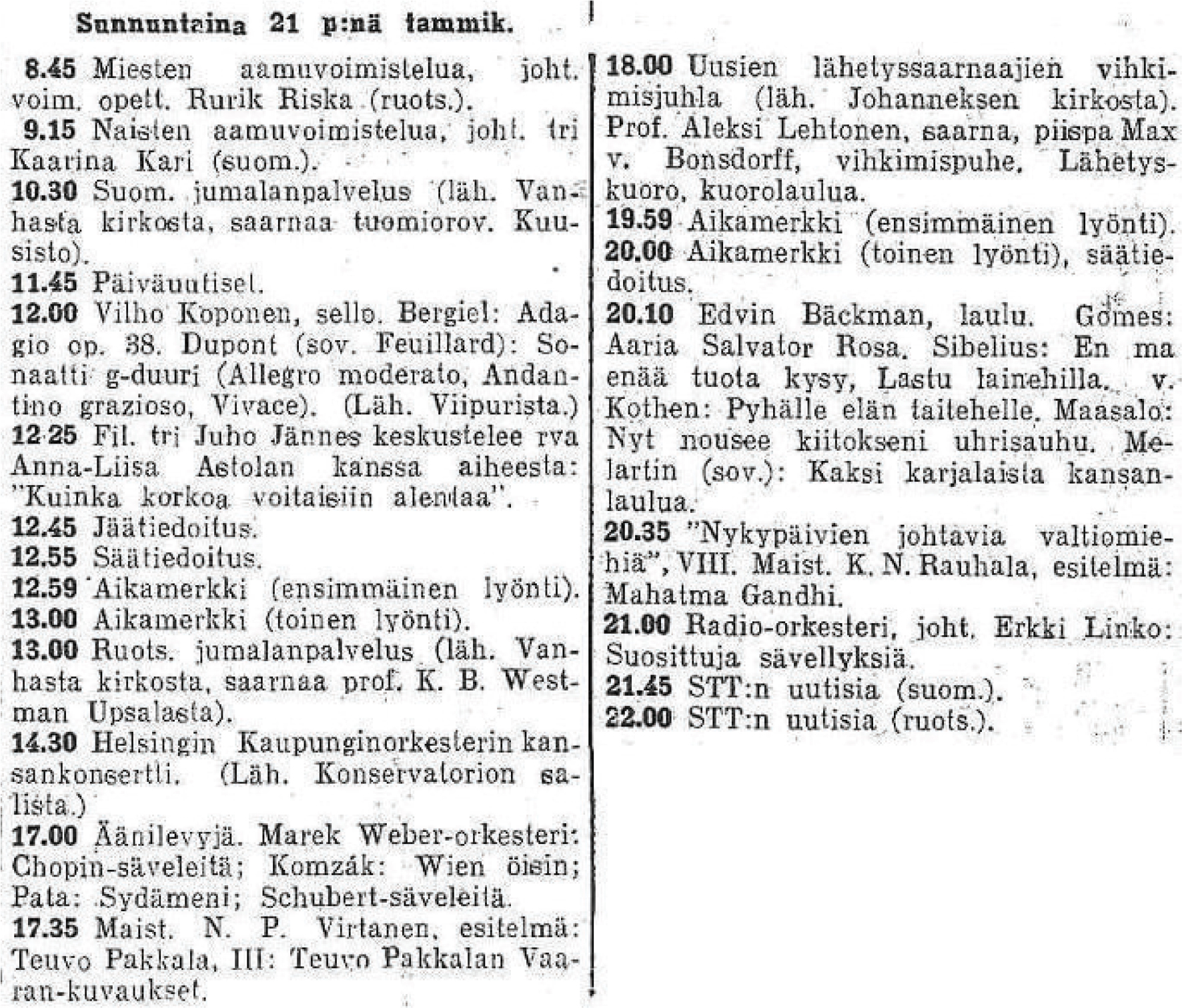
Figure 1
Typical Sunday radio programme described in listings magazine Radiosanoma in 1934. The schedule begins with an exercise programme (aamuvoimistelua) for gentlemen in Swedish and for ladies in Finnish. Followed by a Sunday service (jumalanpalvelus) and the news (päiväuutiset), the rest of the day’s programme consists of classical music both performed live (konsertti) and from records (äänilevyjä), weather and sea forecasts, talks and discussion, a broadcast from missionaries’ initiation festivities and ends with the news from the Finland’s News Agency STT by 10 pm. A time signal (aikamerkki) is given at 1 pm and 8 pm local time.
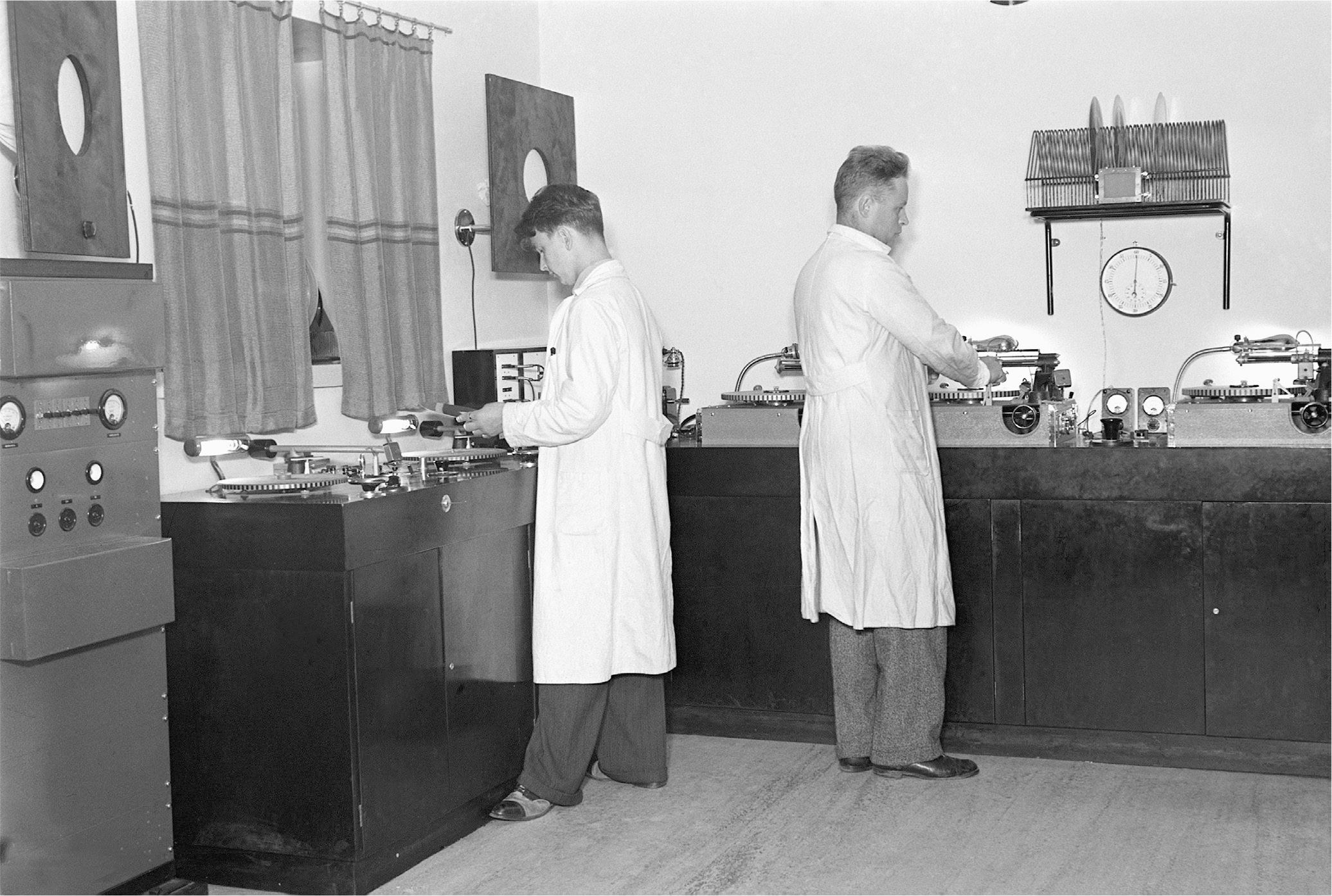
Figure 2
Recording facilities at the new broadcasting house included Telefunken lacquer record lathes, Estimated date 1935-1938. Photo: Yle Photo Archives.
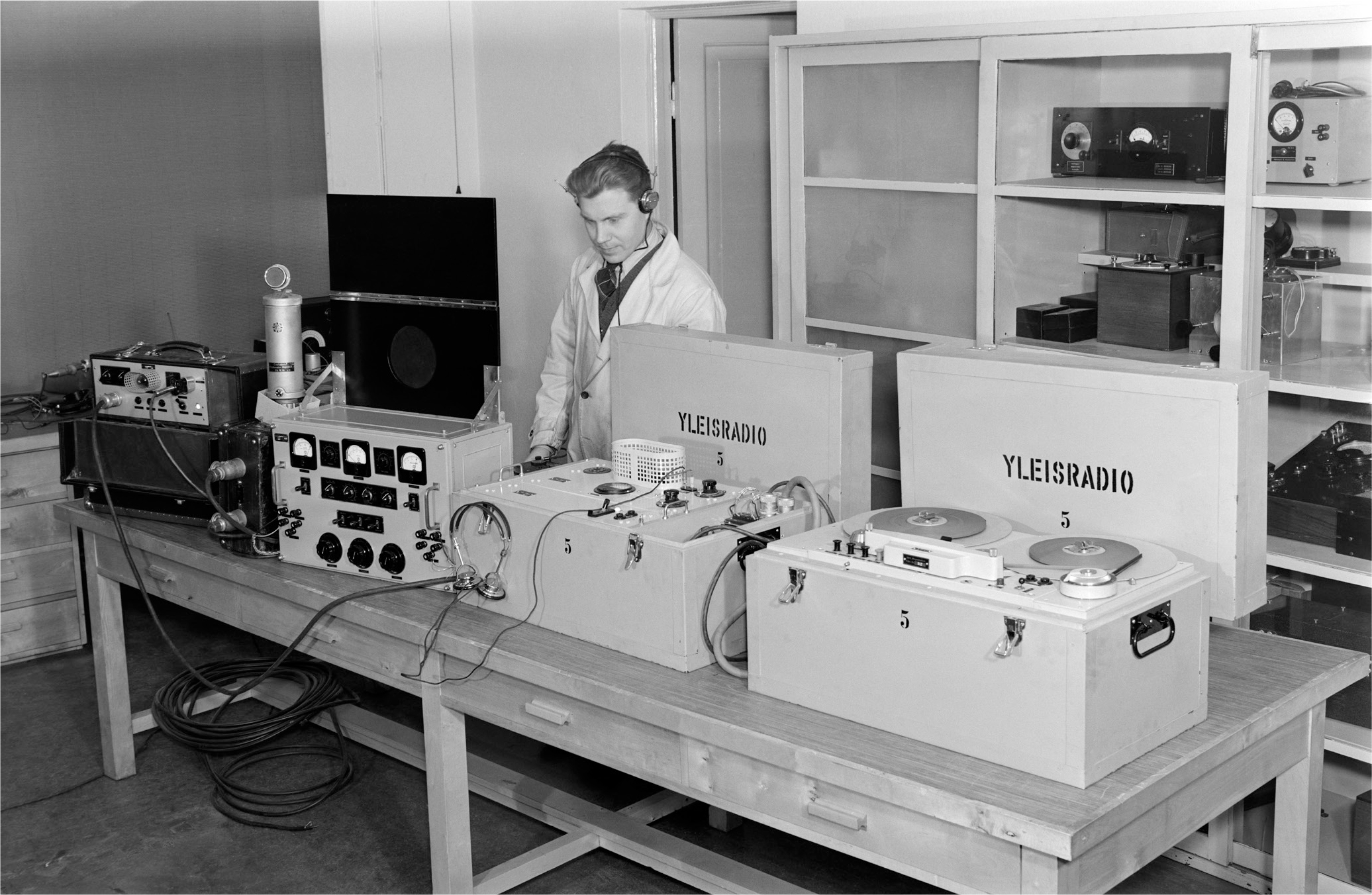
Figure 3
Yleisradio’s in-house engineering manufactured power supplies, amplifiers and transformers which are combined with Telefunken microphone and AEG tape recorder to constitute a recording unit for the 1940 Olympic broadcast, Date: pre-1940. Photo: Yle Photo Archives.
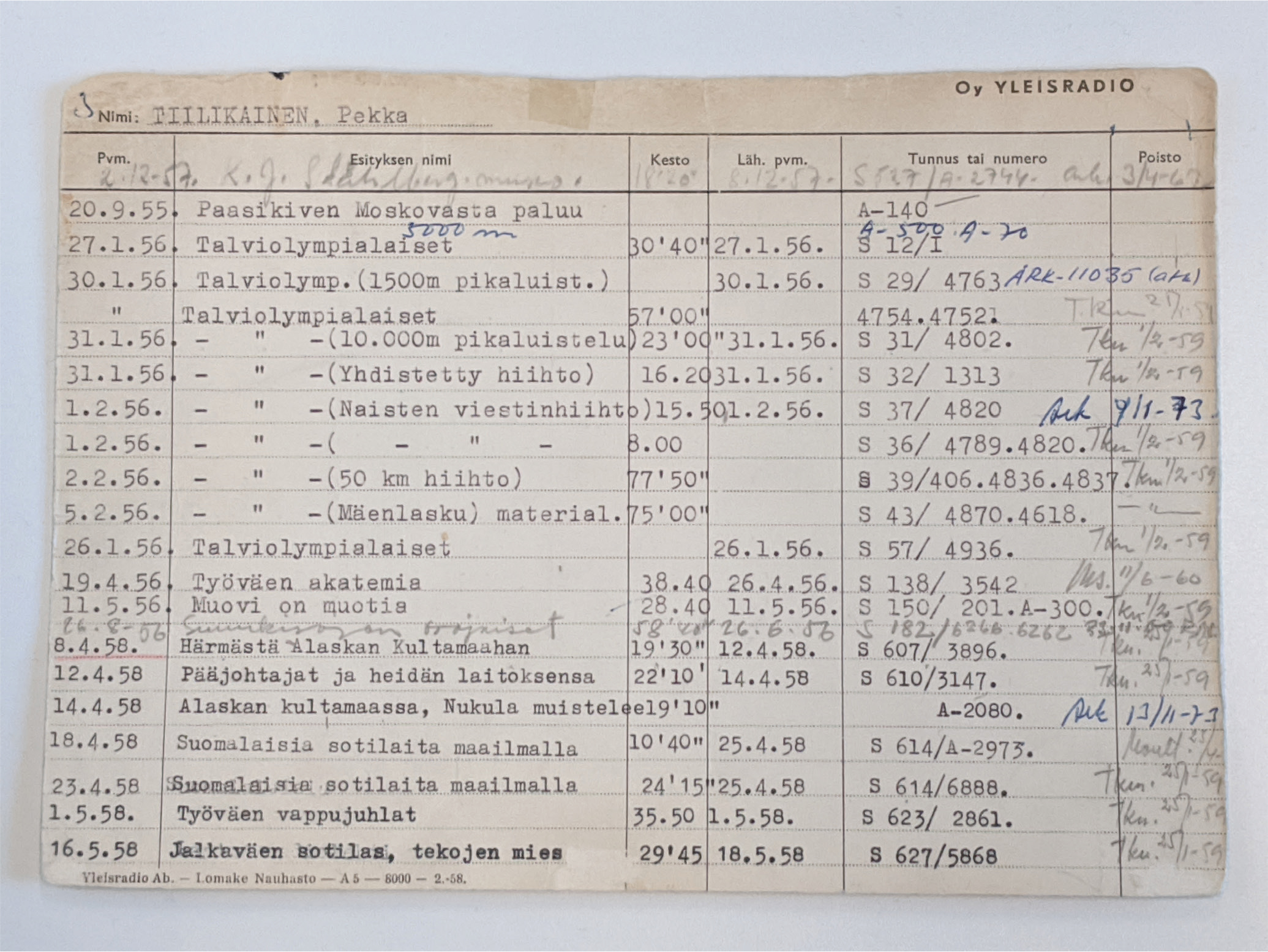
Figure 4
Tape Depository catalogue card from the 1950s. On the top row the main entry, in this case reporter Pekka Tiilikainen. Columns from left.: date of arrival, recording title, duration, broadcast date, carrier ID, and last disposition date which, when containing date or other markings, indicated that recording was disposed. Photo: author.
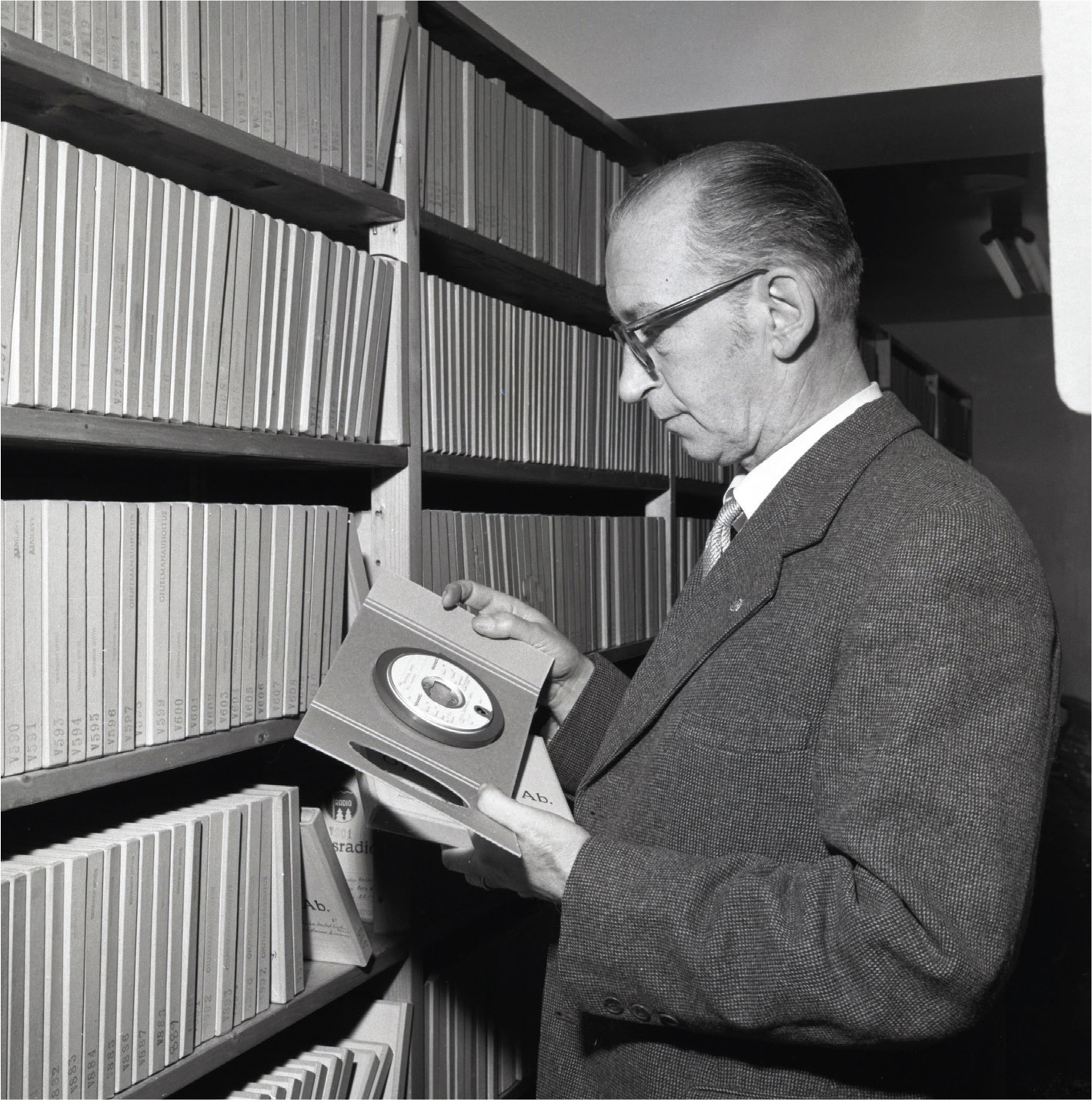
Figure 5
The manager of the Yle Radio Tape Depository, Mr. Erkki Ainamo in 1958. Photo: Yle Photo Archives.
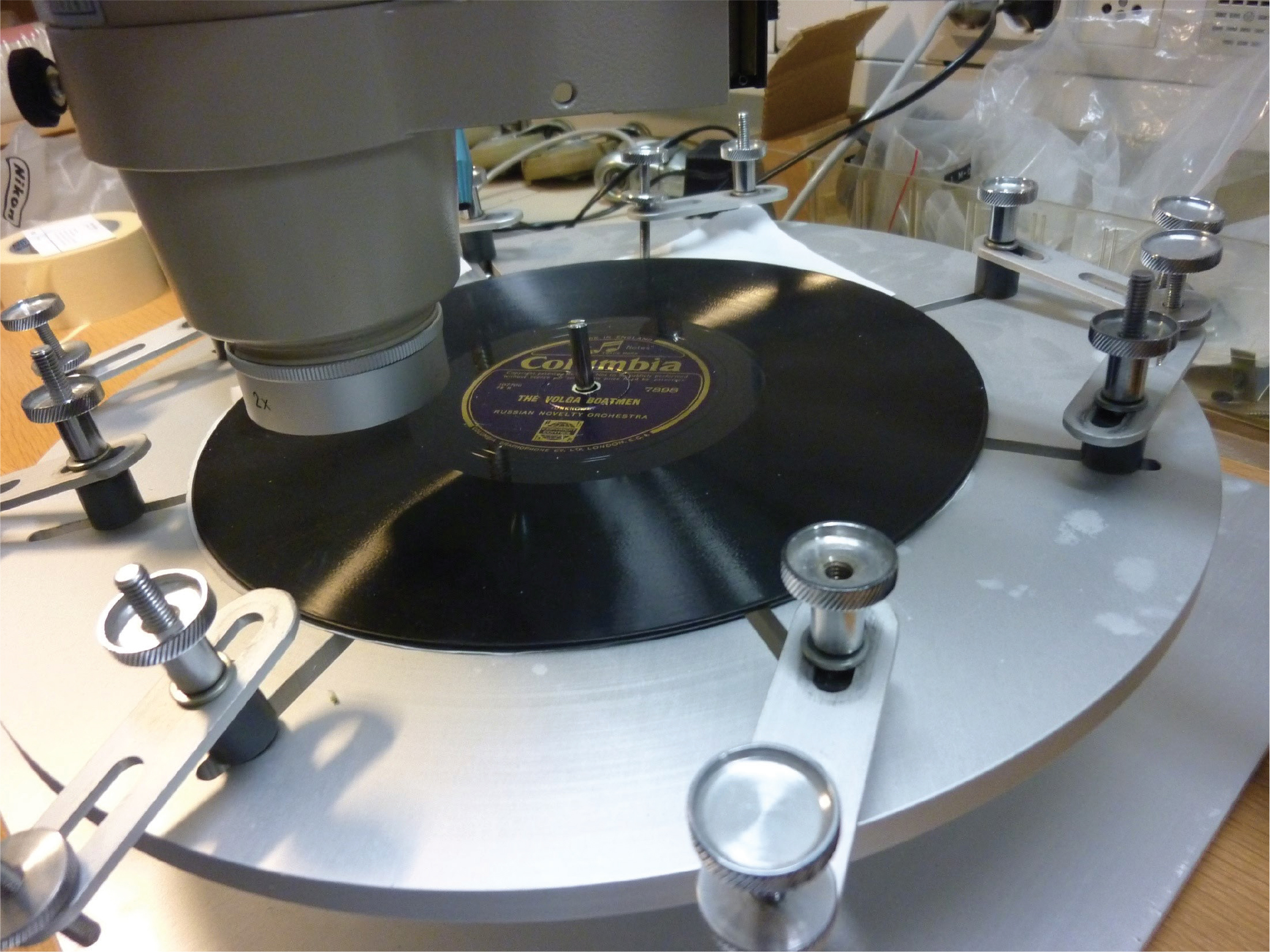
Figure 6
Audio restoration tools of the Yle audio archive’s restoration studio included a microscope which enabled observation of the grooves of shellac records. Nowadays, a lot of signal manipulation can be done in the digital domain, for example a coughing member of the audience can be removed from a concert recording afterwards if necessary. Photo: author.
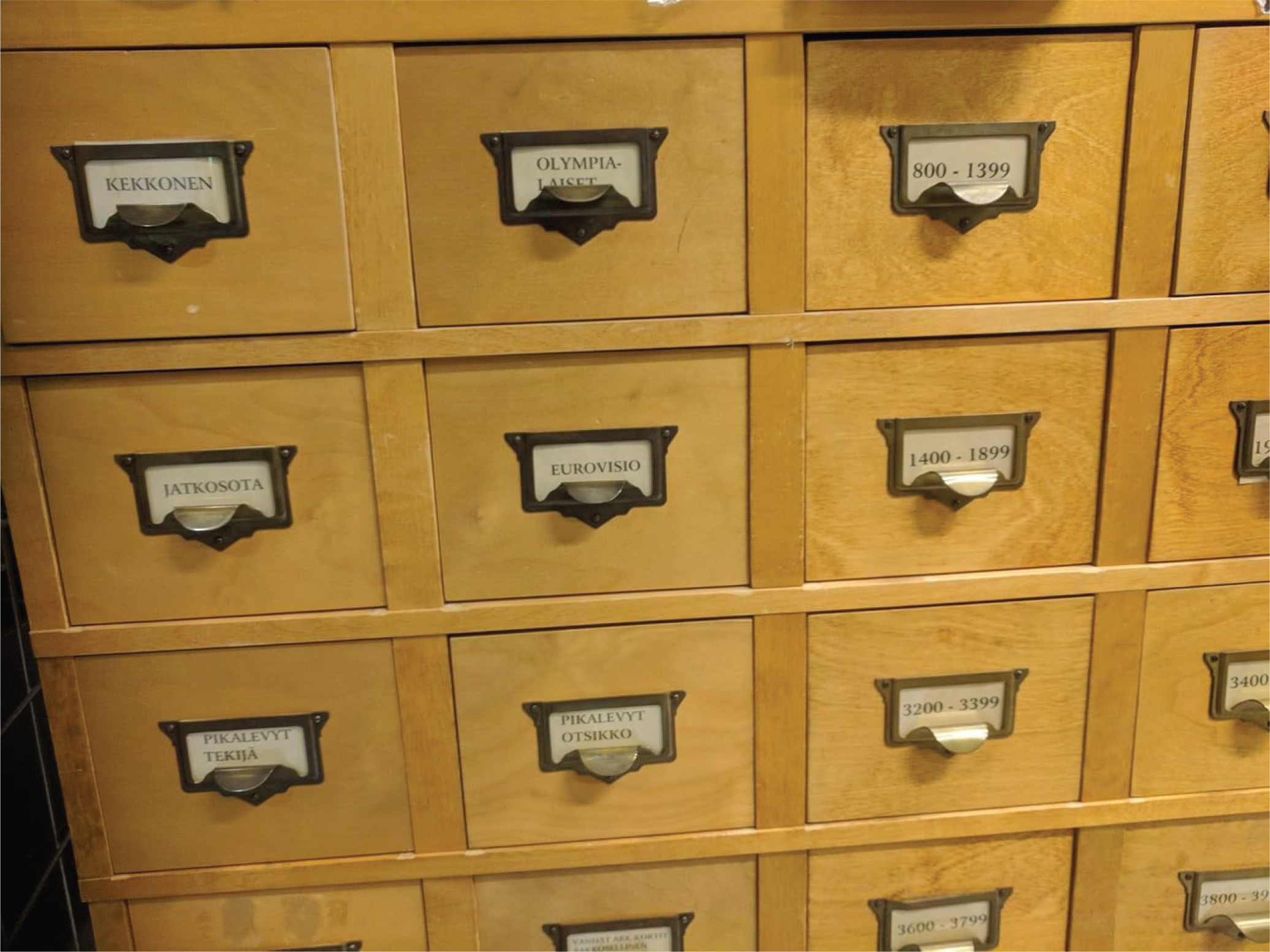
Figure 7
Radio Archive’s card catalogue predated online access to the audio collections. A closer look at the box titles reveals that for example Eurovision exchange, the Olympic Games, Continuation War and Urho Kaleva Kekkonen, the president of Finland 1956-1982, were considered as subject headings worth a direct access. The lacquer disc (pikalevyt) catalogue provides access by author or title, otherwise this part of the collection is arranged by archival ID numbers. Photo: author.