
INTRODUCTION
Agriculture is widely recognized as a fundamental sector supporting human societies and national economies. It encompasses activities such as soil cultivation, crop production, and livestock rearing, providing essential food, fiber, and raw materials. With the global population projected to exceed 9 billion by 2050, agricultural systems are expected to face increasing pressure to meet future food demand. In parallel, the development of agriculture has been described in the literature as progressing through several stages, from early mechanization (Agriculture 1.0) to industrial intensification (Agriculture 2.0), the emergence of precision agriculture in the late 20th century (Agriculture 3.0), and, more recently, the rise of digital and smart agriculture (Agriculture 4.0) driven by advanced technologies since the 2010s.
The first agricultural revolution began 10,000 B.C., 12000 years ago (Blakemore, 2023). While the first agricultural system required intensive labor, and productivity was low, Agriculture 2.0, or the second agricultural revolution, saw agricultural yields start to grow dramatically. This was driven by supplemental inputs, such as fertilizers, pesticides, nitrogen, and machines. Agriculture 3.0, or the third agricultural revolution, which is also known as precision agriculture/farming, emerged as the Global Position System (GPS) became available for public use (Wu, 2022). Agricultural inputs can be cut efficiently when advanced technologies are used in guidance (GPS), sensing and control (yield monitors), telematics (monitor vehicle fleets), and data management (computer software). Agriculture 4.0, also known as smart farming or the fourth agricultural revolution, emerged in the early 2010s and was characterized by the integration of advanced digital technologies, such as the Internet of Things (IoT), artificial intelligence (AI), big data analytics, drones, robotics, and precision agriculture (Wu et al., 2025). These innovations aim to optimize farming practices, enhance productivity, improve resource efficiency, and reduce environmental impact through data-driven decision making (Da Silveira et al., 2021). Building on this foundation, Agriculture 5.0 began to take shape in the early 2020s, emphasizing personalized, sustainable, and human-centered farming practices. Incorporating collaborative robots (cobots), real-time AI decision support, and eco-friendly practices, it prioritizes a harmonious relationship between technology, farmers, and the environment, at the same time addressing labor shortages, enhancing food security, and minimizing the carbon footprint of agriculture.
The COVID-19 pandemic (Laborde et al., 2020; Smith and Wesselbaum, 2020) and the ongoing war between Russia and Ukraine (Glauber and Laborde, 2022), two major global suppliers of food and fertilizers have exposed significant weaknesses in the agrifood system. The Black Sea region, particularly Russia and Ukraine, has served as a “global breadbasket” over the past three decades (Vlamis, 2022). Consequently, some food store shelves stand empty, while surplus food on the farm is destroyed (World Bank, 2021). However, the global COVID-19 pandemic and the Russia–Ukraine conflict should be understood as amplifying factors rather than fundamental drivers of the long-term food insecurity crisis (UN, 2022b). Agriculture has been facing a variety of long-standing and emerging risks (Wu et al., 2023, 2024), including climate change, water scarcity, limited arable land, biodiversity loss, low agricultural productivity, an aging farming population, market volatility, shifting consumer preferences, population growth, and rising demand for environmentally sustainable practices (Basso and Antle, 2020).
Despite the growing body of literature on digital agriculture, existing studies have largely focused on specific technologies or individual application domains, resulting in fragmented insights. Limited attention has been paid to understanding how digitalization simultaneously interacts with multiple dimensions of the agrifood system in an integrated manner. This gap highlights the need for a more comprehensive perspective that captures cross-sectoral linkages and systemic impacts. Therefore, this study develops an integrated conceptual framework that positions digital agriculture as a cross-dimensional and system-level driver, aiming to provide a more holistic understanding of its role in shaping sustainable agricultural transformation and linking technological adoption with broader sustainability outcomes.
LITERATURE REVIEW
Agriculture and food security face increasing pressure from resource limitations, climate change, and changing demand patterns. Climate change, especially the rising frequency of extreme weather events, has a significant negative impact on agricultural production. Rising temperatures are expected to reduce yields, with some studies indicating that a 3°C increase could lead to crop losses of up to 50% in certain regions. Climate change threatens agricultural production through more erratic rainfall patterns and more frequent flooding and droughts. On the other hand, current agricultural production tools also exacerbate climate change through greenhouse gas emissions (Agrimonti et al., 2021). Agricultural production relies on climate, while the supply of natural resources, including water and land, is tied to industrial activities. Only 12% of the world’s land can be used for agriculture, and agricultural water accounts for 70% of the world’s freshwater. However, agriculture is rapidly depleting water and land. Such arable land reduction is an increasingly serious issue from various perspectives, including soil erosion, soil degradation (loss of soil fertility and biodiversity), land destruction by natural hazards, and unilateral, irreversible expansion of built-up areas. Biodiversity loss reduces crop pollination. In the last 40 years, 30% of farmland has been lost, and the world’s topsoil could be entirely depleted if the current degradation rate continues for the next 60 years. To date, nine lakes have disappeared, while others have lost 90% of their water.
In addition to these risks and challenges, agriculture should feed a rapidly growing population and meet rising demand. Recent estimates indicate that the global population has surpassed 8 billion, with China (approximately 1.4 billion) and India (around 1.4–1.5 billion) as the most populous countries (UNPF, 2026c, 2026a, 2026b). According to a UN report, the world population will reach 8.6 billion in 2030, 9.8 billion in 2050, and 11.2 billion in 2100. Nigeria is currently one of the world’s ten most populous countries and the fastest-growing country. In general, Africa’s population is rising rapidly and is on track to double the current number between 2017 and 2050. Such rapid population growth in the poorest countries poses a significant challenge for sustainable development (UN, 2022a). To sustain this future population, global food availability will need to increase by 70% by 2050. Simultaneously, consumer demand is transitioning from prioritizing food quantity to emphasizing food quality. The quantity and quality of agrifood must be improved, while adapting to the changing demands of consumers.
While price variability in agricultural commodities is a common phenomenon, extreme volatility can pose serious risks to food security, farmers’ income stability, and broader economic systems (FAO, 2022). Farmers and consumers represent the two endpoints of the agrifood value chain, corresponding to supply and demand, respectively. Effective communication between these stakeholders is essential to minimize food surpluses and reduce waste.
While advanced agtech can significantly improve agricultural productivity, it remains very expensive. Consequently, only large-scale farmholders can afford the huge investment in agriculture, from seed treatment, crop protection, crop harvesting, and data analysis. However, smallholders account for 80% of the developing world’s food suppliers. Simultaneously, rapid urbanization, the aging farming demographic are further concerns (Fresh Plaza, 2022), as migration from rural to urban areas continues at a significant pace. Therefore, critical questions arise: How can the agricultural workforce be expanded, how can smallholder farmers’ investment capacity be strengthened, who will constitute the future farming population, and how can talent be attracted back to agriculture? These challenges are central to both the present and future development of the agricultural sector.
Given the increasing challenges facing modern agriculture, Agriculture 4.0 – encompassing digital and smart farming approaches – has emerged as both a promising solution and an inevitable trajectory for future agricultural development (Vásáry et al., 2020). Digital agriculture is a revolution based on precision agriculture (Da Silveira et al., 2021; Takács-György and Takács, 2022), which can digitally collect, store, analyze, and share electronic data and/or information in agriculture associated with digital technologies such as GPS, drones, sensors, IoT, artificial intelligence, robotics, big data, 5G, and 3D printing to support the sustainability of the economy, society, and environment by increasing productivity and efficiency and decreasing the cost and waste (Basso and Antle, 2020; Gaál et al., 2021; Khujamatov et al., 2021; Milics et al., 2022).
MATERIAL AND METHODS
With the rise of Industry 4.0, advanced technologies are key to agricultural development. It is clear that technology is and will play an essential role in our future. To systematically examine and better understand the inevitable impact of digitalization on agriculture, this study adopted a structured literature review. The relevant literature was selected from authoritative databases, such as Web of Science, Scopus, and Google Scholar. All the literature used came from peer-reviewed journal articles published in English between 2020 and 2026. The search process followed some keywords, including “digitalization”, “sustainable development”, “climate change”, “smart agriculture”, and “food security”. In addition, some reports from official organizations were also included, such as the FAO, UN, and World Bank. Studies focusing on unrelated sectors or insufficient substantive discussion of digitalization in agriculture were excluded. The initial search contained a broad range of publications, which were further filtered based on titles, abstracts, and full content to select the most relevant studies.
This study contributes to the literature by advancing an integrated conceptual perspective on digital agriculture. By conceptualizing digital agriculture as a cross-dimensional and system-level driver, this study provides a more holistic understanding of its role in transforming the agrifood system. This integrative approach not only clarifies the interdependencies among key domains but also extends existing research by linking technological adoption with broader sustainability outcomes. This methodological approach supports the development of an integrative framework that captures cross-sectoral interactions, which are often overlooked in existing literature.
RESULTS
To systematically examine the influence of digitalization on agriculture, this study structures the analysis around four key dimensions: the Sustainable Development Goals (SDGs), climate change, crop and livestock production, and agricultural economics.
The contribution of digital agriculture to sustainable development
On 25 September 2015, all 193 Member States of the United Nations adopted the 2030 Agenda for Sustainable Development with 17 goals (SDGs) (Fig. 1), for the international community to end poverty by 2030, which includes economic, social, and environmental goals. Although digital agriculture can boost crop yields, enable targeted irrigation, enhance information empowerment, optimize supply chains, monitor waste generation, promote system integration, advance aquaculture, improve land management, and facilitate information sharing, it still cannot contribute to the achievement of all Sustainable Development Goals (SDGs). Digital agriculture plays a pivotal role in advancing SDGs. Digital agriculture mainly or directly deals with two of the SDGs: No.2 (Zero hunger) and No.9 (Industry, Innovation, and Infrastructure), and indirectly addresses No. 1 (No poverty), No.4 (Quality education), No.5 (Gender equality), No.6 (Clean water and sanitation), No. 7 (Affordable and clean energy), No.8 (Decent work and economic growth), No.10 (Reduced inequalities), No.11 (Sustainable cities and communities), No.12 (Responsible consumption and production), No.14 (Life below water), No.15 (Life on land), and No.17 (Partnerships for the goals) (Banjeree, 2020; Maffezzoli et al., 2022). Information and communication technologies (ICT) enable agricultural production to function more efficiently, increase crop yields, and reduce losses, which is promising for providing adequate food to feed the increasing population. Integrated systems and transparent information-sharing requirements facilitate the infrastructure of agriculture and food systems. The development of digital agriculture relies on a workforce equipped with integrated expertise in both agriculture and digital technologies, with an emphasis on inclusive skill development. Furthermore, digital financial solutions and timely access to market and pricing information can support poverty alleviation by enhancing economic opportunities. While advanced technology increases greenhouse gas emissions, at the same time, it helps industries to explore more green energy options, such as solar, wind, and other renewable sources. Within agriculture, more precise management of irrigation and soil fertility, combined with reduced water wastage and decreased chemical use, can improve both the quantity and quality of water resources. Moreover, a more efficient and integrated agrifood value chain serves the cities and communities more sustainably and also makes the actors responsible for food waste and production, such as producers, transporters, retailers, and consumers.
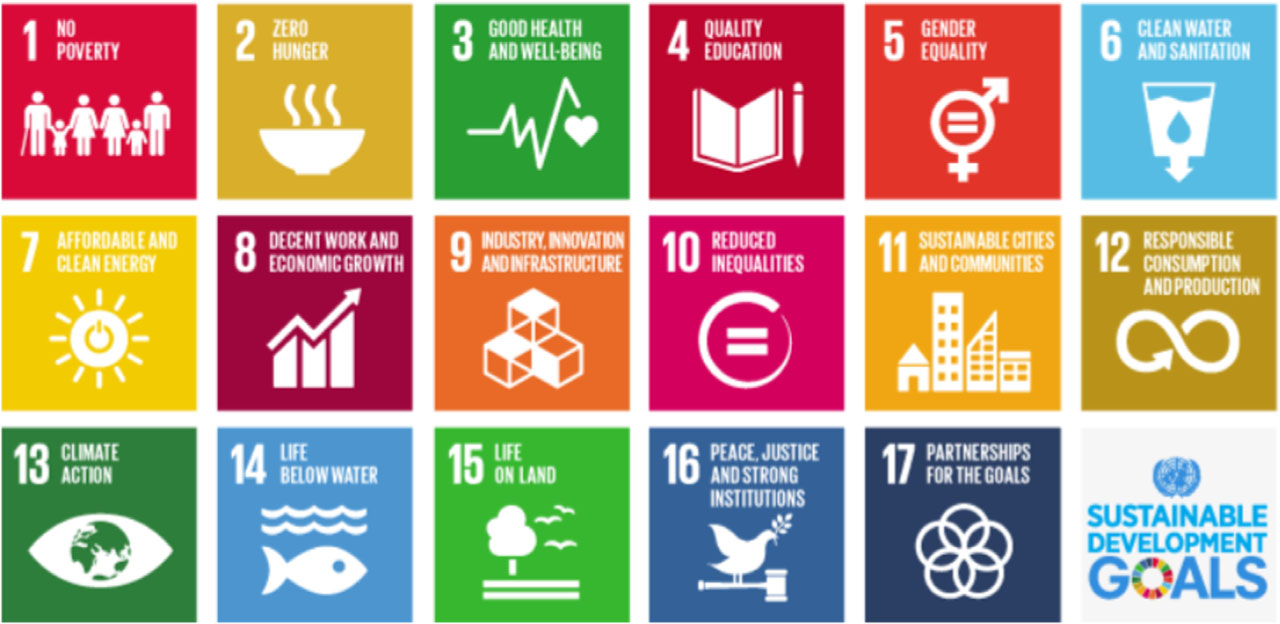
Fig. 1.
The 17 Sustainable Development Goals
Source: own elaboration based on UN, 2015.
The adoption of robotics and advanced mechanized systems can minimize soil disturbance and degradation, thereby contributing to the conservation of soil fertility. Advanced technologies used to analyze historical data and make predictions, such as big data and databases, can help farmers decide what crops to cultivate and where to cultivate them in a given climate zone, which can enhance biodiversity (Maffezzoli et al., 2022).
Digital agriculture dealing with climate change
Global climate change affects not only agriculture but also ecosystems, livelihoods, and human health (Table 1) (German Environment Agency, 2021). The consequence is more frequent floods, droughts, heat and cold waves, super whirlwinds, and typhoons. Climate change further threatens agriculture through its impact on ecology, the environment, the geographical situation of crops and crop production, the resources and supply chain of agriculture, and market prices. Moreover, such climate change risks are projected to intensify across most sectors over time, with higher impacts under pessimistic scenarios compared to optimistic ones. Sectors such as agriculture, forestry, fisheries, water management, and coastal systems show a clear transition from moderate to high risk by the end of the century, particularly in pessimistic projections. In contrast, the energy sector remains consistently low-risk, while sectors such as transport, industry, and tourism exhibit more moderate but increasingly variable risk patterns. The key to sustainable agriculture is to transform agriculture into a more efficient and resilient system, which is the effect of digital or smart agriculture (Agrimonti et al., 2021). Climate-Smart Agriculture (CSA) is an approach that includes traditional organic farming, innovative technologies, and information technology (IT) to transform agricultural production and the agrifood value chain in the direction of sustainable development facing climate change, which was introduced by the FAO in 2010 and supports the SDGs and the Paris Agreement (Agrimonti et al., 2021). This approach is relevant at both global and local levels, contributing to climate change adaptation and mitigation. Essentially, CSA has three main missions: (1) increase agricultural productivity and income sustainably; (2) adapt to climate change and build resilient agriculture; and (3) reduce and/or remove greenhouse gas (GHG) emissions if possible, through all the private sector or individual practitioners, small- or large-scale producers, and related enterprises (Biró and Szalmáné Csete, 2021) in different fields, such as fields, pastures, forests, and oceans and freshwater ecosystems. The most notable Climate-Smart Agriculture technologies are drones (monitor crop and livestock situations, collect data and carry out tasks), The Internet of Things (IoT) (mainly monitor or measure the infield conditions by sensors), big data (analyze all the data from drones and IoT, and optimize production processes), blockchain (monitor all the supply chain process to make efficient traceability decisions), artificial intelligence and robotics (implement tasks instead of human, interpret imagines, etc.) (Takács-György and Takács, 2022).
Table 1.
The risks from climate change
| Present | Middle of century, optimistic case | Middle of century, pessimistic case | End of century, optimistic case | End of century, pessimistic case | |
|---|---|---|---|---|---|
 Biodiversity Biodiversity | low | medium | medium-high | medium | high |
 Soil Soil | low-medium | low-medium | medium-high | low-medium | medium-high |
 Agriculture Agriculture | medium | medium | high | medium | high |
 Forestry Forestry | medium | medium | high | medium | high |
 Fisheries Fisheries | low-medium | medium | high | medium | high |
 Coastal and marine protection Coastal and marine protection | medium | medium | high | high | high |
 Water management, water balance Water management, water balance | medium | medium | high | medium | high |
 Construction Construction | medium | medium | medium-high | medium | high |
 Energy industry Energy industry | low | low | low | low | low |
 Transport, transport infrastructure Transport, transport infrastructure | low-medium | low | medium | low-medium | medium-high |
 Industry and commerce Industry and commerce | medium | low | medium | low | medium |
 Tourism Tourism | low | low | medium | medium | high |
[i] Source: GEA, 2021.
Digitalization in crop production
The use of machinery in agriculture, such as intensive tractors, combine harvesters, and trucks, can improve crop production per unit of equipment by 19%–26% approximately and decrease the cost per unit of production (Subaeva et al., 2020). The use of drones, GPS, and other IoT-based technologies in yield monitoring and disease detection can enhance efficiency by reducing operational time and improving crop yields (Maffezzoli et al., 2022). For example, the use of GPS in strip-tillage systems has been shown to increase crop yields compared to conventional tillage. The tilled rows warm up more quickly, which enhances seed germination and early plant growth. In addition, GPS-based satellite guidance systems can significantly improve operational efficiency in planting, management, and harvesting by enabling precise, continuous operations both day and night. GPS, together with geographic information systems (GIS) and remote sensing (RS), can efficiently and accurately estimate yields and map the planting situation, such as plant disease, soil fertility, pests, weeds, landscape changes, soil type and moisture, topography, pH, crop cover, and distribution of N, P, K, and other nutrients. 5G technologies are used as sensors, cameras, and controllers to collect data related to the growth conditions and environment of the grain. After the data has been restored and analyzed in the cloud platform and software, feedback is provided to producers to make better decisions in time. Other producers can also gain knowledge and experience from this process. 5G technology can not only improve food quality but also control food quality by monitoring the entire industry chain, including production and processing, operating services (logistician), and management level, and providing timely feedback. Nevertheless, agriculture-based bioeconomy (such as biotechnology innovation and GMO applications) is also promising for crop production. A country’s adoption of GMO application depends on a complex set of factors.
Digitalization in animal husbandry
Similar to crop production, the adoption of digital technologies in livestock farming, such as radio frequency identification (RFID) and automated or robotic milking and feeding systems, can enhance efficiency while reducing costs and improving both the quantity and quality of outputs. For example, these technologies can increase calf yield, milk production, and feed conversion efficiency, while lowering the costs associated with insemination, culling, and disease treatment (Marinchenko, 2020). Drones or other infrared technologies can be used to monitor the number of animals (cattle, pigs, sheep, and goats) and their health condition, such as weight, lameness, abnormal movements, and so on. Milk producers can also monitor cows’ body temperature and body weight and make decisions on the milking schedule or control milking robots via radiofrequency identification tags. Moreover, these robots can test and analyze milk quality.. Compared to crop production, labor productivity is lower in animal husbandry (Subaeva et al., 2020), ye digital animal husbandry has a promising future for sustainable food security and food safety, for example, with robots milking and feeding instead of human feeders and milkmen (Gebbers and Adamchuk, 2010).
Digitalization in agricultural economics and management
Economic gains in agriculture are strongly associated with the use of digital technologies in crop and livestock systems, driven by lower input requirements, reduced environmental damage, and enhanced efficiency and product quality (Maffezzoli et al., 2022). The expensive and efficient digital technologies or machines used in large-scale farms can significantly increase gross agricultural outcomes and reduce production complexity (Lowenberg-DeBoer et al., 2021; Subaeva et al., 2020). In line with the principles of economies of scale, digital agriculture has been shown to enhance irrigation development across multiple dimensions, including water resource potential, the design of irrigation systems, and construction efficiency. While the initial investment and fixed costs of digital technologies (e.g., equipment) may be substantial, unit costs tend to decrease with scaling, leading to greater operational efficiency. Although labor and water costs may increase in certain contexts, the overall effect of digitalization is to enhance profitability by improving resource allocation, productivity, and long-term economic returns (Shao et al., 2022). Consequently, the advancement of digital agriculture has emerged as a strategic priority in several economies, including China and Russia. It not only represents a transformative shift within the agricultural sector but also acts as a driver of broader economic development, strengthening both national competitiveness and the performance of agribusiness enterprises (Szanyi-Gyenes and Almási, 2023).
DISCUSSION
Implications
This study advances the literature by providing an integrated and systematic perspective on how digitalization reshapes agriculture. Rather than examining isolated applications, we conceptualize digital agriculture (smart agriculture or Agriculture 4.0) as a cross-dimensional driver that simultaneously influences five key domains: sustainable development, climate change adaptation, crop production, animal husbandry, and agricultural economics (Fig. 2). This integrative framework highlights the interdependencies among these domains, demonstrating that digitalization not only improves efficiency and productivity but also enables more resilient and sustainable agricultural systems. Furthermore, digital technologies – including drones, GPS, robotics, AI, and 5G – facilitate data-driven decision-making and precision management, thereby transforming traditional agriculture into a more adaptive and resource-efficient system. Despite challenges such as high investment costs and barriers to adoption, this study emphasizes that the long-term potential of digitalization lies in its capacity to link technological innovation with sustainability outcomes across the entire agrifood system, thus offering a coherent logic that extends beyond existing fragmented analyses.
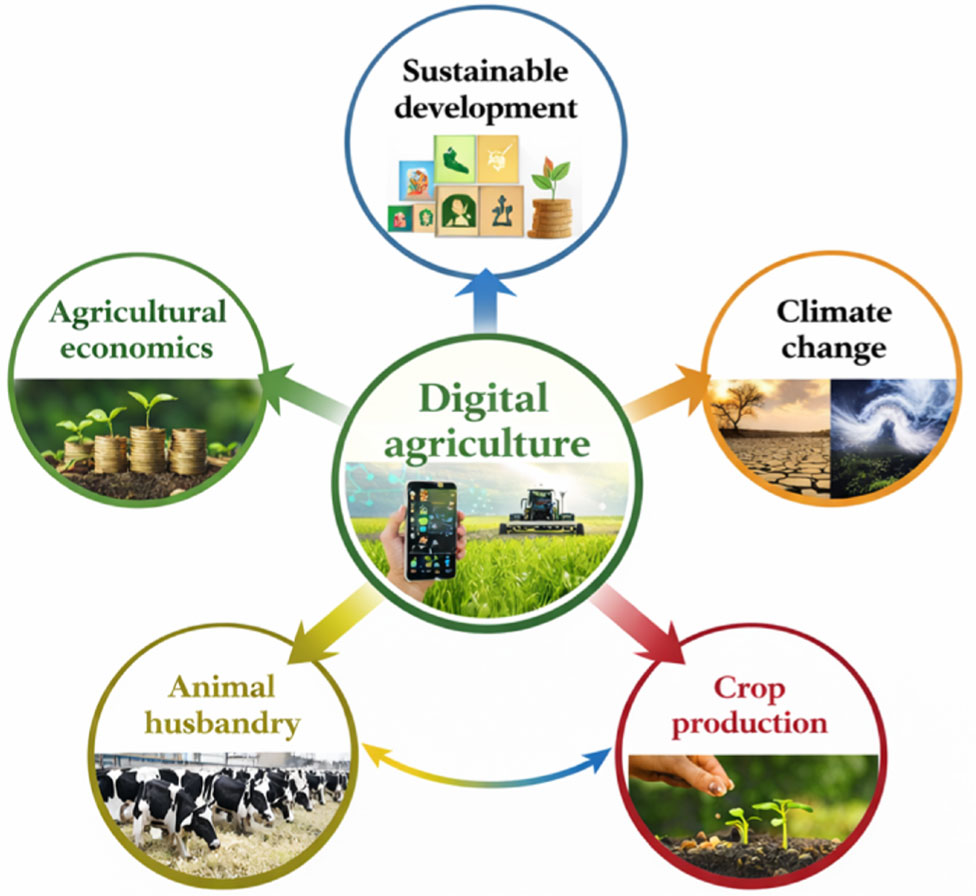
Fig. 2.
The role of digitalization in agriculture
Source: own elaboration.
In terms of sustainable development, digital agriculture benefits most of the 17 SDGs, soil fertility, and biodiversity. These SDGs include No. 2 (Zero hunger) and No. 9 (Industry, Innovation, and Infrastructure), No. 1 (No poverty), No. 4 (Quality education), No. 5 (Gender equality), No. 6 (Clean water and sanitation), No. 7 (Affordable and clean energy), No.8 (Decent work and economic growth), No. 10 (Reduced inequalities), No. 11 (Sustainable cities and communities), No. 12 (Responsible consumption and production), No. 14 (Life below water), No. 15 (Life on land), and No. 17 (Partnerships for the goals) (Banjeree, 2020; Maffezzoli et al., 2022). Climate-Smart Agriculture (CSA) and other approaches using IT, ICT, IoT, etc., are aimed at transforming traditional agriculture into more efficient and resilient agriculture, which focuses on adapting and mitigating the impacts of climate change (Agrimonti et al., 2021). Efficiency, yields, and the quality of agrifood products can be drastically improved by the use of drones, GPS, robotics, radio frequency identification (RFID), 5G, etc., as employed in crop production (Maffezzoli et al., 2022; Subaeva et al., 2020) and animal husbandry (Gebbers and Adamchuk, 2010; Marinchenko, 2020) Thanks to digitalization in agriculture, the agricultural economy is boosted by high efficiency and quality (Maffezzoli et al., 2022; Subaeva et al., 2020). Although investment poses a significant challenge for the dissemination of digital agriculture and the inevitable concerns with digitalization, given the prospective economies of scale, digitalization in agriculture is still a bright future (Shao et al., 2022).
Limitations and suggestions
While the study establishes the immense potential of future digital agriculture, due to limited space requires us to leave deeper examinations to other researchers. Therefore, the limitation of our research also suggests directions for future research. Nonetheless, digital agriculture is an essential aspect of sustainable agriculture, although it remains in its infancy (Ministerie van Landbouw, 2021). Moreover, critical gaps remain in areas requiring joint engagement from both stakeholders, notably in cybersecurity and data protection, as well as in bolstering farmers’ awareness and technical knowledge (Fountas et al., 2020; Maffezzoli et al., 2022; Tang et al., 2021), the quantity of talents managing digital agriculture and suitable institutions (Carmela Annosi et al., 2020; Shao et al., 2022; Tang et al., 2021), clear and adequate digital agriculture education and training (Monteleone et al., 2024; Pogorelskaia and Várallyai, 2020; Soma and Nuckchady, 2021), integrated policy and laws on digital agriculture (MacPherson et al., 2022), sufficient financial support, data privacy and availability. How do these factors hinder the success of digital agriculture, and what should we do to mitigate this hardness? These essential questions should be addressed in future studies.
CONCLUSIONS
Digital agriculture should be understood not merely as a set of technological innovations but as a systemic transformation of the agrifood sector. By linking technological advancement with sustainability outcomes, digital agriculture enables coordinated progress across the agrifood value chain, contributing to multiple Sustainable Development Goals (SDGs), enhancing climate adaptation and mitigation, improving crop and livestock productivity, and strengthening economic performance through increased efficiency and product quality. This study further illustrates that its benefits depend on appropriate and informed implementation, as misuse or unequal access may lead to unintended environmental and social consequences. To mitigate these risks, targeted educational initiatives and effective communication strategies for farmers are essential. Achieving sustainable outcomes, therefore, requires an enabling ecosystem. This includes fostering digital literacy, stronger policy support, and collaborative efforts at both the individual and national levels, thereby ensuring successful and equitable implementation of digital agriculture across generations.