
INTRODUCTION
One of the strategic challenges of Poland’s development is the growing share of tourism in the country’s GDP; this currently stands at 4.9%, against the EU average of 9.5%. The expected direction of development is sustainable tourism. Rural areas have dormant potential for tourism development, as their unique identity and its components can become an attractive tourist product. Rural areas in Wielkopolska with such potential are its ethnographic regions. An example of a community equipped with outstanding cultural resources is the area of Biskupizna, located in Krobia municipality.
The concept of identity is present in various sciences, including psychology, sociology, political science, as well as economic geography and economics. However, it cannot be treated as something constant in any of these aspects. Rather than viewing identity as a state, it should be understood as a process of an abstract nature, or a certain social construct that changes over time (Camagni et al., 2020). As a result, this creates challenges related to describing and understanding identity, particularly when its study devolves into a mere narrative (Billig, 1995). Regional identity is present in European discourse primarily as a component of the competitiveness of regions, or in opposition to globalization (Millard and Christensen, 2004). For the purposes of the research, the main emphasis is placed on territorial identity, which is understood as people’s identification with the specific territorial unit in which they live. In other words, territorial identity refers to identification with a specific local (regional) community, and thus with people, traditions, culture, as well as elements of the landscape and emotional ties between residents and a given territory (Paasi, 2011). Camagni et al. (2020) draw attention to the feelings related to territorial identification, pointing to two key elements: similarity and solidarity. Similarity refers to common spatial boundaries, history, and institutional and economic frameworks, and therefore sets certain boundaries within which territorial identities can be formed. Solidarity, on the other hand, is related to the phenomenon observed when the interests of individuals and collectives overlap to a certain extent, which fosters reciprocity and beneficial social behaviour. Such pro-social attitudes are seen by Cichocki (2018) in the inhabitants of Wielkopolska, emphasizing their low level of conflict, and willingness to act for the common good. Cultural heritage plays an important role in the process of strengthening identity, and the correlations between economic dynamics and this heritage are also noticeable. In this context, the importance of an attitude of openness and enthusiasm towards novelties is emphasized, which fosters innovation and allows space to adapt, especially in crisis situations (Camagni et al., 2020).
The aim of this study was to identify the importance of local identity in the process of socio-economic development of the commune, as well as the possibility of its use in the field of tourism. The following research questions were posed:
How was the historically and culturally identity of the ethnographic region of Biskupizna formed?
How does local identity manifest itself in the everyday life of residents and what role does it play in the processes of socio-economic development?
To what extent are cultural resources used for the development of tourism?
What are the possibilities and limitations of using local identity in the development of tourism?
The article consists of the following sections: Biskupizna as an ethnographic region (the history of the studied area is discussed); local identity in the local development of the commune (contains the results of qualitative and quantitative research); local identity as a potential for the development of tourism (recognizing this potential for shaping the tourist function of the commune); conclusions.
The study was conducted using the example of Krobia municipality, located in Biskupizna, the smallest ethnographic region in Poland, which lies in the Wielkopolska Province. In accordance with UNESCO guidelines, the cultural traditions of the region have been inscribed on the National List of Intangible Cultural Heritage. The uniqueness of this area, as well as the high level of socio-economic development and intensive agriculture, were the prerequisite for undertaking in-depth field research.
The article addresses a research gap that concerns how local identity relates empirically to the development of tourism. Employing the case study method, the article uses both statistical data and the author’s previous research results to determine the level of development of the municipality and assess its dynamics against the background of the Wielkopolska region and Poland as a whole. In addition, material collected during field work was used in the form of individual interviews and questionnaire surveys conducted with representatives of local authorities, non-governmental organizations and cultural activists. In addition, observations from local cultural events or meetings with leaders were used. The case study was conducted in the municipality of Krobia from April to October 2025. During the field research, photographic documentation of the area was collected.
BISKUPIZNA AS AN ETHNOGRAPHIC REGION
An ethnographic region is an area conceptually similar to a cultural region. It is determined on the basis of the spatial occurrence of certain characteristic folk culture phenomena (Bronco, 1996). However, the boundaries and characteristics of ethnographic regions are blurred. As Potocki (2009) emphasizes, these regions do not necessarily correspond a particular geographical area, since folk culture is not found everywhere. For instance, an area where folk culture disappeared after 1945 is the Sudetenland in Poland.
By contrast, the study area is characterized by a rich, centuries-old Wielkopolska tradition which is nurtured and maintained. Of particular value for the cultural heritage of both Poland and Europe is the ethnographic microregion of Biskupizna, which includes the village of Krobia and eleven villages located in the municipalities of Krobia and Gostyń (Fig. 1). This region’s history dates back to the 13th century, when this area was owned by the bishops of Poznań1. Thanks to this, the inhabitants were endowed with numerous privileges, and farms covered larger areas, thereby providing better conditions for farming. At that time, a sense of separateness, a certain elitism developed, as did Biskupian folk culture (www.biksupizna.pl).
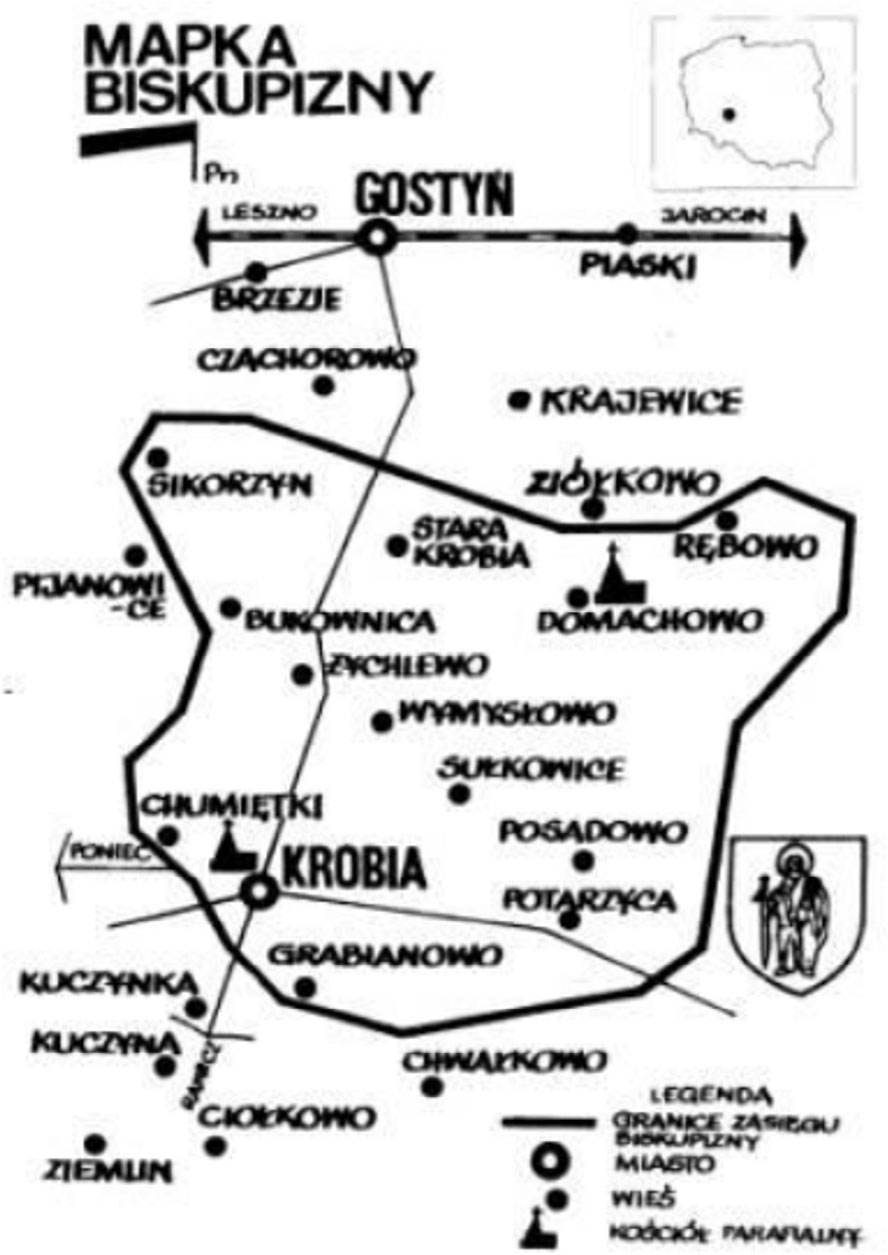
Fig. 1.
Territorial scope of Biskupizna
Source: Dictionary…, 2025.
This area remained the property of the bishops until the Partitions of Poland, when it was transferred to the Prussian government. Consequently, the enfranchisement of peasants was carried out on favourable terms. These positive economic changes coincided with the fight against Germanization, bolstering local traditions and patriotism, which was expressed in participation in insurgent struggles and activity in independence movements. Local inhabitants actively opposed the Germanization policy by creating associations and institutions: the Society of Industrialists, the People’s Bank, the Society of People’s Reading Rooms, the “Sokół” Gymnastics Society.
The most important independence uprising in the history of the Gostyń region was the Wielkopolska (Greater Poland) Uprising of 1918–1919, which allowed them to regain their freedom and return to their Motherland. The memory of the uprisings and attachment to history and the land is present in the municipality’s social spaces, with monuments and streets named after local heroes. Since Poland regained its independence, the folk culture of Biskupizna has been vividly popularized. A key role in this process was played by the Polish ethnographer Jan Bzdęga (Jan of Domachowo Bzdęga), who, together with Zofia Nowak, founded the Biskupiański Folkloristic Ensemble2. From the beginning, the members of the group were farmers interested in local traditions and their continuation. The first president was the chairwoman of the Rural Housewives Circle from Domachowo. Currently, there are two children’s ensembles functioning at local schools, which educate the youngest in the field of music and folk dance. The traditions of the Biskupizna region have been inscribed on the National List of Intangible Cultural Heritage, in accordance with UNESCO guidelines. The most important manifestations of cultural heritage here include characteristic costumes, dialect, unique instruments (bagpipes and violins tied), as well as singing, dancing and rituals. Folk dances from this region occupy an important place in the repertoire of many folklore groups in Poland, including wiwat, przodek and równy. The culture of Biskupizna has inspired numerous documentaries and artistic projects (music postcards). Moreover, folk artists are awarded the Oskar Kolberg Award3 and receive support from the Ministry of Culture for activities popularizing folk heritage. An example of an interesting project was the 2012 film “The Land of Happy People”, presented at the Malta International Festival in Poznań, which showed young people’s passion for folk music. Another project, taking up the difficult topic of violence, is the music video and song “Hola, hola” by the band Dagadana4.
LOCAL IDENTITY IN THE LOCAL DEVELOPMENT OF THE MUNICIPALITY
Krobia municipality is located in the southern part of Wielkopolska, in the west of Poland, and has a population of 12,577 (Central Statistical Office, 2026). Krobia municipality is peripheral in nature, being located off the country’s main transport routes, both road and rail, which is a significant limitation for the development of tourism. The region’s natural assets are typical for the agricultural landscape of southern Wielkopolska – there are no larger water reservoirs, the relief of the terrain is gentle, and the landscape is flat. However, the area is prone to drought. It is distinguished on the one hand by well-developed and intensive agriculture5 and, on the other, by its uniqueness in terms of history. The social and technical infrastructure, developed through numerous investments and the effective securing of external funds, meets local needs. Local government initiatives are enhanced by the commitment and work of the residents. It is worth adding that in addition to its educational municipality’s institutions, the municipality also has a nursery.
As mentioned above, the local government is successful in securing external financial resources. In the commune office, there are project teams assigned to the project, consisting of employees of various units of the office and organizational units, depending on the specific thematic area and needs. This collaboration fosters the accumulation of knowledge and experience of employees, strengthens the quality of work, reduces the risk of mistakes through the mutual permeation of know-how, promotes the identification of employees with the tasks performed, and builds a strong organizational culture.
One of the European Union-financed projects aimed at strengthening the unique potential of the area was the reconstruction of “Gościniec Domachowo” Guesthouse. Domachowo is the “heart of Biskupizna” (Fig. 2) and its many assets have been significantly strengthened thanks to the project. The rebuilt inn is located in the vicinity of the oldest wooden church in Poland (Fig. 3) and is now used as a centre for folklore education and cultural heritage exhibitions. Many thematic workshops for different age groups are held there, from cuisine to dance and folk costumes. Moreover, children have classes there, along with group rehearsals, and meetings of representatives of rural communities. It also acts as the informal headquarters of “Partnership for Biskupizna”, a group of people representing different environments, who work for the benefit of local culture and tradition. The facility has kitchen and sanitary facilities and a large, sheltered area, meaning it is adapted to organize integration events. It also has a photovoltaic installation, which emphasizes how important it is to combine tradition with modernity and care for the climate (Bartkowiak-Bakun, 2021).
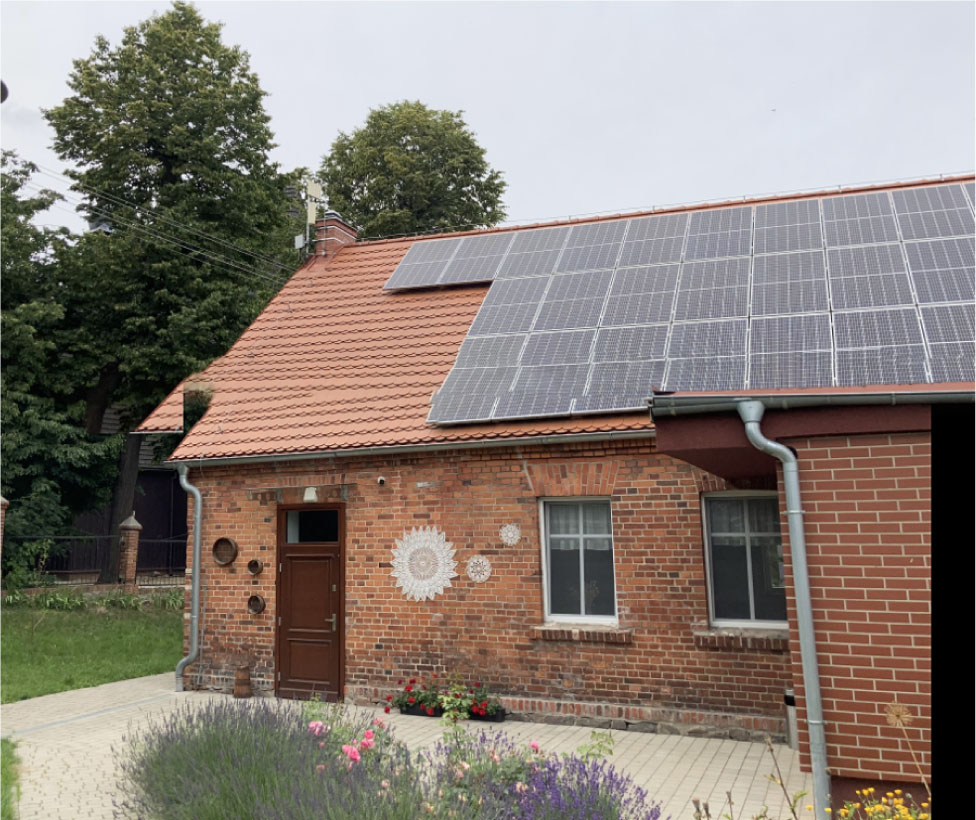
Fig. 2.
Domachowo Guesthouse
Source: author’s photo.
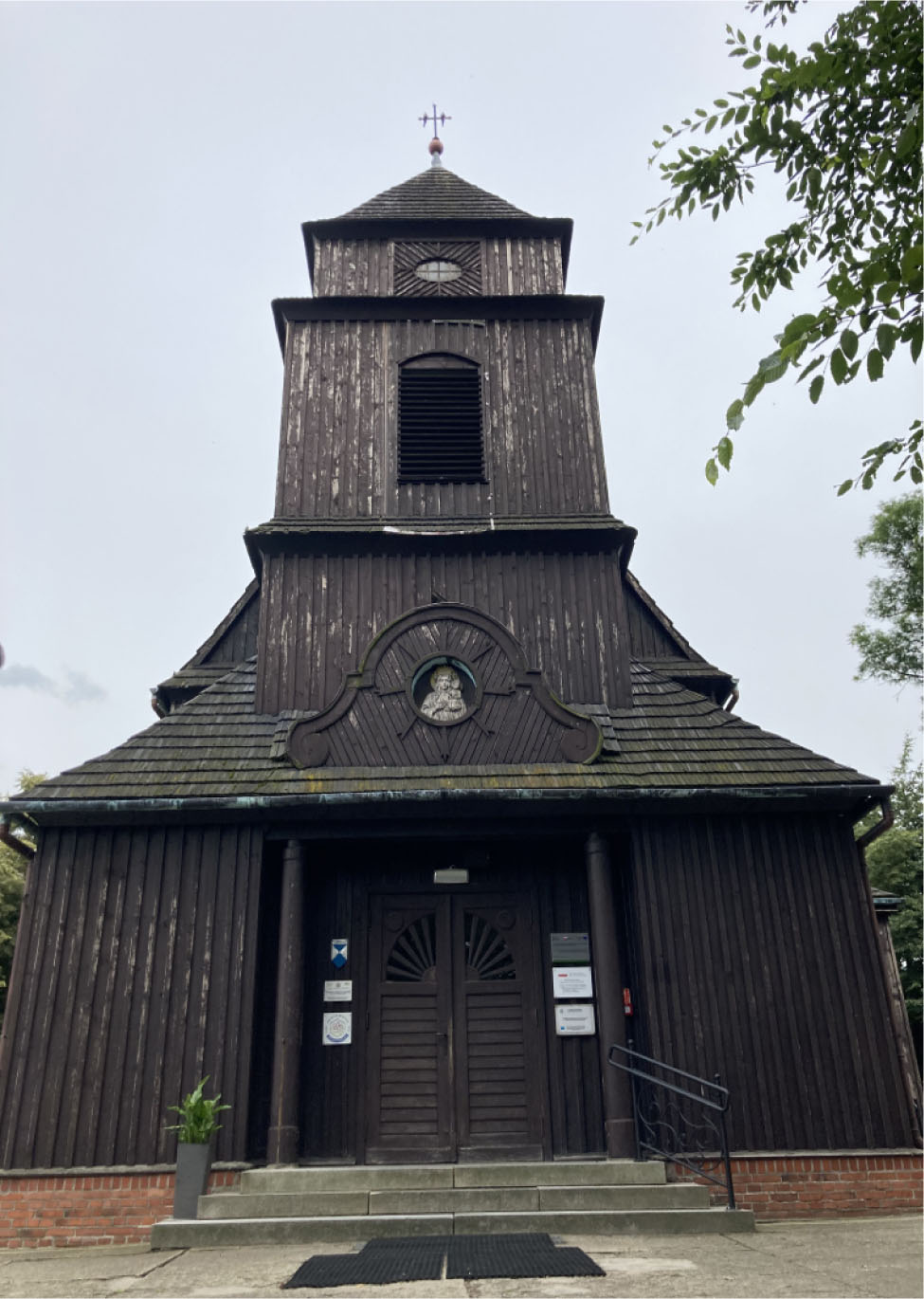
Fig. 3.
Church of St. Michael the Archangel, 1369
Source: author’s photo.
Non-governmental organizations and neighbourhood groups (for instance, created spontaneously to achieve goals, e.g. planting trees in fields, planting village flower beds) are active in the municipality, as are folk bands, a sports club, a private carpentry museum, and the “Gościnna Wielkopolska” Local Action Group. The multitude and diversity of operating entities prove the high level of social and human capital of the Krobia rural community. The activities undertaken by the community are noted in Poland and in Europe (European Rural Renewal Award – ARGE).
Local inhabitants are connected by a community of traditions, customs, history, and belonging to the place. This local identity and the coherence of traditions are also expressed in views on such difficult issues as food waste or waste management, including segregation. Another dimension of his collective mindset is the care for property, the countryside, and the natural environment in general. This can be regarded as an expression of concern not only for the private but also for the public good.
Clear attitudes towards difficult development challenges facilitate the effective and sustainable management of resources, supported by available knowledge interpreted locally. A space is created to animate activities for the benefit of the local community, whose leaders of change can be residents. From this point of view, it is crucial to identify strategies that activate and strengthen the potential of Krobia municipality residents in the process of developmental changes in rural areas.
LOCAL IDENTITY AS A POTENTIAL FOR TOURISM DEVELOPMENT
One of the events that combines elements of experience, experiencing local tradition and culture is “Tabor Wielkopolski”6. This event, which takes place in Stara Krobia, is a meeting space for artists, tourists and residents, and consists of a series of workshops addressed to both adults and children. Representatives of the folklore group, members of the Rural Housewives Circle and local residents are involved in preparing the event. In addition to the workshops, there are also dances, joint feasts with local dishes prepared by Circle members, as well as meetings to exchange experiences and foster mutual learning. A key element of the event is intergenerational transmission, which consists in folk artists (masters) passing on their skills during workshops – they teach traditional singing, bagpipes or the violin, in conjunction with professional musicians. As a result, folk art intertwines with the experience of the participants, creating a living, authentic process of cultivating and reinterpreting traditions (Bartkowiak-Bakun, 2021).
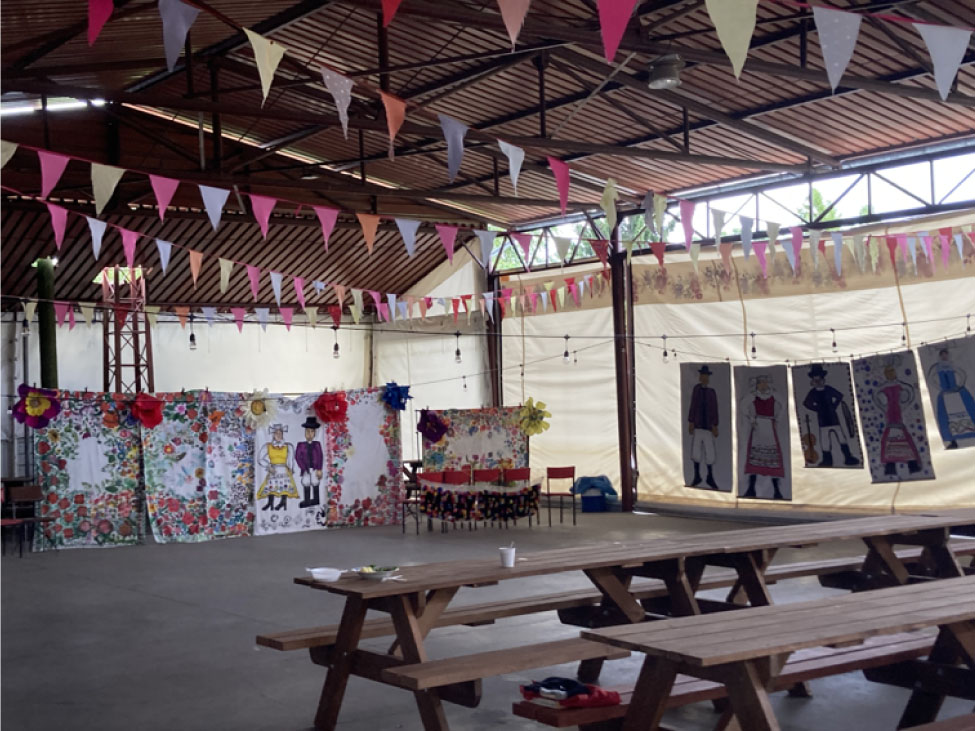
Fig. 4.
The Tabor Wielkopolski venue for dance workshops in Stara Krobia
Source: author’s photo.
Other initiatives contributing to the preservation of local identity include the traditional calendar of events inscribed in the rhythm of the seasons and the church calendar, such as dances on the occasion of St. Catherine’s Day (a pre-Advent party), podkoziołek (a party at the end of the carnival), the harvest festival or “wińca”, the traditional procession on the occasion of Corpus Christi7. Another activity is the Biskupiański Culinary Trail created in cooperation with local Rural Housewives Circles and the Partnership for Biskupizna. This partnership includes representatives of local authorities and business, members of folklore groups and rural housewives’ circles, and residents of the region. Its members cooperate in organizing events, promoting Biskupizna, and implementing projects related to cultural heritage. Thanks to the efforts of the Partnership, in 2016 the cultural heritage of Biskupizna was entered on the national list of intangible cultural heritage. The strong position of local non-governmental organizations impacts the presence of folklore groups in schools and kindergartens, which boosts the interest of children and young people in folk culture. It also creates opportunities for learning to play unique instruments, such as bagpipes or fiddle. It allows you to grow in your knowledge of local folk costumes, dialect and traditions. Thanks to this, local identity is built in a natural way, preserving its authenticity.
However, the richness of tradition and culture is not reflected in the tourist base: the municipality lacks active agritourism farms and has insufficient accommodation in hotels or guesthouses. During the Wielkopolska Tabor event, participants stay overnight at the school or pitch tents around the building. Moreover, it is impossible to reach Krobia or other towns by public transport during the holiday season, due to the fact that individual routes only run during the school year. Such transport issues rules the area out as a tourist destination. Access to dining options is highly limited, with facilities only operating on weekends or during special events. This restricted availability creates real barriers to accessing local attractions or participating in events, both for young and older people, who do not have their own means of transport or are not active drivers.
CONCLUSION
Krobia municipality demonstrates a high level of socio-economic development, with well-developed agriculture and agri-food industries. Local government authorities efficiently obtain external funds (including those from the European Union), which serve to systematically strengthen local potential. Based on research findings, it can be concluded that the inhabitants of Krobia municipality enjoy a high quality of life. The multifunctional development of rural areas, which results from the entrepreneurial attitudes of the inhabitants and the tradition of local craftsmanship, is successfully implemented in the municipality. Furthermore, the coherent attitudes formed through the community’s historical development constitute unique potential, with the behaviours developed (practices) being friendly to the environment and its resources. As the sustainable behaviours are already deeply ingrained, it is expected that incentives will be introduced to support or strengthen current activities. Krobia’s high level of development, despite its the peripheral location, is the consequence of residents’ attitudes, i.e. entrepreneurship, diligence, care and concern for the common good, creativity and a great sense of community, which are components of the local identity. This rural community clearly has a strongly rooted local identity, with residents being involved in professional work as well as socially in the process of rural development.
In the institutional dimension, the municipality features strong networking, which can provide a basis for unique solutions. However, in the daily functioning of the municipality, both social organizations and the residents themselves often overlook the economic potential of cultural uniqueness either as a source of income, or as a factor encouraging people to live in the local community. There is a clear need for an active transition to rediscovering the place of residence. The future model of the local ecosystem should incorporate tourism’s potential for boosting the economy.
The complexity and uniqueness of the municipality’s resources requires solutions using both digital, social and organizational innovations, and adapting good practices interpreted locally. As a result, a sustainable development model can be created for the rural community based on local culture and highlighting the opportunities offered by already-existing events and established networks. This invention is important, since the area’s potential is underutilized due to poor accommodation and gastronomic facilities.
In utilizing local identity to develop tourism, it is crucial to maintain a balance between the authenticity resulting from the local culture and the commercial pressures of ‘folklorization’. Over-commercialisation can lead to the unique characteristics and real identity of a given area being weakened or lost. In this context, peripherality can actually become an asset, as it favours the preservation of the authenticity of the experiences and practices of the inhabitants. Ultimately, it is necessary to maintain a balance between creating a tourist product and altering the identity of the local community in a way that preserves its authentic character.