
INTRODUCTION
The impacts of natural disasters on agricultural systems have become an increasingly critical area of research, particularly in the context of climate change and the rising frequency of extreme events. Natural disasters disrupt all stages of agricultural production, undermining rural livelihoods and threatening food security (Pingali et al., 2005). The February 2023 earthquake that devastated southern Turkey, particularly Hatay Province, offers a salient case for examining disaster resilience in rural agricultural systems. Given agriculture’s central role in Hatay’s economy, understanding post-disaster recovery dynamics in this sector is essential to the region’s broader socio-economic reconstruction.
Although the literature on disaster resilience has expanded substantially, most studies offer generalized frameworks that inadequately account for regional socio-cultural, ecological, and institutional characteristics. As a result, a significant gap remains in context-specific studies that systematically integrate local stakeholder perspectives into agricultural recovery strategies. Moreover, although participatory approaches are widely advocated, recovery strategies are often developed through top-down processes with limited local participation. This research addresses these gaps by examining post-earthquake agricultural recovery processes in Hatay using a participatory methodology that centers the voices of affected agricultural stakeholders.
This study examines eight interconnected components of the agricultural value chain: livestock systems, plant production, agricultural labor, inputs and supply chains, logistics and distribution, marketing, food security, and institutional support mechanisms. The analysis draws on data obtained from thematic focus group discussions conducted at Hatay Mustafa Kemal University in February 2024, one year after the earthquake. The research aims to: (1) document stakeholder experiences and perspectives on earthquake impacts across the agricultural value chain; (2) identify resilience factors and vulnerabilities within rural agricultural systems; and (3) develop evidence-based policy recommendations that are sensitive to local contexts and grounded in stakeholder priorities.
This study makes original contributions to the post-disaster recovery literature by systematically integrating local knowledge into agricultural resilience frameworks. The findings reveal not only critical challenges – including livestock losses, infrastructure damage, labor migration, and supply chain disruptions – but also resilience-enhancing factors such as social capital and community solidarity. The remainder of the manuscript is organized as follows: the literature review situates the study within scholarship on rural resilience and post-disaster recovery; the study context section outlines Hatay’s agricultural systems and the impacts of the 2023 earthquake; the methodology section describes the focus group approach; the results section presents stakeholder perspectives across the eight value chain components; the discussion synthesizes the findings and advances a priority-based policy framework; and the conclusion reflects on implications for rural resilience scholarship and disaster recovery practice.
LITERATURE REVIEW
This literature review examines three interconnected bodies of scholarship that inform understanding of post-disaster agricultural recovery: (1) conceptual frameworks of rural resilience, (2) empirical studies of agricultural recovery following natural disasters, and (3) participatory approaches to post-disaster reconstruction. By synthesizing these strands of research streams, the review identifies critical gaps in existing knowledge and establishes the theoretical foundation for the empirical investigation conducted in Hatay.
Rural resilience and post-disaster agricultural reconstruction
Figure 1 presents an integrated model of rural resilience dimensions derived from the existing literature, which this study seeks to test and refine through empirical evidence from the Hatay case. The figure illustrates the multidimensional nature of rural resilience, shaped by the dynamic interactions among various forms of capital. External factors influence overall system resilience by affecting both individual capital stocks and the relationships between them. Rural resilience encompasses social, economic, and ecological dimensions that interact dynamically in response to external shocks, reflecting a conceptual shift from narrow resistance-based approaches toward broader adaptive capacity frameworks (Folke, 2006). Contemporary models emphasize that resilient rural systems not only recover from disruptions but also adapt and transform into more sustainable configurations, with strong social capital, diversified livelihoods, and access to infrastructure identified as critical enabling factors (Frankenberger et al., 2013).
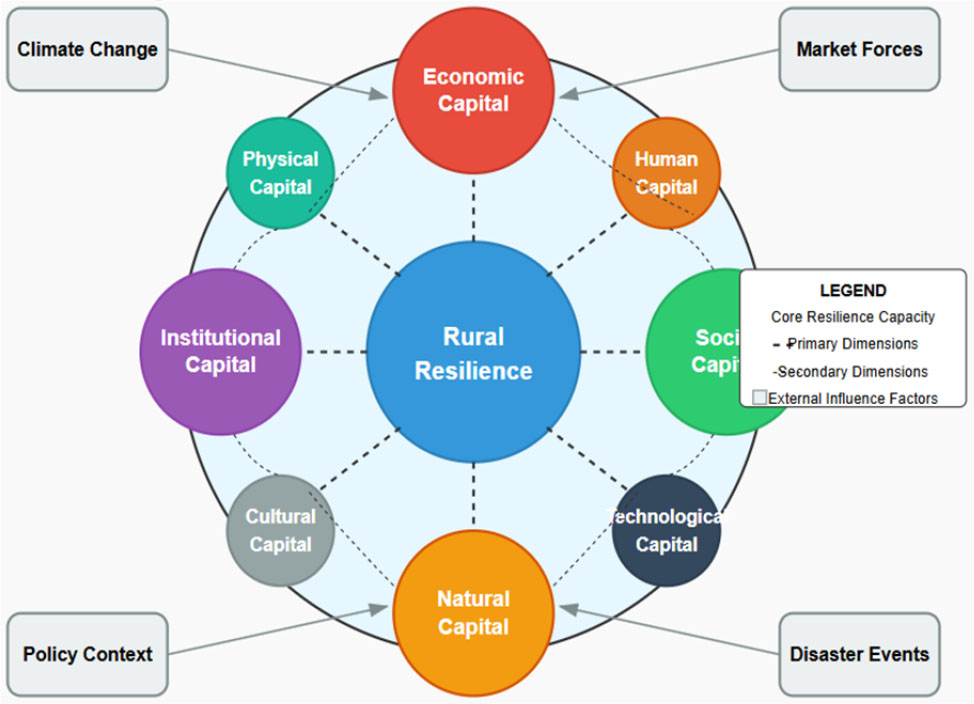
Fig. 1.
Integrated framework of rural resilience dimensions
Source: Developed based on Wilson (2012), Frankenberger et al. (2013), and related contemporary literature.
Wilson’s (2012) community resilience model conceptualizes resilience as a balanced interaction among economic, social, and environmental capital, demonstrating that communities with well-integrated capital systems exhibit greater adaptive capacity. However, this model has primarily been tested in developed-country contexts, with limited application in developing economies characterized by differing institutional structures and resource constraints.
Post-disaster agricultural recovery dynamics have been examined across a range of contexts. Régnier et al. (2008) demonstrate that sustainable recovery in post-tsunami Indonesia and India depends on addressing socio-economic factors alongside physical infrastructure rehabilitation. Harvey et al. (2014) document the heightened vulnerability of smallholder farmers in Madagascar, showing how resource constraints restrict adaptation options. In Turkey’s earthquake-prone context, agricultural resilience requires integrated planning supported by multi-stakeholder governance frameworks (OECD and FAO, 2021). Recent literature further highlights the transformative potential of technological innovation, with digital tools such as remote sensing, GIS, and AI-enabled risk modeling offering new opportunities for proactive and anticipatory intervention strategies (Tambo and Wünscher, 2017).
International perspective: Comparative case analysis
A comparative analysis of three international cases reveals both universal patterns and context-specific dynamics in post-disaster agricultural recovery. The 2011 Japan tsunami affected 23,600 hectares of agricultural land, causing irrigation system damage, soil salinization, and labor migration patterns comparable to those observed in Hatay (Okuyama and Santos, 2014). Nepal’s 2015 Gorkha earthquake affected one million smallholder farmers, causing a 35% decline in agricultural production and 40% livestock losses, underscoring the importance of integrating local knowledge into recovery processes (Epstein et al., 2018). Chile’s 2010 Maule earthquake, which disrupted 30% of national agricultural production, demonstrated the effectiveness of coordinated recovery strategies that combined private-public partnerships with targeted financial mechanisms. In particular, the Chilean government’s “Agricultural Emergency Fund” provided immediate liquidity to affected farmers, while complementary technical assistance programs supported the restoration of production systems. Together, these interventions offer valuable lessons on the integration of financial instruments with institutional support in post-disaster recovery (Baez et al., 2016). Comparative analysis of the Japan, Nepal, and Chile cases reveals four critical patterns with direct relevance for Hatay’s agricultural recovery. First, institutional coordination mechanisms fundamentally shape recovery outcomes. Chile’s successful integration of agricultural, financial, and infrastructure ministries through a unified emergency response framework contrasts sharply with fragmented approaches that delayed recovery in other contexts. Second, phased transition strategies that explicitly link emergency response to long-term development are essential. Japan’s systematic progression from immediate relief to infrastructure reconstruction and subsequent economic revitalization illustrates how clear temporal sequencing helps prevent gaps between humanitarian and development interventions. Third, the balanced integration of local knowledge with technological innovation accelerates adoption and enhances sustainability. Nepal’s experience demonstrates that technology is most effective when innovations are adapted to existing farming practices rather than imposed as replacements, thereby encouraging farmer uptake and long-term use. Fourth, diversified financial mechanisms – combining grants, subsidized credit, and insurance instruments – enable inclusive recovery by addressing the heterogeneous needs of small-scale and commercial producers alike. Chile’s Agricultural Emergency Fund exemplifies how layered financial tools can support farmers at different stages of the recovery process. These patterns provide strategic frameworks for designing agricultural recovery interventions in Hatay and situate the case within the broader comparative disaster response literature. Despite a growing body of literature on agricultural disaster resilience, significant gaps remain. First, most studies rely on generalized frameworks that insufficiently account for regional socio-cultural, ecological, and institutional characteristics, with particularly limited empirical evidence from the Eastern Mediterranean. Second, although participatory approaches are advocated, few studies systematically integrate diverse stakeholder perspectives, and recovery strategies are often developed through top-down processes with minimal local engagement. Third, existing research tends to focus on isolated components of agricultural systems rather than examining entire value chains, limiting understanding of how disruptions propagate across interconnected production, processing, and distribution networks. Finally, as LaLone (2012) notes, a persistent disconnect exists between theoretical resilience frameworks and their practical application in post-disaster recovery planning.
This study addresses these gaps through an empirical analysis grounded in local knowledge from Hatay, employing focus group methodology with a diverse range of stakeholders to bridge academic discourse and field realities. By examining eight interconnected components of the agricultural value chain, the research provides a comprehensive understanding of system interdependencies essential for holistic recovery planning. This approach facilitates the development of evidence-based interventions that are both theoretically informed and practically responsive to the specific socio-economic and institutional conditions of post-earthquake Hatay.
STUDY CONTEXT
Hatay Province, situated in southern Turkey at the northeastern corner of the Mediterranean Sea, constitutes a distinctive agricultural region shaped by diverse topography, favorable climatic conditions, and a rich cultural heritage. Spanning approximately 5,524 square kilometers, the province features elevations ranging from sea level to over 2,000 meters, resulting in pronounced microclimatic variation that supports a wide array of agricultural production systems. Agriculture employs approximately 35% of Hatay’s workforce and plays a critical role in national production of citrus fruits – particularly oranges and mandarins – as well as olives, vegetables, and livestock products. Owing to its proximity to Syria, the province has historically benefited from cross-border agricultural trade and labor mobility, and in recent years Syrian refugees have constituted a substantial share of the agricultural labour force.
On February 6, 2023, two major earthquakes of magnitudes 7.7 and 7.6 struck southern Turkey, with Hatay Province among the most severely affected areas. All 15 districts experienced extensive damage, including the widespread destruction of residential, commercial, and agricultural infrastructure. Official assessments indicate approximately 32,000 fatalities and large-scale population displacement, with more than 280,000 residents relocating to other regions in the immediate aftermath. As the economic backbone of rural communities across the province, the agricultural sector suffered severe disruptions across the entire value chain, from production infrastructure to marketing systems.
Earthquake ımpacts on Hatay’s agricultural systems
The February 2023 earthquake had severe and far-reaching impacts on Hatay’s agricultural systems. According to the Presidency of Strategy and Budget report (2023), approximately 235,000 hectares of agricultural land – representing 68% of the province’s total area – were directly affected, with total losses estimated at 4.2 billion TL. The livestock sector sustained particularly heavy damage, including losses of 42% of cattle (65,000 head) and 37% of sheep (120,000 head), while 12,500 barns were damaged. Agricultural infrastructure was also extensively affected. Irrigation systems suffered major disruptions, with 64% of irrigation cooperatives reporting severe damage and 58% of irrigation channels rendered unusable. Greenhouse agriculture experienced widespread destruction, with 40% of facilities completely destroyed and an additional 20% partially damaged. Labour availability declined sharply as earthquake-induced migration affected 95,000 individuals – 34% of total migrants – resulting in labour shortages for 65% of agricultural enterprises. Disruptions extended across the broader agricultural value chain. 70% of agricultural input sales points were damaged, while 45% of rural roads experienced varying degrees of damage, further impeding transportation and market access. Collectively, these quantitative indicators demonstrate the comprehensive and systemic nature of earthquake impacts across all dimensions of Hatay’s agricultural systems. The qualitative analysis presented in the following sections explores how these damages affected different components of the agricultural value chain and examines the adaptation strategies developed by local stakeholders in response to the crisis. Figure 2 illustrates the spatial extent of earthquake impacts on agricultural land across Hatay Province.
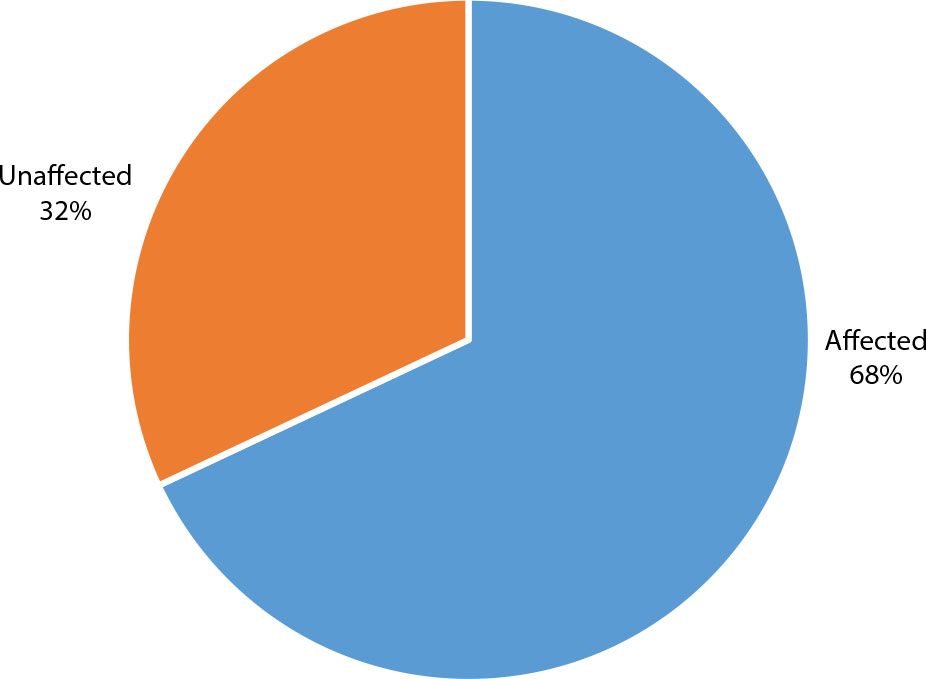
Fig. 2.
Agricultural land impact
MATERIALS AND METHODS
This study adopted a qualitative research approach to analyze rural agricultural systems following the February 2023 earthquake. Data were collected through thematic focus group interviews conducted during the “Rural Development Workshop for Resilient Cities”, held at Hatay Mustafa Kemal University in February 2024. Eight thematic focus groups were organized to represent key components of the agricultural value chain: livestock systems, plant production, agricultural labor, agricultural inputs and supply chain, logistics and distribution, marketing and value chain, food security, and institutional support mechanisms.
Each focus group comprised 8–10 participants (total n = 72), and all discussions were conducted in Turkish to facilitate authentic expression and nuanced dialogue. Participants were selected using purposive sampling. The sample consisted of academics (40%) with expertise in agricultural economics, engineering, food security, and disaster management; practitioners (35%), comprising cooperative representatives, active farmers, and agricultural business owners with a minimum of 5 years of regional experience; and local stakeholders (25%) drawn from public institutions, NGOs, and local government. Initial participant recruitment relied on institutional networks and was supplemented by snowball sampling to ensure representation across Hatay’s sub-regions.
Participants were assigned to a single thematic focus group aligned with their professional expertise and experience, enabling in-depth and focused discussion with each value chain component. Each session lasted approximately two hours and followed a structured discussion protocol. The first 30 minutes addressed pre-earthquake baseline conditions, the subsequent 60 minutes focused on post-earthquake impacts and challenges, and the final 30 minutes explored recovery strategies and policy recommendations. This temporal structure ensured comprehensive coverage of key themes while maintaining participant engagement. All sessions were audio-recorded with informed consent and supplemented by detailed field notes capturing group dynamics. Data analysis followed the thematic framework proposed by Braun and Clarke (2006), involving systematic stages of transcript familiarization, coding, theme development, theme review, and final synthesis. Analytical rigor was enhanced through multiple validation strategies, including independent coding of 25% of transcripts with high inter-coder agreement, member checking with selected participants to verify interpretations, and triangulation with official quantitative data from government reports and agricultural statistics.
Several methodological limitations should be acknowledged. Data collection occurred approximately one year after the earthquake, which may introduce retrospective bias. The purposive sampling strategy may not fully capture the perspectives of all farmer categories, particularly small-scale or marginalized producers. The inclusion of mixed stakeholder groups may have influenced the extent of critical expression in some discussions. Additionally, numerical estimates emerging from focus group discussions reflect participant perceptions rather than statistically validated measurements. Consequently, findings are context-specific to Hatay, and caution is required when considering transferability to other settings.
Finally, the study clearly distinguishes between quantitative damage assessments derived from official sources (Presidency of Strategy and Budget, 2023; FAO, 2023) and qualitative insights generated through focus group discussions. Together, these complementary data sources provide a more comprehensive understanding of both the measurable impacts of the earthquake and the lived experiences, coping strategies, and adaptive responses of local stakeholders.
RESULTS
The findings are structured around three temporal phases: pre-earthquake baseline conditions, immediate post-earthquake impacts across the agricultural value chain, and emerging recovery dynamics. This temporal framework enables a systematic analysis of how rural agricultural systems experienced disruption and subsequently initiated adaptive responses.
Pre-earthquake baseline conditions
Focus group participants characterized Hatay’s pre-earthquake agricultural systems as highly diversified, combining livestock production with citrus orchards, vegetable cultivation, and olive farming. The agricultural economy was predominantly based on smallholder family farms, with most enterprises operating on land parcels ranging from 5 to 20 hectares. Seasonal labor availability, particularly during harvest periods, was generally considered adequate, with both local workers and Syrian refugees forming an integral part of the agricultural workforce. Traditional farming knowledge was largely transmitted through intergenerational family networks, with experienced farmers mentoring younger generations in crop-specific practices and locally adapted environmental management techniques. Prior to the earthquake, agricultural infrastructure included established irrigation networks, livestock shelters developed over several decades, rural road systems linking production areas to regional markets, and cooperative-based mechanisms for input supply and product marketing. Participants noted that although agricultural insurance schemes were available, adoption rates remained relatively low – estimated at approximately 30% of farmers. Many producers instead relied on informal risk management strategies, such as crop diversification and family-based support networks. Collectively, these baseline conditions provide essential context for assessing the scale of earthquake impacts and for understanding the structural and institutional foundations upon which post-disaster recovery efforts must build.
Post-earthquake impacts across the agricultural value chain
Production systems: Livestock and crops
Official damage assessments indicate that Hatay’s livestock systems were among the sectors most severely affected by the February 2023 earthquake. According to the Presidency of Strategy and Budget (2023), losses amounted to 42% of cattle (65,000 head) and 37% (120,000 head) of sheep, while 12,500 barns and shelters sustained damage. The FAO (2023) similarly identifies livestock production as one of the most heavily impacted agricultural subsectors, contributing to total agricultural losses of $6.7 billion across the 11 earthquake-affected provinces. Hatay Province alone accounted for an estimated 4.2 billion TL (approximately $210 million) in agricultural damages.
Focus group participants corroborated these figures through firsthand accounts, highlighting the human and emotional dimensions of livestock losses. Farmers described widespread herd mortality resulting from collapsed shelters and the inability to access emergency veterinary services in the immediate aftermath. As one participant explained: “After the earthquake, our barn completely collapsed. Only three of my twelve animals survived. It was not just an economic loss; these animals were part of our family”. Damage to livestock infrastructure emerged as a critical constraint to recovery, with surviving animals often housed in temporary and inadequate conditions that further increased vulnerability.
Supply chain disruptions compounded these challenges. Post-earthquake market reports documented sharp increases in feed prices, a trend consistently emphasized by focus group participants as a major barrier to recovery. İnterruptions in feed supply, combined with transportation difficulties and damage to storage facilities, undermined farmers’ ability to maintain adequate animal nutrition and health. As noted by Christopher and Peck (2004), post-disaster supply chain disruptions disproportionately affect small-scale producers who lack alternative sourcing options.
Interruptions to veterinary services posed additional risks to animal health and disease control. Participants reported significant difficulties in accessing vaccinations and treatment for injured animals in the immediate post-earthquake period. Pingali et al. (2005) emphasize that disruptions in animal health services often result in secondary losses and long-term declines in productivity, underscoring the critical importance of restoring veterinary access within the first months following a disaster.
Despite these severe constraints, focus group discussions also revealed important elements of resilience within livestock systems. Participants described community-based support networks in which neighbors shared feed, provided temporary shelter for animals, and collectively organized access to veterinary services. These informal cooperation mechanisms underscore the role of social capital in sustaining livestock enterprises during crisis periods, aligning with Wilson’s (2012) emphasis on community networks as a cornerstone of post-disaster resilience.
Crop production systems were similarly affected by the earthquake. Focus group participants reported that physical changes to agricultural land – including surface cracking and landslides – reduced production capacity by altering soil structure, particularly in fertile plains. Damage to irrigation infrastructure emerged as a critical constraint, especially given Hatay’s arid climate conditions. Participants estimated that approximately 60% of irrigation canals were damaged, significantly limiting water availability for crop production. Consistent with these findings, Régnier et al. (2008) emphasize that the rehabilitation of irrigation systems is essential for sustaining livelihoods in post-disaster contexts and should be prioritized in short-term recovery planning.
In addition to physical damage, demographic changes following the earthquake resulted in substantial areas of agricultural land being left idle. Post-disaster out-migration reduced labor availability, further constraining cultivation. Cutter et al. (2014) document similar patterns, noting that population displacement can undermine rural production systems. Related research emphasizes that community-based land management models can help address agricultural labor gaps caused by migration. In addition, damage to greenhouse structures significantly affected production capacity, particularly in the Hatay region, where greenhouse production is intensive. Focus group participants reported that approximately 40% of greenhouse areas were damaged.
Labor migration and knowledge loss
Official migration statistics reveal significant demographic changes in Hatay’s agricultural workforce following the February 2023 earthquake. According to the Presidency of Strategy and Budget (2023), approximately 95,000 individuals – representing 34% of the 280,000 people who migrated from the region – were directly engaged in agricultural activities prior to displacement, while 65% of agricultural enterprises reported labor shortages. At the sectoral level, seasonally adjusted employment losses in agriculture reached approximately 294,000 workers in the second quarter of 2023. The FAO (2023) similarly confirms that the earthquake severely disrupted agricultural labor systems across all 11 affected provinces, contributing to broader declines in food production capacity.
Focus group participants provided detailed accounts of how post-earthquake labor migration has affected agricultural operations. Farmers consistently reported acute worker shortages during critical production periods, particularly for harvesting, and described increasing difficulty in recruiting both permanent and seasonal labor. As one farmer from Kırıkhan explained: “Before the earthquake, seasonal workers could be easily found in our region during the harvest season. Now we have a shortage of workers because many people have left the region. Those who come cannot find shelter. There is work in the fields, but there is no one to do it”.
Beyond numerical labor shortages, participants emphasized the qualitative loss of agricultural knowledge and skills resulting from migration. The departure of experienced farmers and long-term agricultural workers was widely perceived as eroding accumulated local knowledge related to crop varieties, soil management, seasonal timing, and adaptation to specific environmental conditions. Marín et al. (2015), in their study of small-scale fishing communities following the Chilean tsunami, similarly demonstrate that post-disaster migration leads to disproportionate losses of community knowledge, undermining long-term resilience.
Disruptions to traditional systems of intergenerational knowledge transmission were a recurring concern among participants. Elder farmers noted that demographic changes have interrupted the transfer of crop-specific techniques and locally adapted practices to younger generations. Despite these challenges, focus group discussions also revealed emerging opportunities for workforce renewal and innovation. Participants observed growing interest among younger individuals in agricultural activities, particularly those incorporating technological tools and sustainable practices. Consistent with Wilson’s (2012) community resilience framework, the integration of younger generations was viewed as enhancing adaptive capacity, given their openness to innovation and technological adoption.
Another significant labor dynamic identified in the post-earthquake period was the expansion of women’s roles in agricultural production. Participants described how women assumed increased responsibilities in farm management and field operations, particularly in households where male family members migrated to urban areas in search of employment. As one female farmer from Reyhanlı explained: “My husband went to the city to find work after the earthquake. I had to manage both the house and our fields with my three children. As women, we used to help in the garden, but now we carry out all the agricultural activities”. This shift aligns with Harvey et al.’s (2014) findings that strengthening women’s participation in agriculture contributes to sustaining food security and livelihoods during recovery periods.
In response to persistent labor shortages, new labor-sharing and cooperative arrangements have emerged as adaptive strategies. Focus group participants described informal networks through which farmers share labor during peak periods, coordinate machinery use, and collectively organize seasonal work. These community-based responses illustrate the mobilization of social capital as a key resilience mechanism, supporting Frankenberger et al. (2013) emphasis on social networks as central to rural resilience in post-disaster contexts.
Supply chain and market access disruptions
Disruptions to agricultural input supply chains significantly constrained production in Hatay following the February 2023 earthquake, with 70% of local input businesses experiencing severe damage or temporary closure. As highlighted in the literature, supply chain flexibility and the availability of alternative sourcing channels are critical for maintaining production continuity in post-disaster contexts (Pettit et al., 2019). In Hatay, targeted subsidy programs played an important mitigating role by partially offsetting input price increases, consistent with findings by Gilligan et al. (2008).
The loss of local seed banks emerged as a particularly significant long-term resilience challenge, as local seed diversity is critical for adaptation to environmental changes and should be prioritized in recovery strategies (Altieri and Nicholls, 2017).
Official infrastructure assessments reveal extensive damage to logistics networks critical for agricultural product distribution. According to the Presidency of Strategy and Budget (2023), approximately 1,200 km of rural roads – representing 45% of the provincial network – sustained varying degrees of damage, severely restricting the movement of agricultural products from production areas to markets. The FAO (2023) assessment similarly identifies damage to logistics infrastructure as a major constraint on agricultural recovery, limiting both farmers’ access to essential inputs and their ability to distribute outputs effectively.
Focus group participants provided detailed accounts of how infrastructure damage disrupted market access and product distribution. Farmers consistently reported significant transportation issues, with journeys that previously required one hour extending to three hours or more due to damaged roads and bridges. A cooperative manager from Kırıkhan explained: “The roads we use to transport our products to the market have been seriously damaged. It now takes us three hours to reach the wholesale market, where we normally reach in one hour. This increases our fuel costs and reduces the quality of our perishable products, especially in hot summer weather”.
Damage to cold storage and processing infrastructure further exacerbated supply chain disruptions, particularly for perishable goods. Official damage reports indicate widespread impacts on post-harvest facilities, including cold storage units, processing plants, and packaging operations. Focus group participants engaged in dairy, fresh fruit, and vegetable production reported higher spoilage rates and declining product quality due to inadequate cold chain access. As a result, many farmers were forced to sell products immediately at reduced prices or incur total losses, disproportionately affecting high-value crops such as citrus fruits and vegetables for which Hatay is regionally renowned.
Market access challenges extended beyond physical infrastructure to include disruptions in established trading relationships and distribution networks. Participants noted that the earthquake damaged not only roads and facilities but also the social and commercial ties underpinning agricultural trade. The relocation or closure of local wholesalers and distributors compelled farmers to seek new marketing relationships and alternative distribution channels.
Despite these constraints, focus group discussions revealed innovative adaptation strategies aimed at overcoming logistics challenges. Participants described cooperative transportation arrangements, cost-sharing mechanisms, and increased reliance on direct-to-consumer sales through digital platforms and local markets. As one farmer observed: “Some small producers have given up selling their products because of transportation costs, but we organized ourselves to share trucks and reduce individual costs”. These adaptations also created opportunities to strengthen local food systems, with growing interest in local markets, direct sales, and community-supported agriculture models that reduce dependence on distant markets. Consistent with Régnier et al. (2008), these findings underscore the importance of restoring transportation infrastructure while simultaneously supporting alternative marketing channels in post-disaster agricultural recovery.
Institutional coordination and financial challenges
Qualitative evidence from the focus group discussion reveals systematic challenges related to institutional coordination in the post-disaster response process. Participants reported that the support provided by different institutions was fragmented and, in some cases, overlapping, which reduced the efficiency of resource allocation and implementation. Frankenberger et al. (2013) emphasize that strong institutional coordination and integrated response mechanisms increase the effectiveness of post-disaster recovery efforts. Their findings underscore the importance of establishing clear communication channels and coordination frameworks among institutions to improve the coherence and overall impact of recovery programs.
Difficulties in accessing financial resources emerged as a major constraint slowing the recovery of farmers in Hatay. Focus group participants reported that small-scale producers, in particular, faced significant difficulties in obtaining credit from the conventional banking system. This is consistent with Tanner et al. (2015), who identify financial access as a key determinant of livelihood resilience to shocks. In addition, researchers have highlighted the importance of developing financial products that offer flexible repayment terms, especially in the post-crisis period.
Inadequate agricultural insurance coverage was also identified as a critical factor limiting farmers’ financial resilience to disaster-related risks in Hatay. Participants reported that the insurance uptake was relatively low prior to the earthquake (around 30%) and that existing insurance products provided insufficient coverage for earthquake-related losses. Harvey et al. (2014) similarly demonstrate that comprehensive risk-transfer mechanisms play a crucial role in enhancing farmers’ financial resilience during post-disaster recovery. These findings highlight the strategic importance of expanding access to risk-based insurance products and tailoring coverage to region-specific hazards as part of long-term rural resilience planning.
Food security and nutritional impacts
Focus group discussions revealed significant post-earthquake changes in food access and nutritional outcomes among rural households. Participants reported widespread difficulties in accessing basic food items, particularly during the initial months following the disaster. However, the partial continuation of agricultural production served as an important buffer for household food security. As noted by Pingali et al. (2005), maintaining local food production during complex emergencies is critical for long-term food security, and diversified agricultural systems are more resilient to external shocks. A decline in animal-source food production emerged as a key factor influencing nutritional status in the Hatay region. Focus group participants emphasized that disruptions to livestock activities led to reduced consumption of milk and dairy products, especially among rural households. Cannon’s (2002) underscores the importance of access to animal-based foods for the nutritional well-being of particularly vulnerable populations, including children, the elderly, and pregnant women. The study further highlights that diversifying protein sources can play a crucial role in improving nutritional outcomes in post-disaster nutritional contexts.
Strengthening local food supply chains was another prominent theme identified in the focus groups. Participants noted that reinforcing local production-consumption linkages in the post-earthquake period provides advantages for both producers and consumers. Similarly, the FAO (2015) emphasizes that enhancing the resilience of local food systems is strategically important for ensuring regional food security. In particular, the development of short supply chains and direct marketing channels has been shown to improve food access in post-disaster settings.
Taken together, these findings underscore the need for a holistic and multidimensional approach to strengthening agricultural system resilience in Hatay following the post-earthquake period. Evidence from the focus group discussions aligns with comparable case studies in the literature and provides a strong empirical foundation for the development of context-sensitive, evidence-based strategies to support post-earthquake agricultural recovery.
RECOVERY DYNAMICS AND ADAPTIVE RESPONSES
Technological innovation and digital solutions
Focus group participants highlighted the critical role of technological innovations in post-disaster recovery. Suggested interventions included precision agriculture technologies, mobile application-based information systems, and early warning mechanisms. Altieri and Nicholls (2017) argue that technological adaptation and innovation play a key role in enhancing the resilience of traditional agricultural systems. Subsequent research has emphasized that technologies adapted to local conditions yield successful outcomes in the reconstruction of agricultural systems after disasters. Focus group participants emphasized the importance of technological solutions, particularly for the detection and analysis of physical changes in lands.
Digital market platforms also emerged as strategically important adaptive mechanisms in the post-disaster context, particularly when conventional marketing channels are disrupted. Participants reported that farmers experienced difficulties selling their products due to restricted access to local markets in the aftermath of the earthquake. Similarly, Marín et al. (2015) demonstrate that the development of alternative market mechanisms following disasters can significantly enhance producers’ recovery capacity. In particular, digital platforms and direct-to-consumer channels can increase producer incomes by reducing reliance on intermediaries.
Social capital and community solidarity
Focus group discussions revealed that social solidarity networks within rural communities in Hatay serve as critical support mechanisms during the immediate post-disaster response period. Participants emphasized that family and kinship ties played a central role in facilitating access to shelter, food, and basic agricultural inputs. As Wilson (2012) demonstrates, strong social networks and community ties are decisive in accelerating post-disaster recovery and enabling the efficient distribution of resources. In contexts where financial and physical capital are constrained, social capital becomes fundamental to sustaining community resilience.
Strengthening cooperatives and producer organizations emerged as one of the most prominent solution pathways identified in the focus groups. Existing cooperatives provided substantial support to their members in the post-earthquake period through shared machinery use, input supply, and marketing activities. Similarly, Frankenberger et al. (2013) highlight that producer organizations enhance recovery by facilitating risk sharing and resource mobilization, while the social safety net function of cooperatives contributes to faster recovery among individual producers.
The role of women farmers also emerged as a critical dimension of post-earthquake recovery. In households affected by male labor migration, women assumed expanded responsibilities to ensure the continuity of agricultural production. Harvey et al. (2014) argue that strengthening women’s roles within fragile agricultural systems is essential for sustaining food security and rural livelihoods. Targeted capacity-building programs are therefore effective strategies for enhancing community resilience in post-disaster settings.
DISCUSSION
The empirical findings from Hatay focus groups both align with and extend existing theoretical frameworks on rural resilience and post-disaster agricultural recovery. The documented impacts, including 42% livestock losses, 60% irrigation infrastructure damage, and 34% workforce migration, illustrate the cascading vulnerabilities described in Wilson’s (2012) community resilience model, in which disruption to one capital form, such as physical infrastructure, triggers losses across social and economic capitals. The emergence of social capital as a critical recovery mechanism, evidenced through community-based support networks and cooperative arrangements, further validates Frankenberger et al. (2013) emphasis on social networks as foundational components of resilience. Similarly, the expansion of women’s agricultural roles in response to male labor migration reflects adaptive capacity dynamics documented by Harvey et al. (2014) in post-shock agricultural systems in Madagascar. These convergences between evidence from Hatay and international scholarship confirm the broader applicability of key resilience mechanisms, while also highlighting context-specific adaptation pathways shaped by Hatay’s distinct socio-cultural and institutional landscape.
Analysis of focus group data further indicates that limited institutional coordination significantly constrains the effectiveness of post-disaster response and recovery processes. As emphasized by Cutter et al. (2014) and Tanner et al. (2015), multi-level governance structures and inclusive, participatory governance approaches play a critical role in post-disaster management. The Hatay case demonstrates that fragmented institutional responses not only reduce resource efficiency but also create service delivery gaps, particularly affecting small-scale farmers who lack the capacity to navigate complex bureaucratic systems.
The findings also show that damage to agricultural infrastructure generates cascading effects across the entire agricultural value chain. Consistent with Régnier et al. (2008), this study confirms that holistic infrastructure planning – spanning emergency response through longer-term development phases – is critical for achieving both resource efficiency and sustainability. In Hatay, the interconnected nature of infrastructure damage, from irrigation systems and livestock shelters to logistics networks, underscores the need for coordinated reconstruction strategies that address systemic vulnerabilities rather than isolated components.
Empirical evidence further reveals pronounced livelihood vulnerabilities in the post-earthquake period, reinforcing Harvey et al.’s (2014) conclusions regarding the importance of livelihood diversification for resilience to shocks. Focus group participants reported that traditional mono-crop agriculture systems were particularly susceptible to disruption, whereas farmers with diversified income sources demonstrated greater adaptive capacity. This finding aligns with Tanner et al. (2015) argument that diversification functions as a structural mechanism for strengthening community resilience.
Finally, social solidarity networks emerged as critical catalysts for post-disaster recovery, reaffirming Wilson’s (2012) assertion that social capital plays a decisive role when other forms of capital are constrained. The Hatay case illustrates that community-based initiatives – particularly those organized through cooperatives and kinship networks – served as essential support mechanisms during the acute crisis phase. However, the findings also suggest that while social capital is indispensable for short-term resilience, sustained long-term recovery depends on complementary institutional support and resource mobilization.
Priority-based policy framework
Drawing on empirical evidence from the Hatay focus groups and insights from comparative international analysis, this study proposes a three-tiered policy framework designed to address both immediate humanitarian needs and longer-term agricultural resilience. The framework is structured around implementation timelines, with interventions prioritized according to urgency, feasibility, and their potential impact on rural recovery. Each tier delineates responsible institutions, resource requirements, and measurable outcomes to ensure accountability and systematic evaluation.
The proposed framework aligns with the priorities articulated in Turkey’s 11th Development Plan (2019–2023), particularly those related to disaster resilience, rural development, and agricultural sustainability. It also incorporates key policy directions outlined in the Agriculture and Forestry Sector Strategy.
Immediate priority (0–12 months): Emergency recovery
The immediate priority phase addresses the most urgent challenges identified by focus group participants, particularly deficiencies in institutional coordination, veterinary service gaps, and input supply disruptions. Three critical interventions form the foundation of emergency recovery efforts. First, the establishment of an Agricultural Emergency Coordination Unit within the Ministry of Agriculture and Forestry Hatay Regional Directorate would directly address the coordination failures repeatedly emphasized by farmers and local officials during the focus group discussions. This dedicated unit would coordinate response efforts across AFAD, the Provincial Special Administration, and the Metropolitan Municipality, with the objective of reducing overlapping aid distribution by 90% within the first three months. Second, the deployment of mobile veterinary units across all sub-districts would respond to the animal health concerns raised by livestock farmers who lost access to veterinary services in the post-earthquake period. The proposed deployment of 12 mobile units would provide free animal health services and vaccinations, with a target of achieving 80% livestock vaccination coverage within six months. Third, emergency seed and input distribution through existing cooperative networks would address seed bank losses and input supply chain disruptions documented in the focus group findings. This intervention aims to support 15,000 affected farmers by supplying climate-adapted seeds and fertilizers in advance of the next planting season.
Medium-term priority (1–3 years): Infrastructure reconstruction
The medium-term phase focuses on reconstructing damaged agricultural infrastructure with enhanced disaster resilience, directly responding to infrastructure damage patterns identified through both focus group discussions and official assessments. Three strategic programs are proposed to address systemic vulnerabilities within the agricultural system. The Seismic-Resistant Agricultural Infrastructure Program aims to reconstruct 500 livestock shelters and 150 km of irrigation channels using earthquake-resistant construction standards. This program responds to the widespread infrastructure damage identified in focus group narratives as a primary constraint to recovery. Implementation through the Ministry of Agriculture and Forestry, DSİ, and private contractors over an 18-month period would restore critical agriculture production capacity while reducing future disaster risk. The Digital Agricultural Information Platform addresses technological adaptation needs emphasized by focus group participants, particularly younger farmers who highlighted the potential of digital solutions to overcome traditional barriers to market access and information dissemination. This mobile application–based platform would offer integrated services, including weather forecasts, market prices, technical advisory support, and emergency alerts, delivered in both Turkish and Arabic. The program targets adoption by 60% of farmers within two years. The Women Farmers Capacity Building Program responds directly to the expanded roles of women in agricultural production documented extensively in the focus group discussions, especially in households affected by male labor migration. By providing mechanization training and equipment subsidies to 2,000 women farmers through 50 regional training centers over a two-year period, the program seeks to strengthen the agricultural workforce while promoting gender equity in post-earthquake recovery processes.
Long-term priority (3–5 years): Resilience building
The long-term priority phase marks a transition from recovery to transformation, aiming to build systemic resilience to future shocks through three strategic initiatives grounded in focus group insights on structural vulnerabilities. The Regional Food Security Strategy proposes the development of a Hatay-specific master plan targeting 80% regional self-sufficiency in basic food commodities. This initiative responds directly to food security concerns and supply chain dependencies repeatedly raised by participants. Developed collaboratively by the Ministry of Agriculture and Forestry, the Planning and Budget Presidency, and the Regional Development Agency, the strategy would be implemented over a five-year period through coordinated, multi-institutional action. The Climate-Smart Agriculture Transition Program addresses challenges related to changing climatic conditions and soil degradation highlighted in the focus group discussions. The program aims to convert 50,000 hectares of agricultural land to climate-resilient crops and sustainable farming practices through a phased implementation process. Supported by Agricultural Research Institutes and EU funding mechanisms, the initiative targets productivity increases of up to 40%. Finally, Agricultural Insurance Reform responds to a critical gap in financial resilience identified by focus group participants, where low pre-earthquake insurance coverage (approximately 30%) left many farmers financially exposed. The development of parametric earthquake insurance products, in collaboration with TARSIM, the Ministry of Treasury and Finance, and private insurance providers, would aim to expand coverage to 90% of agricultural assets within five years. This reform would establish a robust financial safety net, strengthening the sector’s capacity to withstand future disasters.
Implementation and evaluation
Effective implementation of the proposed framework requires robust governance structures and adaptive management mechanisms. The recommended interventions directly support multiple objectives within Turkey’s national policy frameworks. Priorities related to agricultural emergency coordination and infrastructure reconstruction align with the 11th Development Plan’s goals of strengthening disaster risk management capacity and enhancing the resilience of rural infrastructure. Similarly, the emphasis on women farmers’ capacity building responds to the Plan’s objectives of promoting women’s economic participation and improving rural employment quality. The climate-smart agriculture transition and regional food security strategy are closely aligned with the Agriculture and Forestry Sector Strategy’s priorities on sustainable production systems, climate change adaptation, and productivity enhancement. To ensure coordinated implementation and accountability, quarterly review meetings chaired by the Hatay Governor and involving all responsible agencies, as well as farmer representatives, are recommended. Progress monitoring should employ phase-specific indicators: service delivery performance metrics and farmer satisfaction surveys for short-term interventions; infrastructure completion rates and agricultural production recovery indicators for medium-term programs; and regional food security indices alongside climate resilience assessments for long-term initiatives. In addition, annual policy reviews should incorporate lessons learned from implementation challenges and evolving local needs, supported by continued focus group engagement to maintain alignment with farmers’ lived realities.
The proposed financing strategy combines multiple sources to ensure sustainable resource mobilization, including national budget allocations (60%), EU disaster recovery funds (25%), World Bank agricultural resilience loans (10%), and local government contributions (5%).
Overall, this prioritized framework ensures that immediate humanitarian needs are addressed while simultaneously laying the groundwork for long-term agricultural resilience in Hatay. The phased approach enables adaptive management based on implementation experience and changing local conditions, while clearly defined timelines, responsible institutions, and measurable success metrics provide robust accountability mechanisms. By grounding policy recommendations in direct stakeholder experiences documented through focus group discussions, the framework bridges the gap between top-down policy formulation and bottom-up community needs, thereby increasing the likelihood of effective implementation and sustainable recovery outcomes.
CONCLUSION
This study makes original contributions to the literature on post-disaster agricultural recovery by examining rural agricultural systems in Hatay following the 2023 earthquake. Using a participatory methodology, the research integrates local knowledge and lived experiences with established analytical frameworks to reveal the multi-layered nature of rural resilience. The findings show that post-earthquake challenges in agricultural systems arise from the interaction of multiple, interrelated factors. Livestock losses, land degradation, labor migration, and supply chain disruptions generated cumulative vulnerabilities, while social solidarity networks, cooperative structures, and local knowledge systems functioned as vital support mechanisms during the crisis.
The study’s primary theoretical contribution lies in empirically reinforcing the multidimensional character of rural resilience. Physical infrastructure resilience, economic system robustness, social capital strength, institutional coordination capacity, and ecological sustainability emerge as interdependent components of an integrated resilience framework. This holistic perspective aligns closely with Wilson’s (2012) conceptualization of community resilience as a balance among different forms of capital and with Frankenberger et al.’s (2013) resilience measurement model, as discussed in the literature review.
The findings further underscore the necessity of context-adapted post-disaster rural development strategies that reflect regional specificities. In Hatay, microclimatic diversity and distinctive cropping patterns proved to be critical considerations for recovery planning. Effective agricultural recovery requires simultaneous attention to physical, economic, and social dimensions across both emergency response and long-term development phases. Consistent with Frankenberger et al. (2013), the study confirms that active stakeholder participation enhances intervention effectiveness by mobilizing local knowledge through cooperative arrangements and knowledge-sharing networks. At the same time, the findings highlight that deficiencies in institutional coordination significantly constrain post-disaster response effectiveness, supporting the theoretical framework proposed by Cutter et al. (2014) and Tanner et al. (2015). Focus group evidence indicates that fragmented institutional responses reduce resource efficiency and create service delivery gaps, disproportionately affecting small-scale farmers. In line with Harvey et al. (2014), the empirical results also demonstrate that livelihood diversification enhances resilience to shocks, with farmers relying on diversified income sources exhibiting greater adaptive capacity than those dependent on mono-crop systems.
Social solidarity networks emerged as particularly influential catalysts of post-disaster recovery, reaffirming Wilson’s (2012) assertion that social capital plays a decisive role when other forms of capital are constrained. The Hatay case illustrates that community-based initiatives, particularly those organized through cooperatives and kinship networks, served as essential support mechanisms during the acute crisis phase, as consistently documented in the focus group discussions.
Several methodological limitations should be acknowledged. The study’s relatively limited sample size and the timing of the data collection process – conducted one year after the earthquake – may constrain the generalizability of the findings and introduce potential recall bias. Future research would benefit from longitudinal studies that track recovery trajectories over time, comparative analyses across different disaster types and regional contexts, and mixed-methods approaches that integrate qualitative insights with quantitative validation.
Overall, the findings from Hatay illuminate the complex and dynamic nature of rural resilience as conceptualized in existing theoretical frameworks. Ensuring the sustainability of rural livelihoods and food security extends beyond local concerns and is integral to achieving broader global sustainability objectives.
Based on these findings, several implications for policy and practice emerge. First, disaster response frameworks should prioritize institutional coordination mechanisms from the outset by establishing clear roles, responsibilities, and communication channels among agricultural authorities, emergency management agencies, and local governments before crises occur. Second, recovery interventions should adopt phased approaches that link immediate humanitarian assistance with medium-term reconstruction and long-term resilience building, as operationalized in this study’s three-tiered policy framework aligned with Turkey’s 11th Development Plan. Third, participatory methodologies that systematically integrate local stakeholder perspectives should become standard practice in post-disaster needs assessments and recovery planning, moving beyond symbolic consultation toward genuine co-design of interventions. Fourth, recognizing women’s critical roles in sustaining agricultural production during recovery periods requires targeted capacity-building initiatives and equitable access to resources, rather than treating women as incidental beneficiaries. Future research should address several limitations of this study. Longitudinal designs tracking recovery trajectories over multiple years would capture long-term resilience dynamics that single-timepoint assessments cannot reveal. Comparative studies examining how different Turkish provinces affected by the same earthquake responded could illuminate the role of pre-existing institutional capacities and social capital in shaping recovery pathways. Integration of quantitative methods with qualitative approaches would enable statistical validation of patterns identified through focus groups while preserving the rich contextual understanding that stakeholder narratives provide. Finally, research examining how recovery interventions informed by this study’s findings perform in practice would advance understanding of knowledge translation from research to implementation in post-disaster agricultural contexts.