
INTRODUCTION
In the context of China's Rural Revitalization Strategy, rural tourism has emerged as a “hot spot” in the tourism market. It is recognized as a crucial driver for promoting rural revitalization at a time when comprehensive rural revitalization is a national priority. Studies have shown a close link between sustainable tourism and rural tourism, highlighting innovation as a vital factor for ensuring the sector's growth and long-term sustainability. Nature-based tourism, a significant component of global tourism, also contributes greatly to sustainable development.
Bibliometric analysis is widely used to track research trends, identify emerging topics, analyze cooperation patterns, and map the knowledge structure of a field. Several scholars have applied bibliometric and visualization techniques, such as VOSviewer and CiteSpace, to explore rural tourism and agritourism research. For example, Roman and Kawęcki (2024) used a literature review and cluster analysis to examine agritourism, while Ndhlovu and Dube (2024) highlighted agritourism's potential in developing countries. Tourist experience, as part of the experience economy, has also emerged as a key research focus in rural tourism studies, especially in China (Zhou et al., 2024).
A comprehensive review of rural tourism research in both China and the broader international context is essential to compare and analyze differences in research hotspots, temporal and spatial evolution, and disciplinary integration within the field (Li and Zhu, 2023). Four core driving forces—marketability, participatory, crisis mitigation and sustainability—have shaped the complex development of rural tourism enterprises (Priatmoko et al., 2023). Through the application of VOSviewer and CiteSpace, scholars are better equipped to gain a systematic understanding of rural tourism experience research and to identify emerging directions for future study (Guan and Huang, 2023). Mohanan and Shekhar (2022) Related studies have explored wellness tourism (Mohanan and Shekhar, 2022) and the development of ecotourism (Le and Nguyen, 2023) using similar bibliometric approaches.
The COVID-19 pandemic has further strengthened the relationship between rural tourism and outdoor recreational activities (Ferreira et al., 2022). Since 2004, rural tourism's impact on rural economic development has remained a significant focus of research (Ruiz-Real et al., 2022). Major research themes include tourist and resident satisfaction, community-based tourism's role in economic growth, stakeholder participation, decision-making processes, and heritage conservation (Krittayaruangroj et al., 2023). A bibliometric review has mapped existing research on innovations in sustainable tourism, particularly focusing on “smart” tourism concepts (Pileliene et al., 2024). Analyzing research on protected areas and nature-based tourism offers valuable insights into key themes and emerging trends, supporting the advancement of knowledge in the field (Silva et al., 2023). In addition, research themes in rural tourism have evolved from the fields of rural planning in China (Liu and Liu, 2024) and broader tourism studies (Zhong et al., 2024).
Sustainability continues to be a central theme in tourism research, particularly as nature-based tourism grows, placing increasing pressure on natural resources. Cavalcante et al. (2021) provided a bibliometric analysis of tourism sustainability research, with a specific focus on marketing and branding. Molina-Collado et al. (2022) examined scientific research on sustainability in hospitality and tourism from 1994 to 2020 through bibliometric and science mapping analyses, offering insights into future research directions and practical implications for managers and policymakers. Additionally, Sun and Yuan (2024) analyzed the maize (corn) intercropping system using Web of Science data, while Yuan and Sun (2023) explored research trends in rice cultivation and greenhouse gas emissions, also utilizing the Web of Science database.
This paper aims to apply bibliometric methods to analyze publications on the topics of “rural tourism” and “agritourism,” utilizing the Clarivate Analytics Web of Science (WoS) core database. CiteSpace and VOSviewer software were employed for bibliometric analysis. Citation topics and Sustainable Development Goals (SDGs) were also examined based on WoS data. The study seeks to map the key research areas in “rural tourism” and “agritourism,” contributing to the field by identifying emerging trends, categorizing central topics and subtopics, and offering guidance for future researchers in selecting relevant and promising research directions.
MATERIALS AND METHODS
Web of Science and Data collection
Publication counts were obtained from the Web of Science (WoS) Core Collection, specifically the Science Citation Index Expanded (SCIE) (1900–present) and the Social Science Citation Index (SSCI) (2005–present). Data collection was completed on October 8, 2024. The following keywords were used for the topic search (TS): “rural tourism” OR “agritourism”, along with additional terms such as “agricultural tourism,” “agritourism farms,” “farm tourism,” “integrated rural tourism,” “rural accommodation,” “rural building integration,” “rural tourism development,” and “sustainable rural tourism”. The document types selected were articles and review articles, with publication years spanning from 2005 to 2024. A total of 2,027 publications were retrieved from the WoS Core Collection.
Impact Factors
Impact factors (IF 2023 and IF 5-year) were sourced from the Journal Citation Report (JCR) 2023, published in June 2024, which provided the most recent data available.
VOSviewer and CiteSpace
VOSviewer (www.vosviewer.com) is a free bibliometric visualization tool, known for its intuitive and user-friendly interface. In this study, the default parameter settings of VOSviewer (version 1.6.20) were applied for the bibliometric analysis. CiteSpace (Basic version 6.3.R1) is a software tool designed for visual analysis of scholarly literature within a research field, area, or discipline, collectively referred to as a knowledge domain. It is particularly useful for identifying trends and keyword bursts.
RESULTS AND DISCUSSION
Document Type and Language of Publication
A total of 2,027 publications were identified in the Web of Science Index, with 1,602 (79.033%) in the Social Science Citation Index (SSCI) and 970 (47.854%) in the Science Citation Index Expanded (SCIE). The document types were predominantly articles (1,965, 96.941%) and review articles (62, 3.059%). Most of the papers were published in English (1,977, 97.533%), while the remaining were in other languages: Spanish (36, 1.776%), Portuguese (5, 0.247%), German (4, 0.197%), French (2, 0.099%), among others.
Publication Output
Figure 1 illustrates the publication trends on rural tourism and agritourism research from 2005 to 2024. The highest number of publications occurred in 2022, with 313 papers. Of the total 2,027 papers, the h-index is 95, the total number of citations stands at 45,738, and the average citations per article is 22.56.
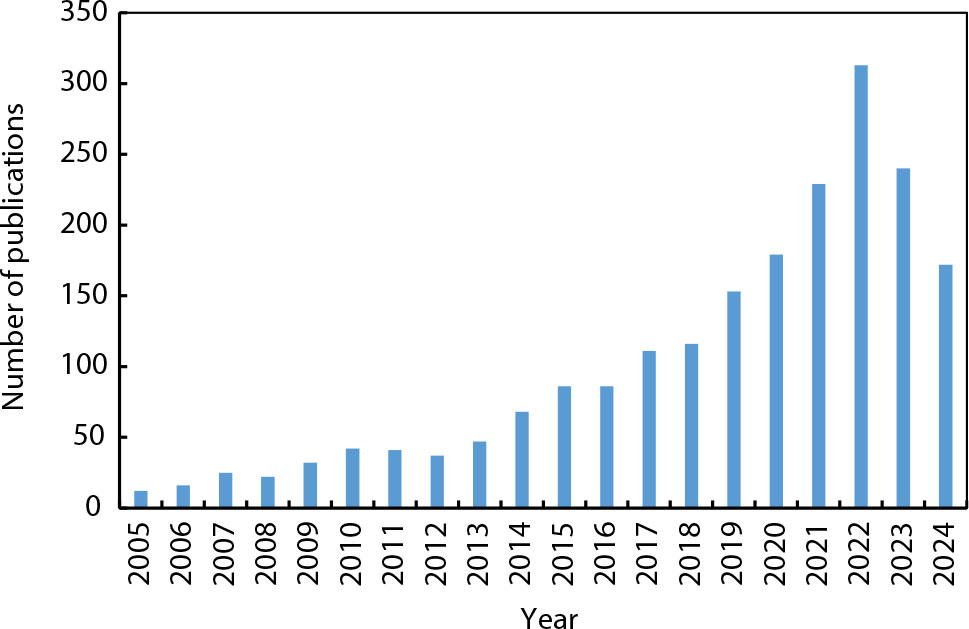
Fig. 1.
Trends in published papers on rural tourism and agritourism topic research from 2005 to 2024
Source: Own elaboration.
Web of Science Categories and Research Areas
A total of 116 WoS subject categories and 76 research areas are associated with research on rural tourism and agritourism from 2005 to 2024. The top 20 WoS categories and research areas are presented in Table 1. The top five WoS categories are: Hospitality, Leisure, Sport and Tourism (639, 31.524%), Environmental Studies (568, 28.022%), Environmental Sciences (552, 27.232%), Green and Sustainable Science & Technology (463, 22.842%), and Management (219, 10.804%). The top five research areas include: Environmental Sciences & Ecology (774, 38.185%), Social Sciences, Other Topics (673, 33.202%), Science & Technology, Other Topics (501, 24.716%), Business & Economics (328, 16.182%), and Agriculture (148, 7.301%). WoS publications are mapped to WoS categories, which offer more detailed classifications than research areas.
Table 1.
Top 20 WoS categories and research areas on rural tourism and agritourism topic research from 2005 to 2024
| Rank | WoS categories | Research areas | ||||
|---|---|---|---|---|---|---|
| Categories | No. papers | % total papers | Areas | No. papers | % total papers | |
| 1 | 2 | 3 | 4 | 5 | 6 | 7 |
| 1 | Hospitality Leisure Sport Tourism | 639 | 31.524 | Environmental Sciences Ecology | 774 | 38.185 |
| 2 | Environmental Studies | 568 | 28.022 | Social Sciences Other Topics | 673 | 33.202 |
| 3 | Environmental Sciences | 552 | 27.232 | Science Technology Other Topics | 501 | 24.716 |
| 4 | Green Sustainable Science Technology | 463 | 22.842 | Business Economics | 328 | 16.182 |
| 5 | Management | 219 | 10.804 | Agriculture | 148 | 7.301 |
| 6 | Geography | 128 | 6.315 | Geography | 128 | 6.315 |
| 7 | Economics | 99 | 4.884 | Public Administration | 81 | 3.996 |
| 8 | Regional Urban Planning | 79 | 3.897 | Sociology | 77 | 3.799 |
| 9 | Sociology | 77 | 3.799 | Engineering | 67 | 3.305 |
| 10 | Agronomy | 51 | 2.516 | Computer Science | 58 | 2.861 |
| 11 | Business | 48 | 2.368 | Food Science Technology | 38 | 1.875 |
| 12 | Agricultural Economics Policy | 44 | 2.171 | Public Environmental Occupational Health | 35 | 1.727 |
| 13 | Agriculture Multidisciplinary | 43 | 2.121 | Development Studies | 33 | 1.628 |
| 14 | Computer Science Information Systems | 39 | 1.924 | Telecommunications | 30 | 1.48 |
| 15 | Food Science Technology | 38 | 1.875 | Physical Geography | 29 | 1.431 |
| 16 | Multidisciplinary Sciences | 38 | 1.875 | Urban Studies | 22 | 1.085 |
| 17 | Public Environmental Occupational Health | 35 | 1.727 | Psychology | 21 | 1.036 |
| 18 | Development Studies | 33 | 1.628 | Mathematics | 18 | 0.888 |
| 19 | Social Sciences Interdisciplinary | 32 | 1.579 | Construction Building Technology | 17 | 0.839 |
| 20 | Telecommunications | 30 | 1.48 | Geology | 17 | 0.839 |
Journal Co-Citation Analysis
A total of 2,027 publications were published across 389 journals and book series. The top 21 core journals, each with more than 21 papers, are displayed in Table 2. This table includes the total number of articles, journal impact factors for 2023 (IF) and the 5–year impact factor (IF 5–year), quartile rank in the category, total citations, and average citations per paper. If a journal belongs to multiple WoS categories, the highest quartile rank was selected.
Table 2.
Top 21 core Journals on rural tourism and agritourism topic research indexed in the WoS
| Rank | Journal | TP | Ratio | IF 2023 | IF 5 year | QC | Citations | Avg. citations |
|---|---|---|---|---|---|---|---|---|
| 1 | 2 | 3 | 4 | 5 | 6 | 7 | 8 | 9 |
| 1 | “Sustainability” | 360 | 17.76 | 3.3 | 3.6 | Q2 | 5,082 | 14.1 |
| 2 | “Tourism Management” | 79 | 3.897 | 10.9 | 11.5 | Q1 | 7,720 | 97.7 |
| 3 | “Journal of Sustainable Tourism” | 74 | 3.651 | 6.9 | 9.5 | Q1 | 3,267 | 44.1 |
| 4 | “Land” | 58 | 2.861 | 3.2 | 3.4 | Q2 | 471 | 8.1 |
| 5 | “Current Issues in Tourism” | 56 | 2.763 | 5.7 | 6.7 | Q1 | 1,359 | 24.3 |
| 6 | “Asia Pacific Journal of Tourism Research” | 42 | 2.072 | 4.3 | 4.4 | Q1 | 754 | 18.0 |
| 7 | “Tourism Geographies” | 40 | 1.973 | 4.1 | 7.5 | Q1 | 1,282 | 32.1 |
| 8 | “International Journal of Tourism Research” | 39 | 1.924 | 4.1 | 4.7 | Q1 | 996 | 25.5 |
| 9 | “Journal of Rural Studies” | 39 | 1.924 | 5.1 | 5.5 | Q1 | 1,997 | 51.2 |
| 10 | “Agriculture Base” | 36 | 1.776 | 3.3 | 3.5 | Q1 | 214 | 5.9 |
| 11 | “Journal of Travel Research” | 32 | 1.579 | 8 | 9.7 | Q1 | 976 | 30.5 |
| 12 | “Land Use Policy” | 31 | 1.529 | 6 | 6.5 | Q1 | 1,285 | 41.5 |
| 13 | “Tourism Management Perspectives” | 30 | 1.48 | 7.3 | 8 | Q1 | 935 | 31.2 |
| 14 | “Fresenius Environmental Bulletin” | 29 | 1.431 | 138 | 4.8 | |||
| 15 | “Journal of Travel Tourism Marketing” | 29 | 1.431 | 8.2 | 8.5 | Q1 | 1,237 | 42.7 |
| 16 | “Journal of Hospitality and Tourism Management” | 27 | 1.332 | 7.6 | 8.3 | Q1 | 870 | 32.2 |
| 17 | “Annals of Tourism Research” | 26 | 1.283 | 10.4 | 11.2 | Q1 | 1,332 | 51.2 |
| 18 | “Journal of Destination Marketing Management” | 24 | 1.184 | 8.9 | 8.3 | Q1 | 809 | 33.7 |
| 19 | “Tourism Economics” | 23 | 1.135 | 3.6 | 4.4 | Q1 | 359 | 15.6 |
| 20 | “Journal of Environmental Protection and Ecology” | 21 | 1.036 | 50 | 2.4 | |||
| 21 | “Scandinavian Journal of Hospitality and Tourism” | 21 | 1.036 | 3.1 | 3.9 | Q1 | 514 | 24.5 |
The top five journals are:
“Sustainability” (360, 17.76%),
“Tourism Management” (79, 3.897%),
“Journal of Sustainable Tourism” (74, 3.651%),
“Land” (58, 2.861%),
“Current Issues in Tourism” (56, 2.763%).
Among the top 21 journals in Table 2, 17 were in Quartile 1, two were in Quartile 2, and two did not have an impact factor in 2023. Journals in the Q1 rank are considered to have the highest impact. Based on the average citations per paper, the top five journals with more than 42.7 citations per paper are:
“Tourism Management” (97.7),
“Annals of Tourism Research” (51.2),
“Journal of Rural Studies” (51.2),
“Journal of Sustainable Tourism” (44.1),
“Journal of Travel & Tourism Marketing” (42.7).
Among the 389 journals, 75 met the threshold of five citations and were connected to each other, forming 11 clusters. The network visualization map of citation connections in the field of rural tourism and agritourism, based on WoS, is shown in Fig. 2, with the clusters represented in different colors. The size of the circles reflects the total number of publications per journal.
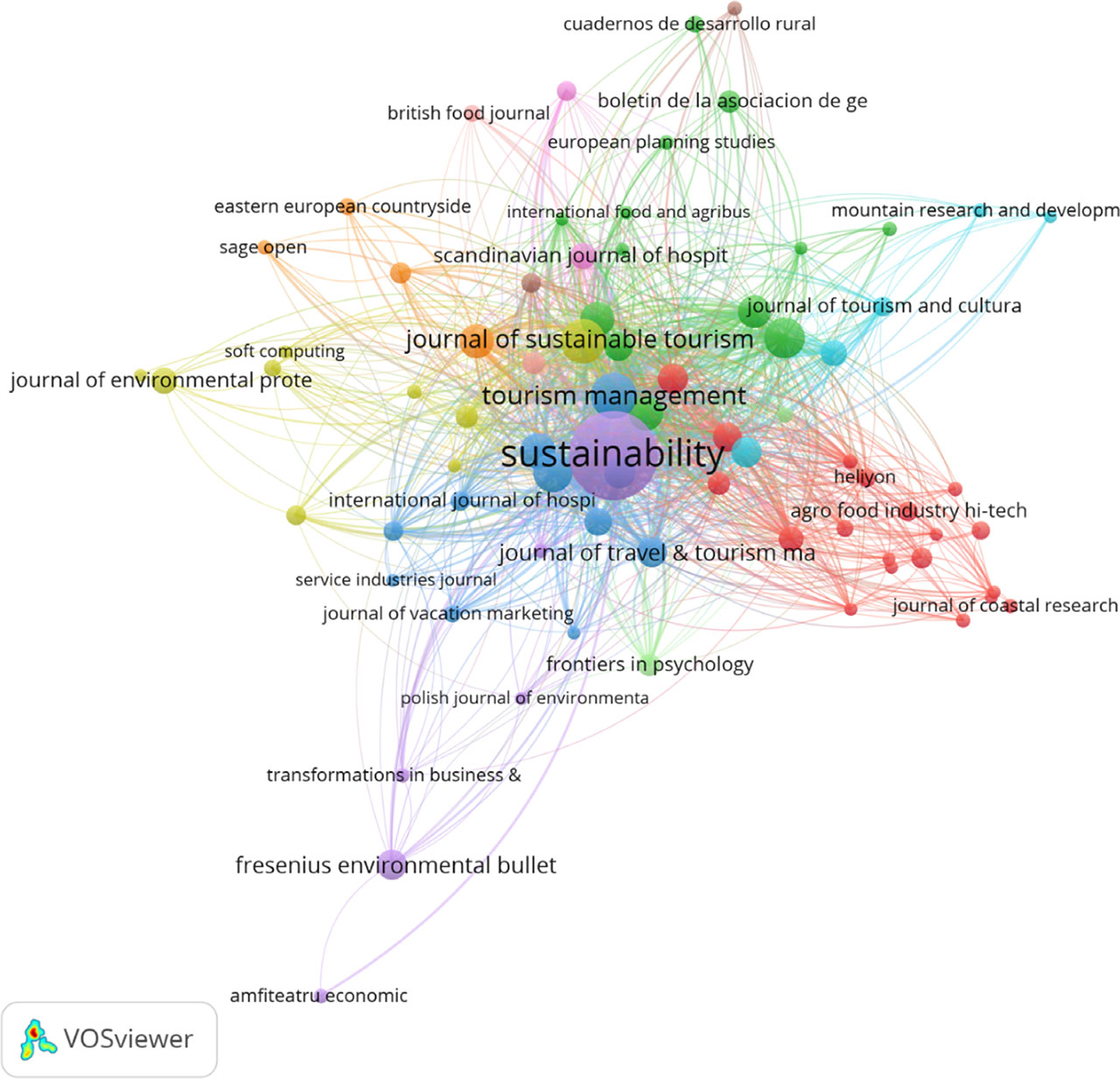
Fig. 2.
Network map of citation journals with a minimum of 5 publications in the field of rural tourism and agritourism, based on WoS, with 75 circles and 11 clusters
Source: own elaboration.
Countries/Regions Co-Authorship Analysis
A total of 101 countries or regions contributed to 2,027 papers. Table 3 presents the top 20 countries or regions that published 31 or more papers, based on the WoS database. Among these, China, Spain, Italy, the United States, and the United Kingdom were the leading contributors, each publishing over 100 papers. Furthermore, the five countries with the highest average number of citations per paper – each with 34 or more citations – were the United Kingdom (46.2), Portugal (44.9), Germany (38.3), South Korea (36.7) and Canada (34.0).
Table 3.
Top 20 countries or regions publishing research papers on rural tourism and agritourism topics based on WoS data
| Rank | Countries/Regions | Records | % of 2,027 | Citations | Avg. citations |
|---|---|---|---|---|---|
| 1 | 2 | 3 | 4 | 5 | 6 |
| 1 | Peoples R China | 669 | 33.004 | 7974 | 11.9 |
| 2 | Spain | 233 | 11.495 | 6002 | 25.8 |
| 3 | USA | 226 | 11.149 | 7137 | 31.6 |
| 4 | Italy | 134 | 6.611 | 3258 | 24.3 |
| 5 | England | 100 | 4.933 | 4620 | 46.2 |
| 6 | Taiwan | 78 | 3.848 | 1799 | 23.1 |
| 7 | Portugal | 77 | 3.799 | 3460 | 44.9 |
| 8 | Romania | 75 | 3.7 | 982 | 13.1 |
| 9 | Australia | 72 | 3.552 | 2024 | 28.1 |
| 10 | Poland | 62 | 3.059 | 978 | 15.8 |
| 11 | South Korea | 60 | 2.96 | 2204 | 36.7 |
| 12 | Japan | 40 | 1.973 | 578 | 14.5 |
| 13 | Malaysia | 40 | 1.973 | 1053 | 26.3 |
| 14 | Canada | 36 | 1.776 | 1224 | 34.0 |
| 15 | Norway | 36 | 1.776 | 1089 | 30.3 |
| 16 | Germany | 35 | 1.727 | 482 | 13.8 |
| 17 | Iran | 35 | 1.727 | 1302 | 38.3 |
| 18 | Serbia | 32 | 1.579 | 383 | 12.0 |
| 19 | Sweden | 32 | 1.579 | 806 | 25.2 |
| 20 | Turkey | 31 | 1.529 | 371 | 12.0 |
Figure 3 illustrates the publication trends for the top five countries in rural tourism and agritourism research between 2005 and 2024. China has emerged as the most prolific contributor, demonstrating a sharp increase in output from 2017 onwards, with more than 20 papers published annually. Additionally, Taiwan, a region of China, has shown significant research strength in this field.
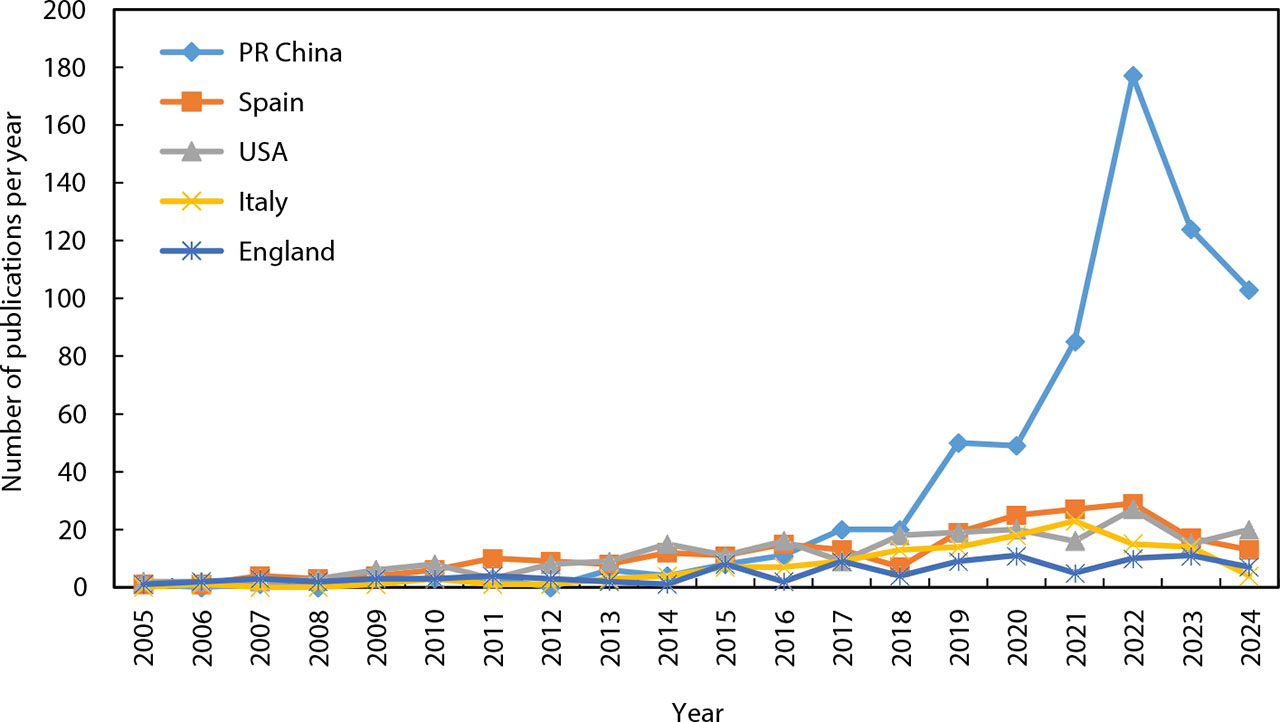
Fig. 3.
Publication trends for the top five countries in rural tourism and agritourism
Source: own elaboration.
Of the 101 countries or regions, 60 met the minimum threshold of five publications. Among these, 59 were interconnected through co-authorship networks and were categorized into seven clusters (Fig. 4). Based on the number of publications within each cluster (from highest to lowest):
Cluster 1 (Red): 14 countries/regions, including Spain, Portugal, Poland, and Germany.
Cluster 2 (Green): 12 countries/regions, including South Korea, Norway, Iran, Sweden, and Turkey.
Cluster 3 (Blue): 11 countries/regions, including Italy, Romania, and Serbia.
Cluster 4 (Yellow): 7 countries/regions, including the United Kingdom and Canada.
Cluster 5 (Violet): 6 countries/regions, including Australia and Indonesia.
Cluster 6 (Light Blue): 6 countries/regions, including China, Taiwan, Malaysia, and Japan.
Cluster 7 (Orange): 3 countries/regions, including the United States, Thailand, and Mexico.
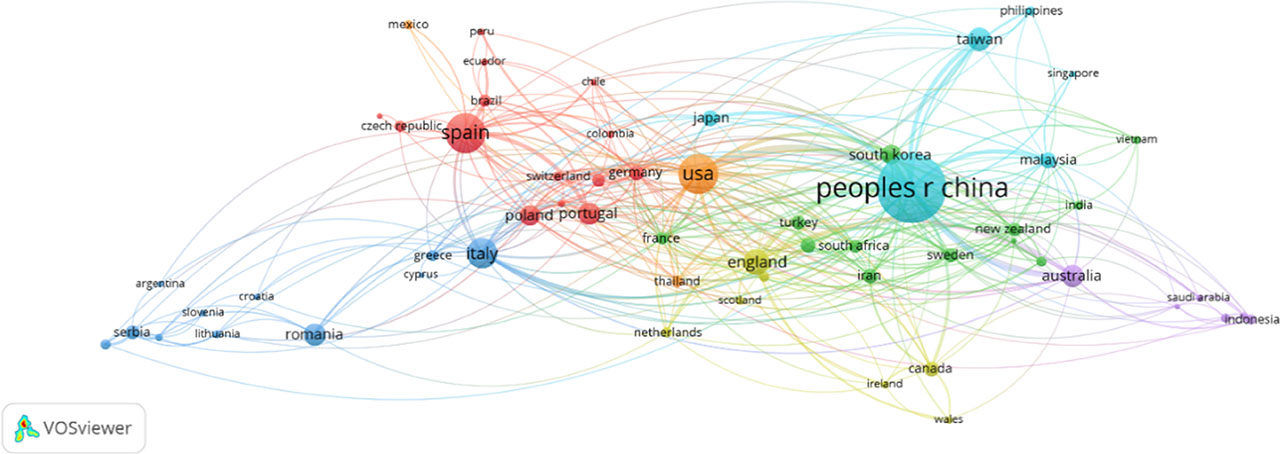
Fig. 4.
Country co-authorship network map for rural tourism and agritourism research based on WoS, with 59 nodes and seven clusters
Source: own elaboration.
Organizations (Affiliations) Co-Authorship Analysis
According to publication data from the WoS database, a total of 1,926 organizations contributed to 2,027 publications. Table 4 presents the top 21 organizations, ranked by the number of publications (more than 14 papers), their share of the total 2,027 publications, and their respective countries. The leading organizations were Universidad De Extremadura (50 publications; 2.467%), the Chinese Academy of Sciences (38 publications; 1.875%), the Institute of Geographic Sciences Natural Resources Research CAS (26 publications; 1.283%), and North Carolina State University (25 publications; 1.233%). These 21 organizations were predominantly located in China (nine organizations), followed by the United States (three organizations), Romania (two organizations), Spain (two organizations), and one organization each from Italy, Portugal, Serbia, South Africa, and South Korea.
Table 4.
Top 21 organizations publishing research on rural tourism and agritourism topic research based on WoS data
| Rank | Organizations | Records | % of 2,027 | Country |
|---|---|---|---|---|
| 1 | Universidad De Extremadura | 50 | 2.467 | Spain |
| 2 | Chinese Academy of Sciences | 38 | 1.875 | China |
| 3 | Institute of Geographic Sciences Natural Resources Research CAS | 26 | 1.283 | China |
| 4 | North Carolina State University | 25 | 1.233 | USA |
| 5 | Hong Kong Polytechnic University | 22 | 1.085 | China |
| 6 | Sun Yat Sen University | 22 | 1.085 | China |
| 7 | Universidade De Aveiro | 22 | 1.085 | Portugal |
| 8 | University of Granada | 22 | 1.085 | Spain |
| 9 | Zhejiang University | 21 | 1.036 | China |
| 10 | State University System of Florida | 20 | 0.987 | USA |
| 11 | University of Johannesburg | 19 | 0.937 | South Africa |
| 12 | University of North Carolina | 18 | 0.888 | USA |
| 13 | Nankai University | 17 | 0.839 | China |
| 14 | University of Novi Sad | 17 | 0.839 | Serbia |
| 15 | Bucharest University of Economic Studies | 16 | 0.789 | Romania |
| 16 | Nanjing University | 16 | 0.789 | China |
| 17 | Sejong University | 15 | 0.74 | South Korea |
| 18 | Banat University of Agricultural Sciences Veterinary Medicine | 14 | 0.691 | Romania |
| 19 | University of Chinese Academy of Sciences CAS | 14 | 0.691 | China |
| 20 | University of Molise | 14 | 0.691 | Italy |
| 21 | Zhejiang Gongshang University | 14 | 0.691 | China |
All Keywords Co-Occurrence Analysis
To investigate the co-occurrence of keywords, we analyzed author keywords, Keywords Plus, and all keywords as distinct units. For the author keywords, using the full counting method for co-occurrence analysis, a total of 5,570 author keywords were identified. Among these, 235 keywords met the threshold of five occurrences, which were then organized into thirteen clusters in the network visualization. The top twenty most frequent co-occurring author keywords, each appearing more than 23 times, were: rural tourism, agritourism, tourism, sustainable development, rural development, sustainable tourism, China, sustainability, farm tourism, rural areas, agriculture, entrepreneurship, COVID-19, satisfaction, motivation, rural revitalization, community-based tourism, ecotourism, social capital, and Spain.
For Keywords Plus, a total of 2,421 keywords were identified, with 361 keywords plus meeting the threshold of five occurrences. These keywords were divided into seven clusters in the network visualization. The top twenty most frequent co-occurring Keywords Plus, each appearing more than 75 times, were: rural tourism, management, tourism, model, impact, satisfaction, perceptions, destination, agritourism, areas, diversification, impacts, community, performance, agriculture, quality, attitudes, sustainability, motivation, and experience.
For all keywords, a total of 7,313 were identified, with 589 meeting the threshold of five occurrences. These keywords were grouped into nine main clusters, each representing different thematic areas within rural tourism and agritourism topic research (Fig. 5). The top 21 most frequent co-occurring all keywords, each appearing more than 90 times, were: rural tourism, agritourism, tourism, management, satisfaction, model, sustainability, impact, perceptions, sustainable development, China, sustainable tourism, destination, agriculture, areas, diversification, motivation, performance, community, impacts, and rural development.
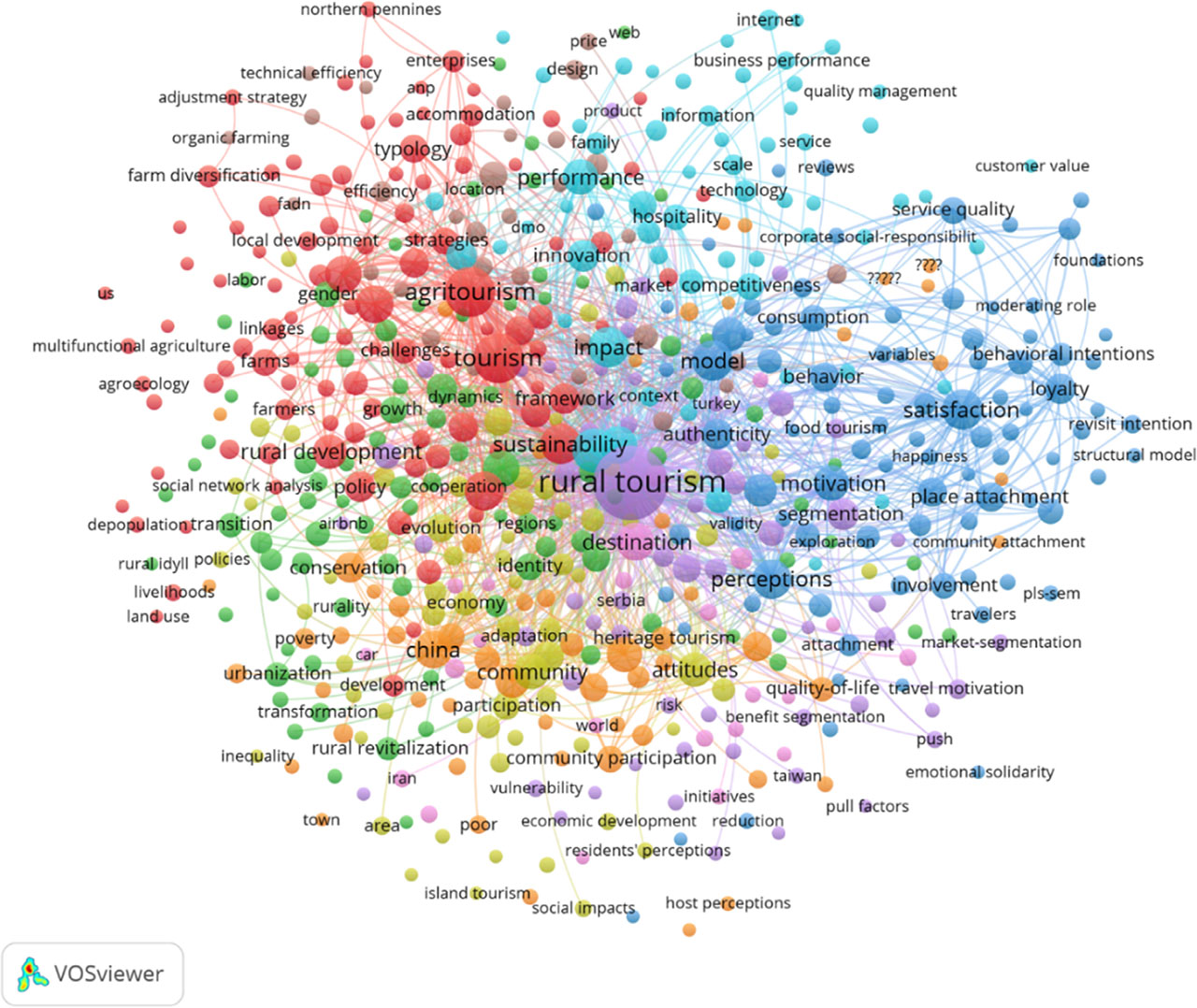
Fig. 5.
VOSviewer co-occurrence network visualization mapping of the most frequent keywords in rural tourism and agritourism research, grouped into nine main clusters
Source: own elaboration.
The same dataset from Figure 5 was represented as an overlay map (Fig. 6), with the years of frequent occurrence for specific keywords indicated by varying colors. In Figure 6, the blue color represents earlier research topics, while, yellow and green indicate more recent areas of focus. The yellow and green circles highlight emerging research fronts. It is important to note that the blue-colored topics do not imply a lack of current interest, but rather suggest that these terms were extensively investigated in the past, with more recent attention shifting toward other emerging themes. These terms may also have become so general that they are no longer as frequently used as keywords.
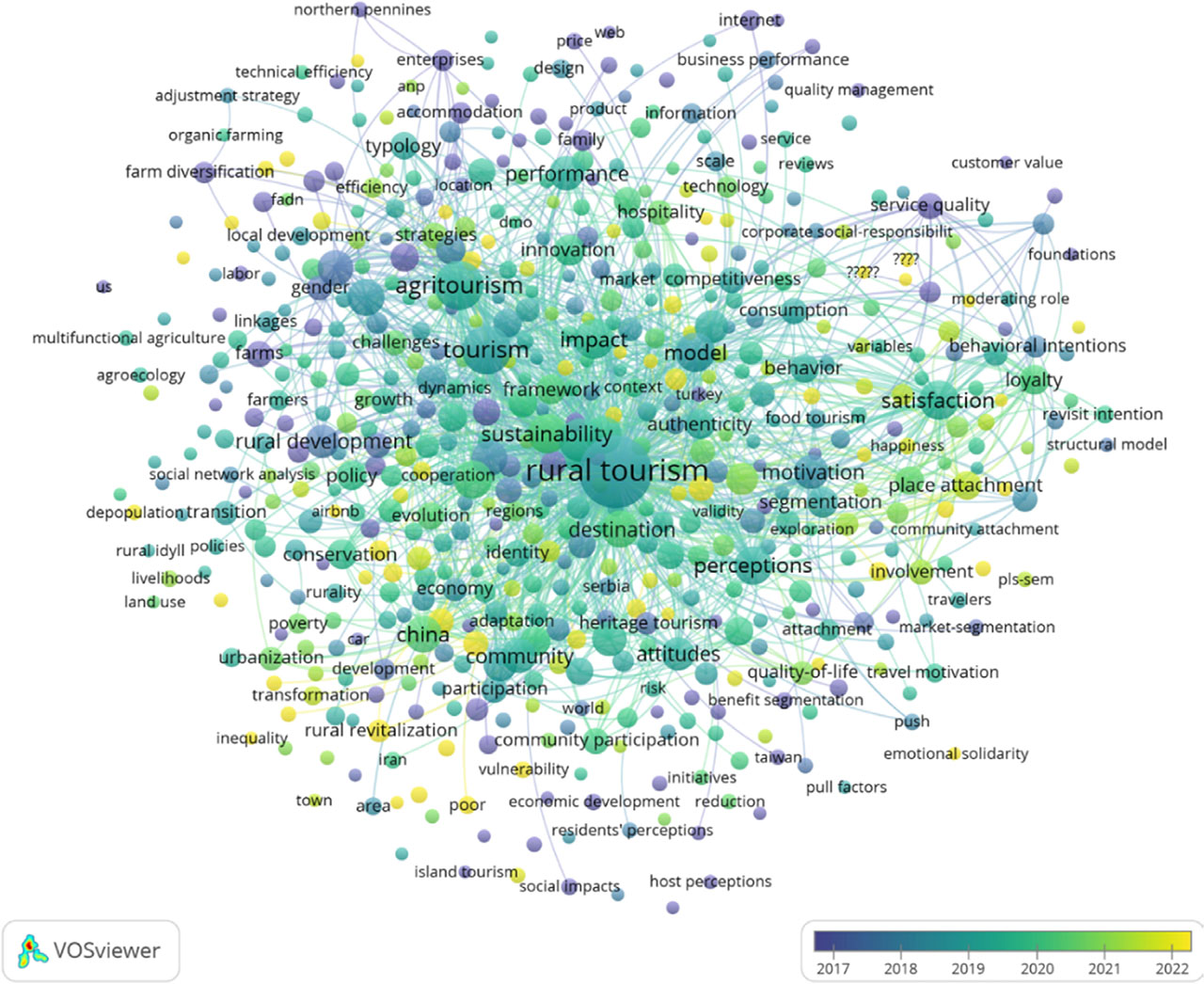
Fig. 6.
VOSviewer co-occurrence overlay visualization mapping of the most frequent all keywords in rural tourism and agritourism research. The years in which specific keywords frequently occur are represented by different colors
Source: own elaboration.
Visualizations created from large datasets (big data) offer valuable exploratory insights into the current state of a scientific field and provide indications of potential future developments. The nine clusters in Figure 5 represent diverse research within rural tourism and agritourism, including agritourism and sustainable development, landscape identity, satisfaction models, heritage communities, rural tourism segmentation, sustainable tourism management, ecotourism impacts in China, big data preference models, and travel and destination management.
Cluster 1 (Red) includes 103 all keywords focused on agritourism and sustainable development. The top 20 most frequently used all keywords in this cluster, each appearing more than 29 times, are: agritourism, tourism, sustainability, sustainable development, agriculture, diversification, rural development, policy, framework, food, indicators, perspective, farm tourism, typology, strategies, farms, challenges, farm, ecosystem services, and community-based tourism.
Cluster 2 (Green) consists of 94 all keywords related to landscape identity. The top 21 all keywords, each occurring more than 18 times, are: landscape, place, growth, identity, gender, urbanization, transition, countryside, rural revitalization, destinations, patterns, social media, geography, employment, GIS, land, region, land-use, construction, and perception.
Cluster 3 (Blue) represents 90 all keywords associated with satisfaction models. The top 21 all keywords, each appearing more than 25 times, are: satisfaction, model, perceptions, motivation, quality, experience, authenticity, loyalty, behavior, place attachment, destination image, consumption, service quality, image, involvement, benefits, antecedents, dimensions, behavioral intentions, experiences, and residents.
Cluster 4 (Yellow) contains 65 all keywords related to heritage communities. The top 20 all keywords in this cluster, each occurring more than 18 times, are: community, attitudes, heritage, networks, evolution, governance, participation, economy, collaboration, culture, stakeholders, power, residents attitudes, social capital, issues, perspectives, space, cultural tourism, integrated rural tourism, and state.
Cluster 5 (Violet) focuses on rural tourism segmentation, with 62 all keywords. The top 22 all keywords in this cluster, each appearing more than 13 times, are: rural tourism, segmentation, demand, rural areas, visitors, environment, industry, Spain, local food, national park, decision-making, market segmentation, urban, adaptation, recreation, climate change, food tourism, travel motivation, cluster analysis, hotels, market, and seasonality.
Cluster 6 (Light Blue) involves 61 all keywords related to the management of sustainable tourism. The top 21 all keywords in this cluster, each appearing more than 13 times, are: management, impact, sustainable tourism, performance, innovation, entrepreneurship, motivations, competitiveness, hospitality, COVID-19, knowledge, entrepreneurs, technology, family, information, scale, firms, internet, context, agritourism, and business performance.
Cluster 7 (Orange) consists of 59 all keywords related to ecotourism impacts in China. The top 22 all keywords, each occurring more than 13 times, are: China, impacts, ecotourism, conservation, support, tourism development, community participation, province, village, quality-of-life, heritage tourism, sustainable rural tourism, residents perceptions, communities, protected areas, poverty, rural tourism development, livelihood, Okavango Delta, income, poor, and poverty alleviation.
Cluster 8 (Pink) involves 32 all keywords focused on big data preference models. The all keywords in this cluster include: determinants, preferences, models, efficiency, Extremadura, big data, design, attributes, island, insights, tool, price, willingness-to-pay, agricultural landscape, rural accommodation, valuation, data envelopment analysis, features, productivity, sharing economy, tourism potential, and more.
Cluster 9 (Brown) represents 23 all keywords related to travel and destination management. The top all keywords in this cluster are: destination, travel, leisure, mobility, destination management, destination marketing, Iran, qualitative research, revitalization, urban tourism, accessibility, initiatives, developing countries, firm, resident attitudes, world, local community, responsible tourism, car, competition, importance-performance analysis, ownership, and tourism destinations.
Burst of Keywords
Keywords exhibiting strong citation bursts often signal a new and impactful perspective that emerges within a specific period, highlighting a phase at the forefront of academic research. A keyword frequency analysis was conducted using CiteSpace (Basic version 6.3.R1) to identify the top 25 keywords in rural tourism and agritourism research from 2005 to 2024 (Fig. 7).
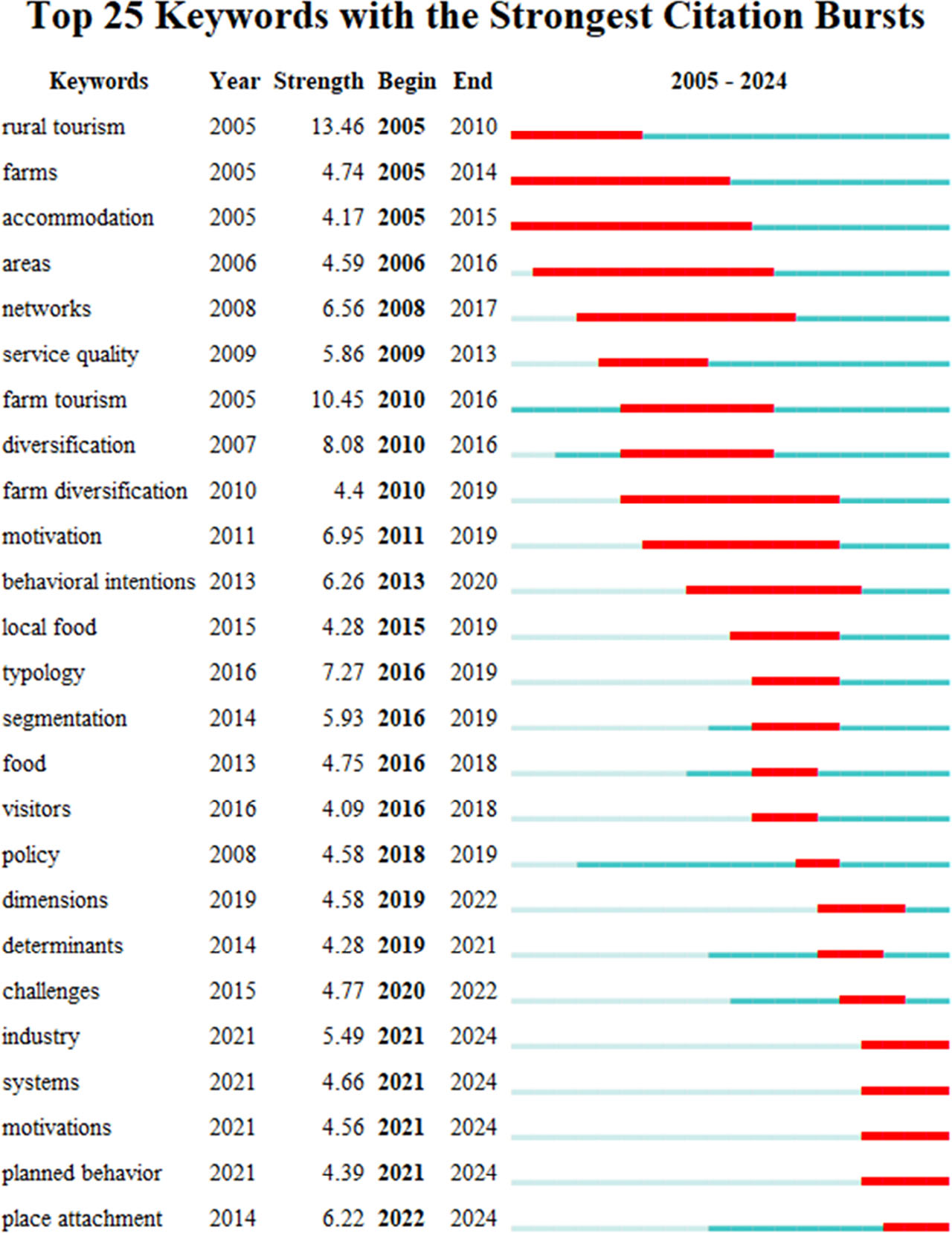
Fig. 7.
Information about the top 25 keywords of Rural Tourism and Agritourism topic research with the strongest citation bursts from 2005 to 2024 by CiteSpace (6.3.R1)
Source: own elaboration.
The keywords are ranked by the starting year of their citation bursts, with periods of heightened scholarly attention marked in red. By examining the duration of these citation bursts, emerging trends in rural tourism and agritourism research can be identified. The top 25 keywords with the most significant citation bursts are: rural tourism, farms, accommodation, areas, networks, service quality, farm tourism, diversification, farm diversification, motivation, behavioral intentions, local food, typology, segmentation, food, visitors, policy, dimensions, determinants, challenges, industry, systems, motivations, planned behavior, and place attachment.
Top Papers Based on Essential Science Indicators (ESI)
The top papers are determined by combining hot papers and highly cited papers, based on Clarivate Analytics' Essential Science Indicators (ESI). The ESI database was last updated on September 12, 2024, and includes data covering a 10-year period (January 1, 2014–December 31, 2023) and a 6-month period (January 1, 2024–June 30, 2024).
According to the ESI database, 18 papers qualify as top papers, all of which are highly cited. These were published in the following years: 2014 (1), 2016 (1), 2017 (2), 2019 (1), 2020 (1), 2021 (6), 2022 (1), 2023 (2), and 2024 (3).
The journals with the most top papers include: “Tourism Management” (3), “International Journal of Contemporary Hospitality Management” (2), and “Journal of Rural Studies” (2). Other journals with top papers include: “Journal of Destination Marketing & Management” (1), “Journal of Destination Marketing & Management” (1), “Journal of Hospitality and Tourism Management” (1), “Journal of Sustainable Tourism” (1), “Journal of Travel & Tourism Marketing” (1), “Kybernetes” (1), “Land” (1), “Land Use Policy” (1), “Sustainable Development” (1), “Tourism Management Perspectives” (1), and “Tourism Review” (1).
The Most Frequently Cited Articles
The annual citations of the eight most frequently cited papers have shown a steady increase since publication (Fig. 8). These papers, authored by Sims (2009), Park and Yoon (2009), Loureiro (2014), Martín and Herrero (2012), Wratten et al. (2012), Devesa et al. (2010), Gao and Wu (2017), and Rasoolimanesh et al. (2017), have collectively garnered over 290 citations. As of October 8, 2024, total citations for each paper were: Sims (2009) – 750, Park and Yoon (2009) – 433, Loureiro (2014) – 377, Martín and Herrero (2012) – 365, Wratten et al. (2012) – 338, Devesa et al. (2010) – 319, Gao and Wu (2017) – 311 and Rasoolimanesh et al. (2017) – 290 times. The average citations per year were 46.88, 27.06, 34.27, 28.08, 26, 21.27, 38.88 and 36.25, respectively. Among these, Sims (2009) had the highest average citation rate, with 46.88 citations per year. According to the ESI database, three of these papers – Loureiro (2014), Gao and Wu (2017), and Rasoolimanesh et al. (2017) – are classified as highly cited papers.
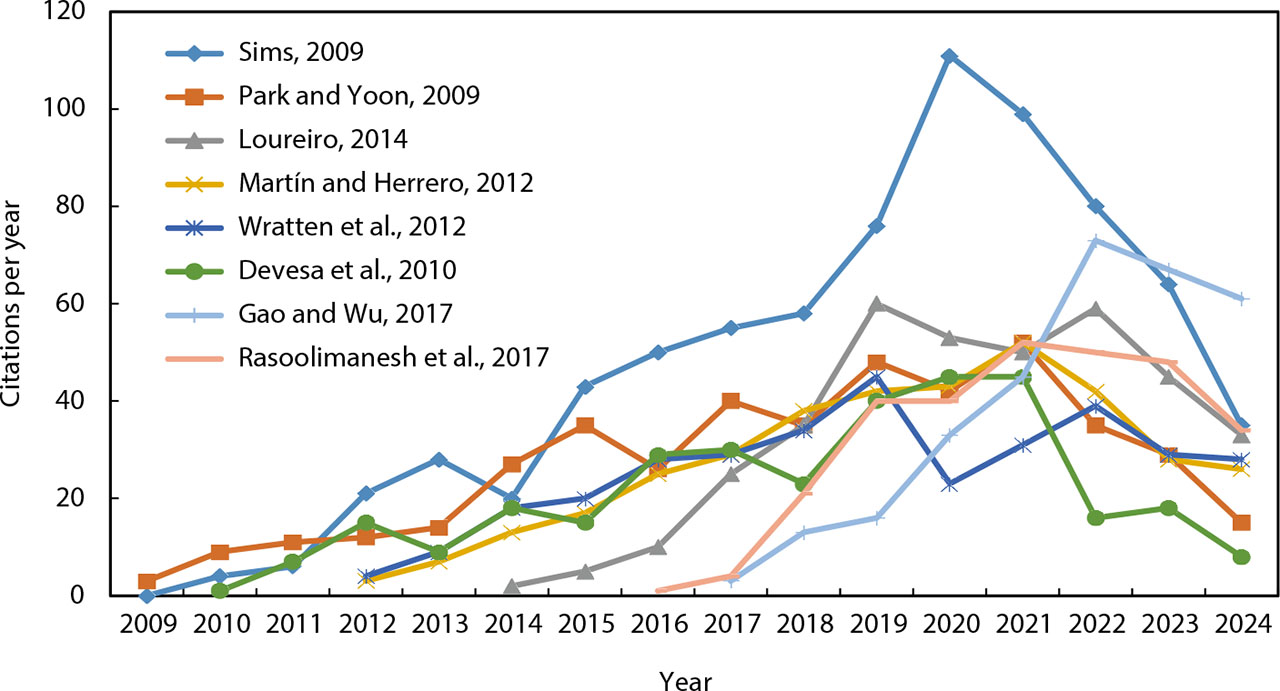
Fig. 8.
Annual citations of the top eight papers in rural tourism and agritourism research from publications to October 8, 2024
Source: own elaboration.
Citation Topics: Meso and Micro
This classification system follows a three-level hierarchical structure: Macro-topics (10), Meso-topics (326), and Micro-topics (2488). Based on the analysis results, there are 88 Meso-topics and 175 Micro-topics related to rural tourism and agritourism research papers. Table 5 presents the top 10 Meso-topics and Micro-topics across all research papers.
Table 5.
Comparison of the top 10 citations Meso-topics and Micro-topics for rural tourism and agritourism research papers
| Rank | Citation Topics Meso | Citation Topics Micro | ||||
|---|---|---|---|---|---|---|
| Meso-topics | No. papers | % of 2,027 | Micro-topics | No. papers | % of 2,027 | |
| 1 | 6.223 Hospitality, Leisure, Sport & Tourism | 1344 | 66.305 | 6.223.247 Tourism | 1299 | 64.085 |
| 2 | 6.263 Agricultural Policy | 107 | 5.279 | 3.40.635 Ecosystem Services | 86 | 4.243 |
| 3 | 3.40 Forestry | 98 | 4.835 | 6.263.898 Farmers | 85 | 4.193 |
| 4 | 6.3 Management | 93 | 4.588 | 6.223.972 Place Attachment | 34 | 1.677 |
| 5 | 6.115 Sustainability Science | 33 | 1.628 | 6.3.65 Customer Satisfaction | 32 | 1.579 |
| 6 | 6.73 Social Psychology | 26 | 1.283 | 6.3.726 Entrepreneurship | 23 | 1.135 |
| 7 | 6.86 Human Geography | 26 | 1.283 | 6.73.1507 Environmental Concern | 23 | 1.135 |
| 8 | 4.61 Artificial Intelligence & Machine Learning | 20 | 0.987 | 6.263.1407 Urban Agriculture | 19 | 0.937 |
| 9 | 6.122 Economic Theory | 19 | 0.937 | 6.122.1087 Contingent Valuation | 18 | 0.888 |
| 10 | 6.153 Climate Change | 13 | 0.641 | 4.61.56 Fuzzy Sets | 14 | 0.691 |
From Table 5, the top three Meso-topics are: 6.223 Hospitality, Leisure, Sport & Tourism (1,344 papers, 66.305%), 6.263 Agricultural Policy (107 papers, 5.279%), 3.40 Forestry (98 papers, 4.835%).
The top three Micro-topics are: 6.223.247 Tourism (1,299 papers, 64.085%), 3.40.635 Ecosystem Services (86 papers, 4.243%), 6.263.898 Farmers (85 papers, 4.193%).
Sustainable Development Goals
According to the InCites Benchmarking & Analytics Help File, the Sustainable Development Goals (SDGs) schema enables exploration and analysis across 16 SDGs. Table 6 presents the SDGs related to rural tourism and agritourism research papers. The research papers cover all sixteen SDGs, with most focusing on three key goals: SDG 11: Sustainable Cities and Communities (1,455 papers, 71.781%), SDG 15: Life on Land (131 papers, 6.463%), SDG 02: Zero Hunger (119 papers, 5.871%).
Table 6.
Sustainable Development Goals for rural tourism and agritourism research papers
| Rank | Sustainable Development Goals | Record count | % of 2,027 |
|---|---|---|---|
| 1 | 2 | 3 | 4 |
| 1 | 11 Sustainable Cities And Communities | 1,455 | 71.781 |
| 2 | 15 Life On Land | 131 | 6.463 |
| 3 | 02 Zero Hunger | 119 | 5.871 |
| 4 | 09 Industry Innovation And Infrastructure | 61 | 3.009 |
| 5 | 13 Climate Action | 45 | 2.22 |
| 6 | 01 No Poverty | 37 | 1.825 |
| 7 | 03 Good Health And Well Being | 36 | 1.776 |
| 8 | 04 Quality Education | 15 | 0.74 |
| 9 | 12 Responsible Consumption And Production | 13 | 0.641 |
| 10 | 06 Clean Water And Sanitation | 11 | 0.543 |
| 11 | 07 Affordable And Clean Energy | 10 | 0.493 |
| 12 | 10 Reduced Inequality | 6 | 0.296 |
| 13 | 14 Life Below Water | 5 | 0.247 |
| 14 | 05 Gender Equality | 2 | 0.099 |
| 15 | 08 Decent Work And Economic Growth | 2 | 0.099 |
| 16 | 16 Peace And Justice Strong Institutions | 1 | 0.049 |
CONCLUSIONS
This study analyzed 2,027 papers on rural tourism and agritourism research, predominantly written in English, from 101 countries or regions. These papers were published across 389 journals and book series. The top five journals in this field “Sustainability”, “Tourism Management”, “Journal of Sustainable Tourism”, “Land”, “Current Issues in Tourism”. The leading five countries are China, Spain, Italy, the United States, and the United Kingdom.
Through co-occurrence network visualization using VOSviewer, all keywords were grouped into nine distinct clusters, including agritourism and sustainable development, landscape identity, satisfaction models, heritage communities, rural tourism segmentation, sustainable tourism management, ecotourism impacts in China, big data preference models, and travel and destination management.
The majority of research focuses on three key Sustainable Development Goals: Sustainable Cities and Communities, Life on Land, and Zero Hunger. These areas offer valuable opportunities for further exploration. To maximize the impact and dissemination of their findings, authors are encouraged to prioritize factors such as international collaboration, leading institutions, journal selection, and a focused approach to rural tourism and agritourism.