The origins of biodynamic agriculture in Poland, dating back to the late 1920s and early 1930s, are only known in a fragmentary way. However, even at this stage, its history is fascinating and at the same time, inspiring. On the eve of the centenary of the ‘Agriculture Course’ given by Dr Rudolf Steiner in Koberwitz, we are intensifying our research in order to present the achievements of people from the biodynamic agriculture movement, and also for international scientific institutions, during the anniversary celebrations of this event (Bietkowski, 2024). In the history of the biodynamic movement, Koberwitz (Kobierzyce near Wrocław, since 1945 on Polish territory), where Dr Rudolf Steiner gave a series of lectures in 1924, was both the inspiration for biodynamic agriculture and its beginning.
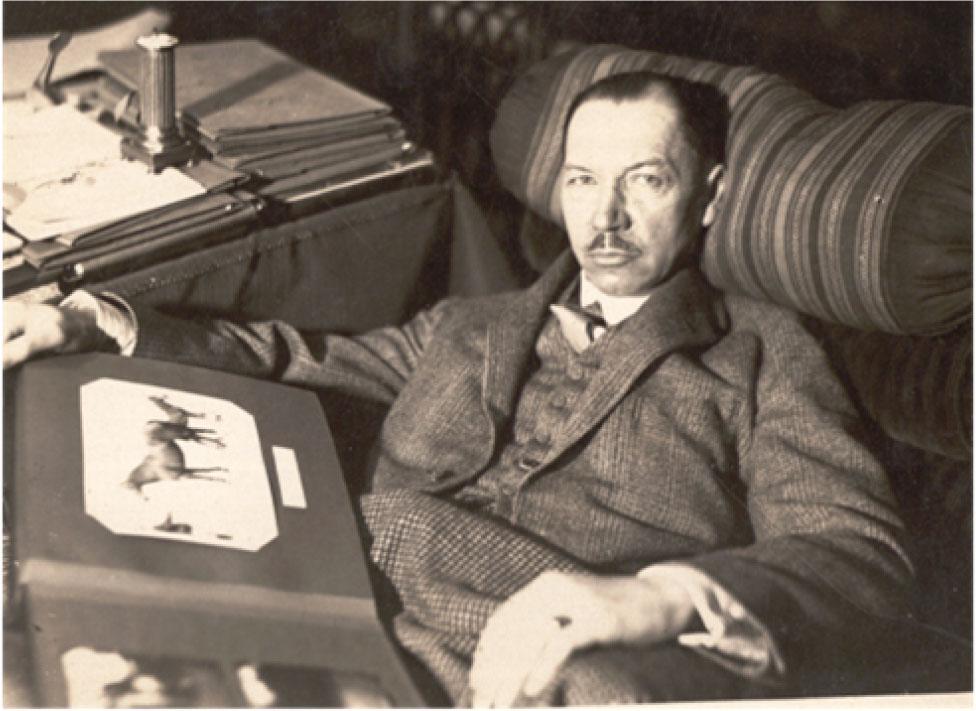
Senator Stanisław Karłowski in the Szelejewo library, 1930s
The establishment of the Stanislaw Karłowski Foundation at the beginning of the 21st century has contributed to the renewal of the ‘Demeter’ movement in Poland. ‘Demeter’ brings together and oversees actors in biodynamic agriculture worldwide. The impetus for the foundation came from Dr Manfred Klett, who is a unique personality in the global biodynamic movement. He also proposed that a pioneer of Polish biodynamic agriculture, Senator Stanisław Karłowski, should be the foundation’s patron.
In order to speak of Stanislaw Karłowski as the doyen of Polish biodynamic agriculture, it is important to bear in mind that Europe’s state borders have changed many times throughout history. As a result of the Great War (World War I), Poland returned to the world map. Through the Treaty of Versailles, Poland was reborn as a separate and independent state. In view of the changes that continued to take place on the European continent, after another global armed conflict, such places as Kobierzyce, Szelejewo and Juchowo found themselves within the Polish state.
Making Stanislaw Karłowski a patron of the Foundation therefore prompts the question – why does he deserve such an honourable place? Though first and foremost an economist, banker and businessman, he was also a social activist and practitioner. He possessed a wealth of knowledge and had the intuition to sense emerging changes, which he was open to them and acted on, while also being an agent of change himself. Born in 1879 in Grąbków near Rawicz, the son of Józefa (née Grzymała-Budziszewska) and Leon (de armis Prawdzic), he had three siblings. Despite the family’s poor financial situation, he received a very thorough and careful education, studying political economy in Brussels, among other places. He graduated from the Commercial Academy in Berlin and then in 1902 from Antwerp. After an internship in the banking institutions of Berlin, Brussels and London, he returned to his native country, where he began his banking career in Galicia (the eastern half of Galicia is now part of Ukraine, and the western half is part of Poland). His energy and efficiency as a banker led to him being elected head of a branch of Bank Handlowy in Kraków in 1906. A turning point in Stanisław Karłowski’s life came in 1920. At that time, he became an heir to an estate in Horyniec in Galicia (now the Podkarpacie region), and purchased a former German estate in Szelejewo, where he lived with his children after the death of his wife, Princess Róża Poniński. Due to these changes, he left his job at Bank Handlowy.
The purchase of the post-German estate in Szelejewo, as mentioned by Prince Heinrich von Schönburg-Waldenburg, took place under rather unusual circumstances. After the provisions of the Treaty of Versailles had come into force, and by virtue of the Sejm Act of 15 July 1920 on the liquidation of private estates in execution of the peace treaty, the estate could have been left in the hands of the Waldenburg family on condition that they accepted Polish citizenship. However, as the prince and his family did not want to accept such a solution, he managed to reach an agreement with Sen. Stanisław Karłowski. In a cash settlement, below its actual value in the time of hyperinflation, the duke sold Szelejewo to him.
In a relatively short period of time, Stanislaw Karłowski went from being a banker and community worker to predominantly an agriculturalist. What is very important, however, is that due to his previous professional experience and passions, Karłowski approached agricultural conditions primarily from a scientific and economic angle. His overriding goal was the profitability of his farm. Looking for the most optimal solutions for his vision of farming, he began cooperating with the University of Poznań. Specialists from this university conducted research into such areas as organic fertilisers. One of them was Bronisław Niklewski, professor of plant physiology and agricultural chemistry. Karłowski combined two extremely important elements in the running of Szelejewo: scientific knowledge about plant cultivation and animal husbandry with economic calculations. Looking at how he farmed in this way, it can be assumed that his later fascination with biodynamic agriculture was precisely in line with his philosophy of life.
A turning point for Stanislaw Karłowski and Szelejewo came with a meeting in the autumn of 1929 with Günther Wachsmuth, who was then in Poland for an anthroposophical convention. This conversation was one of the factors contributing to the conversion of farming in Szelejewo to the biodynamic method, which Karłowski introduced, with the considerable help and cooperation of Almar von Wistinghausen, in the early 1930s.
Wistinghausen was a specialist in plant cultivation and his interest and participation in Steiner’s ‘Agriculture Course’ in 1924 turned his attention towards biodynamics. In 1927 Wistinghausen and Erhard Bartsch took possession of a farm in Marienhöhe, near Bad Saarow, and turned it into a centre for the biodynamic movement. By the 1950s, Wistinghausen had already created a network of more than fifty biodynamic farms in Württemberg. In 1954 he established the ‘Demeter Association’, which he chaired for the next 11 years.
Karłowski recognised the declining economic performance of his conventional method farm, caused by the poor quality of crops grown and the deteriorating health of livestock and declining animal fertility. It seemed to him that introducing the biodynamic method on the farm would help solve the growing problems. There is also a hypothesis that Karłowski was introduced to biodynamic farming by his good friend and neighbour Baron Karl August von Massenbach, who farmed in the nearby town of Pniewy (near Poznań).
The creator of the biodynamic method in agriculture was the Austrian philosopher, mystic and researcher of Goethe’s legacy, Dr Rudolf Steiner. The expression ‘biodynamic agriculture’ was coined in 1930 by Erhard Bartsch and Ernst Stegemann.
At the beginning of the 20th century, on Steiner’s initiative, a spiritual movement, anthroposophy, combining elements of esoteric philosophy and theosophy, emerged. Anthroposophy means wisdom about man (gr. ánthropos – man, sophía – wisdom, knowledge). It is a spiritual and esoteric worldview. The basis of this school of thought is direct knowledge of the spiritual world enriched by individual experience, meditative practice and integral human transformation. Steiner’s prototype was the poet and playwright Johann Wolfgang von Goethe with his elegy ‘Die Methamorphose der Pflanzen’ written in 1798. Dr Steiner’s concept was a negation of the theory developed by Justus von Liebig, a German chemist and a great proponent of organic chemistry. Liebig is referred to as the father of fertilisers, as his research led to significant developments in agricultural chemistry. Thus, Steiner strongly denied the use of the industrial path in agriculture, opposing it in favour of the natural, biological and dynamic path.
Ernst Stegemann, anthroposophist and farmer from the monastery of Marienstein near Göttingen, approached Dr R. Steiner in 1921 with the problem of securing seed breeding when the currently existing stock was exhausted. Following Steiner’s advice, Stegemann oriented the operation of his farm to anthroposophical principles from 1922 onwards, and there he carried out experimental plant cultivation based on a preparation prepared using cow horns.
After the end of the First World War, the practice of converting nitrogen explosives into fertilisers and military equipment into agricultural machinery became widespread. At that time, there was also a significant increase in food production in agriculture. However, it soon dawned on the farmer that crops grown in this way were much more susceptible to various diseases, and that the soil became impoverished very quickly, losing its fertility. Many farm owners, especially in Germany, turned to Dr Rudolf Steiner to analyse the current state and future of agriculture in relation to the situation at the time.
From 7 to 16 June 1924, on the estate of Graf Carl von Keyserling in Kobierzyce near Wrocław, Dr Steiner gave a series of lectures on the biological-dynamic method entitled ‘Human Nature of the World; Scientific and Spiritual Foundations of Agricultural Development’. He placed the greatest emphasis on plant cultivation, devoting far less space and time to the issue of animal husbandry. He devoted most time to the issue of fertilisation, especially the processing of fertiliser from cow manure, and the use of compost and animal excrement to fertilise fields and crops.
The materials transcribed from Steiner’s lectures were published in book form and titled ‘Agriculture Course’. They helped to initiate the development of biodynamic agriculture throughout the world. ‘The Agriculture Course’ addresses the issues of the endangerment of nature by irresponsible human actions in the sphere of technology and the development of the chemical industry as an expression of a robber economy. In addition, recognising the dangers of human actions at the time, Steiner also emphasised humans’ responsibility for nature for future generations. He also drew attention to the possibility of boosting the fertility of the soil and thus its productivity, therefore facilitating the cultivation of crops that are free of toxins.
In his lectures, the philosopher proposed an alternative vision of agriculture. However, he did not present a complete concept of biodynamic agriculture, but rather gave some extremely important hints. These were later developed by farmers affiliated to anthroposophical circles associated with the Experimental Circle of Anthroposophical Farmers and Gardeners
The concept of biodynamic agriculture had a strong philosophical basis. Steiner understood agriculture as the interaction of spiritual and cosmic forces, in stark contrast to a materialistic economy using primarily biochemical elements. In doing so, he drew on folk wisdom and intuition for inspiration and action.
Dr Rudolf Steiner’s ‘Agriculture Course’ is a landmark text on the biodynamic and organic farming movement, one which has been translated into as many as 16 languages (Paull, 2020). The eight lectures that Steiner presented in Kobierzyce laid the foundations for the emergence, over the next two decades, of biodynamic and organic agriculture. In them, Steiner gave advice to be put to the test, not ready-made prescriptions or dogmas.
‘The Agriculture Course’ did not appear in print until 1926, in German. It was initially available as confidential material for members of the Experimental Circle of Anthroposophical Farmers and Gardeners. The first translation of the ‘Agriculture Course’ came in 1929 and was done into English by George Kaufmann (later known as George Adams). He masterfully translated Rudolf Steiner’s lectures for English-speaking audiences. In addition, at least two more English translations by other translators from 1938 and 1993 are known. Since then, ‘Agriculture Course’ has also been translated into French (1943), Swedish (1966), Italian (1973), Danish (1976), Dutch (1977), Spanish (1988), Hebrew (1989), Norwegian (1992), Romanian (1997), Russian (1997), Serbian (2004), Portuguese (2005), Polish (2007) and Esperanto (2009). As organic farming is now attracting increasing numbers of new consumers, advocates, practitioners and researchers, there is a great interest in the ground-breaking text ‘Agriculture Course’.
Stanisław Karłowski became the greatest populariser of the biological-dynamic method in pre-war Poland (1918–1939). He wrote in ‘Gazeta Rolnicza’ (Agricultural Gazette) of 1934 that ‘while the biological aspect will be understood at once by every practical farmer, it is understood that the other half of the method, i.e. the dynamic ‘a priori‘ may seem incomprehensible (Karłowski, 1934b). The task of the dynamic side is to intensify the creative power of nature and to use the influence of the Earth and cosmic waves for plant growth’. In the interwar period, Karłowski created a model farm run using the biodynamic method on his 1,724 ha estate in Szelejewo, consisting of the manors Szelejewo, Stefanowo, Bielawy, Antonin and Józefowo. This was made all the easier by the fact that the count’s estates were located practically in a single area.
Szelejewo’s conversion to the innovative method began in 1930 and lasted until 1935. Its overriding aim became to create conditions for growing plants as close to natural as possible. The biological part of this involved the introduction of the best possible ‘digested’, composted manure, i.e. ready-made food for the soil. The basis of the Szelejewo farming reform was to increase cattle ownership. It provided a source of excellent manure, which was the basis for making valuable composts as a source of both nutrients and humus compounds for plants. There was a strong emphasis on the use of compost and the inoculation of compost and manure with specialised preparations of medicinal herbs. The preparations used by Karłowski were described in the Gazeta Rolnicza newspaper (Karłowski, 1935b). These included home-made decoctions, bran, ‘beet pulp’ or defecation lime. In the dynamic part of the method, on the other hand, the emphasis was on strengthening the creative forces of nature through the influence of cosmic energy resulting from the appropriate constellation of the stars. This theme of the dynamic part of the method is reflected in the biodynamic calendar, which is now being used increasingly widely in agricultural practice.
Farmers have long been interested in the influence of the planets, especially the Moon, on crops and animals. They followed the recommendations of calendars based mainly on lunar rhythms (Metera, 1993). Because the lunar month does not coincide with the solar month we commonly use, it must be redrawn every year. The best known is Maria Thun’s biodynamic calendar, published since 1952 under the title ‘Sowing Days’. It is widely used by biodynamicists in Germany and other countries, including Poland. On the basis of numerous experiments, Maria Thun demonstrated the relationship between the timing of sowing and tillage operations and the quality and yield of crops. She found that depending on the position of the Moon against the backdrop of the constellations, there are favourable and unfavourable days for sowing, cultivation procedures or harvesting crops.
The aim of this method was to create a farm with economic self-sufficiency, also known as autarky. According to this principle, the farm was to be a closed organism, which was to guarantee the farmer’s independence from external conditions and the economic situation. The idea was that all fodder was to be produced on one’s own land using a biological-dynamic method. In line with this method, the use of artificial fertilisers and plant protection products is superfluous, both for the volume of production and economics, as it only causes unnecessary financial burdens for the farms.
Before Karłowski made the final decision to abandon conventional farming and started converting his farm to biodynamics, he tested its success in practice in Szelejewo. As a trial, in the spring of 1930, he planted 22.5 hectares of field with potatoes, in accordance with the biodynamic method. Potatoes grown under this system yielded 240 q/ha compared to 210 q/ha for potatoes grown on ordinary manure. After obtaining such encouraging results, he decided to switch the whole farm over to the biodynamic method in stages. In view of the four-field rotation he was using at that time, it took four years to convert the fields completely. Although this conversion was carried out in stages, i.e. with successive crops, as he points out, he did not use artificial fertilisers on cereals from 1932.
On the pages of ‘Gazeta Rolnicza’ in February 1935, he reported that the first four-year period would begin from the 1935/36 growing season, when all crops would be cultivated according to the biological-dynamic method (Karłowski, 1935a). At the same time, he provided information about the level of crop yields during the conversion period in relation to the yields he had obtained using the conventional method during the previous decade. While the best results were in potato cultivation, a yield increase of 31 q/ha, he also achieved good results with wheat (26.0 q/ha as opposed to 19.9 q/ha) and rye (24.1 compared to 20.1). In conclusion, he wrote that he had spent about 110,000 złotys per year on artificial fertilisers, but ‘only’ about 12,000 złotys on inoculants necessary to the biodynamic method. He concluded that the biodynamic method had resulted in such a reduction in production costs that no fertilisation method had ever achieved before.
After converting his own farm for four years, Karłowski demonstrated the economic and health effects of the method used. Considering the drought period during the conversion of the farm in Szelejewo, the owner of the estate was all the more able to see the advantages of the method. In addition to the increase in yields of the cultivated plants and the marked improvement in the quality of the crops obtained, it was worth noting that the plants and seeds produced were much healthier than those grown using the traditional method and more resistant to the numerous diseases threatening crops.
The use of nine biodynamic preparations was advocated in place of chemicals in the biodynamic method. These are divided into two groups: for use as sprays on the surface of fields or plant patches, and for the inoculation of composts. They are intended to stimulate the development of bacterial and fungal flora in the soil. Special biodynamic preparations applied to soil and plants or added to compost are intended to neutralise harmful elements (e.g. in fertilisers or nutrients) in plant cultivation.
The timing of the completion of the conversion of Szelejewo to biodynamic farming coincided with the organisation of a ‘Farmer’s Course’ on the estate on 6 April 1935. This was yet another course organised by Karłowski within the space of a few weeks, in response to the growing interest in biodynamics among landowners and farmers. The course was attended by many prominent figures from the agricultural industry, practising landowners, and also by advocates of the use of fertilisers.
Described by the anonymous author ‘Ignotus’ on the pages of ‘Gazeta Rolnicza’, the meeting of trainees drew attention first and foremost to the enormous role of the practical in agricultural work, which is far superior to the theoretical foundation. He also emphasised the very beneficial effect of natural raw materials from the farm. The author thus indicated the positives of biodynamic agriculture. Under a pseudonym, he criticised cultivation technologies based on artificial fertilisers and the lobby of producers and users of these substances. In doing so, he advocated the philosophy of self-sufficient farms based on locally available inputs.
Mention should be made here of Karłowski’s publication addressed to practitioners of the biodynamic method. Being a practitioner himself, and drawing on the experience of the Pniewy estate, he polemicised with Jerzy Ryx, among others, who in his articles argued against the biodynamic method and in favour of traditional cultivation based on artificial fertilisers (Karłowski, 1934a). Ryx even mocked the organisation of farmers working on the basis of the biodynamic method, pointing out the very restrictive by-laws and rules that the members undertook to follow strictly (Ryx, 1934). Ryx published a pamphlet ‘Biodynamic farming at home’, in which, referring among other things to publications in the magazine ‘Demeter’ and the results of research supporting artificial fertilisers, he portrayed biodynamic farming in a decidedly negative light, subjecting it to severe criticism. Karłowski, on the other hand, in his publications and practical activities, showed the opponents of biodynamics to be factually deficient in their uncritical praise of artificial fertilisers. In so doing, he cited numerous examples, positive experiences of biodynamic farming from other countries. He wrote that the facts were so obvious that the Scandinavian countries only buy bread rye grain from Russia, as it was better for baking and was grown without artificial fertilisers, and grain for feed and other purposes from Germany and Poland. In Switzerland, it was necessary to intervene against the excessive use of artificial fertiliser because the quality of the cows’ milk had deteriorated so greatly that the famous Emmental cheese could not be made to the proper quality standard (Karłowski, 1935b).
In his organic work, Karłowski enlisted the cooperation of Prof. Bronisław Niklewski from the University of Poznań, a respected specialist in composts and liquid humus. However, just how difficult it was in the conditions at the time to promote and implement the practices of biodynamic agriculture can be seen from a certain ‘dry’ entry from the minutes of a meeting of the Council of the Faculty of Agriculture and Forestry of the University of Poznań on 1 October 1938. The fourth item on the agenda of the aforementioned Council dealt with ‘the issue of courses organised by Prof. Br. Niklewski’. It goes on to articulate that: ‘the Faculty Council, after discussing the project, took a unanimous negative position’ (Protokół..., 1939).
Using the biodynamic method, Stanislaw Karłowski began to pay close attention to the health issues of consumers of agricultural products. He was one of the first promoters of healthy eating and was aware of how the chemicalisation of food products affects human health. On the basis of his experience, he founded the Society for the Promotion of the Principles of Life and Economy in Accordance with Nature. This organisation was founded at the end of 1938 and brought together many scientific authorities who published in the Society’s bimonthly journal Biologia a Życie (Biology and Life). By the outbreak of the Second World War, four more issues of the journal had been published. It was in the July–August issue of Biologia a Życie that he published what was probably his last article before the tragic autumn of 1939, entitled Earth and its Fertilisers (Karłowski, 1939). There he quoted the very eloquent words of the English economist C. A. Baker. ‘We exploit our soil, forcing it to yield ever more abundant crops. We disregard quality. In this way, the soils are becoming ever less productive and, for people providing food, inadequate or even harmful to health. And in conclusion: ‘... but what a man will be raised on such food’. It can be assumed that this was his vision for the future, realised through the promotion and introduction of biodynamic agriculture.
Expanding on the above, Senator Karłowski was active in improving the health of the population through hydrotherapy and through his ownership of Horyniec. He was so successful that from 1937–1939 he served as President of the Association of Polish Spas. The basis of his activities was the spa in Horyniec, which passed into his stewardship after the death of his wife, Róża. The health resort developed rapidly; guesthouses and villas were built within the spa and in its immediate vicinity to meet the needs of patients. In the mid-1930s, there were a total of 16 of these, which could accommodate between 400 and 500 patients. Two guesthouses in particular stood out: Aleksandrówka and Kalikstówka, offering a total of 57 rooms. Even then, the guesthouses in Horyniec were advanced for their time, boasting such features as electric lighting and sanitation.
In addition to Szelejewo, other farms also made successful use of the biodynamic method. This method was also adopted by Jan Suski, owner of the Sycze estate in Polesie (now part of Belarus). Similarly, Borys Postowski, owner of the Karcz estate in Polesie, whose interests focused precisely on biodynamic farming, farmed similarly. In Pniewy, as in Szelejewo, ‘biodynamic preparation courses’ and training meetings of Polish and German biodynamic farmers were held.
With the outbreak of the Second World War, Stanisław Karłowski, as an extremely capable financier and farmer, as well as a great patriot and statesman, found himself on the German proscription list. As such, he was a significant obstacle to German plans to germanise Wielkopolska (Greater Poland) and was arrested on 21st October 1939. Karłowski was shot in a public execution on the market square in Gostyń, along with thirty prominent citizens of the Gostyń area. A commemorative plaque on Gostyń Town Hall, bearing the inscription, reminds us of this terrible fact today: ‘From here they went out on the ramparts of death to give us victory, our dearest heroes‘.
The Second World War and the political and economic changes that followed made it impossible for organic farming to continue. The end of the war in 1945 brought a completely new order in Europe. Kobierzyce found itself within the borders of Poland, and an agrarian reform came into effect, involving the expropriation of landowners and the transfer of some land to landless or low-income farmers. This seems to have brought about a significant decline in agriculture, not least due to the introduction at all costs of socialist farming methods based on Soviet models. In this context, the forced collectivisation of agriculture, combined with its chemicalisation, produced mediocre results. The yields obtained were not the highest and, in addition, were of fairly average quality, while at the same time, the production technologies used placed a significant burden on the environment.
In Poland, only one biodynamicist, Jan Suski, survived the war (Bietkowski and Fortuna, 2021). In a letter to G. Wachsmuth, he described the reality of the Sycze estate after the war and his attempt to recreate the farm anew after its loss due to post-war changes. Unfortunately, he was forced to leave Sycze and settle in Podgórzyn near Jelenia Góra. He then asked G. Wachsmuth for advice on producing biodynamic preparations and for help in importing them from Switzerland. In addition, in the letter, he hoped that this way of farming would not be forgotten in Poland, as he had been approached by various people interested in biodynamics, including representatives of the scientific world. However, with his death in 1960, the biodynamic movement initiated almost 30 years earlier by Stanislaw Karłowski, came to an end.
As a result of the Second World War, the former centres of biodynamic agriculture throughout Europe were lost. Under the circumstances, Josef Blockhuys, Kurt Eisele, Hans Heinze, Ernst Meyer, Nicolaus Remer, Immanuel Voegele, Kurt Willmann and Brunhild-Erika Windeck reactivated the Reich Association for Biodynamic Farming in 1946 as the Research Circle for Biodynamic Farming (after 1950 with its headquarters in Darmstadt). The publishing arm of the Research Circle is the magazine ‘Lebendige Erde’, which has appeared since 1950. The first steps were taken towards developing marketing, mainly through ‘health food’ shops. In 1954, the trademark rights were transferred to the Demeter Association and in 1956 the association’s guidelines were developed and issued.
The person who attempted to reactivate biodynamic farming in Poland almost 20 years after the Second World War was Julian Osetek (Bietkowski i Rzeczycka, 2023). He used this method on his small, three-hectare farm in Nakło n/Notecią. His fascination with anthroposophy later coincided with a period of change in Poland in the early 1980s. It was then that hitherto forbidden topics slowly began to appear in the media, and alternative agriculture appeared, which Julian Osetek began to promote with numerous lectures throughout Poland, and with the publication of a biodynamic calendar by the aforementioned Maria Thun, entitled ‘Sowing Days’. He also produced biodynamic preparations, which he sold nationally.
In the early 1980s, Julian Osetek gained an important promoter of the biodynamic method in the form of Prof. Marian Górny, who from 1981 on, took up the criticism of conventional agriculture and the promotion of organic farming. From there, he established and headed the Department of Organic Food Production Methods operating within the Warsaw University of Life Sciences. In 1989, he initiated the establishment of the Association of Organic Food Producers ‘EKOLAND‘ in Przysiek near Toruń. In 1990, the Association became a member of the International Federation of Organic Agriculture (IFOAM). When listing the promoters of organic agriculture, one must not fail to mention Prof. Górny’s student, Dorota Metera, M.Sc. She is currently a member of the Council for Organic Agriculture and the Monitoring Committee of the Rural Development Programme advising the Minister of Agriculture and Rural Development and on the GMO Commission of the Minister of the Environment. In these institutions, Dorota Metera represents the interests of organic farming. Since the early 1980s, she has also been actively involved in activities related to the biodynamic method, where she passes on the knowledge she has acquired in training courses, publications and practical action.
The aforementioned Prof. Bronisław Niklewski’s scientific work dealt with issues such as soil fertility or the influence of humus compounds on plant development (Wojciechowski, 1972). Professor Niklewski was also the first Polish scientist to raise the issues of the biodynamic method in the press of the 1930s and 1940s, i.e. in the post-war period. He saw in it not only factual principles of plant cultivation and animal husbandry, but also a layer of fantasy and conjecture. For Prof. Niklewski, the most important issue in the biodynamic method was the use of fermented manure and compost for plants and soil, about which he wrote in his book ‘The Biodynamic Method – Decay and the plant’ (Niklewski, 1944). In his numerous pioneering studies on the effects of humus compounds on plants, he demonstrated the importance of humus for plants (Niklewski, 1932).
According to Prof. Niklewski, humus stimulates the root cells of the growth cone to divide rapidly and stimulates the formation of abundant lateral roots. At the same time, humus compounds induce a strong chemotropic reaction in the roots, which makes it easier for the roots to find food in the soil. The humus-influenced shoots and leaves show a more luxuriant development and a darker green colour, with the humus accelerating the development of the vegetation. He further argued that the uptake of mineral salts by plant roots is more intensive under the influence of humus compounds (Niklewski, 1939).
This diverse effect of humus on the plant explains the momentous influence of organic fertilisers on plant production. These fertilisers have a beneficial effect not only on the nutritional resources but also on the organic compounds from which humus compounds are produced under the influence of the soil flora. Thus, natural and organic fertilisers can be considered the basic fertilisers that keep the soil in cultivation and create excellent development conditions for plants (Niklewski, 1949).
A further important element of proper management is the optimal use of manure (Wojciechowski, 1972). Prof. Bronisław Niklewski believed that ‘hot-fermented’ manure contains humus-colloid dissolvable matter in much greater quantities than ordinary manure, although in variable amounts. This results in the activation and uptake of nutrients from ‘hot-fermented’ manure being much more abundant than in ordinary manure, which is confirmed by the higher beet yields obtained. Moreover, the content of soluble humus in compost is a highly variable value, fluctuating within quite a wide range, and the quality of the compost probably depends on this. The amount of soluble humus in the compost decreases during storage for several years, as the compost turns into ‘compost soil’ and thus becomes biologically inactive. This biological activity of compost can be resumed by reintroducing manure into the compost. Thus, Prof. Niklewski postulated that there are substances in soil and organic manure that have a stimulating effect on plant growth, and that a more detailed knowledge of these bodies will contribute to a deeper understanding of fertiliser issues and may have practical significance in reducing the cost production. He also gave detailed recommendations for making valuable and biologically active composts (Niklewski, 1935). Easily fermentable materials such as green plants, turf and manure should be composted, resulting in compost within a few months. He recommended frequent topping of the compost pile with manure (diluted with pond water) or a cow dung suspension. What is important is the composition of the compost mass containing both nitrogen-rich and nitrogen-poor materials in balance, or what we today call the correct C:N ratio. After 10–12 weeks, the pile should be processed – aerated and covered with a layer of humus soil or turf and keep the pile sufficiently moist.
The problem of rational preparation of manure and composts was taken up by Karłowski in the pages of ‘Poradnik Gospodarski’ with a view to their correct application on the farm (Karłowski, 1934b). It marked a practical development in Prof. Niklewski’s research inspiration in the field of composting. He offered practical advice on the proper treatment and storage of manure, the necessity of building ‘manure pits’, and presents recipes for making various composts. In the article, he stated simply that those who once become convinced of the beneficial effects of well-prepared composts on their land will not lack the ingenuity to accumulate, without any costs, considerable amounts of compost every year, which together with well-decomposed manure and with the proper use of green manures, can create self-sufficiency in fertilisers without the fear of lowering crop yields. The editors of Poradnik therefore posited that biodynamic agriculture was a healthy movement, fertile with great practical consequences under the conditions of the economic collapse of agriculture at the time (the Great Depression), and that Senator Karłowski was its pioneer in Poland.
Currently, the vast majority of Polish biodynamic farms are affiliated to the Demeter Association, which has been operating in Poland since April 2005, when on the initiative of Dr Barbara Szymańska-Kowalkowska, then a member of the Founding Council of the Stanisław Karłowski Foundation, the inaugural meeting of the organisation was held. In May of that year, the Association was granted legal status. Unfortunately, it functioned for a rather short time, ceasing its activities due to financial difficulties. However, after a 10-year hiatus, it was successfully reactivated. The Association is currently based in Juchowo in the Zachodniopomorskie Voivodship, where a biodynamic farm with an area of approx. 2,000 ha operates. This plays an educational, cultural and socially very important role, as it provides employment to disabled people.
The aim of the farm is to protect biodiversity, preserve the environment and create a model of a modern village based on ecology and the possibility of self-realisation for the people living there.
The most important message of the foundation is how the farm (i.e. ‘field and barn’) functions as a closed circuit by maintaining a balance between plant and animal production. Stanislaw Karłowski took the first steps in this direction by popularising the biodynamic method in agriculture. Unfortunately, with the outbreak of the Second World War and its consequences for Poland’s history, this direction was completely lost. Looking now at the increasing interest in organic farming in the world, one can hope for the restoration of the biodynamic method and its dissemination.
Senator Stanislaw Karłowski had a background in economics and extremely broad experience in banking and finance, as well as his passion as a social activist, and yet he looked at agriculture from more than just the economic angle. Applying the biodynamic method to his estate not only increased economic performance, but also gave added value in the form of high-quality and safe crops, which in turn benefited the health of consumers. Such a forward-looking vision of farming successfully anticipated contemporary issues of sustainability, which is now a priority issue for most economies worldwide.
If we relate the development of biodynamics to certain mathematical concepts, the lectures given by Dr Rudolf Steiner at Koberwitz form the basis, the basic equation. The work of the experimental circles (the activities of the entire agricultural section at the Goetheanum, the work of Pfeifer, Wachsmuth, Thun and others) is the second stage in the development of the idea – the ‘second derivative’ – biodynamic agriculture 2.0, if we use contemporary language.
Karłowski entered biodynamics at stage 2.0, although, in our view, thanks to his talents and hard work, he very quickly moved on to a version of biodynamics 3.0. He developed the idea further, allowing it to grow for the future, so it is consistent with what Dr Rudolf Steiner assumed.
The forms of development of this idea by Senator St. Karłowski are confirmed by the following directions of his work.
Firstly, he swiftly and effectively converted the entire farm, covering over 1,700 ha, into a biodynamic farming system. He understood the concept of organicity and complementarity of this way of farming and put it into practice, with the help of the prominent promoters of the biodynamic movement Messrs Wachsmuth and Wistinghausen as early as 1929, an expensive but promising experiment for the future.
Secondly, he did not limit himself to the activities of the experimental circle but tried to attract other landowners to this way of farming by organising demonstrations and courses for them at his home in Szelejewo, and did so successfully. He popularised the idea of biodynamics, ergo: he influenced the further development of the idea, and by popularising it, gave it the opportunity to develop further, to enter the stage of life practice, no longer as an experiment, but a clear change in customs. This is, after all, the crux of the matter – initiating widespread change.
Thirdly, he drew people of science, scientists with open minds, into his activities. After all, we do not forget that Dr Rudolf Steiner was a scientist who dared to change science, to extend its boundaries with new ways of thinking. Karłowski invited Professors Bronisław Niklewski and Adam Wodziczko to Szelejewo along with their research teams – these were true ‘open minds’ – the former a specialist in fertilisers and composts, and the latter a biologist, a promoter of environmental protection. Together, they initiated the founding of the journal Biologia a życie (Biology and Life), which would become a scientific platform for exchanging ideas on a new model of soil and plant cultivation, plant nutrition and, in general, the perception of humans’ place in nature. This journal was another agent of change, as it published a magazine and brochures in Polish that promoted the advantages of biodynamic agriculture. In turn, Prof. Niklewski’s reviews of publications appeared in the periodical promoting this method, the journal ‘Demeter’. This should all be noted at this juncture, since it is a matter the movement of ideas, development, evolution. Based on the above arguments, we hypothesise that by the 1930s, Stanislaw Karłowski had already created biodynamics 3.0 in Szelejewo.
Stanislaw Karłowski was neither an anthroposophist nor a member of the Anthroposophical Society, and thus had no internal or personal limitations connected to respect for the memory of Dr R. Steiner as an exceptional personality (whom he had not met, because he had not been, for example, at the Koberwitz lectures in 1924, and thus was not a direct disciple). Karłowski was not afraid to go beyond the framework of the well-known phrase ‘The Doctor said’ (which could block any new thought). However, realising the power of the ideas preached at the Goetheanum and their potential, he brought Dr R Steiner’s idea to life. Karłowski allowed the idea to grow, to develop, not to be confined to a narrow circle of enthusiast-students, but to take it further boldly and do so with conviction. He worked according to the obvious principle that one can work with the biological-dynamic method (n.d.) without by necessity being an anthroposophist (Karłowski, 1935a). He added: ‘I, for example, have not read Dr Steiner’s philosophical works at all, because for me the philosophy of the Catholic Church is completely sufficient for life, and yet I use the b.-d. method successfully in the garden and in farming’.
In turn, our research shows that if it had not been for that fateful, terrible September 1939, Karłowski’s Szelejewo would undoubtedly have been at the forefront of this change in thinking. All his actions were directed precisely at the emergence and development of biodynamic agriculture.
In view of the arguments cited above, Senator Stanisław Karłowski should also be regarded as a forerunner of Environmental Society Governance (ESG), for in 1939, together with Messrs Wodziczko and Niklewski and others, he founded the ‘Society for the Promotion of Life and Economy in Accordance with Nature’ (TKZZN). Undoubtedly, the foundations of the TKZZN laid the foundations for the now modern ESG trend, which evidently derives from Szelejewo’s biodynamic themes.
At present, the ‘Juchowo Village Project’ (www.juchowo.org) within the Stanislaw Karłowski Foundation is the fruit of Karłowski’s pre-war activities. The impetus for the foundation was given by Dr Manfred Klett, and the work of the foundation’s patron acted as inspiration for the foundation’s stated aims. The Stanisław Karłowski Foundation promotes agricultural culture based on the principles of biodynamic agriculture and the teachings of Dr Rudolf Steiner throughout Central and Eastern Europe. The Stanisław Karłowski Foundation is undoubtedly a continuation of the biodynamic farm in Szelejewo, which laid the foundations for the further development of the biodynamic movement in the pioneering days when this now worldwide organic farming movement was taking shape.
In conclusion, we invite all those interested in biodynamics who wish to celebrate 100 years of biodynamic agriculture to visit Kobierzyce, the place where this important idea came out into the world.