
‘Rossby concluded his interview for Time in 1956 by saying “Nature can be vengeful. We should have a great deal of respect for the planet on which we live”. Revitalizing Tellus feels like the right way to pay these respects, and now feels like the right time to do so.’ – I. Riipinen
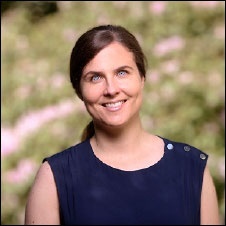
Figure 1
Ilona Riipinen, Editor-in-Chief of the Tellus Journal. Photo: Sören Andersson. Reproduced with permission of the photographer.
We have relaunched Tellus in this spirit, looking forward to a new era in the long history of this journal. Tellus was founded in the late 1940s by Prof. Carl-Gustaf Rossby upon his return to Sweden from the United States. It was the beginning of the Cold War, and Sweden was looking for ways to strengthen its scientific and innovation capacity by bringing home one of the pioneers of meteorology and climate science (see e.g., the article ‘Science: Man’s Milieu’ in Time, 1956). At the time, Tellus provided a channel for interactions within the global scientific community on topics central to understanding what governs the flows of energy and material within the Earth system. Now, more than 70 years later, the specific scientific challenges are different, but the need to better understand the physical, chemical, and biological processes that govern the climate and sustain life on Earth—tellus in Latin—is even more urgent.
‘Rossby presciently arrived at the idea of Earth system science over 70 years ago. Today, it’s more relevant than ever.’ – R. Caballero
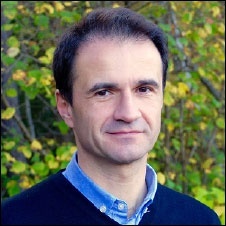
Figure 2
Rodrigo Caballero, Senior Editor of the Tellus Journal. Photo: Rodrigo Caballero. Reproduced with permission of the photographer.
Tellus is an independent, not-for-profit journal managed and edited by research-active scientists. A journal by scientists, for scientists. As such, it is poised to play an important role in the future, given the growing consensus around the need for the academic community to reappropiate much of the scientific publishing process to guarantee scientific integrity and intellectual independence (see e.g., Sabel and Larhammar, 2025). Embracing this guiding principle, the key ethos of Tellus is the focus on quality as defined by the scholarly community, ensured by a committed editorial board working pro bono for the journal. We also strive to keep the journal affordable, do not seek profits to distribute to investors, and to advocate for open science and transparency.
‘The publishing landscape has changed significantly during the past decade. It is now dominated by large publishing companies that extract financial profit for distribution to private investors, taking away public money originally invested in science. We need publishing models that retain public money within scientific organizations and prolong its use in scientific activities. The new Tellus is a step in this direction.’ – C. Sierra
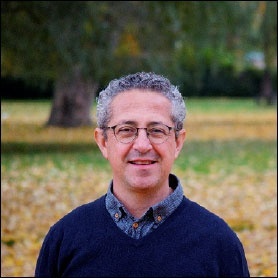
Figure 3
Carlos Sierra, Senior Editor of the Tellus Journal. Photo: Marie Spohn. Reproduced with permission of the photographer.
Our promise to the authors is a meaningful interaction with the editors and reviewers—supporting scholarly exchange and learning. Besides dedicating their time to a thorough peer-review process, our editorial board is committed to promoting the published articles in their professional networks.
‘Academic life is becoming more and more hectic—and so is the publication process. I feel we need to slow down and give ourselves time to exchange ideas and feedback that ultimately promote sound and innovative science. With Tellus we are doing exactly that.’ – S. Manzoni
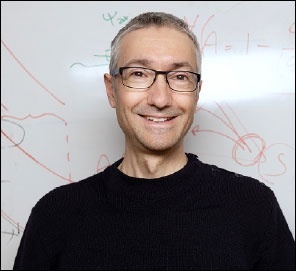
Figure 4
Stefano Manzoni, Editor-in-Chief of the Tellus Journal. Photo: Rickard Kilström. Reproduced with permission of the photographer.
Our goal is to publish volumes that attract readership from the whole Earth system science community, stimulating curiosity and encouraging scholars also to dive into topics outside their core expertise.
‘Curiosity is an intimate and powerful motivation for doing research for many scientists. Reading (and writing) novel and thought-provoking articles can nurture that curiosity.’ – G. Vico
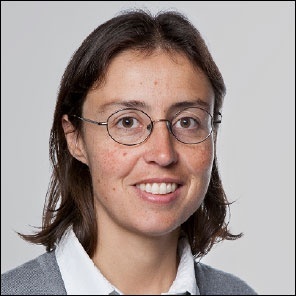
Figure 5
Giulia Vico, Senior Editor of the Tellus Journal. Photo: Jenny Svennås-Gillner. Reproduced with permission of the photographer.
The re-launched Tellus subsumes the former Tellus A: Dynamic Meteorology and Oceanography and Tellus B: Chemical and Physical Meteorology into a new journal with a much broader scope encompassing all Earth’s spheres—atmosphere, biosphere, cryosphere, geosphere, and hydrosphere.
‘The new Tellus represents an important step towards peer review publishing that is rooted in sound scientific practice and a return of power to the scientific community. Its broad focus on Earth System Science makes it an ideal journal for research that offers holistic insights into Earth System processes. I firmly believe that this is how some of the greatest future discoveries in Earth System Science will emerge and feel excited and privileged to be part of the journey.’ – T. Storelvmo
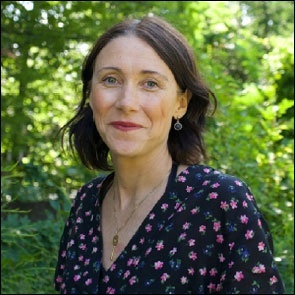
Figure 6
Trude Storelvmo, Senior Editor of the Tellus Journal. Photo: Elina Melteig. Reproduced with permission of the photographer.
We consider manuscripts presenting original results, synthesizing knowledge, or providing forward-looking perspectives. We particularly welcome contributions that cross disciplinary boundaries and provide an integrated view of Earth’s processes and how they collectively act to shape Earth’s changing climate.
Tellus publishes three types of peer-reviewed articles (display items and references are included in all word counts):
Research Articles present original research findings and thus include substantial new empirical data (or novel re-analysis of existing data), theories, and/or model results to address specific research questions or hypotheses. The findings should provide novel insights on the physical, chemical, biological, or ecological processes that shape the dynamics of the Earth’s spheres. Research Articles should be no more than 8,500 words in length.
Perspective Articles are forward-looking syntheses of a research topic relevant for Tellus. In addition to summarizing the current knowledge on the topic, they should provide an outlook on new research questions and directions, or a critique of the state-of-the-art. Perspective articles should be no more than 4,000 words in length, with at most six display items.
Overviews and Assessments review a substantial body of research (including for e.g., large-scale research projects, coordinated multi-model experiments, and experimental campaigns), and by synthesizing novel understanding gained from this research, they provide original insights and an outlook about the topic. They should balance background material and novel findings to serve as authoritative references for a broad readership. Overview and Assessment articles should be no more than 16,000 words in length.
On top of these, Tellus publishes content in the form of editorials, invited commentaries, and other types of exchanges from the scholarly community, reviewed and deemed relevant by the editorial board.
‘In an era of increasingly impersonal, privatization of research publishing, the Tellus team is committed to providing a quality “research and researcher first” publishing experience.’ – J. Famiglietti

Figure 7
James Famiglietti, Senior Editor of the Tellus Journal. Photo: Samantha Chow. Reproduced with permission of the photographer.
Tellus has adopted a three-step evaluation process. Submitted manuscripts are first screened by the editorial office to verify that they comply with the format requirements and that the content of the work is broadly within the scope of Tellus. Manuscripts that are deemed potentially suitable for publication are forwarded to the senior editor board for an editorial evaluation. At this stage, senior editors comment on the breadth of the manuscript scope, the novelty of the approach or findings, and the potential impact of the results. If a manuscript raises sufficient enthusiasm within the group of senior editors, a topic editor is assigned to oversee the quality control of the science underlying the results presented. At this third evaluation step, the scientific quality is assessed by the topic editor, who can still desk reject in case of apparent major flaws, or send the manuscript to external reviewers. Our goal with this three-step evaluation is to ensure that manuscripts that are ultimately accepted are scientifically sound and have the potential to become influential articles in the long term.
The new Tellus has been accepting submissions since October 15th 2025 and has been met with heart-warming support from the scientific community. Within four months, it has received over 40 new submissions, about half of which were sent for further review. The quality of the submissions received has been impressive, but the focus on publishing a relatively small volume of articles with curiosity-provoking novelty and quality requires us to be selective during the initial editorial review.
‘Tellus launched foundational work on circulation and transport in the atmosphere and ocean. Now we can extend that tradition to the full Earth system—linking dynamics, chemistry, biology, and climate impacts.’ – F. Roquet
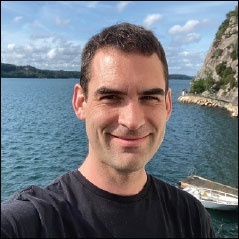
Figure 8
Fabien Roquet, Senior Editor of the Tellus Journal. Photo: Fabien Roquet. Reproduced with permission of the photographer.
We look forward to receiving several more, exciting submissions to Tellus. We look forward to the privilege of reading them, helping improve them, and learning from the wonderful community of scholars working in the various facets of the Earth system research.
‘Finally a European open access scholarly-led journal that will actively promote community building.’ – B. Stevens
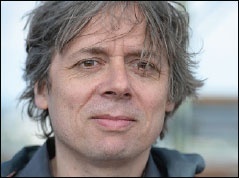
Figure 9
Bjorn Stevens, Senior Editor of the Tellus Journal. Photo: David Ausserhofer. Reproduced with permission of the photographer.
We look forward to sharing the most important and inspiring insights of your research with the rest of the world!
Acknowledgements
Tellus editorial coordinator Maria Basova is kindly acknowledged for excellent support in preparing this editorial.
Competing Interests
All the authors serve as the Senior Editors of Tellus. The material has not been peer-reviewed and represents solely the perspectives of the authors.