
Introduction
Globally, young persons with disability are left behind in accessing healthcare, education, social participation, employment and research (Banks, Kuper and Polack 2017; Mactaggart et al. 2018; Kuper and Heydt 2019; World Health Organization 2022; World Health Organization 2011). In Uganda, 78% of the population is under 30 years old, and 12.4% have a disability (Uganda Bureau of Statistics 2019). Despite its commendable progress of inclusion of persons with disability in policymaking, Uganda continues to face significant challenges in meeting global disability inclusion milestones as set out by the Sustainable Development Goals, the Convention on the Rights of Persons with Disabilities and the National Disability Act (National Planning Authority 2020).
Children and youths rarely participate in the design and implementation of research, yet understanding the lived experiences of young people with disability and their engagement in leading and shaping research is critical for developing contextually appropriate and effective strategies that effectively promote participation and inclusion for all (Smythe et al. 2021; Lundy, McEvoy and Byrne 2011; Botha and Kahonde 2024; Njelesani et al. 2022; Huus et al. 2021).
In studying disability and health in Africa, scholars have argued for valuing diverse understandings and different discourses to avoid generalised and simplified descriptions of disability experiences (Bannink Mbazzi and Kawesa 2022; Grech 2009; Grech 2011; Haang’andu 2018; Ingstad 1999; Meekosha 2011; Seligman and Darling 2009; Whyte 1995). They have also stressed the importance of intersectionality (Cho, Crenshaw and McCall 2013; Connor et al. 2016; Erevelles and Minear 2010) and Afrocentrism for capturing and reflecting diverse perspectives (Owusu-Ansah and Mji 2013). Social and peer support has been highlighted as a key aspect of enhancing social inclusion, mental health and health-related quality of life for youths with disability in Africa (Augestad 2017; Fekete et al. 2021; Bannink Mbazzi et al. 2020).
We developed a Disability Inclusive Youth (DIY) research training and mentoring programme to build research capabilities and leadership skills of Ugandan youths with and without disability. The training and mentoring programme offered youths with disability research training and internships in pairs at two research institutions in Uganda (Ssemata et al. 2025). The research training was based on the good training practices of the Zimbabwean Youth Research Academy (Ferrand, Dauya and Chikwari 2021), whilst the mentoring programme was built on the Obuntu bulamu peer-to-peer support intervention, in which children with disability were paired with peers of their age to become agents of change in collaboration with their families and schools (Bannink Mbazzi et al. 2020). The development and content of the DIY programme are described elsewhere (Ssemata et al. 2025).
Framed through the concept of Ubuntu, persons with disability are seen as part of humanity, interrelated to others with mutual responsibilities. This approach places persons with disability within communities, reduces isolation and can improve participation and inclusion (Owusu-Ansah and Mji 2013; Chataika and McKenzie 2013). Peer-to-peer support has earlier been successfully utilised in parental support programmes for children with disability as well as HIV prevention and treatment programmes with youths in sub-Saharan Africa (Adeagbo et al. 2022; Wogrin et al. 2021; Mark et al. 2019; Nanyunja et al. 2022).
In addition, the DIY programme built on lessons learnt from participatory research, including photo and video voice and action workshops with children, youths and their peers (Wickenden and Kembhavi-Tam 2014; Punch 2002; Bannink Mbazzi, Hameed, et al. 2024; Bannink Mbazzi, Kawesa, et al. 2024), and used our experience of participatory filmmaking from the Obuntu bulamu and the Young Africa Works studies, in which youths with disability co-created short films about their participation in education and employment in East Africa (Bannink Mbazzi, Kawesa, et al. 2024; Bannink Mbazzi, Hameed, et al. 2024).
This paper describes the experiences of 14 Ugandan youths with disability, their peers, trainers and mentors, and the reactions, learning, behavioural changes and results of the DIY training and mentoring programme. The youths were trained and mentored in African disability health research, conducted research and disseminated findings within the one-year training and capacity-building programme in two established Ugandan research institutes.
Research Process
Ethics and consent
Ethical approval was obtained from the Uganda Virus Research Institute research ethics committee (Ref: GC/127/964) and the London School of Hygiene & Tropical Medicine (Ref: 29531). Additionally, research clearance was given by the Uganda National Council of Science and Technology (Ref: SS1706ES). An information sheet describing the study protocol, including data management processes, procedures for maintaining confidentiality and plans for data sharing, was given to participants during recruitment and reiterated verbally as part of the informed consent process. All participants were informed that they could opt out at any time without any pressure or providing reasons. Reasonable accommodations were provided to the participants. For example, the information sheets and consent forms were made available in English and Braille. A sign language interpreter was employed to consent participants with hearing impairments, and sign language was used in interviews involving youths with hearing impairments. Written consent was obtained from all participants by signature or thumbprint in the presence of an impartial witness.
Study population
The participants in this study consisted of 14 young men and women with and without disability in Uganda. Fourteen youths were selected and trained (seven youths with a disability and seven peers without disability) through an inclusive and competitive application and interview process, conducted by the research team, representatives of the research group’s advisory team and representatives from the National Council of Persons with Disabilities. Adverts were shared using several platforms, including printed adverts at educational institutions and health centres frequented by youths with disability, social media and contact lists of organisations for persons with disability. The criteria for application were: a) aged 18–30 years; b) have a disability, or for non-disabled youths to have a family member with a disability or demonstrated interest in working with youths with disability; c) completion of a bachelor’s degree; d) be interested and available to participate in the training, internships and study activities for at least 50% of their time for 12 months with remuneration. The youths were expected to apply in pairs; a youth with a disability would apply with a peer with or without a disability and attend the interview together. Disability was defined as outlined in the Ugandan Disability Act and implemented by the National Council for Persons with Disabilities: ‘a substantial functional limitation of daily life activities caused by physical, mental, or sensory impairment, and environmental barriers that result in limited participation’. In addition, the Washington Group Short Set of Questions (Washington Group on Disability Statistics 2017) on functional difficulties was used during participant selection to ensure that youths with lived experiences of disability, particularly those affecting participation in employment and research, were appropriately identified and included. The Ugandan Disability Act adds categories not measured by the Washington group, including short stature and albinism.
In total, 211 applications were received, and 13 pairs (26 youths) were shortlisted and interviewed. Seven pairs of youth researchers were selected, each consisting of one youth with a disability and one peer (with or without a disability). The youths with disability had a range of impairments, including albinism and visual impairment (female, 26), visual impairment (male, 28; male, 29), hearing impairment (female, 28; male, 30), cerebral palsy and hearing impairment (male, 30) and a physical impairment (male, 30). Their peer counterparts did not identify as having a disability, except for one who had a speech impairment (male, 27). Peers included both males (4) and females (3) and were between 25 and 30 years old.
The selected 14 youths underwent a 10-day research methods and disability studies training, followed by a three-month internship placement within an existing research programme at the MRC/UVRI & LSHTM Uganda Research Unit or Makerere University. Each youth pair was assigned a mentor whom they would meet biweekly during the internship period. Following the internship, the youths conducted life history data collection from youths with disability in Central Uganda, transcribed, coded and analysed the data and disseminated the findings over a period of nine months. They drafted manuscripts and developed a participatory film. Findings from the life history data collection and the film are described elsewhere (Sande et al. 2025).
The mentors (four female and three male; ages 34–46) consisted of three study coordinators with a master’s degree, one PhD student and two early-career researchers employed at the two research organisations. All mentors had at least four years of experience in social science research at their respective institutions and had previously mentored interns and other staff. They volunteered for the DIY programme following an internal call for mentors from the study investigators. The mentors were supported by the study investigators, two mid-career disability researchers, one at each research institution.
Data collection and analysis
At the start of the programme, the youths were requested to complete a written interview that contained questions about research knowledge, perceptions and expectations of the programme (month zero). They also completed an evaluation form at the end of the initial training in month one. At month three, following the training and internship period, a focus group discussion was conducted with the 14 youths to evaluate the programme after the initial training and mentoring phase. In addition, each youth was interviewed individually. At month six, during the life history data collection and analysis phase, youths were requested to write a personal reflection and positionality statement. During the participatory film development in month nine, we actively sought and incorporated the experiences of both youth participants and their mentors through workshops and script writing. After completing the life history data collection and analysis and dissemination phase, evaluation interviews took place at month 11 with the youths and their mentors. Figure 1 summarises the study’s timeline and the data collection methods used.
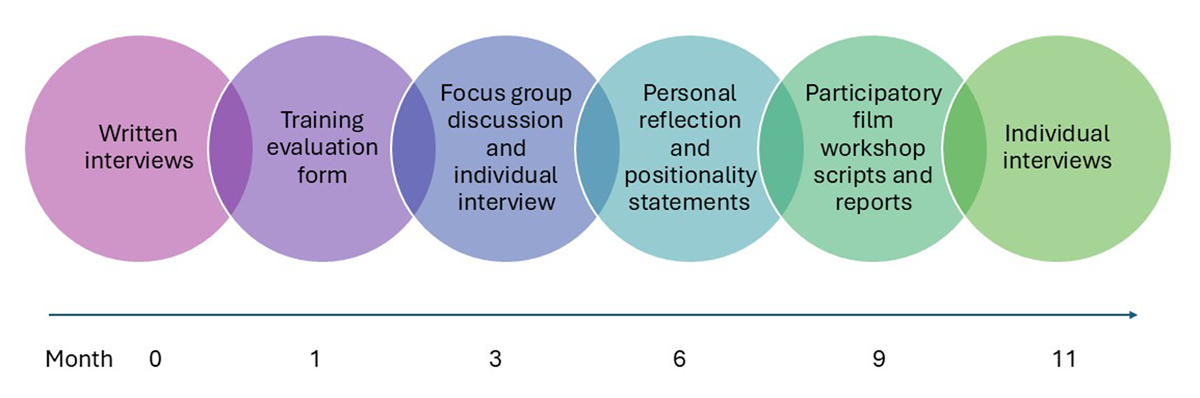
Figure 1
Study timeline and data collection methods.
The interviews were conducted in English by Ugandan social scientists from the MRC/UVRI & LSHTM Uganda Research Unit, all of whom have extensive experience in youth-focused research, including working with young people with disability and conducting programme evaluations. To maintain confidentiality and create a safe space for open dialogue, the interviewers were intentionally selected from outside the DIY research team and had no direct involvement in the training or mentoring activities. In addition, a participatory film was developed in collaboration with an independent filmmaker with experience in the co-creation of disability-inclusive films. The script and reports from the participatory film workshops were included in the data analysis.
Data were transcribed, and transcripts and written assignments were anonymised. Data were coded following a codebook developed by the research team using thematic analysis, supported by NVivo. The data analysed included questionnaire data, focus group discussion, midline evaluation interviews and positionality statements of 14 youths, as well as endline evaluation data of 13 youths, six mentors and four research group and department heads of the partner institutions, along with workshop reports and film scripts.
We then applied thematic analysis to identify key patterns, which were subsequently mapped onto Kirkpatrick’s Four-Level Training Evaluation Model (Kirkpatrick, Craig and Bittel 1967) to structure our findings. On the reaction level, (1) we reported the participants’ reactions to the training and mentoring experience. On the learning level, (2) we described the knowledge and skills the youth researchers and their mentors obtained. On the behavioural level, (3) we evaluated the extent to which behavioural changes occurred, and the youth researchers applied the learnt skills in practice, as well as the difficulties they experienced in this process. On the results level, (4) we looked at the impact of the programme on the youth researchers and the wider organisation by the end of the programme (Kirkpatrick et al. 1967). To ensure cultural relevance in using this framework (Cloete 2016), we paid specific attention to the shared learning and peer support experiences at each level and reflected on the relevance of the categories in an African research setting together with the youth researchers.
Data were anonymised and securely stored. All staff members and youth researchers were trained in the programme-specific safeguarding policy. If youth researchers presented health, counselling or other care needs, they were referred to a relevant service provider. Findings were verified with youth researchers, youth advisory group and mentors. The youth researchers were not directly involved in the coding and analysis of the evaluation data, as they were the subject of the evaluation and did not feel comfortable reading each other’s individual interview data. However, they did support the analysis of the participatory film workshop scripts and reports.
Findings
Level 1 Reactions
The youth researchers’ reaction to the DIY training and mentoring programme were positive. Reactions about the training, mentorship and work environment are described below.
Training
The 10-day training at the start of the programme was implemented as planned. Fidelity checks were conducted by the research team during the training. All training sessions were completed, and almost all content was covered. Some of the training sessions took longer than originally planned, which resulted in trainers cutting out one or two exercises to catch up with time. However, some sessions were completed in a shorter time than indicated, especially towards the end of the training, as youths became more familiar with the research terminology and training approach. The youth researchers recommended increasing the time for some of the earlier sessions and providing a glossary of ‘difficult words’ in future trainings. They appreciated the mix of theory and practical exercises and were content with the mode and quality of delivery by the trainers. The training manual was modified based on their feedback. As one youth expressed:
The trainings were very helpful […] we were given an overview of how it is to be a researcher, how it is to do qualitative research […] most of the guidelines that were given in the training, we ultimately had to apply them in the field setting […] I think they are really on point. […] the training was done in a very short time, we received a lot of information […] in future it could be spread out more […]. (youth researcher with disability)
Mentorship
Mentors played a crucial role as sources of inspiration, serving as role models who fostered confidence, encouraged critical thinking and motivated youths to see themselves as capable researchers. One youth reflected:
My experience has been good, it has given me a chance to learn from others […] people inspire you, for example I see [name mentor], […] when I grow up, I need to be like them. […] there is a way it gives me that inspiration […]to build my career in research. (youth researcher with disability)
Moreover, mentorship programmes instill confidence through role modeling. A youth explained how observing their mentors’ confidence inspired personal growth: ‘[…] I would just see how confident they are standing in front of all these people and distribute knowledge […]. That was really outstanding for me’ (youth researcher with disability).
Beyond the scope of the programme, mentors took an active interest in the personal and professional development of their mentees. The mentorship sometimes went beyond the immediate programme, encouraging interns to plan for their future.
There was a time when I was sitting with her and […] she said, “if you have engaged in all activities, I think by the end of this internship, you will be able to write your own paper.” This motivated us so much and I think one day I will also write my own paper. [..] We could communicate to our mentors as if we are a family, as if it was a mother and a daughter. (youth researcher with disability)
This was also acknowledged by mentors themselves, as one of them remarked:
Our meetings were not just about accomplishing tasks but also about nurturing personal and professional growth, fostering a lasting bond built on mutual respect and trust. […] I took the time to inquire about their well-being and any personal challenges they might be facing, offering a supportive ear and assistance whenever needed. (mentor)
Mentors, which included PhD fellows and team leaders with heavy workloads, were sometimes unavailable due to competing priorities. As one youth shared, ‘Since mine [my mentor] was a PhD fellow, they were too busy, which I understand. The mentor could always tell us […] I have a lot of work to do. Sometimes […] they are away for the whole week. However, they could not hesitate to help you when available’ (youth researcher with disability).
To address this, alternative arrangements were implemented, such as assigning additional mentors or research assistants to provide interim support. While this mitigated some of the challenges, youth researchers noted that certain issues required the attention of the primary mentor and could not always be addressed by substitutes. In some cases, youth researchers improvised by using email or WhatsApp communication during periods when mentors were unavailable in person, which helped maintain some level of guidance. Despite the challenges of limited mentor availability, youths demonstrated adaptability by seeking peer support and optimising the time they had with their mentors. More thoughtful planning and resource allocation were recommended to ensure that mentorship is consistently available to fully empower youths’ research and professional development in future programmes.
A positive and supportive work environment
The youth researchers highlighted the humility and approachability of staff as critical to creating a supportive research environment during the programme. One youth said: ‘I think there is something about this place, people are really humble and I like that. […] it makes life easier, if I am dealing with humble people who are down to earth, who can listen, people who are accommodative’ (youth researcher with disability).
Further still, staff members demonstrated a genuine curiosity and willingness to learn about disability, often expressing interest in understanding how their colleagues with disability navigated daily tasks. While some hesitated to ask direct questions out of concern for being inappropriate, they sought insights from peers as explained in the quote below:
But one thing that is special about staff, they were really very interested to [..] learn more […]. They would see me moving with my peer who is visually impaired and [..] they would ask questions like how does he do this, can he do this? We heard that he does this, how does he do it? […] how long does it take to learn sign language? […] how do I say this in sign language […] the staff are very willing to learn. (peer researcher)
Level 2 learning
In the area of learning, youth researchers reported that they acquired knowledge and skills in research and disability inclusion. They emphasised the value of peer learning and support throughout the programme.
Research skills
The programme’s youth researchers reported increased proficiency in research language and methodologies as a learning outcome. Many youths initially found research terminology intimidating, particularly technical terms like ‘coding’, ‘transcription’ and ‘analysis’. However, through hands-on experience and mentorship, they gained a clearer understanding of these concepts. As one youth explained:
We [learned] to transcribe, we […] learned how to code […] because one of the mentors suggested that it was important for us to do it ourselves … […] Of course, it took us time to perfect it, but it was a great learning experience. […] also the screening of our own [study] participants we did by ourselves, of course with guidance and support from the mentors. (youth researcher with a disability)
Some reflected on how their understanding of research had evolved, realizing the mistakes they had made in previous programmes and acknowledging how they would now approach research differently.
Before I joined the training, I had finished writing my research paper, but when I attended the training, I now realized the mistakes that I had made, […] if I had to write that paper again, I would improve a lot. And when we started the data collection, I really understood what [research] is. (peer youth researcher)
From the mentors’ perspective, participating in the programme was a transformative experience. Mentors observed significant growth in the youths, noting how quickly the youth researchers adapted and gained research skills, from conducting interviews to analysing data and writing scientific reports. One mentor reflected: ‘The youth quickly adopted and gained skills in research including conducting interviews, analyzing data, and writing. Therefore, they can be dependable researchers like anyone else if given the opportunity to learn and explore their potential’ (mentor).
Understanding of disability
The research experience not only enhanced youths’ technical skills but also deepened their understanding of disability. As the youth researchers engaged in research processes, they were exposed to diverse lived experiences of persons with disability, broadening their perspectives beyond their own. Interacting with different persons with disability enabled them to recognise the complexities of disability, including the social and structural barriers that exist:
This research has helped me a lot in understanding the challenges faced by other persons with disabilities which I used not to know. I only knew my type of disability. For example, persons with albinism, they have a lot of challenges especially regarding their skin and vision. I never knew this before joining the programme… (youth researcher with disability)
Peers who had previously worked closely with persons with disability also acknowledged the fact that the programme helped to expose them to interacting with people with different disabilities and change their perception. A youth reflected: ‘people with visual impairment, I never thought that they can do things that we do […] that they too can use a computer, that they can type’ (peer youth researcher).
Peer support
A key enabler in the learning process and meaningful participation in research was the peer-to-peer support, which paired youths with and without disabilities. This approach ensured that youths could assist each other in various aspects of research, from navigating physical environments to conducting interviews and handling research materials. This collaborative model enhanced accessibility and inclusion:
We had peer-to-peer support, […] we would go to the field in pairs, a person with a disability with a person without a disability. For example, […] I cannot see, but I had someone who could move me around as a guide, that could enable me to fully participate. […] when consenting, I could read my information sheet in braille, and my colleague could help guide the participant how to sign the form. (youth researcher with disability)
Beyond physical support, peer collaboration fostered knowledge exchange and skill development, particularly in areas such as research methods, technology use and communication strategies. ‘I did not know some of the ICT issues […], they had to give us a computer that we were to use together. So, I could connect it with my peer, and what I did not know, he would support me; what he didn’t know, I would support him. […]’ (peer researcher).
Youths also emphasized the value of peer learning in practical aspects such as operating office equipment and accessing educational opportunities. A youth said: ‘There was a time when I didn’t know how to use a printer, so my fellow peer helped me. She taught me how to print, how to photocopy, how to scan […] and when they shared online courses, my peers would share them with us so that we could all benefit’ (youth researcher with disability).
Level 3 behaviour
Gaining a deeper understanding of disability through research not only increased learning but also broadened participants’ perspectives, which ignited behavioural changes and a sense of responsibility.
Reasonable accommodations
One key enabler of meaningful participation is providing reasonable accommodations that support the diverse needs of youths with disability. Youths highlighted that when these accommodations, such as assistive devices and personal assistance, are in place, individuals with disability can fully engage and even excel in research and other professional settings:
I need a white cane, […] braille, […] a personal assistant to help me with movement – if one has such accommodations, they can really… let us say, surpass other people in performance. I have learnt that people with disabilities […] can deliver as long as the employer has put in place the reasonable accommodations […]. (youth researcher with disability)
Peers emphasised the importance of understanding the youths’ communication needs, particularly those with hearing impairments, and how making an effort to learn basic sign language helped bridge communication gaps. A peer narrated: ‘I knew communicating with some of my peers in the research group would be hard, especially like persons with hearing impairments, so I had to learn a bit of sign language […] I was able to at least work on that communication gap…’ (peer researcher).
The programme employed professional sign language interpreters, and offered training to build sign language skills among participants.
Mentors emphasised the importance of creating a supportive and inclusive work environment to ensure that youths with disability could fully participate and contribute meaningfully. Efforts were made to establish a welcoming and accessible workspace. A mentor said: ‘We received four youth mentees, and the first thing we did […] was to ensure that the environment would be supportive and friendly for them. So we made sure that the working space was easily accessible for them while at work’ (mentor).
Youth researchers emphasised the necessity of providing guides and accessible formats for materials, for example, during trainings and meetings. Whilst efforts were made to provide these in programme-related activities, not all institutional meetings that youths engaged in during the programme included such. One youth mentioned ‘If it is information, let it be in accessible format, it could be in braille but also in soft copy that is readable by screen readers. Some scanned materials reflect as images, and the screen readers cannot read them’ (youth researcher with disability).
Similarly, some youths struggled with more structural inaccessibility of the campus. While the designated offices had been made accessible, some of the other staff and youth researchers were based in other offices that were not.
The biggest challenge was the accessibility of the buildings within the campus. Youth with physical impairment could not access most campus buildings. Whereas the youth were assigned an accessible office, other programme staff and youth sat […] on the next floor, which was not accessible, limiting collaborative learning and sharing. (mentor)
The research team members, youth researchers and mentors asked the management of the research organisations to address accessibility issues and uphold the principles of inclusivity and equal opportunities for all.
Advocacy
The youths felt the DIY programme did not only change their and other people’s behaviour in the workplace but also prompted them to action in their communities. The youths emphasised the role of research in bringing credibility and weight to advocacy efforts by providing evidence and using this to advocate.
To me, research is a tool that brings facts to the table[…] I see research as a treasure because you go on the ground and find things, you […] show other people […] we found out this, with evidence. To me, research is a tool for advocacy… […] I am going to use this knowledge to defend my community and the deaf community. (youth researcher with disability)
In addition, youths highlighted that their involvement in disability research would help to engage stakeholders, including government officials, disability organisations and rehabilitation centres. They noted that findings provide evidence of the gaps and barriers that exist, enabling stakeholders to prioritise and address these issues effectively:
When we had gone to interview someone in the rehabilitation centre, we found that the rehabilitation centre itself was not accessible to people with visual impairments and people who use wheelchairs. So, if we do research, we disseminate our findings to stakeholders so that they can understand what is going well and […] and what should be improved. (peer youth researcher)
Role models
In addition to igniting their passion for advocacy, the youths acted as role models for the individuals they interacted with during the research process. Their active participation demonstrated to others, especially those with disability, that meaningful engagement in research is achievable.
During the data collection, a certain researcher went and met a participant, and both had disability. During the conversation that participant was encouraged and he [said] that he wants to be like this person [the researcher]. So, research done by youths with disabilities can change our mind set. (peer youth researcher)
Similarly, the presence of a wheelchair-using researcher left a significant impression on a participant with multiple impairments. These interactions highlight how youth researchers, sharing their lived experiences and demonstrating their capabilities, inspire others. One peer youth researcher said: ‘Engaging youth with disabilities in research is good. It encourages. For example, we had a researcher who used a wheelchair who was admired by a participant with multiple impairments during the interview’ (peer youth researcher).
Level 4 results
Participants said the programme positively impacted the youth researchers, mentors and host institutions.
After their initial training and internship period, the youth researchers collected life histories from youths with disability, transcribed and analysed the data and draughted and submitted a journal publication. In month six of the programme, four youth researchers shared their experiences at the AfriNEAD conference in South Africa. In months eight and nine, youth researchers created a participatory film about their experiences in the programme, which was launched at the dissemination event in month 12. A press release was held, various television presentations were made and newspaper articles were published (https://www.lshtm.ac.uk/drg). These were not only learning experiences for the youths but also had a wider societal impact. For example, a peer youth researcher said ‘We have been able to learn […] to make a conference presentation that is going to leave someone changed or touched’. Another youth mentioned:
I went to South Africa for a conference. There were very many speakers […] some had master’s degrees, PhDs and professors, including those with disabilities. The way they spoke had a significant impact […] it made me realize that I can also be like them; I can become a professor […] My dream is to develop my career in research. (youth researcher)
During the programme, four youth participants exited for various reasons. One youth withdrew after five months, during the life history data collection phase, having completed the training and internship. A second youth left the programme at ten months due to health issues. While they did not take part in dissemination activities, they were able to contribute to the midline and endline evaluations, respectively. Two youths transitioned into employment at international nonprofit organisations at nine and ten months. Both returned to engage in the dissemination activities and the endline evaluation.
Six of the youth researchers were employed on other programmes at the MRC/UVRI & LSHTM Uganda Research Unit by the end of the programme, whilst two were employed at Makerere University. Within six months of completion of the programme, six youth researchers presented the participatory film at the International CBID Africa Conference in Entebbe, and two shared study findings at the Kyambogo University Conference on Disability Inclusive Education.
Research institution
Mentors and other staff observed a significant mindset shift among colleagues who initially doubted the capacity of youths with disability but, through direct interaction and collaboration, became more positive about inclusion. During the filmmaking, youths asked research organisation staff and managers about their impressions of the programme. Their response was positive, as quoted in the film as well as dissemination events the youth researchers co-facilitated. One of heads of the research organisations which hosted the youth researchers said: “The youth have highly enriched our environment. They have challenged us in terms of understanding the importance of inclusion with a focus on disability…”. The head of department of the other organization involved in the project reflected: “Usually, the way people with disabilities have been engaging in research is by studying them as subjects, not them as researchers, because the thinking has been that they cannot do it. But we have seen that they can.” One of the mentors said: “I saw a significant shift in mindset among the staff at the organization. Many people who initially doubted the youths’ capacity changed their perspectives by the end of the programme and are now very positive about inclusion…”.
Additionally, mentors themselves gained new skills and knowledge about disability inclusion, including basic sign language and effective ways to work alongside persons with disability. This increased their receptiveness to disability inclusion andstrengthened their commitment to creating more accessible work environments. Mentors felt that the youths contributed to making their research more disability inclusive. One mentor commented: “We involved them in brainstorming […] this allowed them to contribute in identifying in the disability needs and gaps in our researche programme”.
Moreover, mentors ensured that the youths were engaged in key activities and had opportunities to apply their skills. Their participation extended to developing tools, training facilitators and piloting assessments, reinforcing their role as valuable team members. One of the mentors said: “They attended a facilitator training of trainers [for our research study] and helped us in further developing the facilitator manual […] and pilot this”.
These experiences highlight that the programme benefited persons with disability as well as research organizations, fostering a culture of learning, openness and commitment to inclusion.
Discussion
The Disability Inclusive Youth training and mentorship programme fostered meaningful participation of youths with disability in research. The programme was well-received by youths, mentors and host organisations, highlighting its potential for replication and scalability. Findings showed overall positive reactions, learning, behavioural changes and institutional changes. Youths in the programme gained valuable knowledge and research skills, fostering both personal growth and professional confidence. They also developed a deeper understanding of disability, which encouraged critical reflection and advocacy. Key enablers of its success included accessibility, reasonable accommodations, peer-to-peer support and an inclusive research environment. Areas for improvement included additional time for some training aspects, ensuring sustained mentorship, enhancing physical accessibility and addressing communication barriers in research institutions.
The DIY programme successfully recruited and trained youths with disability in research skills. The programme structure, which integrated training, mentorship and active research participation, provided a strong foundation for experiential learning. There was strong engagement and commitment of both participants and institutions throughout the initiative. Prior studies have shown that inclusive education and training programmes enhance self-efficacy and career readiness for persons with disability (EunKyoung Lee and Kim 2025; Dispenza 2021). We recommend paying special attention to challenges related to accessibility and mentors’ availability when scaling the programme and testing this further in different African research institutions.
The DIY programme significantly enhanced participants’ research knowledge and skills. Youths gained expertise in methodologies, data analysis, academic writing and presentations. Many participants reported increased confidence in conducting interviews, analysing findings and contributing to scholarly discourse. These findings align with literature emphasising the importance of hands-on training in developing research competencies among under-represented groups (Greenstein 2015; Shaw et al. 2021).
Beyond research skills, the programme created pathways for employment and career growth. Participants, who initially had limited exposure to professional environments, reported that the programme expanded their career aspirations and provided networking opportunities. The majority of the youth researchers gained employment in research organisations after the programme. The intersection of disability inclusion and employment remains a crucial area, with evidence suggesting that targeted training programmes enhance job prospects for persons with disability (Kulkarni and Kote 2014; Kramer et al. 2013; Bannink Mbazzi et al. 2024).
A key feature of the DIY programme was its peer-to-peer and mentoring approach, which promoted mutual learning and support. In the development of the DIY programme, the peer-to-peer model was aligned with the principles of the Ubuntu philosophy (Bannink Mbazzi 2023; Mugumbate and Nyanguru 2013; Udah et al. 2025; Ssemata et al. 2025). The Ubuntu philosophy contests Global North concepts of individualism in research, advocating for a communal and inclusive methodology in knowledge production (Owusu-Ansah and Mji 2013). Youth researchers reflected on the positive and respectful workplace culture and good relationships with their peers and mentors. The peer support model proved particularly effective in bridging accessibility gaps. Youth researchers supported each other in navigating physical spaces, interpreting sign language and overcoming technology-related barriers. Research has shown that such approaches not only enhance knowledge acquisition but also contribute to attitudinal shifts in inclusive settings (Marks et al. 2019; Nalugya et al. 2023; Irvan, Mutmainah and Jauhari 2021). The DIY programme contributed to the design of African capacity-building frameworks by taking an approach which (instead of focusing on individual training and development) focused on peer learning among participants and developing a community of practice and supportive workplace culture, inclusive of persons with disability.
To ensure employment opportunities within research organisations upon completion of the DIY programme, we asked for a bachelor’s degree, as this is the minimum qualification for research job applications in our organisations. This meant we excluded youths who did not go to school and especially youths who were less likely to complete school, for example, youths with intellectual disability or youths with multiple disabilities, such as deaf blindness or severe forms of cerebral palsy. Although we do have representation of these particular groups of youths with disability in our Youth Advisory Group, other solutions need to be explored to mitigate this limitation and ensure participation and inclusive employment in future research programmes.
The DIY programme presents a critical opportunity to rethink traditional capacity-building approaches to research. Historically, research training has been exclusionary, often designed without considering the unique needs of persons with disability. By embedding disability-inclusive practices, such as accessible materials and participatory learning methodologies, the programme challenges dominant paradigms and advocates for a more representative research landscape, in line with the mandate of the African Network of Evidence for Action in Disability (Botha and Kahonde 2024). Furthermore, the integration of disability studies into mainstream research presents an avenue for shaping policies that are informed by lived experiences. The African Disability Studies perspective emphasises agency, lived experiences, and the sociocultural dimensions of disability (Chataika 2018).
Conclusion
The DIY programme provided youths with disability with practical research skills while fostering inclusive, supportive environments for learning and collaboration. Its peer-to-peer and mentoring approach, grounded in the Ubuntu philosophy, presents an alternative framework that challenges conventional, top-down imported capacity-building models. To ensure initiatives are sustainable and scalable, sustained mentorship, enhanced accessibility and transition to employment require further investment.
Data Accessibility Statement
Data is stored on the MRC/UVRI & LSHTM Uganda Research Unit server in a protected database. The data is available on reasonable request.
Acknowledgements
We thank the youth researchers for their participation in and time spent evaluating this programme. We are grateful to our research partners namely, Lillian Namukasa of the Ugandan National Council for Persons with Disabilities and Dr Mandikudza Tembo of the Health Research Unit Zimbabwe, for their contributions to the development and delivery of the training programme. We thank the mentors at the MRC/UVRI & LSHTM Uganda Research Unit and Child Health and Development Centre, Makerere University, who contributed to the mentoring of the youth researchers. We thank Moses Kizza for the coordination of the internships and the management of both research institutions for their support of the study.
Competing Interests
The authors have no competing interests to declare.