
Introduction
People with disability1 cite social attitudes, discrimination and stigma among the biggest barriers to their wellbeing and participation (Bogart et al. 2022; Robinson & Idle 2023). The need to address negative attitudes is a focus in the United Nations Convention on the Rights of Persons with Disability (CRPD, UN General Assembly 2007). The Convention states that disability results from attitudes and environments that hinder people’s full participation in society. This definition is known as a human rights framing of disability (Shakespeare 2014). Changing community attitudes is a key to improving the lives of people with disability.
Evidence about the effectiveness of interventions to change attitudes is needed. Considerable literature about the extent and impact of negative attitudes is available (Nevile, Esler & Gray 2021; Randle & Reis 2019; Temple, Kelaher & Williams 2018), but little of it examines how to change them. This article is a scoping review about interventions to change community attitudes towards people with disability. It was the initial part of a larger study about changing attitudes (Idle et al. 2022) and conducted in a policy context informed by changes to Australian and international policy. At the time of the review, the Australian Royal Commission into Violence, Abuse, Neglect and Exploitation of People with Disability (Royal Commission 2019–2023) investigated not only the prevention of harm, but also active strategies to counter harm, including policy to change attitudes. Our larger study was completed for the Australian Royal Commission.
The article introduces the background literature about attitudes and the policy context. It describes the scoping review method adopted and presents the results from the findings. It draws conclusions about characteristics of policy and interventions to change attitudes.
Background
Policy context
The policy context is the CRPD (UN General Assembly 2007), which was the starting point for our rights-based analysis. At an Australian level, this is articulated through Australia’s Disability Strategy 2022–2032 (ADS). This policy is the second 10-year strategy, which aims to implement the CRPD principles through national policy and practice in key areas of employment and financial security; inclusive homes and communities; safety, rights and justice; personal and community support; education and learning; health and wellbeing; and community attitudes. The results of the evidence review in this article are presented within these six outcome areas. The seventh outcome area of community attitudes was not included since it is the overarching concept for the analysis.
These ADS outcome areas are equally relevant internationally since they reflect the rights in the life domains articulated in the CRPD. The translation of the rights into the life domains is critical to the analysis because it is in life domains that attitudes are experienced, and rights affected (Harpur 2012; Robinson et al. 2024).
Attitudes to disability and social inclusion
The concept of attitude relevant to this article is primarily psychological. Attitudes are referred to in various ways, for example as cognitive structures which can have motivational force (Mook 1996: 530) and ‘a mental and emotional entity that inheres in, or characterizes, the person’ (Perloff 2017: 86). Definitions of attitude emphasise various aspects of the concept (Perloff 2017), including that they are learnt, directed towards a certain entity (that can be individuals, groups, animals, objects, places, and issues in general), have an evaluative or emotional component leading to liking or disliking the entity, and that they can influence thought and action (Mook 1996; Perloff 2017). Attitudes are related to, but differ from, the concepts of values and beliefs. Perloff (2017) proposes that attitudes are shaped by values, defined as guiding principles in a person’s life, and consist of specific beliefs, defined as cognitions about the world.
Attitudes can be explicit and implicit (Friedman 2019; Wilson, Lindsey & Schooler 2000). Explicit attitudes are conscious, deliberately formed and can be self-reported (Friedman 2019; Perloff 2017). Other judgments are implicit and less conscious in our awareness or control (Project Implicit 2011). These implicit attitudes are more automatic, without conscious thought (Friedman 2019; Perloff 2017; Project Implicit 2011). Both explicit and implicit attitudes can be positive or negative. Most research about attitudes toward people with disability does not examine implicit attitudes or the interaction between explicit and implicit attitudes (Friedman 2019).
In Australia, the Attitudes Matter survey, conducted with a representative sample (n = 2069) of Australians (Bollier et al. 2021), and the Voice of Queenslanders with Disability survey, which involved 442 participants including 291 people with disability, 117 family/carers and 34 organisational representatives (Chapman, Allen & Kendall 2023), reported overall improvements in explicit community attitudes towards people with disability. However, neither study measured implicit attitudes (Bollier et al. 2021; Chapman et al. 2023). Most participants in the Attitudes Matter survey were in favour of the rights of people with disability, including access to regular schools for inclusive education, freedom in residential choices, and the right to sexual relationships (Bollier et al. 2021). Similarly, in the Voice of Queenslanders with Disability survey, most participants (67%) felt welcome and included in their communities and 80.5% reported feeling safe (Chapman, Allen & Kendall 2023). Nevertheless, 78% of participants in the Attitudes Matter survey acknowledged uncertainty in how to interact with people with disability (Bollier et al. 2021). Acting based on uncertainty can have adverse impacts for people with disability, regardless of people’s actual intentions (Bollier et al. 2021). There were also a considerable number of neutral or undecided responses to various statements. For instance, ‘while 20% of respondents agreed that “people should not expect too much of people with disability,” a further 27% reported they neither agreed nor disagreed with this statement’ (Bollier et al. 2021: 19). Such neutral positions pose challenges for interpretation and are frequently encountered in attitude surveys. In the Voice of Queenslanders with Disability survey, 67% of the respondents did not believe that Queensland employers hire people with disability. In the Attitudes Matter survey, 20% agreed that employers should be allowed to refuse to hire people with disability and 26% neither agreed nor disagreed with that statement. People with disability are twice as likely to be unemployed or work fewer hours compared to people without disability (ABS 2020; AIHW 2022). Studies involving employers show enduring negative attitudes, including underestimation of abilities, lack of awareness about disabilities, and low confidence regarding how to make workplaces more accessible (Burke et al. 2013; Nota et al. 2014; Tan et al. 2019). Several other studies in Australia (Tan et al. 2019) and internationally (Wang et al. 2021) have identified attitudinal barriers towards people with disability and discussed how these can have far-reaching negative effects on their inclusion and sense of dignity (Chapman et al. 2023).
Overall, theories about changing attitudes follow central or peripheral route approaches (Petty 2012). Central route approaches highlight persuasion through information about the subject, with the assumption that understanding and learning about the subject will change attitudes (Petty 2012). Central route approaches include prominent theories such as the Theory of Reasoned Action (Fishbein & Ajzen 1975), the Theory of Planned Behaviour (Ajzen 1991), and Dissonance Theory (Harmon-Jones & Mills 1999). Peripheral route approaches of persuasion try to generate associations or inferences, such as agreement with an expert source or the strength of multiple arguments for change. Examples are Attribution Theory (Weiner 2010) and approaches that emphasise emotional process (affect) in attitude change (Petty 2012).
Most contemporary literature on attitude change is guided by one of the available ‘dual process’ models of judgment. Petty and Cacioppo’s Elaboration Likelihood Model (ELM) is a prominent dual process model (Petty & Cacioppo 1981). The ELM assumes that people want to hold correct attitudes, that is, attitudes which will prove useful in functioning in the environment. Overall, people form attitudes from exposure to persuasive communication which can follow either central or peripheral routes of processing (Petty 2012).
Other theories about attitude change add to these core approaches. Allport’s contact theory (1958) is often cited as a way to address intergroup prejudice. A meta-analysis found that contact typically reduces intergroup prejudice, with more rigorous studies yielding larger mean effects (Pettigrew & Tropp 2006). The meta-analysis found that contact theory can apply to people with disability and other groups (Pettigrew & Tropp 2006). The analysis found that Allport’s four conditions for contact to be effective (equal status between the groups; common goals; intergroup cooperation; and the support of authorities, law, or custom) are not essential, although institutional support is important (Pettigrew & Tropp 2006).
In summary, the various theories on attitude change suggest that change can occur through a variety of processes and that different processes can dominate in different situations. Changes from these various processes can have different characteristics, including persistence and resistance over time despite contrary information (Petty 2012). Attitudes that seem similar can have different underlying structure, affecting their temporal persistence, resistance and ability to predict behaviour.
The theoretical discussion and empirical evidence on the relationships between attitudes and behaviours is complex and mediated by many determinants (Frymier 2021). Frymier (2021) identified five main factors: 1) measurement issues, that is the level of specificity of both attitudes and behaviours, with specific attitudes more likely to predict specific behaviours; 2) behavioural control beliefs, such as perceived behavioural control (proposed in the Theory of Planned Behaviour), whereby lower perceived control leads to weaker relationships between attitudes and behaviours; 3) formation factors, with attitudes formed through direct experience being more predictive of behaviour than attitudes formed through indirect experience; 4) cognitive processing factors, such as attitude accessibility (how promptly people associate attitudes to behaviours), relevance (whether people perceive certain attitudes as relevant or pertinent to a given behaviour) and vested interest (whether people have a vested interest in the object the attitude refers to); and 5) situational factors, that is, the characteristics of the situation in which a person performs the behaviour, including ‘individuated situations’ (where people focus on their internal states, including their own attitudes, values and beliefs), ‘deindividuated situations’ that allow the person more anonymity and therefore stimulate less focus on their internal states, and ‘scripted situations’, such as habits. The fact that direct experience can lead to attitude formation (point 3) entails that, in some instances, the very act of performing a behaviour can affect people’s attitudes.
Two central route approaches – cognitive dissonance theory and self-perception theory (Frymier 2021) – and Allport’s (1958) contact theory, also consider behaviour as the basis for influencing attitudes. Anti-discriminatory laws are an example of behaviour influencing attitudes. By making behaviour mandatory that respects the rights of people with disability, these laws can contribute to increasing participation of people with disability in public places and, therefore, to changing community attitudes towards them.
Finally, approaching behaviour change focusing on attitudes and its related concepts – values and beliefs – entails giving priority to factors that are thought of as internal to the person and less weight to external factors (Jackson 2005). However, behaviour change is often the outcome of both internal and external factors. Michie and Prestwich (2011) proposed the COM-B model, which suggests that behaviour is generated by the interaction of three main factors that, in turn, can also be affected by the enactment of behaviour: capability (i.e. the psychological and physical capacity to engage in a certain activity), opportunity (i.e. all the external factors to the individual that make the activity possible or prompt it), and motivation (i.e. all brain processes that energise and direct behaviour, including basic drives, automatic processes, choice and intention). Michie et al. (2011) do not refer to attitudes in the COM-B model. However, considering that they base the concept of motivation on Mook’s (1996) work, we can assume that attitudes are part of motivation and can influence people’s behaviour by prompting positive or negative evaluations of both the outcomes of the behaviour and the behaviour itself.
The COM-B is the hub of a Behaviour Change Wheel (BCW) that includes a typology of interventions and policies aimed at stimulating each element of the model (Mitchie, van Stralen & West 2011). In the next section, we illustrate how we used the BCW as a framework to map the literature.
Method
The review answered the research question: Which policy interventions have changed attitudes towards people with disability? We adopted a scoping approach as originally proposed by Arksey and O’Malley (2005) and then further developed by Levac et al. (2010). A scoping approach was considered the best fit for this review because of the broad and open-ended nature of the research question and the aim to examine the extent, range and nature of policy interventions to change attitudes towards people with disability (Arksey & O’Malley 2005; Levac, Colquhoun & O’Brien 2010; Pham et al. 2014). The research question linked to our aim for undertaking the scoping review and its design (Levac, Colquhoun & O’Brien 2010). This enabled us to recognize the necessity for a comprehensive framework to categorise interventions, for which we used the Behaviour Change Wheel (BCW) framework (Mitchie, van Stralen & West 2011). The BCW helped us then to clarify the following phases of the review process, particularly the data extraction phase.
The review accessed publicly available documents and so did not require ethical approval.
Search
The search strategy aimed to retrieve published peer-reviewed research and national and international government and non-government documents (grey literature). It was developed using the recommended approach for scoping reviews, Population, Concept, Context (PCC) (Aromataris & Munn 2020; Peters et al. 2021), whereby ‘population’ refers to the specific group of people the scoping review focuses on; ‘concept’ refers to the main phenomenon or topic of interest in the review; and ‘context’ refers to the setting or circumstances that are of interest to understand the concept. The review question left the ‘population’ element quite open, as it was inclusive of men and women of any age with disability. The ‘concept’ in the review question (policy interventions to change attitudes) was also broad and could cover any type of intervention related to changing attitudes towards people with disability. Finally, the review question left ‘context’ fully open, so the evidence could come from any context (for example national and international, urban and rural, community or healthcare settings, and sociocultural). Consequently, the research team identified three sets of keywords for literature searches: people with disability (the review ‘population’), and attitudes and interventions (the review ‘concept’) (Table 1).
Table 1
Keywords.
| PEOPLE WITH DISABILITY | ATTITUDES | INTERVENTIONS |
|---|---|---|
| Disabl* or Disabilit* | Attitude* | Intervention* |
| Handicap* | Knowledge | Program* |
| Impair* | Recognition | Scheme* |
| Deaf or deafness or ((Hearing or Acoustic or Ear*) adj5 (loss* or impair* or deficienc*)) | Belief*; | Evaluat* |
| Blind or blindness or ((Visual* or Vision or Eye*) adj5 (loss* or impair* or deficienc*) | Lay belief* | Initiative* |
| Cripp* | Stigma | Policy or policies |
| Special need* | Discrimination | Strateg* |
| Prejudice | Pilot* | |
| Awareness | Law or laws or legislation | |
| Disablism | Regulat* | |
| Ablism | Campaign* |
Literature was searched systematically in four databases: ProQuest (including PsycInfo), Scopus, Australian Public Affairs (APAFT), and Social Science Research Network (SSRN). In each database, the three groups of keywords were searched together using the Boolean operator OR and then combined using the Boolean operator AND, for example, ‘People with disability’ AND ‘Attitudes’ AND ‘Interventions’. Searches were restricted to literature published in English between January 2018 and July 2021 because of the rapid pace of change in this field. Non-peer-reviewed literature (grey literature) was searched using the keywords ‘disability’, ‘attitude’ and ‘intervention’ in Google. A total of 2,826 references were identified through the searches in the databases (Table 2).
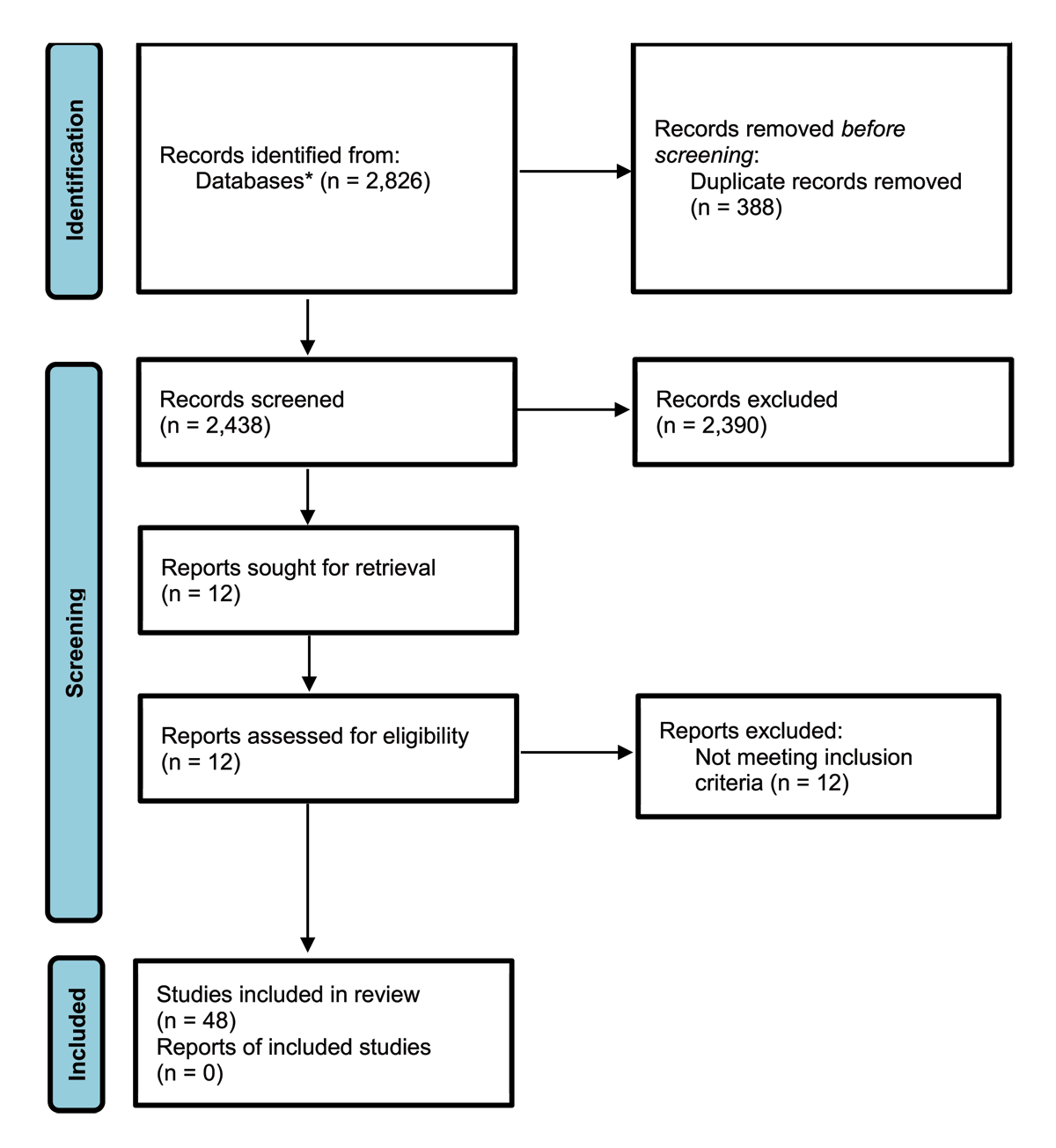
Table 2
Identification of studies via databases.
Note. *Number of references retrieved from individual databases: 1) APAFT: Australian Public Affairs (Australian journal articles from published material on the social sciences: three different combinations of keywords returned 147, 55, and 56 references respectively; 2) Proquest Databases: 1,652 references; 3) Social science research network (SSRN): 18 references; 4) Scopus: 898 references.
Eligibility criteria
Literature was included using as guidance the categories of the PCC framework (Aromataris & Munn 2020; Peters et al. 2021) as well as the research type. The inclusion criteria were:
Population: The study included men and women of any age with any form of disability (physical, mental, sensory or intellectual).
Concept: The study reported findings on the effectiveness of interventions aimed at changing attitudes and/or behaviours towards people with disability. The interventions could be of any type (e.g. public awareness campaigns, training and education programs, policies, laws, regulations, guidelines and incentives).
Context: The study clearly identified the location and setting of the intervention. The study could be in any country, geographical context (e.g. rural and urban) and setting (e.g. healthcare, education, community).
Research type: Findings could be reported in peer-reviewed literature, including systematic reviews, and grey literature.
The exclusion criteria were:
Population: The study was not about people with disability.
Concept: The study was not about interventions to change attitudes or behaviours towards people with disability or did not report empirical findings on the effectiveness of the intervention(s).
Context: The study did not clarify the country, geographical context (e.g. rural and urban), and setting (e.g. healthcare, education, community). where it was conducted.
Research type: Literature consisting of opinion papers, only of an abstract, and books or article reviews.
The searches identified 12 non-peer-reviewed reports which helped to give context to the review by raising issues of discrimination, gendered violence, racism and intersectionality and pointing to the urgent need to address rights through legislation and policy reform to change institutionalised discrimination (First People’s Disability Network 2016; NSW 2021). However, the reports are not analysed in the review because they did not fit with the criteria established to ensure the included publications contained information about the effectiveness of interventions.
Data selection
Titles and abstracts of studies identified by the searches were downloaded into the bibliographic management software EndNote and duplicates removed (n = 388, Table 1). The remaining references (n = 2,438, Table 2) were then split between two researchers (GG and YE) who separately screened them by reviewing their title and abstract against the inclusion and exclusion criteria, excluding those that did not meet them (n = 2,390, Table 2). The two researchers had regular meetings (via Microsoft Teams) and discussed any studies on which they had doubts. The discussions reviewed the inclusion and exclusion criteria and specific reasons for each researcher’s decisions regarding the study inclusion or exclusion, which eventually lead to a consensus. Where needed, the full paper was downloaded to determine its eligibility. If consensus was not reached, the paper was discussed with the wider research team.
Data extraction
GG and YE then read in full the 48 included papers (Table 2) and extracted the following information from each of them, summarising it in an Excel spreadsheet: study aims, country(ies) where the study was conducted, study findings/results, policy areas, type of intervention, level of intervention, intervention/policy aim (e.g. attitude change, behaviour change), target population (e.g. general public, students, teachers), research design (e.g. Pretest-Post-test, Randomised Control Trial, Survey, Correlational, Semi-experimental, Review), type of data (e.g. qualitative, quantitative, mixed), sample size, measures used (for quantitative research), number of studies included (for reviews), comments.
The above data extraction categories are reported for each included study in the supplementary file 1.
Data analysis
Using the information extracted in the Excel spreadsheet, Author A and Author B categorised the 48 studies based on the level of intervention (Heijnders & Van Der Meij 2006) and a typology of nine types of interventions and seven types of policy proposed in the Behaviour Change Wheel framework (Mitchie, van Stralen & West 2011).
There were five levels of intervention described across the reported studies: personal, interpersonal, organisational, community, and government (Heijnders & Van Der Meij 2006). While all interventions ultimately targeted individuals, they could be categorized into two distinct groups: those designed for individuals within an organizational context (organizational level) and those aimed at altering people’s cognitive or emotional perceptions of individuals with disabilities, irrespective of their organizational or community roles (intrapersonal level). Government-level interventions primarily involved legal and policy measures, whereas community-level interventions primarily comprised educational efforts directed either at the broader community or specific subpopulations within it.
The Behavior Change Wheel (BCW) outlines nine types of interventions and seven types of policies (Mitchie, van Stralen & West 2011). It was developed by amalgamating key components consistently identified across 19 behaviour change frameworks in a systematic literature review (Mitchie, van Stralen & West 2011). We chose the BCW as our analytical framework because it provides a comprehensive and rigorously structured approach to understanding the various actions that governments can employ to influence attitudes.
Tables 3 and 4 provide an overview of how each intervention and policy type were operationalised. At the beginning of the analysis process, Author A and Author B independently applied the analytical framework to five papers each and then met to discuss their coding, settling any differences by examining the particular justifications for each researcher’s choices, ultimately reaching a mutual agreement. This ensured that they reached a consistent understanding of the categories as reported in Tables 3 and 4 and they applied them in a similar manner.
Table 3
Definitions of types of interventions.
| TYPES OF INTERVENTION | EXAMPLES |
|---|---|
| Education | Education interventions aimed to increase knowledge about disability. Examples were traditional educational tools such as written material, videos, workshops, but also contact-based activities, imagined contact activities and simulation activities. |
| Training | Training interventions aimed to improve skills relevant to reduce negative attitudes toward people with disability (individual and organisational levels). Examples were disability-specific sensitisation or awareness training programs, and behavioural or skill-building interventions. |
| Modelling | Modelling interventions aimed to promote peer learning and leadership. Examples were interventions where teachers could model peers’ positive attitudes or students acted as models for each other. |
| Persuasion | Persuasion interventions aimed to promote a cognitive or emotional response rather than the provision of facts and information. Examples were teachers giving feedback on students’ attitudes, and bias feedback where participants are informed about their implicit attitudes/bias found through psychological testing. |
| Environmental restructuring | Environmental interventions aimed to promote positive attitudes by reshaping the structures of an organisation, institution or government. An example was the state-wide implementation of the anti-bullying prevention framework ‘School-Wide Positive Behaviour Intervention and Supports’ (SWPBIS) in Georgia, USA. |
| Enablement | Enablement interventions aimed to provide support or removing barriers for people with disability, their family and carers. An example was the adoption of the social relational model of disability to challenge teachers’ implicit beliefs about students’ capabilities and provide access to education where it was previously limited or denied. |
| Restriction | Restriction interventions promoted positive attitudes by establishing rules or regulations that would reduce the opportunity to engage in competing behaviours. An example was the implementation of the World Health Organization Quality Rights toolkit. |
| Coercion | Coercion interventions promoted positive attitudes by introducing forms of penalty, primarily through criminal law mechanisms. An example was the comparison of anti-bullying policies in 39 comparable universities in the UK and Australia. |
| Incentivisation | Incentivisation interventions aimed to promote positive attitudes by incentivising attitudes or behaviours. An example was receiving a Merit Badge (as an incentive) upon completion of a course aimed at promoting disability awareness. |
[i] Source: Idle et al. (2022: 81–82).
Table 4
Definitions of policy types.
| TYPES OF POLICY | EXAMPLES |
|---|---|
| Legislation | Legislation or policies. Examples were national legislation to implement the CRPD or organisation-based anti-bullying policies. |
| Service provision | Delivering a service in the wider sense of the expression, including, courses, training, and workshops. |
| Communication/marketing | Using print, electronic, telephonic or broadcast media |
| Guidelines | Frameworks and protocols that recommended or mandated practice. Examples were the UN Quality Rights toolkit and school-wide and systematic approaches to inclusive education. |
| Regulation | Agreements that established rules or principles of behaviour or practice. An example was a research and knowledge exchange initiative involving a higher education institution and a management body for post-primary schools in Ireland to develop integrated, school-wide, systematic and collaborative approaches to inclusive education. |
| Fiscal | Using the tax system to reduce or increase the financial cost |
| Environmental/social planning | Designing or controlling the physical, social environment |
[i] Source: Adapted by the authors from Michie et al. (2011).
The findings were synthesised with a rights-based framework drawn from the CRPD. The framework applied the six outcome areas of Australia’s Disability Strategy, which are defined in Table 5.
Table 5
Definitions of the outcome areas in Australia’s Disability Strategy.
| OUTCOME | DEFINITION |
|---|---|
| Inclusive and accessible communities | People with disability live in accessible and well-designed communities with opportunity for full inclusion in social, economic, sporting and cultural life. |
| Economic security | People with disability, their families and carers have economic security and suitable living arrangements, enabling them to plan for the future and exercise choice and control over their lives. |
| Health and wellbeing | People with disability attain highest possible health and wellbeing outcomes throughout their lives. |
| Rights, protection, justice and legislation | People with disability feel safe and have their rights promoted, upheld and protected. |
| Learning and skills | People with disability achieve their full potential through their participation in an inclusive high-quality education system that is responsive to their needs. People with disability have opportunities to continue learning throughout their lives in both formal and informal settings. |
| Personal and community support | People with disability, their families and carers have access to a range of well-coordinated and effective services and supports that are appropriate for their needs. |
[i] Source: Idle et al. (2022: 69–70).
The full characteristics of the 48 included studies are reported in the supplementary file 1.
Findings
This section reports on the findings of the 48 peer-reviewed studies deemed eligible for inclusion (Table 2).
As detailed in Table 6, there were significantly more studies classified into the two outcome areas learning and skills and inclusive and accessible communities than the remaining four. The findings of the scoping review analysis will be reported in this order of frequency in outcome areas.
Table 6
Number of peer-reviewed references by outcome areas.
| OUTCOME AREA | N |
|---|---|
| Learning and skills | 261 |
| Inclusive and accessible communities | 122 |
| Health and wellbeing | 53 |
| Personal and community support | 24 |
| Economic security | 25 |
| Rights protection justice and legislation | 16 |
| Total | 48 |
[i] Source: Idle et al. (2022: 94). 1Studies as numbered in the supplementary file 1 (1, 5, 7, 9, 11, 15–18, 22–27, 29, 32–35, 37–38, 40, 42–43, 46); 2(2, 10, 13, 19–21, 28, 30–31, 39, 44, 47); 3(3, 8, 12, 14, 36); 4(41, 48); 5(4, 6); 6(45).
The main types of interventions to change attitudes found in the review were education, training, or modelling (Table 7). These interventions were primarily at the organisational, community, and intrapersonal levels (Table 8) and referred to service provision (n = 25) as the main type of policy to implement attitude change (Table 7). There was a notable lack of studies engaging with other types of policies such as fiscal policies or environmental and social planning ones.
Table 7
Types of interventions by type of policy in the primary studies.
| TYPES OF INTERVENTIONS | SERVICE PROVISION | LEGISLATION | GUIDELINES | COMMUNICATION/MARKETING | REGULATION | TOTAL |
|---|---|---|---|---|---|---|
| Education | 10 | 5 | 2 | 1 | – | 186 |
| Two or more | 8 | 1 | 3 | 2 | 1 | 157 |
| Training | 5 | – | – | 1 | – | 68 |
| Persuasion | 1 | – | – | – | – | 19 |
| Coercion | – | 1 | – | – | – | 110 |
| Enablement | – | 1 | – | – | – | 111 |
| Environmental/restructuring | 1 | – | – | – | – | 112 |
| Total | 251 | 82 | 53 | 44 | 15 | 43 |
[i] Note. This table reports the explicit or implicit type of policy that motivated the need for each intervention. Systematic reviews (n = 5) are excluded because they were not classified. 1Studies as numbered in the supplementary file 1 (1–3, 5, 7–8, 11–14, 17–18, 23–28, 30, 32–33, 35, 37, 40, 48); 2 (6, 38–39, 41–42, 45, 46–47); 3 (4, 16, 34, 36, 43); 4 (19, 21–22, 31); 5 (15), 6 (1, 3, 4, 8, 11, 17, 18, 21, 33–35, 37–42, 46), 7 (2, 5, 14–16, 19, 22–24, 26–27, 32, 36, 43, 47), 8 (7, 25, 28, 30, 31, 48), 9 (12), 10 (45),11 (6), 12 (13).
Table 8
Types of intervention by level of intervention.
| LEVEL OF INTERVENTION | |||||||
|---|---|---|---|---|---|---|---|
| TYPES OF INTERVENTION | ORGANISATIONAL/INSTITUTIONAL | COMMUNITY | INTRAPERSONAL | MULTIPLE | GOVERNMENTAL/STRUCTURAL | INTERPERSONAL | TOTAL |
| Education | 12 | 7 | 1 | 1 | – | – | 217 |
| Two or more | 8 | 1 | 2 | 3 | 1 | 1 | 168 |
| Training | 3 | 1 | 3 | – | – | 79 | |
| Environmental restructuring | – | 1 | – | – | – | – | 110 |
| Enablement | – | – | – | – | 1 | – | 111 |
| Coercion | 1 | – | – | – | – | – | 112 |
| Persuasion | 1 | – | – | – | – | – | 113 |
| Grand Total | 251 | 102 | 63 | 44 | 25 | 16 | 48 |
[i] Source: Idle et al. (2022: 116). 1Studies as numbered in the supplementary file 1 (1, 7, 9, 11–12, 14, 16–17, 23–24, 26–29, 32, 34–35, 37–38, 40–43, 45–46); 2(3–4, 8, 13, 19–21, 31, 33, 39); 3(18, 22, 25, 30, 47–48); 4(5, 10, 36, 44); 5(6, 15), 6(2) 7(1, 3, 4, 8–11, 17–18, 20–21, 33–35, 37–42, 46), 8(2, 5, 14–16, 19, 22–24, 26–27, 32, 36, 43–44, 47), 9(7, 25, 28–31, 48), 10(13), 11(6), 12(45), 13(12).
Learning and skills
More studies examined the potential for achieving change in the learning, skills and education outcome area than any other (n = 26; 1, 5, 7, 9, 11, 15–18, 22–27, 29, 32–35, 37–38, 40, 42–43, 46).2 Thirteen of the 26 studies adopted education interventions (1, 9, 11, 17, 18, 33, 34, 35, 37–38, 40, 42, 46),2 ten adopted two or more types of interventions (5, 15–16, 22–24, 26–27, 32, 43)2 – mostly education, training, and modelling, and in two cases also persuasion and environmental restructuring – and three used training interventions (7, 25, 29).2 The interventions were targeted primarily at the organisational level based on a person’s role or position (n = 20; 1, 7, 9, 11, 16–17, 23–24, 26–27, 29, 32, 34–35, 37–38, 40, 42–43, 46),2 and were directed at students (n = 12; 1,9, 16, 18, 22, 25, 33, 35, 37–38, 43, 46),2 teachers (n = 11; 5, 7, 11, 17, 23–24, 26–27, 29, 32, 42),2 administration staff (n = 2; 15, 34),2 and students and teachers (n = 1; 40).2 Studies also focused on the intrapersonal (n = 3; 18, 22, 25),2 government (n = 1; 15),2 community (n = 1; 33)2 levels, or on interventions operating at multiple levels using both organisational and interpersonal levels (n = 1; 5).2
The 12 studies of interventions targeting students aimed to change attitudes of students without disability toward students with disability. One study was a systematic review conducted on interventions in kindergarten through secondary school grades in the Republic of Korea (South Korea) (Chae, Park & Shin 2019) and 11 were primary studies. Overall, they targeted students from kindergarten to high school. The interventions were either behavioural (n = 6; 16, 33, 35, 37, 43, 46),2 such as an intervention using imagined contact with peers with disability, or cognitive (n = 2; 22, 25),2 such as the provision of information, or a combination of the two (n = 3; 1, 18, 38).2 Chae and colleagues’ (2019) systematic review found large positive effects for contact-based interventions, use of materials, role-playing, and human rights interventions, in this order. It also found that the intervention effects did not significantly differ by school levels and that increasing the number of programme sessions was more critical than length of instructional times per session in leading to positive attitudes toward disability (Chae, Park & Shin 2019). Of the 11 primary studies, 10 reported a positive change in attitudes and one (Gage, Rose & Kramer 2019) did not. Gage, Rose et al. (2019) examined the effect of universal school-wide positive behaviour interventions and supports (SWPBIS) as a prevention framework for reducing school-based bullying using school-level propensity score matching to compare 76,248 students’ self-report of bullying victimization in 118 US schools that implemented SWPBIS with fidelity and 118 matched comparison US schools and found no statistically significant difference between treatment groups on students’ self-report of bullying victimization. Only one study investigated the impact of attitude change on the participants’ behaviours (Siperstein et al. 2018). In their investigation into the effects of a schoolwide social inclusion initiative known as the ‘Special Olympics Unified Champion Schools program’ on students’ responses to the use of the term ‘retard’ (referred to as ‘the r-word’ hereafter), Siperstein and their team (2018) discovered that students’ pro-social tendencies, the context in which the r-word was employed, and their engagement in activities related to the Special Olympics Unified program were strong predictors of active bystander behaviour when confronted with the use of the r-word.
Eleven studies reported interventions to change the attitudes of teachers toward students with disability. One study was a systematic review on the attitudes of preservice teachers (Lautenbach & Heyder 2019) and 10 reported the results of primary studies. Overall, five studies described interventions targeting preservice teachers (11, 23–24, 26, 29)2 and six described interventions targeting tenured teachers (5, 7, 17, 27, 32).2 Among the 10 primary studies examined, six centred on the provision of information, including topics related to disability, inclusive teaching, and relevant legislation (5, 7, 11, 17, 32, 42).2 Four interventions combined the delivery of information with practical field experience (23–24, 26–27).2 These latter field experience-based interventions drew inspiration from Allport’s (1958) contact theory, which posits that, given suitable conditions, direct interactions with individuals with disabilities can diminish prejudice and foster positive attitudes. They also aligned with the experiential-based learning and teaching model, which involves complementing classroom learning with opportunities for hands-on application, both within the classroom and in real-world settings (Hughes & Braun 2019).
Most of the twenty-three studies in Lautenbach’s and Heyder’s systematic review (2019) reported interventions that consisted of a combination of provision of information and practical field experiences (n = 11), or only provision of information (n = 10).
When examining the collective findings from the 10 primary studies under review and incorporating data from 21 additional studies as documented in Lautenbach and Heyder’s systematic review (Lautenbach & Heyder 2019),3 we find that 13 of the 16 studies focused on cognitive interventions centred around information provision recorded a positive shift in attitudes. Similarly, 12 of the 15 studies that combined information with practical field experience reported an increase in positive attitudes.
Only three of the 10 primary studies reported evidence of behavioural changes (all four studies were qualitative). Among these studies, two highlighted that the positive shifts in attitudes resulting from the intervention also translated into changes in participants’ behaviours (Brennan, King & Travers 2019; Hughes & Braun 2019). In contrast, the study carried out by Carew and colleagues (2019) observed attitudinal changes following the intervention but did not find corresponding behavioural changes in the form of changes in teaching practices.
Finally, of the two studies that targeted administrative staff, one found that professional learning using communities of practice approaches were important in making change (Fitzgerald et al. 2021). The other considered the impact of administrative disciplinary equity reporting on change and found ‘no meaningful change’ (McIntosh et al. 2020).
Inclusive homes and communities
Twelve studies addressed the inclusive homes and communities outcome area (2, 10, 13, 19–21, 28, 30–31, 39, 44, 47).2 Most studies involved an education-type intervention (n = 4; 10, 20–21, 39)2 or multiple intervention types that included an education element, training, modelling, incentivisation or persuasion (n = 4; 2, 19, 44, 47).2 Other studies included training interventions (n = 3; 28, 30–31)2 or environment planning or restructuring (n = 1; 13).2 Most studies targeted the community (n = 6; 13, 19–21, 31, 39)2 or intrapersonal levels (n = 2; 30, 47)2.
The four studies that adopted education interventions aimed to increase knowledge or understanding about dementia (Robertshaw & Kotera 2019; Herrmann et al. 2018), stigma (Chakraborty et al. 2021), and racial issues (Hochman & Suyemoto 2020). They were systematic reviews (10, 20)2 and two primary studies (21, 39)2 that, collectively, offered mixed results on the efficacy of educational interventions aimed at diminishing stigma and prejudice. One systematic review included nine studies on interventions to reduce dementia-related stigma and found that they successfully provided education and support in relation to using experimental vignettes, pictures, or hypothetical scenarios to reduce stigma (Herrmann et al. 2018). The other systematic review included 32 studies on interventions to reduce stigma towards people with epilepsy (only one study was a policy-based intervention, all the others matched the category education) (Chakraborty et al. 2021). Chakraborty et al. (2021) found mixed outcomes and concluded that more work is needed both to develop effective stigma-reduction strategies and to validate tools to measure their efficacy.
Four studies were coded as presenting interventions that included an education element together with an element focused on training (Gürbüz, Yorulmaz & Durna 2020), modelling (Smythe, Adelson & Polack 2020), incentivisation (Anderson et al. 2021), or persuasion (Young et al. 2019). Smythe, Adelson et al. (2020) was a systematic review and the other three were primary studies. Overall, the four studies reported positive outcomes on the effectiveness of the interventions. Smythe’s and colleagues’ (2020) systematic review was centred on interventions to reduce stigma experienced by children with disability and their families in low- and middle-income settings. The review examined nine studies of which seven reported notable improvements in knowledge about disability and a reduction in negative attitudes (Smythe, Adelson & Polack 2020).
The three training studies (28, 30–31)2 implemented cognitive and behavioural training to enhance skills relevant to reducing negative attitudes toward disability. These studies found that training has a positive short-term impact on the attitudes of participants. However, there was less evidence of its long-term effects and whether it led to any sustained behavioural changes after the training had been completed. An Indian study based on disability awareness training found that without organisational leadership, this intervention could perversely lead to increased othering, rather than improve attitudes (Kulkarni, Gopakumar & Patel 2018). An English study (Lindau et al. 2018) and a Chinese study (Li & Wu 2019) used cognitive and behaviour training and found some positive effects, although information about long term change was not provided.
The one study that employed environmental planning comprised a three-year ethnographic study of the Academy of Music and Arts for Special Education (AMASE), a university undergraduate volunteer organization offering music instruction for individuals with disabilities (Draper & Bartolome 2021). The authors delineated AMASE’s core organisational values through three key themes: ability, community, and service. In sum, the study’s results demonstrated the potential influence of a social relational model on both the philosophy and implementation of music education.
Health and wellbeing
The evidence review found five studies (3, 8, 12, 14, 36)2 focused on promoting positive attitudes toward people with disability in health settings to promote the highest possible health and wellbeing outcomes for people with disability. The studies used education interventions (n = 2; 3, 8),2 two or more intervention types (n = 2; 14, 36)2 and persuasion (n = 1; 12)2. None of the studies reported the effect of the interventions on behaviour change.
The two education interventions were at the community level and both targeted university students. One found that knowledge of the social model of disability and contact with people with disability were important factors in changing the attitudes of 160 psychology students in the US (Bogart et al. 2022). The other intervention consisted of a multidisciplinary course aimed at improving disability knowledge and empathy and involved 12 South American undergraduate health care students. The students reported improved learning experiences and an increase in knowledge related to the care of people with disability (Castro Shamyr et al. 2018).
Two studies included an education intervention together with a training intervention (Eiroa-Orosa, Lomascolo & Tosas-Fernández 2021), as well as modelling, restrictions, and coercion (Pathare et al. 2021). Eiroa-Orosa et al. (2021) conducted a cluster randomised-controlled trial involving 371 Spanish primary care and mental health professionals to evaluate two awareness-raising interventions tailored to reduce stigmatising beliefs and attitudes toward persons with a mental health diagnosis. The study identified decreases in stigmatising beliefs and attitudes among both primary care and mental health professionals. However, the study three-month follow-up showed a resurgence of stigmatising beliefs and attitudes. Eiroa-Orosa and colleagues (2021) concluded by emphasising the importance of maintaining a consistence presence of anti-stigma activities and messages.
Pathare and colleagues (2021) conducted a pragmatic implementation trial adopting a quantitative pre-post approach. They found that the WHO QualityRights Tool Kit could be effectively implemented in resource-constrained public health setting in Gujarat, India, and that it had a significant impact on the quality of mental health services.
Finally, Diallo’s and colleagues’ (2019) study was coded as a persuasion intervention, that is employing communication techniques to evoke positive or negative emotions and prompt action. The study utilized a pre-post quantitative methodology to assess the impact of a live theatre performance designed to improve the attitudes of pre-service rehabilitation students (n = 54) toward individuals with disabilities. The findings indicated that the live theatre performance intervention proved more effective in generating positive emotions such as gladness and in enhancing the students’ attitudes toward individuals with disabilities compared to a simple print media approach (Diallo et al. 2019).
Personal and community support
The review identified only two studies focused on changing attitudes in the personal and community support outcome area, that is in services areas other than health services. One study reported an education intervention at the organisational/institutional level (Samadi et al. 2020). The other study reported a training intervention at the intrapersonal level (Zappala et al. 2018). Neither addressed behaviour change.
Samadi and colleagues (2020) employed a quantitative pre- and post-intervention design to assess the effects of an autism spectrum disorder (ASD) training course on 162 Iranian day care staff members. The study’s three-month follow-up found that there was a greater number of participants who exhibited a willingness to integrate children with ASD into day-care centres, and that their knowledge had notably improved compared to the baseline measurements.
Zappala and colleagues (2018) conducted a survey study involving 80 American mental health professionals who served as forensic evaluators. Their objective was to investigate the presence of unconscious bias within this group and to assess the efficacy of an intervention aimed at reducing the dependence on introspection as a debiasing technique. The intervention involved presenting the intervention group with a brief article on unconscious processes and behaviour to educate participants about the limitations of introspection. The study found evidence of unconscious bias among the evaluators, who exhibited a strong inclination toward relying on introspection. However, the intervention designed to diminish this reliance on introspection as a debiasing strategy did not have the intended effect (Zappala et al. 2018).
Employment and financial security
Only two studies addressed interventions around changing attitudes in employment and financial security. One study reported an education type intervention focused at the community level (Borsatto, Buchanan & Pineault 2021). The other study reported a restriction type of intervention focused at the government/structural level (Brzykcy & Boehm 2021).
Borsatto and colleagues (2021) conducted a quantitative pre-post intervention study to explore the impact of accessibility training focused on aphasia and supportive communication strategies. The study involved 226 participants from 15 Canadian organisations. The study primary aim was to determine whether this training could enhance employees’ knowledge of aphasia and boost their self-efficacy when interacting with customers affected by aphasia. The study’s results showed a significant improvement in participants’ declarative knowledge about aphasia, along with an increased perceived ability to effectively interact with individuals dealing with aphasia or other communication disorders.
Brzykcy and Boehm (2021) conducted a quantitative quasi-experimental study that involved 845 employees with disability sampled from a representative German workforce data set. The primary objective was to investigate whether individuals labelled as ‘severely disabled’ perceive fewer chances for forming workplace relationships compared to those with equally severe disabilities but without the ‘severely disabled’ label. Brzykcy and Boehm (2021) found that the act of labelling did indeed result in perceptions of reduced opportunities for building relationships at work. This effect held true regardless of whether supervisors were aware of the subordinates’ disabilities, the specific type of disability, or the visibility of the disability. Brzykcy and Boehm (2021) concluded that the labelling effect might primarily be driven by self-stigmatization rather than external public stigma.
Safety, rights and justice
The evidence review found only one study that addressed the outcome area of safety, rights and justice, which highlights another research gap. The study involved a coercion intervention at the organisational level (Vaill, Campbell & Whiteford 2021). Vaill and colleagues (2021) examined the content and user-friendliness of student anti-bullying policies from 39 universities in the UK and compared them to 39 similar Australian universities. The study’s findings indicated that a significant number of universities in the UK have policies and related documents addressing bullying that are more comprehensive and accessible to students compared to their counterparts in Australian universities.
Discussion
This review paper has examined the question of which policy interventions have changed attitudes towards people with disability. The method was a scoping review of international and Australian research about interventions to improve attitudes and behaviour towards people with disability. The review found 48 peer-reviewed studies published in English between January 2018 and July 2021.
The studies were categorised into life domain outcome areas consistent with life domains relevant to rights in the CRPD as articulated in Australia’s Disability Strategy (learning and skills; inclusive and accessible communities; health and wellbeing; rights protection, justice and legislation; economic security; and personal and community support). Within each outcome area the interventions were analysed by level of intervention (Heijnders & Van Der Meij 2006) and types of intervention and policy (Mitchie, van Stralen & West 2011).
The study found that most interventions reported an increase in positive attitudes, although the evidence in some life domain outcomes was very limited. Most studies were in the outcome domains of learning and skills and inclusive homes and communities, with only five studies identified in the health and wellbeing domain, two in the personal and community support domain, two in the employment and financial security domain, and one in the safety, rights and justice domain. The lack of evidence in these latter areas shows limited research on attitude and behaviour change concerning key rights and therefore life experiences of people with disability. This may indicate gaps which warrant attention, as indicated by the experiences of people with disability. For example, the Attitudes Matter survey (Bollier et al. 2021) and the Voice of Queenslanders with Disability survey (Chapman, Allen & Kendall 2023) showed the presence of negative attitudes regarding the employment of people with disability. Nevertheless, only two studies were identified for the life domain outcome employment and financial security. A possible explanation for the absence of relevant studies in these fields might be that often the interventions that generate this type of attitude change are practice oriented and small scale (e.g. Alexander et al. 2023; Purcal, Fisher, Robinson, Giuntoli & Newman 2024).
Overall, the findings were that interventions that take an approach of combining intervention types and several levels of intervention over time were more likely to be effective. In most instances, both information-based cognitive interventions and those combining information with behavioural experiences (for example direct or indirect contact with people with disability) resulted in an increase in positive attitudes. However, the studies had several limitations, both in relation to the limited type of interventions that were examined, and at the theoretical level. The analyses showed that most interventions were at the organisational and community level. Little evidence about structural interventions to change attitudes was found, even though this is the level available for government intervention that could influence other levels. The lack of evidence about structural level interventions was evident across the policy types too, which mainly relied on service provision, legislation, and guidelines.
The absence of other types of policies (fiscal, environmental and social planning) implies missed opportunities to promote cognitive and behavioural change related to attitude change. The urgency of this need is noted in the final report of the Australian Disability Royal Commission into Violence, Abuse, Neglect and Exploitation of Persons with Disability (Disability Royal Commission 2023). The final report contains multiple recommendations that focus on changing attitudes through behaviour. For example, a major recommendation is to introduce a new Disability Rights Act to frame implementation of many of the recommendations. A core function of the Act would be ‘awareness-raising, guidance and education’ for duty-holders, people with disability and their allies, and the general community (Commonwealth of Australia, 2023: 248). Other recommendations similarly note the need for a layered approach to progress both policy and practice change.
The review also found gaps in the links between the examined interventions and the theoretical frameworks that underpinned them. Most literature referred to a limited set of theoretical frameworks, such as Allport’s contact theory, and did not reference other attitude change frameworks. For example, the studies did not clearly explain whether they considered cognitive processing factors, such as attitude accessibility (how promptly people associate attitudes to behaviours), relevance (whether people perceive certain attitudes as relevant or pertinent to a given behaviour), vested interest (whether people have a vested interest in the object the attitude refers to) and situational factors, including individuated situations (where people focus on their internal states, including their own attitudes, values and beliefs), deindividuated situations (that allow the individual more anonymity and therefore stimulate less focus on their internal states), and scripted situations (such as habits). However, as previously mentioned, attitudes can vary significantly in their underlying structures even if they appear similar when measured. This divergence can impact their persistence over time, their resistance to change, or their ability to predict behaviour.
Finally, the capacity of the reviewed interventions to bring about long-term attitude change remained unclear. This was also a consequence of the lack of studies that aimed to investigate the relationships between attitudes and behaviour change. Only five studies reported examining whether an increase in positive attitudes resulted in behaviour change (of these three found a positive shift in the participants’ behaviour following the attitude change intervention). This is a particularly important area of investigation that could help to improve the quality and impact of interventions aimed at changing attitudes. The relationships between attitude change and behaviour change are complex (see the Background section); however, some elements in the design of attitude change interventions could be easily addressed. For example, studies could explicitly mention what behaviours are thought to be directly related to the attitude object of the intervention. Doing this would allow researchers to increase attitude-behaviour consistency by reminding the participants in the intervention of their attitudes (enhancing accessibility) and of the relevance of the attitude to the behaviour. Furthermore, interventions aimed at changing attitudes linked to specific behaviours could target people’s beliefs (perceived behavioural control) about the behaviour being changed, expanding the range of variables and theoretical frameworks considered in the interventions.
Last but not least, very little peer-reviewed evidence about intersectional experiences of First Nations people, cultural and linguistic diversity and location is available. Instead, community-generated knowledge is the major source of evidence of these experiences (First People’s Disability Network 2016; NSW 2021).
Scoping review methodology requires a careful explanation of the processes through which sources of knowledge have been determined eligible for inclusion. The process of peer review is the most common mechanism for ensuring the reliability of evidence. We acknowledge this means there are other forms of relevant knowledge that have not been incorporated here. We recognise that our focus on the peer-reviewed literature may unwittingly perpetuate a system of knowledge production that is elitist and complicit in maintaining the exclusion and erasure of knowledge held by communities marginalised by colonisation and by racist, sexist, heterosexist, and cisgenderist discourses, including among people with disability. We hope that processes for more meaningfully incorporating non-peer-reviewed and/or community-produced research in scoping review methodologies will be developed to guide future analyses in this area.
Conclusion
Evidence about how to change attitudes about disability indicates that strategies require a combination of complementary intervention types, policy types and multiple levels of intervention. Usually information-based cognitive interventions and those combining information and behavioural experience (for example direct or indirect contact with people with disability) increased positive attitudes. The proviso to these findings was that changing attitudes must also address the temporal persistence, resistance and complex relationship between attitudes and behaviour. The effect of interventions on long-term change remained unclear, except to say that multiple, mutually reinforcing interventions seems more likely to address this context.
Additional Files
The additional file for this article can be found as follows:
Supplementary file 1
Appendix. Characteristics of the 48 included studies. DOI: DOI: https://doi.org/10.16993/sjdr.1084.s1
Notes
[7] ‘People with disability’ is the preferred policy and community term in Australia, where the research was conducted https://pwd.org.au/resources/language-guide/.
[9] Two of the 23 studies included in Lautenbach and Heyder (2019) had different aims and design so were not included in this count.
Funding Information
The study was funded by the Australian Royal Commission into Violence, Abuse, Neglect and Exploitation of People with Disability.
Competing Interests
The authors have no competing interests to declare.