
Context and theoretical background
This article examines the complex interplay between plantations, rural gentrification, and food sovereignty in Guasca, Cundinamarca. By analyzing changes in food production and consumption over three periods—past, present, and future—it highlights the experiences of women, older adults, and individuals with special needs. Through ethnographic research, the study reveals how these factors exacerbate local water insecurity and depeasantization, hindering peasants’ ability to exercise food sovereignty. This study broadens the discussion on the extent to which peasant families can choose what and how to grow (Li, 2015). The findings suggest that the ability to feed themselves and be well-fed is influenced by global, national, and regional capitalist pressures. These pressures disproportionately affect women and the elderly, who bear the brunt of these changes due to their caregiving and family farming roles.
Guasca is a town located in the eastern part of Cundinamarca, Colombia. It is 2,710 meters above sea level and has an area of 34,600ha. The municipality is in the high Andean Forest and Paramo ecosystems. This is a place where under the ‘water factory’1 narrative there have been tensions that negatively conduct the food sovereignty exercise by peasant families because of the extractivist insights2 from plantations and new landowners known as ‘finqueros or finqueras’.3 In other words, the interest in the use and control of water has been shaped as a transversal factor that links plantations and the rural gentrification as the main threats to the exercise of peasant food sovereignty in Guasca because, without access to water and land, there are no crops. These extractivist and abundant nature visions conflict with the peasants’ conceptions of nature. This situation is also driven by the proximity of this territory to Bogota and, recently, by the aftermath of the COVID-19 pandemic.
However, the consequences of plantations and rural gentrification cannot be analyzed separately. Rather, it is necessary to discuss the interconnectedness of plantations and rural gentrification in the transformation of a territory, as well as the power asymmetries between plantation owners and finqueros over peasants. This research is covered by political ecology (Leff, 2003) which helps to denaturalize constructions associated with the natural and ecologize social relations in Guasca, which involves recognizing the difference in conceptions of natures between plantation owners and finqueros on one hand and peasants on the other. In addition, this research draws on the contributions of feminist political ecology (Ulloa, 2020), understanding that the gender dimension is fundamental to address the frameworks from which plantations and rural gentrification are sustained and how these affect women and feminized bodies in a differentiated manner in vital aspects such as food provisioning. This study adheres to the definition of feminized bodies and subjects proposed by Espitia Beltrán et al. (2019) as the ‘other bodies,’ those that do not fit the ideal white, cis, heterosexual, and capable male body. That is bodies and subjects that are female, young, racialized, older people, with functional diversity or dissident in gender and sexuality.
This research analyzes these phenomena from the situated experience of peasant families in Guasca. Starting from the definition of food sovereignty
The right of people to define their food system, policies, and sustainable strategies for the production, distribution, and consumption of nutritious, culturally appropriate, and accessible food. These strategies should be based on small- and medium-scale production and respect the diversity of peasant, fishing, and indigenous methods of agricultural production, marketing, and management of rural areas. Women’s participation is crucial in this process (Medina Rey et al., 2021).
This research conceptualizes plantations as fundamentally predatory agro-extractivist systems, centered on the commodification and exploitation of nature and labor, particularly of feminized bodies essential to sustaining this model (Ojeda, 2021). It is crucial to expand our understanding of plantations beyond industrial monocultures that dominate landscapes and deplete resources for capital accumulation (Prunier and León Araya, 2022). Recognizing industrial monoculture as a prevalent model, we must also consider the broader economic, social, and cultural impacts of plantations. This perspective is particularly pertinent to the case study of Guasca, where the shift from flower plantations in the 1980s to blueberry plantations has led to significant water and soil appropriation under the pretext of employment generation. In turn, peasant families consider this a direct affectation to the exercise of peasant food sovereignty, partly due to the loss of traditional crops and seeds by replacing the ancient recipes and limiting areas for the traditional crops but also due to the monopolization of the water necessary to sustain not only traditional crops but also life itself. The latter has been conceptualized as ‘water insecurity’ (Hidalgo et al., 2017) which goes beyond the historical dynamics of water scarcity imposed by dominant social groups. It plays a crucial role in shaping current power dynamics, particularly in landscapes where marginalized and economically disadvantaged groups face unequal access, control, and contamination issues related to water.
For Clark (2004), rural gentrification is defined as an economic, population, and cultural change in rural environments in terms of class. This implies that traditional inhabitants, their visions of nature, and ways of life are replaced by people from social elites with visions of nature focused on exploitation and pleasure. This phenomenon has primarily been studied through comparative analyses (Phillips, 2010). However, restricting the study to a comparison between places is problematic as it neglects the potential for analyzing GR across diverse and situated spatiotemporal scales. This approach allows for the interpretation of how the movement of people, capital, and ideas over different periods produces and reproduces contemporary landscapes (Nelson, 2018). These contemporary landscapes primarily stage new geographies of capital accumulation and domination (Nelson and Hines, 2018). Regarding the theorization of this phenomenon, López-Morales (2018) alludes that it has focused on cases of the global north, leaving aside its study in Latin America, South Asia, the Middle East, and Africa.
Despite the limited focus on rural gentrification in the Global South, scholars have advanced its understanding, notably through the concept of rururbanization. This concept explores the coexistence and interaction of populations in urban-rural fringe areas, blending urban and rural lifestyles and socio-ecological dynamics to form new territorial identities (Jiménez-Barrado and Campesino-Fernández, 2018; Sánchez-Torres, 2018). The impact of tourism as a driver of rural gentrification has also been analyzed (Gascón, and Ojeda, 2019). Villamizar-Santamaría (2022) highlights the unique characteristics of rural gentrification in Latin America, where the affected places are not geographically distant, and there is a diverse population in terms of class. This diversity in Guasca, with a clear distinction between peasants and gentrifiers based on identity and class, supports the use of rural gentrification as a framework for this study.
Gascón and Cañada (2016) illustrate that in Latin America, rural gentrification creates tensions leading to depeasantization, subordination, and migration among rural communities. Depeasantization, as defined by Bryceson (2002), is a process that disrupts rural life, impacting family farms, social cohesion, knowledge, economic ties, and environmental interactions due to the loss of vital natural resources and the undermining of peasant economies. This process introduces new labor dynamics, relegating traditional residents to lower roles in a new social hierarchy, often in jobs related to care, cleaning, and maintenance, under the guise of job security. However, the effect of this gentrification does not stop only in these dimensions, since by producing a change in the lifestyles of the inhabitants, there is a change in other dimensions that have been scarcely explored, such as nourishment and the exercise of people’s food sovereignty.
Building on the theoretical framework and contextual background, this study seeks to answer the question: How does the interaction between plantations and rural gentrification impact peasant food sovereignty in Guasca, Colombia, when analyzed through a feminist political ecology lens?
Methodological considerations
The study adopted a constructivist paradigm, following Denzin and Lincoln’s approach (2005). It involved a dialectical, reflexive, and ongoing construction process between the researcher and participants. Ethnography was chosen as the primary method due to its dynamic, interactive, and immersive nature, where the researcher’s reflection plays a crucial role in understanding the subject under observation (Montes de Oca, 2016). Notably, the researcher identifies as a peasant and as a resident of the studied territory, implying an exercise of dynamic and constant reflexivity and emphasizing the research’s situated nature (Piazzini, 2014). This approach recognized the researcher as a subject with the ability to make participants feel as pairs, fostering keen sharing with participants and challenging traditional notions of fieldwork as distant and wild, instead emphasizing a closer, caring, and non-violent approach.
The fieldwork spanned eight months and involved 15 peasant families in Guasca, selected using the snowball method. The primary ethnographic techniques were: i) field diaries to record observations, feelings, and questions during the ethnographic walks; ii) semi-structured interviews to guide the conversations about the peasant food sovereignty and rural gentrification; and iii) participant observation was part of the triangulation process. The research involved voluntary and informed participation of individuals from 10 out of 14 veredas4 in the municipality (Figure 1). The researcher visited participants in their kitchens, plots, or vegetable gardens to study changes in food production and consumption patterns across three distinct periods: the past, the present, and the future. The investigation aimed to understand the impact of plantations and rural gentrification on food sovereignty among peasant families.
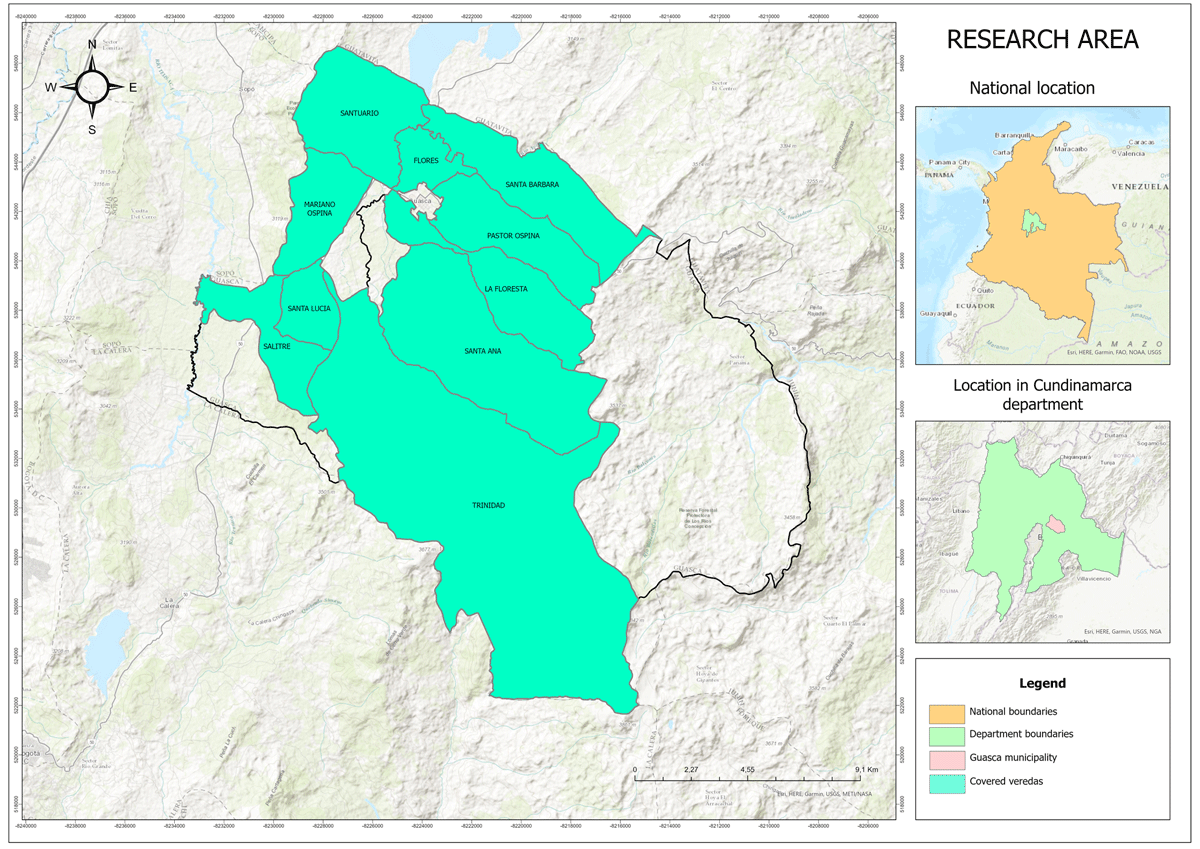
Figure 1
Research area: Guasca, Cundinamarca, Colombia. Spring Green: covered veredas; White: uncovered veredas. Map elaborated by the author with official data from DANE.
This study primarily focused on women, older adults, and individuals with special needs as key participants. This emphasis arises from the social perception that activities related to food preparation and family farming have been traditionally associated with women, often without recognition or remuneration. These individuals are seen as responsible for feeding and supporting their families, putting them under significant pressure to make decisions about what to provide during times of uncertainty and global change. In this way, this research gives prominence to the lived experience of those who are often relegated to a secondary place and marginalized, not only in their homes but also in decision-making processes on the problems that most affect them, from the daily provision of water to land use planning mechanisms.
The study interviewed one to three members of each family, who were asked to participate in an activity that involved visually representing a food dish from the past that is no longer prepared, followed by a dish from the present, and imagining a dish from the future. This exercise aimed to gain insight into changes in diet, the production and reproduction of recipes, and future food imaginaries. Additionally, the conversations explored topics such as the origins of food, labor and care practices in food production, and the causes of changes in food production and consumption.
To gather information for the research, various methods were used including semi-structured interviews, informal conversations, telephone calls, and participant observation. The researcher also attended open meetings for discussion of the Land Use Planning Scheme5 (EOT by its Spanish acronym), focusing on the food aspect, to understand the perspectives of stakeholders such as public authorities, territorial planning council, agribusiness managers, new landowners, and real estate sellers. Additionally, interviews were conducted with five new territory inhabitants who didn’t identify as peasants and three workers from flower and blueberry plantations. Previous research, official documents, and social networks were also reviewed as sources of information.
The study involved physical interactions following COVID-19 safety protocols. Interview data was transcribed, organized, and coded for analysis, with participants given pseudonyms for privacy protection. Additionally, a protocol was implemented to reduce risks and negative impacts on both participants and the researcher, which was approved by the ethics committee of Cider: Universidad de los Andes on December 1, 2020.
Findings and discussion
The water factory: a paramo where water is scarce for peasants
The introduction of extractivism, manifested through plantations and rural gentrification, ties closely to narratives that paint Guasca as a land of plentiful nature, largely because it encompasses parts of the Chingaza paramo system. It’s crucial to acknowledge the paramount importance of the paramos to the communities that have long resided nearby. Their significance is twofold: the inherent fragility and uniqueness of their ecosystems and the external pressures they face due to their essential role in water supply (Méndez Polo, 2019). The narrative I refer to is the ‘water factory’ that has been historically built from formal institutions such as the Ministry of Environment and Sustainable Development (Minambiente), expressly in Resolution 886 of 2018, by establishing guidelines for the delimitation of paramos and within its considerations it states:
The paramo ecosystems have been recognized as areas of special ecological importance that have special protection by the Colombian government, since they are of vital importance for the ecosystem services they provide to the Colombian population, especially those related to the stability of climatic and hydrological cycles and the regulation of water flows in quantity and quality, which makes these ecosystems true ‘water factories’ (Minambiente, 2018).
Guasca exemplifies the impacts of developmentalist projects, such as plantations and rural gentrification, on rural landscapes and communities. The land use planning scheme (EOT) of the municipality envisions a transformation by 2035, aimed at strengthening the municipality’s socio-economic structure through enhanced agricultural and livestock production, promotion of food security, development of specialized economic activities, implementation of advanced rural technologies, and provision of high-quality ecotourism services (Alcaldía Municipal de Guasca, 2021). These are processes that are based on extractive, individualistic, and exoticist visions of nature, particularly aligned with the appropriation of water and land (Duarte-Abadía & Boelens, 2016). This situation invisibilizes the voices and meanings of subjects and, particularly, feminized bodies that have traditionally settled these landscapes and who see worryingly how a rurality project is being planned and constructed where there is no space for the peasantry and its collective and communitarian perspectives about food sovereignty and water.
There is a private aqueduct here: PROGRESAR, which controls the water supply for certain areas such as condos and recreational clubs. Where they need larger catchment points for these activities. Even their dynamic is to try to link and absorb the local (veredal) aqueducts, which is how water is managed … This is a political issue due to the capacity for control and power. As it was said before, where the river goes the power goes, now we can think that where the water catchment goes the power goes. – Leonel, 52 years old, peasant, Santuario vereda. February 19, 2021.
This rurality project minimizes the importance of water access and management by the peasant population for food production and, consequently, for sustaining life. Water access in the area is facilitated through two methods: the private route, involving private aqueducts, and the public way, which includes participation in veredal aqueducts and public concessions granted by the regional environmental authority, the Corporación Autónoma Regional del Guavio (CORPOGUAVIO). In agreement with the participants’ accounts, the priority given to the allocation of concessions and permits for export plantations such as flowers and blueberries is a source of concern.
In Guasca, access to water for domestic use is provided by the veredal aqueducts, which have communitarian history and infrastructure. Despite having 18 veredal aqueducts and one private aqueduct, this management system is under pressure from institutions, plantations, and finqueros who argue for privatization. This was highlighted in a meeting where a finquera claimed that the veredal aqueducts in the municipality were not functioning due to being run by peasants and that privatizing them would make them more profitable (Observation, April 19, 2021).
This is a complex scenario because the risk of water insecurity and, subsequently, of food sovereignty loss is not a matter of infrastructure and water availability but rather a question of power. On the one hand, finqueros and plantations are strategically located in the higher parts of the territory with concessional access to tributary and aqueduct points. This means that they do not have fluctuating access to water to maintain their lakes, lawns, and gardens. On the other hand, peasants in the most water-stressed areas with difficult access to infrastructure and/or resources to obtain concessions experience water scarcity in their homes, crops, and gardens in differentiated ways.
Evidence of this is reported by Millán Cortés (2020), who shows how in 2019 there were up to 19 days without water in 12 of the 14 veredas, as well as in the urban area of the municipality, because of an overdemand related to the accelerated arrival of gentrifiers. In these cases, a differentiated effect of water scarcity is perceived between those who can access water concessions to offset the shortage (gentrifiers/plantations) and those without the power to do so. This panorama highlights the risk to the exercise of the food sovereignty and the dignified life of peasant families because without water there are no crops.
The establishment of plantations in Guasca began in the 1970s with the incursion of flower crops in the Bogota savanna, and now there is a transition, primarily, to blueberries. This is in response to the increase in demand for a specific product in the national and international markets, the decrease in the profitability of the previous species, and the deterioration of the soils in which they are established. The cultivation of blueberries has had a sharp growth in terms of hectares planted, since by 2021 it was expected to exceed the amount of 1000 ha planted in the country, compared to the 120 ha recorded in 2017 (Miranda, 2021). Indeed, in the case of Guasca, these crops have been accentuated in high areas and near water bodies. The above is relevant because the implementation of a blueberry crop requires a considerable economic investment that is not within the reach of peasant families and a high volume of water to sustain it. The water footprint of flower and blueberry plantations in the municipality is not known with certainty. Despite the lack of technical evidence, peasant families perceive water scarcity in association with the rise of these plantations, while they also see with concern how the rural landscape continues to be filled with greenhouses. Carlos further emphasizes the impact that this exercise of power over water has on the peasant food sovereignty:
Crops, now everybody is planting blueberries. If there are a lot of blueberries growing, the price will drop. It will happen like strawberries. The crops grown are those of wealthy people. The peasants will not be able to grow these crops because of the expenses of the inputs – Carlos, 73 years old, peasant, Pastor Ospina vereda. March 31, 2021.
The revision of the land use planning scheme (EOT) raised concerns about the expansion of greenhouses and the actual benefits they provided to the peasantry. However, the attempt to regulate and limit their expansion was unsuccessful due to the opposition from greenhouse owners, who were also recreational or tourism property owners, and their allies among the finqueros and some plantation workers. The power of these groups to influence land use planning guidelines reveals the presence of patriarchal behavior that delegitimizes the opinions and proposals of the peasantry, represented majoritarian by women in those meetings. Furthermore, the argument of work and economic stability hides the proletarianization of peasant work (Morales-Zapata, 2021), indicating that the food sovereignty is not a priority on the municipal government’s agenda or in future territorial planning. This demonstrates that gentrifiers and plantations collectively use capital as a tool to order, discipline, and (de)legitimize spaces, bodies, subjects, and landscapes (Li and Semedi, 2021).
Peasant food sovereignty in Guasca: between nostalgia, extractivist pressures, and a pessimistic future imaginary
The conversations about food with the study participants were full of feelings and emotions because talking about their meals was like touching the memory of each person. This exercise allowed them to evoke stories with their grandmothers, parents, and siblings. They remembered flavors, aromas, landscapes, and crops. Everything that has gone and will not return. Most of the recipes and food dishes drawn and described correspond to food cooked, for the most part, by women on wood and coal stoves, to water from the springs and rivers, and to the food that was obtained and traded in the veredas (Figure 2). These recipes were mostly composed of soups rich in calories due to the inclusion of tubers, grains, and cereals, but also because of the presence of corn, wheat, and barley-based mixes together with ferments such as guarapo, chicha, and masato. This is how Elsa keeps it in mind:
They used to feed us with a corn soup that consisted of beans, which they called mazamorra de piste. My mother made it, and we, the children, ground the corn and made the dough for the soup. It was delicious! We used to add beans, broad beans, potatoes, and arracacha. Nowadays it is no longer made, corn mills no longer exist, and nobody makes corn soup anymore. It is no longer grown, and everything is so expensive, so buying all the ingredients is costly, and it does not taste the same. – Elsa, 69 years old, peasant, Flores vereda. May 12, 2021.
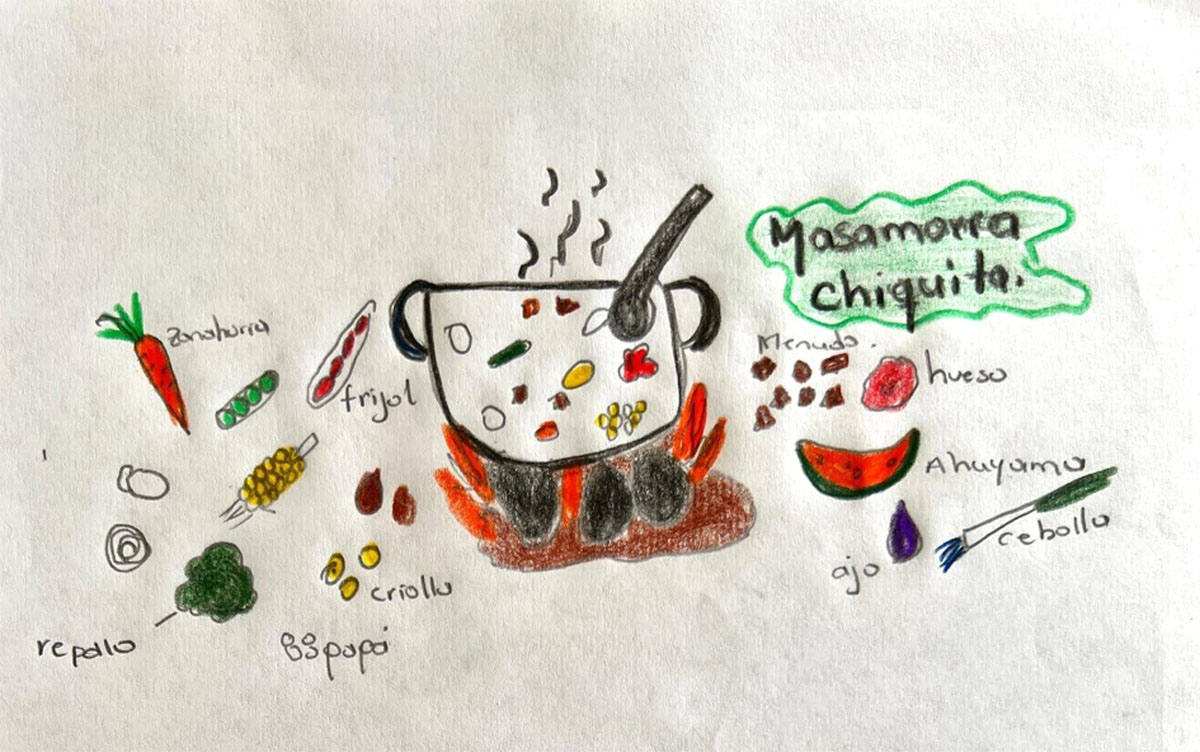
Figure 2
Past food dish. Drawn by Elsa, 69 years old, Peasant, Flores vereda. Reproduced with permission of the participant. March 25, 2021.
In the past, this food tradition aligned with the traditional Andean diet (López Estupiñan, 2015), especially in the paramo area where agricultural labor required significant physical exertion and thus a high caloric intake. By the 1990s, barley and wheat, cultivated by local peasants, dominated the landscape, while flower plantations, owned by non-local investors, began to consolidate. This shift in dietary patterns and regional agricultural products was driven by a crisis in the cereal market, exacerbated by increased imports of cereals and flour due to former President Gaviria’s economic liberalization policies (Álvarez-Sánchez and Chaves, 2017).
Food production in the area shifted towards potatoes and milk for commercial purposes due to the difficult commercialization of barley and wheat. This led to a specialization in potato, pea, corn, and bean crops using Green Revolution practices (Molina-Zapata, 2021). Meanwhile, species and seeds for self-consumption were relocated to gardens and plots, decreasing in variety and quantity over time. Driven by the neoliberal rhetoric of entrepreneurialization (Acuña, 2012), this shift created an ideal scenario for the proliferation of flower plantations (Patel-Campillo, 2010). Consequently, traditional agricultural practices declined, certain crop varieties disappeared, soil degraded, and land use shifted from food production to non-food species or export crops. This led to dependence on plantation work and agrochemicals, posing a significant threat to conventional food production, increasing production costs, and raising basic food prices, leading to food supply uncertainty (Mazoyer, 2008).
Given this background, the alternatives proposed by governments and the requests made by peasants have focused on reducing the costs of fertilizers and pesticides to sustain the Green Revolution model. However, these solutions do not address the root cause of the problem: dependence on monoculture plantation agriculture. To question this dependency requires acknowledging the unsustainability of the dominant model and even challenging the foundations of capitalism itself. Consequently, there is an urgent need for a transition to a new agrifood model (Roa Avendaño et al., 2018).
Participants, as illustrated in Figure 3 and revealed through interviews, now produce only about 20% of their diet, a stark reduction from the past when they relied more on homegrown and exchanged food. This decline reflects depeasantization, characterized by several factors: the hybridization of diets for perceived health benefits, loss of traditional seeds and food identity, inadequate generational farming succession, underused rural land, the shift of peasantry into labor roles, and changes in land ownership. Plantation agriculture and rural gentrification have significantly accelerated this transformation.
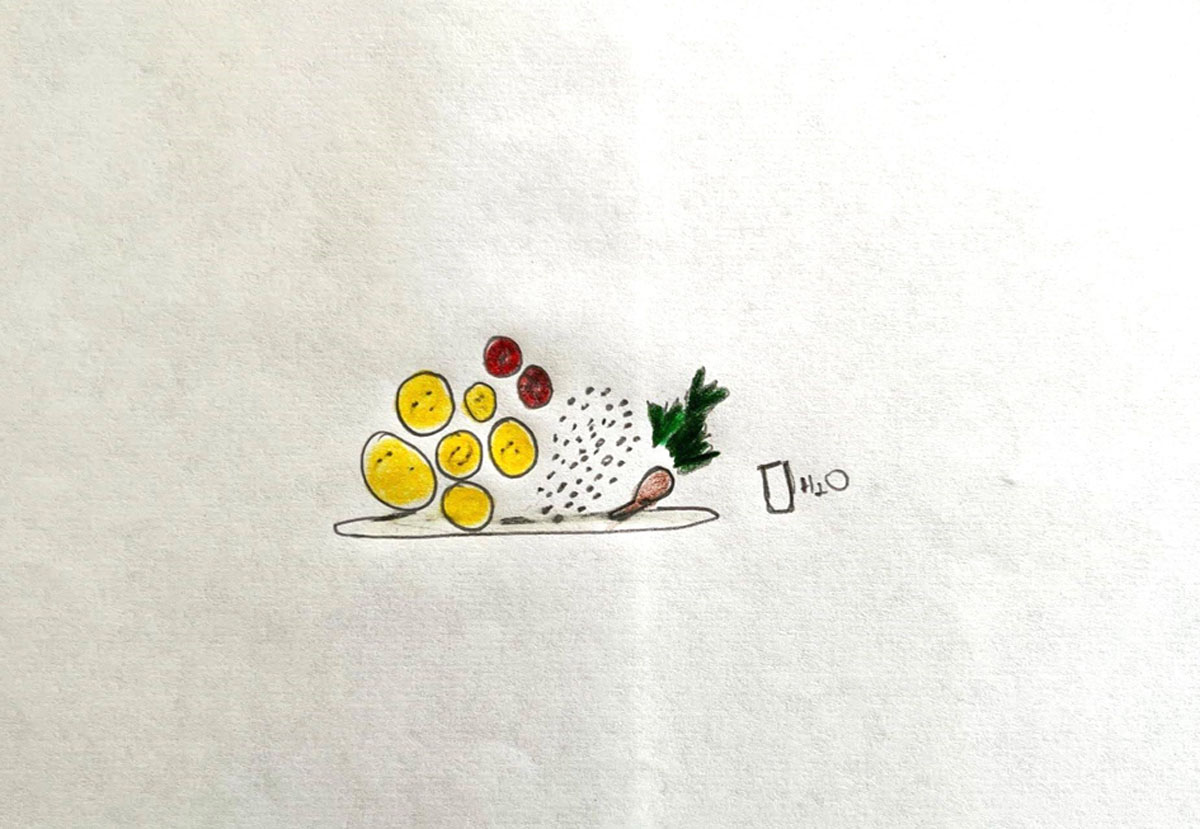
Figure 3
Present food dish. Drawn by Dayana. 53 years old, peasant, vereda Santa Bárbara. Reproduced with permission of the participant. February 22, 2021.
In this way, flower and blueberry plantations along with the acceleration of the rural gentrification have contributed to the construction of Guasca as an extraction landscape. This transformation has led to a landscape without peasants or collective relationships, dominated by agribusiness. It has become a place where alternative ways of being and living are not allowed, as they are not considered aligned with development. Likewise, this process has deepened because of the sequels of economic vulnerability intensified by the COVID-19 pandemic where 5.7 million Colombian people had insufficient food access (WFP & FAO, 2022).
Only six out of 15 peasant families still grow food crops like aromatic herbs, corn, beans, and leafy greens, mostly non-native. This trend, driven by health narratives, indicates a shift from ancient recipes (Figure 2), reflecting a broader process of depeasantization and the colonization of dietary preferences (Albán Achinte, 2010), where introduced foods and species have been established under the dominant notion of health. Many individuals adapted their traditional gardens based on what society deems as ‘healthy,’ often devaluing traditional Andean diets and foods by labeling them as “unhealthy.” This is exemplified by Francia’s explanation of changes in ingredients between past and present meals.
First of all, we did not control the amount of flour [corn, wheat, and other cereals] when cooking in the past. Even if they were natural, we consumed a lot, but at that time flour was not as unhealthy as it is now. And nowadays, we try to eat more vegetables, more fruit, and less flour – Francia, 68 years old, peasant, Santa Ana vereda. May 14, 2021.
While this research doesn’t specifically address the nutritional differences between past and present foods, conversations with participants have highlighted that this dietary shift is connected to issues of access and the risk of losing collective identity and agri-food traditions linked to the abandonment of traditional seeds and ancient recipes. These concerns are compounded by economic vulnerabilities exacerbated by the COVID-19 pandemic. As Elsa mentioned, ‘We no longer grow crops, and everything is so expensive, so buying everything is costly and doesn’t taste the same.’
Current practices suggest a complex land use situation in Guasca. While 80% of the food consumed by participating peasant families comes from the market, it is unclear whether underutilization of land or land scarcity is the primary driver. Participants attributed this shift to declining interest in farming and the loss of traditional practices. This aligns with the historical devaluation of rural life. Consequently, some peasants lease their land for plantation or dairy farming to generate income for food purchases. This reliance on markets reflects a shift towards food security (Agarwal, 2014), which contrasts with the food sovereignty perspective. This situation echoes historical disincentives for rural life and the peasantry (Garzón, 2021), linked to depeasantization (Bernal Valbuena, 2020). These trends contribute to the reconfiguration of the contemporary landscape in Guasca.
Echoing Ojeda (2021), the shift towards agroextractivism, replacing traditional crops with plantations, turns peasants into net food purchasers. It is also observed that responsibilities like gardening, milking, and cattle care predominantly fall to women and older adults. This underscores an unequal labor distribution within peasant families, emphasizing roles for women and feminized bodies and reinforcing the idea of gardens as spaces for female caregivers and marginalized masculinities, as Kunin (2021) discusses. This is consistent with Castaño and Romo’s (2015) data for Colombia on unpaid daily work in rural women’s own and private households over 10 years of age, which corresponds to 93%. This work in turn represents an average time dedication of 8 h and 12 min compared to 3 h and 6 min dedicated by men. These facts are evidence of the consequences behind all the pressures exerted by this agro-extractivist and rentier model, which is sustained, in large part, through the exploitation of women and feminized bodies.
My father has always lived off cattle raising, so that is our main income. Our livelihood is our cows, which we have always had between 14 and 20 years, and my mother is the one who does the milking and takes care of them. My siblings and I work, but we do not contribute to the income. We don’t grow anything, because there is no need, we don’t depend on it, and we easily get what we need in the supermarkets. – Teresa. 38 years old, peasant descendant, Santa Lucia vereda. April 28, 2021.
In addition, the process of depeasantization, also expressed as a loss of peasant identity and fracturing of social and communitarian networks, is evident at the local level, as Martha reminisces with nostalgia about the celebration of the peasant’s festival in the past:
The farmers’ festivities were events in which we worked hard collectively. We made a float involving all of us from this sector and those from the other veredas. We dressed up and represented the work of spinning wool until it was transformed into ruanas and blankets. The chicha, food, and peasant dresses are shown. Over time, I see that these festivals have disappeared, and the municipal governments have not continued to motivate the peasants to go out and show their culture. – Martha. 67 years old, peasant. Mariano Ospina vereda. March 6, 2021.
The underutilization of land, lack of generational replacement, and infeasibility of green revolution agri-food production have led to the real estate market capitalizing on the territory, resulting in increased land costs and changes in ownership and land use. Antonio, an 80-year-old peasant who inhabits the Trinidad vereda, shares how land prices have skyrocketed, making it impossible for local people to buy land, and young people who have lost their connection to the countryside sell their land to move to the city. Nubia’s comments align with this trend:
There have been changes in the owners of the land, and grandparents and parents have died. People sell, new people arrive, the finqueros arrive, and farms for rest and recreation are no longer farms to work in … They [the finqueros] arrive with their new buildings, which are much more modern. – Nubia, 71 years old, peasant, El Salitre vereda. February 26, 2021.
The shift in land ownership in the municipality has resulted in a divide between peasants and new landowners finqueros. These finqueros, who typically do not live on the farms permanently, engage in the rural gentrification process, which is based on an extractivist view of enjoying nature. The participants of the study express concern over how the finqueros settle on the best lands for food production but do not use them for that purpose. Instead, they build houses and structures with lakes, meadows, and horses, and offer the peasants work as guardians, gardeners, cleaners, and caretakers. This reflects a complex relationship between the actors involved in the rural gentrification processes, as different uses of nature are assigned different meanings (Villamizar-Santamaría, 2022), leading to unequal exchanges between the urban and the rural and the emergence of an eco-bourgeoisie (Higuera, 2017).
To broaden the panorama, some meetings were held with new land owners [finqueros] to learn about their vision of the territory and food. Some results were:
We come with a lot of ideas, experience, and contacts. We do not think we are better than anyone else, but you must understand that we are looking for rest and we do not economically depend on food production. In fact, we give jobs to the peasants in the vereda who need them, and we give gifts to their children in December. – Paula, 45 years old, finquera. Santa Bárbara vereda. June 11, 2021.
I seldom hire people from here to take care of the farm because that is a problem, then they come out with crazy stories. And when I do, I hire older people for a daily wage, those people have experience, and they do not complain. The only thing I look for is to keep my gardens and horses up to date. I’m not interested in crops because it’s a breeding ground for flies and bugs. – Alan, 55 years old, finquero. Flores vereda. June 18, 2021.
It is possible to observe how the finqueros perceive this territory from the perspective of extracting enjoyment. That is, from their position of economic privilege they can choose where to settle and decide the work and the payment of those who inhabit this territory in a traditional way. In other words, there is a process of proletarianization of the peasantry (Ruiz-Rivera and Delgado-Campos, 2008), since 70% of the peasant participants revealed that at least one of the members of their family has worked or works for finqueros and that they do so because it is an opportunity to have something moderately stable since agriculture is uncertain. This reinforces the distancing of the peasantry from food production and consequently the decline of the peasant food sovereignty.
The average size of peasant properties in the study (1.388 ha) falls significantly below the established Family Agricultural Unit (UAF) minimums (INCORA, 1996) for suitable living [15–25 ha in hilly soils, 2–4 ha in flat soils]. This limited land access, coupled with the minimum legal land size requirement of two hectares for building on rural land as stated in the Land Use Planning Scheme (EOT), presents a challenge for rural families, especially women. Data indicates that 78.4% of landholdings of less than five hectares in Colombia belong to women (DANE, 2015). While the current data does not definitively show a generational decrease in farm size, the limited land access disproportionately affects women who own smaller properties. This situation makes it difficult for future generations to maintain sustainable farming practices and food sovereignty in Guasca.
Finally, there was an exercise to think about Guasca’s territory in the future. The conversations were guided by questions such as who will inhabit their farms? What will food be like in the future? What will be the origin of that food? And what will happen to the water? A consensus in the illustrations and responses of the study participants was the rule. People imagine a pessimistic future (Figure 4). They see that there will not be access to water and the land will no longer belong to their descendants. There will be a chaotic landscape. Jose even believes that colonial traits of the past will be repeated in terms of land tenure:
Ah well, I don’t know what will happen, I figure that eventually there will only be 10, 14, or 15 big farms owned by the big landowners, and we will return to the times of the big haciendas, yes, that is what I think. Perhaps there will be two or three small peasant houses around, and they will be like slaves to take care of those farms – because who else? – Jose, 65 years old, peasant, Floresta vereda. May 17, 2021.
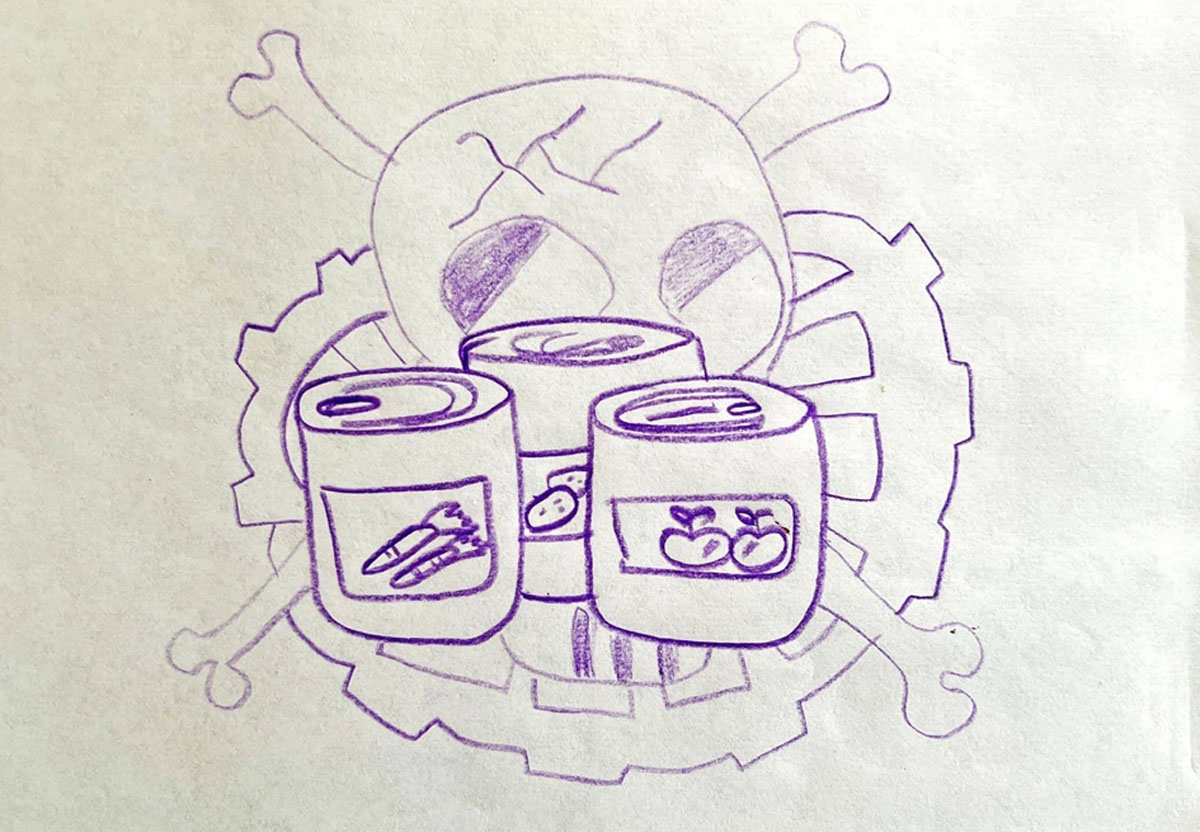
Figure 4
Future food dish. Drawn by Leonel. 52 years old, peasant, Santuario vereda. Reproduced with permission of the participant. June 5, 2021.
Likewise, the participants expressed deep concern for the future of their children and grandchildren, fearing that they will grow up disconnected from their cultural heritage and traditional way of life. They worry that urbanization and land monopolization will cause a decline in agricultural knowledge and practices. Additionally, they are fearful of the negative health consequences that may arise from the modern food system, such as pandemics and scarcity. Mariana’s experience illustrates the neglect of traditional gardening practices due to illness and lack of awareness:
The food of the future will be imported, I think. Because just imagine, if the workers, we, the peasants, are disappearing and the new generations are no longer engaged in seeding or have not learned to plant or cultivate, then I don’t know. My guess is that everything will come from laboratories, everything will be processed, pills, and canned food may be the rule. And then there will be more diseases because in any case these foods of the future will only contain preservatives. -Mariana, 73 years old, peasant, Santa Bárbara vereda. April 10, 2021.
However, some believe that something can still be done in terms of peasant food sovereignty in Guasca. As they see it, those changes must occur away from what has brought them to this point. Linda a peasant woman full of energy, is recognized in the vereda for her leadership and is part of a territorial organization. She told me while preparing chicha for a family event that peasant families must stop believing that they are inferior to finqueros and highlighted the relevance of collective and communitarian work to achieve food sovereignty in the territory. As she understands it, these people (finqueros) depend on the peasantry not only to maintain and watch over their farms but also to produce the food on their tables:
The finqueros may have money, but without us, the peasants, they do not eat. Do you think these people are going to put up with the work in the fields? For the future, we must organize ourselves and teach our children to produce food to make them understand that life in the countryside, even though it is hard, is calm and that they should look for a way to stay. – Linda, 52 years old, peasant, Flores vereda. July 2, 2021.
This aligns with Wolford (2021), who posits that large-scale capitalist plantations, which are agro-extractivist sites, depend on racialized labor exploitation; therefore, the alternatives must be small-scale, labor-intensive, diverse, and participatory.
Conclusions
The study demonstrates that plantations and rural gentrification are interconnected processes that seriously undermine peasant food sovereignty. Through ethnographic methods, it becomes evident that food sovereignty encompasses more than individual dietary choices; it is profoundly influenced by globalized capitalism, which locally manifests through the expansion of plantations and rural gentrification. This research enriches agrarian studies by emphasizing the detrimental effects of these interlinked phenomena on food sovereignty, especially impacting women and marginalized groups. Adopting a feminist political ecology perspective is crucial as it brings to light the gendered dimensions of water scarcity and depeasantization, highlighting how these processes disproportionately affect women and feminized bodies.
The multi-temporal methodological approach in the study enriches understanding by tracing the historical roots of rural gentrification and plantations, examining their effects on peasant food sovereignty and the evolving rural landscape, and exploring potential future scenarios. This includes both pessimistic predictions and alternative visions proposed by women, often excluded from mainstream discourse.
The findings illustrate how locally framed narratives like the ‘water factory’ exacerbate water insecurity for peasants, evident in water scarcity events witnessed in Guasca. Moreover, these processes reshape the rural landscape, driving depeasantization through dietary shifts, seed loss, weakened social networks, and changes in land ownership.
Water insecurity and depeasantization ultimately restrict peasant choices in exercising food sovereignty, evidenced by a decline in self-produced food to 20%, increased market dependence, and land dispossession. However, some participants resist this shift, emphasizing the political dimension of food sovereignty beyond mere food provision and advocating for land access and the revalorization of peasant identity.
Furthermore, family farming and livestock responsibilities disproportionately fall on women, intensifying their caregiving burdens. This exacerbates the distinct experiences of depeasantization among feminized bodies due to their traditional roles, limited land access, and challenges related to providing food and ensuring water security, especially in the context of plantation expansion and rural gentrification in Guasca.
Notes
[1] Concept based on narratives of water abundance and linked to paramo ecosystems, both in popular language and in the media: https://www.rcnradio.com/bogota/ambientalistas-rechazan-nueva-represa-en-chingaza.
[2] The concept of extractivism, as described by McKay, Alonso-Fradejas, & Ezquerro-Cañete (2022), is applied to plantations and rural gentrification. It involves the appropriation of both commodified and non-commodified productive forces, eroding local autonomy, displacing rural populations, expropriating natural resources, and concentrating profits among non-local investors. In Guasca, this is evident through the expansion of plantations under the “water factory” narrative, which prioritizes large-scale monocultures for profit, displacing peasants, and exacerbating socio-economic and gender inequalities.
[3] Name associated with new landowners, men (finqueros) or women (finqueras), given by peasants as evidence of income, class, and power differentiation.
Acknowledgements
I owe gratitude to the research participants for their time and contributions to this study in the middle of uncertain pandemic times.
Competing Interests
The author has no competing interests to declare. As the main author, I assume full responsibility for the contents presented in this study.