
Table 1
Static and Dynamic Conceptualisations of Nature Conservation (adapted from Schuster 2010: 39).
| Static Conceptualisation | Dynamic Conceptualisation | |
|---|---|---|
| Ecosystem | Ecosystems as super-organism | Ecosystems as functional units |
| Equilibrium | Ecosystems in natural equilibrium, ‘balance of nature’ | Ecosystems in disequilibrium |
| Disturbances | Serious disturbances can disrupt the state of equilibrium | Disturbances are immanent and necessary for ‘healthy’ ecosystems |
| Species Range | Specific constellations of species characterise an ecosystem and define its limits | The species found within an ecosystem shift substantially over time |
| Processes | Predictable within an ecosystem | Unpredictable and contingent |
| Understanding of Nature | Cultural landscape | Wilderness |
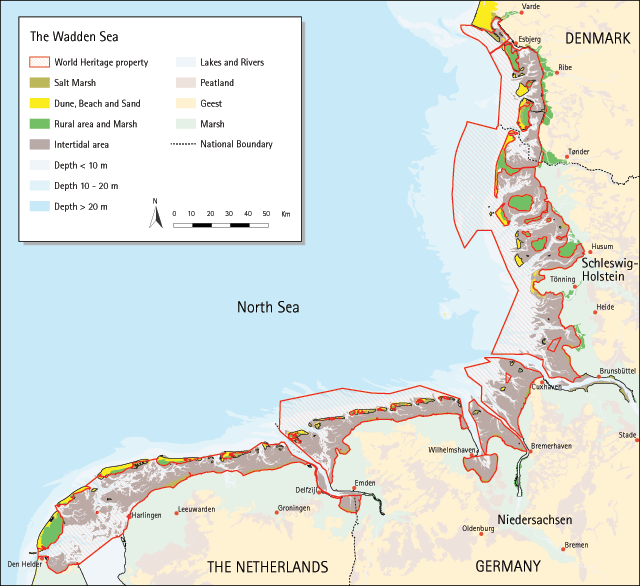
Figure 1
The trilateral Wadden Sea Area and World Heritage Site (© Common Wadden Sea Secretariat).
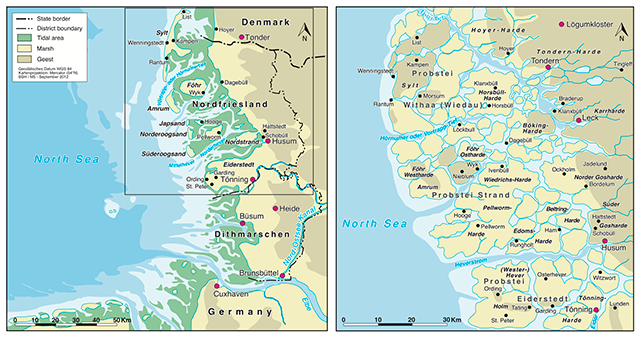
Figure 2
The west coast of Schleswig-Holstein in the present day (left) and prior to the storm flood of 1362 (right inset), indicating the extent of lands ‘lost to the sea’ in North Friesland. Maps produced by T. Böge, University of Hamburg, Institute for Geography, following the historical map of Johannes Mejer (1652).3
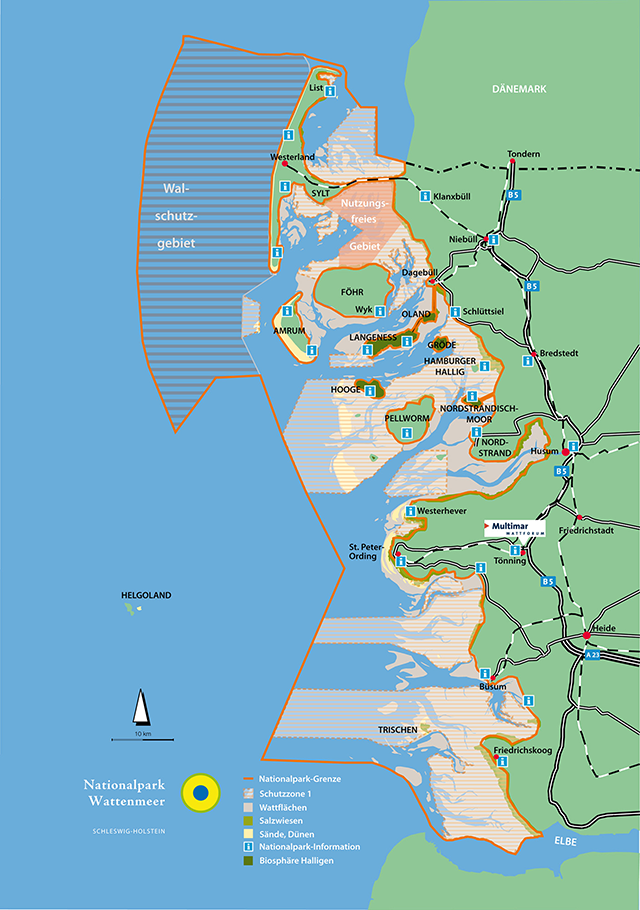
Figure 3
Official map of the Schleswig-Holstein Wadden Sea National Park, depicting current boundaries and zonation (source: © LKN-SH National Park administration).
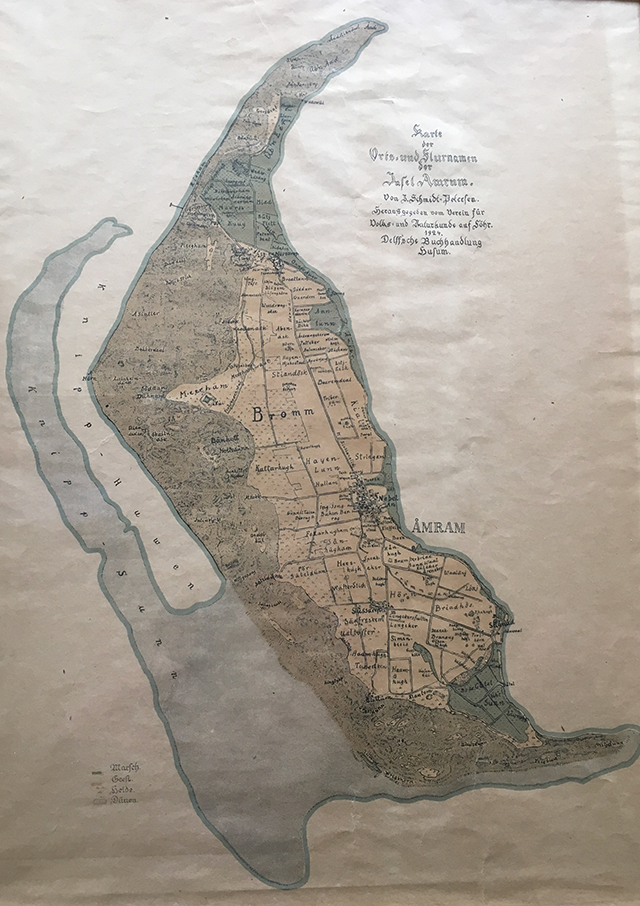
Figure 4
Historical map of the island of Amrum, dating from 1924, depicting the then-current location of the Kniepsand (source: map produced by B. Schmidt-Petersen, 1924, courtesy of Sven Tougaard, Ribe).
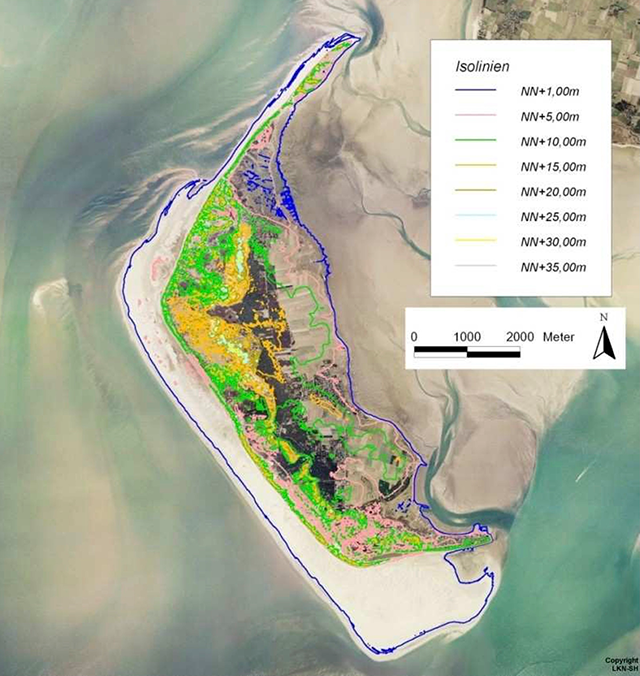
Figure 5
Contemporary map of the island of Amrum with contour isolines, showing the current location of the Kniepsand (source: © Landesbetrieb für Küstenschutz, Nationalpark und Meereschutz Schleswig-Holstein).