
Table 1
Visual rhetorical interpretation questions.
| 1 | Basic denotation | What does the photograph show? What kind of story does it present? |
| 2 | Analysis of photographic techniques and atmosphere | How do framing, lighting, composition, colour and its saturation help in constructing the in-group cohesion, the sense of ‘us’ opposed to ‘them’, of the populist movement? |
| 3 | Visual rhetorical figures | What kind of visual rhetorical figures can be identified in the photograph? What are their roles in constructing the in-group cohesion among the populist movement? |
| 4 | Symbol and intertextuality | Which other texts does the photograph refer to? Which symbols does it depict? Can they be identified as signifiers, knowing the context? |
| 5 | Emotional engagement | What kind of emotional engagement with the story does the photograph portray? How is the in-group cohesion emotionally constructed in the photograph? |
| 6 | The visual argument | What argument is conveyed through the photograph? |
Table 2
Actors in the photographs.
| Principal actor | Correo del Orinoco | Tal Cual |
|---|---|---|
| ‘Chavista’ politicians | 31% (19) | 36% (5) |
| Chávez | 18% (11) | 7% (1) |
| Citizens | 30% (18) | 7% (1) |
| Opposition politician | 2% (1) | 29% (4) |
| Expert | – | 14% (2) |
| Other | 5% (3) | – |
| No actors | 15% (9) | 7% (1) |
| TOTAL | 100% (61) | 100% (14) |
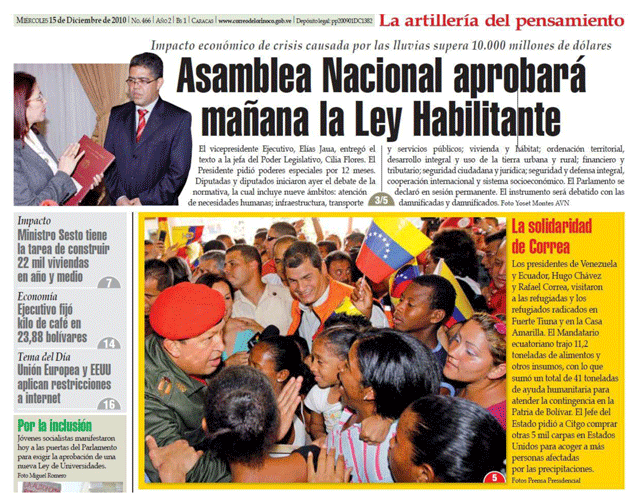
Figure 1
Section of the cover of Correo del Orinoco, December 15, 2010.
Source: Correo del Orinoco, Edición impresa.1
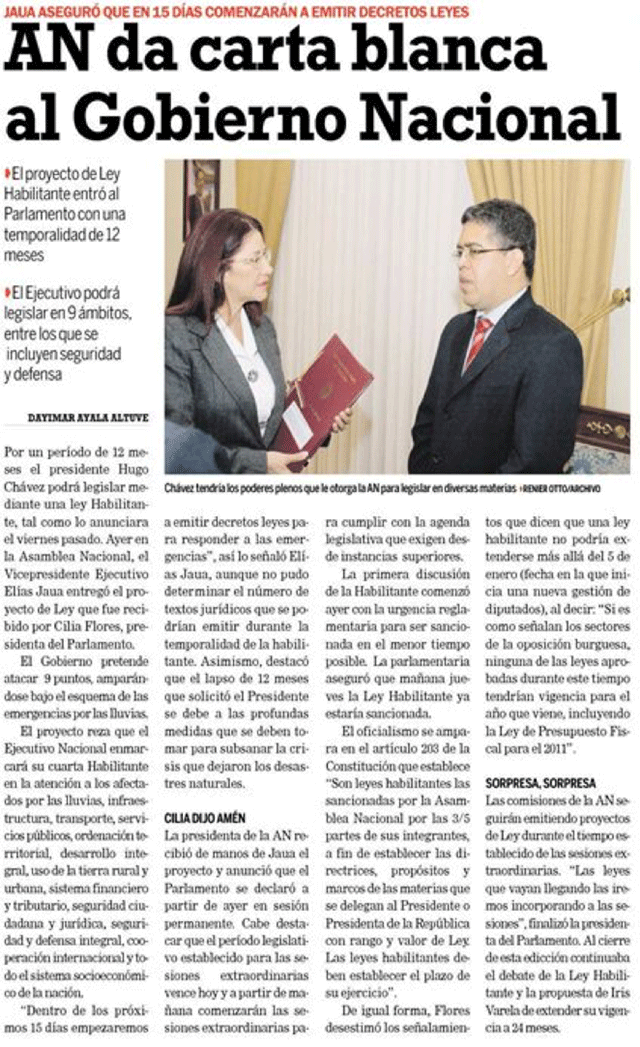
Figure 2
Tal Cual article, December 15, 2010.
Source: Online edition of Tal Cual.
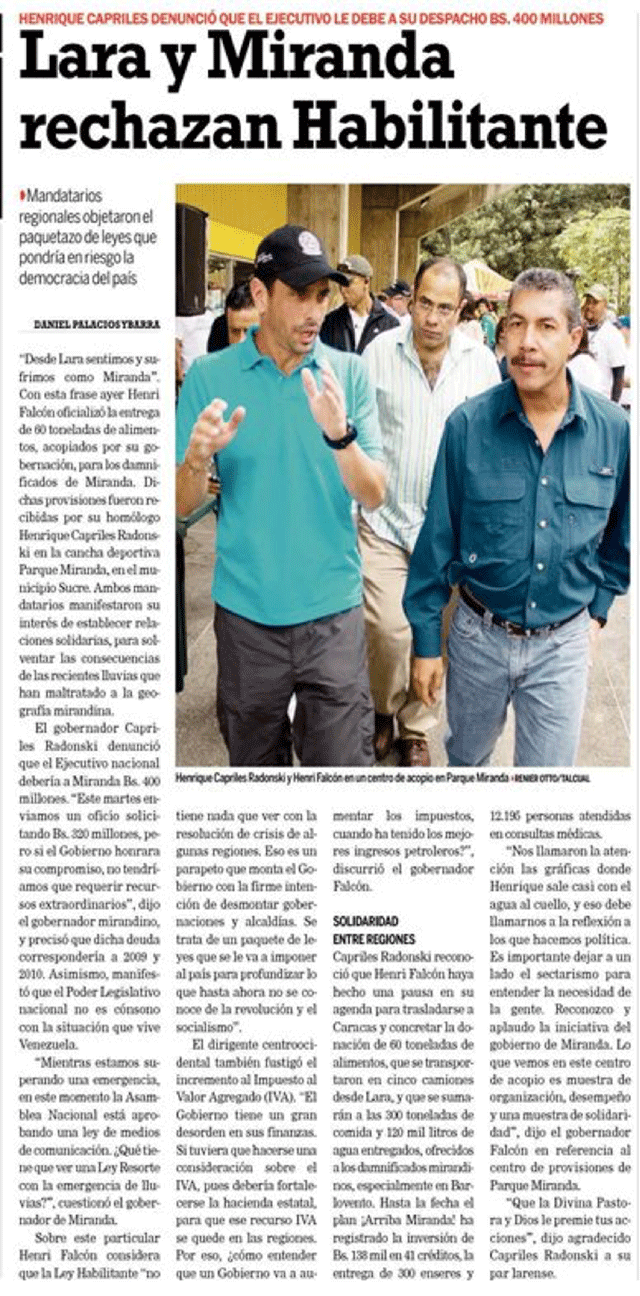
Figure 3
Tal Cual article, December 16, 2010.
Source: Online edition of Tal Cual.