
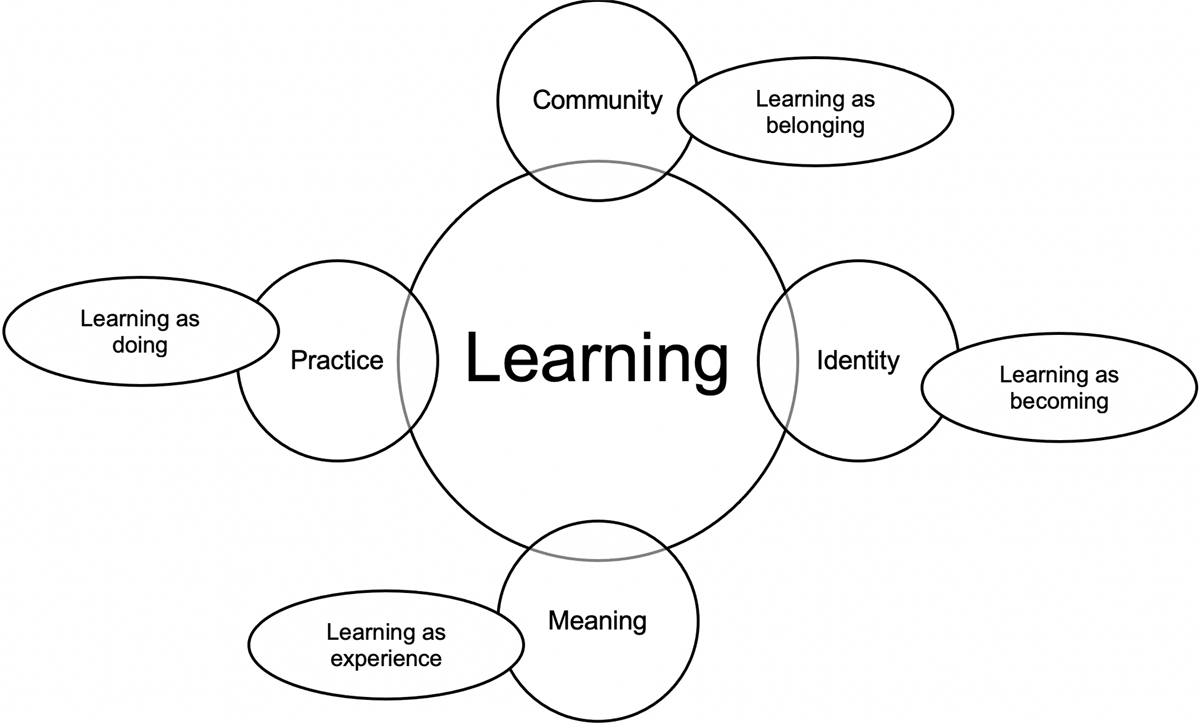
Figure 1
Components of Wenger’s Social Theory of Learning, 1998/2008, p. 5.
Table 1
Overview of the participants and length of interviews.
| Participants (age) | Interviews minutes | Recording | |
|---|---|---|---|
| Anna (12) | Creator/Competitor | 53 | Audio recorded |
| Amelia (13) | Creator/Competitor | ||
| Sabina (9) | Creator | 55 | Video recorded |
| Nellie (9) | Creator | ||
| Stina (9) | Creator | ||
| Total | 108 |
Table 2
Overview of the participants and generated data in the creating community.
| Participants in a community (age) | Play session 1 | Video-stimulated recall interview | Play Session 2 (+iPad) | Video-stimulated recall (+iPad) | Video-stimulated recall (+iPad) |
|---|---|---|---|---|---|
| Sabina (9) | X (GoPro) | X | X | ||
| Stina (9) | X | X (GoPro) | X (GoPro) | ||
| Nellie (9) | X (GoPro) | X (GoPro) | |||
| Researcher | X | X | X | ||
| Minutes | 43 | 44 | 52*3 = 156 | 40 | 39 |
Table 3
An illustrative example of the analytical tool.
| Extra column | Practice – knowledge is located in the actions and the participants have their own experience of practice. | |||
|---|---|---|---|---|
| (see Table. 4) | Participation: can be traced to when they engage directly in activities and conversations | Reification: can be traced to when they produce physical and conceptual artefacts – words, concepts, stories, tools, constructions and other forms of reification – reflecting their shared experience | Experience: can be traced to when there is a reflected change in how they act | Competence: can be traced in the ability to perform certain actions, in the expressions of certain pieces of information or in the mastery of certain skills |
| Sabina and Stina start to build their houses. A difference can be noted in how they construct the foundations of their houses. Sabina has constructed a foundation that looks like a platform. Stina just start to build the walls. Stina: I’m a slow builder Sabina: Yes I’ve noticed that (play-session) | Anna and Amelia use the abbreviation PVP when they describe what they usually do. When I ask what PVP stands for, they do not know. But they what it means – to fight. | Amelia explains: If I do something that makes me lose a life, then I think about it next time. That I cannot act in the same way, instead I have to come up with another way of doing it. (group interview) | Nellie explains that they are good at different things and that she is the best at constructing things with electricity. Meanwhile, Stina and Sabina are better at coming up with ideas. Nellie says: They have NEVER started to build something using electricity, they just expect me to do it (video-stimulated recall) | |
Table 4
Empirical data illustrating grit.
| Showing interest | Training | Having goals | Failing | Being persistent |
|---|---|---|---|---|
| Anna motivates why they did not give up, although they kept losing their games: It was still fun! Stina says: I love Minecraft! I play at least an hour every day! | Sabina has trained a lot and finally learnt how to construct the kind of roofs that her older brother builds: I don’t want to have a flat roof, I want it to look as a real roof (defining the goal). She describes in detail how she now builds roofs. | Anna and Amelia define their goal with playing as: “to be better at fighting”. Sabina defines her goal: “I have always wanted a YouTube channel and record when I’m playing Sims and Minecraft. But I think you have to be 15”. | Sabina built a house, without knowing that she was using dynamite: The house somehow caught fire and then the whole house blew up! Now I don’t use dynamite when building houses. | Amelia describes how happy she was after winning their first game: We had been playing for about a month without winning. We didn’t give up! |
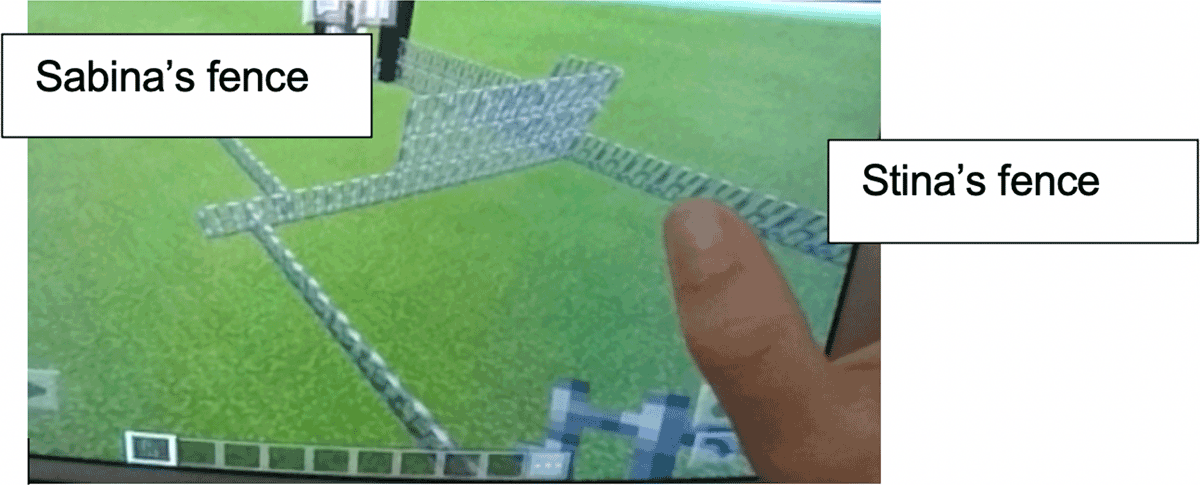
Figure 2
Illustrating the fence. Photo: Marina Wernholm.

Figure 3
QR code of a videoclip illustrating problem solving. Film: Marina Wernholm.
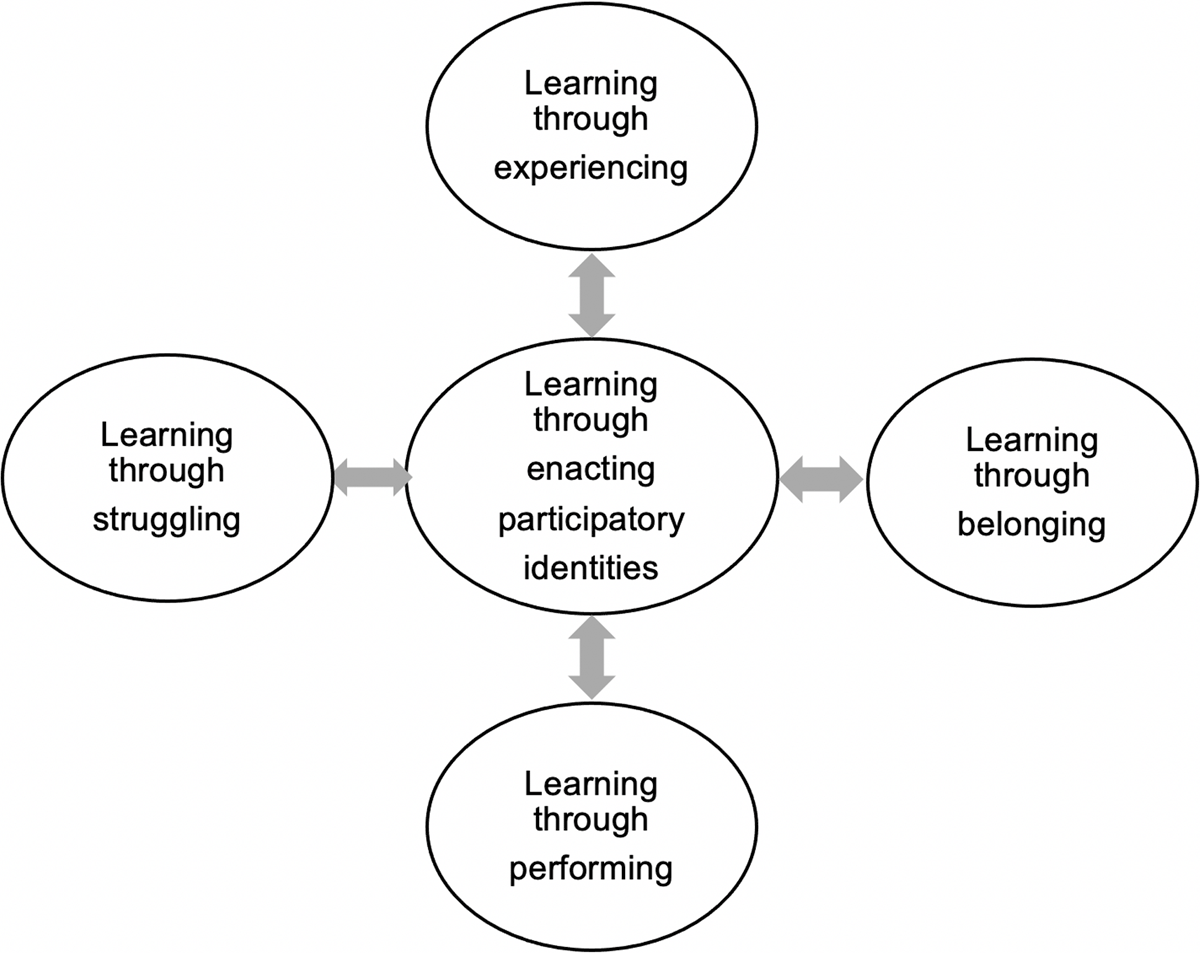
Figure 4
Five components that characterize learning in children’s out-of-school digital gaming communities. Designed by: Marina Wernholm.