
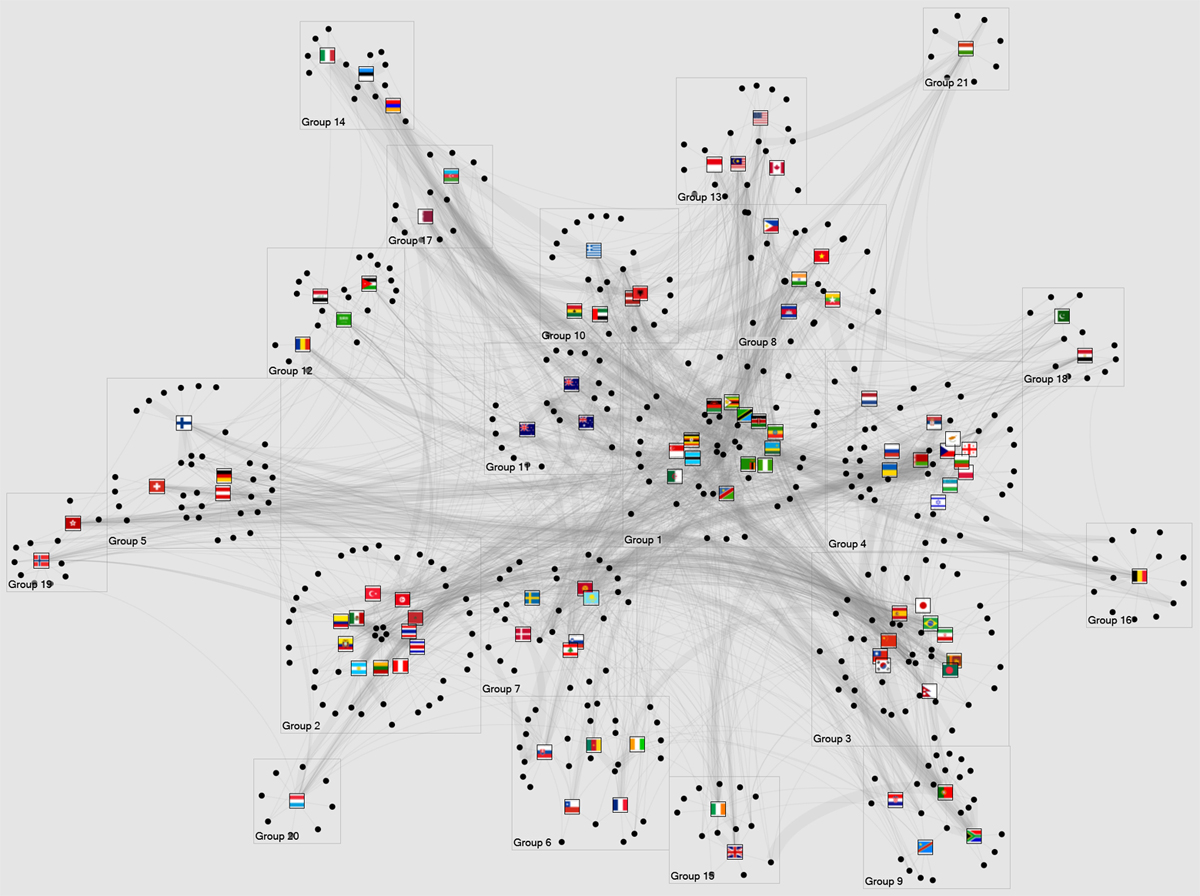
Figure 1
Clustered countries and subjects
Table 1
Classification stems and descriptions
| Stem | Classification |
|---|---|
| 1 | 1: Place qualifiers |
| 2 | 2: Language qualifiers |
| 3 | 3: Time period qualifiers |
| 5 | 5: Interest qualifiers |
| 6 | 6: Style qualifiers |
| A | A: The Arts |
| C | C: Language and Linguistics |
| D | D: Biography, Literature and Literary studies |
| G | G: Reference, Information and Interdisciplinary subjects |
| J | J: Society and Social Sciences |
| K | K: Economics, Finance, Business and Management |
| L | L: Law |
| M | M: Medicine and Nursing |
| N | N: History and Archaeology |
| P | P: Mathematics and Science |
| Q | Q: Philosophy and Religion |
| R | R: Earth Sciences, Geography, Environment, Planning |
| T | T: Technology, Engineering, Agriculture, Industrial processes |
| U | U: Computing and Information Technology |
| W | W: Lifestyle, Hobbies and Leisure |
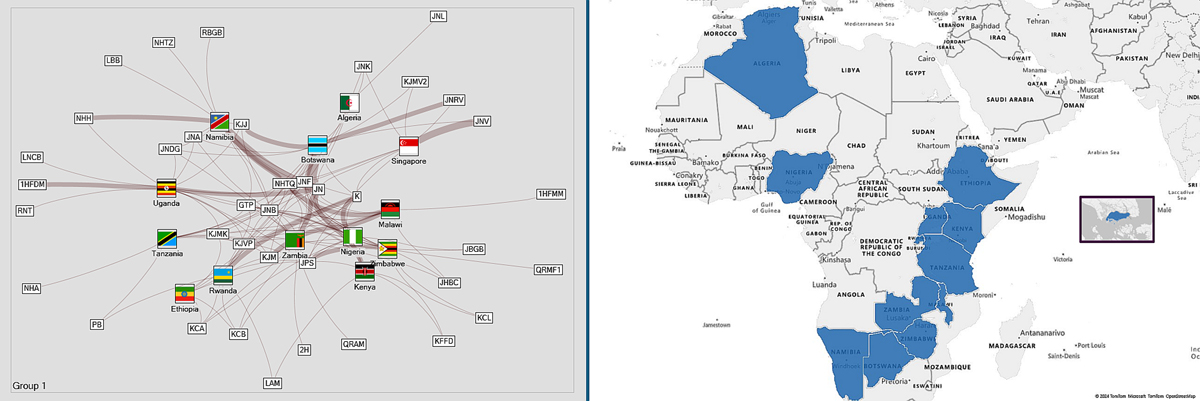
Figure 2
Clusters and countries of Group 1
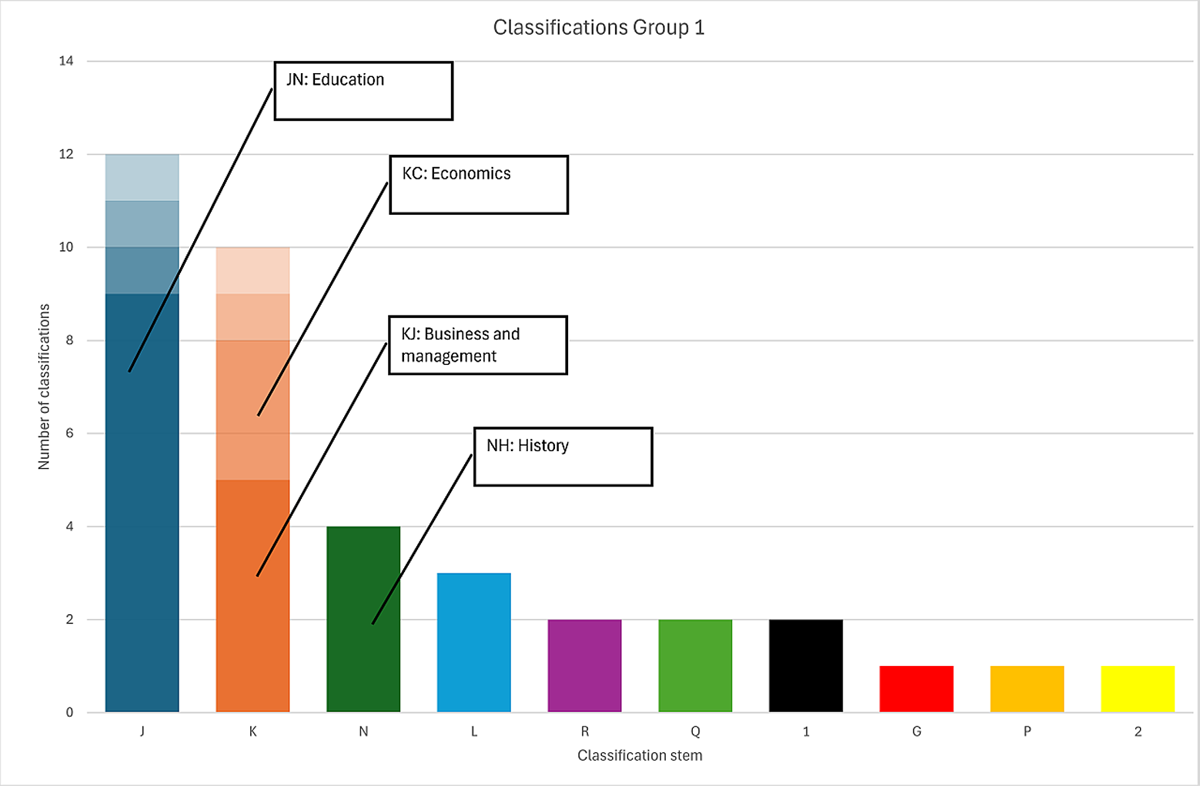
Figure 3
Classifications of Group 1
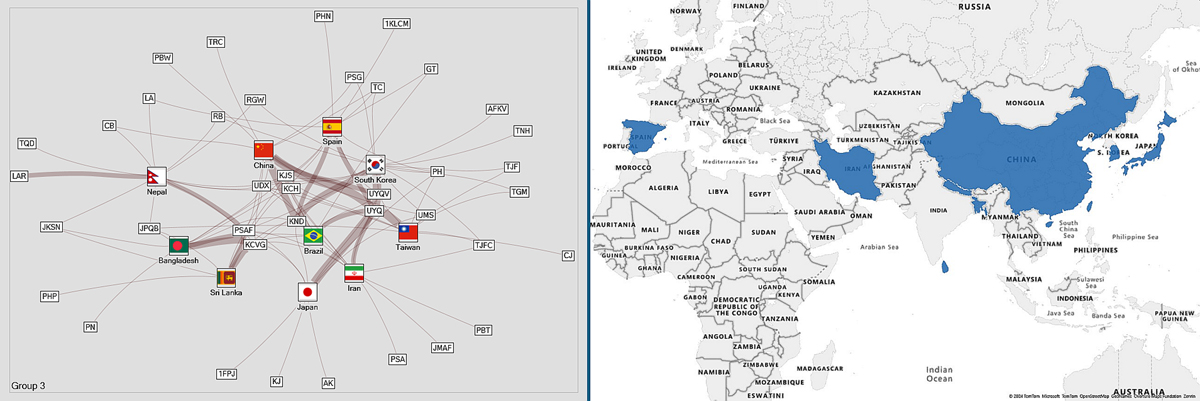
Figure 4
Clusters and countries of Group 3
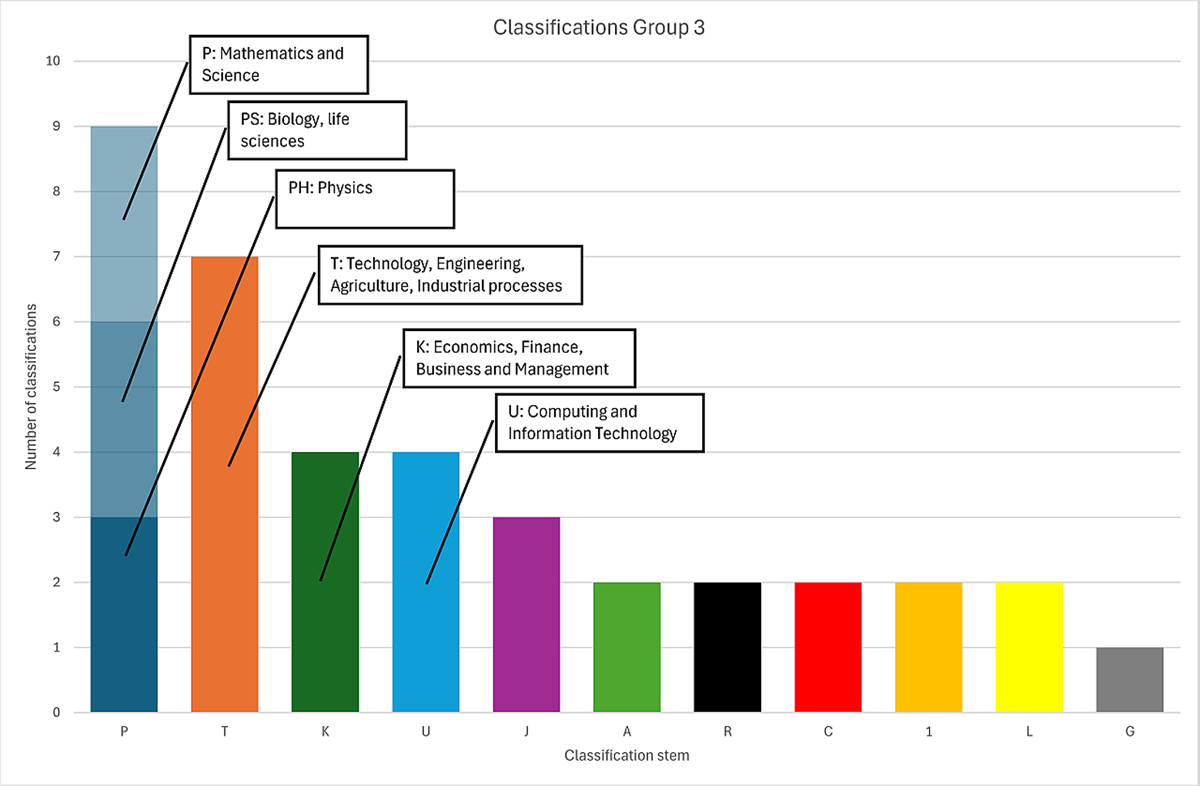
Figure 5
Classifications of Group 3
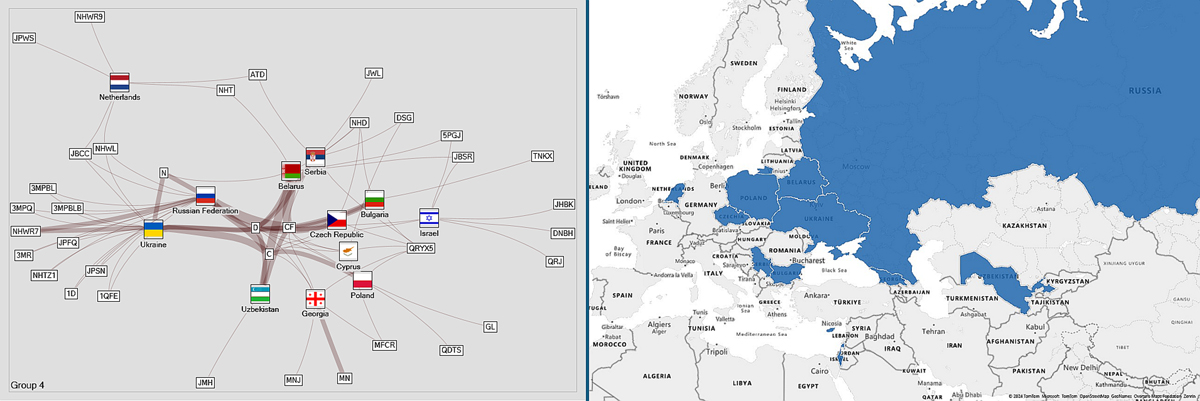
Figure 6
Clusters and countries of Group 4
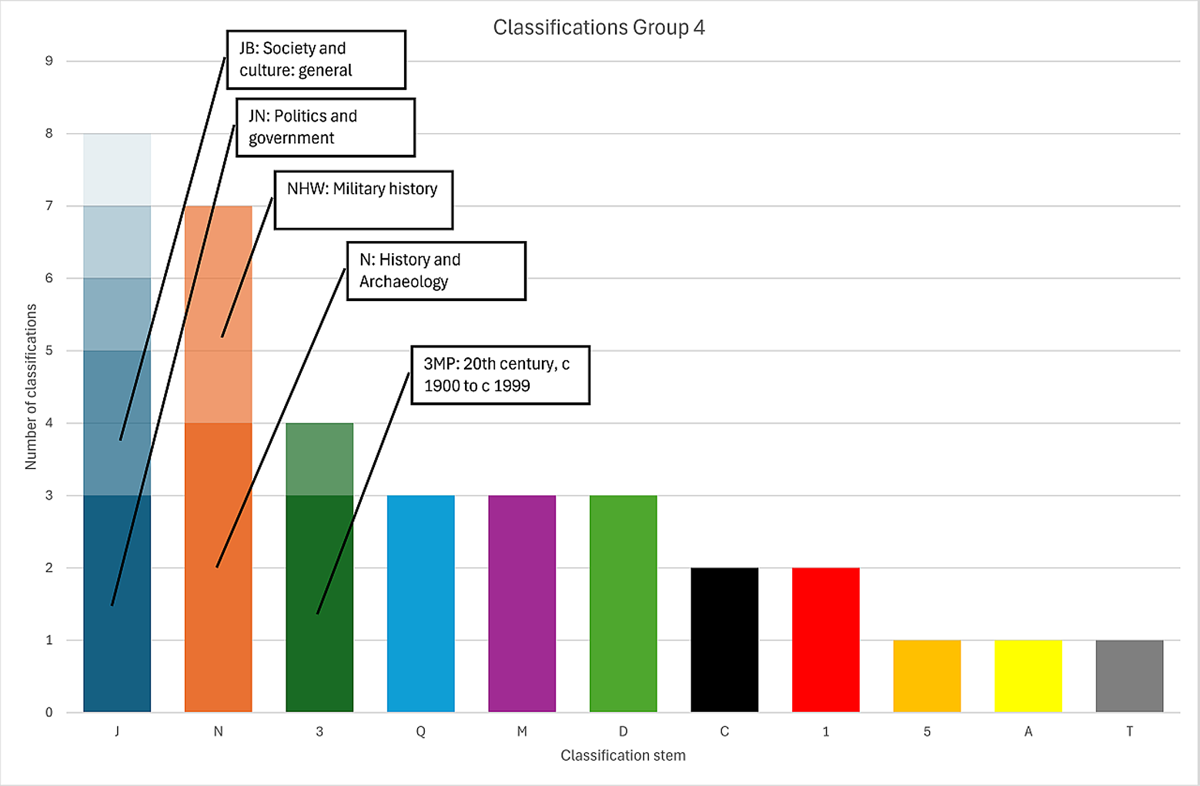
Figure 7
Classifications of Group 4
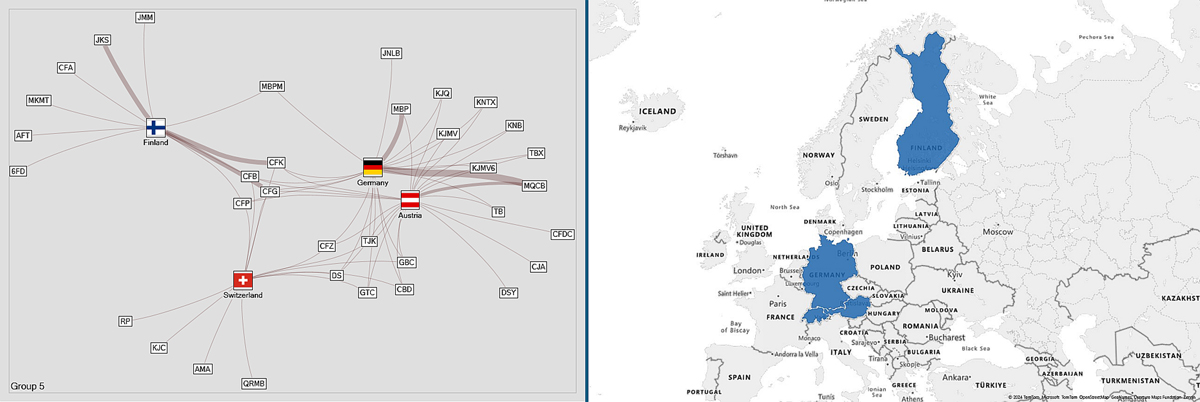
Figure 8
Clusters and countries of Group 5
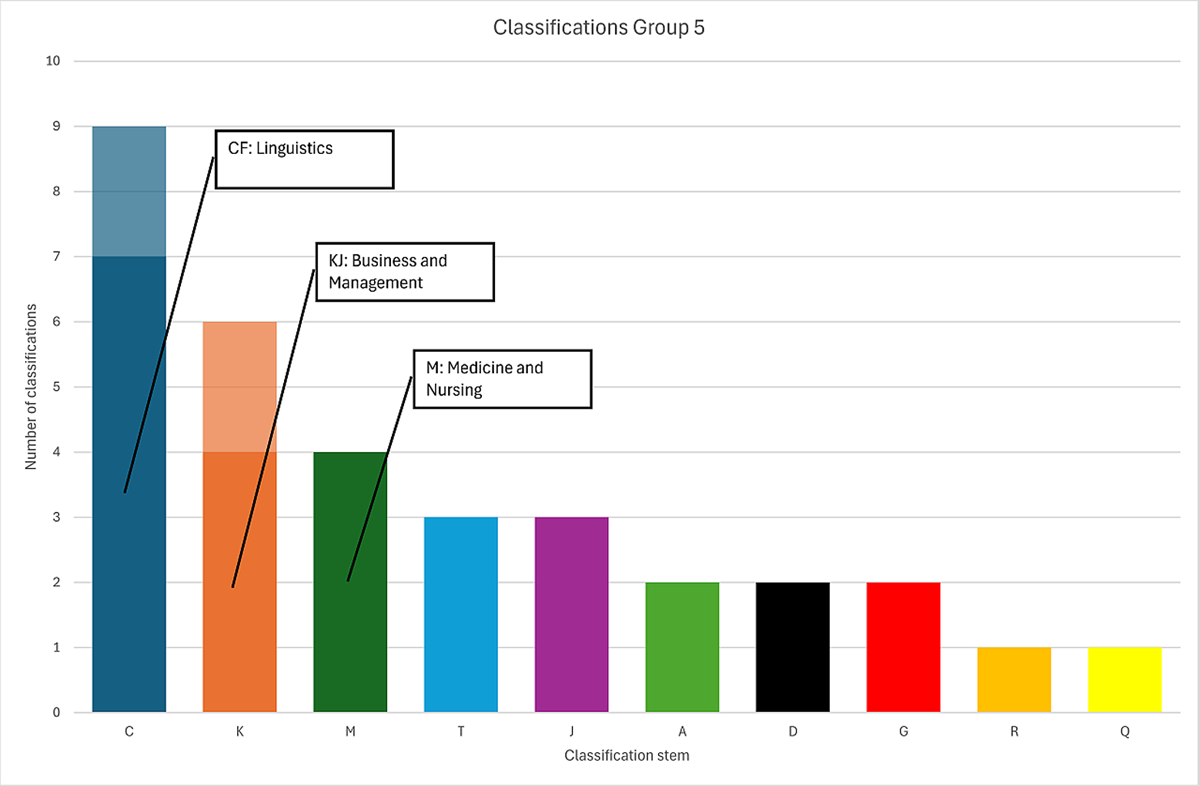
Figure 9
Classifications of Group 5
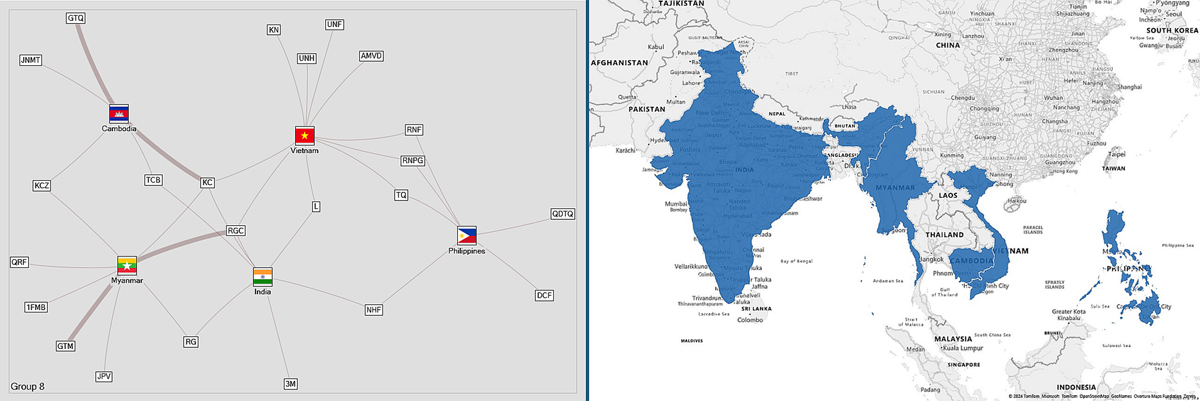
Figure 10
Clusters and countries of Group 8
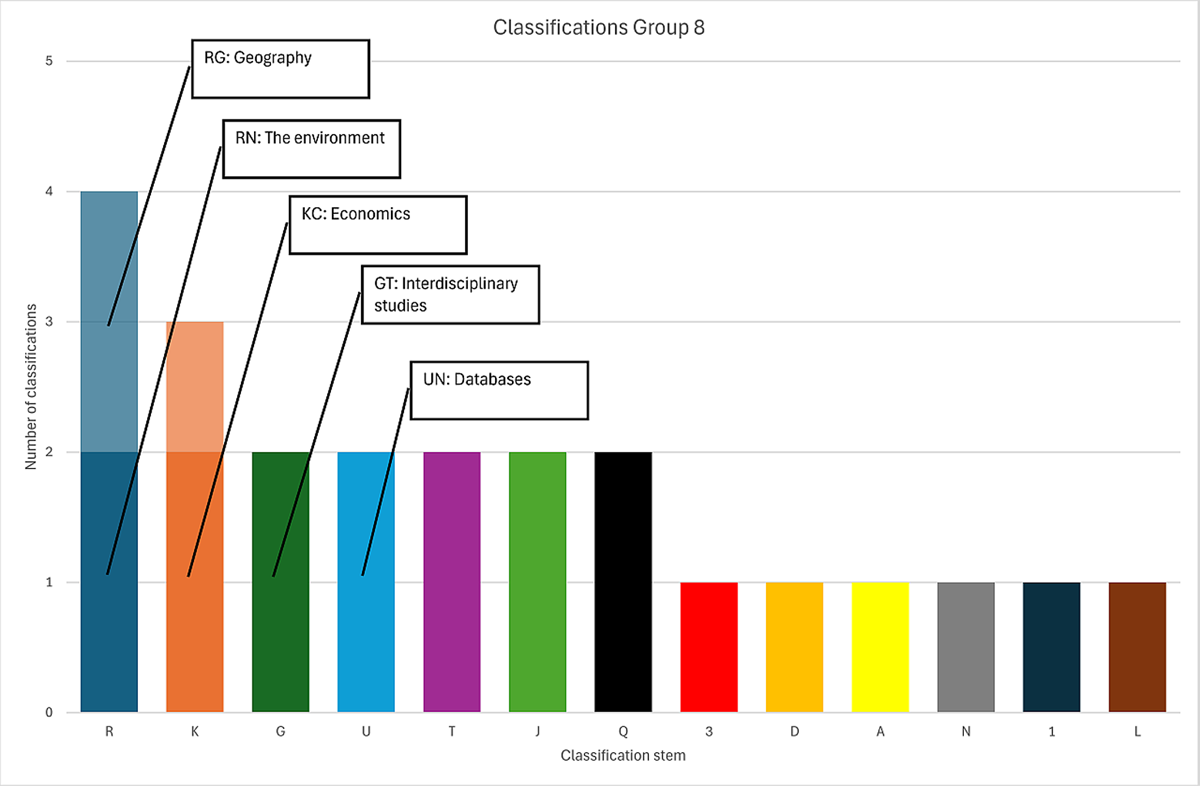
Figure 11
Classifications of Group 8
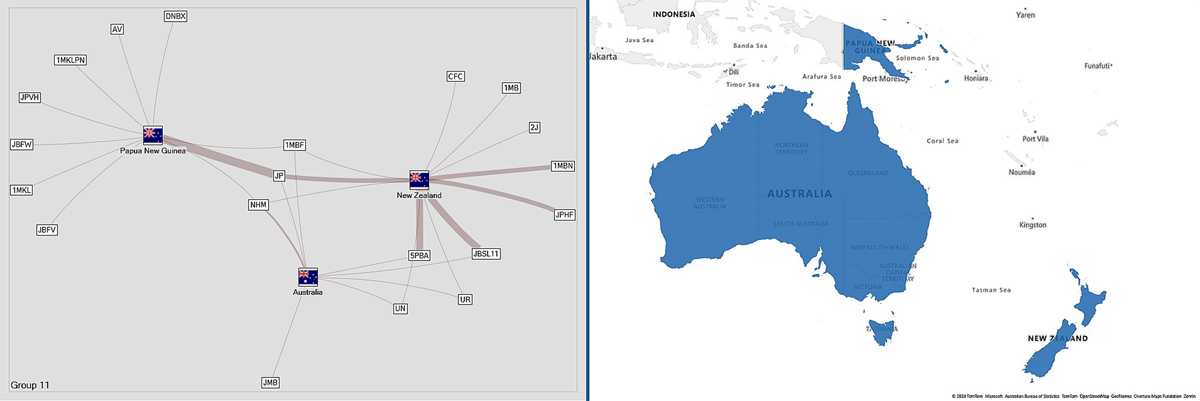
Figure 12
Clusters and countries of Group 11
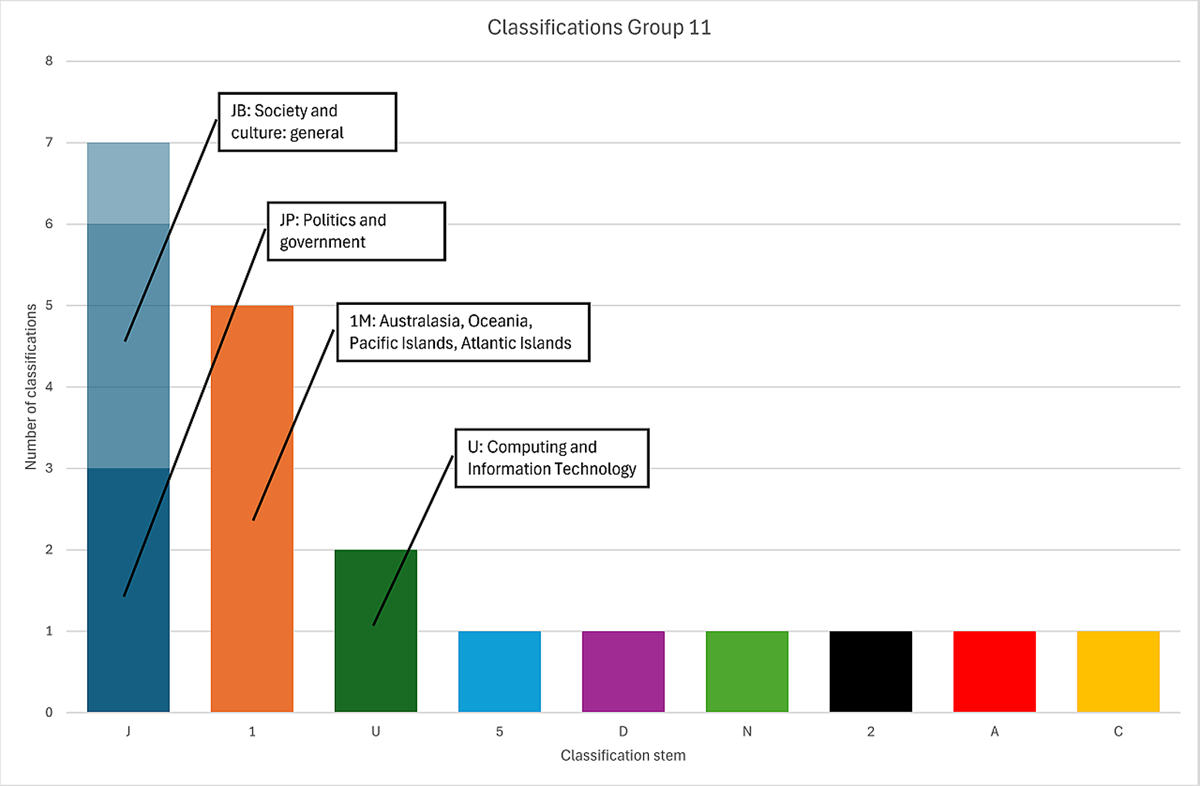
Figure 13
Classifications of Group 11
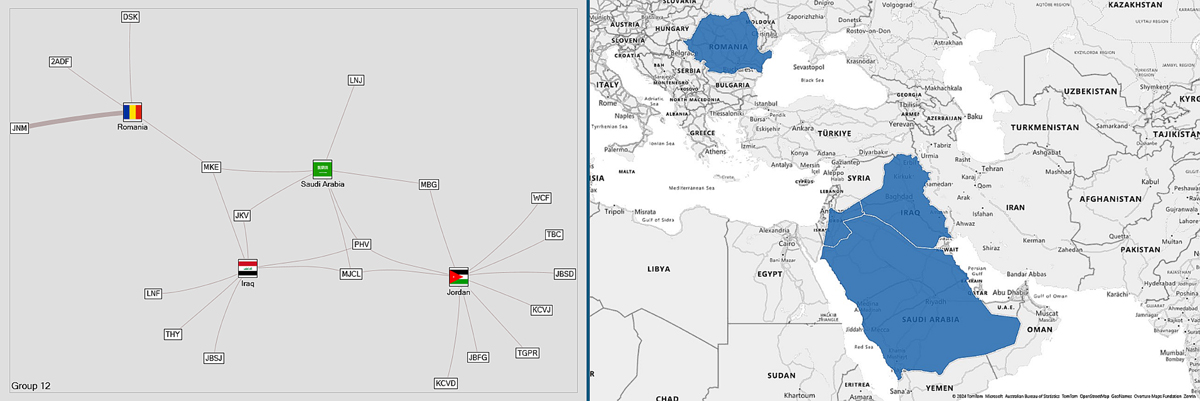
Figure 14
Clusters and countries of Group 12

Figure 15
Classifications of Group 12
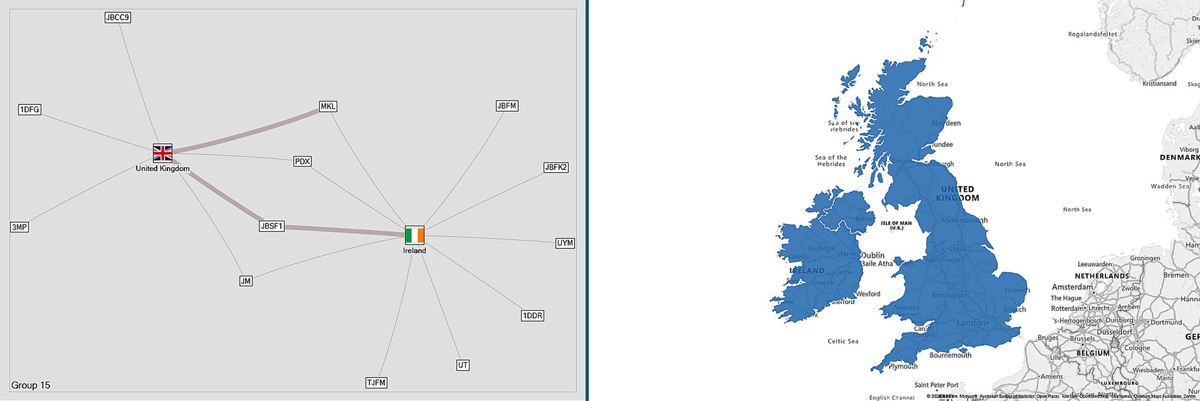
Figure 16
Clusters and countries of Group 15
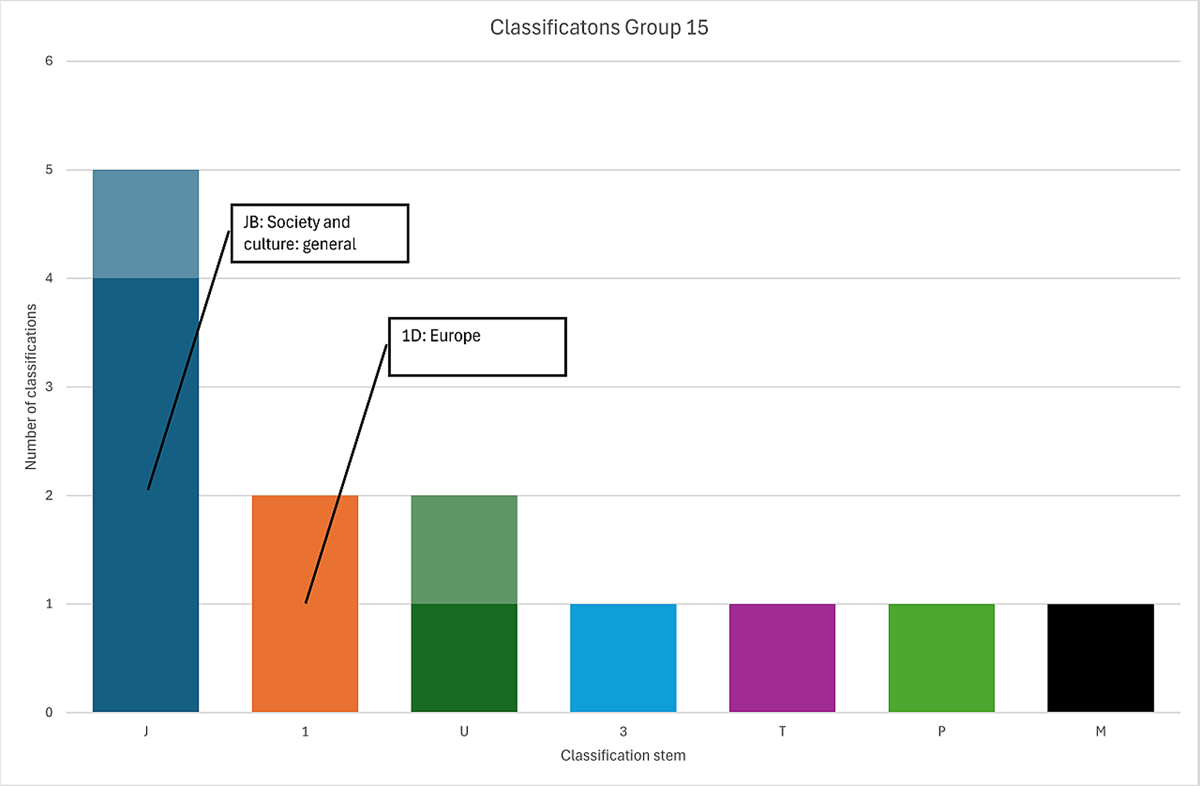
Figure 17
Classifications of Group 15