
Background of the Study
Quality of care and the mental and physical health of nurses are interlinked. The quality of patient care and outcomes largely depends on a caregiver’s professional quality of life.1 Nursing is a high-risk, stressful profession that increases nurses’ vulnerability to compassion fatigue symptoms compared to other healthcare workers. Compassion fatigue has serious consequences for nursing staff, patients, and healthcare organizations.2
Professional quality of life (ProQOL) is the quality of life that those in the helping professions reap from their work, including compassion satisfaction and compassion fatigue (burnout and secondary trauma).3 Both the positive and negative aspects of doing one’s job influence one’s professional quality of life.4 Nurses with high compassion satisfaction and low compassion fatigue (burnout, secondary traumatic stress) tended to have higher clinical competence.5
Nurses’ caring behaviors, professional activities, and behaviors for the benefit of patients influence patients’ perceptions of care and satisfaction with the quality of care provided. Caring behaviors of nurses are contextual, and various factors such as patients’ social structure, lifestyle, culture, and interests, as well as their biographical, social, and physiological characteristics, can influence perceptions of caring behaviors of nurses, as caring behaviors are an interactive and mental process between patients and nurses.6
The concept of caring is one of the primary aspects of nursing practice, universally acknowledged as essential for providing patient care. Measuring caring behaviors can advance knowledge about caring and has the potential to improve caring practices and the outcomes of care.7
Research indicates that nurses’ caring behavior influences care quality, patient satisfaction with health services, and readmission, all of which are important indicators of service quality.8 Nurses providing care based on professional values were found to have higher compassion satisfaction and burnout levels, and nurses with higher compassion satisfaction were found to experience less compassion fatigue.9
A study done among 1174 nurses in 2 large Southern California healthcare organizations reported that overall, participants scored moderate to average (23-41) on compassion satisfaction, burnout, and compassion satisfaction.10 A systematic review and meta-analysis concluded that the Asian region had the lowest levels of compassion satisfaction but the highest levels of compassion fatigue symptoms, while the Americas and Europe had the lowest levels of compassion fatigue but the highest compassion satisfaction.2
A study done in Southwest Ethiopia reports one in four nurses had a high level of compassion fatigue, and factors like work experience, perceived social support, self-compassion, coping strategies, work unit, and sleep hours were associated with compassion fatigue. A high level of compassion fatigue may adversely impact nurses’ well-being, patients, and healthcare outcomes.11
A study conducted among 375clinical nurses in three academic medical centers in Saudi Arabia (2020) documented that the majority of the nurses reported average levels of compassion satisfaction (57.9%), burnout (54.4%), and secondary traumatic stress (66.9%) in the professional quality of life domains. Positive and negative domains of professional quality of life influenced the caring behaviors among clinical nurses.12
A multicenter, cross-sectional study conducted in 2015 among 129 nurses from nine NICUs across six cities of Gujarat, North India, reported high compassion satisfaction, high burnout, and high secondary traumatic stress (19.4%, 23.3%, and 23.3% of nurses, respectively).13
Another study done among 203 nurses in Uttar Pradesh, North India, found two-thirds of the nurses reported a moderate level of compassion satisfaction (62.6%), burnout (66.0%), and secondary traumatic stress (63.1%). Compassion satisfaction was negatively correlated with burnout and secondary traumatic stress.14
A study conducted among 65 professional care providers at cancer palliative care centers in Bengaluru, South India, revealed 49.2%had an average level of compassion satisfaction (CS) and 53.8% of study participants had burnout(BO), while 95.4% of participants reported higher secondary traumatic stress (STS) on the ProQoL scale. A significant negative correlation was found between CS and BO, while a positive correlation was significant between BO and STS.15
Attention to the factors influencing nurses’ quality of work life may help nurse administrators and policymakers identify effective strategies to improve organizational efficacy, job satisfaction, retention, nursing care for patients, and the establishment of healthy work environments.16
Examining the issues affecting nurses’ own quality of life is crucial since nurses, as essential parts of the healthcare system, work to improve the quality of care and patients’ quality of life. The findings of this study help better understand the professional quality of life of nursing professionals and assist with designing interventions to improve staff’s well-being and quality of service at the hospital.
Most of the research on the professional quality of life and caring behaviors of nurses has been performed abroad. There have been three published studies on ProQoL: two from North India, one from South India, and none from Kerala State. In India, no studies have been conducted to assess the perceived care behaviors of nurses.
Moreover, the ProQoL and caring behaviors of nurses may differ between Indian and other populations due to variations in ethnicity, culture, health literacy, rural population, socioeconomic features, and health-care system. Therefore, this study was undertaken to evaluate the variables influencing nurses’ professional quality of life and compassionate behavior.
Methodology
This cross-sectional descriptive study was conducted from September 2024 to February 2025 in a 300-bed multispecialty private hospital in Anchal Town, Kollam district, Kerala State, South India.
The institutional ethical clearance was obtained. The study setting included all the inpatient units of the hospital. The sample size in our study was 110 nurses. The sample size was calculated using the following formula at a level of significance of 0.05 and a power of 0.80 (1.96).
There were 145 nurses in the hospital working in all three shifts, which included 131 nurses providing direct patient care and 14 nursing supervisors. Out of 131 nurses, 110 nurses were selected using a convenience sampling technique.
The inclusion criteria were that both female and male nurses working for more than three months in the study hospital, and providing direct patient care. All three shift nurses (morning, evening, and night) working in different units were included.
We excluded nurses unavailable during data collection (nurses on long leave for medical or maternity reasons) and nurses unwilling to participate.
Participation in the study was voluntary. Nurses were informed of the purpose of the study, and informed consent was obtained from all nurses before enrollment in the study. Confidentiality and anonymity were assured to the participants, and they were informed of the right to withdraw from the study at any time without any negative consequences for their employment. The participants were not coerced in any way since the researchers were not working in the same hospital.
The data was collected using a three-part, self-administered questionnaire that consisted of Part I: demographic data instrument, Part II: Professional Quality of Life scale (ProfQoLStamm4), and Part III: Caring Behaviour Inventory-24 (CBI-24-Wu et al.17).
Meetings for data collection were scheduled with the participants. The participants filled out their questionnaires at the start of their shift after their biometric attendance in the nurses’ room of their respective department. The participants were assured that the information and identity would be kept confidential. The data collection lasted for 30-45 minutes per subject.
Variables
Professional Quality of Life (ProQoL): refers to persons’ positive (compassion satisfaction) and negative (compassion fatigue) feelings in relation to their work of helping others experiencing or suffering trauma. Compassion satisfaction (CS) is related to the pleasure derived from the alleviation of patient suffering and positive work experience. Higher scores indicate greater satisfaction related to the ability of the nurse to be an effective caregiver in her job. Compassion fatigue encompasses two parts: burnout (BO), which concerns exhaustion, frustration, anger, and depression, and secondary traumatic stress (STS), which is a negative feeling driven by fear and work-related trauma.4
The researchers used the Professional Quality of Life Scale (ProQOL) which consists of 30 items on a 5-point scale. With more than 200 published papers, the tool has strong construct validity.4 For each of the items, the respondent was asked to give a score from never (1), rarely (2), sometimes (3), often (4), and always/very often (5), indicating the frequency of experiencing stated events in the last 30 days. The maximum score was 150, which included a compassion satisfaction score of 50and a compassion fatigue score of 100. For the compassion fatigue scale, scores of 5 items (items 1, 4, 15, 17, and 29) were reversed before calculating the total score.
Total compassion satisfaction scores were classified as low (scores ≤ 22), moderate (scores between 23 and 41), or high (scores ≥ 42). The total compassion fatigue scores were classified as low (scores ≤ 44), moderate (scores between 45 and 82), or high (scores ≥ 83).
Caring Behavior: Caring behaviors are actions concerned with the well-being of a patient, such as sensitivity, comforting, attentive listening, honesty, and nonjudgmental acceptance. Caring behaviors include two general categories: those that reflect the skills or technical abilities and those that reflect the attitudes and behaviors or emotional aspects of caring.17
In this study, the short-form Caring Behaviour Inventory-24 (CBI-24) was used to assess the nursing care behaviors among clinical nurses.17 The CBI-24 is an empirical instrument for measuring caring, developed to determine perceptions of caring among patients and nurses in diverse settings. The CBI-24 demonstrates high internal consistency, convergent validity, and good test–retest reliability in hospitalized patients and nurses, and it is widely used in these populations.17
The CBI-24 consists of 24 items with four subscales: (i) Assurance of human presence (8 items); (ii) Professional knowledge and skill (5 items); (iii) Respectful deference to others (6 items); and (iv) Positive connectedness (5 items). The CBI-24has 6-point Likert scale responses ranging from 1 (never) to 6 (always). The total score ranges from 24 to 144, where higher values reflect better perceptions of the caring behaviors.
Validity and Reliability: The standardized instruments, ProQoL andCBI-24,were used in the study. However, we obtained the content validity of both instruments from the subject experts. No modifications were made in the original instruments. The ProQoL and CBI-24 tools were tested for reliability using the test-retest method ( r- values: ProQoL: = 0.82;CBI: =0.88). Both instruments had an acceptable reliability value.
Statistical Analysis
All the categorical variables were summarized using frequency and percentage. Data were analyzed using descriptive (mean, standard deviation, frequency, and percentage) and inferential statistics.
Pearson’s correlation coefficient was used to explore the relationship between the professional quality of life (compassion satisfaction and compassion fatigue) of nurses and their caring behaviors.
Additionally, multiple regression analysis was employed to find out the factors influencing the compassion satisfaction, compassion fatigue, and caring behavior of nurses. The univariate analysis, the chi-square test, was performed to find the association between the personal and working-life variables and the professional quality of life and caring behaviors of nurses.
Statistical analyses were performed by SPSS Version 22.0. Variables with p<.05 were considered significant.
Results
Nurses Characteristics
A total of 110 nurses were recruited. The majority of them (99.1%) were female. Fortyseven (42.7%) nurses were in the age group between 31 and 40, and 36 (32.7%) nurses were between 21 and 25 years old. About 50.9% of nurses had a diploma in General Nursing and Midwifery (GNM), while 49.1% had a bachelor’s degree in a nursing qualification. Most of them (63.6%) were married, and 60% of them had children. The population reflected that 45.5% of them had less than 2 years of experience, and 26.4% of them had more than 8 years of experience. ICUs accounted for 32.7% of the total nurses, and medical wards accounted for 20%.
Professional Quality of Life
The study found the ProQOL scores were high for compassion satisfaction (53.6%) and average for compassion fatigue (62.7%). Fiftyone (46.4%) nurses had an average level of compassion satisfaction (CS); none of them had a low level of compassion satisfaction. Fortyone (37.3%) of them had a low level of compassion fatigue (CF), and none of them had a high level of compassion fatigue (Table 1).
Table 1
Mean, Standard Deviation, and Level of Overall Professional Quality of Life and its Subscales among Nurses (N= 110)
| Variables | Mean | Mean % | SD | Range (Min-Max) | Level (%) | ||
|---|---|---|---|---|---|---|---|
| Low | Average | High | |||||
| Compassion satisfaction (Total score-50) | 41.33 | 82.66 | 4.73 | 25 -50 | 0 | 46.4 | 53.6 |
| Compassion fatigue (Total score-100) | 47.85 | 7.85 | 9.41 | 25- 76 | 37.3 | 62.7 | 0 |
| Overall ProQOL score (Total score-150) | 89.18 | 59.45 | 9.17 | 69- 119 | - | - | - |
The overall mean (SD) of professional quality of life of the nurses was 89.18 out of 150 total score (SD = 9.18) with the score range of 87.45-90.92. The compassion satisfaction mean score of the nurses was 41.33 (SD=4.73) out of 50 total (mean percentage=82.66), whereas the compassion fatigue mean was 47.85 out of 100 (mean percentage=47.85). (Table 1)
Perception of Caring Behaviour of Nurses
The current study results revealed that 93.6% of the nurses had a high perception of caring behaviors, and 6.4% of them had a moderate perception of caring behaviors. None of them had a low perception of caring behaviors.
The overall mean score (SD) of nurses’ perception of caring behaviors was 127.75 (SD=10.53) out of 144 total scores, with the score range of 99-144. Among the four sub-components of caring behaviors, the assurance component had the highest mean percentage of 90.31, followed by respectful (89.0%), knowledge and skill (87.2%), and connectedness (87.2%). (Table 2)
Table 2
Mean and Standard Deviation of Caring Behaviors (N=110)
| Variables | Mean | Mean % | SD | Range (Min-Max) | 95% CI (Lower-Upper) |
|---|---|---|---|---|---|
| Assurance (total score- 48) | 43.35 | 90.31 | 3.770 | 33-48 | 42.63-44.06 |
| Knowledge & skill (total score- 30) | 26.16 | 87.2 | 2.653 | 19-30 | 25.66-26.66 |
| Respectful (total score- 36) | 32.07 | 89.0 | 3.445 | 21-36 | 31.42-32.72 |
| Connectedness (total score- 30) | 26.16 | 87.2 | 2.853 | 15-30 | 25.62-26.70 |
| Overall Caring behaviors Score (144) | 127.75 | 88.72 | 10.526 | 99-144 | 125.76-129.73 |
Relationship among compassion satisfaction and compassion fatigue and perception of caring behaviors of nurses
The current study found a positive and statistically significant relationship between compassion satisfaction and the caring behaviors (r=−0.326, p<0.001). Additionally, there was a negative and statistically significant relationship between compassion fatigue and compassion satisfaction (r=-.301, p<0.001); that means a higher level of compassion fatigue was related to a reduced compassion satisfaction score. (Table 3)
Table 3
Correlation Co-efficient among Compassion Satisfaction, Compassion Fatigue, and Perception of Caring Behaviors of Nurses (N=110)
| Compassion Satisfaction (CS) r- value (p value) | Compassion Fatigue r- value (p value) | Caring Behaviors (CB) r- value (p value) | |
|---|---|---|---|
| CS | 1 | -0.301***(0.001) | 0.326***(0.001) |
| CF | - 0.301***(0.001) | 1 | - 0.057(0.557) |
| CB | 0.326***(0.001) | -0.057(0.557) | 1 |
[i] Notes. *** p<.001
Factors predicting compassion satisfaction (CS), compassion fatigue (CF), and caring behaviors among nurses
Regarding the association between the demographic and working-life variables and CS, CF, and caring behaviors of nurses, the univariate analysis (Chi-square) revealed that total years of clinical experience (p<.01) and working shift (p<.05) were significantly associated with compassion satisfaction, while marital status and having children were significantly associated with level of compassion fatigue (p<.05). (Figure 1-4)
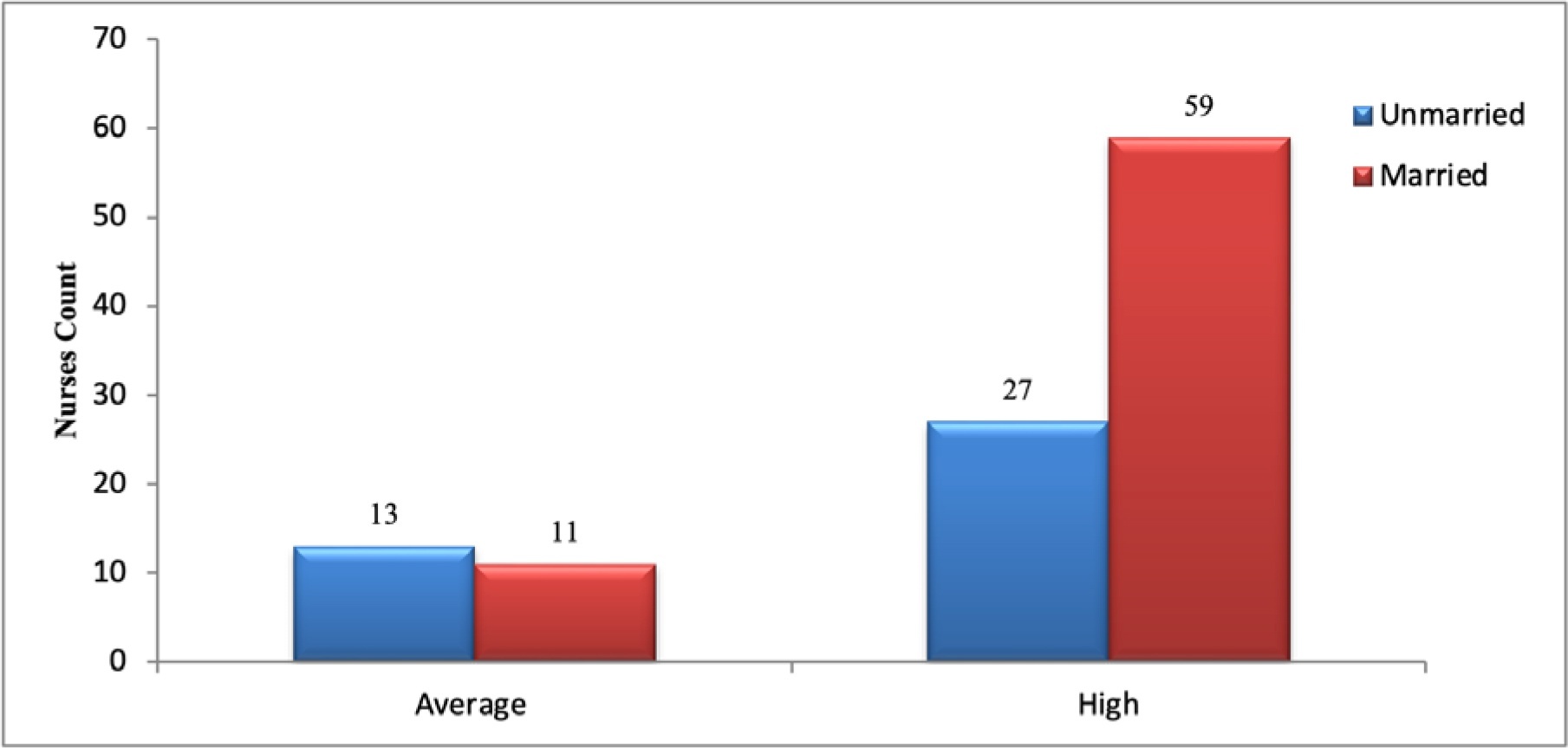
Figure 1
Level of compassion fatigue and marital status (N=110)
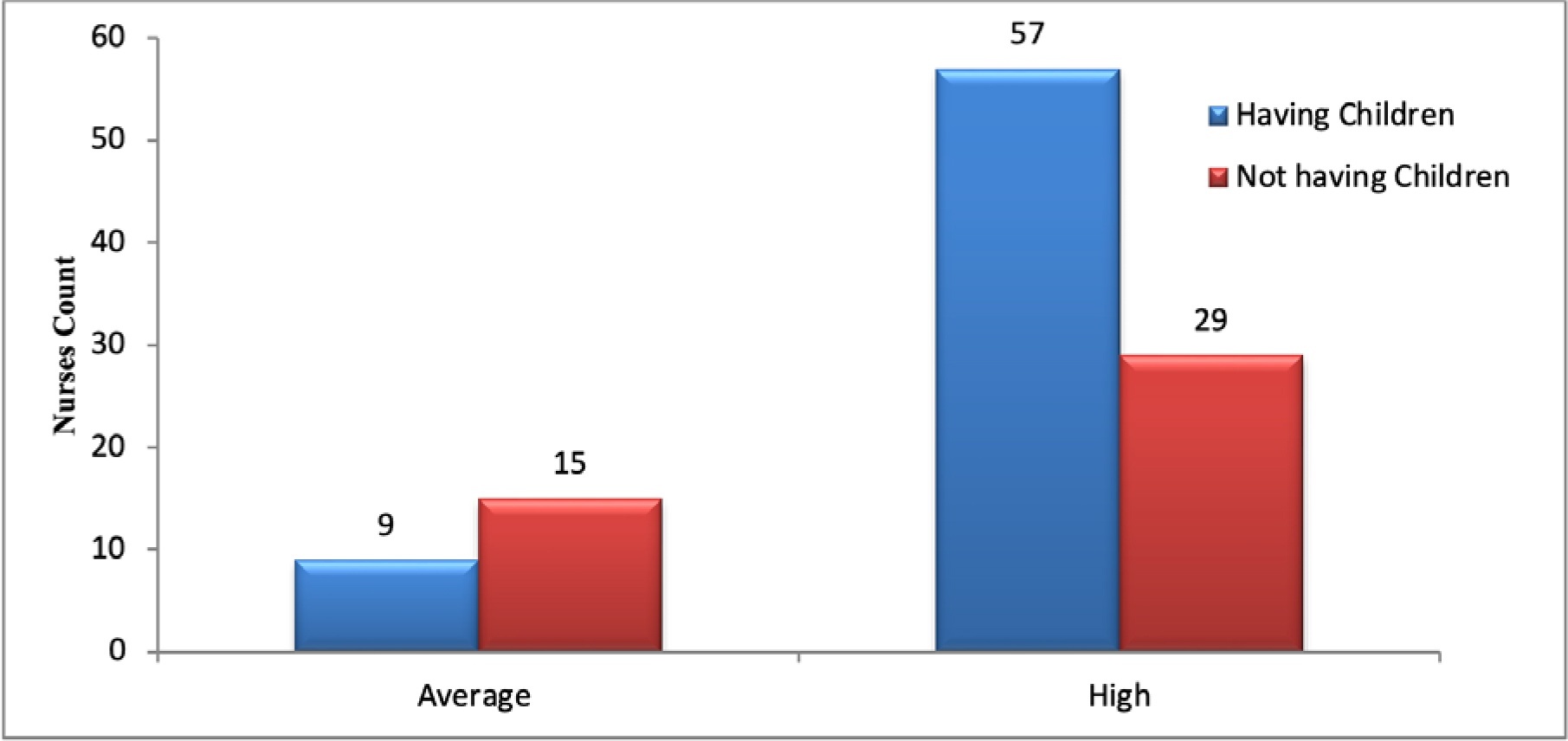
Figure 2
Level of compassion fatigue and having children (N=110)
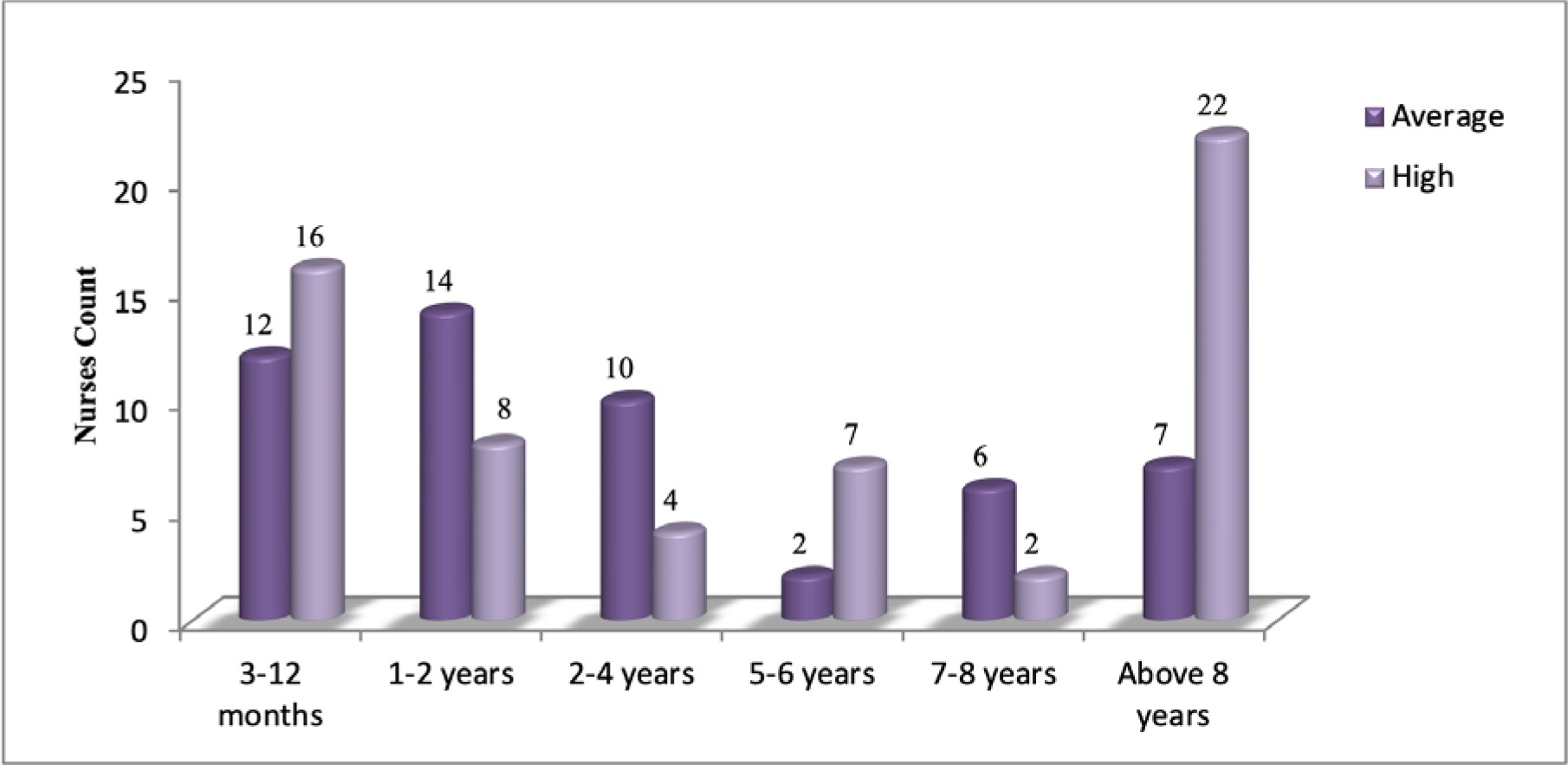
Figure 3
Level of compassion satisfaction and years of experience (N=110)
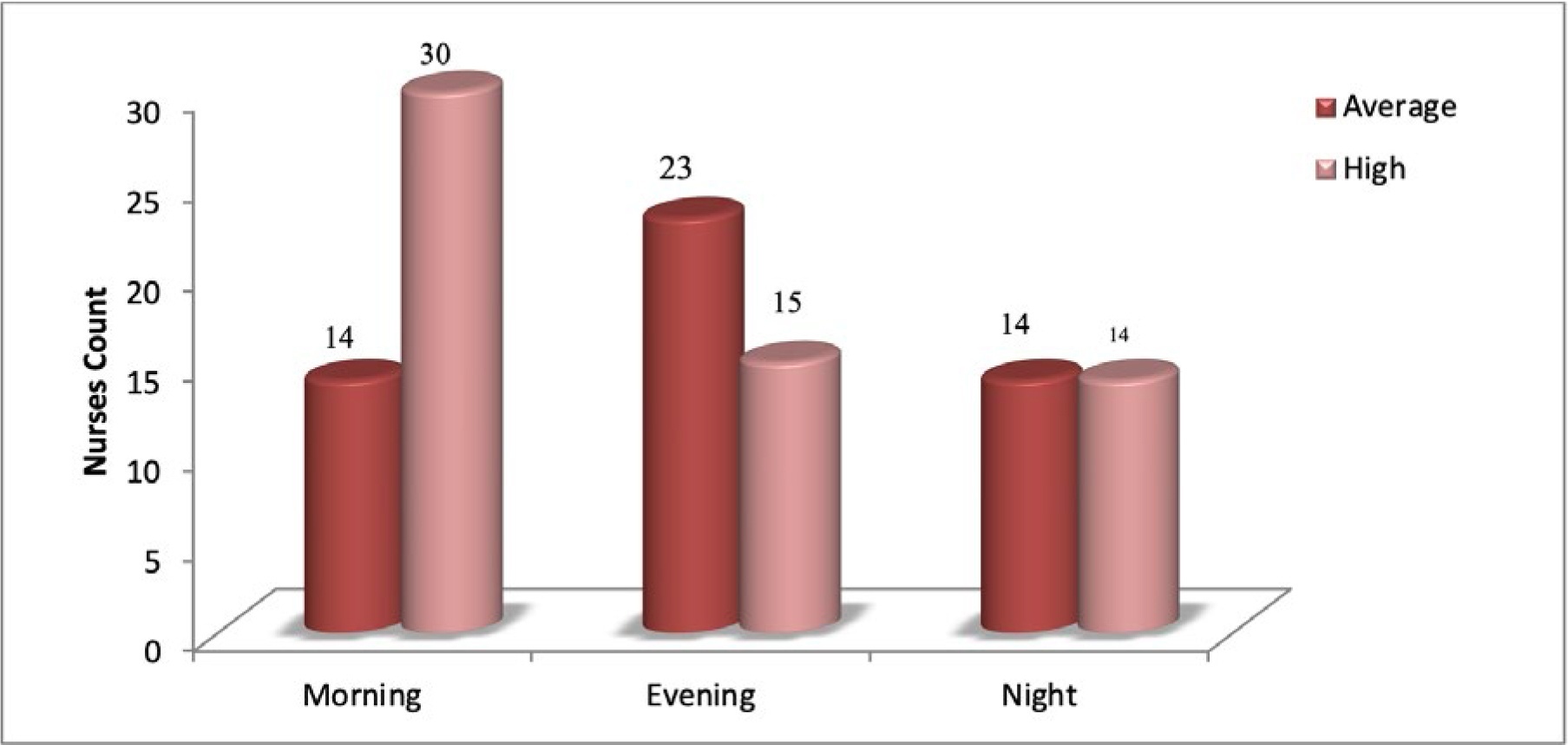
Figure 4
Compassion satisfaction and work shift (N=110)
Multiple regression analysis was used to determine the factors contributing to compassion satisfaction, compassion fatigue, and caring behaviors of nurses (Table 4). The study found that compassion fatigue (p < 0.05) and caring behavior (p<0.001) of nurses were statistically significant predictors of nurses’ compassion satisfaction levels (R²=26.8%),whereas nurses being married, nurses having children, and compassion satisfaction were statistically significant predictors of nurses’ compassion fatigue (R²=19.3%; p < 0.05), and these three variables had a direct negative relationship with the compassion fatigue (compassion satisfaction: β=-.26; 95% CI: -.94, -.12; nurses being married: β = -.49; 95% CI: -19.12 -.01; having children: β=-.58; 95% CI: -21.33, -1.16). (Table 4)
Table 4
Multiple regression analysis for Factors Influencing Compassion Satisfaction, Compassion Fatigue and Caring Behaviors of Nurses (N= 110)
| Dependent Variables | Independent Variables | SE | Β | p | 95% CI | Adj. R2 |
|---|---|---|---|---|---|---|
| Compassion Satisfaction | Caring behaviour | .04 | .35 | .000 | .07-.24 | 0.169 |
| Compassion fatigue | .04 | -.24 | .011 | -.21, -.02 | ||
| Compassion Fatigue | Compassion satisfaction | .20 | -.26 | .011 | -.94, -.12 | 0.084 |
| Marital status | 4.81 | -.49 | .050 | -19.12, -.01 | ||
| Having children | 5.08 | -.58 | .029 | -21.33, -1.16 | ||
| Caring Behaviors | Compassion satisfaction | .21 | .35 | .000 | .37-1.21 | 0.163 |
| Age | 1.59 | -.38 | .018 | - 6.99,-.66 | ||
| Total clinical experience | .79 | .33 | .027 | .20-3.35 |
[i] Notes. p<.05; β: Standardized Beta; SE: Standard error; CI: Confidence Interval
Further, the compassion satisfaction (p<.001), age of nurses (p < 0.05), and total years of clinical experience (p < 0.05) were statistically significant predictors of nurses’ caring behaviors (R²=26.2%). The caring behaviors of nurses had a direct negative relationship with their age (β=-.38; 95% confidence interval: -6.99 - .66). (Table 4)
Discussion
More than half of the nurses in our study experienced high levels of satisfaction in their work, and none of them experienced a low level. Nearly two-thirds of them had an average level of compassion fatigue, and one-third of them had a low level of compassion fatigue. Overall, participants scored high to average on compassion satisfaction (53.6% to 46.4%) and from average to low on compassion fatigue (62.7% to 37.3%). Positively, the mean score of compassion satisfaction was high (41.33 out of 50) when compared to the compassion fatigue mean score (47.85 out of 100). These findings are in agreement with the studies done in India, stating nurses reported average levels of compassion fatigue and burnout, but higher STS.13,15
Similar results were reported from different parts of the world, stating the ProQOL scores were average to low for compassion fatigue and high to average for compassion satisfaction.3,12,18 Similarly, a study done in Malaysia reports the majority of the nurses had moderate levels of compassion satisfaction (71%), burnout (46%), and secondary traumatic stress (45%).19
In the current study, the statement in the ProQoL Life scale “I am proud of what I can do to help” was rated highest, with the mean score of 4.52 out of 5. The other highest-rated statements were “I like my work as a helper,” “I am happy that I chose to do this work,” “My work makes me feel satisfied,” “I have thoughts that I am a success as a helper,” and “I have happy thoughts and feelings about those I help and how I could help them.”
More worryingly, all the low-rated statements of ProQoL were related to “Burnout.” The least rated statements were “I feel trapped by my job as a helper” (mean 1.76 out of 6), “I am a very caring person” (mean=1.85), “I have beliefs that sustain me” (mean=1.92), and “I am happy” (mean=2.19).
Regarding the caring behaviors of nurses, the present study results showed that the mean score of nurses’ caring behavior was high, 127.75 (out of 144 total score), and the majority of them (93.6%) had a high level of caring behavior. Similar findings emerged from a study involving 310 patients and 329 nurses across six general hospitals in Greece. The mean score for the Caring Behaviors Inventory-16 was 78.94 for patients and 80.27 for nurses (out of a total of 96).20 A study conducted in Ethiopia found that 75.1% (196/261) of nurses and midwives demonstrated a higher perception of caring behavior.21 Another study done in Ethiopia revealed that 63.4% of nurses had a good perception of caring behaviors.22
In the current study, among the four sub-components of caring behaviors, the assurance component had the highest mean, indicating that nurses placed high value on being readily available for the patients’ physical needs, followed by the respectful, connectedness, knowledge, and skill components. This finding is in agreement with a study done in Saudi Arabia that reported the highest degree of caring in terms of “assurance of human presence” and the lowest in “knowledge and skills” in four subscales of caring behavior among nurses.12
In the present study, the statement “Supporting the patient” was rated highest with the mean score of 5.62, and the statement “Demonstrating professional knowledge and skill” was rated lowest with the mean score of 4.8 out of 6. Alikari V et al.20 report that for nurses, the most important caring behavior was “Treating patients’ information confidentially” (mean=5.43), and the least important was “Returning to the patient voluntarily” (mean=4.57).
In the current study, the Pearson correlation coefficient revealed that there was a positive relationship between the compassion satisfaction of the nurses and their caring behaviors and vice versa, indicating that as the compassion satisfaction increases, the perception of caring behaviors of nurses also increases. Burtson and Stichler examined the relationship of nurse caring and compassion satisfaction and nurse job satisfaction and stress, burnout, and compassion fatigue among 126 nurses in the USA and found a positive correlation between compassion satisfaction and job satisfaction and nurse caring and a negative correlation between stress or burnout and nurse caring.23 In the same study, age and experience were associated with lower Caring Behaviors Inventory scores, suggesting that younger, less experienced nurses were at a higher risk of compassion fatigue. Similarly, studies conducted among nurses in Saudi Arabia,12Ethiopia,21Tehran,24 South Korea,25 and Turkey26report that compassion satisfaction and compassion fatigue domains of professional quality of life influenced the caring behaviors among clinical nurses. The authors concluded that nurses’ degree of caring behavior is related to their professional quality of life.
In the present study, there was a negative relationship between compassion fatigue and compassion satisfaction, indicating compassion satisfaction level decreases with increasing compassion fatigue levels and vice versa. Therefore, initiatives to increase nurses’ compassion satisfaction levels may serve as a safeguard against compassion fatigue. A study done in Turkey found there was a statistically significant correlation between compassion satisfaction and compassion fatigue (p=.002, r=0.220).27 The health and well-being and demands at work domain were significantly associated with compassion satisfaction, burnout, and secondary traumatic stress levels among nurses.19
Predictors of compassion satisfaction, compassion fatigue, and caring behaviors of nurses
Compassion Satisfaction as Dependent variable: Multivariate analysis revealed that the compassion fatigue and caring behavior of nurses were significant independent predictors of compassion satisfaction. The compassion fatigue had a negative relationship with the compassion satisfaction, which means nurses with low levels of compassion satisfaction are likely to suffer from compassion fatigue (STS and burnout). A study done in Turkey concluded that nurses with higher compassion satisfaction were found to experience less compassion fatigue.9
Next, the compassion satisfaction had a positive relationship with the caring behaviors of the nurses and vice versa; that means nurses’ compassion finds its reflection in the caring behavior of the nurses. Similar results were found in a study done in South Korea, which reports that compassion satisfaction (t=6.00, p<.001) was associated with oncology nurses’ degree of caring behavior and concluded that oncology nurses’ degree of caring behavior is related to their professional quality of life.25
Compassion Fatigue as Dependent variable: The nurses’ being married, the nurses having children, and the compassion satisfaction of the nurses were identified as significant factors affecting compassion fatigue. The compassion fatigue had a negative relationship with all three variables: the compassion satisfaction (CS), being married, and having children. In this study, 84.2% of the married nurses and 67.5% of the unmarried nurses had a high level of compassion fatigue (CF). Similarly, 86.4% of the nurses who had children and 65.9% of the nurses who did not have children had high levels of CF. A study done among 335 Korean nurses found that there were significant differences in age, marital status, religion, educational status, and position between clusters (compassion satisfaction, burnout, and secondary traumatic stress) of the professional quality of life scale.5
Similarly, a study conducted in Spain reported socio-demographic factors such as marital status, the healthcare setting, the area where the workplace is located, and the work shift are directly related to CF. In contrast, the following variables were involved in the CS sub-dimension: age, sex, marital status, the healthcare setting, the area where the workplace is located, and the work shift.3
Caring behaviors as Dependent variable: Compassion satisfaction, total years of clinical experience, and age of the nurses predicted their caring behaviors. Compassion satisfaction predicted the caring behaviors of the nurses, which may mean greater joy in their work and higher work engagement.
High-quality and humane nursing care depends on lowering nurses’ levels of compassion fatigue and increasing their levels of compassion satisfaction, requiring compassionate, merciful, and sympathetic nurses. Our study results were consistent with studies12,21,23-25conducted in different parts of the world, which reported that the positive domain (compassion satisfaction) and the negative domain (compassion fatigue) of professional quality of life influence caring behaviors among clinical nurses.
A study by Assefa et al.21 reports that professional satisfaction, personal satisfaction, midwife/nurse-doctor relationship, and workload were significantly associated with their perception of caring behavior. They suggested creating a positive and conducive caring behavior in the organization by reducing the excessive workload of nurses and midwives, as well as enhancing the nurse/midwife-doctor relationship and increasing their job satisfaction by providing recognition and reward, which could improve nurses’ and midwives’ caring behavior. Similarly, a study done in Sierra Leone revealed that the nurses’ caring behavior significantly and positively correlated with job satisfaction and resilience and both negatively correlated with anxiety. Linear regression analysis showed that resilience, job satisfaction, anxiety, daily working time, and position were the main predictors of caring behavior.28
In the present study, total years of clinical experience of the nurses was positively related to their perception of caring behaviors, signifying that as the years of clinical experience increase, the caring behavior of the nurses also increases. This could be explained by various factors, including professional expertise, better self-care habits, rich life experience, and improved emotional management gained through experience over time. This is corroborated in other studies, indicating that experience and maturity over the years increase psychological flexibility and the capacity for acceptance developed in adverse situations.18,29 The authors recommend implementing the nurse mentorship program to pair experienced nurses, who are potential mentors, with the novice or less experienced nurses. The mentorship programs offer mentees real-world insights, practical advice, and hands-on experiences that cannot be taught in classrooms alone.
Further, in our study, the caring behaviors of nurses had a negative relationship with their age. The possible reason may be that we found the mean score of the caring behaviors of two nurses in the age group of 51-60 years (111 out of 144) was far below the total mean of 127.75. Their low score may be due to their health issues, stress, and burnout.
Finally, positively in our study, the caring behaviors of the nurses were not influenced by compassion fatigue.
Limitations
Our study was conducted in a private hospital in a rural area in South India, thus excluding the nurses working in the urban settings and public hospitals. It is a single-centered study with a small sample size, selected by convenience sampling. Multicenter studies with large samples, including nurses working in both the private and public hospitals, are required to reflect the experience of the nurses in cities and rural areas of our country. Further, nurses’ ProQoL and caring behaviors were assessed cross-sectionally, and a person’s evaluation of their perceptions may alter over time as a result of unique work-related circumstances. Further, all measures were self-reported, where ratings for each statement are subjective and may have introduced response bias, which cannot be ruled out. In addition, the social desirability tendency may have an impact on nurses’ self-evaluation.
The various other work-related variables among nurses, like workload, staffing and scheduling, contentment with wage perks, job insecurity, interpersonal relationships, cultural and spiritual practices, could be studied further. Also, further research might be done to assess the impact of ProQoL and the caring behaviors of nurses on patient care outcomes. In addition, the same research may be replicated, including the perceived care behaviors of patients.
Nevertheless, our study findings are consistent with the studies done all over the world on the professional quality of life and caring behaviors of nurses.
Conclusions and Implications for Practice
In the current study, most of the nurses have a high level of compassion satisfaction and an average level of compassion fatigue. The great majority of them perceive a high level of caring behaviors. Next, the compassion satisfaction, age, and years of experience predict their caring behaviors. Nurses who are more satisfied and engaged have improved patient satisfaction and perceive good caring behaviors.
Lastly, marital status, having children, and compassion satisfaction all have an impact on nurses’ care behaviors. The literature states that compassion fatigue can have negative consequences for the nurse, the patients they are caring for, and the organization, leading to negative physical symptoms for the nurse, decreased job productivity, decreased employee engagement, increased turnover, and burnout. Occupational stressors should be recognized and reduced to help nurses cope with compassion fatigue. The nurse leaders and managers can apply this study’s baseline evidence to create tailored educational programs and resilience-building interventions in high-stress environments to promote compassion satisfaction and reduce compassion fatigue among nurses.
Acknowledgments
We would like to thank Dr. R. Subramanian, MS (ENT), retired senior civil surgeon, Madras Medical College, for English proofreading of the manuscript, and Dr. K. Geevarghese, biostatistician, for his help in statistical analysis.
Conflicts of interest
There are no conflicts of interest.
Financial support and sponsorship
Nil.