
Introduction
Pharmacovigilance, as defined by the World Health Organization (WHO) is “the science and activities relating to the detection, assessment, understanding, and prevention of adverse effects or any other drug-related problems,”1. It is a critical component of the global healthcare systems. It ensures drug safety by continuously monitoring medications, identifying risks, and implementing measures to minimize harm throughout a drug’s lifecycle.2-6 Pharmacovigilance systems aim to safeguard public health by addressing adverse drug reactions (ADRs), a significant cause of morbidity, mortality, and financial strain on healthcare systems worldwide.7-10 Globally, pharmacovigilance evolved in response to significant drug safety crises, notably the thalidomide tragedy of the 1960s. The incident underscored the inadequacy of existing drug monitoring frameworks, catalyzing the WHO Programme for International Drug Monitoring (PIDM) establishment and creating the Uppsala Monitoring Centre (UMC) to manage global ADRs reporting through VigiBase.11. Today, pharmacovigilance encompasses many functions, including data collection, signal detection, risk communication, and regulatory interventions to ensure public trust and safety.4,12
The significance of pharmacovigilance is amplified in regions like West Africa, where healthcare systems are often strained by resource limitations, insufficient infrastructure, and underdeveloped regulatory frameworks.4,13,14 15,16 The rapid introduction of new medicines and vaccines, particularly in response to emerging diseases, highlights the critical need for robust pharmacovigilance systems. Effective pharmacovigilance can identify, assess, and mitigate ADRs, ensuring that medications provide their intended therapeutic benefits while minimizing risks.17-19 Despite advancements, deficiencies still need to be improved in the pharmacovigilance systems of West Africa. Numerous nations have created national pharmacovigilance centers and are affiliated with WHO’s Programme for International Drug Monitoring.2,11,20. Nonetheless, obstacles such as inadequate healthcare professional training, a deficient ADRs reporting culture, and communication difficulties impede the efficacy of these systems.20-25 Regulatory frameworks and public awareness programs remain underdeveloped, exacerbating underreporting of ADRs—a problem compounded by cultural and systemic factors.23,26,27
This scoping review aims to systematically assess and map the pharmacovigilance systems and adverse drug reaction (ADR) reporting practices across West African nations. It will examine various aspects, including regulatory frameworks, stakeholder engagement, and operational challenges. The review will encompass the following countries: Benin, Burkina Faso, Cape Verde, Côte d’Ivoire, Gambia, Ghana, Guinea, Guinea-Bissau, Liberia, Mali, Niger, Nigeria, Senegal, Sierra Leone, and Togo. By identifying gaps and highlighting advancements, this review seeks to offer actionable recommendations for improving pharmacovigilance systems within the region. Such efforts are crucial for ensuring that West Africa aligns with global pharmacovigilance standards, fortifies healthcare systems, and enhances patient safety.
Method
This scoping review followed the Joanna Briggs Institute (JBI) methodology and adhered to the PRISMA-ScR (Preferred Reporting Items for Systematic Reviews and Meta-Analyses Extension for Scoping Reviews) guidelines.28 The primary aim was to map the literature on pharmacovigilance systems and ADRs reporting in West Africa, identifying advancements, challenges, and opportunities for improvement.
Search Strategy
A comprehensive search strategy was developed with one of the Witwatersrand College of Health Sciences Librarian to ensure inclusivity and rigor. The search included relevant terms such as “pharmacovigilance systems,” “adverse drug reaction reporting,” and “West Africa,” combined using Boolean operators and Medical Subject Headings (MeSH). The databases searched included PubMed, Scopus, Web of Science, MEDLINE, EMBASE, CINAHL Plus, and Google Scholar.
The search was conducted between April 17 and April 30, 2024, and included studies published from January 1, 2001, to April 2024. This timeframe was selected because Ghana became the first West African country to join the WHO Programme for International Drug Monitoring in 2001.29,30 Additional grey literature was identified through manual searches of institutional repositories and reference lists of included studies.
Inclusion and Exclusion Criteria
Inclusion Criteria:
Studies published between 2001 and 2024.
Focus on pharmacovigilance and ADRs reporting in West African countries.
Articles discussing pharmacovigilance systems, frameworks, challenges, and stakeholder roles.
English-language publications.
Studies involving human participants.
Exclusion Criteria:
Studies published outside the timeframe.
Commentaries, editorials, and animal studies.
Study Selection
EndNote version 20 was employed to import the search results and eliminate duplicate entries. The screening process was conducted in two stages:
Title/Abstract Screening: Articles were assessed for relevance based on their titles and abstracts.
Full-Text Screening: Articles meeting the initial criteria were subjected to a detailed evaluation in accordance with the established inclusion criteria.
The selection process was carried out by two independent reviewers. Any discrepancies between the reviewers were addressed through discussion, and co-authors were consulted as necessary to reach a consensus on the articles to be included in the final review. Throughout this procedure, the study selection methodology was meticulously documented and visualized using a PRISMA flow diagram.
Data Extraction
A standardized data extraction form was developed to ensure consistency. Key variables included:
Study Characteristics: Author, title, year, country.
Pharmacovigilance Features: Frameworks, ADRs reporting tools, and WHO program collaborations.
Outcomes and Recommendations: Challenges, successes, and proposed solutions.
Themes Identified: Stakeholder involvement, gaps, and recommendations for improving pharmacovigilance systems.
Data extraction was performed by one reviewer and cross-validated by another to minimize errors and ensure completeness.
Data Analysis and Presentation
Extracted data were analyzed using a descriptive statistical approach and thematic coding.
1. Descriptive Statistical Analysis:
Quantitative data were summarized, including the distribution of studies by country, publication year, and study design.
2. Data Categorization and Thematic Coding:
Data were systematically categorized into predefined themes:
National Pharmacovigilance Systems
ADRs Reporting Mechanisms
Stakeholder Involvement
Challenges and Barriers
Recommendations and Best Practices
Thematic analysis identified recurring patterns and insights aligned with the study objectives.
3. Presentation:
The findings were presented in a narrative synthesis, supported by visual representations (e.g., tables and figures) to ensure clarity and accessibility.
Quality Appraisal and Risk of Bias
In line with JBI guidelines, a formal quality appraisal and risk of bias assessment was not conducted, as this is not typically required for scoping reviews. The focus remained on mapping the available literature to identify knowledge gaps and thematic insights.
Ethics
Ethical approval was not required as the review relied solely on publicly available literature. All procedures adhered to ethical standards for conducting systematic and scoping reviews.
Results
The systematic search identified a total of 3,000 documents. After removing 1,054 duplicates, 1,946 articles were screened by title and abstract. Subsequently, 89 studies were chosen for comprehensive examinations, of which 59 satisfied the inclusion criteria and were incorporated into the final analysis (Figure 1). A detailed presentation of these studies is shown in Table 1 and summary of the findings per country in Table 2.
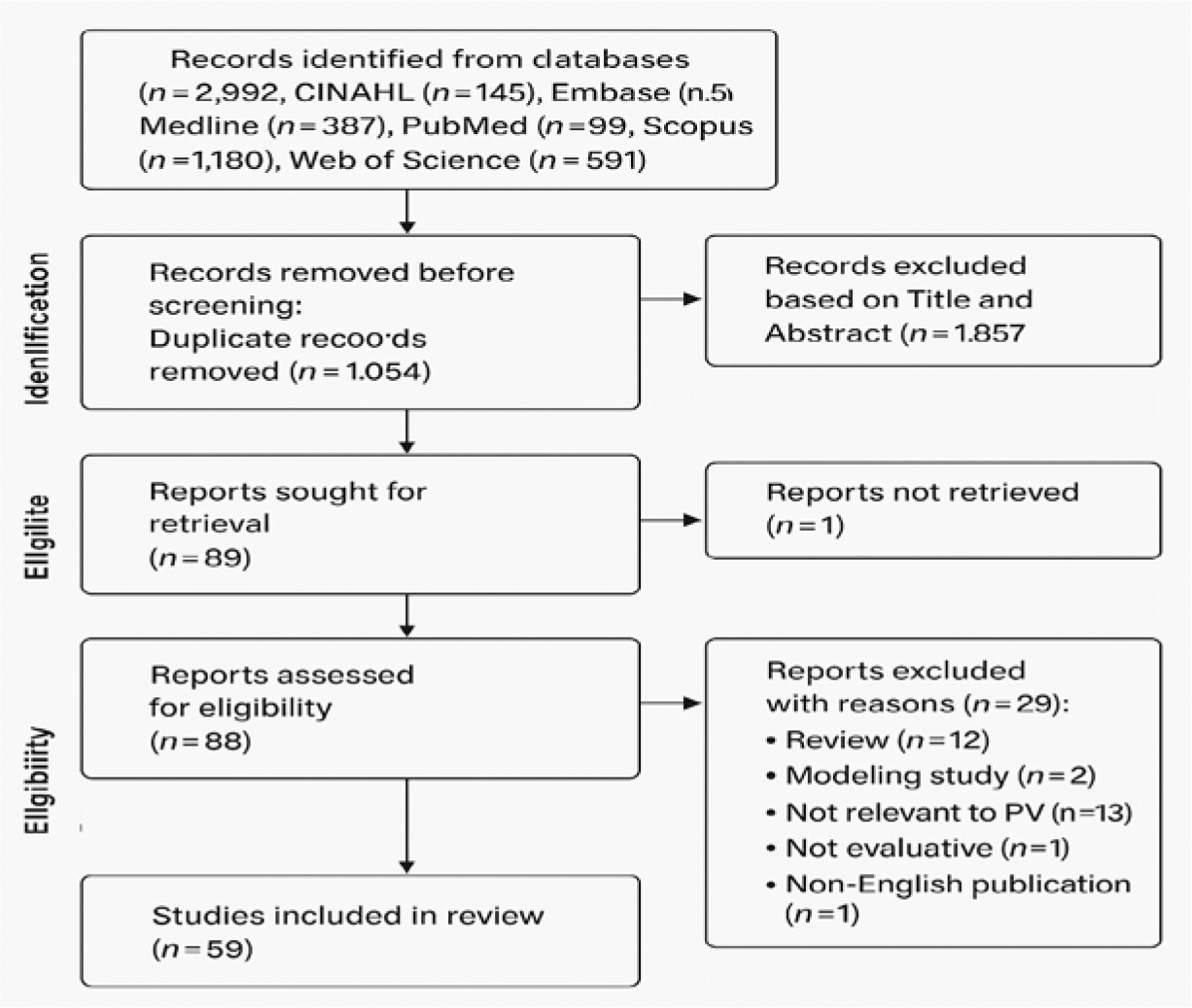
Figure 1
PRISMA flow diagram for selection criteria for Pharmacovigilance and ADRs reporting in West Africa.
Table 1
Characteristics of included studies
| Reference | Country | Study design | Pharmacovigilance systems level | Collaboration with WHO program | National Database | Outcome/Themes | Recommendation |
|---|---|---|---|---|---|---|---|
| Abiri et al. 201920 | Sierra Leone | Cross sectional study | Established basic structures for pharmacovigilance activities, formal organizational structure, medicine safety advisory committee, national pharmacovigilance guideline, | Joined the WHO Collaborating Centre for International Drug Monitoring in 2008. 87th member and is a full member. | Established in 2008. contains reports from clinical trials, immunization programmes and health facilities | Pharmacovigilance legislation for medicine safety monitoring. Incorporate active surveillance activities into the pharmacovigilance system. Collaborate with research institutions, universities, professional regulatory associations and healthcare programs Pharmacovigilance to be included in curriculum health related courses. | |
| Aborigo et al. 202231 | Ghana | Descriptive in-depth interviews | Adverse effects following immunization (AEFI) reports flow from the healthcare professional to the district disease control officers, to the regional coordinators and then to the national and finally to the FDA. | Expanded Program on Immunization collaborates with WHO for AEFIs surveillance | Database maintained at both district and regional offices, reports are submitted to the national Expanded programme for immunization (EPI) office and then to the FDA. | Reasons for under-reporting are lack of knowledge, workload, lack of motivation, fear of blame and cost of reporting. Reporting can be improved by Capacity building, simplified and standardized reporting systems, supportive supervision and incentivizing reporting, | To explore the use of electronic reporting to increase AEFI reporting in Ghana. |
| Acheampong et al. 201532 | Ghana | Retrospective review and key informant interviews | Attitude of healthcare professionals, lack of knowledge, communication barriers and workload | Pharmacists to improve their clinical knowledge to be accepted as partners in the management team | |||
| Adedeji et al 202133 | Nigeria | Cross- sectional survey (self-administered questionnaire) | Have a positive attitude. Inadequate knowledge and training, poor ADRs reporting, lack of information on ADRs in primary health Care (PHC) facilities, trained community health extension workers are more likely to report an observed ADR. Males more likely to report ADRs than females. | Training interventions on ADRs reporting urgently needed | |||
| Adegbuyi et al. 202134 | Nigeria | Self-administered questionnaire-based study | Healthcare professionals document the observed or reported ADR on the yellow card. The report is then submitted to the hospital pharmacovigilance committee and then to the regional pharmacovigilance center. Reports are collated and analyzed by the National Pharmacovigilance Centre and then submitted to WHO global | Collaborate with WHO and submit collated reports of ADRs to WHO Global. | The National Pharmacovigilance Centre collates, and analyses reports from all the regional pharmacovigilance centers in the country. | Healthcare professionals have positive attitudes. Pharmacists are highly knowledgeable. High pharmacovigilance knowledge tertiary level facilities. Healthcare professionals preferred internet/web reporting to paper base forms or telephonic /text messages. Reasons for not reporting include lack of time and compensation. Lack of knowledge, no action taken after reporting | Incentivizing ADR reporting. Building capacity for frontline workers. Simplified reporting methods |
| Adisa et al .201935 | Nigeria | Questionnaire-guided interview | Nigeria implemented a mobile phone alert system, the Pharma-covigilance Rapid Alert System for Consumer Reporting (PRASCOR) in 2012 to enable the public to report suspected ADRs directly to NPC | Learned about pharmacovigilance through the news (television and radio) and social media. Pharmacist’s counselling does not cover ADRS. Good knowledge of the concept of serious ADRs. Majority believed that reporting ADRs is necessary to prevent harm. | Educating stakeholders on pharmacovigilance. Disseminating the PRASCOR initiative to the public | ||
| Kukula et al. 201536 | Ghana | Prospective, observational, cohort study | Use of Mobile phones in reporting is effective and affordable | ADRs events to be monitored through phone calls in resource constraint settings | |||
| Adisa et al. 201937 | Nigeria | Questionnaire-guided survey | Healthcare professionals have awareness, lack knowledge and a moderately positive attitude towards reporting. Patients have low awareness. Challenges in ADR reporting include unavailability of form, lack of expertise in the ADR form. | Continuous training on pharmacovigilance mandatory. Public awareness campaigns on spontaneous ADR reporting | |||
| Adu-Gyamfi et al. 202238 | Ghana | Crosssectional study (self-administered structured questionnaire) | Joined WHO Programme for International Drug monitoring and started pharmacovigilance and spontaneous ADR monitoring activities in 2001 | Lack knowledge of pharmacovigilance. ADR was not reported due to workload, lack of knowledge and unavailability of reporting forms. | Reporting forms are accessible, integrating electronic reporting, giving feedback for reporting | ||
| Agu et al. 201239 | Nigeria | Cross-sectional study, | Counselling and education on ADR contributed to positive attitude and drug compliance | Design Pharmacovigilance programs for pharmacists to improve the ADR reporting process. | |||
| Anyachebelu et al. 201840 | Nigeria | Mixed method (questionnaire, observation and interviews) | Good knowledge, poor compliance and poor reporting | Design Pharmacovigilance programs for pharmacists to improve the ADR reporting process. | |||
| Appiah et al. 201941 | Ghana | Interviews and focus group discussion | Most patients stop the medications when they experience ADRs and do not report because of lack of knowledge | Mobile phone caller tunes can be used to educate the public on ADRs and drug safety | |||
| Asiamah et al. 202242 | Ghana | A questionnaire- based cross-sectional study | Institutional Contact Persons at facilities that serve as the link between the FDA and the health professionals for ADR reporting. Mandatory ADR reporting by Pharmaceutical Manufacturing Companies. Manufacturing Companies have Qualified Person for Pharmacovigilance to report ADR and pharmacovigilance for all the products and to FDA | Joined the International Medicine Safety Monitoring System in 2001 as the 65th Member State and the 1st in sub-Saharan Africa | Ghana FDA keeps an ADR data repository | Average knowledge and low ADR reporting. | Awareness campaigns through media sensitization and stakeholders’ engagement on the need to report all ADRs. A policy on mandatory reporting to be implemented |
| Avong et al. 201843 | Nigeria | A Structured Pharmacovigilance and Training Initiative (SPHAR-TI) model was used | The NAFDAC has a National Pharmacovigilance Policy and an administrative structure. represented in Abuja and Centers in all the six geographic regions. | Nigeria joined the International Drug Monitoring Scheme in 2004 and became the 74th member country | All reports are submitted to NPC, reports are validated and analyses and then submitted into VigiBase | Form is the primary tool for reporting. The SPHAR-TI model designed for capacity building to improve reporting and ADR reporting increased. Activation of Pharmacovigilance Committees at facility levels | |
| Awodele et al. 201244 | Nigeria | descriptive cross-sectional survey | Patent medicine vendors (PMVs) play a crucial role in pharmacovigilance activity. The bulk of the PMVs have above secondary school education. ADRs not reported for fear of prosecution. Training significantly improved knowledge, attitude and reporting | NPC to make Rereporting forms accessible. Patients in the rural areas can report to nearby PMVs stores where there are no nearby health facilities. | |||
| Awodele et al. 201145 | Nigeria | cross sectional descriptive survey | Good knowledge of pharmacovigilance. Reasons for not reporting are lack of access to forms and fear of prosecution. Training is needed for doctors in the private health sector. Public sensitization to report all ADRs to their health care professionals | Inclusion of pharmacovigilance in both undergrade and post-graduate medical school curriculum. | |||
| Awodele et al. 201346 | Nigeria | cross sectional descriptive survey | As per WHO guidelines all herbal medicines are expected to have adverse effects and as pharmacovigilance systems urges all members to be aware of this fact | Public awareness efforts on pharmacovigilance. Pharmacovigilance of herbal medicines not monitored. Herbal medicines to go through quality assurance testing. Reporting of ADRs due to herbal medicines to the pharmacovigilance center. | Support direct consumer report to improve ADRs from herbal medicines. Adverse effects herbal medicines to be incorporated into the pharmacovigilance systems. | ||
| Balogun et al. 201447 | Nigeria | Cross-sectional survey study | Reporting high. Strengthening patient participation in pharmacovigilance of HAART. Educate patients on reporting all suspected ADRs early | ||||
| Balogun et al. 202148 | Nigeria | WHO data collection form for pharmacovigilance indicators | Pharmacovigilance system has components of adequate for safety monitoring of herbal medicines use. | Pharmacovigilance system is highly limited for the safety monitoring of herbal medicines. | Improvement needed on active surveillance of efficacy and safety, and causality assessment of HMs-related reports of herbal medicines. Incorporation of Pharmacovigilance into national educational curricula. Awareness campaign and education of the public and relevant professionals on the need to report adverse reactions due to herbal medicines | ||
| Bello et al. 201149 | Nigeria | Self-administered questionnaire-based study | Lack of awareness of ADR and poor reporting. Female physicians prefer not to engage the key actors of pharmaceutical companies on ADRs. | Educational strategies for improving ADR reporting are needed for both patients and physicians. | |||
| Chatio et al. 201650 | Ghana | In-depth interviews | ADRs not reported due to lack of education, patients attitude behavior of healthcare professional. Healthcare professionals to educate and encourage patients to report all reactions immediately | Continued educational training to be integrated into the day-to-day health care services. Encourage ADR reporting. Proper care should be provided for patients experiencing side effects. | |||
| Daniel et al. 202151 | Nigeria | Cross-sectional descriptive study | Good knowledge of ADR reporting. Reports from nurses and midwives are low overall. Lack of access to the reporting form. | Training and access to online reporting portal Healthcare professionals to improve ADR reporting | |||
| Eze et al. 202352 | Nigeria | Cross-sectional study | Improved awareness of pharmacovigilance and ADR reporting. Perceptions of pharmacovigilance and ADR reporting are low. Perception toward ADR reporting is linked to exposure. | Adequate exposure and training for all interns on pharmacovigilance for and ADR reporting, possibly making it mandatory. | |||
| Ejekam et al. 202016 | Nigeria | Crosssectional mixed method study | WHO pharmacovigilance Indicators used to assess pharmacovigilance in public health programmes in Nigeria | HIV/AIDS program contributes greatly to ADR reports to the country’s database. | ADR reports not included in the annual reports. Poor recording and reporting of ADRs. Insufficient budget allocated for pharmacovigilance activities. Poor internet access, inadequate human resources. Delay in data entry into database. | Update the current ADR form to include therapeutic ineffectiveness and medication error. Pharmacovigilance policy objectives to be included in the academic curriculum | |
| Fadare et al. 201153 | Nigeria | Cross-sectional questionnaire-based study | AEFI monitored by the FDA and the Expanded Programme on Immunization with close collaboration with the African Collaborating Centre for Pharmacovigilance (ACC) | National electronic data system for AEFI reporting started in 2002 | Healthcare professionals unaware of the availability of pharmacovigilance committee. The use of the Yellow Card for reporting is low. Inclusion of nurses in pharmacovigilance activities will improve ADR reporting | Regular training on and strengthening ADR reporting guidelines among healthcare professionals is needed | |
| Gidudu et al. 202054 | Ghana. | Cross-sectional survey | lack of knowledge and training, fear of consequences, lack of feedback on the report | Clear policy protecting healthcare professionals needed, supportive supervision, feedback on reports, and adequate training. | |||
| Gulma 202355 | Nigeria | Document review and key informant interviews | Lack of knowledge and poor reporting of ADRs. Reporting is complicated, workload, reactions not severe or lifethreatening, unavailability of forms. Actions taken by PHC staff for ADRs cases are, refer the patient, treat the symptoms of the ADR with another drug or counsel the patient and allow the reaction to resolve on its own | ||||
| Jaquet et al. 201156 | Cote d’Ivoire. | Cross-sectional survey study (questionnaire to ART prescribers and a retrospective ADR survey of the medical charts) | Joined WHO program for international drug monitoring as an associate member in 2007 | Lack of knowledge and Under reporting of ADRs. Training in pharmacovigilance and ADR monitoring of HIV-infected patients is needed. The use of treatment modification for ADRs monitoring is feasible | |||
| Kabore et al. 201357 | Burkina Faso | Descriptive cross-sectional study | The pharmacovigilance system was launched in 2008 by the drug regulatory authority of the Ministry of Health (MoH) | Member of the WHO Uppsala Monitoring Centre | National guidelines and standardized operating procedure are limited. No specific legislation on pharmacovigilance. Basic pharmacovigilance resources are in place. | Develop pharmacovigilance legislation, improve stakeholders’ coordination. Need for training and supervision. Provide feedback and decentralize pharmacovigilance services. Risk management and communication endeavors should be displayed | |
| Mendoza et al. 202412 | Côte d’Ivoire | Training and mentoring of healthcare professionals | Pharmacovigilance activities were launched in 1988, and the policy was adopted in April 2014. Pharmacovigilance projects were built on a partnership between GlaxoSmithKline (GSK), PATH, and the Ministry of Health, national health authority, and the national pharmacovigilance center | Joined the WHO Programme for International Drug Monitoring in 2010 (full member) | Have an established database | Training and mentoring healthcare professionals to be incorporated in the standard functioning of health facilities to improve reporting. Acknowledge and provide feedback mechanisms to motivate healthcare professionals Collaboration between public health programmes and the national pharmacovigilance unit to confirm all adverse effects are compiled at the central level, to adequately monitor the safety of medicines. | Use electronic tools compatible with VigiBase to allow prompt AE reporting and faster safety signal detection. |
| Mohammed et al 201858 | Nigeria | Descriptive cross-sectional survey | Good knowledge, perception and attitude towards reporting. Nonavailability of reporting forms. Promotion of continuous medical education. | On the job training for optimal exposure leads to better performance and inculcation of ethical values. | |||
| Mohammed et al. 201959 | Nigeria | Cross sectional survey study | Lack of knowledge. Positive perception of ADRs reporting among traditional medicine practitioners. | Support training of the traditional medicine practitioners on identification and reporting ADRs. | |||
| Ndiaye et al. 201860 | Senegal | Evaluation of reporting using reporting form, mobile phones and active follow-up | Community health professionals to be trained to identify and report adverse effects. Healthcare professionals to be trained in the use of mobile phones to report to improve timely ADRs notification and enhance safety. Supervision of healthcare professionals and community sensitization. Central team to process reports and provide feedback | ||||
| Obieze et al. 202261 | Nigeria | cross-sectional survey study | Knowledge, attitude, and practice of pharmaceutical supply chain management leaders can be improved through dissemination of the national pharmacovigilance policy and training. Communication of medicines safety outcomes to the supply chain management could enhance the knowledge attitude and practice of pharmacovigilance. | ||||
| Ohaju-Obodo et al 201062 | Nigeria | cross-sectional survey study | Lack of knowledge, awareness and attitude, under reporting of ADRs. Reasons for not reporting are lack of awareness, lack of commitment by regulatory authorities, poor reporting protocol and unavailability of forms. | ||||
| Okezie et al. 200863 | Nigeria | cross-sectional survey | Low reporting. Reporting to be included in all specialty meetings. Use of notes and posters on ADRs reporting in all wards and clinics. The pharmacovigilance unit should give regular feedback to doctors to motivate reporting. | ||||
| Omoleke et al. 202264 | Nigeria | In-depth interviews and observations | Healthcare professionals Knowledge is poor. Error during vaccination is most common cause of AEFI. Low uptake of immunization due to AEFI. | Policymakers must consider regular update training for healthcare providers on AEFI. | |||
| Opadeyi et al. 201815 | Nigeria | Cross-sectional descriptive survey | Pharmacovigilance policy document introduced in 2012. Creation of zonal centers to decentralize the activities of the National Pharmacovigilance Centre (NPC). | WHO indicators ideal for the evaluation of tertiary Hospitals and help in improving patient safety through Pharmacovigilance. Maps out relevant areas for interventions and alterations in the health information system management | Poor record keeping and lack of data in hospitals. Poor budget allocation for pharmacovigilance. Improvement in medical record documentation. Hospitals with established committees and committed personnel had better reports. | Increased institutionalization of pharmacovigilance may be the first steps to improve pharmacovigilance activities in the tertiary hospitals. | |
| Opadeyi et al. 201965 | Nigeria | Cross-sectional study | SMS reminders to report ADRs are very useful. Educational intervention leads to Improvement in the knowledge and practice of pharmacovigilance. Regionalization of reporting centers improves reporting | ||||
| Oppong et al 202266 | Ghana | Cross-sectional study | Treatment failure is often experienced with generic antimicrobials than with branded products. Antibiotics must be stored as per the manufacturer’s specification. Suspected ADRs mostly reported to seniors as opposed to completing the form. Training in the documentation of ADRs in the approved form is needed. | ||||
| Oreagba et al. 201167 | Nigeria | Cross-sectional observational survey | Nigeria became a full member as the 74th member country in September 2004. | Lack of knowledge, practice and reporting rate. Reasons for poor reporting include lack of awareness and incentive about pharmacovigilance. | Urgent need for Training in pharmacovigilance and ADR reporting. Inclusion of Pharmacovigilance and ADRs in the curriculum. The basic duties of pharmacists constitute ADR reporting | ||
| Osakwe et al. 201368 | Nigeria | Cross sectional study | Training improved knowledge and practice of pharmacovigilance amongst health care providers. Training sessions should emphasize real life situations and role plays rather than teaching session to make it impactful and long lasting. | Strengthening awareness raising and improvements in pharmacovigilance training methods are essential to enhance the effectiveness of the program. | |||
| Osei et al. 201669 | Ghana | Cross-sectional survey | Failure of reporting ADR is due to the unavailability of forms and lack of knowledge. Acknowledgment letter for report submitted to encourage continued reporting. ADR reporting was made mandatory to improve reporting rates. Professional development and training on pharmacovigilance is an effective strategy to improve ADR reporting | ADR reporting forms to be readily available in all community pharmacies. NPC should consider ways of improving reporting ADRs, for example using social media and direct online reporting. | |||
| Osemene et al 201770 | Nigeria | Cross-sectional survey | Lack of knowledge but positive perceptions towards reporting. Regular curriculum review and expansion of the course content to improve the knowledge in pharmacovigilance. Lay emphases hands-on training and focuses on early postgraduate clinical programmes as they accord the students the requisite exposure to real time experiences with patients. Students believed monetary incentives will improve ADR reporting. | ||||
| Osemene et al. 201271 | Nigeria | Survey questionnaire | Involvement in the monitoring and reporting of ADRs is very low. Herbal medicines could be toxic. Regular knowledge update through active participation in workshops in pharmacovigilance. | ||||
| Oshikoya et al. 200972 | Nigeria | Cross-sectional study | Gaps between knowledge and ADRs reporting. Training in pharmacovigilance. | Attitudinal and cultural changes are needed for improvement in reporting. reporting to be an integral part of the clinical activities. More awareness on the reporting form | |||
| Oshikoya et al. 200973 | Nigeria | Structured questionnaire | Inadequate undergraduate teaching. ADRs prevention is not taught. ADRs reporting to the NPC is low. ADRs prevention, monitoring and reporting form part of the core curriculum of undergraduate CPT teaching. | ||||
| Oshikoya et al. 200974 | Nigeria | Questionnaire survey | Parental reporting of suspected ADRs is feasible. Involve parents in ADR detection and reporting to prevent the occurrence of ADRs. Parental reporting can identify unusual ADRs previously undetected during the initial evaluation of a medicine | ||||
| Powell et al. 202375 | Ghana | Cross-sectional survey | Lack of knowledge and reporting. Designated contact persons for pharmacovigilance in health facilities. Use of mobile phone for ADRs reporting | Regular and sustained engagement with healthcare professionals | |||
| Rouamba et al. 202076 | Burkina Faso | Prospective observational study | Both systems of surveillance (active and passive) are useful. In the passive surveillance system, we noted a relative underreporting of ADRs. Spontaneous reporting is feasible. The active surveillance is achievable but expensive. The Health and Demographic Surveillance System platform is a useful tool for the national pharmacovigilance system to monitor the safety of medicines in rural areas. | ||||
| Sabblah et al. 201477 | Ghana | Cross sectional survey | Training improved ADR reporting. Most doctors had not been trained. Reporting forms to be available. Training and update courses on ADR reporting are to be organized. Acknowledgement and actions taken to be provided for reporters. | ||||
| Sabblah et al. 201978 | Ghana | Cross-sectional study | Feedback provided to all healthcare professionals reported in the form of personalized letters. Patients expect feedback for ADR reports submitted to the NPC. Feedback expected through mobile phones, short messaging services and email. | NPC to explore alternative ways of providing feedback to patients reporting ADRs. | |||
| Sabblah et al. 201779 | Ghana | Cross-sectional survey | Positive attitude and good knowledge of ADR reporting to the NPC. Report because they expect to contribute to drug safety. Patients’ decisions to report are influenced by healthcare professionals and family members, and the ease of reporting | Public awareness campaigns and timely feedback of the actions taken to reporting patients to encourage continued reporting | |||
| Seaneke et al. 202380 | Ghana | Cross-sectional study | The App is useful and user friendly. Concerns about the privacy and security of personal information. | Support raising awareness to enhance the acceptance and use the app by both healthcare professionals and patients | |||
| Showande et al. 201381 | Nigeria | Questionnaire survey | Pharmacovigilance is not included in the pharmacy curriculum. Lack of Knowledge. Pharmacy students need to be well grounded in pharmacovigilance activities to improve reporting. | The Pharmacist Council and University Commission to immediately implement the new curriculum which includes pharmacovigilance courses | |||
| Showande et al. 202282 | Nigeria | mixed methods (questionnaire survey and observational study) | Some patients reported experiencing ADRs to healthcare professionals. Patients are unaware of the existence of Pharmacovigilance Rapid Alert System for Consumer Reports (PRASCOR). Community pharmacists can identify ADRs. Poor documentation and reporting of the observed ADRs by community pharmacists. | ||||
| Udoye et al. 201883 | Nigeria | Cross-sectional survey | High awareness but attitude and practice through very poor. Availability of reporting forms to all pharmacists. Regular reminders during meetings and teachings, that reporting ADRs is ethical and mandatory. | ||||
| Yamoah et al 201984 | Ghana | Cross-sectional quantitative design | Awareness, lack of knowledge regarding and negative perceptions. Training and sensitization of healthcare professionals on AEFIs and vaccine safety. Pharmacovigilance and vaccine safety to be integrated in academic institutions. | ||||
| Yawson et al. 202285 | Ghana | Cross-sectional survey | Good awareness and positive attitudes but low ADRs reporting. Healthcare managers and the regulator to pay attention to existing gaps in the knowledge of healthcare professionals in pharmacovigilance |
Table 2
Summary of findings by country on pharmacovigilance
| Country | Number of Studies | Key Findings | Recommendations |
|---|---|---|---|
| Nigeria | 36 | Poor reporting and lack of information in PHC facilities, with trained community health extension workers more likely to report. Males report more than females. High incidence of ADRs related to antiretroviral drugs. | Implement standardized reporting and enhance training for healthcare professionals. |
| Ghana | 17 | Lack of structured drug safety systems, workload constraints, fear of blame and costs associated with reporting. Mobile phone reporting is effective, but forms are often unavailable. | Develop national ADR monitoring systems and integrate pharmacovigilance into academic curricula. |
| Burkina Faso | 2 | Underreporting of ADRs with current systems in development. Health and Demographic Surveillance System is useful for monitoring safety in rural areas. | Strengthen healthcare worker training and improve pharmacovigilance infrastructure. |
| Cote d’Ivoire | 2 | Underreporting of ADRs. Treatment modification is a feasible strategy for monitoring. | Training and mentoring healthcare professionals; feedback mechanisms to motivate reporting; collaboration with public health programs. |
| Senegal | 1 | Barriers in medication access affecting reporting. Need for supervision and community sensitization for ADR reporting. | Establish patient safety education and train community health professionals in reporting methods. |
| Sierra Leone | 1 | Pharmacovigilance systems currently in development with significant gaps in awareness and reporting capabilities. | Strengthening healthcare worker training to promote awareness and improve reporting practices. |
Characteristics of Included Studies
The 59 included studies spanned across six West African countries: Ghana (17 studies), Nigeria (36 studies), Burkina Faso (2 studies), Côte d’Ivoire (2 studies), Sierra Leone (1 study), and Senegal (1 study). This distribution highlights a concentration of pharmacovigilance research in Nigeria and Ghana, while studies from other countries remain limited (table 1, 2 and figure 2). The included studies comprised: cross-sectional studies (n = 22), qualitative studies (n = 10), mixed-methods studies (n = 15), and National reports and guidelines (n = 12). This information is shown in Table 1, below.
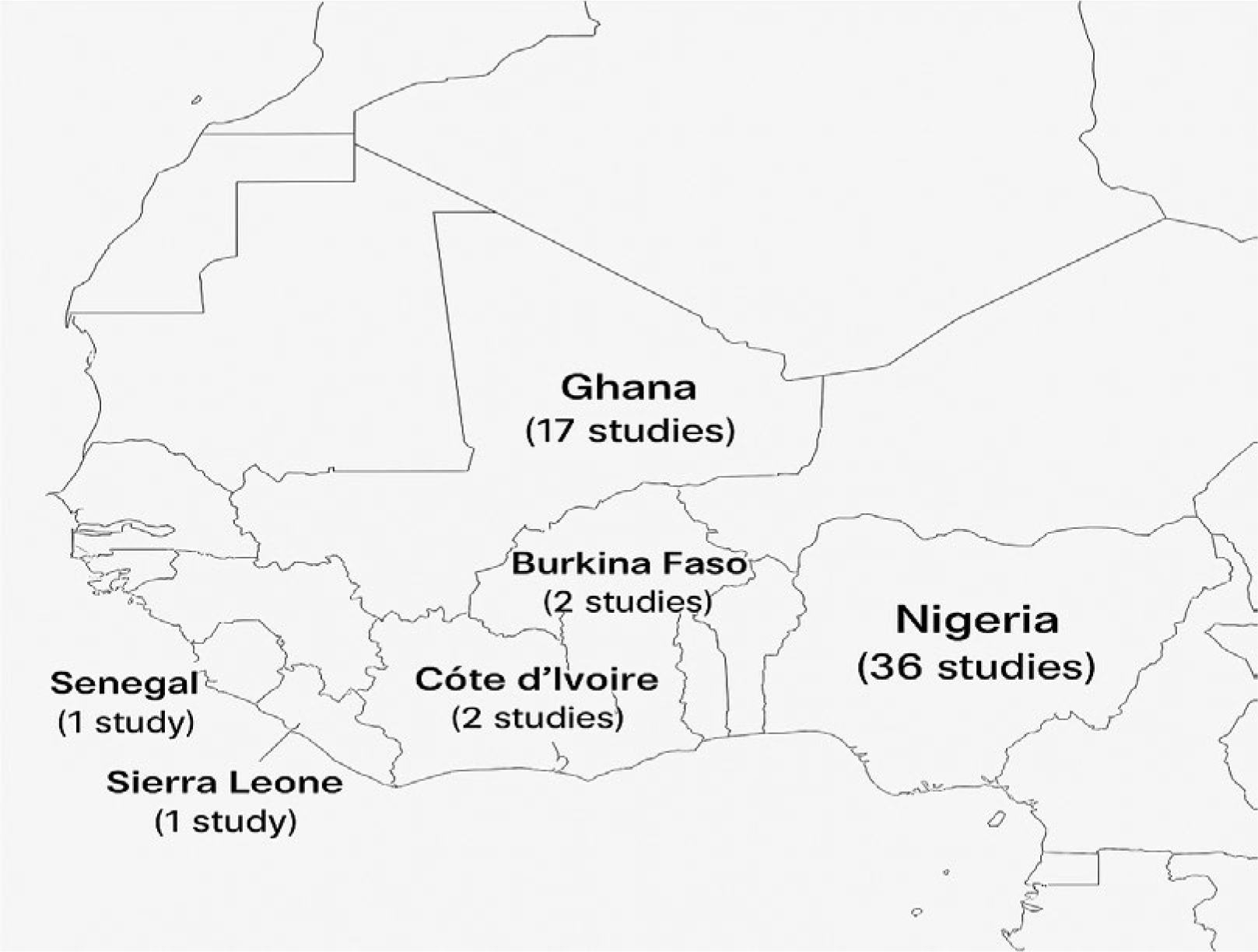
Figure 2
A map highlighting the pharmacovigilance system strengths across the 16 countries in West Africa.
National Pharmacovigilance Systems
The findings indicate that all West African countries included in this review have established national pharmacovigilance centers, with varying degrees of functionality:
Ghana was the first country to join the WHO PIDM in 2001 and maintains a robust pharmacovigilance framework through the Food and Drugs Authority (FDA).
Nigeria has a well-defined ADRs reporting system using the Yellow Card Scheme, supported by the National Agency for Food and Drug Administration and Control (NAFDAC).
Côte d’Ivoire and Burkina Faso have recently formalized pharmacovigilance activities but face challenges in implementation and resource allocation.
Sierra Leone’s pharmacovigilance system, established in 2008, continues to develop under the WHO’s guidance.
While WHO collaboration has strengthened reporting systems, resource constraints, including staffing and infrastructure, hinder full implementation across the region.
Adverse drug reaction Reporting Mechanisms and Challenges
ADRs reporting mechanisms varied across countries. Key findings include:
1. Reporting Tools: Manual reporting forms (e.g., Yellow Cards) remain the most widely used tools. However, underreporting remains a significant challenge, with healthcare professionals citing barriers such as:
Lack of awareness and training in ADRs reporting (reported in 60% of studies).
Fear of litigation or punitive consequences.
Time constraints due to workload pressures.
Lack of feedback after ADRs submission.
2. Technological Integration: Electronic ADRs reporting systems, such as Ghana’s Med Safety App and Nigeria’s pilot digital platforms, have shown promise but remain underutilized due to poor internet access and training gaps.
Stakeholder Involvement
Stakeholder collaboration is critical for successful pharmacovigilance systems. Findings revealed:
Regulatory Bodies: WHO and the UMC play a central role in guiding national pharmacovigilance activities.
Healthcare Professionals: Physicians, nurses, and pharmacists were identified as primary ADRs reporters, but underreporting was widespread.
Patients: Public awareness of ADRs reporting was low across all studies, highlighting the need for educational campaigns.
Challenges and Barriers
The primary challenges identified in the review include:
Resource Limitations: Insufficient funding, inadequate staffing, and subpar infrastructure were prevalent across most studies. These financial constraints significantly hinder the capacity of regulatory bodies to perform essential functions, such as implementing training programs, executing awareness campaigns, and enhancing infrastructure. The scarcity of qualified human resources is a critical barrier to effective pharmacovigilance.
Knowledge Gaps: A recurrent issue is the lack of pharmacovigilance training for healthcare professionals, coupled with the absence of pharmacovigilance education in academic curricula. This results in a noticeable deficiency in clinical knowledge and experience among healthcare practitioners concerning the completion of ADR reporting forms, ultimately leading to the underutilization of available reporting resources.
Communication Barriers: Ineffective feedback mechanisms and low levels of awareness among patients further impede the reporting of ADRs.
Lack of Reporting Resources: Reports from some primary healthcare centers (PHCs) highlighted the absence of necessary ADR reporting forms, which can severely obstruct data collection efforts.
Awareness Gaps: A general lack of understanding regarding the importance of ADR reporting exists, with many PHC workers perceiving ADRs as minor or insignificant issues. This attitude contributes to a culture of underreporting.
Reluctance to Engage in ADR Reporting: Female physicians often exhibit a reluctance to engage with key representatives from pharmaceutical companies on matters related to ADRs.
Discussion
This scoping review overviews pharmacovigilance systems and ADRs reporting systems in West Africa. While progress has been made in establishing national pharmacovigilance centers and aligning with WHO standards, gaps in implementation and functionality still need to be evident.
Establishing national pharmacovigilance systems marks a critical step forward for many West African countries. As the first sub-Saharan African country to join the WHO Programme for International Drug Monitoring, Ghana has set a precedent for the region,31,38,42 Nigeria, with its structured ADRs reporting mechanisms, has also demonstrated leadership in the development of pharmacovigilance infrastructure.43,48,67 However, disparities among countries persist, with some systems still in their infancy and constrained by resource limitations.15,16,76 These differences underscore the need for crosscountry collaboration and knowledge sharing to build regional capacity.86-88
Despite these advancements, the review reveals several barriers to effective pharmacovigilance. Underreporting ADRs remains a significant challenge, driven by workload pressures, limited awareness, and fear of punitive repercussions.16,31,32,38,44,45,49,53,54,56,62,67 Resource constraints, including inadequate funding and insufficient staffing, further hinder the ability of national pharmacovigilance centers to function optimally.15,16 Additionally, public awareness of pharmacovigilance is alarmingly low, reducing the likelihood of patient engagement in ADRs reporting.33,35,37,41,49 The lack of feedback mechanisms for reporters further compounds this issue, discouraging participation from healthcare professionals and patients alike.12,38,54,60,61,77-79
Collaboration between stakeholders, including regulatory bodies, healthcare professionals, and international organizations, plays an important role in the success of pharmacovigilance systems. The involvement of the WHO and the Uppsala Monitoring Centre has provided critical support to member countries. This has enhanced the country’s ability to monitor and respond to drug safety signals.12,20,34,38,43,56,57,67 Healthcare professionals are central to ADRs reporting efforts, yet their contributions are often limited by systemic inefficiencies. Engaging the public through educational campaigns and community-based initiatives could significantly improve awareness and reporting rates, fostering a culture of safety and accountability.34,37,39,48,50,59,64,66,74 The non engagement of pharmaceutical companies by female physicians aligns with documented patterns of passive behaviour observed in clinical settings, potentially undermining collaborative efforts to enhance drug safety.89
The need for legislation specific to pharmacovigilance in most countries presents a significant implementation barrier.20,57 Policies incentivizing healthcare professionals to report ADRs are crucial to addressing the issues that deter participation.31,34,67,71 Establishing standardized procedures and strengthening policy frameworks to mandate ADRs reporting can help to address barriers to under-reporting of ADRs.42,69,83 Furthermore, integrating digital tools, such as electronic ADRs reporting platforms, offers an opportunity to simplify reporting processes and improve data collection, provided that infrastructure and training gaps are addressed.12,31,35,38,76,80,82 For instance, the utilization of mobile phone alerts and the Pharmacovigilance Rapid Alert System for Consumer Reporting (PRASCOR) offers innovative methods to facilitate timely ADR reporting directly to national centers.35 It is evident that as countries invest in technological advancements, the effectiveness of their pharmacovigilance systems can be significantly improved.
To enhance the capacity of frontline healthcare providers and advance pharmacovigilance activities, strategies such as simplified ADR reporting systems, effective monitoring, and supportive supervision are recommended.69,80,85 Additionally, incorporating ADR-related topics into the educational curricula of institutions training health professionals could increase awareness and improve reporting practices.37,70,84
This scoping review highlights the need for targeted interventions to strengthen pharmacovigilance in West Africa. Continuous professional development programs for healthcare staff and public awareness campaigns can address knowledge gaps and improve ADRs reporting.35,46,58,69,79,82 Investment in technological infrastructure and robust feedback systems will further enhance the efficiency and impact of pharmacovigilance activities.35,80,31,36,41,60,63,75,78 By addressing these challenges, West African countries can build more resilient systems to ensure medication safety and protect public health.40,57,82
Recommendations
Policy Development by Regulatory Bodies: It is essential to strengthen legal frameworks that mandate ADR reporting and ensure accountability for both healthcare providers and pharmaceutical companies. This will help create a robust foundation for effective pharmacovigilance practices.
Protective Policies for Healthcare Professionals by the Ministry of Health: The ministry should develop protective policies addressing the fears and concerns that healthcare providers have regarding ADR reporting. These policies should aim to alleviate apprehensions related to punitive actions, thereby encouraging more healthcare professionals to report adverse reactions.
Regular Training by the National Pharmacovigilance Centre: There should be frequent training sessions for healthcare professionals that emphasize their ethical and legal responsibilities concerning ADR reporting. Such training will enhance their confidence and competence in identifying and reporting ADRs.
Public Awareness Campaigns by the National Pharmacovigilance Centre: Engaging the public through continuous educational initiatives is crucial. Awareness campaigns should focus on the significance of ADRs, the importance of reporting them, and the specific mechanisms available for reporting.
Incorporating Pharmacovigilance into Education by Training Institutions: Health-related academic curricula must integrate topics related to pharmacovigilance and ADR reporting. This initiative will help cultivate foundational knowledge among future healthcare professionals, preparing them for active roles in pharmacovigilance.
Resource Allocation by the National Government: Adequate resource allocation is fundamental. When healthcare professionals are equipped with the necessary tools and support, they can effectively prioritize and monitor patient safety across all regions.
Technological Integration: The use of mobile applications and electronic reporting tools should be promoted to streamline the ADR reporting process. Such technologies can facilitate quicker, more efficient reporting, making it easier for healthcare professionals and patients alike.
Multi-Disciplinary Collaboration: Strengthening pharmacovigilance systems requires collaboration among various stakeholders, including public health programs, non-governmental organizations (NGOs), the National Pharmacovigilance Centre (NPC), health facilities, and healthcare professionals. A multidisciplinary approach is vital to leverage education, technology, and policy reforms to enhance pharmacovigilance efforts in the region.
Limitations of the study
Despite the valuable insights gained from this review, there are notable limitations to consider. First, the inclusion of only English-language studies may have excluded relevant literature from Francophone countries. This limitation could restrict the generalizability of our findings across the broader West African context.28
Additionally, our reliance on publicly available data may have led to the omission of unpublished or grey literature, which could provide further context and insights into pharmacovigilance systems in the region.
Another significant limitation is the lack of diversity among the studies sourced from anglophone countries. This homogeneity may not fully capture the disparities and variations present across different anglophone contexts, potentially influencing the comprehensiveness of our conclusions.
Future research
Future research should focus on the integration of pharmacovigilance education into academic curricula to enhance the knowledge and skills of future healthcare professionals. Additionally, evaluating the effectiveness of public awareness campaigns on improving ADR reporting practices will provide valuable insights into their impact and inform best practices.
It is also crucial to investigate the role of faith-based organizations in strengthening pharmacovigilance systems, particularly in addressing the challenges posed by inadequate monitoring of drug safety. Longitudinal studies assessing the sustainability of pharmacovigilance reforms are essential to guide future strategies and ensure that improvements are maintained over time.
Furthermore, there exists a significant gap in the literature regarding traditional medicine in West Africa. Thus, research in this area is necessary to better understand the implications of traditional practices on pharmacovigilance and patient safety. Future studies should include qualitative methodologies, such as in-depth interviews, to enhance understanding and facilitate cross-country comparisons within the region.
By addressing these critical research areas, we can foster a more comprehensive approach to enhancing pharmacovigilance systems across West Africa.
Conclusion
In summary, the advancements in pharmacovigilance across West Africa indicate a strengthened commitment to ensuring drug safety; however, considerable challenges persist. Overcoming these obstacles will require targeted efforts in education, comprehensive policy reforms, and the integration of technological solutions to establish robust and sustainable pharmacovigilance systems.
By promoting collaboration among stakeholders and investing in capacitybuilding initiatives, West African nations can enhance health outcomes and create a safer healthcare environment for their populations. The establishment of effective ADR reporting channels, combined with continuous education and training programs, is crucial for building a resilient pharmacovigilance infrastructure that can tackle the unique challenges faced in the region.
With these strategic improvements in place, the framework for drug safety monitoring in West Africa is poised to evolve in line with global best practices, ultimately contributing to the health and well-being of its communities.
Conflicts of interest
None.