
Introduction
Vector control remains the primary defense against vector-borne diseases (VBD). Standard preventive deterrence against VBDs incorporates integrated vector management (IVM) with personal protective measures (PPMs). In many situations, vector control efforts are limited to the direct suppression of vectors using conventional pesticides. The popularity of conventional pesticides is mainly due to their ability to quickly suppress vectors. However, there are many challenges and issues associated with their use, i.e., they are difficult to confine to a specific target and, therefore, have potential to harm other organisms and pollute the environment. Many pesticides are also limited by their delivery method and fail to come into contact with the vector. Due to the aforementioned problems with conventional pesticide use, laws concerning pesticides have grown more restrictive eliminating the use of many pesticides and leading to increased costs to develop new pesticide formulations. As a result, the number of conventional pesticides available for vector control is limited, and their excessive use has often led to insecticide resistance and behavioral adaptation of vectors. Therefore, additional vector control methods are needed to augment current vector control strategies.
The use of attractive toxic sugar baits (ATSB) is a relatively new approach for controlling mosquito vectors. Plant sugar is an essential part of the mosquito diet. Male and female mosquitoes frequently feed on nectar for energy for flight and other metabolic processes. The ATSB solution consists of an attractant (fruit or flower scent), feeding stimulant (sugar or honey), and an oral toxin to kill adult mosquitoes. The ATSB have been shown to be effective in the field against adult mosquitoes.1-3 A wide variety of toxins have been used in ATSB with some providing secondary control of mosquito larvae after adults have died from ingesting the bait. One of the most important biopesticides for control of larvae, Bacillus thuringiensis israelensis (Bti), as the active ingredient within ATSB needs further study. Anopheles sergentii, fed on ATSB containing B. sphaericus, are capable of transporting the larvicide to larval habitats with reduction in mosquito larvae.4 Applying ATSB directly on vegetation has proven to be effective in reducing adult mosquito populations, but this application method often attracts and kills non-target organisms such as butterflies, however B. thuringiensis is target specific and is a gut disruptor of adult mosquitoes.5 The use of ATSB with B. thuringiensis may provide the advantages of being target specific to adult mosquitoes with dispersal of adult B. thuringiensis to larval habitats.
The use of properly designed bait stations with target-specific active ingredients (AI) can help mitigate the issues associated with non-target organisms. Formulated Bti is a highly specific bio-pesticide lethal to target while maintaining biosafety for non-target organisms.6 It has been used for decades, and no evidence of mosquito resistance has been discovered in the field. Variation in concentration in susceptibility among adult Aedes aegypti, Anopheles freeborni, and Culex quinquefasciatus to Bti in sucrose solutions at varying concentrations has been documented in laboratory testing.7 However, few field studies have been conducted on the use of Bti as a mosquito adulticide. Adulticidal activity of EntobacTM pesticide (MEVLABS, Inc.), composed of Bti in a nectar-like ProVector® Mosquito Attractant Bait (MABTM) against Ae. aegypti and An. dirus mosquitoes was tested at the Armed Forces Research Institute of Medical Sciences, Thailand.8 The Bti treated mosquitoes died within 3-7 days post treatment. The ProVector Flower devices with Entobac were utilized in Kenya to greatly reduce mosquito populations of the following species; Ae. circumluteolus, An. coustani, An. pharoensis, Coquillettidia azurites, Cq. fuscopennata, Culex poicilipes, Cx. quinquefasciatus, Cx. univittatus, Mansonia africana, and Ma. uniformis.9 The delayed lethality of Bti in adult mosquitoes may also create opportunities for auto-dissemination (indirect-transfer) to oviposition sites, and when also exposed to methoprene, reduced egg counts in exposed mosquito females as well as decreased adult emergence from the contaminated eggs will likely occur.
In addition to Bti, methoprene is often used alone or in combination with Bti to control larval mosquito populations. Laboratory trials have demonstrated methoprene also impacts survival and fecundity of female and survival of male mosquitoes.10,11 ProVector Entobac M (active ingredients: Bti and methoprene) was developed to take advantage of the safety and efficacy of both active ingredients, provide control of adult and larval mosquitoes, and target specificity when delivered through a ProVector applicator. The objective of this study was to determine the effects of ProVector Military Camouflage Tubes (MCT), with the mosquito attractant colors of black, blue, green, red, yellow, and white and containing ProVector Entobac M pesticide pad, on mosquito populations in Southeastern Georgia. In addition to the use of the colors on the ProVector technology to attract vector species, the colors have also been used to share the Gospel on the ProVector devices by the principal author and missionaries in several countries.
Materials and Methods
Four sites were chosen in Bulloch County, located in Southeastern Georgia (Figure 1), to evaluate the efficacy of the ProVector MCT (Figure 2) with ProVector Entobac M biopesticide in controlling mosquito populations. The four sites were composed of mixed pine hardwood forests with open water that floods during heavy rains. The study was conducted from May through September 2018.
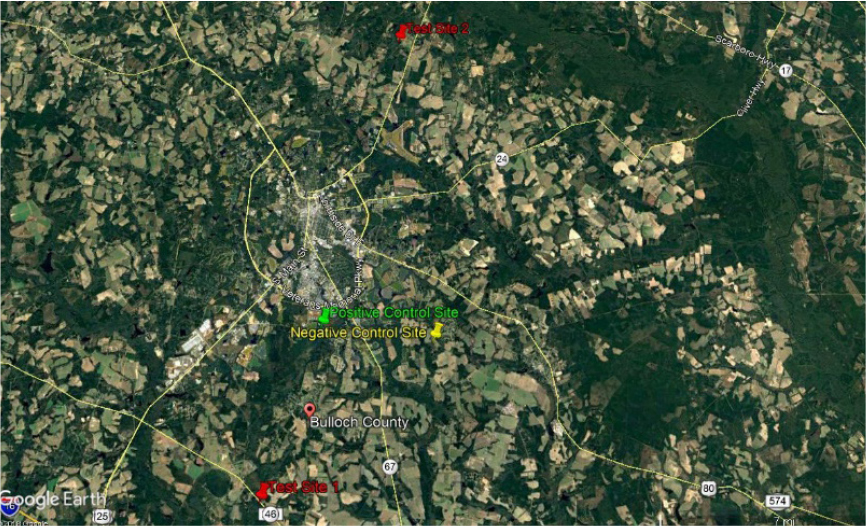
Figure 1
Map of Study Sites in Bulloch County, Georgia.
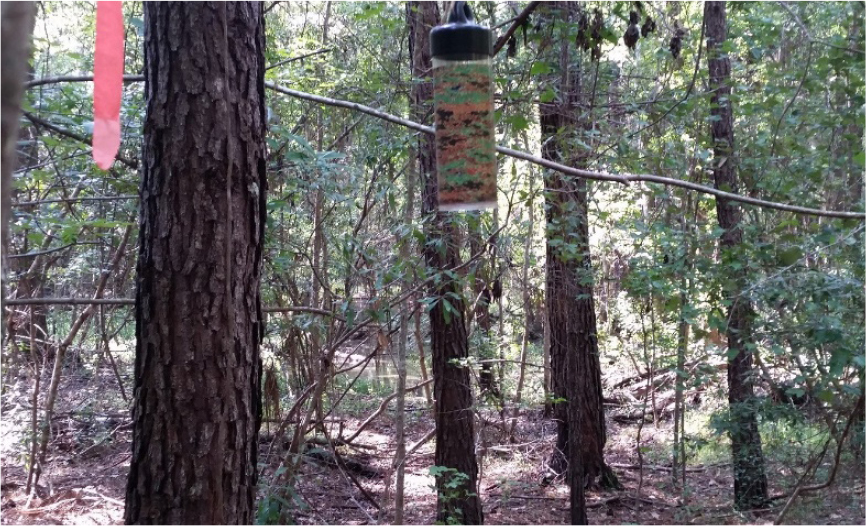
Figure 2
ProVector® Military Camouflage Tube.
Mosquitoes were collected from each site for four trap periods, 30 days each. Period one consisted of pre-sampling from the four sites. Testing was conducted during periods two, three, and four. Three trap stations, consisting of CDC light and BioGents Sentinel (BGS) traps (BioGents Corporation, Regensburg, Germany) were baited with Flowtron Octenol (Armatron International, Inc., Malden, MA) and CO2 (0.5 kg dry ice) were placed at each site for four nights each period with a minimum of one night between each night of trapping per site. At the conclusion of each period, pesticides were applied at each site, except the negative control (NC) site. The positive control (PC) site was treated with Terminix All Clear® ATSB® Mosquito Bait Concentrate (0.1% garlic oil) mixed with one part concentrate with three parts water, applied using a backpack sprayer in an up and down motion on vegetation from 0.3m to 1.5 m above ground along the perimeter. Forty ProVector® MCT’s, containing ProVector Entobac™ M bait pads (MEVLABS, Inc.) were hung two meters from the ground from vegetation equidistantly within a one-acre (0.405 hectare) grid at two test sites (T1 and T2). Entobac M contains active ingredients (6% Bti and 0.7% methoprene) within an artificial nectar, Mosquito Attractant Bait (MAB™). Entobac M bait pads were replaced at the conclusion of each trap session. Mosquitoes were identified to species and sex using a dissecting microscope and the Burkett-Cadena key.12
Statistical analysis was conducted using Statsoft Statistica v13.3. Comparisons between the mean number of total mosquitoes and individual mosquito species between trap periods at sites was tested using ANOVA with Fisher’s LSD test. The observed increase to expected increase was determined using a modification of Mulla;13 percent increase = TSOS/(TS1xEI); where expected increase (EI) = NCOS/NC1, OS = observed sum of mean population collected post preliminary collection (in this case periods 2-4), TS=treatment site, 1=mean population preliminary collection. The percentage of the summed mosquito populations for periods 2, 3, and 4 were compared to the first period of capture based on expected rate of increase of mosquito species at the negative control. Mosquito diversity and evenness among sites were measured using Shannon Diversity Index and Equitability.14
Results
The total number of 92,547 mosquitoes, representing 26 species, were collected from the four sites during the study. The most abundant species collected was Cx. quinquefaciatus, (n=17,073) a well-known vector of West Nile virus (WNV). The second most prevalent species was An. crucians Wiedemann (n=11,808). The invasive species, Aedes japonicus, was recorded for the first time in Bulloch County, GA from two sites. Individual sites varied in the mean number of total mosquitoes collected and within species.
There were significant differences in the increase and decrease of the mean total number of mosquitoes and individual mosquito species collected during period one and periods 2-4 between the NC and PC sites vs the Test sites (ANOVA with Fisher’s LSD test; NC vs T1 p<0.05, NC vs T2 p<0.05, PC vs T1 p<0.05, PC vs T2 p<0.05. There was not a significant difference in the mean number of mosquitoes collected between the NC and PC sites and not between the T1 vs T2 sites, p >0.05). There was a significant difference in the mean percent decrease between the NC, PC, and Test sites (maximum negative difference = -0.66, maximum positive difference = 0, p<0.05 Kolmogorov-Smirnov Test) (Table 1). There was not a significant difference in the percent mean increase between PC and Test sites, although there was a difference between the PC and Test sites in the increase of the mean number of mosquitoes between time periods.
Table 1
Significant change in mean number of mosquitoes collected between the first period compared to the second, third, and fourth periods (ANOVA), i=significant increase and d=significant decrease (p<0.05).
| Species | Neg Control | Pos Control | Test Site 1 | Test Site 2 |
|---|---|---|---|---|
| Mosquito Total | 2, 3i, 4i | 2, 3i, 4i | 2d, 3d, 4d | 2, 3, 4 |
| Ae. albopictus | 2, 3, 4 | 2i, 3, 4 | ||
| Ae. vexans | 2, 3d, 4d | 2, 3d, 4d | 2d, 3d, 4d | 2i, 3, 4 |
| Ae. japonicus | ||||
| An. crucians | 2, 3i, 4 | 2d, 3i, 4i | 2d, 3d, 4d | 2d, 3d, 4d |
| An. punctipennis | 2, 3i, 4 | 2, 3, 4 | 2d, 3d, 4d | 2d, 3d, 4d |
| An. quadrimaculatus | 2, 3, 4i | 2, 3d, 4 | 2, 3d, 4 | 2, 3, 4 |
| Cq. perturbans | 2, 3d, 4d | 2i, 3i, 4i | 2d, 3d, 4d | 2d, 3d, 4d |
| Cx. coronator | 2, 3i, 4 | |||
| Cx. erraticus | 2i, 3i,4i | 2, 3, 4d | 2, 3, 4d | 2, 3, 4i |
| Cx. nigripalpus | 2, 3, 4 | 2, 3, 4 | 2, 3, 4 | 2, 3, 4 |
| Cx. quinquefasciatus | 2, 3i, 4i | 2, 3i, 4i | 2, 3i, 4i | 2, 3, 4i |
| Ma. dyari | ||||
| Ae. atlanticus | 2i, 3i, 4 | 2i, 3i, 4 | 2i, 3i, 4 | 2, 3i, 4 |
| Ae. canadensis | 2i, 3, 4 | 2i, 3d, 4d | 2i, 3d, 4d | 2, 3d, 4d |
| Ae. fulvus pallens* | 3d, 4d | 3d, 4d | 3d, 4 | |
| Ae. infirmatis | ||||
| Ae. taeniorhynchus | ||||
| Ae. triseriatus | 2, 3i, 4i | 2, 3, 4 | 2, 3, 4 | |
| Ae. trivittatus | ||||
| Or. signifera | ||||
| Ps. ciliata | 2, 3i, 4 | 2, 3, 4 | 2, 3, 4 | |
| Ps. columbiae | 2, 3i, 4 | 2, 3i, 4 | 2, 3i, 4 | |
| Ps. ferox | 2i, 3i, 4 | 2i, 3i, 4i | 2i, 3i, 4i | 2i, 3i, 4 |
| Ps. howardii | 2, 3i, 4 | 2i, 3i, 4 | 2, 3i, 4 | 2, 3i, 4 |
| Ur. lowii | ||||
| Ur. sapphirina | 2, 3, 4i | 2, 3, 4i | 2, 3, 4 |
Because of the increase in Cx. quinquefaciatus at the sites and its importance as a vector of West Nile Virus, a comparison was made of the mean number between the sites for period one and the total study period. During period 1 there was not a significant difference in the mean numbers of Cx. quinquefasciatus collected at the C (12), PC (6.54), and T1 (8.52) sites, but the mean number at T2 (0.68) was significantly lower than the other three sites p<0.05. There was a significantly higher mean total number of Cx. quinquefasciatus collected during the study period between the NC (78.87) and PC (76.11) sites than the test sites T1 (24.26), T2 (6.90) p<0.05. The mean total of Cx. quinquefasciatus at the NC and PC sites were not significantly different from each other, and the mean total at the test sites were not significantly different from each other p>0.05.
Male mosquitoes comprised 2.2% of the total mosquito population; however, a higher percentage of males from two species were collected than females, Psorophora howardii (58%) and Uranotaenia sapphirina (54%) from the PC and T2 sites. A comparison was made between the increase/decrease between males and females collected during each period using ANOVA with Fisher’s LSD test. Patterns of increase were the same with male and female Ps. howardii within the two sites (Table 2). Male Ur. sapphirina increased significantly during period 4 over period 1 but no significant change for females at the PC site. Collections of male Ur. sapphirina increased significantly before females at T1. In a study of ATSB in Malawi, Africa, mosquitoes were collected from vegetation; 34% of females and 50% of males had fed on sugar sources of which 11% of females and 14% of males collected from vegetation had fed on the ATSB.16
Table 2
Comparison of males from mosquito species where n> 30 at study sites in Bulloch County, Georgia.
| Species | Pos Control | Test Site 1 |
|---|---|---|
| Ps. howardii males | 2i, 3i, 4 | 2i, 3, 4 |
| Ps. howardii females | 2i, 3i, 4 | 2i, 3, 4 |
| Ur. sapphirina males | 2, 3, 4i | 2i, 3, 4 |
| Ur. sapphirina females | 2, 3, 4 | 2, 3i, 4 |
[i] Note. Significant change in mean numbers collected between first, second, third, and fourth periods (ANOVA), i=significant increase and d=significant decrease (p<0.05).
There was a similar pattern of the proportion of several species inhabiting the study sites, and the PC and TS were similar with the NC site being least similar in diversity and evenness; Shannon Weiner Index of Diversity and Shannon Weiner Equitability, respectively; NC 1.65, 0.52, PC 1.98, 0.62, TS 1 2.02, 0.64, and TS 2 2.17, 0.67. Figures 3 and 4.There was a significant increase in the mean number of total mosquitoes collected in the fourth period over the first period at the NC and PC sites (Figures 5 and 6).
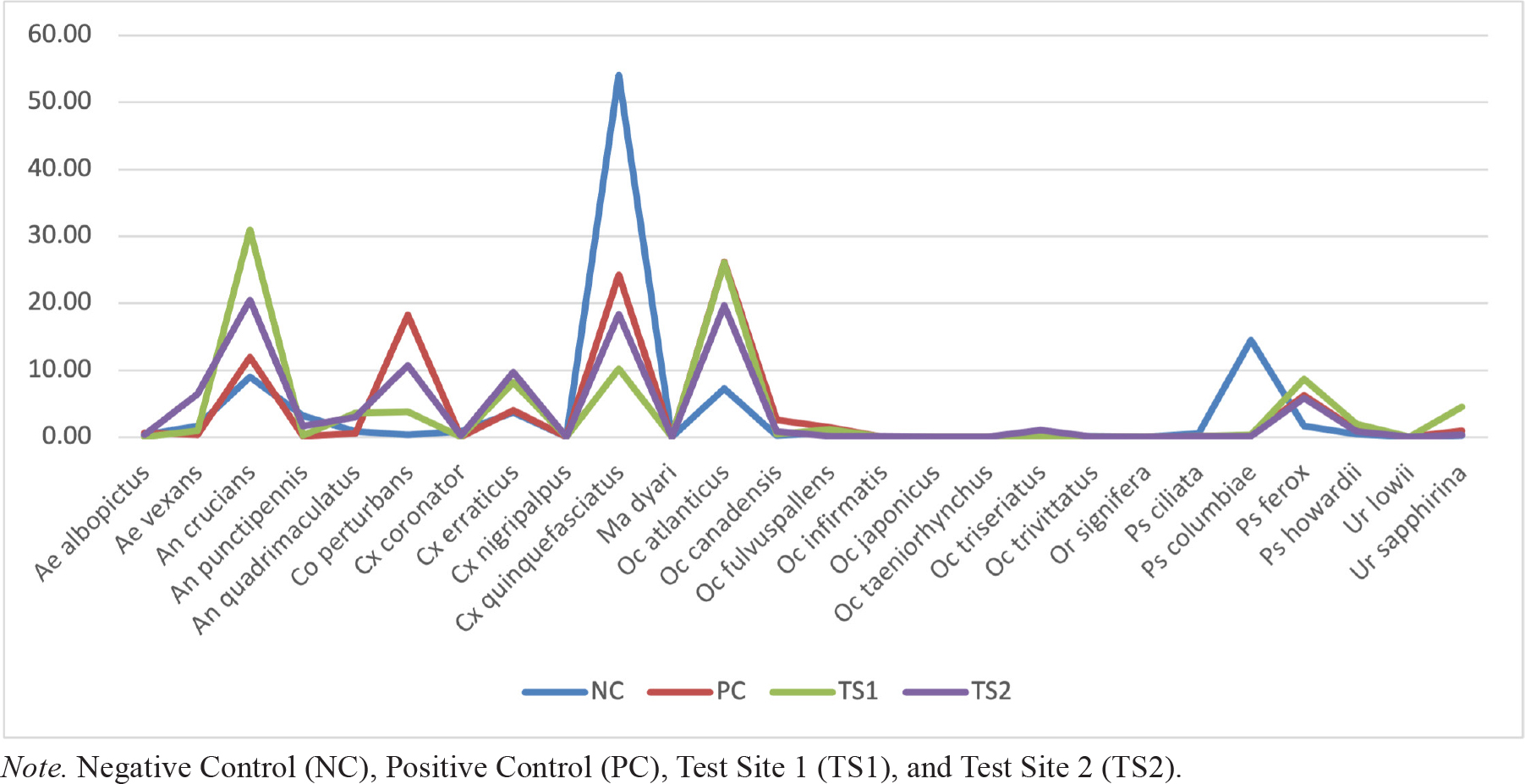
Figure 3
Proportion of Individual Mosquito Species From Each Site.
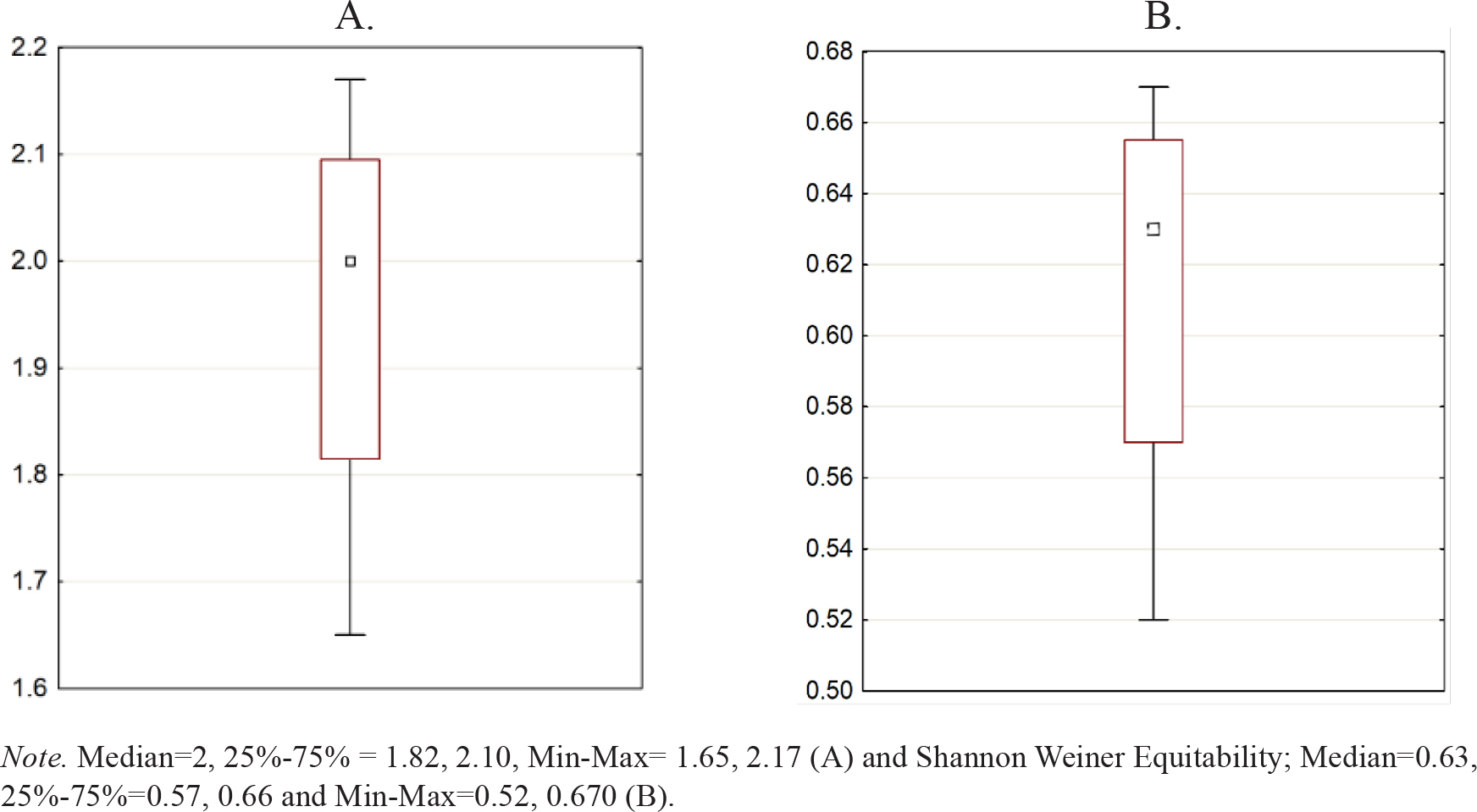
Figure 4
Shannon Weiner Index of Diversity.
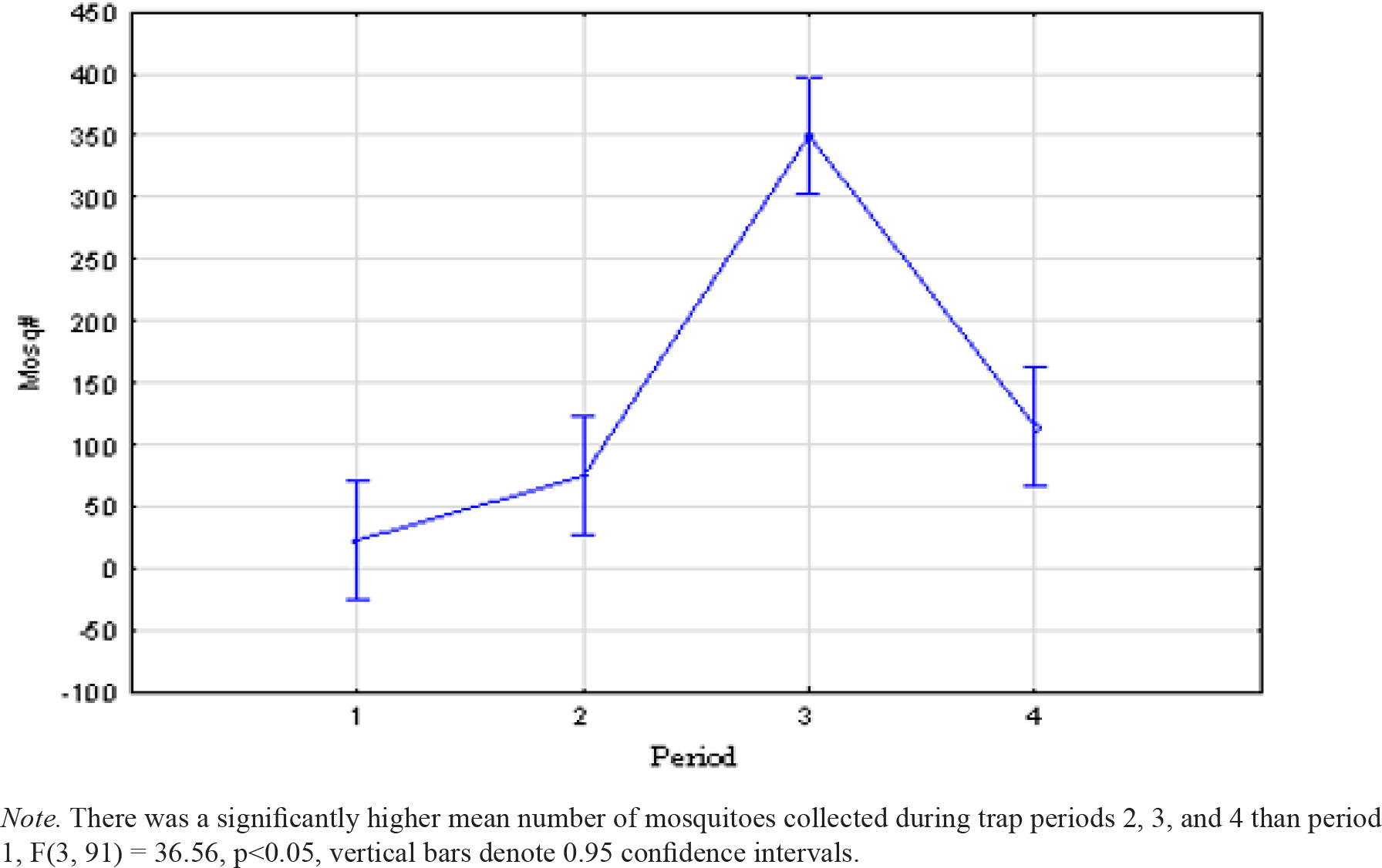
Figure 5
Comparison of mean number of mosquitoes collected at the Negative Control Site.
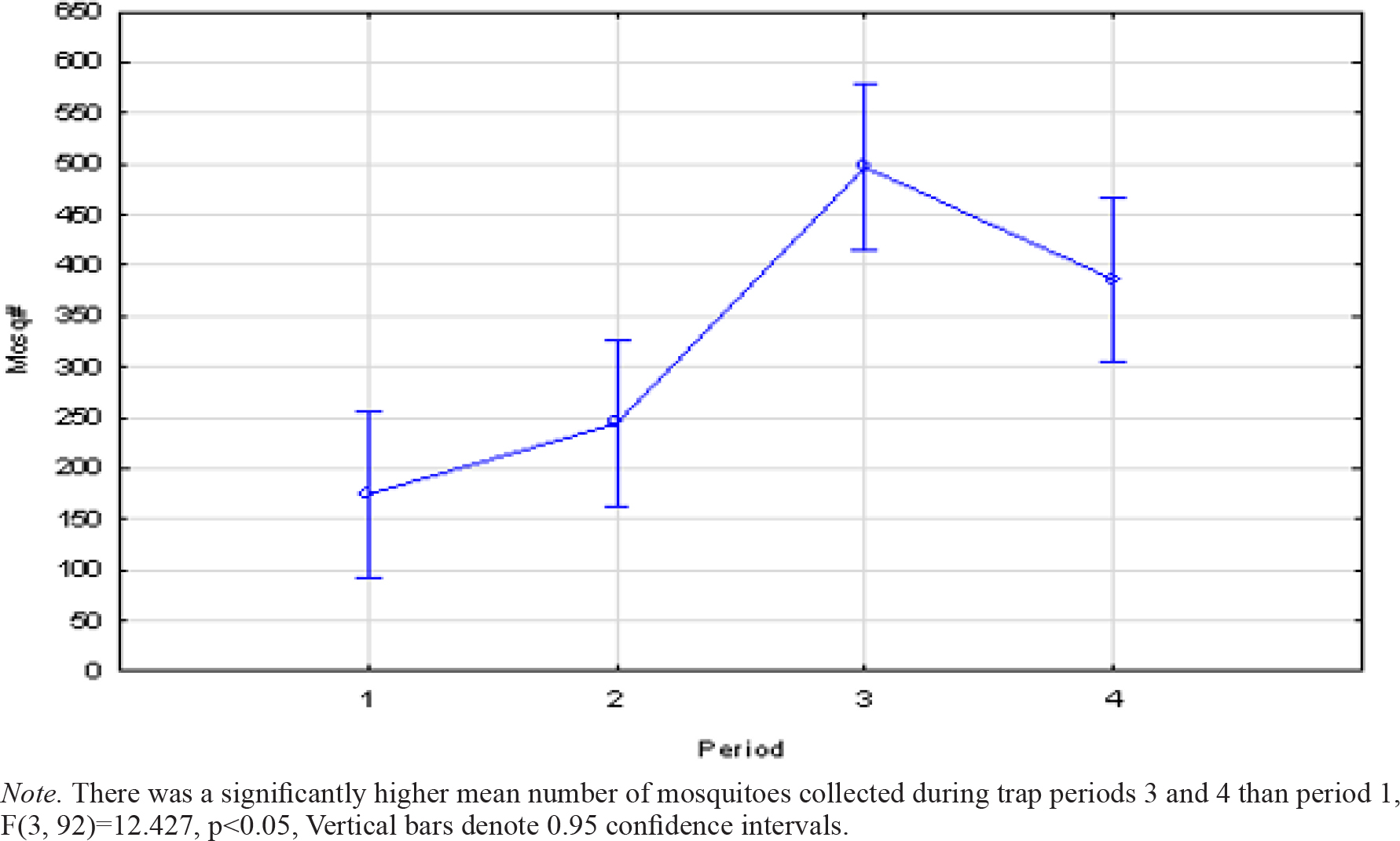
Figure 6
Comparison of mean number of mosquitoes collected at the Positive Control Site.
There was a significant decrease in the mean number of total mosquitoes at T1 and no significant change in total numbers at T2 (Figures 7 and 8) between the first and fourth periods. Entobac M was effective in either reducing or controlling overall mosquito populations below or nearly equal to first period levels.
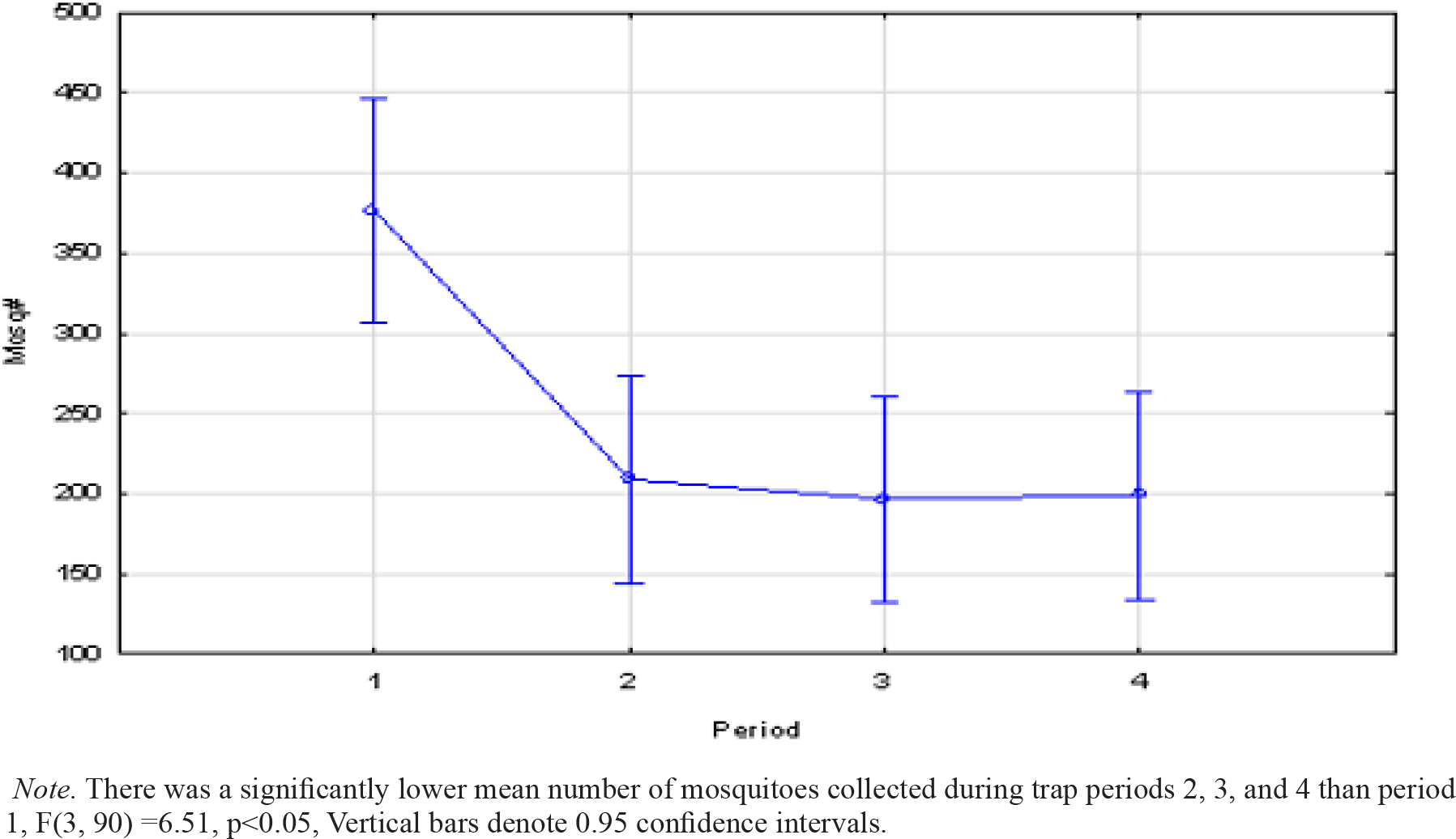
Figure 7
Comparison of mean number of mosquitoes collected at Test Site 1.
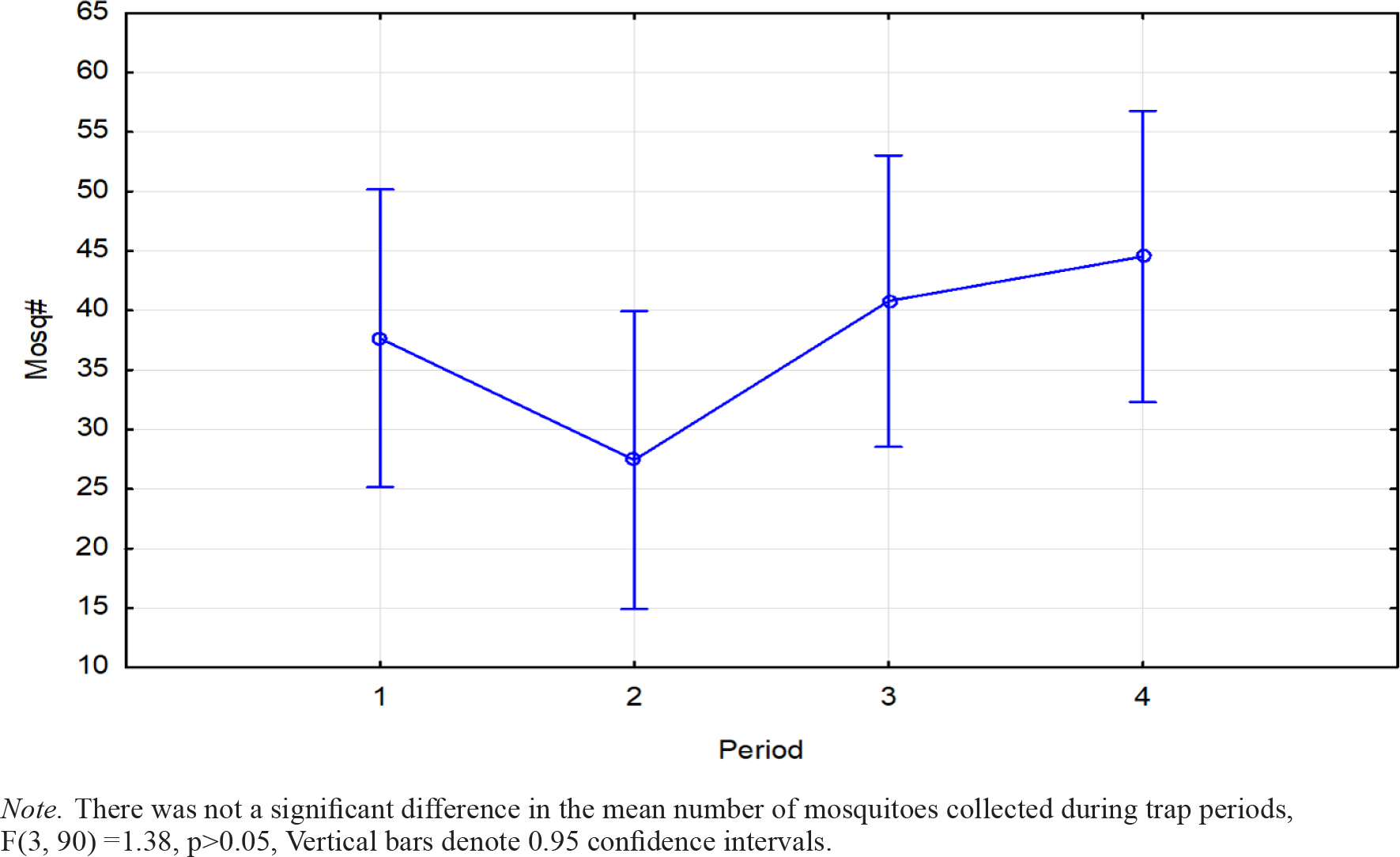
Figure 8
Comparison of mean number of mosquitoes collected at Test Site 2.
Discussion
Discovery of Aedes japonicus in Bulloch County is important because this species is expanding its range in North America, and it is a competent vector of several encephalitis viruses in the laboratory and has been found infected with WNV and La Crosse virus in the wild.15 Culex quinquefasciatus increased significantly at each site during the study; however, the test sites had a significantly lower number than the NC and PC sites; therefore, the risk of WNV is likely reduced. ProVector Entobac M has been shown to be effective in controlling Cx. quinquefasciatus in catch basins in Houston, Tx.21
In a study in Florida, eugenol laced ATSB reduced seven mosquito species with an average of 71%.17 One treatment per month with the garlic ATSB was not sufficient to control total mosquito populations at the PC site. However, one treatment per month did provide some level of control for several species (Table 1). Rain occurred at various times during the study, with retreatment after rain recommended on the label for the garlic ATSB. This study evaluated the effect of pesticides with one treatment per month, reducing the amount of pesticides applied to the environment and the negative impact on non-target organisms by ATSB. ProVector MCT with Entobac M produced a significantly lower mean overall decrease of 92% in mosquito population at the test sites with Entobac M than the combined data from the volatile plant oil ATSB in Florida and the current study (72%), Chi-Square 13.5, p<0.05. Once a month treatment at the PC site with ATSB was not enough to prevent Ae. albopictus from increasing. In addition to rain, vegetation type, and whether the ATSB was applied by spray application or bait station may also have impacted the efficacy of ATSB. In a study in Florida, ATSB spray application was more effective in controlling Ae. albopictus than bait stations.18 No Ae. albopictus were collected at the treatment sites; however, in a separate study in Honduras, this species was reduced using ProVector Flowers and ProVector tubes with Entobac bait pads.19 ProVector Entobac contains only Bti and does not contain methoprene. In another study, ProVector colored tubes with ProVector Entobac combined with spray application of Entobac by backpack were effective in reducing Ae. albopictus larvae in tires in Savannah, GA with control inversely correlated with distance from treatment.20 One treatment per month with replacement of Entobac M pads each month was sufficient to control the total mean number of mosquitoes and individual species; however, a few mosquito species did increase in number for both the PC site with ATSB and the Test sites with Entobac M (Table 1).
ProVector Entobac has been shown to be effective under field conditions in several countries, e.g., Kenya, Dominican Republic, Ghana, and Sierra Leone.9, 22-24 Auto-dissemination of Entobac has been observed under laboratory conditions and in the field at a hotel resort in the Dominican Republic, reducing mosquito population in an area > 200% larger surrounding the site where ProVector Flowers were placed on hotel balconies.22 This study provides evidence that the ProVector MCT with Entobac M provides an effective means of reducing mosquito populations while being target specific, having low environmental impact and low visibility to human detection. Further research is being conducted in the laboratory and field to determine whether auto-dissemination of Entobac M is effective in reducing mosquito populations and evaluate the ProVector MCT in urban environments.
The attention to mosquito surveillance in Georgia is gaining support based on the IVM strategy that robust mosquito surveillance should guide vector control. Four vector and surveillance control districts were set up to begin to predict and respond to vectors and vector-borne diseases; however, only 6 of the 159 counties in Georgia have a functional mosquito control program.25 Because of the limited resources to support mosquito control programs in Georgia, mosquito surveillance has been based on the density of anthropophilic mosquito species in suburban areas.
Conclusion
This study showed the occurrence of several anthropophilic species, i.e., Ae. albopictus and Cx. quinquefasciatus in rural areas in Bulloch County, Georgia. With the identification of invasive and highly competent vectors of pathogens such as Ae. japonicus and Cx. coronator in Bulloch County, more robust surveillance and control systems are recommended. The ProVector technology is a practical and inexpensive additional tool to IVM as no specialized training or equipment are needed with the added benefit of low toxicity and target specificity. Further research is being conducted to determine the efficacy of additional ProVector Entobac formulations.
Acknowledgments
Funding for this work was provided by Walter Reed Army Institute of Research, Contract Number W81XWH18C0322 to MedEnvVet Laboratories, Inc. We thank Dr. Emily McDermott, Department of Entomology and Plant Pathology, University of Arkansas, Fayetteville, AR for reviewing the manuscript.
Competing Interests
None declared.
Disclaimer
The views expressed are those of the authors and do not necessarily reflect the official views of Liberty University, Walter Reed Army Institute of Research, or the Department of Defense.