
Table 1
Luticola species reported from the region in the vicinity of Madagascar
| Species | Source | Region | Comments |
|---|---|---|---|
| L. rhombica | (S.J.C.Zimmermann) Levkov, Metzelti n & A.Pavlov 2013: 208 | Tanzania | Coll. F. Fricke |
| L. frickei | Levkov, Metzeltin & A.Pavlov 2013: 114 | Tanzania | Coll. F. Fricke |
| L. gesierichiae | Levkov, Metzeltin & A.Pavlov 2013: 119 | Tanzania | Coll. F. Fricke |
| L. hustedti i | Levkov, Metzeltin & A.Pavlov 2013: 131 | Tanzania | Coll. Leg. B. Schröder |
| L. kraeuselii | (Cholnoky) Metzeltin & Lange-Bertalot 1998: 139 | South Africa | Acc. No. MKNDC 6283 |
| L. disti nguenda | (Hustedt) Levkov, Metzelti n & A. Pavlov 2013: 106 | South Africa | Acc. No. MKNDC 6396 |
| L. tropica | Levkov, Metzeltin & A.Pavlov 2013: 241 | South Africa, Indonesia | – |
| L. novaeguineaensis | (Tempère) Levkov, Metzelti n & A.Pavlov 2013: 177 | New Guinea, Sumatra | Coll. Adams |
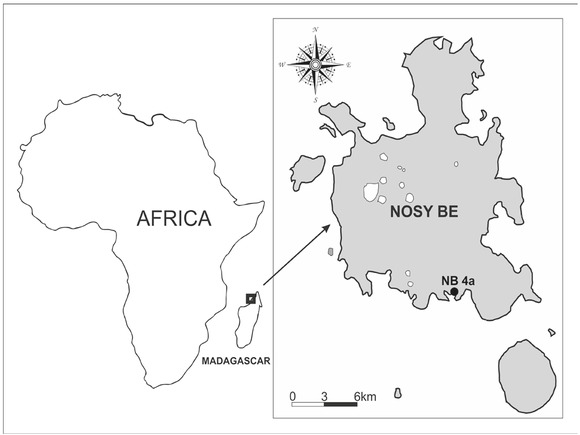
Figure 1
Nosy Be Island with the diatom sampling site (NB 4a)
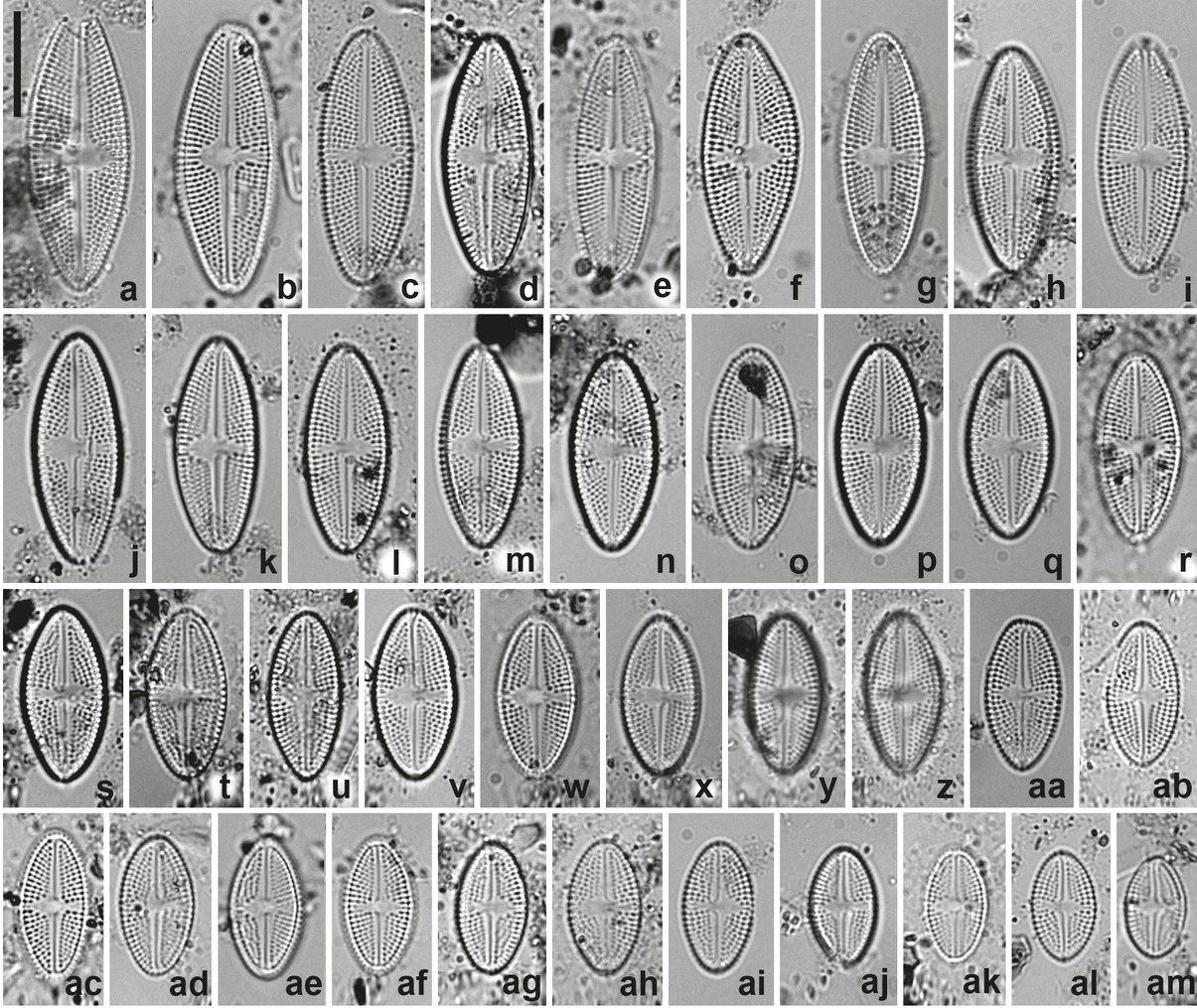
Figure 2a–am
Luticola nosybeana sp. nov. LM images. Valve views, showing variation in size and outline. Fig. 2p presents the holotype. Scale bar = 10 µm
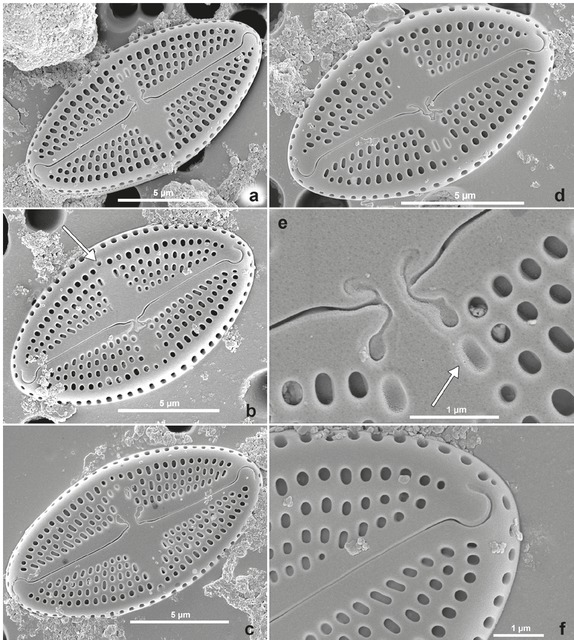
Figure 3a–f
Luticola nosybeana sp. nov. SEM images. External valve views. Figs 3a–d: whole valve with straight axial area, expanded at the center to form a wide, asymmetrical, deltoid or rectangular fascia and isolated pore opening (arrow in Fig. 3b). Fig. 3e: proximal raphe endings, hooked to the side opposite the isolated pore, continuing with irregular, shallow, T-shaped or L-shaped grooves. Note the presence of a few slit-like or elliptic irregular surface depressions (“ghost areolae”) within the central area (arrow). Fig. 3f: distal raphe end curved and not extending onto the mantle
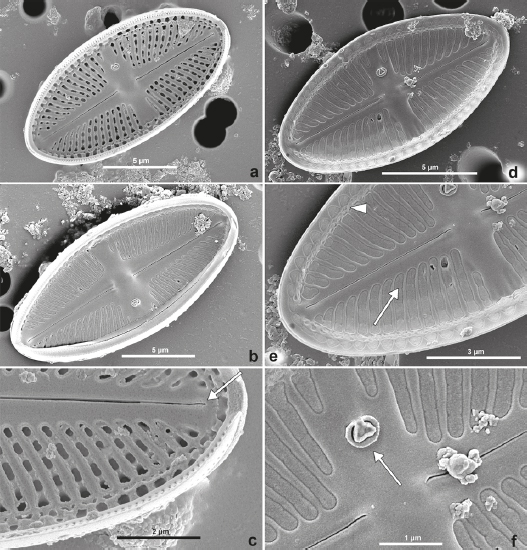
Figure 4a–f
Luticola nosybeana sp. nov. SEM images. Internal valve views. Figs 4a, 4b, 4d: whole valve views with the marginal canal and isolated pore. Fig. 4c: distal raphe branch terminating in small helictoglossa (arrow). Fig. 4e: close-up of the valve interior showing the hymenate occlusions of areolae (arrow) and the marginal narrow channel, located at the valve face/mantle junction (arrowhead). Fig. 4f: central area with a small, round isolated pore opening covered by large, triangular structure (arrow)
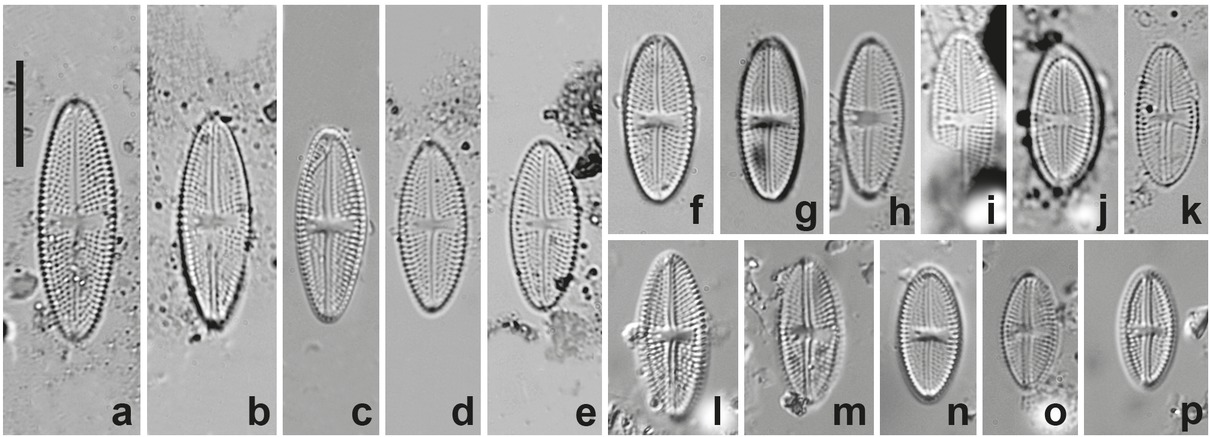
Figure 5a–p
Luticola madagascarensis sp. nov. LM images. Valve views, showing size diminution series. Fig. 5f presents the holotype. Scale bar = 10 µm
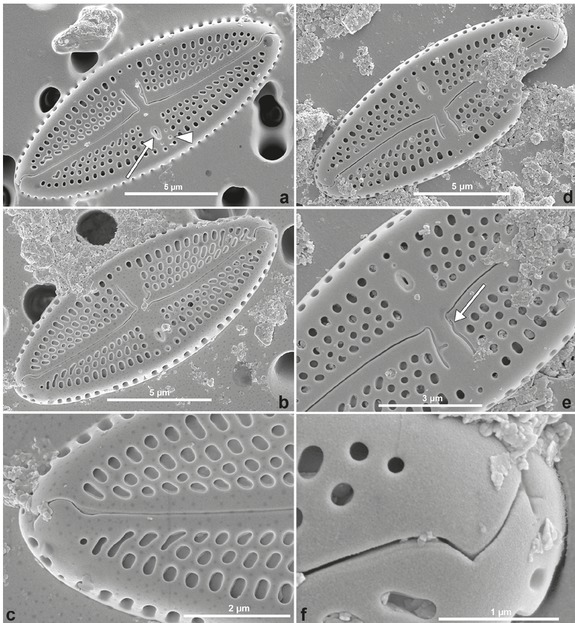
Figure 6a–f
Luticola madagascarensis sp. nov. SEM external valve views. Figs 6a, 6b, 6d: entire valve showing a narrow axial area expanded at the center to form a wide symmetrical, bow-tie shaped fascia on both valve margins. A single isolated pore (arrow in Fig. 6a) is present. Figs 6c, 6f: distal raphe fissures hooked on the same side, extending to the valve mantle. Fig. 6e: proximal raphe endings hooked to the opposite side of the isolated pore, continuing with irregular, shallow, elongated, L-shaped grooves (arrow)