
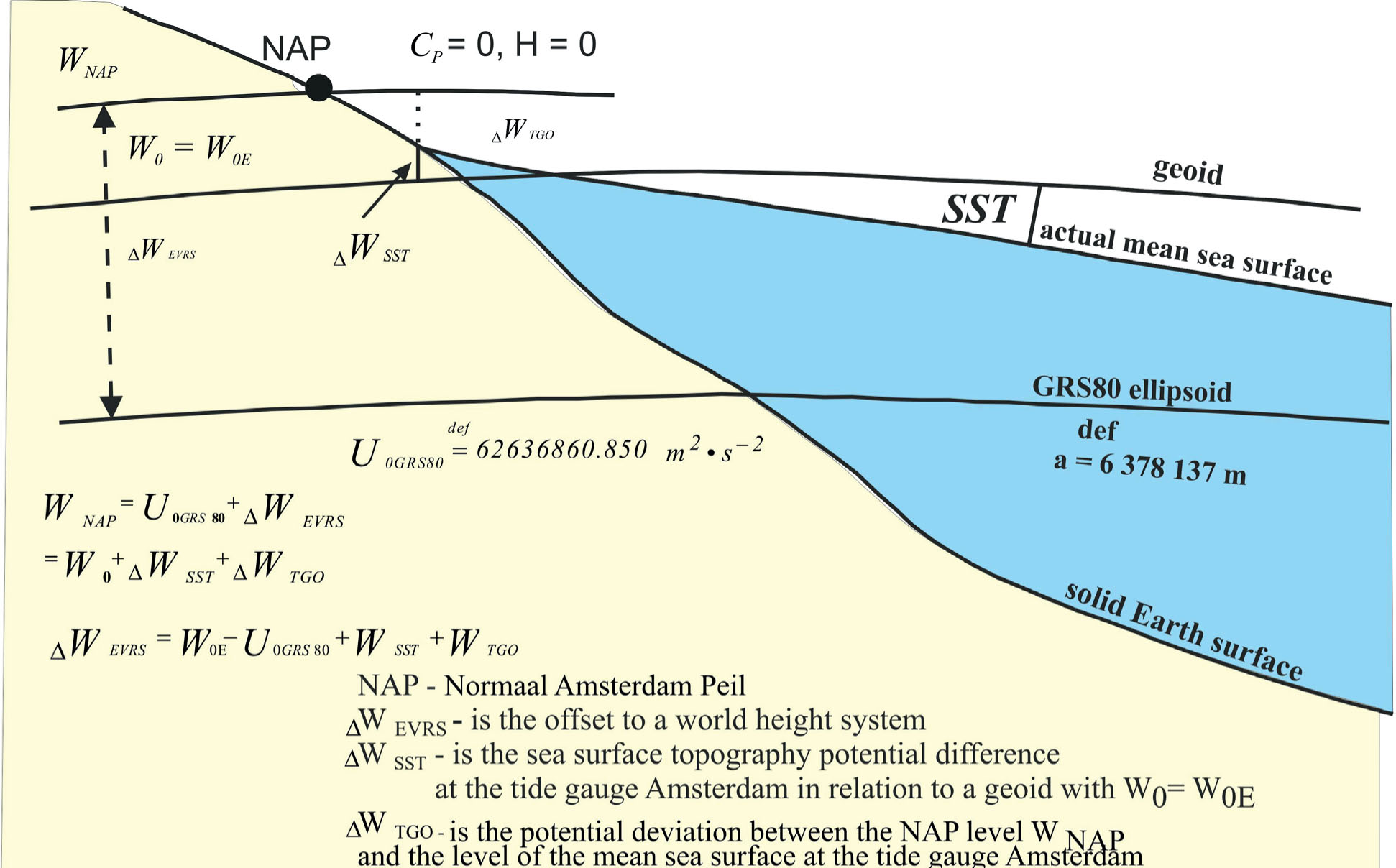
Figure 1
Relations between the EVRS Datum Definition as a World Height System and the EVRF 2000 Datum (NAP) (Ihde 2004 - modified by the authors)
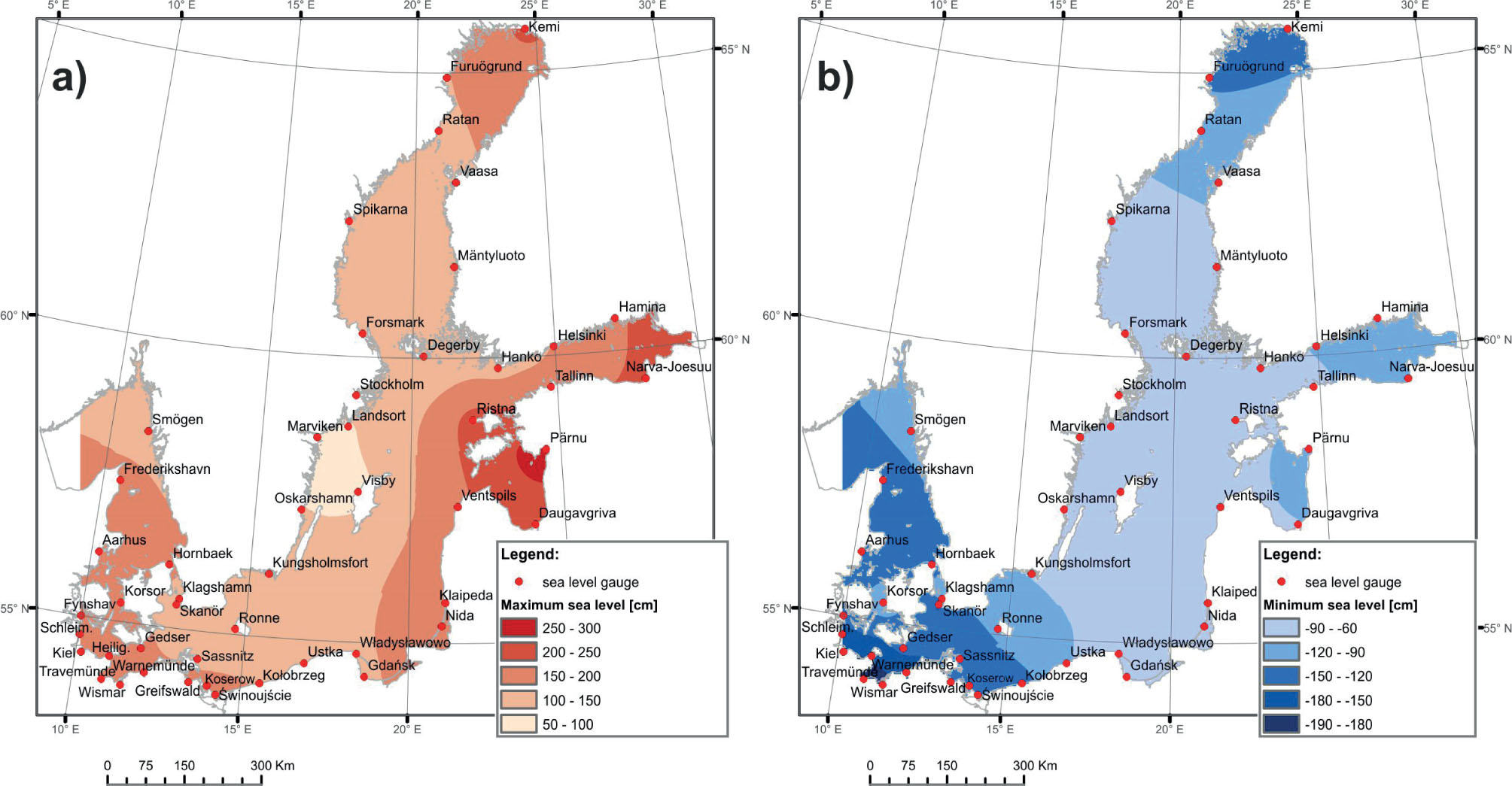
Figure 2
Distribution of extreme sea levels in the Baltic Sea in the period of 1960-2010; a) maximum sea levels, b) minimum sea levels (source: Wolski et al. 2014)
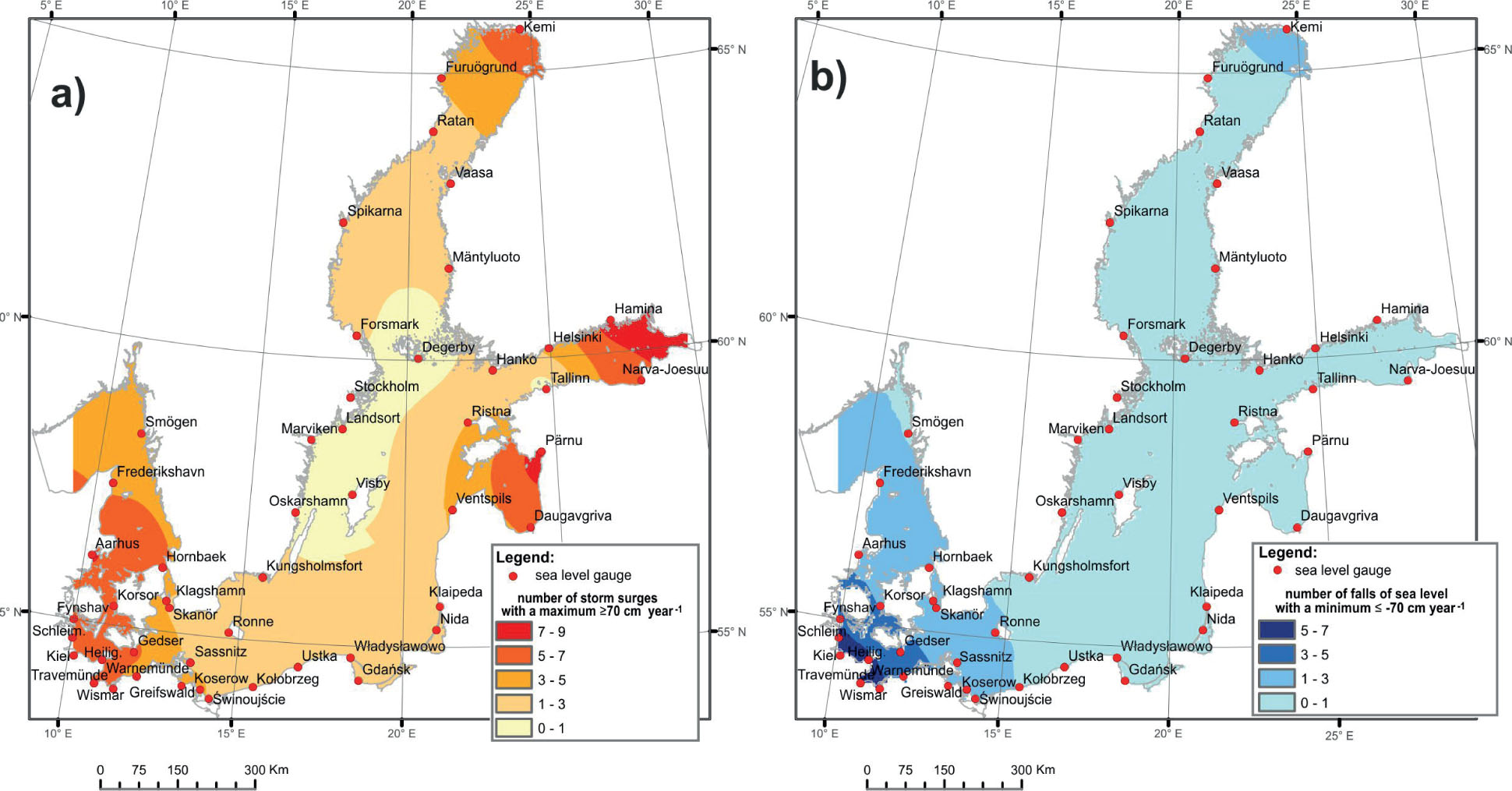
Figure 3
a) The number of storm surges with the maximum ≥ 70 cm referring to NAP per year (annual average value from the long term 1960-2010); b) The number of falls with the minimum ≤ -70 cm referring to NAP per year (annual average value from the long term 1960-2010)
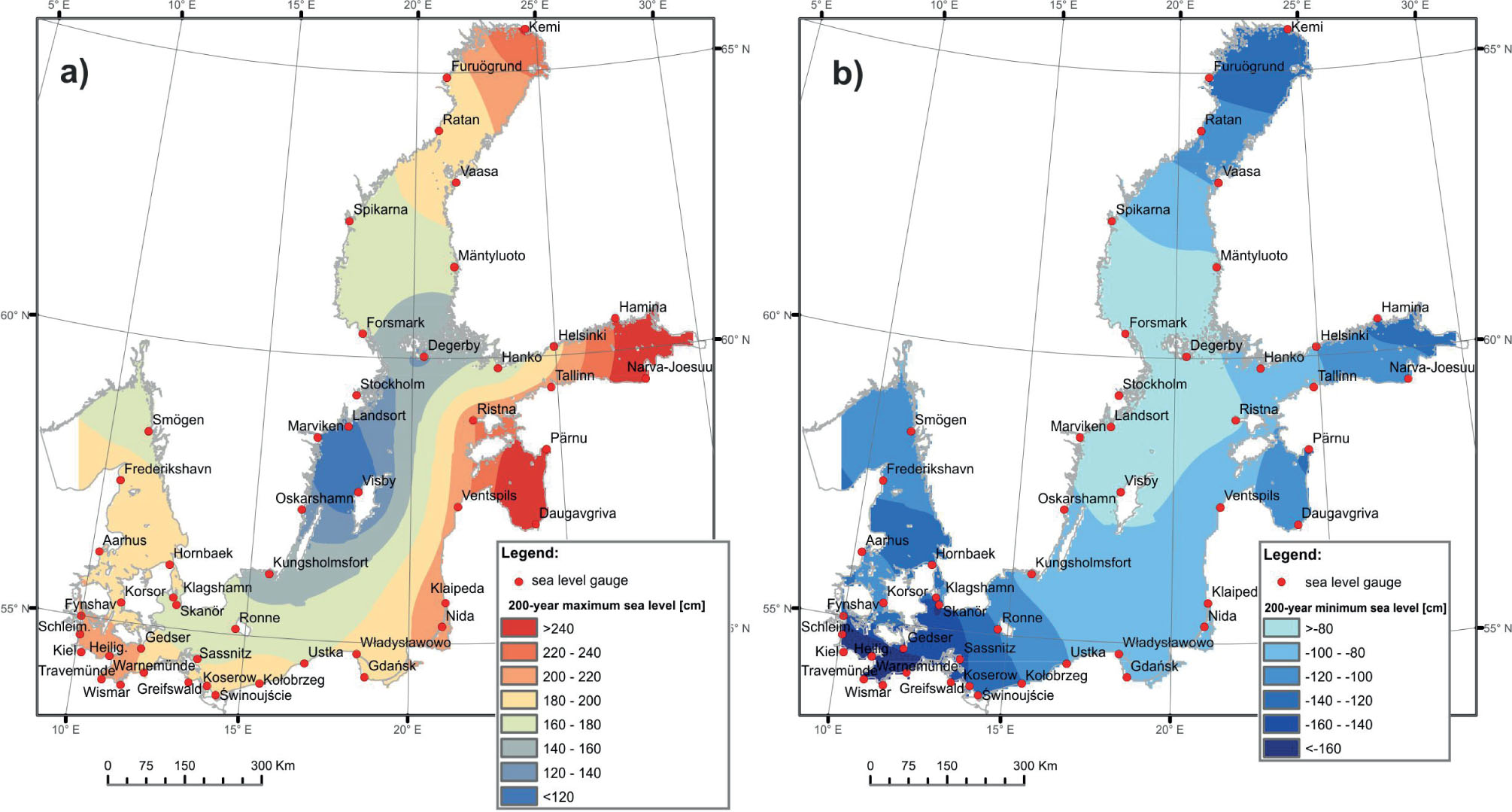
Figure 4
Distribution of theoretical water with the 200-year return period: a) theoretical 200-year maximum water level, b) theoretical 200-year minimum water level
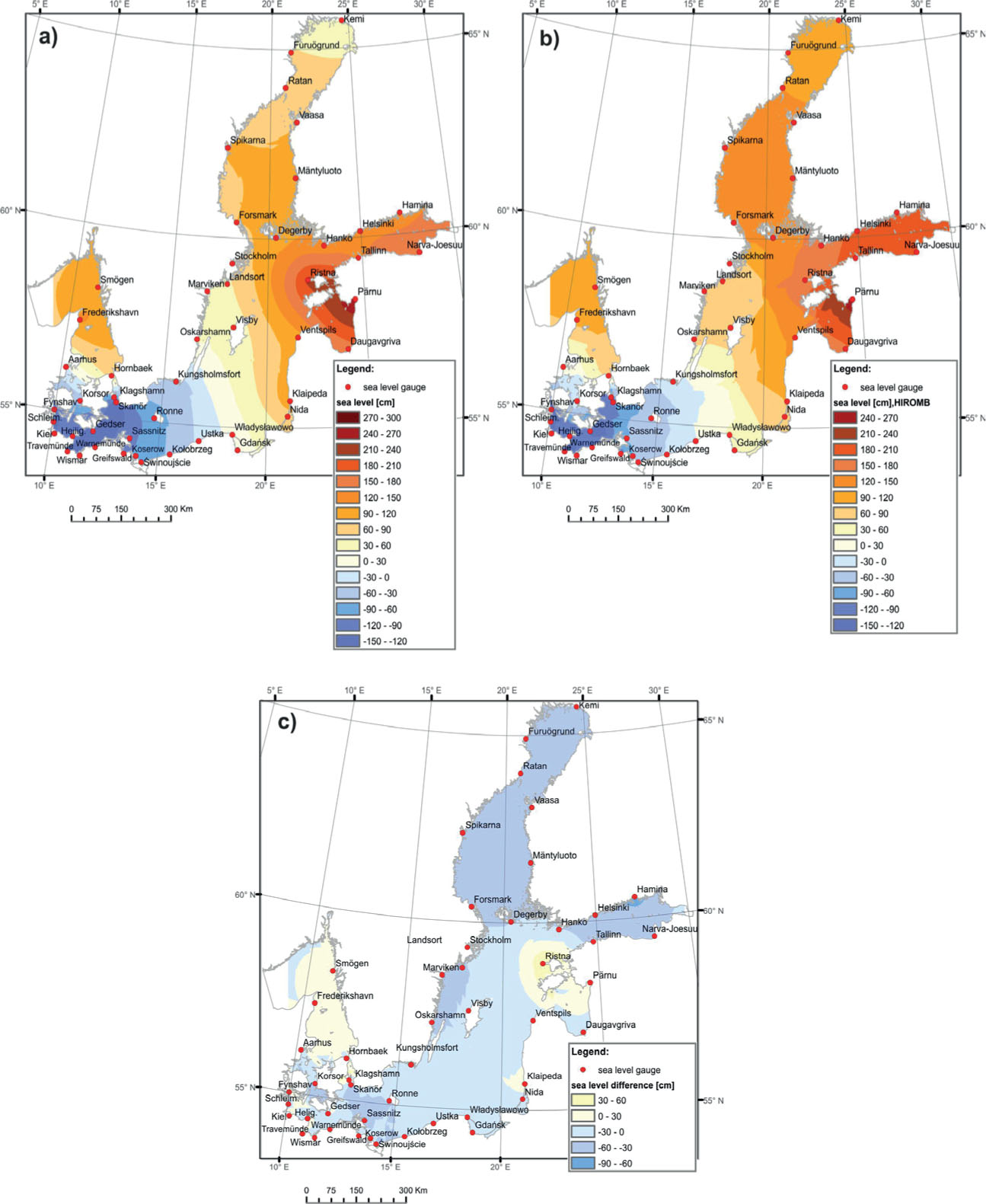
Figure 5
Baltic sea surface models for 9 January 2005, 03:00 UTC: a) on the basis of real sea levels (49 tide gauges); b) on the basis of the HIROMB model (49 points); c) absolute differences between sea levels in cm
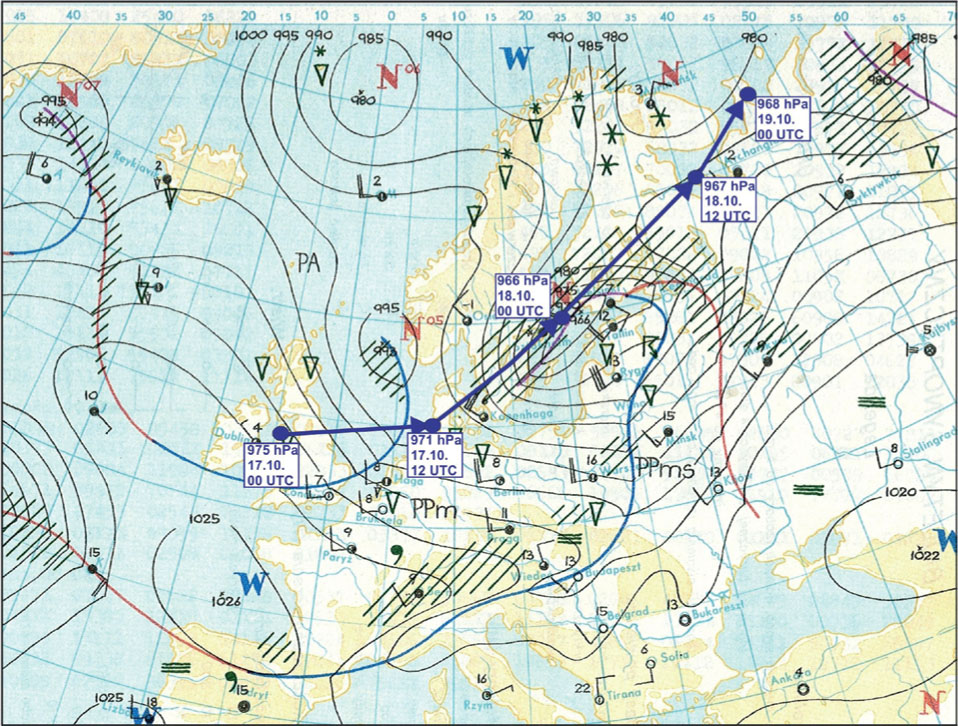
Figure 6
The course of the low pressure system on 17-19 October 1967 together with the main synoptic situation on 18 October.1967, 0:00 hrs UTC (source: Synoptic Bulletin PIHM with modification of the authors).
Table 1
Collation of the greatest differences between the observed and forecasted (HIROMB model) values of the sea level for selected tide gauges during the storm event of January 9, 2005, 03:00 UTC.
| Tide gauge | Sea level | Absolute differences between the observed and forecasted sea level | |
|---|---|---|---|
| Observed | Forecasted | ||
| Ristna | +217 cm | +172 cm | 45 cm – underestimation |
| Hamina | +138 cm | +206 cm | 68 cm – overestimation |
| Kemi | +41 cm | +97 cm | 56 cm – overestimation |
| Helsinki | +145 cm | +188 cm | 43 cm – overestimation |
| Sassnitz | -100 cm | -60 cm | 40 cm – underestimation |
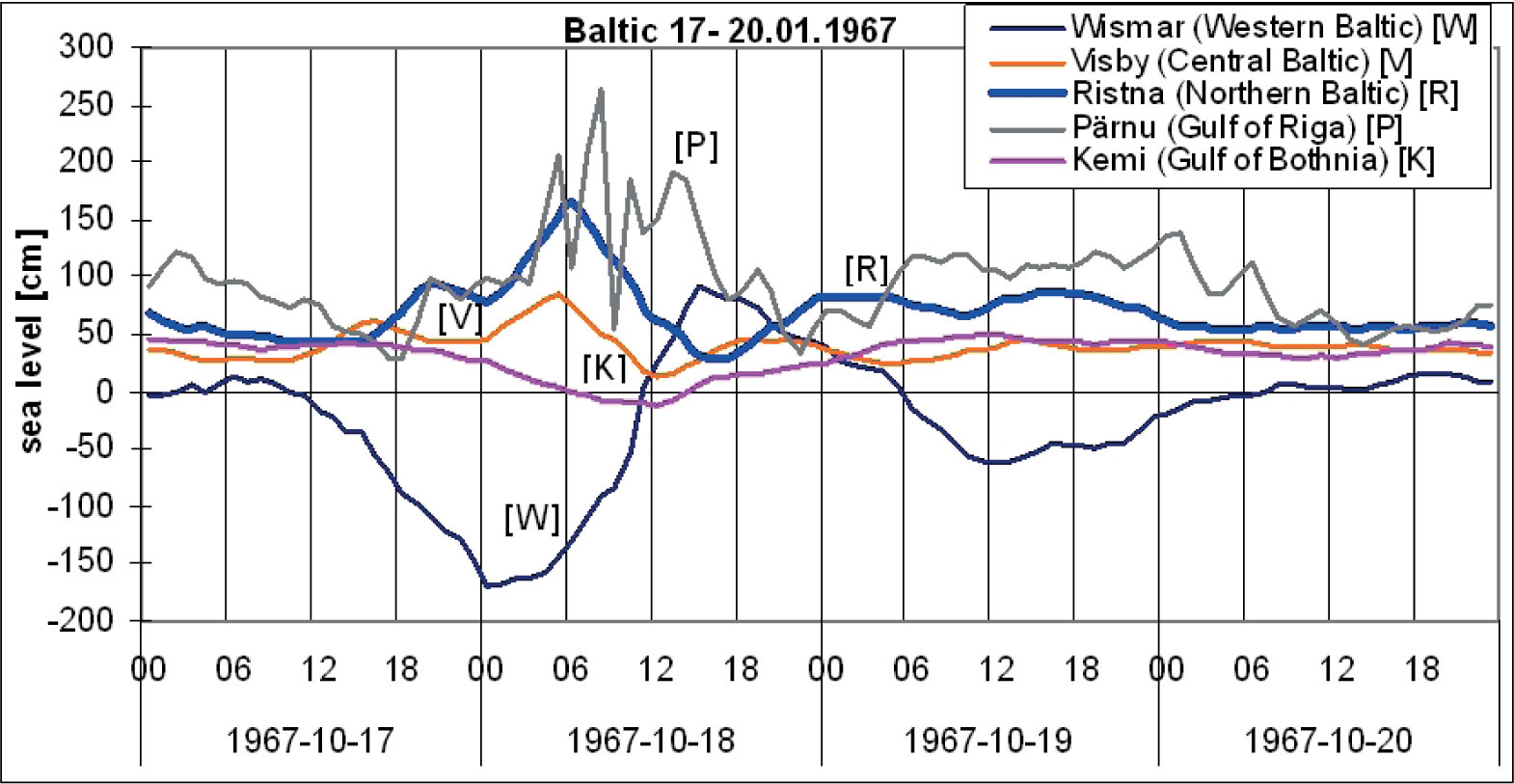
Figure 7
Changes in the sea level for representative stations in the main basins of the Baltic Sea on 17-20 October 1967
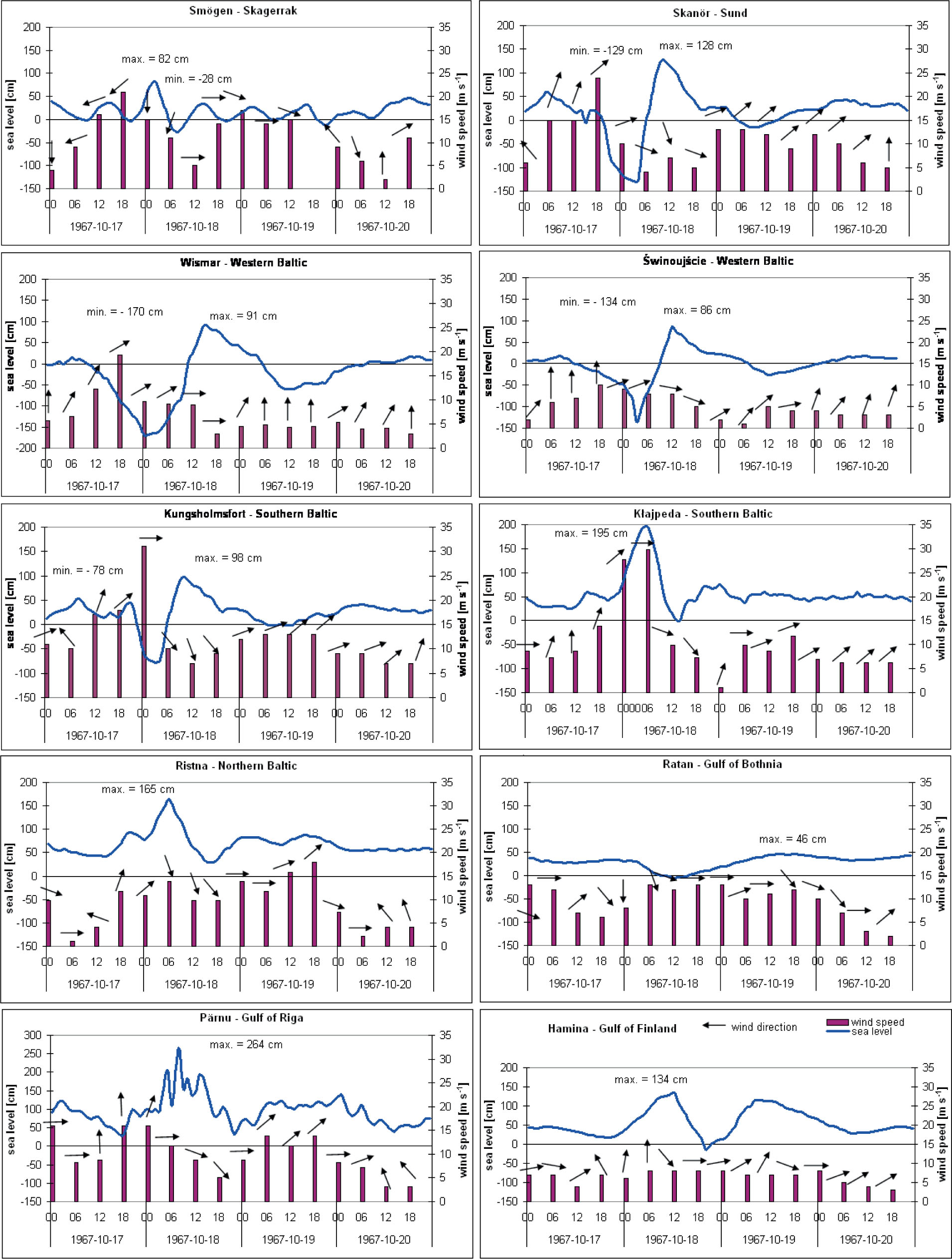
Figure 8
Distribution of wind direction and velocity together with changes in the sea level in particular basins of the Baltic Sea in 17-20 October 1967
Table 2
Features of the low pressure system and parameters of the storm surge analyzed in the period of 17-20 October 1967
| Station | Features of the low pressure system | Recorded sea level | Hs(cm) | ΔHd(cm) | ||||||||||
|---|---|---|---|---|---|---|---|---|---|---|---|---|---|---|
| Pi(hPa) | VL (m s-1) | Initial sea level (cm) | Max (cm) | Min. (cm) | Amplitude (cm) | The maximum rate of sea level change (cm h-1) | Duration of the sea level [hour] | |||||||
| Rise | Decrease | ≥70 cm | ≥100 cm | ≤ -70 cm | ≤ -100 cm | |||||||||
| Smogen | 966 | 22.2 | 20 | 82 | -28 | 110 | 30 | 30 | 2 | - | - | - | 47.6 | 143 |
| Skanor | 19 | 128 | -129 | 257 | 76 | 54 | 8 | 5 | 8 | 6 | ||||
| Wismar | -3 | 91 | -170 | 261 | 58 | 24 | 6 | 0 | 17 | 12 | ||||
| Warnemunde | -1 | 76 | -170 | 246 | 38 | 33 | 3 | 11 | 8 | |||||
| Gedser | 1 | 98 | -141 | 239 | 39 | 38 | 6 | - | 12 | 11 | ||||
| Swinoujscie | 6 | 86 | -134 | 220 | 34 | 54 | 2 | - | 4 | 2 | ||||
| Kungsholmsfort | 13 | 98 | -78 | 176 | 41 | 39 | 6 | - | 3 | - | ||||
| Klajpeda | 28 | 195 | +1 | 194 | 31 | 47 | 14 | 8 | - | - | ||||
| Visby | 36 | 85 | + 13 | 72 | 13 | 14 | 4 | - | - | - | ||||
| Parnu | 91 | 264 | +30 | 234 | 102 | 110 | 68 | 40 | - | - | ||||
| Ristna | 42 | 165 | +29 | 136 | 20 | 24 | 40 | 8 | - | - | ||||
| Sztokholm | 27 | 90 | +9 | 81 | 14 | 18 | 8 | - | - | |||||
| Tallinn | 63 | 135 | +20 | 115 | 17 | 17 | 34 | 7 | - | - | ||||
| Helsinki | 50 | 103 | 10 | 93 | 15 | 15 | 26 | 6 | - | - | ||||
| Hamina | 44 | 134 | -16 | 150 | 21 | 24 | 30 | 16 | - | - | ||||
| Narva | 72 | 180 | + 16 | 164 | 26 | 30 | 54 | 29 | - | - | ||||
| Degerby | 25 | 72 | 16 | 56 | 6 | 10 | 1 | - | - | - | ||||
| Vaasa | 35 | 57 | 14 | 43 | 5 | 6 | ||||||||
| Kemi | 40 | 50 | -12 | 62 | 7 | 6 | - | - | - | - | ||||
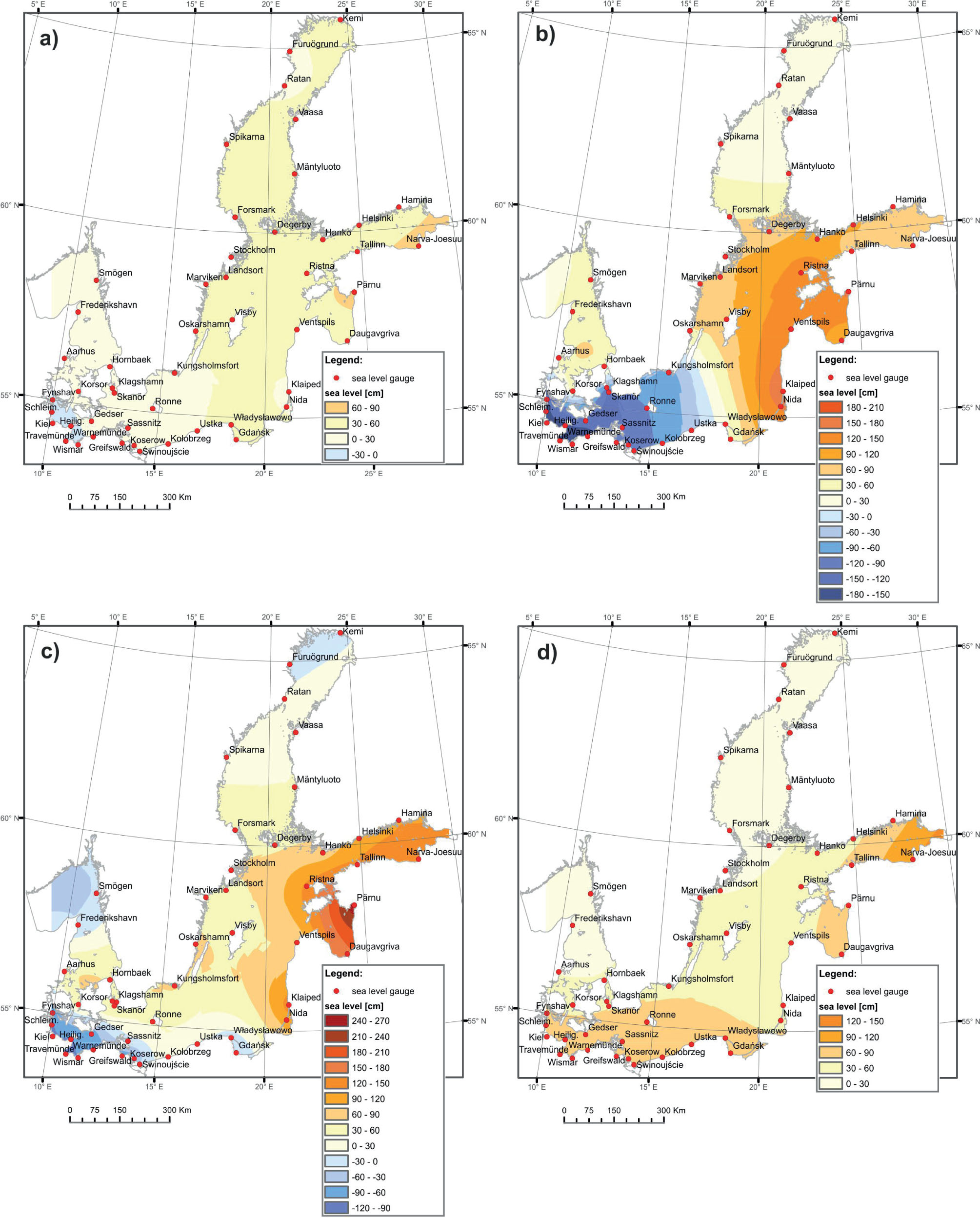
Figure 9
The image of instantaneous sea levels of the Baltic Sea: a) 17 October 1967, 12:00 UTC; b) 18 October 1967, 04:00 UTC; c) 18 October 1967, 08:00 UTC; d) 18 October 1967, 16:00 UTC