Have a personal or library account? Click to login
The Taxation of Industrial Foundations in Sweden (1862–2018) Cover

The Taxation of Industrial Foundations in Sweden (1862–2018)

Open Access
|Mar 2021

Figures & Tables

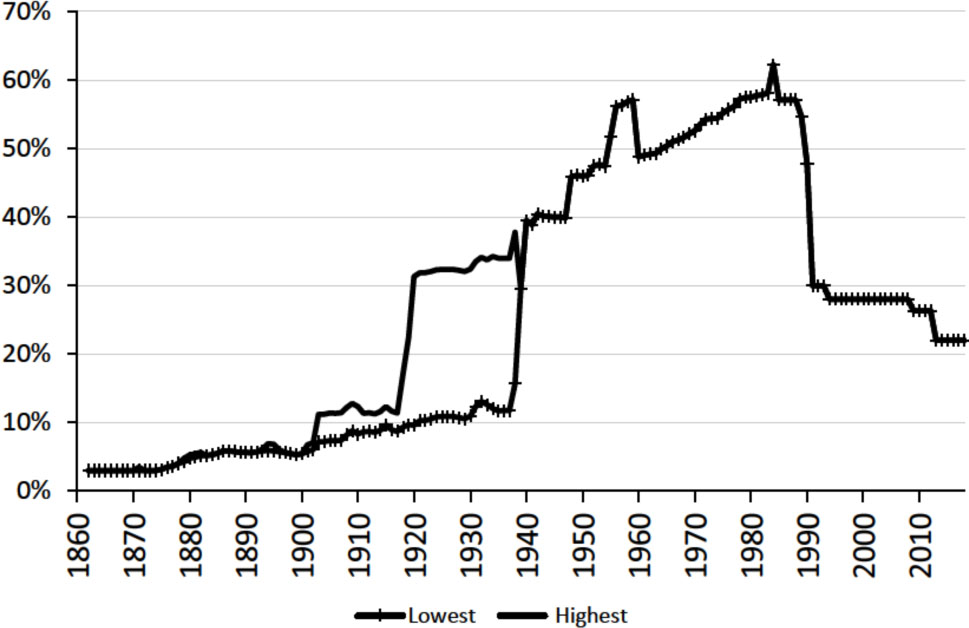
Figure 1

The highest and lowest statutory marginal corporate income tax rate, 1862–2018.Note: The statutory marginal corporate income tax rate refers to the total effect of local and state corporate income taxes. The progressive state corporate income tax was replaced by a proportional tax in 1939.Source: Johansson et al. [27] and updated by the authors.
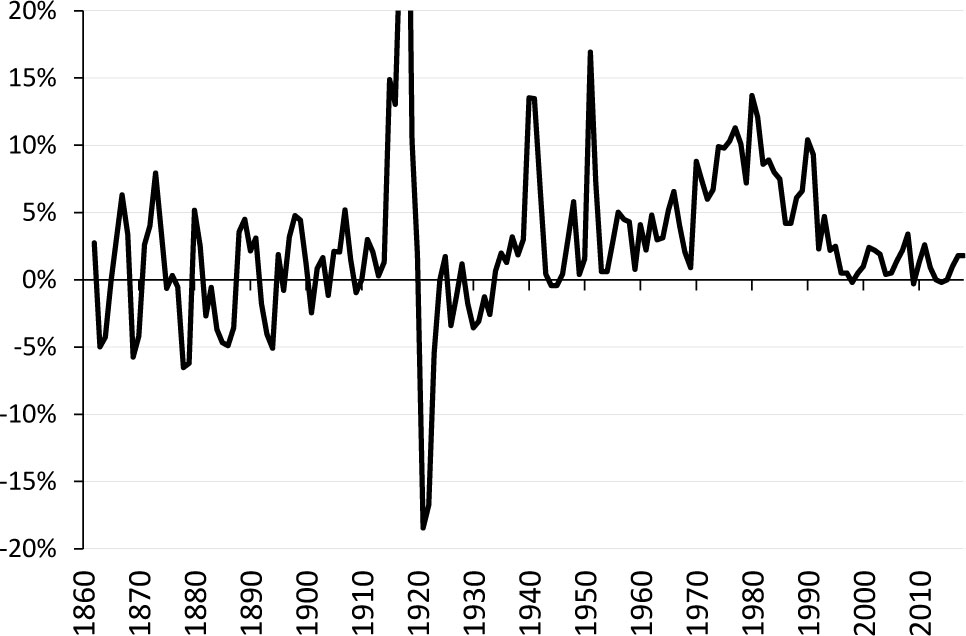

Figure 2

The inflation rate, 1862–2018.Note: The inflation rates for 1917 (26%) and 1918 (47%) are excluded to increase clarity.Source: http://www.scb.se/hitta-statistik/statistik-efter-amne/priseroch-konsumtion/konsumentprisindex/konsumentprisindex-kpi/pong/tabell-och-diagram/konsumentprisindex-kpi/inflation-i-sverige/

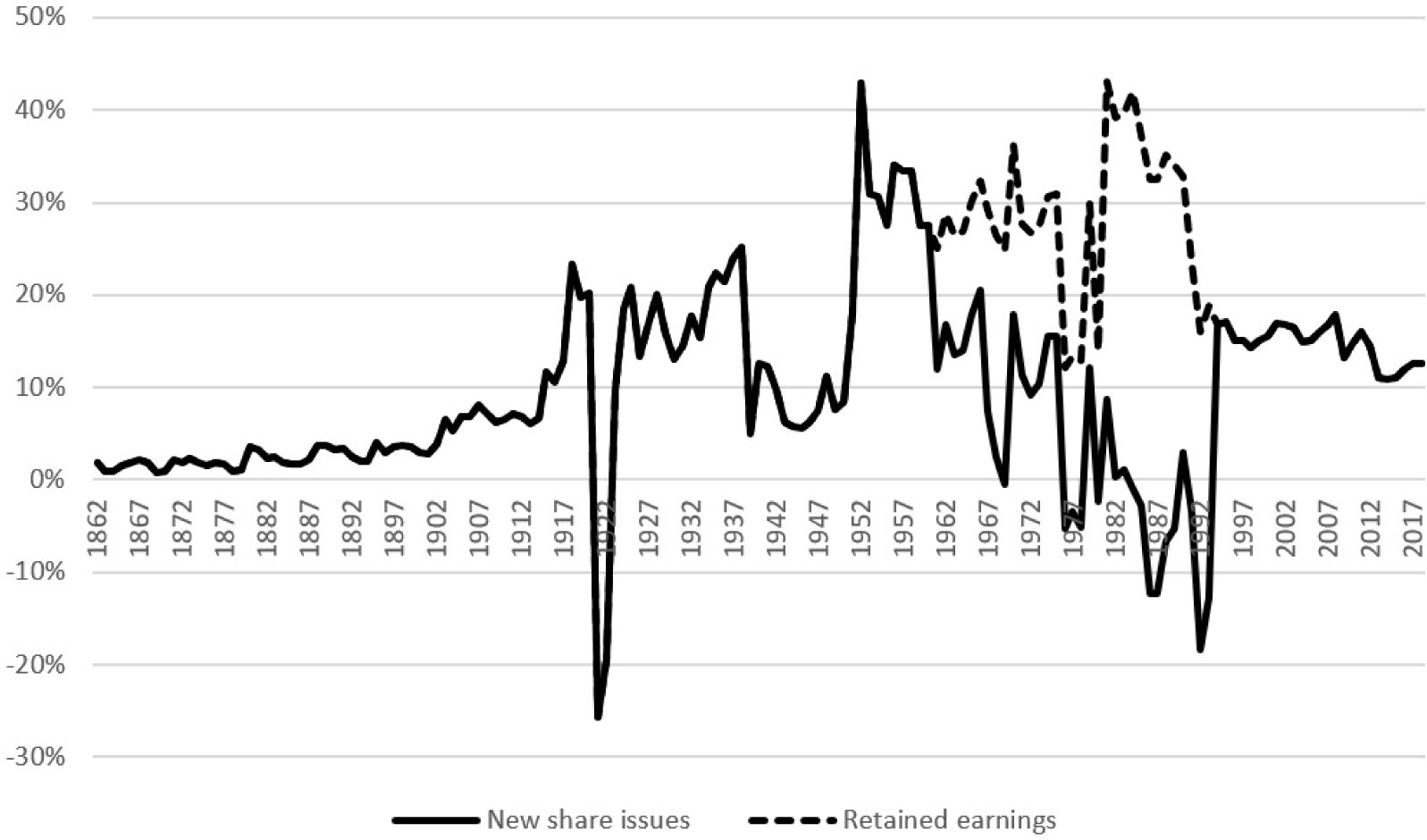
Figure 3

The marginal effective tax rate (METR), new share issues, and retained earnings, 1862–2018.Source: Own calculation.

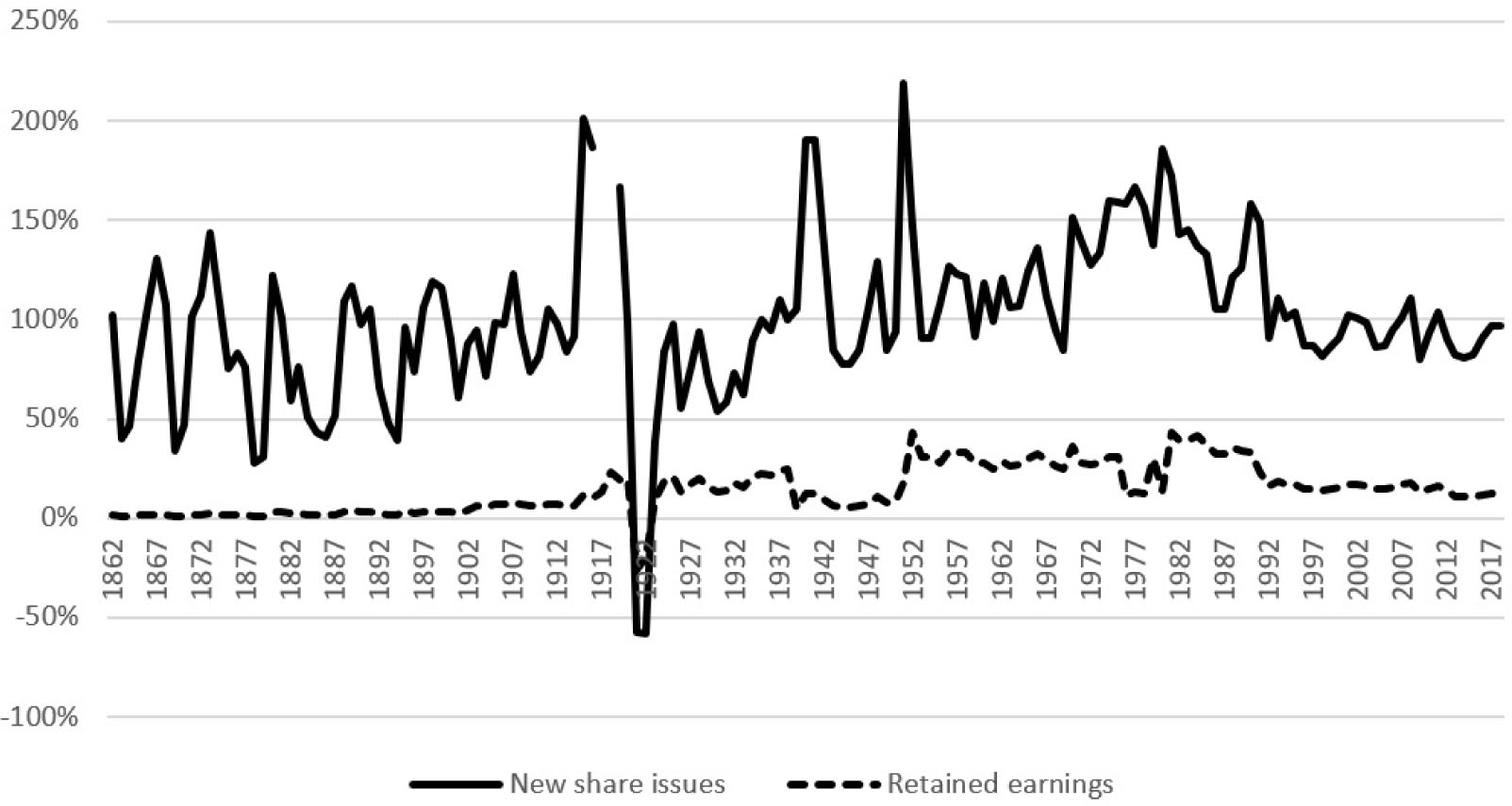
Figure 4

The marginal effective tax rate (METR), new share issues, and retained earnings, 1862–2018, including the cash flow effect.Note: The METR is calculated under the assumption that the foundation has to pay 80% of its net income for charitable purposes. The figure is truncated, and extreme spikes because of inflation (26% in 1917 and 47% in 1918) during World War I are excluded to increase clarity.Source: Own calculation.

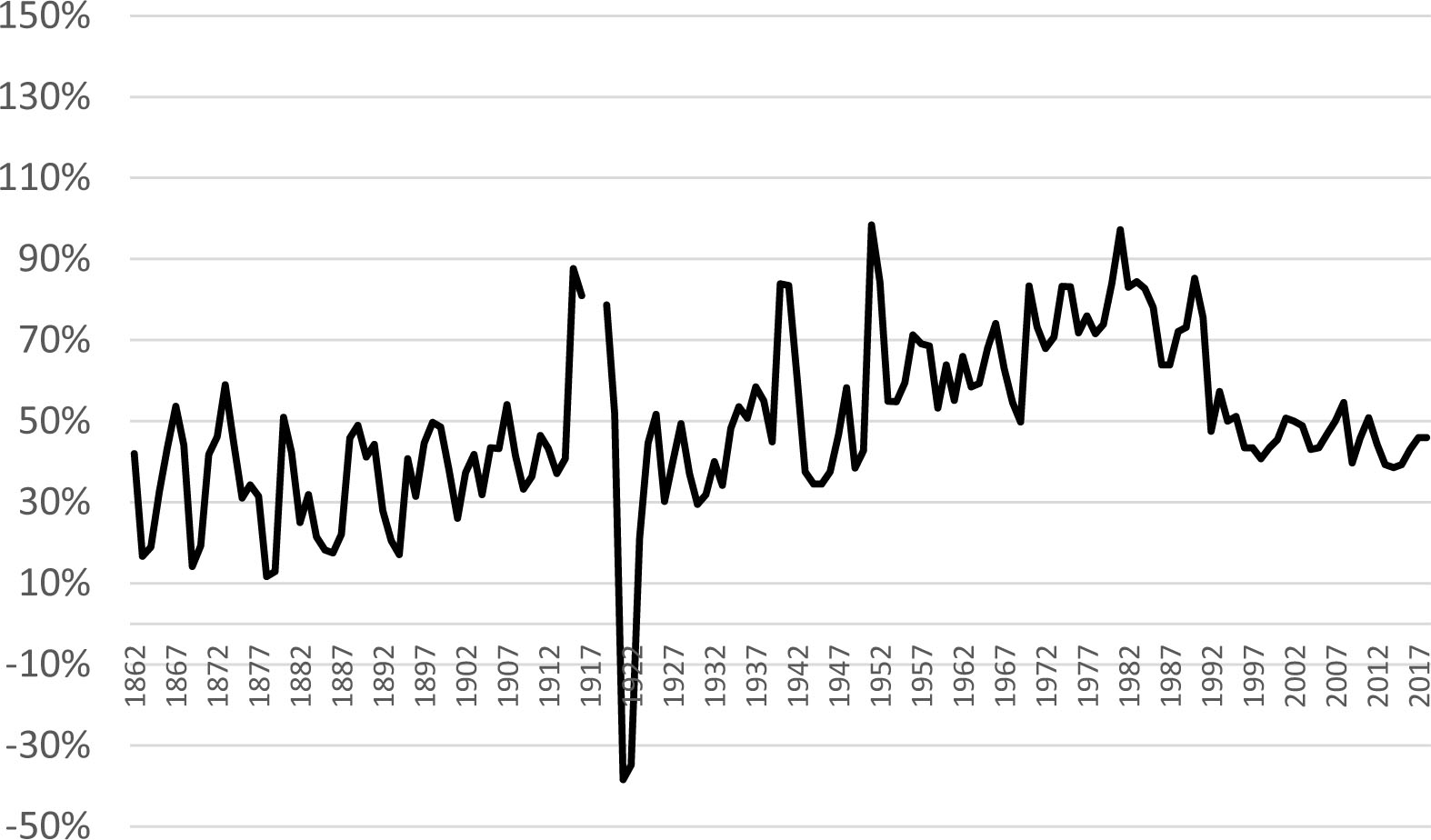
Figure 5

The marginal effective tax rate (METR), mixed case, 1862–2018.Note: The METR is calculated under the assumption that the foundation has to pay 80% of its net income for charitable purposes. The calculations are made under the assumption that the stock return follows the average pattern in the stock market, that is, that dividend yields account for 40% of the return and price changes (capital gains) for 60%. The figure is truncated, and extreme spikes because of inflation (26% in 1917 and 47% in 1918) during World War I are excluded to increase clarity.Source: Own calculations.
Language: English
Page range: 1 - 14
Submitted on: May 10, 2019
Accepted on: Oct 6, 2019
Published on: Mar 11, 2021
Published by: DJØF Publishing, Nordic Tax Research Council
In partnership with: Paradigm Publishing Services
Publication frequency: 1 issue per year

© 2021 Dan Johansson, Mikael Stenkula, Niklas Wykman, published by DJØF Publishing, Nordic Tax Research Council
This work is licensed under the Creative Commons Attribution-NonCommercial-NoDerivatives 4.0 License.