

Table 1
Tensions between Dominant and Alternative Approaches to Assessing the Outcomes of C4D
| Dominant approaches | Alternative approaches | Tensions and issues |
|---|---|---|
| Dominance of instrumental, upward accountability-based approaches that focus on proving impacts, using linear cause-effect logic and formal reporting of results. Alternative approaches are not adequately resourced or supported and are often critiqued for lacking ‘objectivity’, ‘rigour’ and ‘validity’. | Flexible, holistic interdisciplinary approach based on ongoing learning, improvement and understanding. Takes the complexity of social change and the particular context into account and focuses on outcomes that an initiative can realistically influence. | Demonstrating the impact of C4D is complex and difficult. Dominant approaches discourage ownership of the evaluation process and learning from evaluation. Results are often biased towards positive outcomes, failures are not captured or learned from, and evaluations are not independent from donor influences. |
| Pressure to produce short-term results within rigid and unrealistic timeframes. This results in a focus on more tangible, short-term changes that are not good indicators of long-term social change. | Seen as more important to focus on progress towards long-term social change and the contribution of C4D. This is a more realistic measure of effectiveness and provides practical recommendations for the implementation of policies and initiatives. | Longitudinal studies are required but they are costly and one of the most difficult challenges in evaluation. Donors are reluctant to fund them. This means that there is a lack of strong evidence on which to build C4D research, which fuels scepticism. |
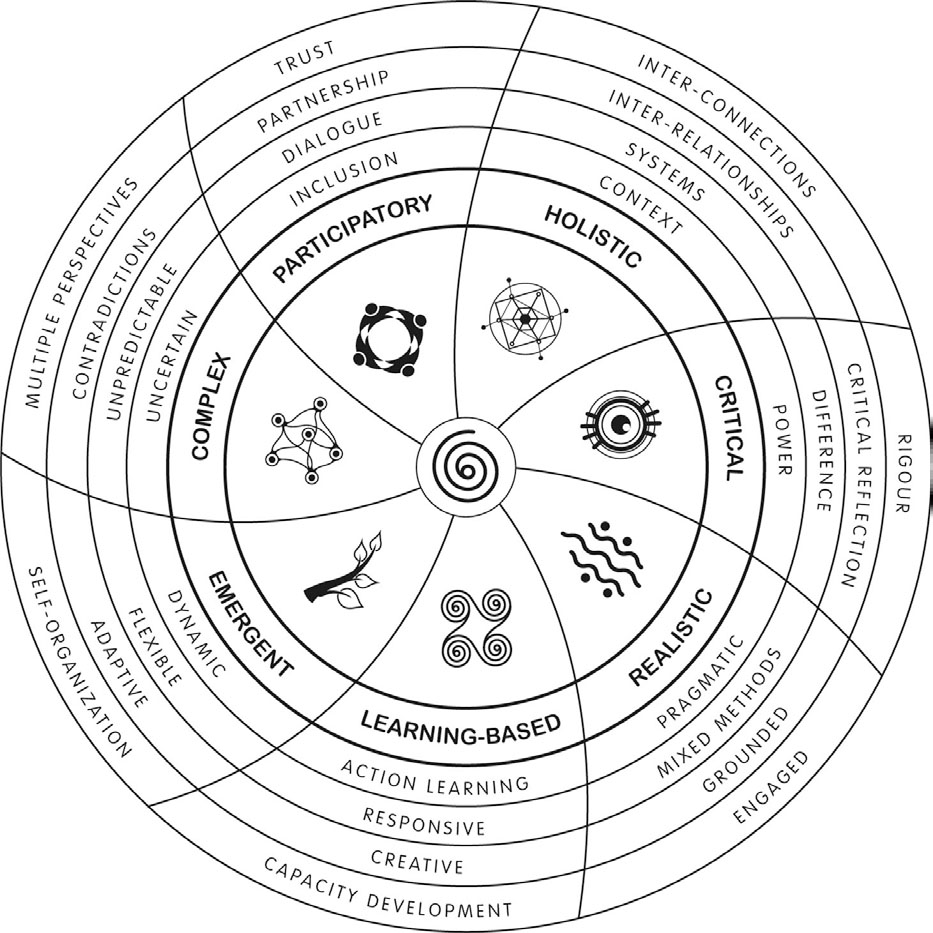
Figure 1
Key Concepts in the Framework for Evaluating C4D